Guide
Underglaze Red: Copper-Red Porcelain of the Yuan and Early Ming
Underglaze red porcelain is painted in copper under the glaze, in the same way as blue and white, but it was far harder to fire. This guide explains why, follows copper-red Chinese porcelain from its first use at Jingdezhen in the Yuan dynasty through the Hongwu reign, when red rivalled blue, to the later revivals, and shows what the colour of the red can tell you about a piece.
What to look for
- First decide whether the red is under the glaze or on top of it: underglaze copper red lies beneath a smooth, glassy surface, while overglaze iron red looks flatter and can often be felt.
- Expect a greyish, brownish or blurred red on Yuan and early Ming pieces; an even, bright red is far more typical of the Qing.
- Look at the edges of the painting: copper often bleeds into the glaze, and thin areas may have fired grey or greenish or almost vanished.
- Where blue and red appear together, expect the blue to have fired more reliably than the red.
- Check the form, body, glaze and base as you would for blue and white; the red never dates a piece on its own.
Copper: the most difficult underglaze colour
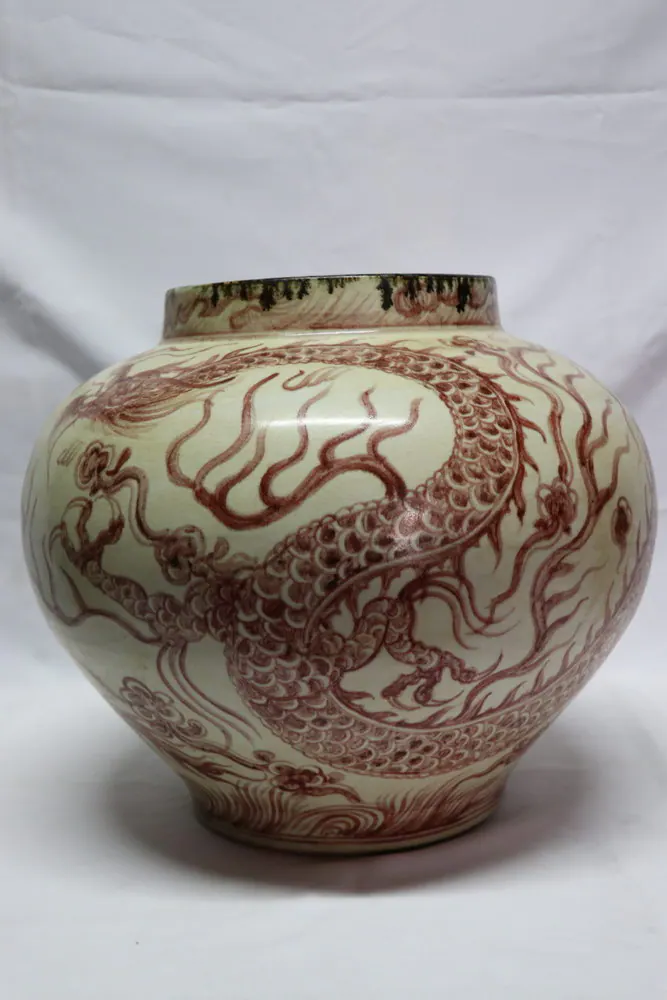
Blue and white and underglaze red are made in the same way. The painter works directly on the dried, unfired body, the piece is covered with a clear glaze, and the whole is fired once at a high temperature, roughly 1,250 to 1,300°C at Jingdezhen. The difference lies in the pigment. Cobalt is stable and fires blue across a wide range of conditions. Copper is not.
To give red, copper must be fired in a reducing atmosphere, one starved of oxygen, and within a narrow band of temperature. With too much oxygen it turns green or grey. Too hot, and it volatilises and fades, leaving a pale ghost of the design. Too thickly applied, it fires dark and brownish; too thinly, it barely shows. Copper also tends to migrate into the glaze, so outlines blur and colour spreads beyond the brushstroke. In a large wood-fired kiln, where conditions varied from one part of the chamber to another, a good red was as much a matter of luck as of skill.
Chinese potters had used copper long before. Potters at Changsha in Hunan painted with copper in the Tang dynasty, mostly in green, and the Jun wares of the Song and Jin carry purple splashes coloured by copper. Painting in copper red under a clear glaze on true porcelain began at Jingdezhen in the Yuan.
Yuan underglaze red at Jingdezhen
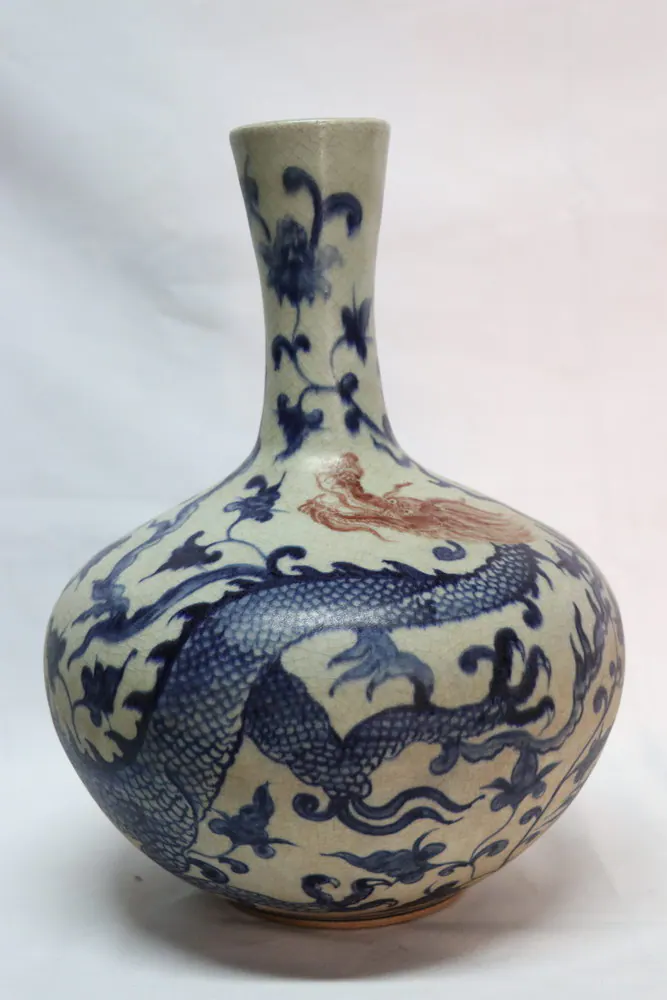
Underglaze red appears at Jingdezhen in the fourteenth century alongside the first mature blue and white, and was made in much smaller quantities. Surviving Yuan pieces include bowls, dishes, jars, stem cups and pear-shaped yuhuchunping bottles, painted with the same repertoire as blue and white: peony and lotus scrolls, chrysanthemums, clouds, and the dragons and phoenixes of the period. The red is usually greyish, brownish or pinkish, only occasionally a clear red, and the painting tends to be broader and simpler than in blue, because fine lines blurred in the firing.
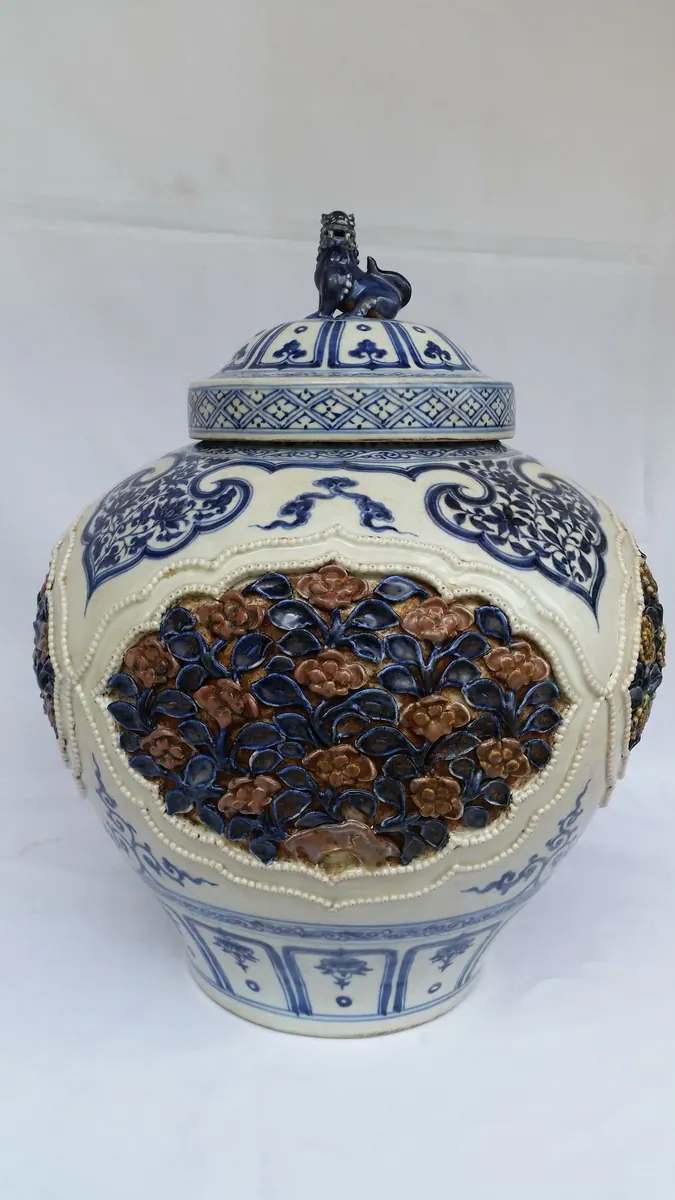
Some of the most ambitious Yuan pieces use both colours, and a few add moulded or openwork decoration picked out in red and blue. Among the best known are covered jars with openwork panels coloured in both, found in a hoard at Baoding in Hebei province. In our collection, a vase catalogued as early Yuan is painted in blue and copper red, its listing describing a dragon whose head is picked out in red among flowering scrolls. Our guide to Yuan blue and white porcelain explains how wares of this period are recognised.
The Hongwu reign, when red rivalled blue
After the Ming dynasty was founded in 1368, underglaze red was used on a scale never seen before or since. Under the Hongwu Emperor (r. 1368–1398), the kilns at Jingdezhen made large dishes, deep bowls, jars, ewers and yuhuchunping painted in copper red, alongside blue and white of the same shapes and designs. Fragments of both have been excavated at the site of the imperial works in Jingdezhen.
The reason is usually sought in the cobalt supply. The trade that had brought Middle Eastern cobalt to China under the Mongols was disrupted by the fall of the Yuan, and in 1371 the new government banned private overseas trade. Much Hongwu blue is greyish and soft, and copper, which was available at home, offered an alternative.
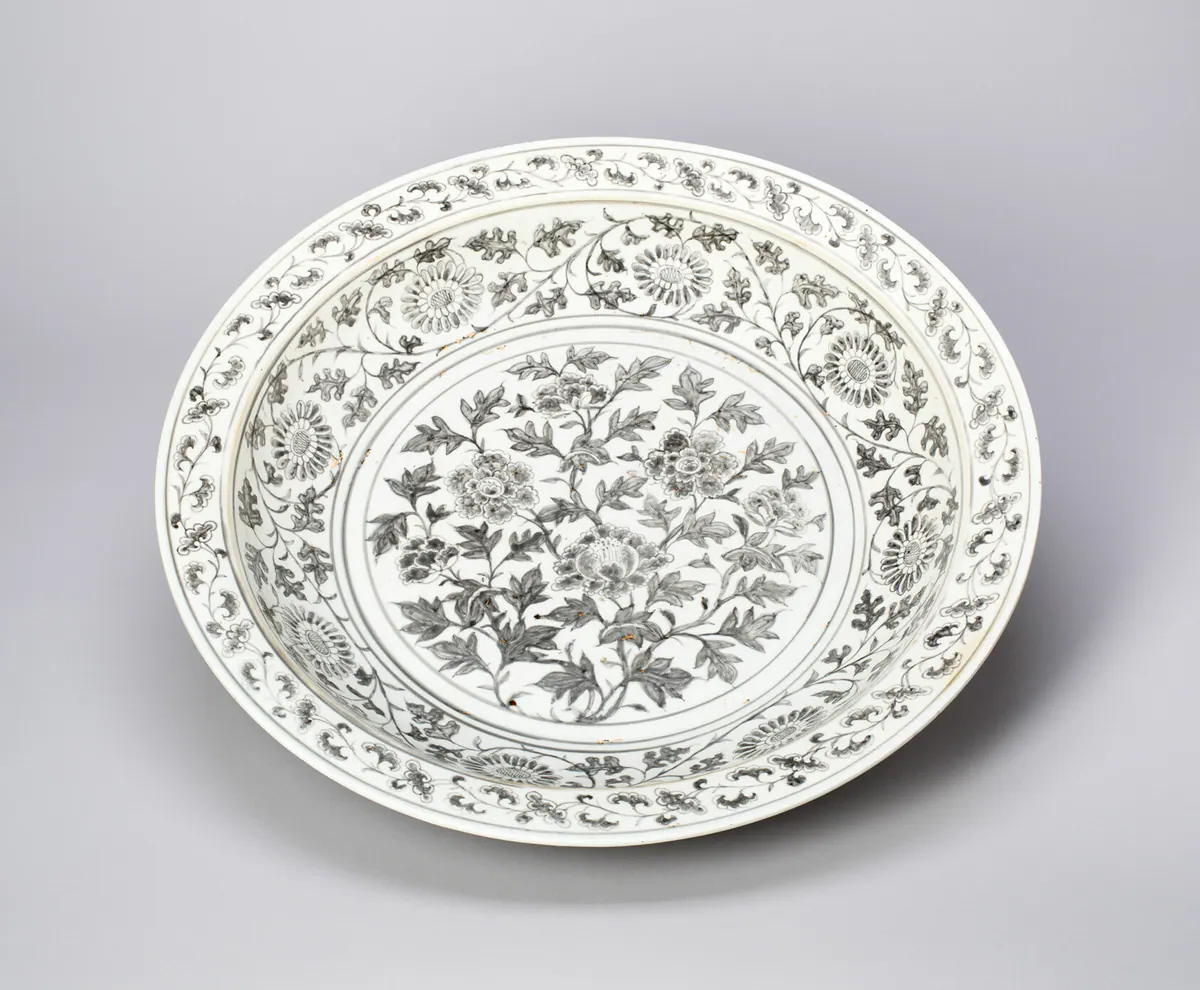
Hongwu decoration is more formal than that of the Yuan. Scrolls of chrysanthemum, peony and lotus dominate, and large dishes carry bands of classic scroll or waves at the rim. Hongwu underglaze red is typically greyish or brownish, occasionally a warmer red, and even colour across a large piece is exceptional. Hongwu court porcelain is unmarked, so pieces are attributed by form, painting and body. Our page on early Ming porcelain places these wares in context.
Greyish, brownish and bright reds: what the colour tells you
The tone of a copper red records what happened in the kiln, and it offers a rough guide to date as well.
- Grey or silvery grey: the copper was fired with too much oxygen, or too hot, and lost most of its colour. Common on Yuan and Hongwu pieces.
- Brownish or liver red: thick pigment, or a firing that was not reducing enough. Also common in the fourteenth century, and on provincial wares of every period.
- Pinkish or pale red: thinly applied copper, or a piece fired slightly too hot, with part of the red lost in the glaze.
- Bright, clear red: uncommon before the fifteenth century and never as dependable as blue, but far more usual on Qing wares from the Kangxi reign onwards.
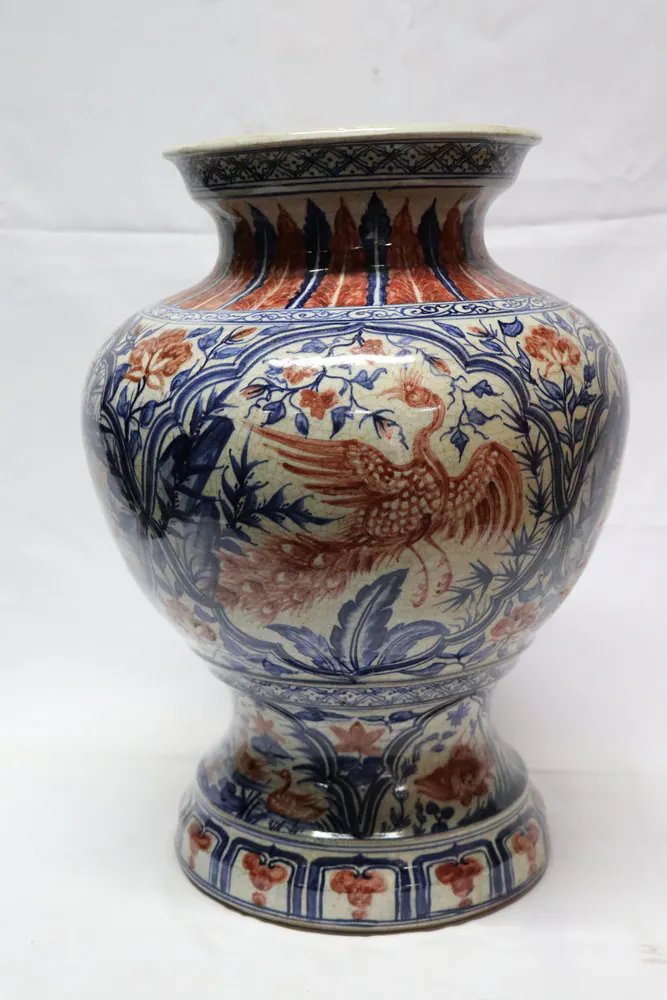
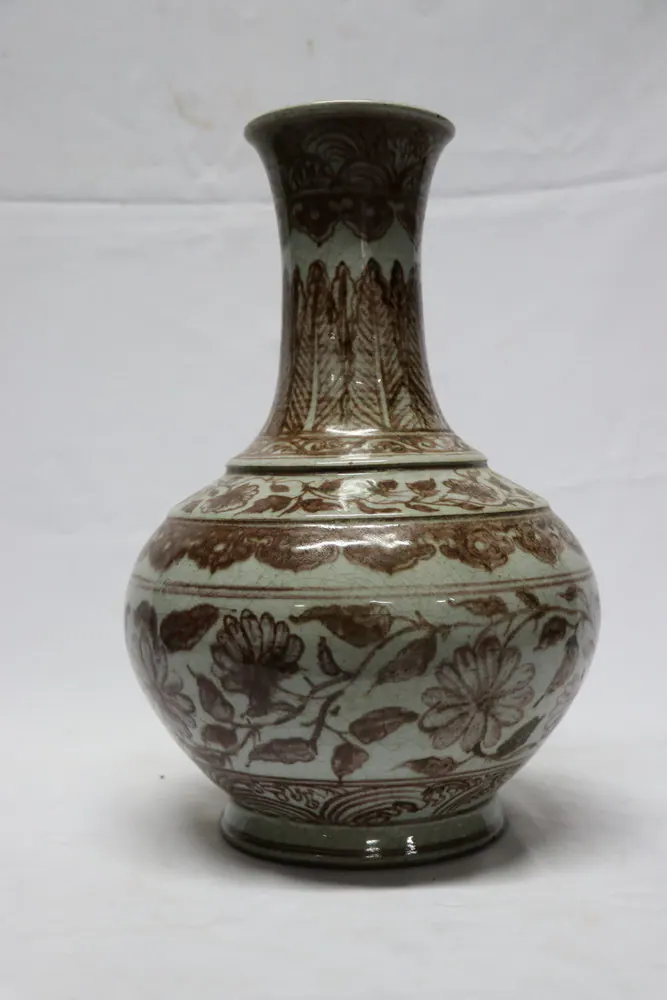
Look at the whole piece, not only its best side. On early red and white Chinese porcelain the red usually varies across the surface: darker where the brush was loaded, paler or greyish where it was thin, and soft at the edges where the copper spread into the glaze. A Ming red and white vase we sold shows the brownish tone well, its peony and floral bands, each within a double line, fired to a brownish red on a crackled glaze. A modern copy may show an even, bright red with crisp edges, or a red deliberately muddied to look old, but it rarely has the natural unevenness of a difficult firing. Our guide to the presence or absence of certain colours explains how colour fits with the rest of the evidence.
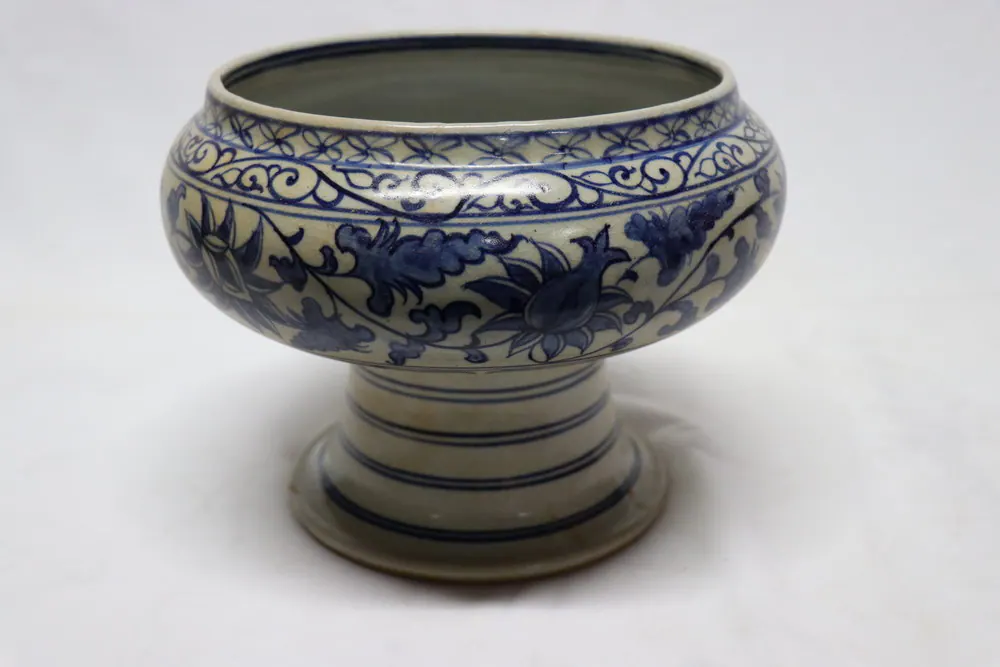
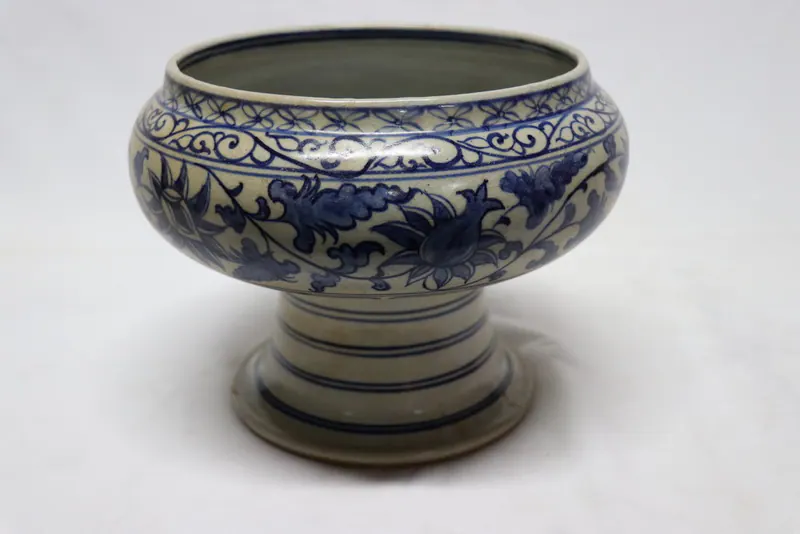
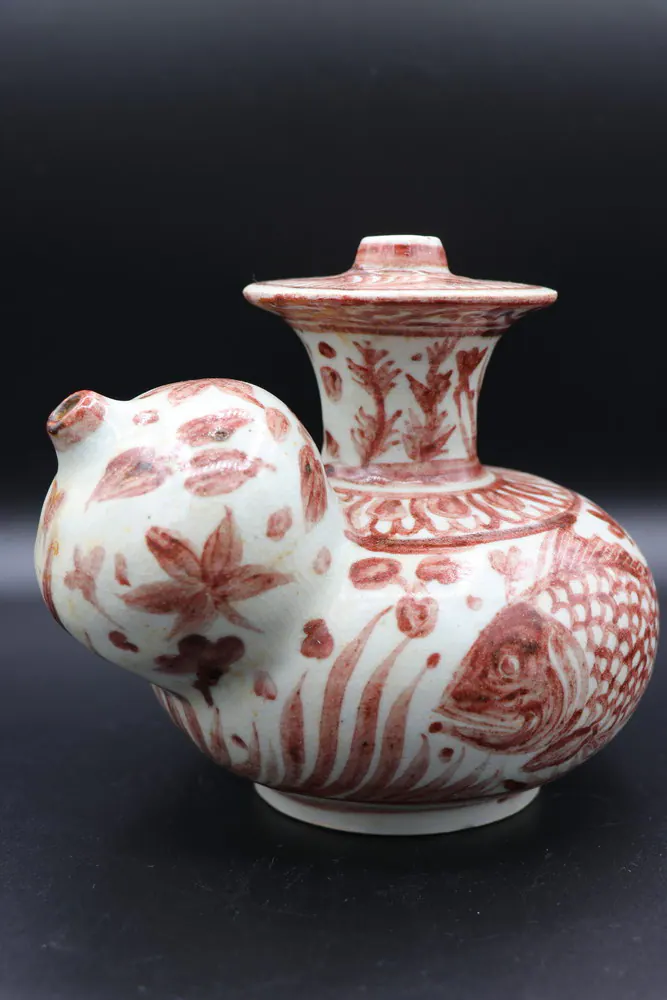
The three pieces below show the range, from a grey that has lost its colour to a clearer red.
Blue and red together
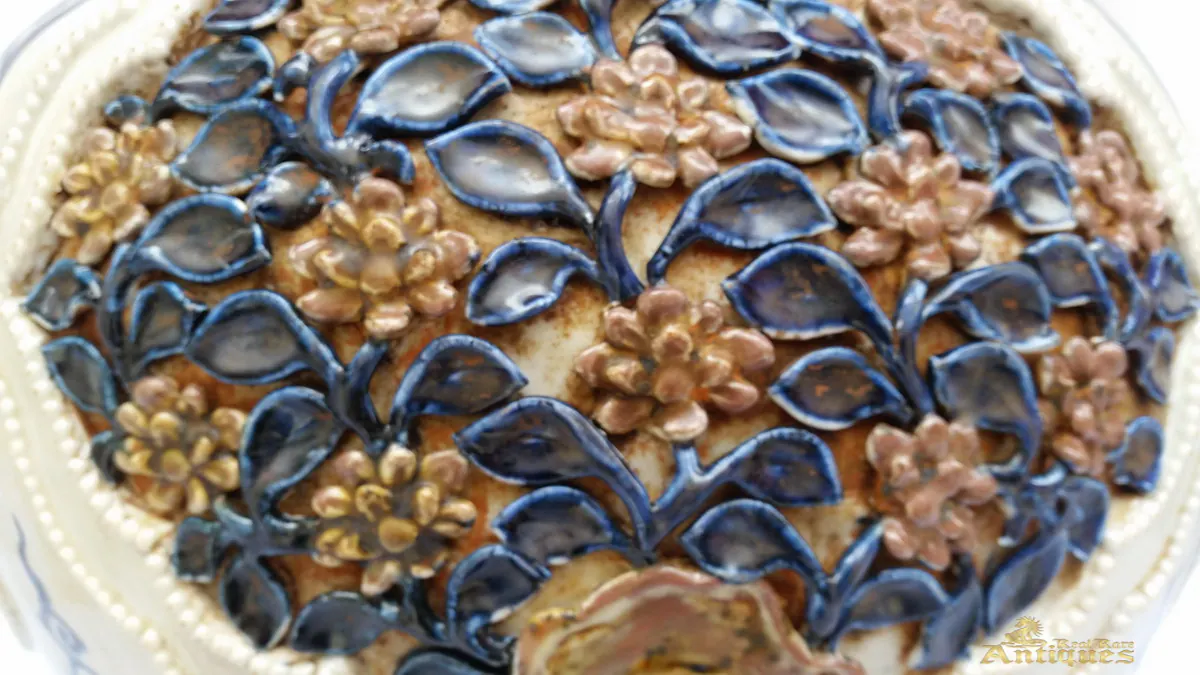
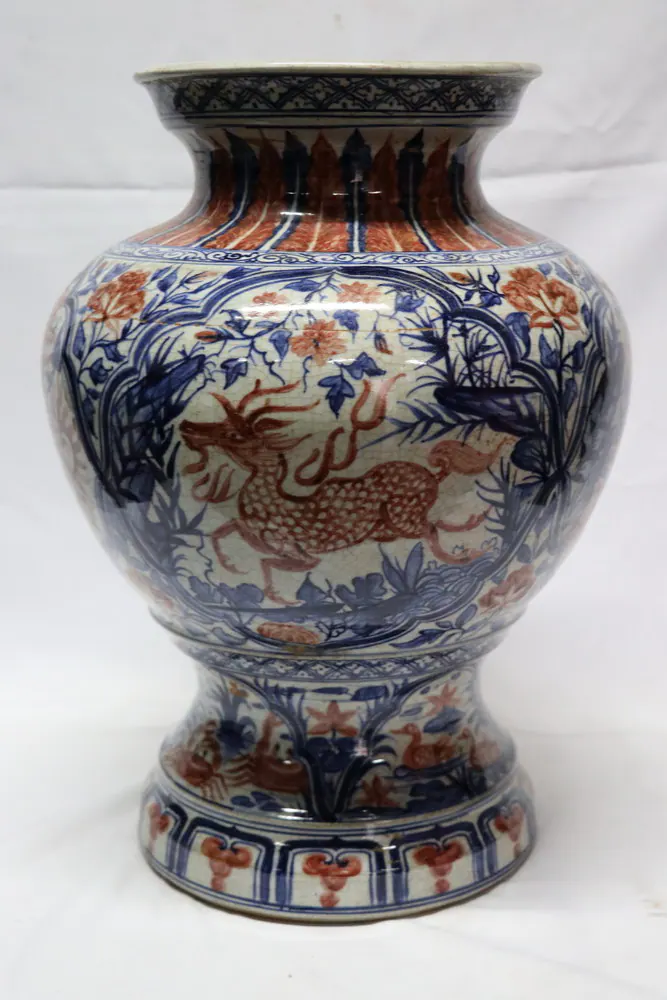
Combining the two colours on one piece doubled the difficulty. Cobalt and copper had to be fired together, and the conditions that suited one did not always suit the other. Usually the blue came out well and the red less so, which is why early pieces in blue and red so often pair a strong blue with a greyish or brownish red.
The combination was made in the Yuan, as the Baoding jars show, and again in the early Ming. It became common only in the Qing, when the imperial kilns under Kangxi, Yongzheng and Qianlong could control both colours, and blue and red, qinghua youlihong in Chinese, became a standard scheme for vases, brush pots and dishes. Our history of Chinese blue and white porcelain follows the blue side of the story.
In our collection, a covered jar catalogued as late Yuan to early Ming has florets in relief set around the body, with blue leaves and brownish-red flowers, beneath a lid with a lion finial.
Later revivals: Xuande and the Qing
Under Yongle and Xuande the imperial kilns turned their skill with copper to monochromes, glazes coloured red all over, known in Chinese as xianhong, "fresh red", or jihong, "sacrificial red". They are the finest Ming copper reds. Painted underglaze red continued too: among the best-known Xuande porcelains are stem cups painted with three fish or three fruits in red on a white ground, copied again and again in the eighteenth century.
After Xuande, Ming copper red declined. From the middle of the dynasty overglaze iron red, painted on an already glazed and fired piece and fixed in a second, low firing, largely took its place, because it was predictable. Copper red returned in strength under Kangxi (r. 1661–1722), whose potters mastered new monochromes such as the deep red known as langyao and the mottled peach bloom, and painted underglaze red with a control earlier potters never had.
Under Yongzheng and Qianlong the imperial kilns made careful copies of early Ming red and blue-and-red wares, many with the marks of their own reigns. These eighteenth-century pieces are fine porcelain in their own right, but their red is more even and their drawing more precise than on fourteenth-century originals. Our guide to Qing dynasty porcelain covers these reigns.
Red in our collection
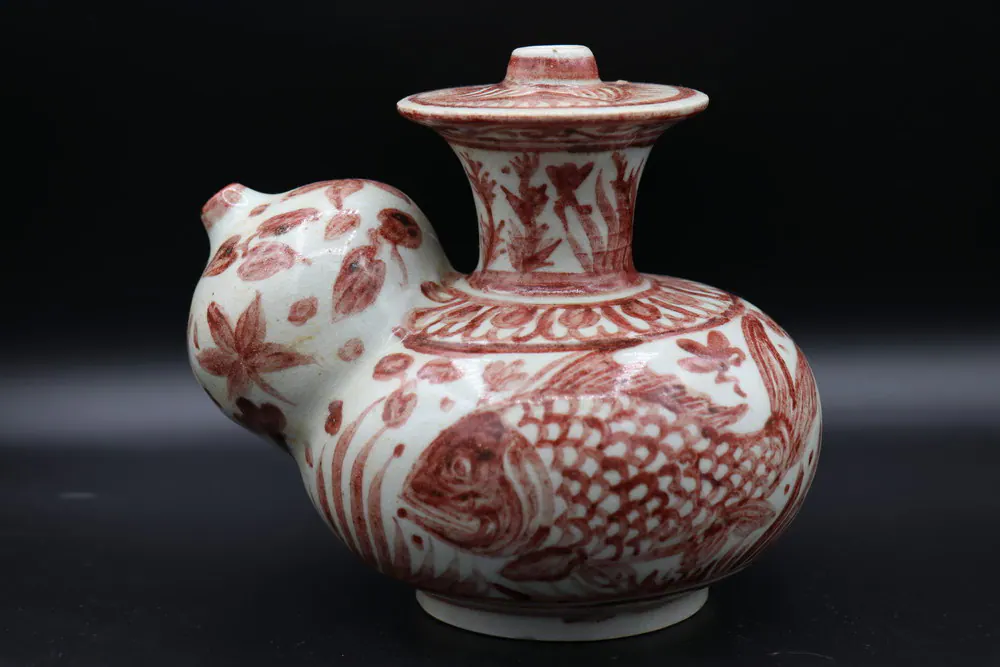
Copper-red pieces make up a small part of our collection. Besides the pieces described above, it includes a kendi painted in underglaze red, catalogued as middle to late Ming. Its body is painted with fish among plants and flowers, and its base has a shell mark. The kendi is a pouring vessel made largely for Southeast Asian markets, and our guide to the kendi explains how it was used.
When you look at a red piece, take the tests on this page in order. Is the red under the glaze? Do its tone and unevenness suit the period claimed? Does the blue, if there is any, agree? Do the form, body and base support the attribution? Value depends on the same factors as for any Chinese porcelain: period, the quality of the potting and painting, how well the red has fired, condition, provenance, rarity and the market. Each piece in our collection is offered by private inquiry through the Request price form on its page; shipping is fully insured, and all sales are final.