1644–1912
Qing Dynasty Porcelain: A Collector's Guide from Kangxi to Guangxu
Qing dynasty porcelain spans more than two and a half centuries of production at Jingdezhen, from the troubled decades after 1644 and the rebuilding of the imperial kilns in the 1680s to the last imperial orders before 1912. This guide follows it reign by reign: what changed, who ran the kilns, which wares collectors associate with each period and how the export trade fits in. For the dynasty's political history, see our page on the Qing dynasty.
- Dates
- 1644–1912
- Main centre
- Jingdezhen, Jiangxi province
- Kiln supervisors
- Zang Yingxuan, Lang Tingji, Nian Xiyao, Tang Ying
- Key wares
- Kangxi blue and white, famille verte, famille rose, monochromes, export wares
- Marks
- Six or four characters, in regular or seal script
Rebuilding Jingdezhen: the supervisors from Zang Yingxuan to Tang Ying
The Qing inherited a porcelain industry in disorder. Imperial orders had faltered in the last Ming reigns, and fighting in Jiangxi during the conquest and again in the Revolt of the Three Feudatories (1673–1681) damaged Jingdezhen itself. For some four decades after 1644 the potters worked chiefly for private and export buyers, the later part of what collectors call the Transitional period.
Recovery began in the early 1680s, when the court sent Zang Yingxuan, an official of the Ministry of Works, to reorganise the imperial factory. Later Chinese writers credit his years there with a series of new monochrome glazes. In the first decade of the eighteenth century Lang Tingji, governor of Jiangxi from 1705 to 1712, oversaw imperial production, and his name survives in langyao, the deep copper-red glaze collectors call sang de boeuf.
Under the Yongzheng Emperor, Nian Xiyao took charge of the factory from 1726, with Tang Ying as his resident assistant from 1728. Tang Ying, who went on to run the works well into the Qianlong reign, was the most influential of all. In 1735 he recorded nearly sixty kinds of glaze and decoration then in production, many of them imitations of Song and Ming wares, and in 1743 he wrote the text for a set of illustrations of porcelain manufacture commissioned by the emperor.
The Jesuit Père d'Entrecolles, who lived at Jingdezhen, described the town in letters of 1712 and 1722: its thousands of kilns, its division of labour and the preparation of its clays. Between his account and Tang Ying's, Qing porcelain is better documented than that of any earlier dynasty.
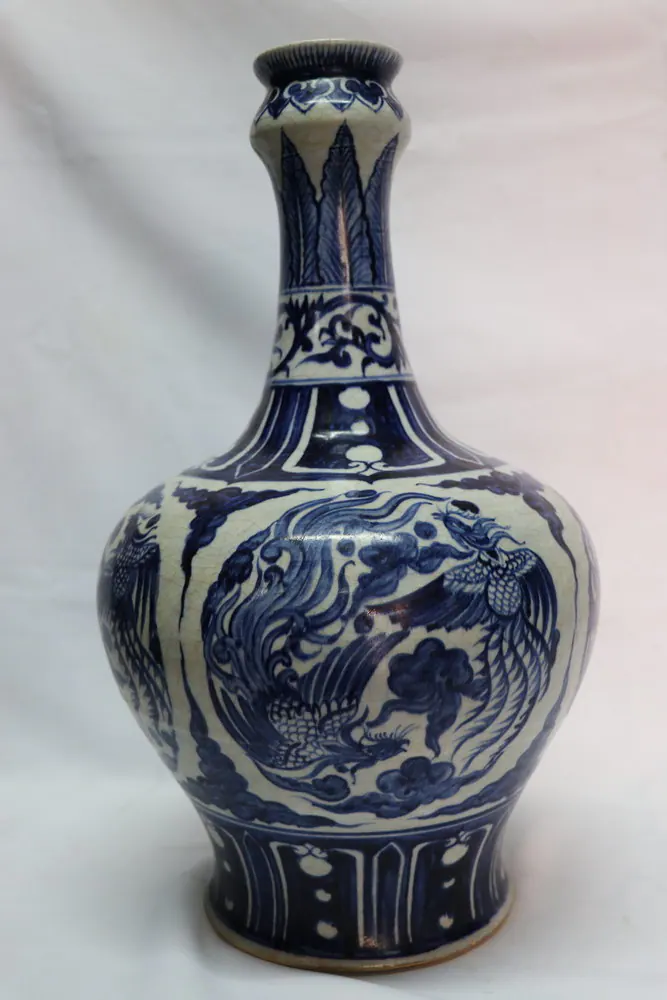
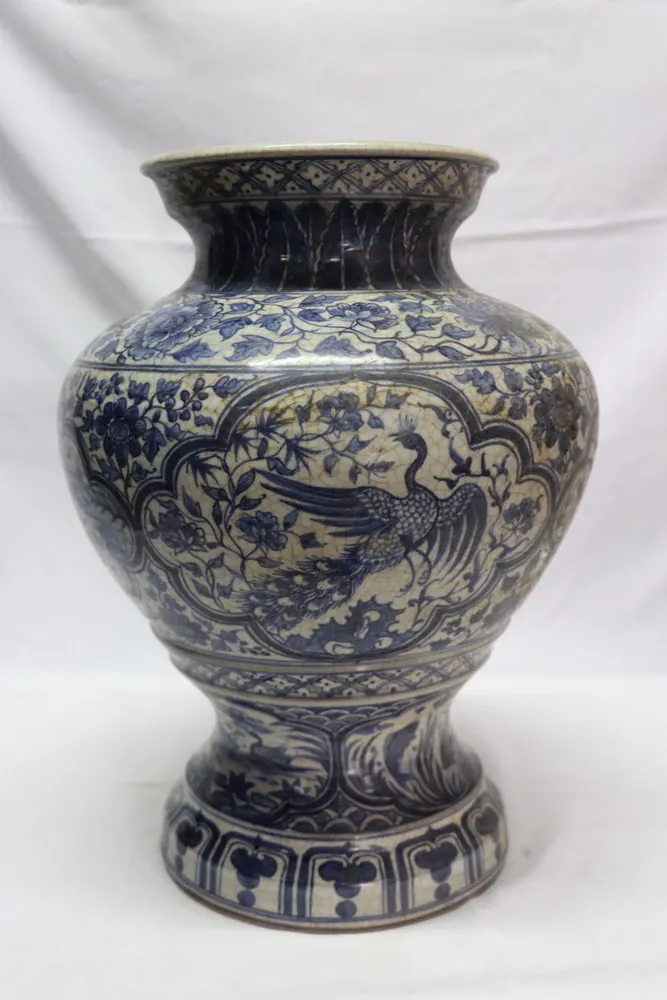
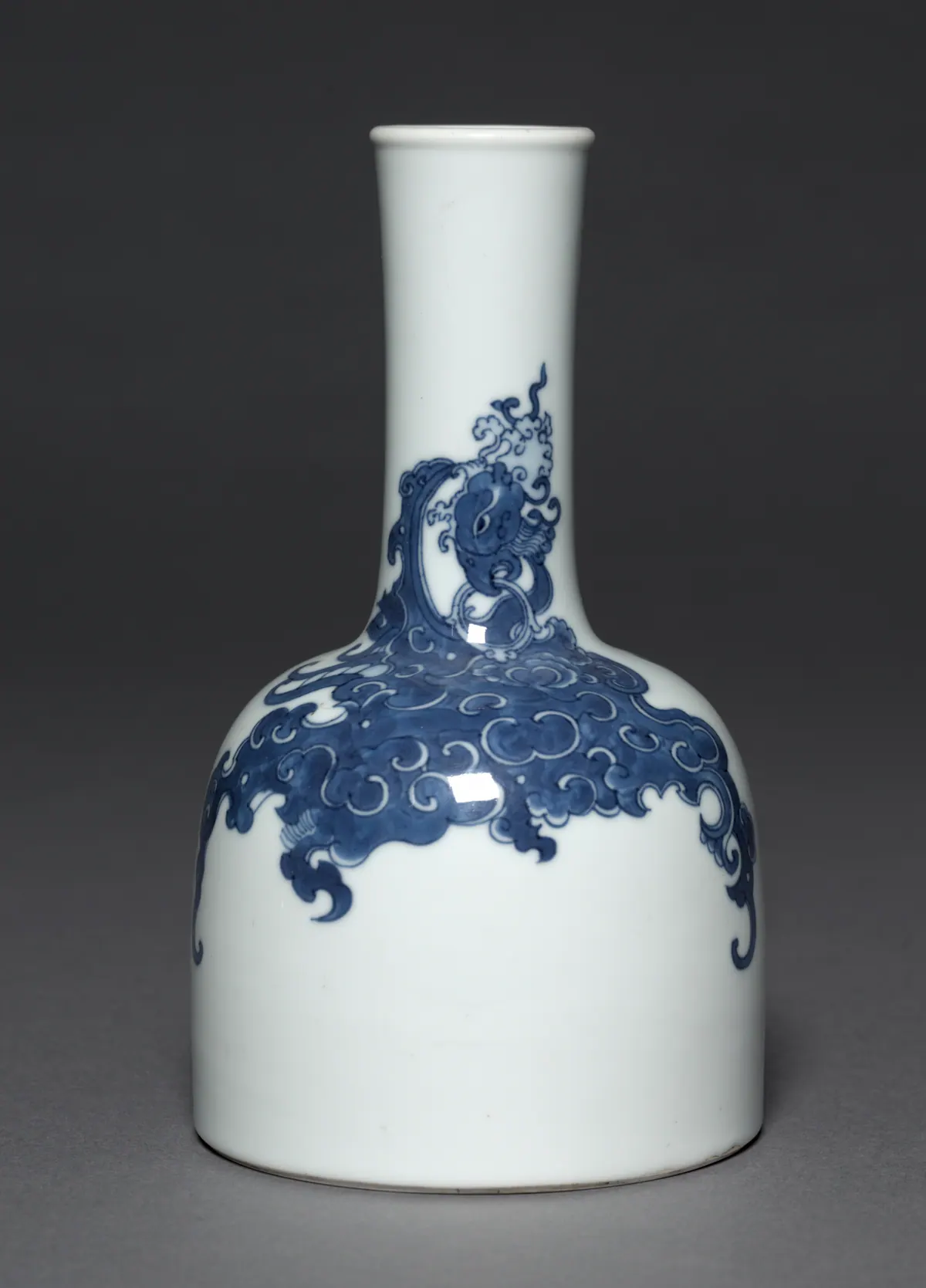
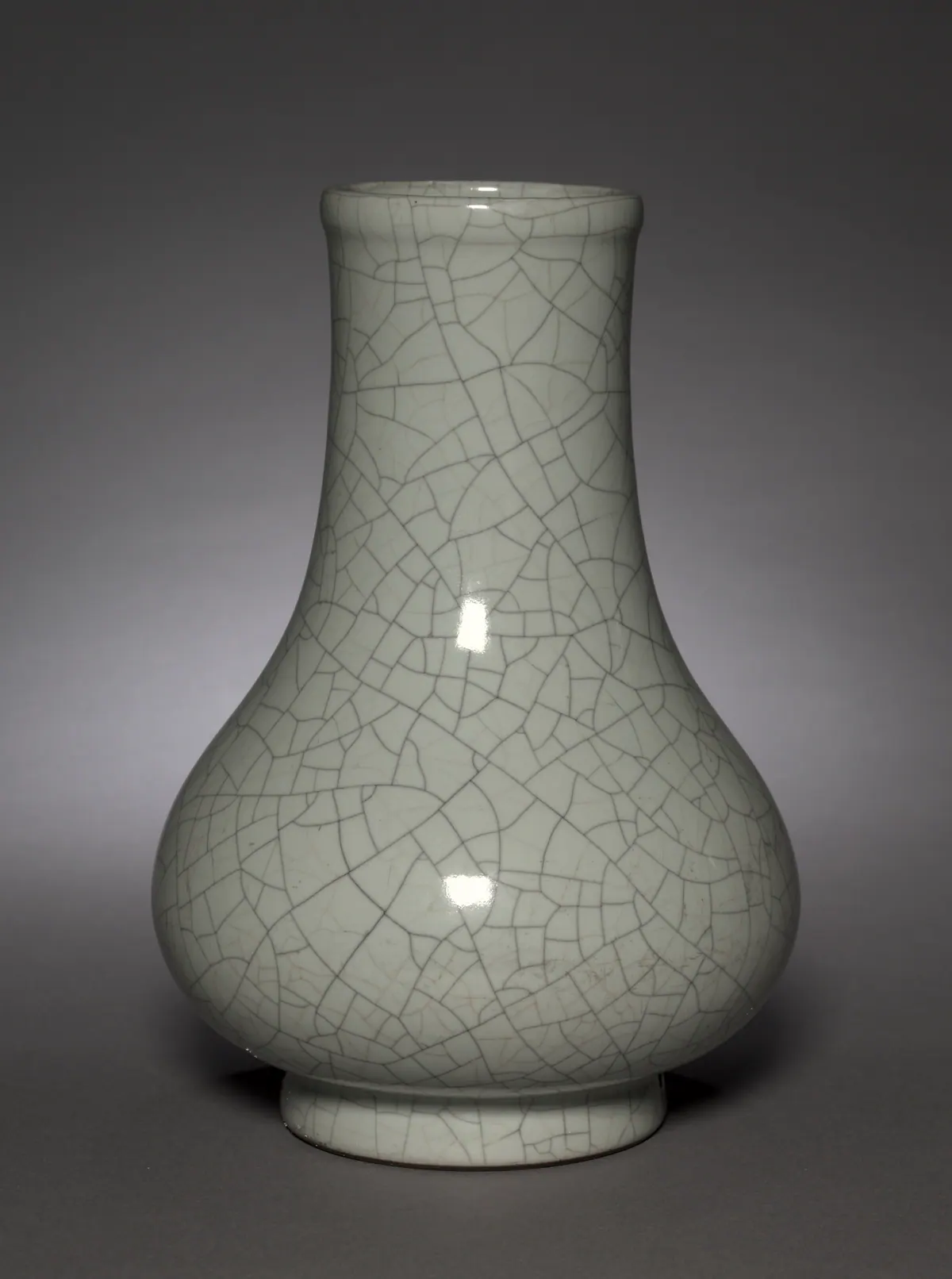
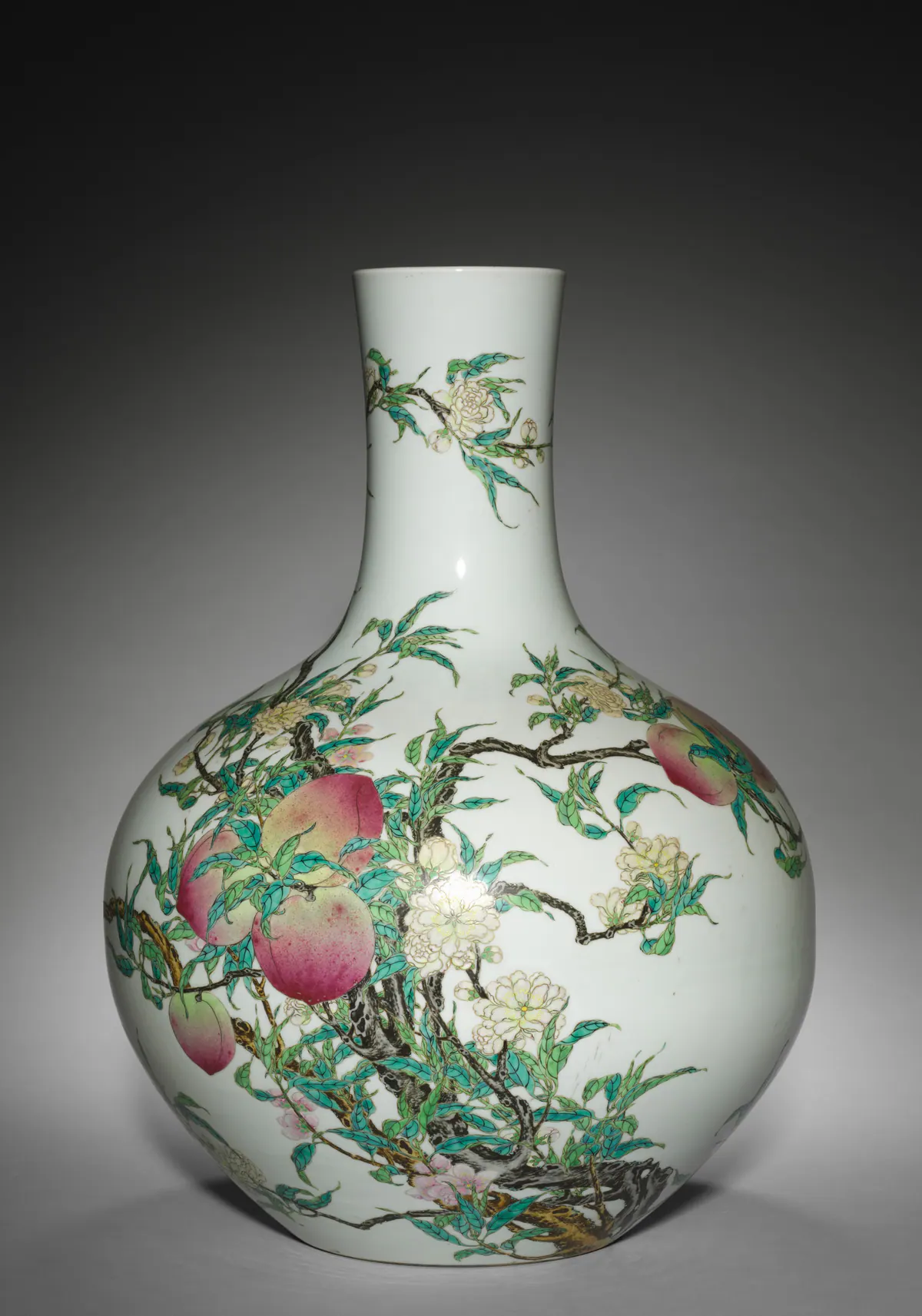
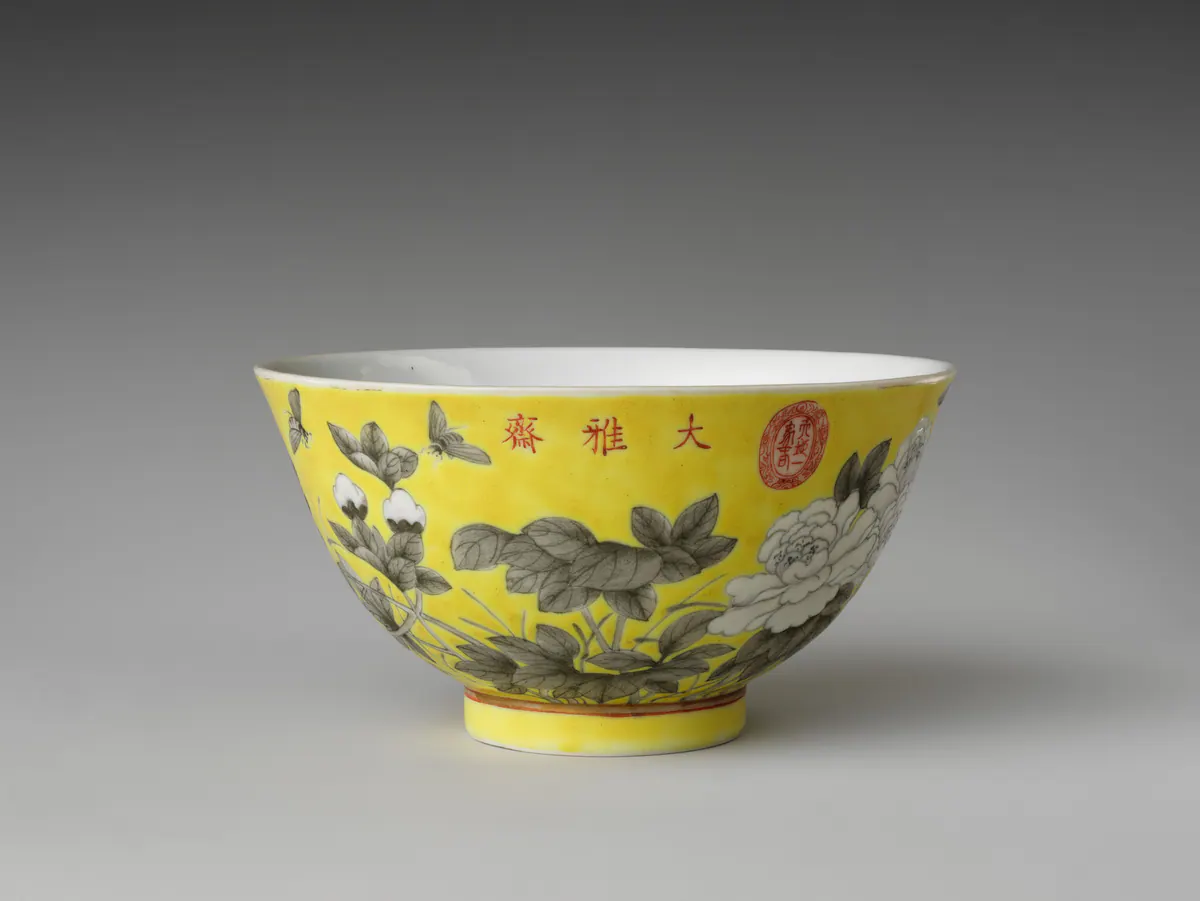
The four museum pieces below, one each from the Kangxi, Yongzheng, Qianlong and Guangxu reigns, show how the porcelain changed across the dynasty.
Museum examples
Kangxi porcelain: blue and white and famille verte
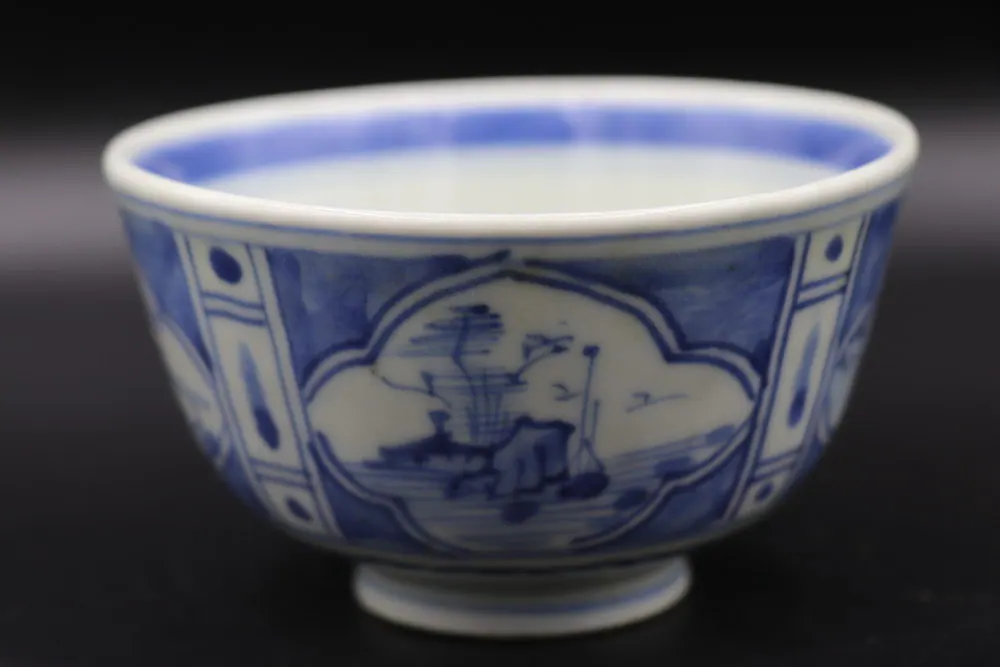
The Kangxi Emperor reigned from 1661 to 1722, and the porcelain of his reign is among the most admired of the dynasty. From the 1680s Kangxi blue and white shows a brilliant, pure sapphire blue, carefully refined, laid on in graded washes that give landscapes and figures real depth. The body is fine and white, the glaze thin, glossy and close-fitting.
Kangxi potters also developed famille verte, a palette of transparent green, yellow and aubergine enamels with iron red and black outlines. Its most distinctive addition was an overglaze blue enamel, which let painters use blue alongside the other colours without a separate underglaze stage. Our guide to famille verte and famille rose explains how to tell the palettes apart.
Favourite subjects on Kangxi blue and white included figures from novels and plays, landscapes in the manner of contemporary painters, and, on the ginger jars made in quantity for export, prunus blossom on a ground of cracked ice. Famille verte appears on everything from large dishes and tall rouleau vases to small cups, and a good share of the finest pieces left China for European collections.
Monochromes flourished too: the copper-red langyao, the pinkish peach bloom used on small objects for the scholar's desk, and powder blue, in which cobalt was blown on through gauze to give a speckled ground.
Reign marks are less common on Kangxi porcelain than collectors expect. A local record of 1677 notes an order forbidding the reign title on porcelain at Jingdezhen, and this is often cited to explain why so many Kangxi pieces carry earlier Ming marks, an empty double circle or a symbol such as a leaf instead. Our chart of Qing reign marks shows the imperial forms.
Yongzheng: refinement, famille rose and copies of Song glazes
The Yongzheng Emperor (r. 1723–1735) took a close personal interest in the imperial kilns, and palace archives record his instructions and criticisms on designs. The porcelain of his short reign is noted for restraint: well-proportioned shapes, thin even potting and a great deal of undecorated white ground.
Famille rose, introduced at court late in the Kangxi reign, came of age under Yongzheng. Its opaque white and gold-derived pink allowed painters to shade petals and faces in soft gradations, and the finest Yongzheng pieces carry sparse sprays of flowers painted with the precision of an album leaf. The most refined enamelled porcelain, known as falangcai, was decorated in the palace workshops in Beijing on white porcelain sent from Jingdezhen.
Yongzheng potters also looked back. They reproduced the glazes of the great Song kilns, including Ru, Guan, Ge and Jun types, with remarkable fidelity, and copied early Ming blue and white so closely that they imitated the dark spots of iron in fifteenth-century cobalt by dotting the brush. Many such pieces carry the Yongzheng mark; others carry the mark of the Ming reign they imitate. Doucai, the Chenghua technique of blue outlines filled with enamels, was revived as well, as our page on doucai and wucai describes.
The monochromes of the reign are among the most sought after of all Qing wares: lemon yellow, pale celadon, the opaque mottled blue known as robin's egg and the speckled olive-brown called tea dust. Yongzheng marks are usually six characters in regular script within a double circle, although seal script also appears.
Qianlong porcelain: technical display
The Qianlong Emperor ruled from 1735 to 1796, and with Tang Ying in charge of the kilns for its first two decades Jingdezhen reached a peak of technical ambition. Potters made vases with revolving inner sections and pierced outer walls, and imitated bronze, jade, lacquer, wood and stone in porcelain so convincingly that some pieces are hard to recognise as ceramic at arm's length.
Famille rose grew denser and more elaborate. Coloured grounds were incised with fine scrolling before enamelling, a technique often called sgraffito, and panels of figures or landscapes were set within them. Blue and white continued, much of it in early Ming style, and the monochrome repertoire expanded further.
Palace enamelling continued, and falangcai pieces of the reign often pair a painted scene with a poetic inscription and small seals, in the manner of a painting. European ideas of perspective and shading, familiar at court through Jesuit painters, appear in some enamelled decoration of the period.
Qianlong imperial marks are usually in seal script. They were copied constantly in the nineteenth and twentieth centuries, and the mark alone says nothing about when a piece was made. A Qianlong mark is only as good as the body, glaze, foot and painting beneath it.
Critics have long contrasted the restraint of Yongzheng with the exuberance of Qianlong. That is a matter of taste. The technical control of the best Qianlong porcelain has never been bettered.
The nineteenth century: Jiaqing to Xianfeng, and the Taiping destruction
Under the Jiaqing Emperor (r. 1796–1820) the kilns continued Qianlong designs, often competently, though with less invention and gradually less finish. Daoguang porcelain (1821–1850) includes some very fine pieces, among them wares with the hall mark Shendetang, a name used by the Daoguang Emperor himself, but ordinary production became plainer and heavier. Imperial marks of both reigns are normally in seal script, following Qianlong practice.
Much of the porcelain made in these decades was for the domestic market rather than the court: dinner and tea wares, vases for the home and pieces decorated with auspicious symbols and inscriptions for birthdays and weddings. Private kilns at Jingdezhen also turned out great quantities of blue and white for ordinary households, and much of it survives.
The decisive blow came with the Taiping Rebellion (1850–1864). In the 1850s the fighting reached Jingdezhen and the imperial works were destroyed. Production for the court under the Xianfeng Emperor (r. 1851–1861) was therefore limited, and genuine Xianfeng imperial porcelain is comparatively scarce.
Nineteenth-century pieces are sometimes dismissed as a decline, but collectors increasingly value them on their own terms. The best Daoguang wares are finely potted and painted, and much of the porcelain that families inherited from this century is sound, honest work.
Tongzhi and Guangxu revivals
The imperial factory was rebuilt in the mid-1860s under the Tongzhi Emperor (r. 1862–1874). One of its first great commissions was porcelain for the emperor's wedding in 1872, much of it famille rose on yellow and other coloured grounds.
The long Guangxu reign (1875–1908) brought a genuine revival. Its potters made careful copies of Kangxi, Yongzheng and Qianlong wares, and Guangxu-marked blue and white can be of high quality. Imperial marks of the period are normally six characters in regular script, a return to the practice of the early Qing. The glaze is often slightly bluish and glassy, and the enamels are brighter and flatter than those of the eighteenth century, which is usually how a Guangxu copy gives itself away beside its model. Wares made in the 1870s for the Empress Dowager Cixi, painted with flowers and birds on coloured grounds, often carry the hall name Dayazhai. The last imperial orders were placed under the Xuantong Emperor, before the abdication of 1912.
Private workshops at Jingdezhen were busy in the same years, and many late Qing pieces carry the marks of earlier reigns. Our guide to late Qing and Republic porcelain covers these decades in detail, including the painters who began to sign their work.
Export wares
For much of the dynasty the largest customers for Qing porcelain were abroad. The Dutch and English East India Companies shipped Kangxi blue and white to Europe in enormous quantities, and later cargoes, such as that of the Dutch ship Geldermalsen, which sank in 1752, show the scale of the trade in tea wares and dinner services.
Export porcelain followed its buyers' taste. Chinese Imari, in underglaze blue with iron red and gilding, answered Japanese wares already popular in Europe. Armorial services were painted with the coats of arms of European families to order. From the eighteenth century much export porcelain was made at Jingdezhen and enamelled in workshops at Canton (Guangzhou), close to the foreign merchants, which led in the nineteenth century to the crowded famille rose patterns known in the West as Rose Mandarin and Rose Medallion.
Blue and white never left the export trade. In the late eighteenth and nineteenth centuries dinner services painted with river landscapes, pavilions and bridges, sold in Britain and America under names such as Nanking and Canton, were shipped in great numbers, and they remain the Chinese porcelain most often found in Western family collections.
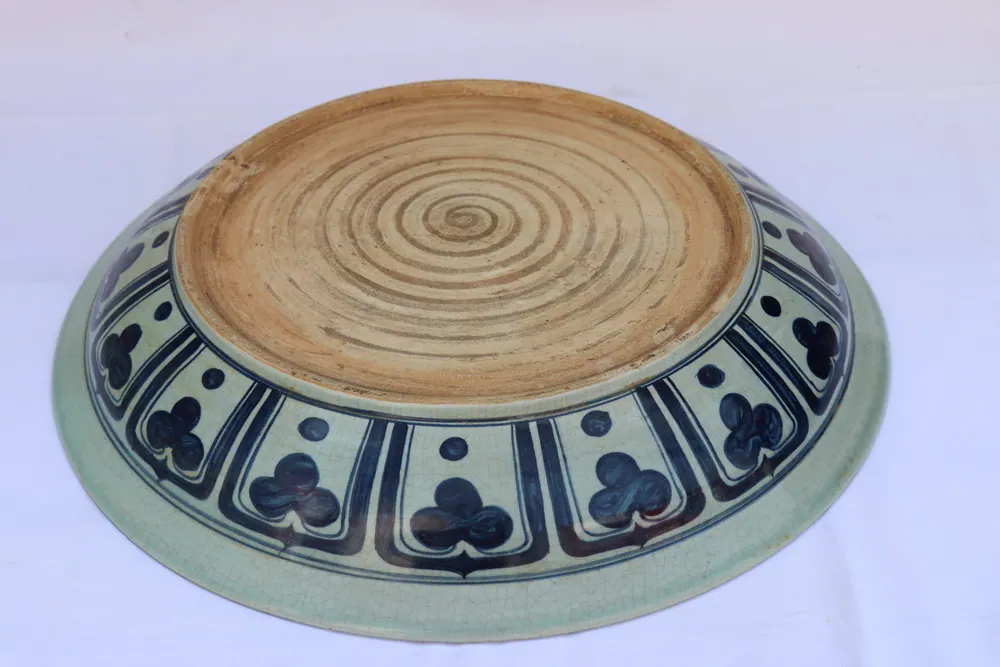
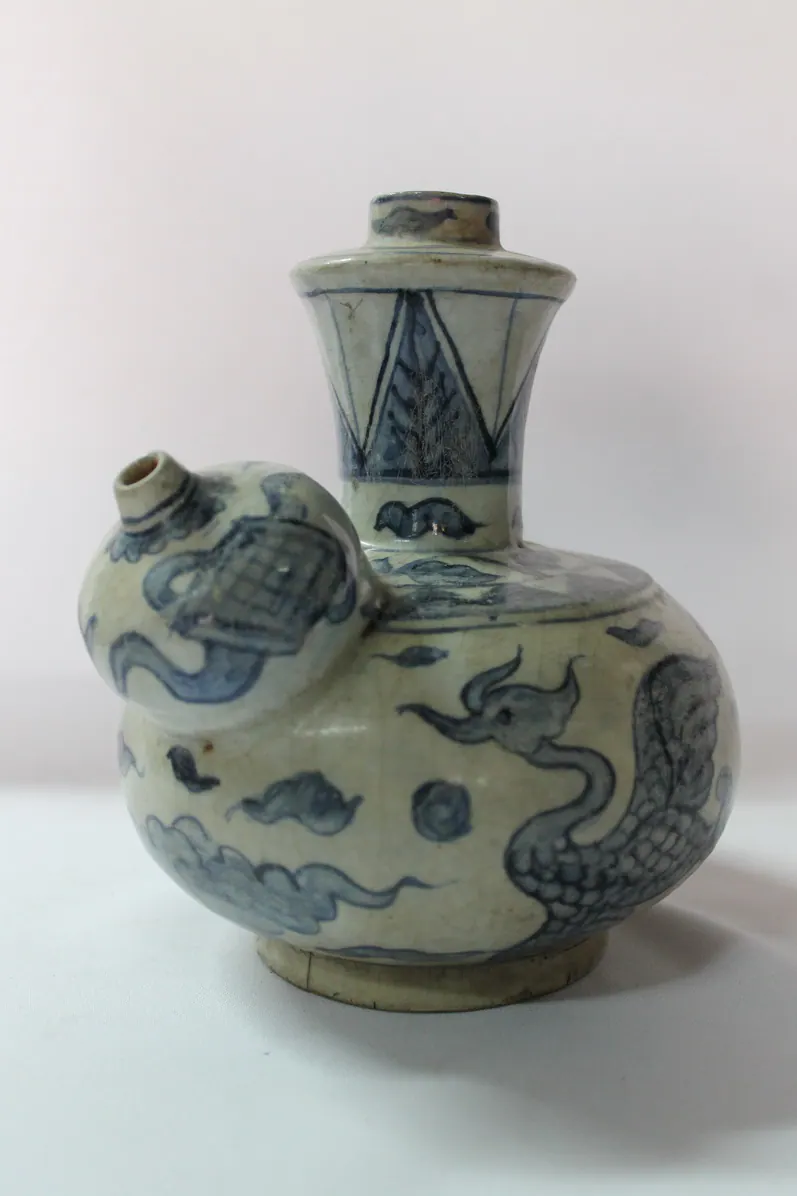
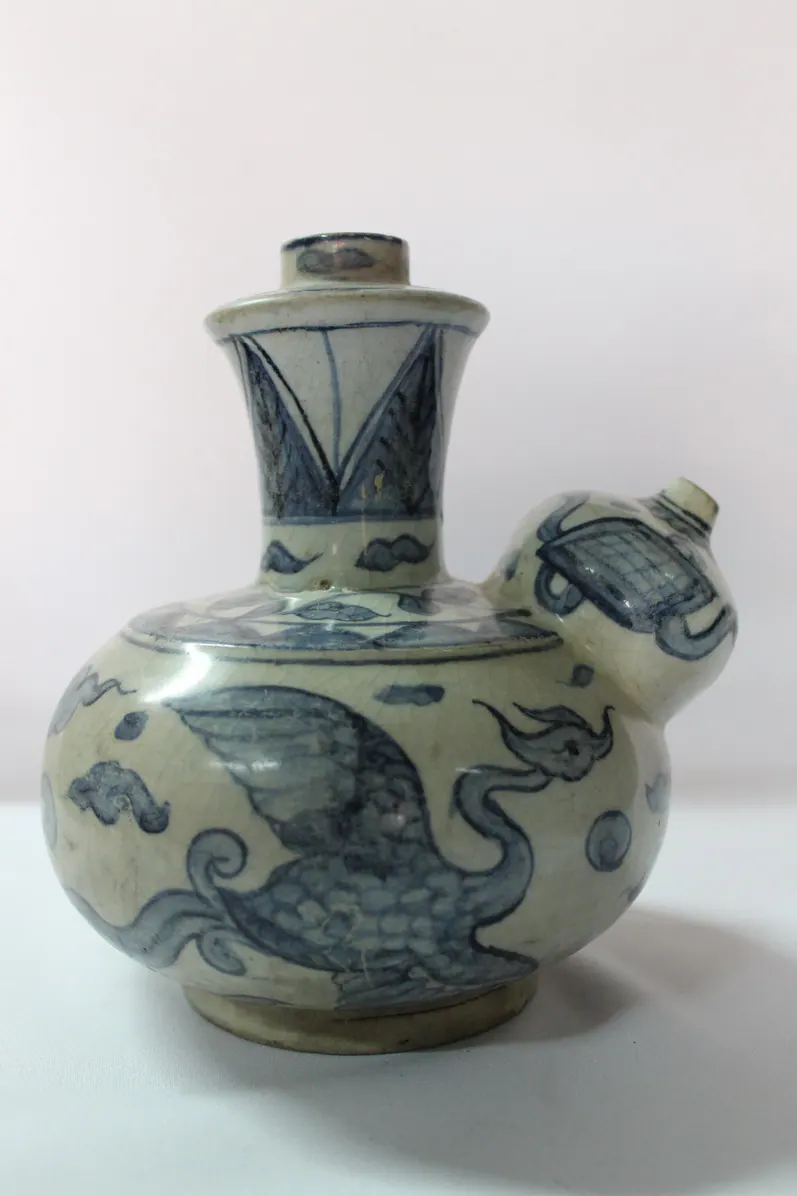
Other wares went to Asian markets. The kendi, a pouring vessel with a spout in the shoulder and no handle, was made in large numbers for Southeast Asia. An early Qing blue and white kendi in our collection was made at a private kiln rather than the official kilns, as much everyday and export porcelain was.
How collectors date Qing porcelain
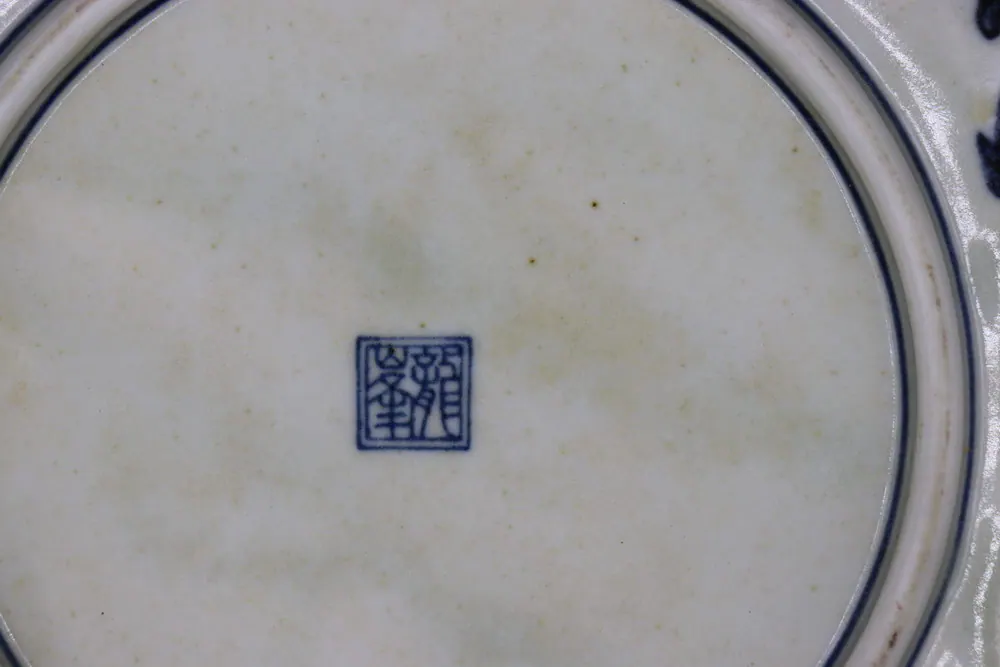
No single feature dates a Qing piece. Specialists weigh several together, and a date is only secure when they all agree. The same questions apply whether the object is an antique Qing vase, a dish or a small cup, and shape is itself evidence: the proportions of a vase, the curve of a bowl and the height of a foot all changed from reign to reign.
- The mark. Its script, layout and calligraphy should match the reign it names, but marks of admired reigns were copied for two centuries. Our guide to reading Chinese porcelain marks explains what a mark can and cannot tell you.
- The foot and base. How the foot ring was trimmed, the colour of the exposed body and the finish of the glaze underneath change from period to period. Double foot rings, for example, are typical of some Kangxi vases and dishes. See reading the base.
- The glaze. Kangxi glazes tend to be thin, glossy and tight to the body; later glazes are often thicker, with a bluer tint or a gently rippled surface.
- The colours. The tone of the blue, and in enamelled wares the range, thickness and shading of the enamels, are among the most reliable guides.
- The painting. Period hands have a fluency that copyists rarely match. Stiff, hesitant or over-careful brushwork is a warning sign.
Signs of age such as wear, glaze contractions and iron spots in the blue help, but none of them proves a date on its own. Our guide to detecting fakes covers the common traps.
Qing dynasty porcelain in our collection
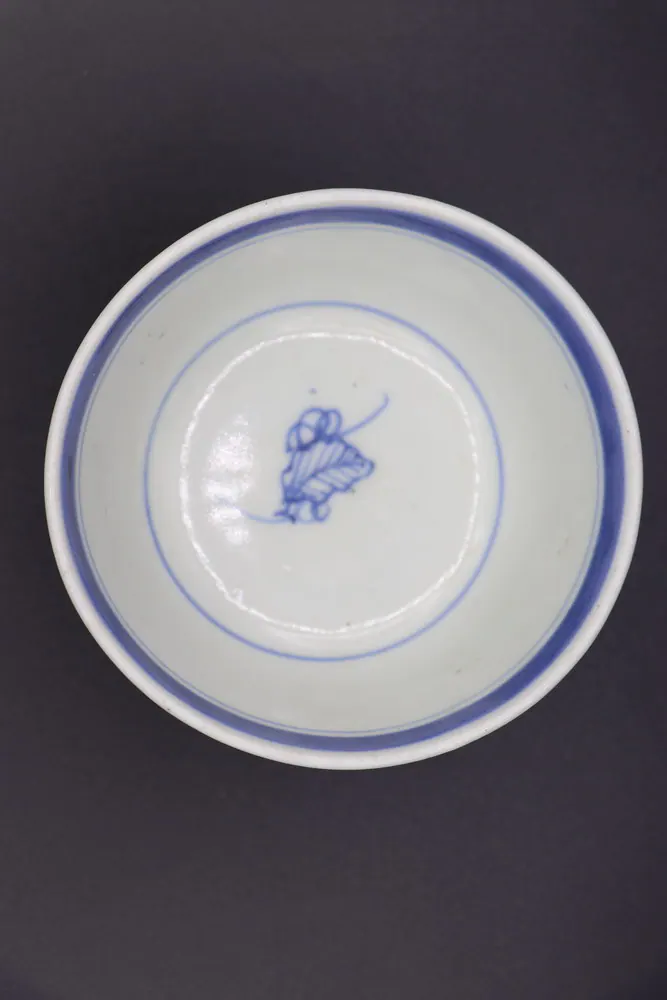
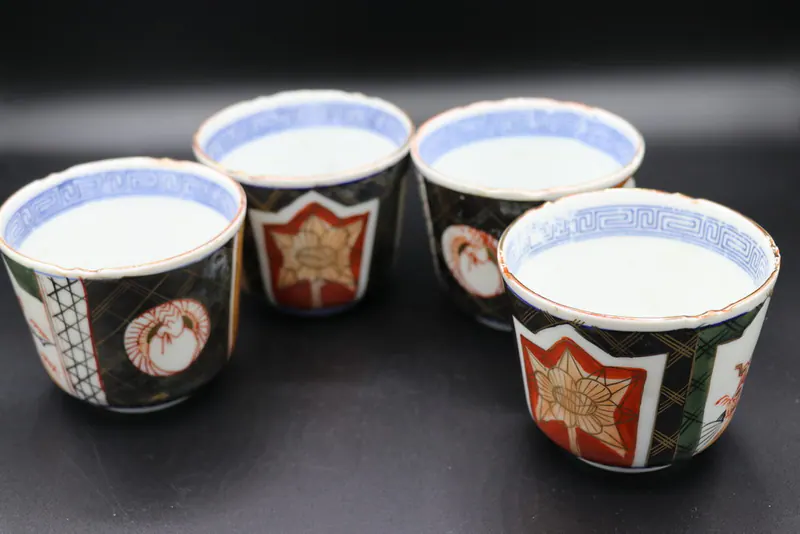
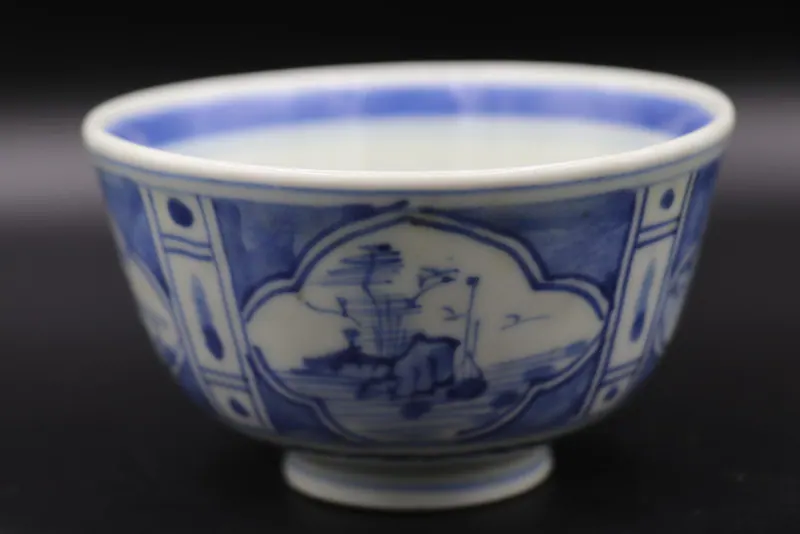
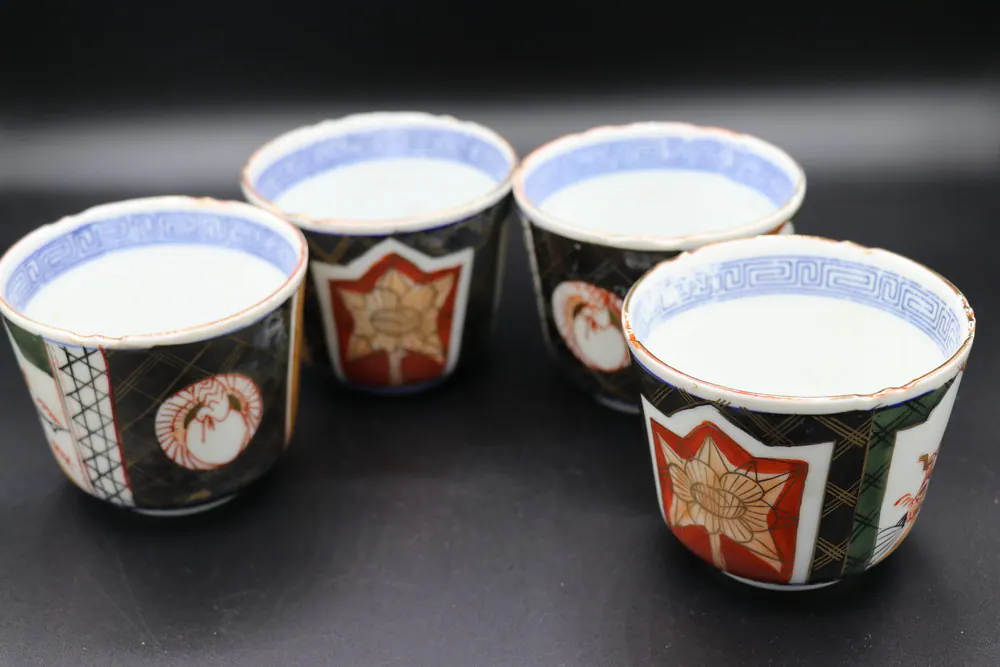
Our Qing dynasty porcelain collection concentrates on blue and white and enamelled wares. It includes a blue and white bowl described as Kangxi period, with a mountain landscape outside and a small leaf mark inside, and a set of four enamelled cups, printed and hand painted, which we date to about 1870 to 1920. Their listings note known damage, such as a crack, and we can send further photographs on request.
What makes a Qing piece valuable is the same combination of factors that applies across Chinese porcelain: the period in which it was actually made, the quality of the potting and painting, condition, rarity of type, provenance and the state of the market. A mark adds interest only when everything else agrees with it.
To buy a piece, use the Request price form on its page and we will reply by email. Every shipment is fully insured, and all sales are final.