Guide
Famille Verte and Famille Rose: Telling the Enamel Palettes Apart
Whether a piece is famille rose or famille verte is the first question to ask of almost any enamelled Qing porcelain. The two palettes were made with different materials in different decades, so telling them apart is also a first step towards a date. This guide explains the difference, the rarer black and yellow grounds, and how collectors date famille rose from the eighteenth century to the twentieth.
What to look for
- Look for pink. An opaque pink or rose enamel places a piece in the famille rose family; famille verte has none.
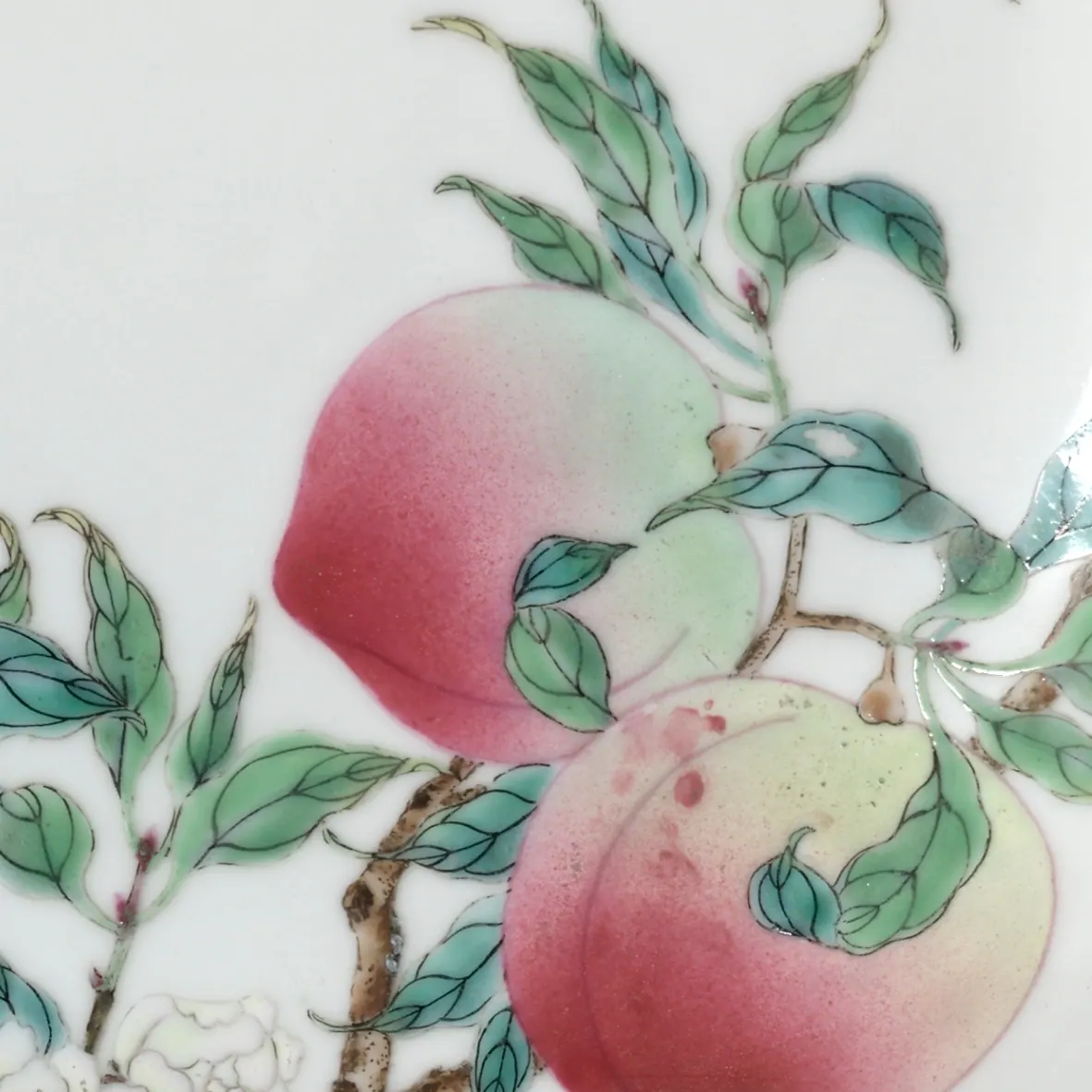
- Tilt the piece to the light. Famille verte enamels are glassy and transparent; famille rose colours are opaque and softly shaded.
- See how forms are modelled: flat washes inside black outlines suggest famille verte, gradations of tone suggest famille rose.
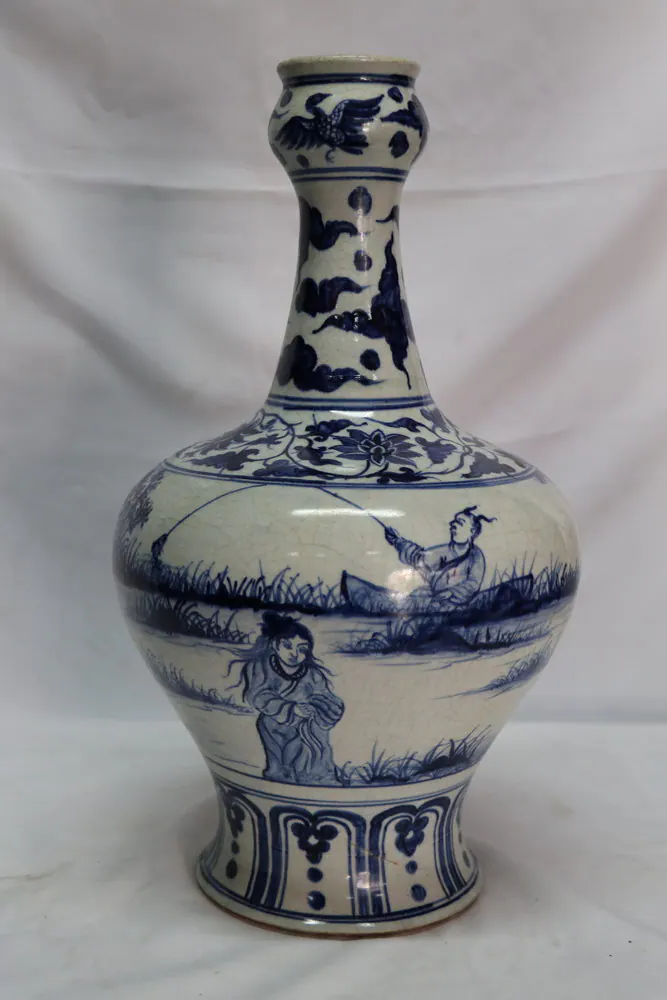
- Check where the blue lies. Blue enamel sitting on top of the glaze is typical of famille verte; blue under the glaze belongs to an earlier stage of firing.
- Match the palette to the mark. Pink on a piece presented as early Kangxi is out of place, because pink enamel came into use on porcelain only around 1720, at the very end of the reign.
Where the French names come from
Famille verte ("green family") and famille rose ("pink family") are Western terms. They were coined in the mid-nineteenth century by the French writer and collector Albert Jacquemart, who grouped enamelled Chinese porcelain by its dominant colour. Famille noire and famille jaune, for pieces with black or yellow grounds, followed the same pattern.
Chinese terms divide the material differently. Famille verte is often called kangxi wucai ("Kangxi five colours") or yingcai ("hard colours"). Famille rose is fencai ("powdered colours") or ruancai ("soft colours"), and the finest palace-decorated examples are falangcai, "foreign enamel colours". The French names have lasted in the West because they are simple, but they describe palettes, not periods or kilns.
Famille verte: transparent enamels under Kangxi
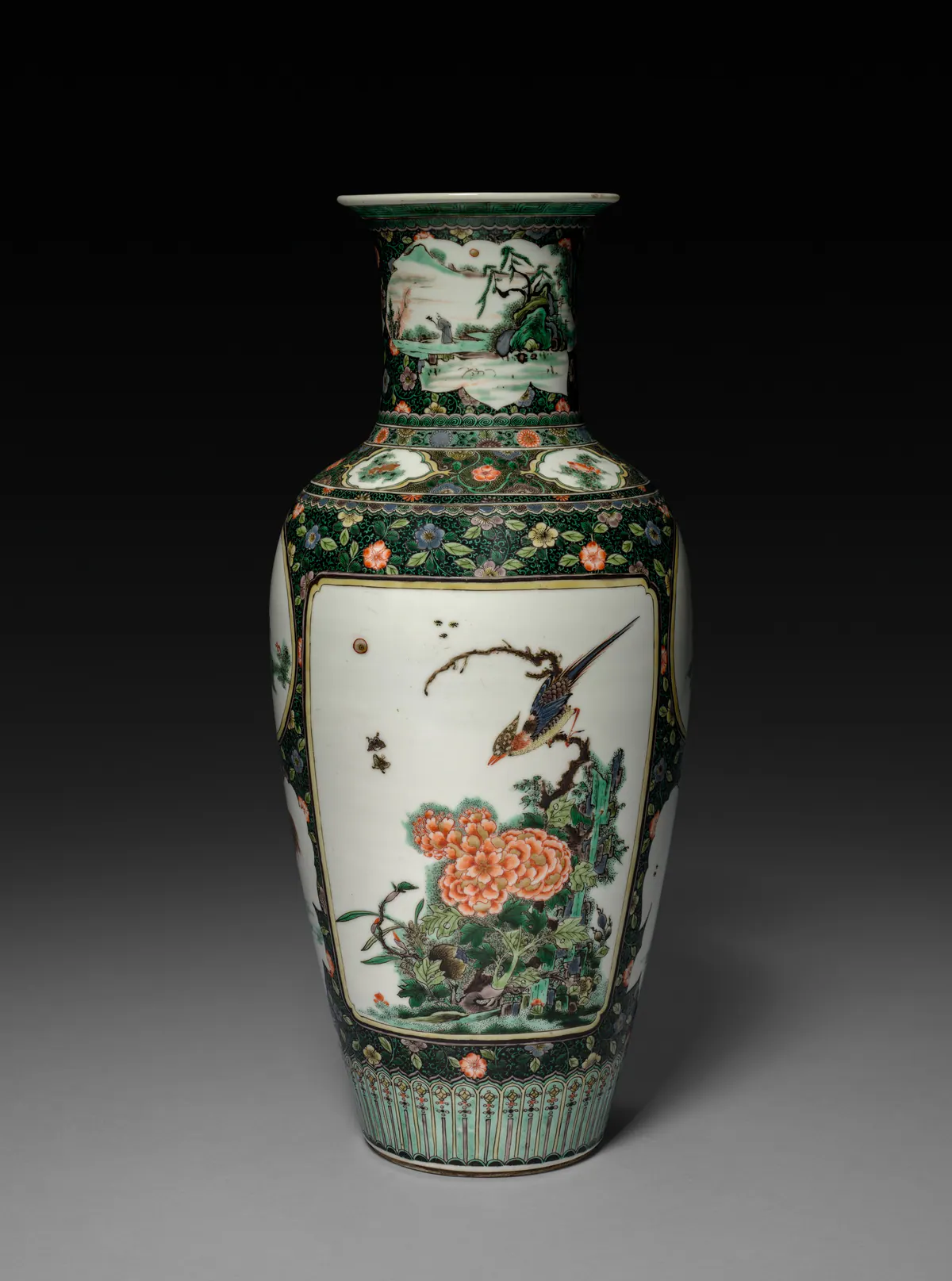
Famille verte developed at Jingdezhen during the reign of the Kangxi Emperor (1661–1722) and was at its best from about 1680 to 1720. It grew out of the Ming enamelling tradition described in our page on doucai and wucai, but with one important change: a blue enamel applied over the glaze, which freed painters from planning the blue as a separate underglaze stage.
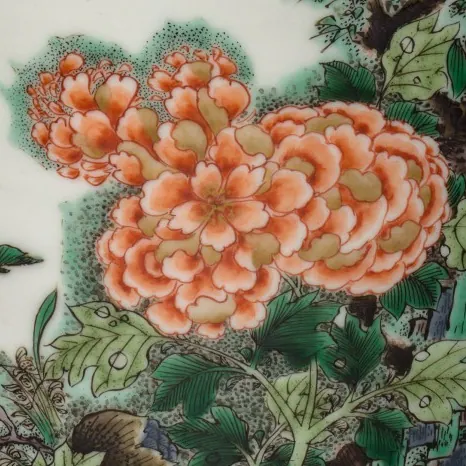
The palette consists of several greens, from pale apple to deep leaf, with yellow, aubergine purple, overglaze blue, iron red and black for outlines, often with gilding. Most of these colours are transparent. They lie on the glaze like coloured glass, and the white porcelain beneath shows through them.
Painters worked in outline and flat wash. A peony petal is drawn in black or red and filled with a single even colour, and depth comes from line rather than shading. Subjects include flowers and birds, landscapes, and figures from novels and plays, on dishes, jars, rouleau vases and small cups. Some pieces were enamelled directly on the unglazed, fired body, known as enamel on biscuit, which gives the colours a softer, more matt appearance.
Famille verte did not end with Kangxi. It was revived on a large scale in the late nineteenth century, when Kangxi-style dishes and vases, many with Kangxi marks, were made for Western collectors. These revivals usually give themselves away through harsher greens, thicker enamels, a stiffer painted line and a body and base that do not match the period of the mark.
Famille rose: opaque white and the gold-derived pink from the 1720s
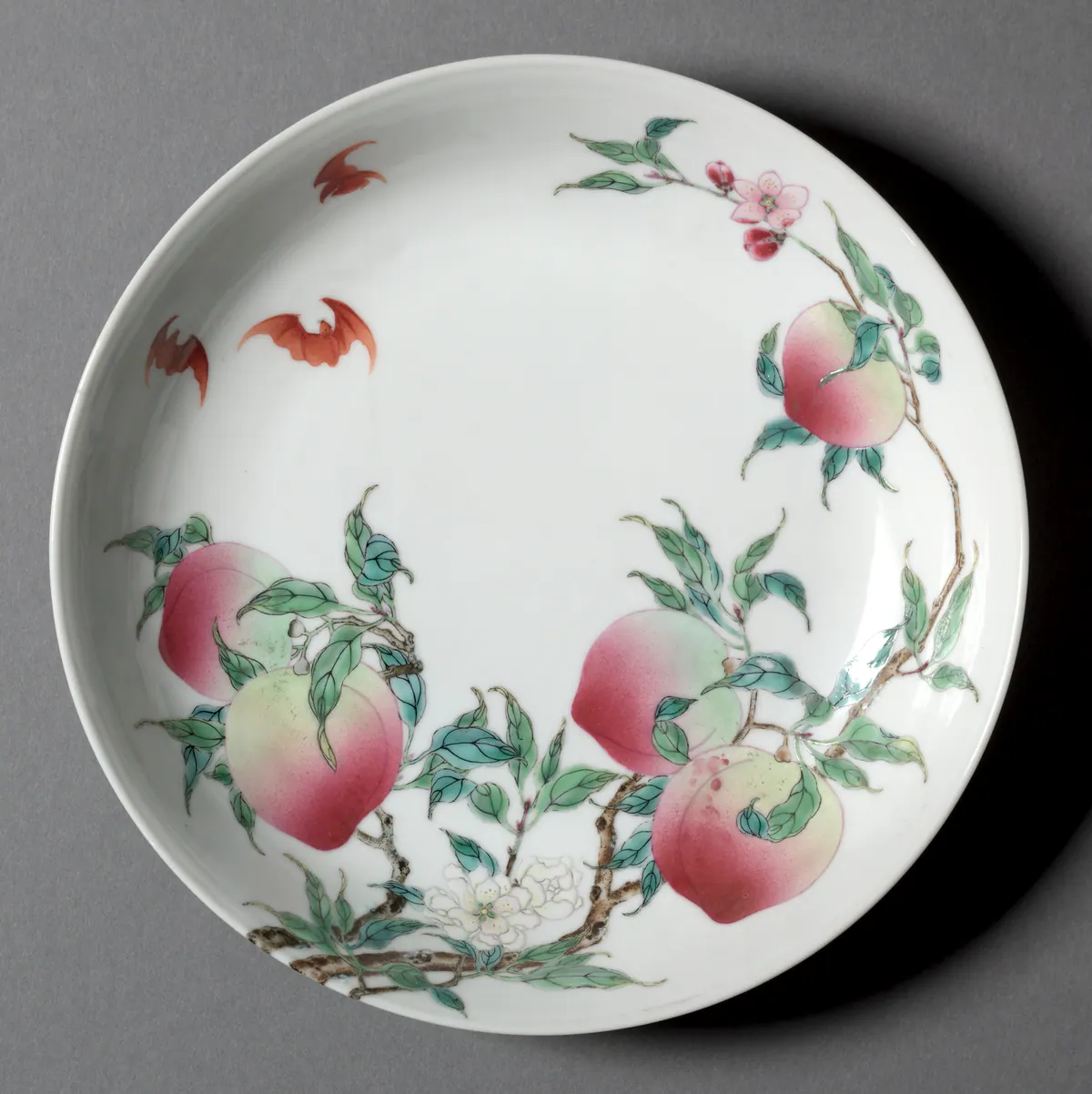
Famille rose depends on two materials unknown to famille verte. The first is a pink made from colloidal gold, known in Europe as purple of Cassius. The second is an opaque white enamel containing arsenic. Both reached the Qing court through European enamelling in the last years of the Kangxi reign, and experiments at the palace workshops in Beijing led to their use on porcelain from the 1720s.
Mixing the white into other colours allowed something transparent enamels could not do: graded shading. Painters could now model a flower from deep rose at its heart to near white at the petal's edge, and give faces and robes a sense of volume. The palette is softer and far wider than famille verte, with pinks, lilacs, pale greens and opaque yellows alongside the older colours.
The finest early famille rose was made under the Yongzheng Emperor (r. 1723–1735): sparse sprays of flowers on thin white porcelain, painted with the care of an album leaf. Our guide to Qing dynasty porcelain sets it in the context of the imperial kilns.
Famille rose vs famille verte at a glance
- Pink: absent in famille verte; the defining colour of famille rose.
- Enamels: transparent and glassy in famille verte; opaque, often slightly matt, in famille rose.
- Modelling: flat washes and strong outlines in famille verte; graded shading in famille rose.
- White: in famille verte the white is the porcelain left bare; in famille rose white is also an enamel, painted on.
- Blue: famille verte uses a blue enamel over the glaze; famille rose uses blue enamel too, but it plays a smaller part.
- Dates: famille verte from about 1680, at its height under Kangxi; famille rose from the 1720s, dominant from the mid-eighteenth century to the end of the dynasty and beyond.
Both palettes were copied and revived, so these contrasts identify the palette, not the date. A famille verte dish may be Kangxi or 1900; a famille rose vase may be Yongzheng or Republic.
Museum examples
The rarer families: famille noire and famille jaune
Famille noire is famille verte decoration set against a black ground. The black is a dull pigment covered with a wash of transparent green enamel, which gives it a deep greenish lustre. Famille jaune uses a yellow ground in the same way. Both are usually painted on the biscuit rather than over a glaze.
Large famille noire vases with Kangxi marks were among the most prized Chinese porcelain in Europe and America in the late nineteenth and early twentieth centuries. Demand of that kind encourages supply, and many specialists now regard most famille noire as made in the late Qing and Republic periods, often with Kangxi marks. Genuine early examples exist but are few.
For a buyer, the practical point is that a black or yellow ground is not in itself a sign of age. The quality of the enamels, the body and the base, and the fluency of the painting, matter far more than the colour of the ground.
Imperial, domestic and export famille rose
Famille rose was made at every level of the market. At the top stood falangcai, painted in the palace workshops on white porcelain sent from Jingdezhen, often with a poetic inscription and seals. At Jingdezhen the imperial kilns made their own enamelled wares for the court, and private kilns supplied Chinese households with vases, dishes and tea wares whose quality ranges from very fine to routine.
Much famille rose went abroad. From the eighteenth century porcelain made at Jingdezhen was often enamelled in workshops at Canton (Guangzhou) for European and American buyers. Export pieces include armorial services painted with family coats of arms, plates of the Yongzheng and early Qianlong periods with a ruby-pink enamel covering the reverse, and, in the nineteenth century, the crowded patterns known as Rose Mandarin and Rose Medallion.
Export and domestic wares differ in taste more than in materials. Export painting tends to be dense and decorative, and often follows European shapes; the best domestic and imperial pieces leave more of the porcelain white.
How to date famille rose: colour, thickness and painting
Dating famille rose depends on comparing a piece with securely dated examples, and on several features read together.
Colour. Eighteenth-century pinks tend towards a soft rose or carmine and are shaded with visible gradation. Much nineteenth-century pink is flatter, and the palette as a whole grows brighter and less subtle. Some twentieth-century enamels have a hard, almost synthetic brilliance.
Thickness and surface. Enamels on good eighteenth-century pieces are smooth and even. Thick, lumpy or bubbled enamel, or colour that looks stuck on, is common on later and lesser work, though thickness varies by workshop and should not be used alone.
Painting. Yongzheng composition is spare; Qianlong painting is fuller and more elaborate; later work often crowds the surface or repeats a pattern mechanically. Look at faces, hands and the edges of petals, where a period painter's control shows most clearly.
Wear matters too. Enamel on a piece that has been handled for two centuries is usually softened on high points, with fine scratches running in every direction. Our guide to the presence or absence of certain colours explains how particular enamels can rule a date in or out.
Nineteenth- and twentieth-century famille rose
Famille rose remained the main enamel palette until the end of the dynasty. Tongzhi and Guangxu wares, many on yellow or other coloured grounds, are brighter and more densely painted than their eighteenth-century models. In the later nineteenth century a lighter style of enamelling with pale washes and ink-like tones, often signed by its painters, became fashionable, as our guide to late Qing and Republic porcelain explains.
Republic potters copied Yongzheng and Qianlong famille rose with great skill, often on a very white, glassy body and frequently with an eighteenth-century mark. Hongxian marks, which use the reign name Yuan Shikai adopted for his short-lived monarchy of 1915 to 1916, appear on famille rose of this kind and on simpler wares as well, and most Hongxian-marked porcelain is regarded as made later in the Republic period.
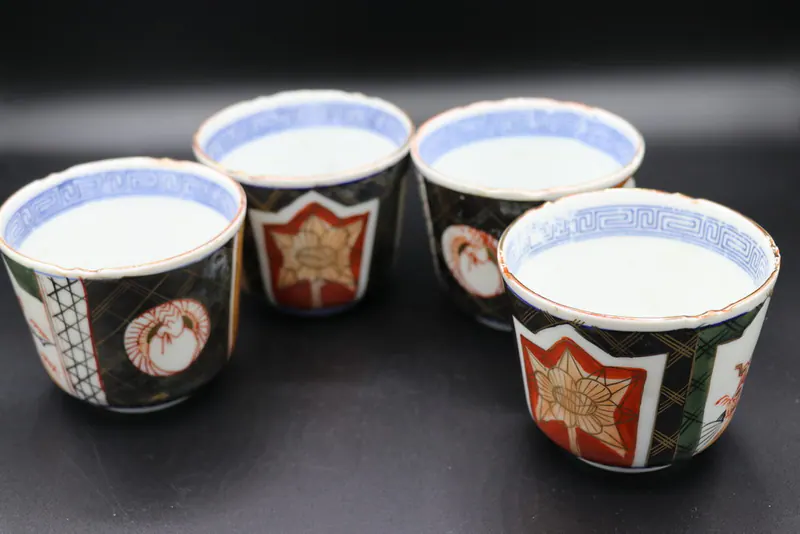
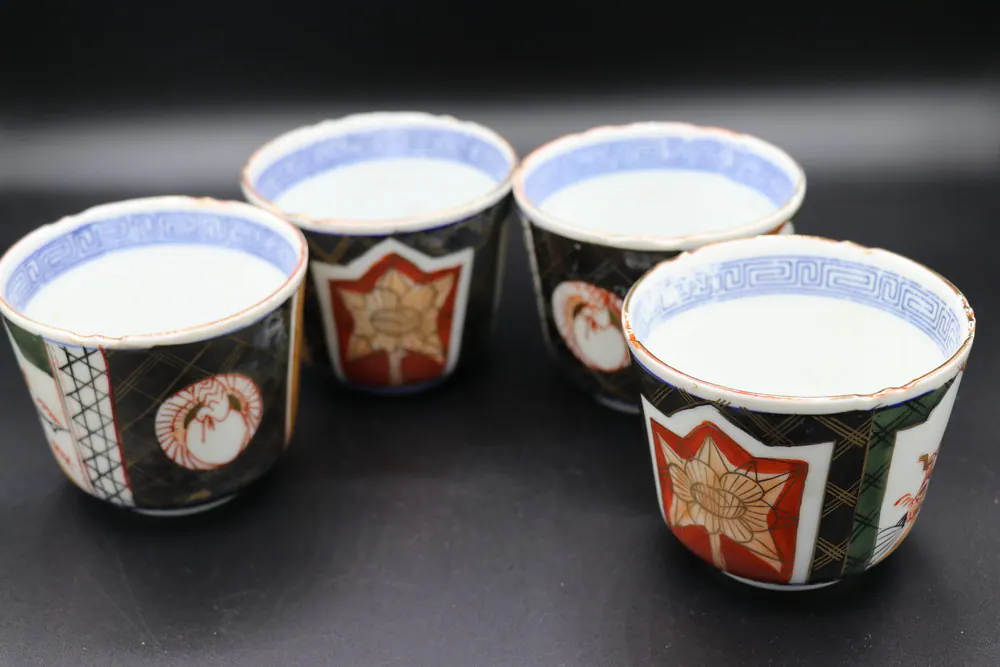
Printed and partly printed enamel decoration also appeared around the turn of the twentieth century. A set of four enamelled cups in our collection, printed and hand painted, which we date to about 1870 to 1920, shows how hand work and printing were combined.