Guide
Reading the Base: Foot Rings, Clay and Glaze on Chinese Porcelain
The foot ring of a piece of Chinese porcelain, and the base it surrounds, record how the pot was trimmed, glazed and set in the kiln. This guide explains what each part of a base shows, how bases changed from the Song to the Qing, what copies get wrong, and which photographs of a base to ask for before you buy.
What to look for
- Where the glaze stops, look at the bare body: an orange or reddish flush from the kiln fades softly into the clay, while paint or stain sits on top.
- Check the foot rim for grit, sand and support marks, and make sure they are fused into the body and glaze, not glued on or packed in with dirt.
- Read the tool marks: throwing spirals, knife facets and chatter should show a thrown, hand-trimmed pot, not a cast one.
- Compare the glaze inside the foot with the glaze elsewhere: its tone, bubbles and pooling should belong to the same firing.
- Ask whether the shape and finish of the foot suit the period and form that the decoration and any mark claim.
- Treat a base that is evenly stained, freshly ground or suspiciously dirty with caution, and never judge by the base alone.
Why the base often says more than the decoration
Decoration is what copyists study. It is photographed in every catalogue and displayed in every museum case, and a skilled painter can reproduce a Yuan peony scroll or a Kangxi landscape closely enough to pass a quick look. The base is different. It records the routine habits of a workshop: how the clay was prepared, how the foot was trimmed, how the glaze was applied and wiped, and how the piece stood in the kiln. Potters did these things quickly and without thinking, and the habits changed from period to period and from kiln to kiln.
That makes the base hard to copy convincingly in every respect at once. A forger may get the colour of the exposed clay right but trim the foot with the wrong profile, or reproduce kiln grit on a body that is far too fine for the period. The base also carries any mark, and a mark only means something when the base around it belongs to the same time. Our guide to Chinese porcelain marks explains why a mark records what was written rather than when a piece was made.
None of this makes the base a verdict on its own. Good copies now imitate the features collectors look for underneath, and genuine pieces vary more than any textbook suggests. The base is one part of the method set out in our guide to identifying antique Chinese porcelain, and it has to agree with the shape, glaze, painting and wear.
Anatomy of a Chinese porcelain foot ring and base
A few terms make any base easier to read.
- Foot ring. The ring of clay on which a bowl, dish or vase stands. It was usually cut from the thickness of the base when the pot was leather-hard, though some large pieces had a foot added separately.
- Foot rim. The bottom edge of the foot ring, the part that touches the table. It was normally wiped free of glaze so that it would not fuse to its support in the kiln, and it takes most of the wear over the centuries.
- Recessed base. The area inside the foot ring. It may be glazed or left bare, and on marked pieces it is where the mark is written, usually in underglaze blue.
- Flat base. Many large Yuan and early Ming jars and vases have no foot ring at all, only a flat or slightly concave unglazed base.
- Exposed body. Wherever the glaze stops, on the foot rim, a bare base or a skipped patch, you see the clay itself. It is the only place where you can judge the body directly.
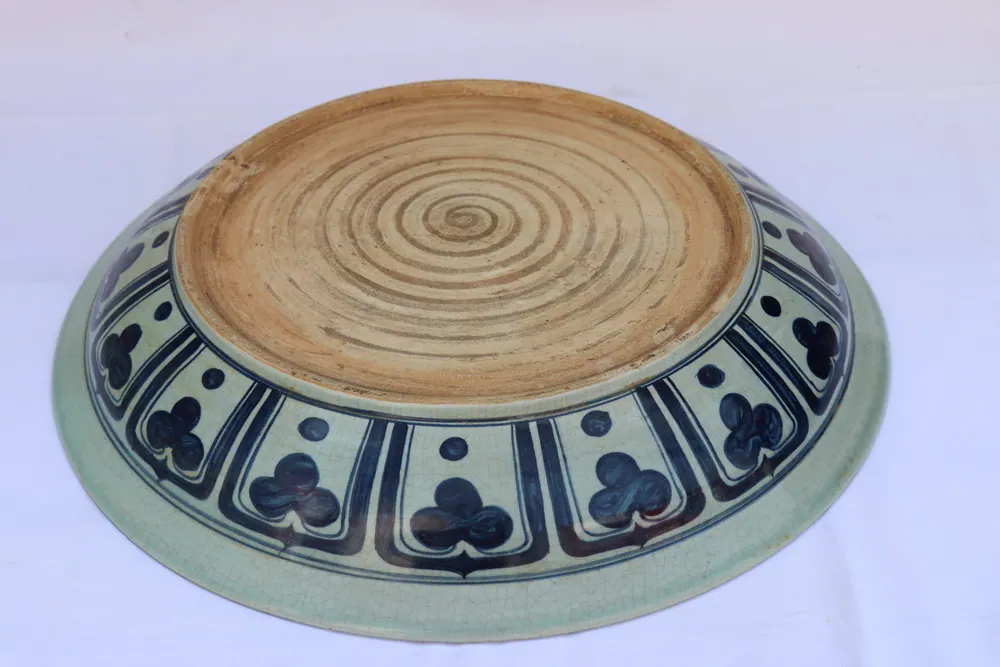
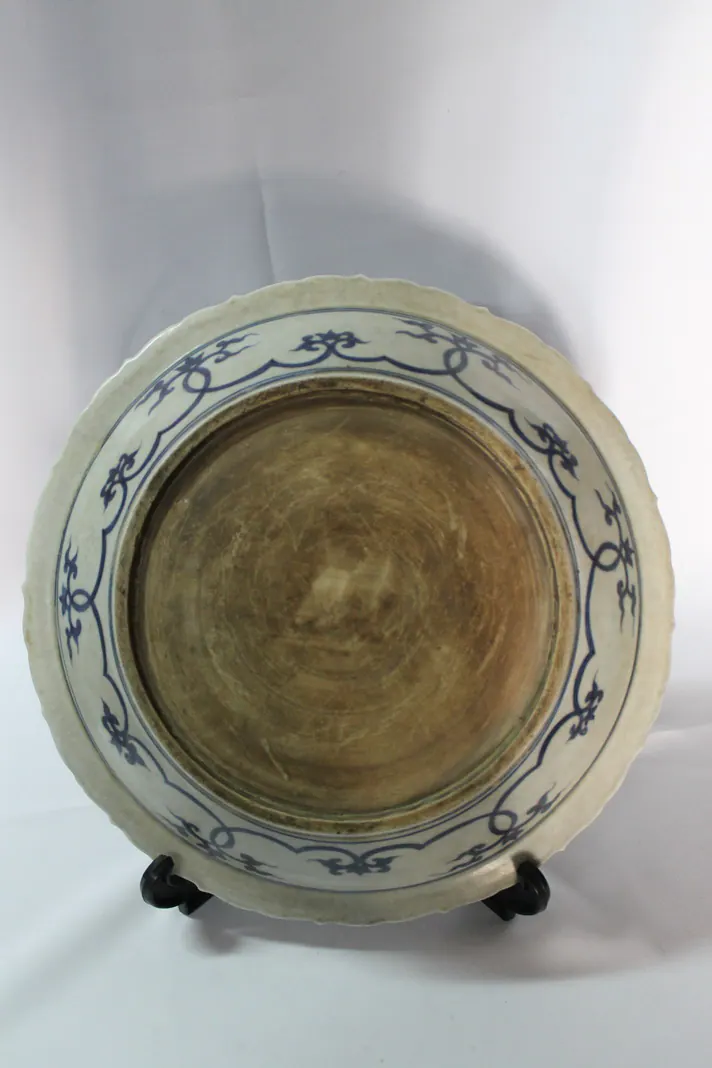
The underside of a middle Ming plate in our collection shows several of these at once: a bare base inside a narrow foot ring, with a scrolling border painted on the glazed underside of the rim.
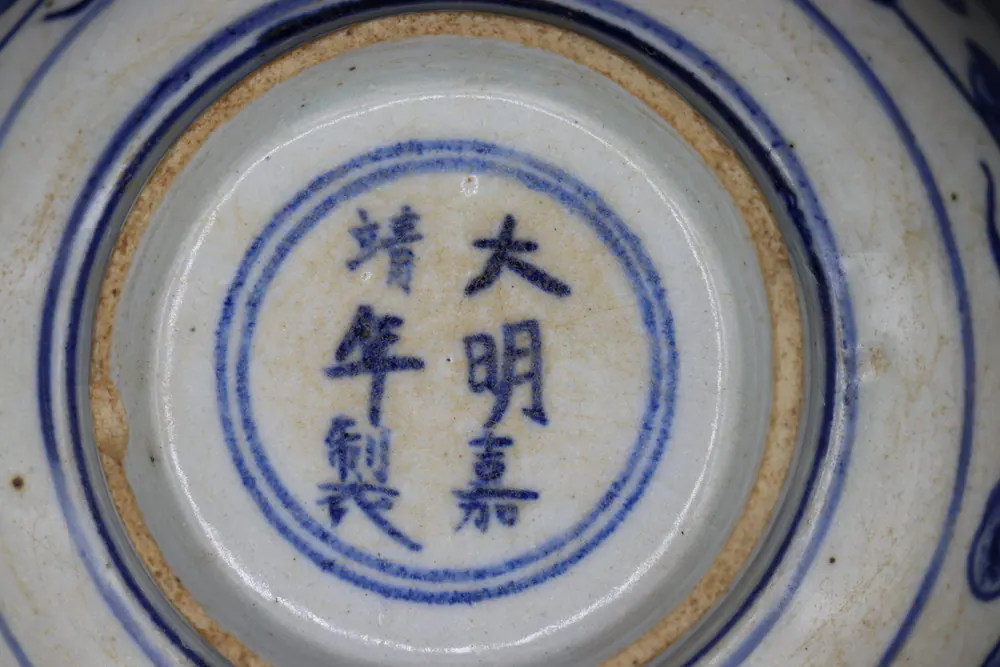
- Foot rim the bare edge the bowl stands on
- Glaze edge the glaze stops in a clean line at the inner edge of the rim
- Recessed base glazed, inside the foot ring
- Mark six characters in underglaze blue within a double ring
- Orange flush the bare body has fired orange-brown
The exposed body by period
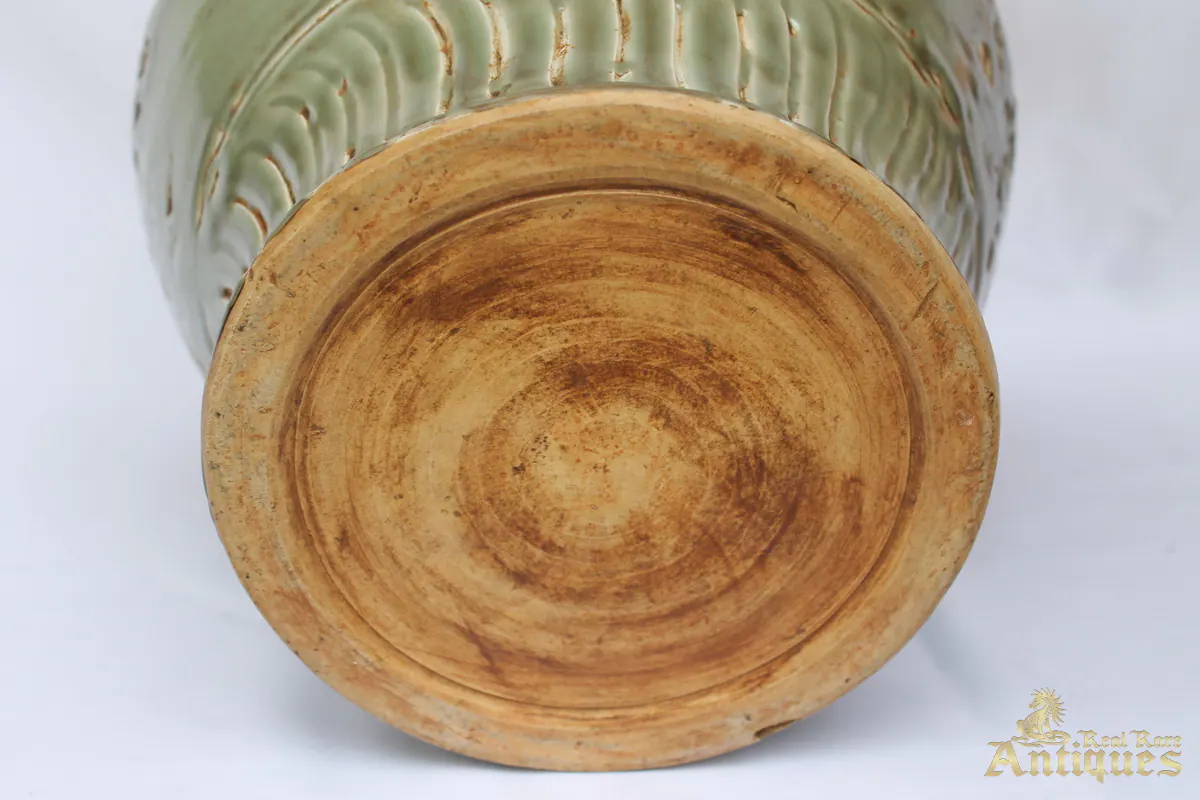
Jingdezhen porcelain and many southern celadon bodies contain a little iron. Where the body was left bare, the surface often reoxidised as the kiln cooled and turned orange, rust-red or brown. Chinese connoisseurs call this huoshihong, "fire-stone red". A genuine flush sits in the body, not on it: it is usually strongest at edges and on the foot rim, varies across the base and fades gradually into the paler clay. Small dark iron specks in the body are common too; our guide to rust spots explains how they differ from iron spots in the painting.
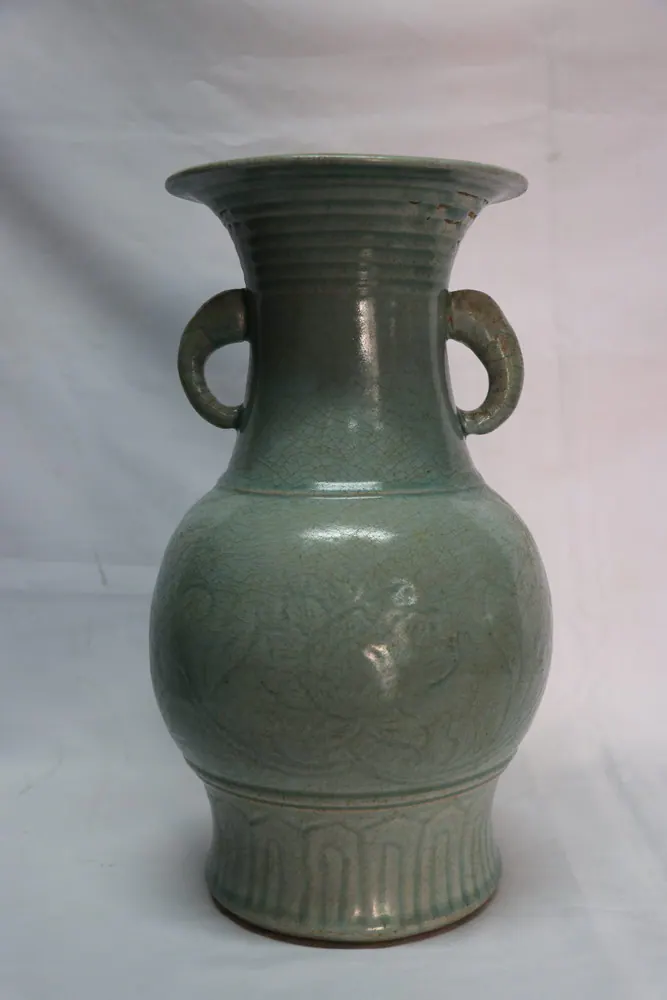
Song. Longquan celadon has a grey or buff body that usually fires to a warm orange-red wherever it is exposed, on the foot rim or on an unglazed ring where the piece stood on its support. The Southern Song Guan wares have a dark, iron-rich body that shows at the foot, which Chinese writers describe as an "iron foot". Qingbai from Jingdezhen has a white, sugary body, often with an orange flush at the foot. The Song celadon vase we sold shows the orange-brown of a bare celadon base.
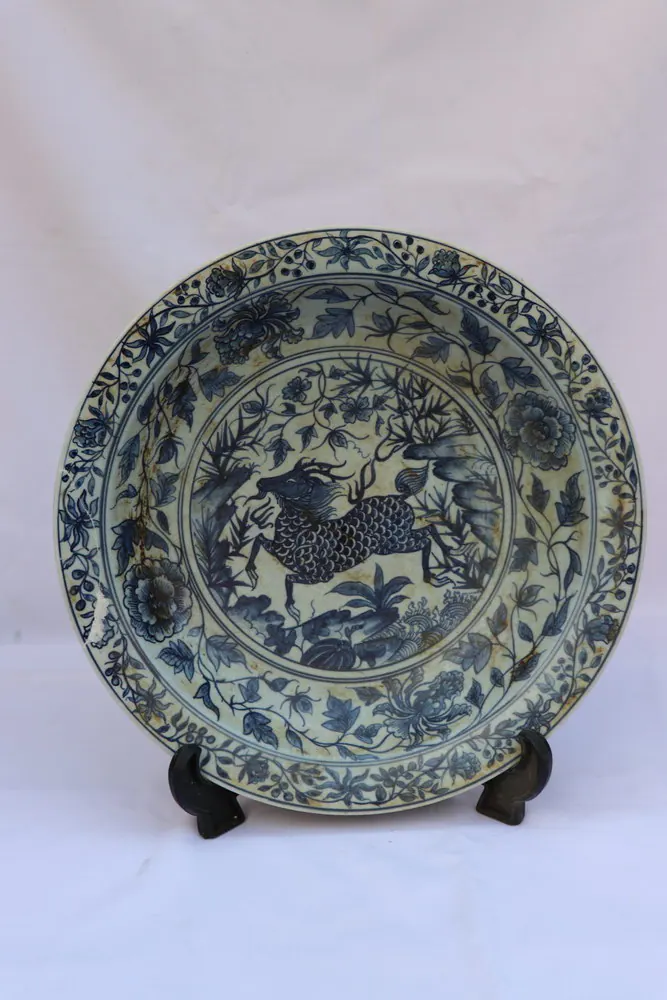
Yuan. Large Yuan pieces are heavily potted, and jars, meiping and big dishes usually have unglazed bases. The body is typically white to greyish, often with patches of orange or reddish flush, spiral or concentric marks from the wheel, and sand or grit near the edge. The listing for a blue and white charger we date to the Yuan dynasty notes its unglazed base. The Yuan blue and white guide covers these wares in full.
Ming. Many large early Ming dishes and jars continue the Yuan practice of bare bases, often with an orange flush. From the Xuande reign, smaller pieces from the imperial kilns, such as bowls and cups, were usually glazed on the base, with the reign mark under the glaze. Private kiln bases vary: some are glazed, others bare or partly glazed, and grit often adheres to the foot. Wherever the body is exposed, an orange flush remains common on Ming wares.
Qing. The best porcelain of the Kangxi, Yongzheng and Qianlong reigns has a finer-grained, whiter body, and the exposed body at the foot rim is often pale with little or no flush, though some pieces show a faint orange tinge. Late Qing bodies can be chalkier and less carefully finished.
How the foot was cut and finished
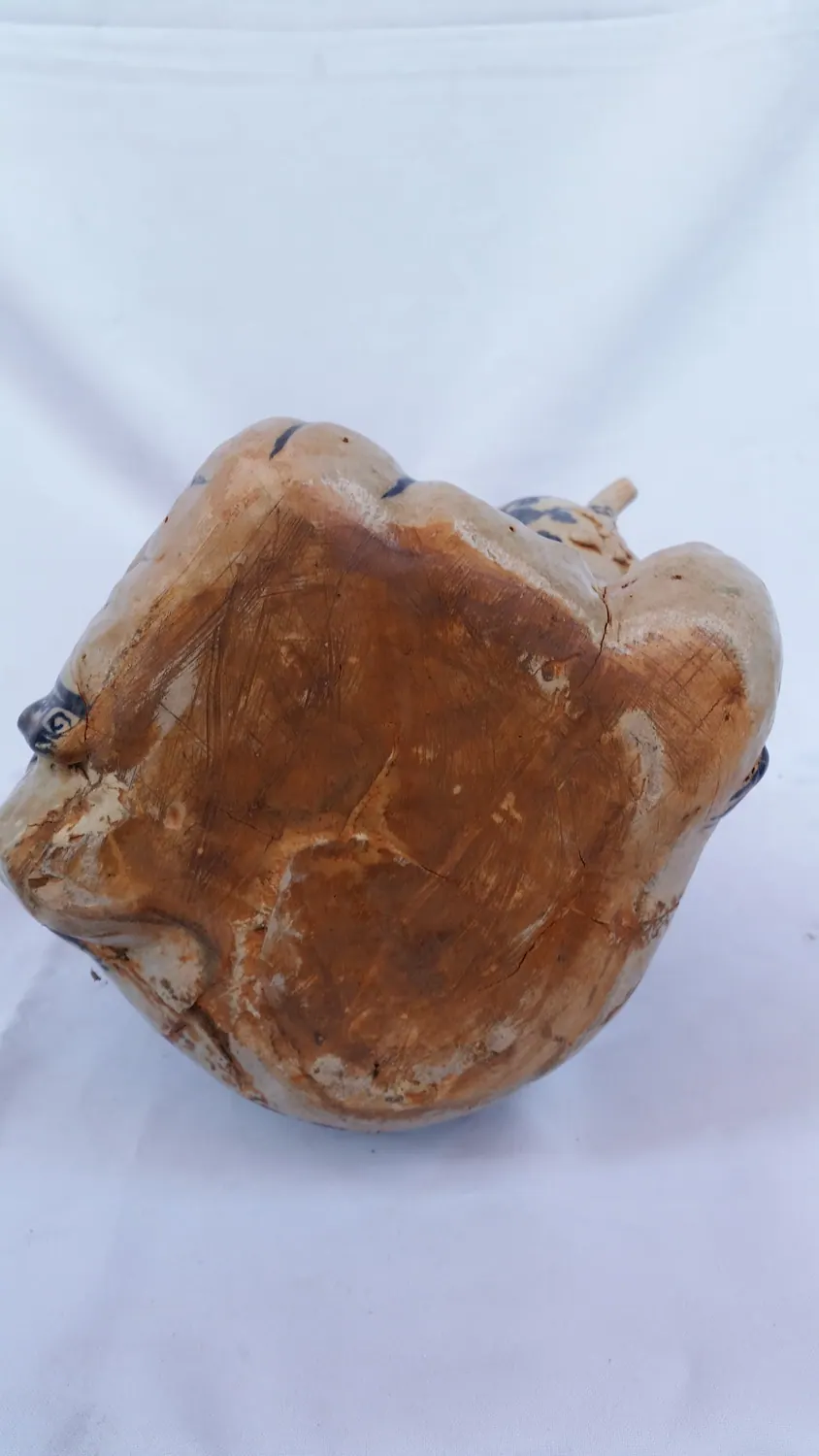
Most Chinese porcelain was thrown on the wheel. When the pot had dried to a leather-hard state it was turned upside down on the wheel and trimmed with a blade: the potter cut the foot ring, hollowed the base and shaved the lower wall. Each step left traces.
- Spiral and concentric marks. On flat, unglazed bases the wheel often leaves a spiral or rings of fine ridges, sometimes with a small raised point at the centre.
- Knife facets. A blade leaves flat facets and small steps on the foot ring and the lower body. Figures and other forms made without a wheel often have flat bases pared by hand, with criss-crossing knife marks.
- Chatter marks. When the blade bounced on a base that had dried too far, it left radiating ripples. They are common on sixteenth and seventeenth-century private kiln and export wares, including many late Ming dishes.
- Foot profiles. The shape of the foot itself changed. Yuan dishes have broad, fairly shallow feet. The best eighteenth-century Qing wares have neatly rounded foot rims, which Chinese collectors compare to the smooth back of a loach, and some Kangxi pieces have a foot with a stepped, double profile.
Moulding alone is not a warning sign. Chinese potters pressed dishes over moulds and made figures in press moulds for centuries, and those pieces still show hand finishing. What does not belong on an antique is the uniform, featureless finish of slip-casting, the industrial method of pouring liquid clay into plaster moulds.
Kiln grit, sand adhesions, spur and support marks
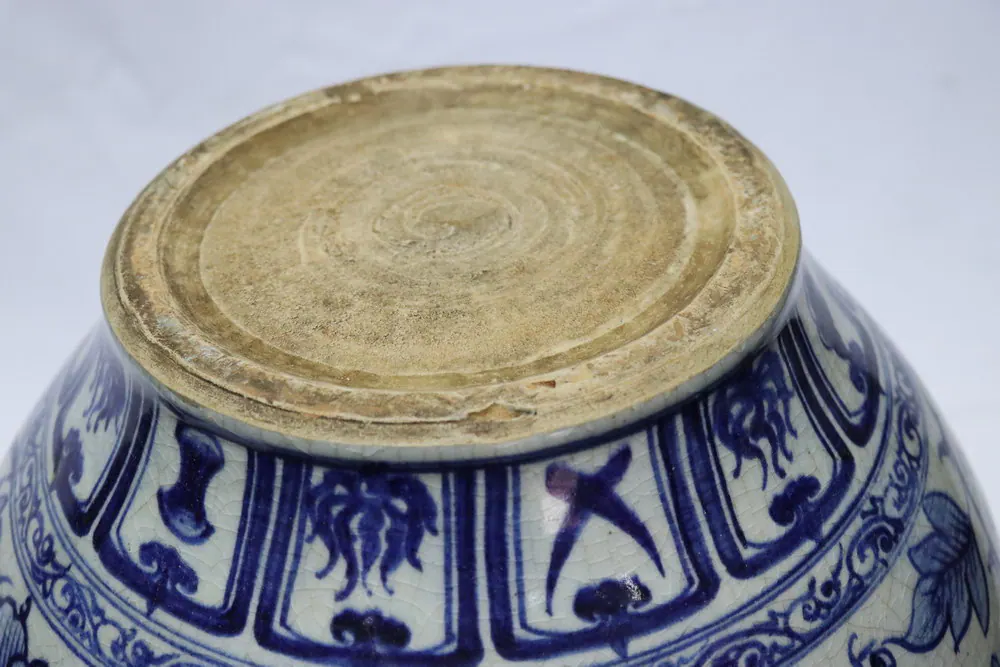
In the kiln, porcelain was fired inside saggars, protective boxes of fireclay, and each piece stood on some kind of support. The support left its mark on the base.
- Kiln grit and sand. Pieces stood on beds of sand or refractory grit, or on pads dusted with it, so that they would not stick. Particles fused to the foot rim, especially where glaze had run down. Grit is common on Yuan and Ming wares, above all on private kiln and export pieces, and very heavy sand adhesions are typical of the Zhangzhou kilns of Fujian.
- Spur marks. Some wares were fired standing on small spurs, which left tiny scars in the glaze. Ru ware of the Northern Song, fired on minute spurs, is the classic example.
- Support rings and pads. Longquan celadons were often fired on a disc or ring of clay, which left a ring of bare, orange-fired body on an otherwise glazed base. Qingbai and other Song wares show pad marks of a similar kind.
Genuine grit is part of the piece. Under a lens it is fused into the body or glaze, often with a glassy edge where glaze reached it, and it cannot be moved. Grit that sits in a film of adhesive, dirt packed round particles, or grit on a foot rim that is otherwise crisp and clean all need a closer look. Do not pick at grit on a piece that is not yours. Other kiln accidents, from firing cracks to warping, are covered in kiln firing faults.
Glaze inside the foot: tone, pooling, bubbles and skips
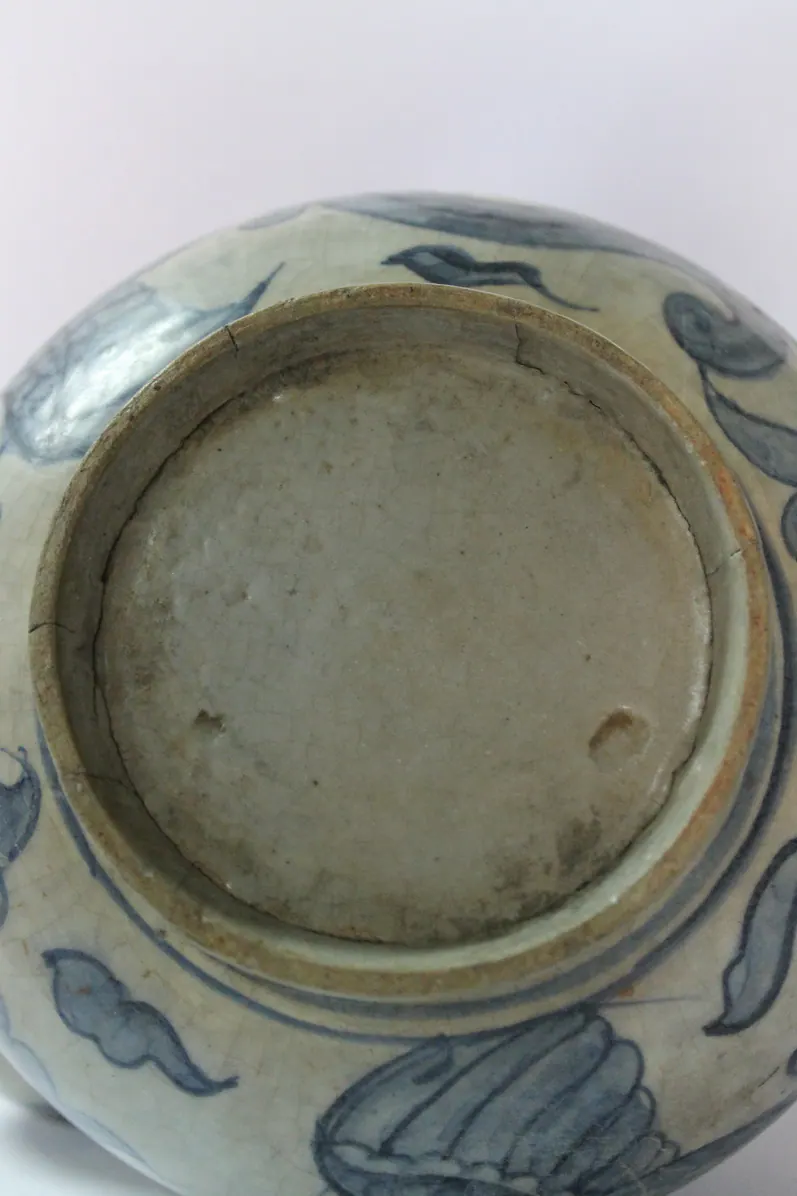
When the base is glazed, the glaze there is often thinner or thicker than on the rest of the piece, and it can be easier to study because nothing is painted over it.
Tone. Yuan and early Ming glazes are usually tinted, bluish or greenish white, and fairly thick. Later Ming glazes vary widely, from the fine, even glazes of the best imperial wares to the bluish, pinholed glazes of much export porcelain. Qing glazes on the base are generally clear and glossy, often faintly blue. A slight undulation in the surface, called orange peel, is found on some of the finest Ming and Qing imperial wares.
Pooling. Glaze runs and gathers where the base meets the inner wall of the foot, and there it looks deeper in tone. The pooling should follow gravity and the shape of the piece.
Bubbles. Under a lens, an old glaze usually shows bubbles of mixed sizes at different depths, some opened at the surface. Many modern glazes have fewer, more uniform bubbles, though bubbles alone prove little either way.
Skips and contractions. Small bare patches, where the glaze missed or pulled back, are common on private kiln wares. Crackle often runs across the glaze inside the foot, as on the base of an early Qing kendi in our collection.
The glaze inside the foot sees little wear, because it never touches the table. Wear belongs on the foot rim, and it should look like the result of use over a long time: see signs of wear. A mark written under this glaze should be consistent with the blue on the rest of the piece, and our guide to cobalt blue explains how the blue changed.
What copies get wrong
Copyists know that collectors turn pieces over, and many now work as hard on the base as on the decoration. The same faults still recur.
- Cast and machine-cut feet. A slip-cast foot is perfectly even all round and shows no throwing marks. A foot turned on a modern lathe or jigger has crisp, geometric edges and a regularity that hand trimming never achieved.
- Painted-on firing colour. An iron-oxide wash or stain brushed on to imitate the orange flush sits on the surface, often with brush marks, a uniform tone and a hard edge. It may run on to areas that were glazed, where a real flush cannot form.
- Stained and dirtied bases. Tea, dyes, chemical stains and earth mixed with glue are used to suggest age. The staining tends to be even, to sit in every scratch including fresh ones, and to stop where the brush stopped.
- Ground bases and foot rims. Genuine foot rims were often ground after firing to remove grit, so grinding alone proves nothing. Bright, sharp abrasion running in one direction on a supposedly worn surface is another matter, and grinding is also used to remove a modern mark or the crisp edge of a new foot.
- Grafted bases. A genuine old base, sometimes with a mark, can be set into a new body. Check that the body, glaze and any crackle run continuously from the base up into the wall.
Restoration is common on foot rims, which chip easily; filled and painted chips are covered in condition and restoration. For wider warning signs, see detecting fakes.
Examining a base yourself, and which photographs to ask for
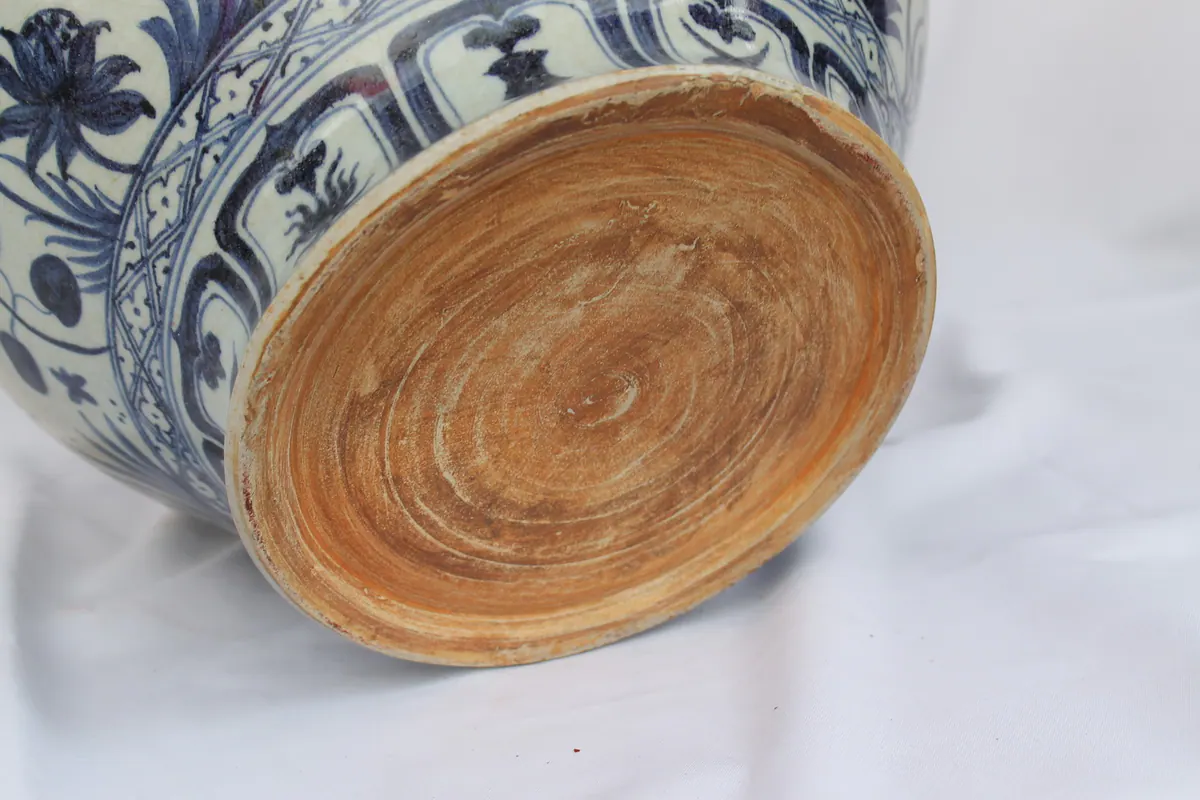
Turn a piece over above a padded surface, holding it by the body with both hands, never by a rim, handle or spout. Work in daylight or under a daylight lamp with a 10x lens, and look in this order: the glaze edge, the exposed body and any flush, grit and support marks, tool marks, the glaze inside the foot, and the mark. Run a fingertip round the foot rim. Long wear leaves it smooth; grit feels sharp; fresh grinding feels flat and even. Then look inside a jar or vase for throwing ridges and joins, which copyists often neglect.
When you buy at a distance, ask the seller for:
- the base photographed square-on, uncropped, in good even light;
- the foot ring in profile, so its height and shape are clear;
- close-ups of the glaze edge at the foot and of any grit or flush;
- a close-up of the mark, if there is one;
- a view in raking light, which shows tool marks and wear;
- the inside of the mouth or neck of a closed form.
A seller who is confident of a piece will provide these without difficulty, and you can ask for any of them when you inquire about a piece in our collection.