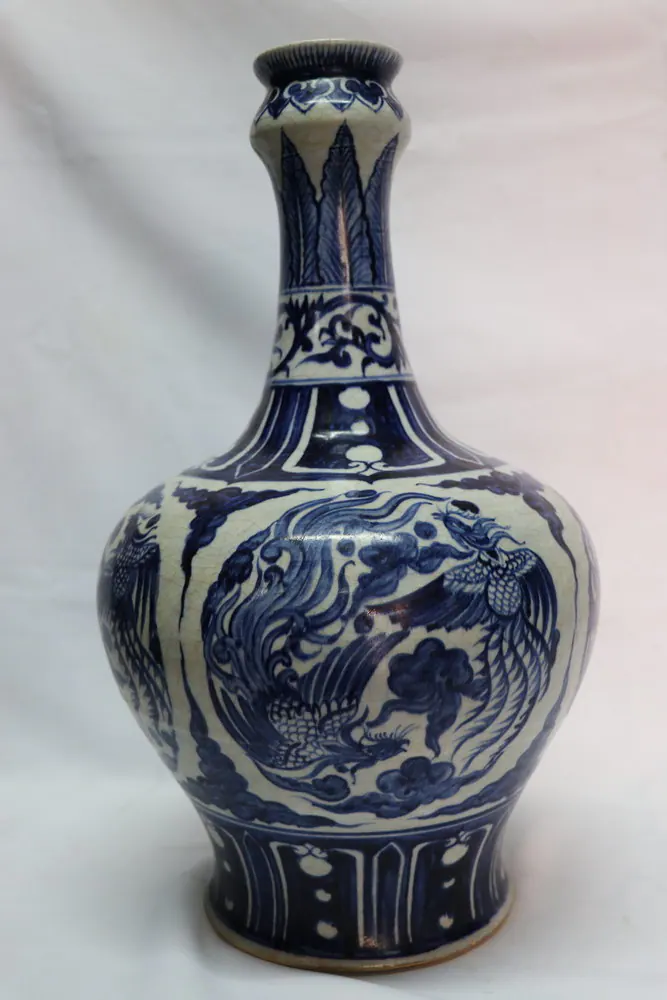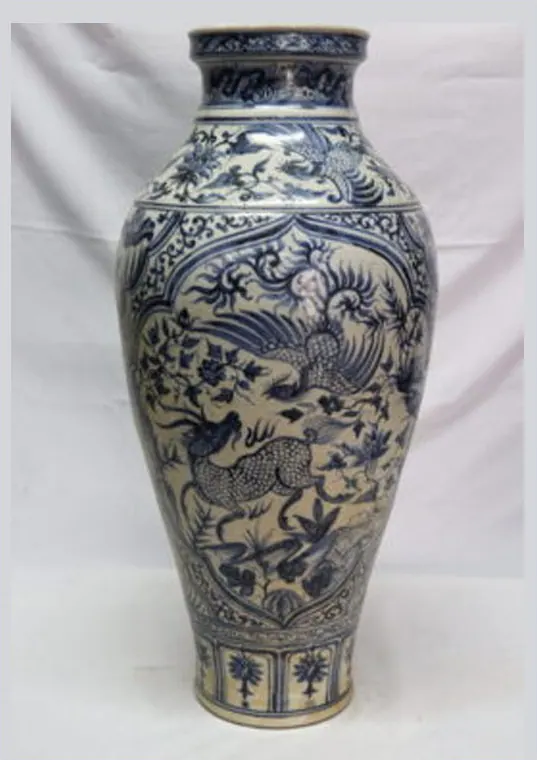
Guide
Buying Antique Chinese Porcelain: A Collector's Guide
Buying antique Chinese porcelain well depends on three things: knowing where genuine pieces come from, reading a seller's listing with a critical eye, and asking the right questions before any money changes hands. This guide sets out how we would approach a purchase from any dealer, ourselves included, and what a careful buyer should expect to see, ask and receive in writing.
What to look for
- Ask where the piece came from and what is known of its history.
- See clear photographs of the base, the foot rim, the interior and any mark.
- Ask the seller to point out any chip, crack or repair, and check each one in the photographs.
- Ask the seller to explain the date they give, not simply to state it.
- Check the measurements against published examples of the same type.
- Agree payment, insurance, shipping and the returns position in writing before you pay.
Where genuine pieces come from
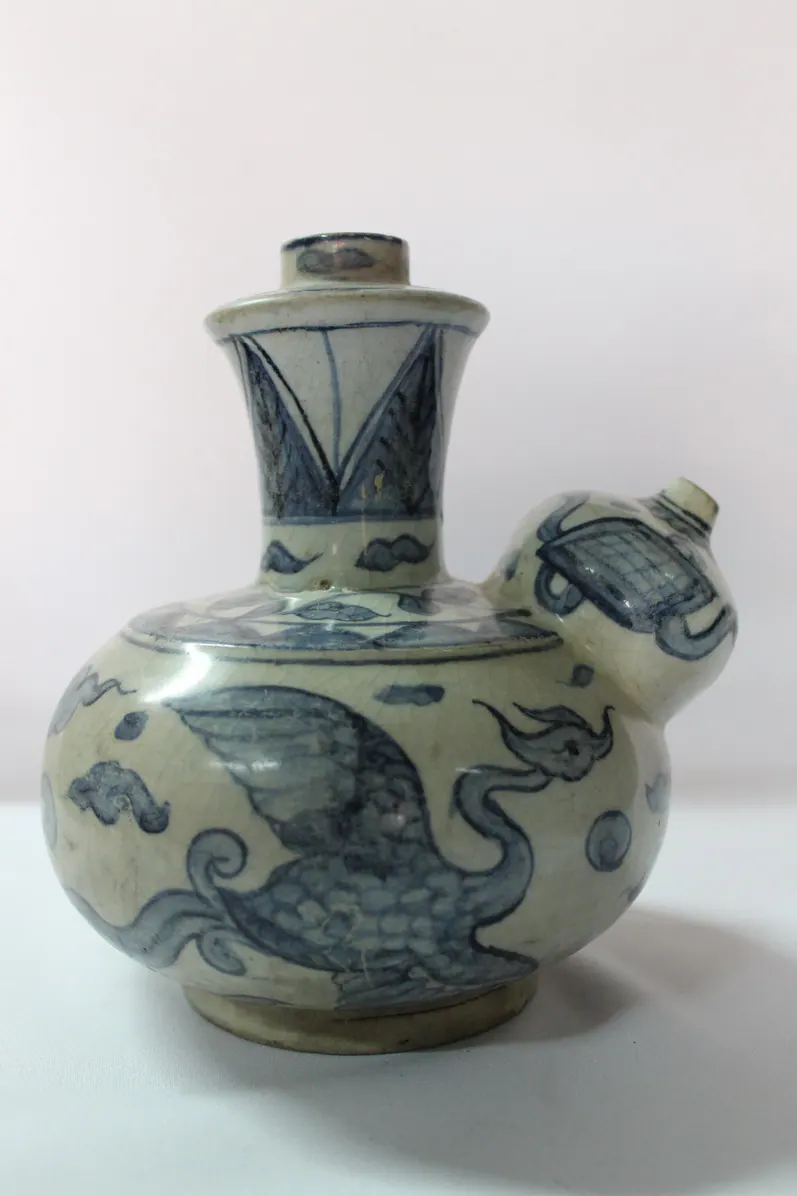
Chinese porcelain was traded far beyond China for centuries. Song and Yuan wares already travelled in quantity to Southeast Asia, Japan and the Middle East, Ming porcelain reached Europe from the sixteenth century, and some types were made mainly for those markets. The kendi, a spouted drinking and pouring vessel, is a good example: it was produced largely for buyers in Southeast Asia, and an early Qing blue and white kendi in our collection belongs to that tradition.
Most of the antique porcelain on the market today has been outside China for a long time. It was bought, inherited and resold within collections formed in Europe, the Americas and Asia over the past two centuries, and a good piece often passes through several owners before it reaches a dealer. Cargoes recovered from shipwrecks are another source, and are usually sold with a record of where they were found.
This matters for a buyer because China does not generally allow antiques of this age to be exported. A seller with a steady supply of "Ming" porcelain arriving fresh from the mainland should be treated with caution. At the same time, workshops in Jingdezhen and elsewhere make skilled reproductions quite openly. Many are sold honestly as copies at the source and only acquire an old date further down the chain. Our guide to identifying fakes explains what those copies tend to get wrong.
Any history that comes with a piece is worth having: an old collection label, a dealer's receipt, a mention in an exhibition or sale catalogue, or a family photograph with the piece in it. Treat such evidence with the same care as the piece itself, because labels can be copied and stories improve with retelling. A modest, documented history is worth more than an impressive one that cannot be checked.
Where to buy: dealers, auction houses and online marketplaces
There are three main places to buy, and each asks something different of the buyer.
A specialist antique Chinese porcelain dealer chooses what to offer, researches each piece and stands behind the description. A good dealer will explain the reasoning behind a date, send further photographs, and answer questions in writing. You pay for that knowledge in the price, and in return you deal with someone whose reputation depends on getting descriptions right.
Auction houses offer a large and public market. The major houses publish catalogues, provide condition reports on request and hold viewings before each sale. Two points catch out new buyers. First, a buyer's premium and taxes are added to the hammer price, so the final cost is well above the winning bid. Second, catalogue wording follows set conventions: a lot described only as having a reign mark, without the words "and of the period", is generally not being presented as made in that reign. Read the conditions of sale before bidding.
Online marketplaces carry the widest choice and the least assurance. A search for Chinese antiques for sale returns thousands of listings, many of them from sellers who give no name, no address and no history for the piece. Photographs are sometimes copied from other listings, and words such as "Ming" or "imperial" are used loosely. If you buy Chinese antiques online, apply the same standard you would to a dealer: a named seller, full photographs, a written description and a clear returns position.
General antique shops and fairs sit somewhere in between. Sellers there may handle Chinese porcelain only occasionally, so pieces can be misdescribed in either direction: a modern copy called Ming, or a good old piece catalogued as a later decorative vase. The questions below apply just as much there.
What a serious listing shows
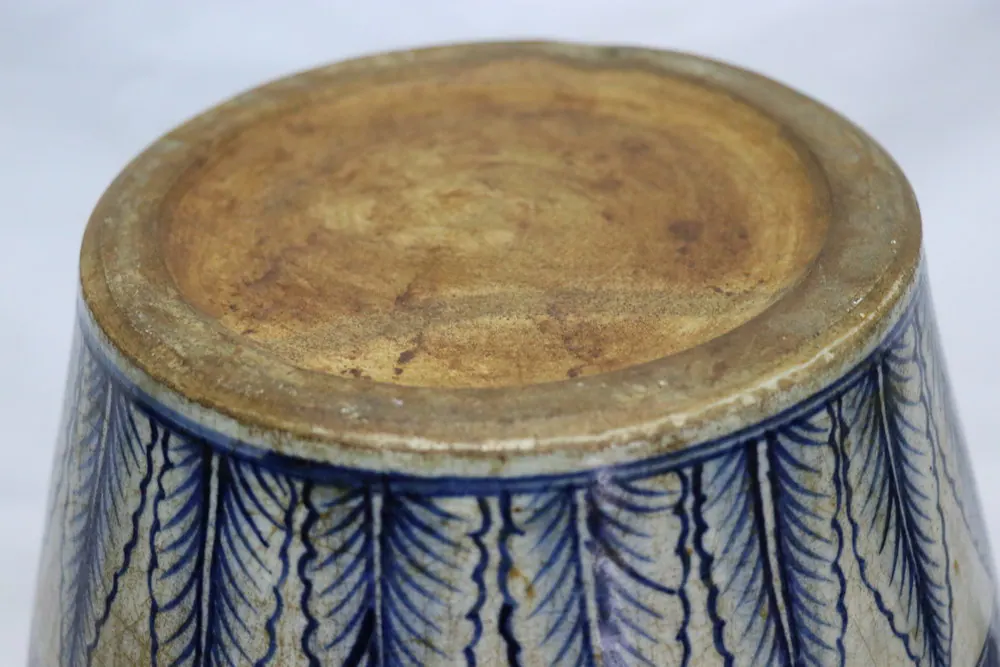
A good listing lets you examine the piece almost as well as you could in the hand. At the least it should include:
- photographs from every side, including the interior of open forms such as bowls and jars;
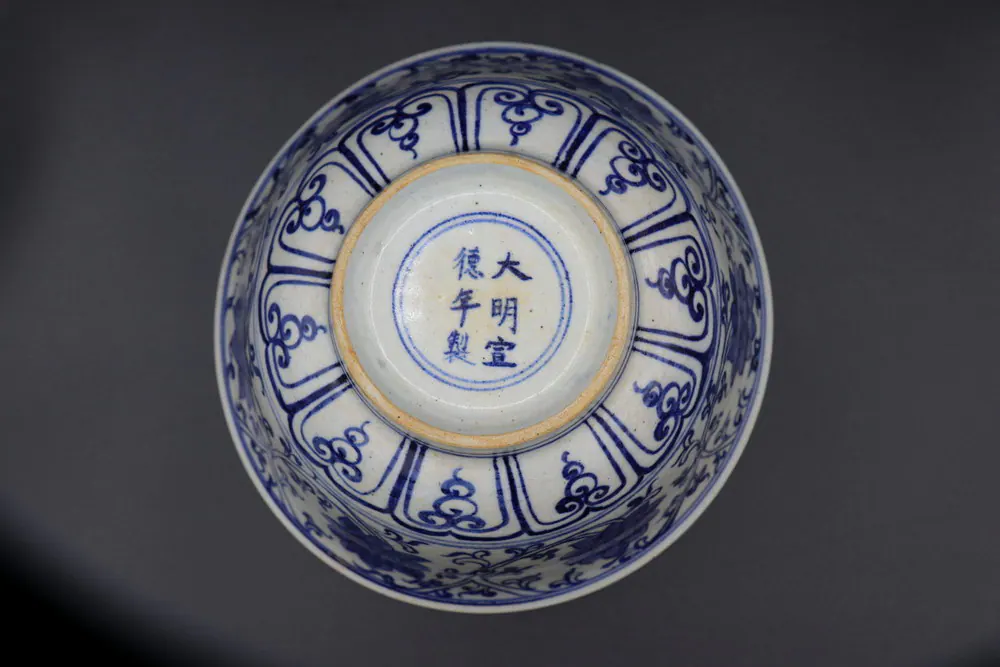
- a clear photograph of the base, showing the foot rim, the exposed clay and the glaze;
- a close photograph of any mark;
- close photographs of any damage, repair or firing flaw;
- measurements, at the least height and diameter;
- a description that matches the photographs and says plainly what the piece is.
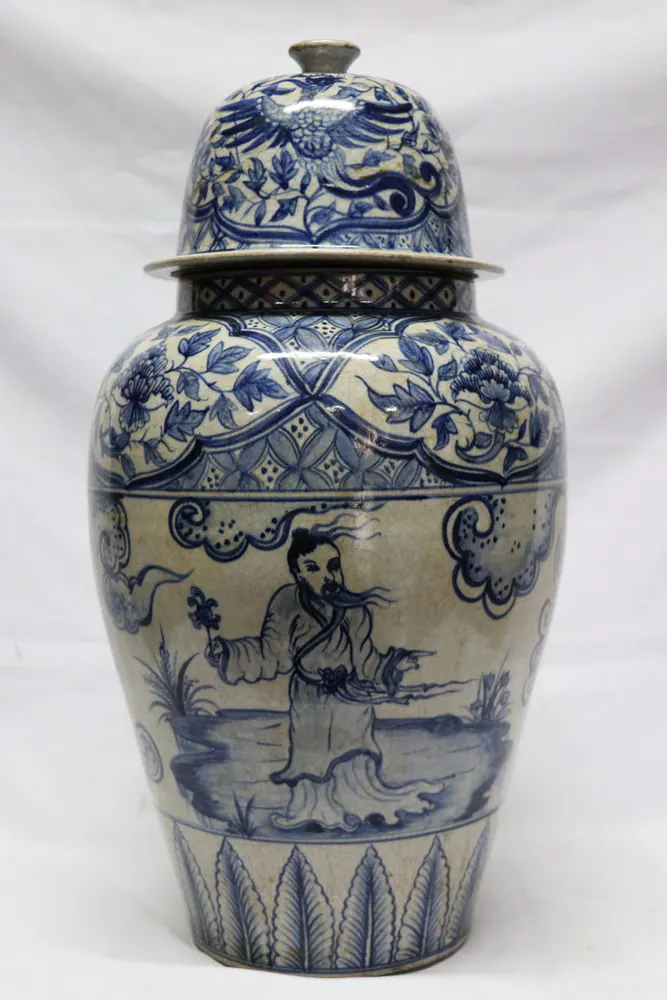
The base deserves particular attention. The colour and texture of the unglazed clay, the way the foot was trimmed and the glaze where it meets the foot all change from period to period, and they are harder to imitate than the decoration. Our guide to reading the base explains what to look for. A listing such as ours for an early Ming blue and white covered jar includes the base for this reason.
Look, too, at how the listing handles a mark. A mark records what was written on the piece, not when it was made, and many later pieces carry earlier reign marks. A careful description says "with a Xuande mark" and then gives its own view of the date, with reasons. Our guide to Chinese porcelain marks covers this in more detail.
Finally, the parts of the description should agree with each other. The shape, the style of painting, the colour of the blue, the glaze and the base should all point to the same period. A listing that explains how they fit together gives you something to test; one that only gives a date gives you nothing to check.
Questions to ask before buying antique Chinese porcelain
Whoever the seller is, these ten questions will tell you a great deal, both from the answers and from the way they are given.
- Where did the piece come from, and what is known of its history?
- On what grounds do you give this date, and what comparable pieces support it?
- Has the piece been restored, filled, overpainted or reglazed anywhere?
- Are there any cracks, hairlines, chips or frits, and exactly where are they?
- What are the exact measurements?
- Can you send photographs of the base, the interior and any damage, in daylight and without filters?
- If there is a cover, stand or companion piece, did it start life with this one?
- What paperwork comes with the sale: an invoice with a full description, and any older receipts, labels or photographs?
- How will the piece be packed, insured and shipped, and who carries the risk until it arrives?
- What happens if the piece is not as described?
A seller who knows the piece will answer these readily and in writing. Vague replies, pressure to decide quickly, or reluctance to put a description in writing are reasons to step back.
Condition, extra photographs and second opinions
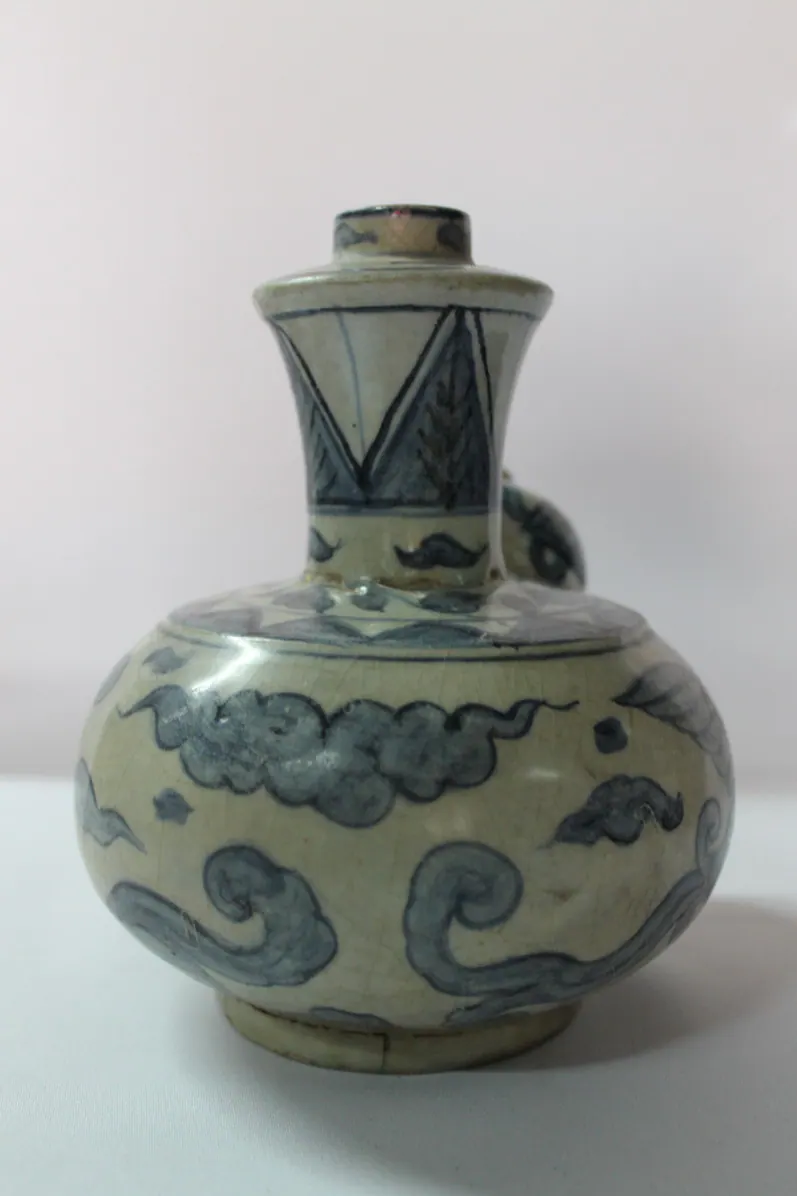
Condition affects both the enjoyment of a piece and its value, so study the photographs closely before you commit and ask for more of any area you cannot see. Learn to distinguish between damage that happened after firing (chips, cracks, wear) and features that come from the kiln itself, such as glaze contractions, iron spots and small firing cracks.
Restoration is the point to press hardest. Skilled repairs to rims, spouts and handles can be close to invisible in a photograph. Many restoration materials show differently under ultraviolet light, which is why some buyers ask for a photograph under a UV lamp, although no single test finds every repair. Our guide to condition and restoration describes the common repairs and how to spot them, and our guide to age signs explains which marks of age are expected on a genuine piece.
For a significant purchase, a second opinion from an independent specialist is worth arranging. Share the listing and photographs with them and ask for their view before you decide. When you do handle the piece, hold rims and thin areas up to a strong light, which shows hairline cracks that a photograph can miss, and run a fingertip gently along the rim to feel for chips and fills. A confident seller will not object; one who does has told you something.
Price, value and negotiation
The price of a piece of antique porcelain reflects its period, its type, the quality of its potting and painting, its condition, its history and the state of the market. Our guide to what makes Chinese porcelain valuable explains each of these.
Public auction records are a useful check, but they need care. Compare like with like: the same type, a similar size and similar condition. Remember that published results may or may not include the buyer's premium, and that a single result reflects the bidders present on one day. A dealer's price also covers research, a written description and the dealer's standing behind it.
Be wary of a price that seems far too low for what is claimed. A genuinely rare piece offered cheaply is far more often a misdescribed later piece than a lucky find. It is entirely normal to ask about price and to discuss it politely; a seller who explains how a price was arrived at is usually one worth dealing with.
Keep in mind, too, that asking prices seen online are not sales. A piece can sit on a marketplace for years at a figure nobody pays, so an asking price elsewhere tells you what someone hopes for, not what the market has confirmed.
Payment, insured shipping, customs and paperwork
Pay by a method that leaves a clear record, and only once the description and price have been confirmed in writing. Keep every email, photograph and invoice. They are your record of what you bought and will matter for insurance and for any future sale.
Porcelain needs proper packing: the piece wrapped and cushioned so that it cannot move, inside a sturdy box that is itself packed inside a second one. Insurance should cover the full value from the moment the piece leaves the seller until it reaches you, and the parcel should be tracked throughout.
Import duties and taxes are set by the buyer's country and are normally the buyer's responsibility. Some countries also restrict the import of antiques or ask for supporting documents, so check your own rules before you buy. The invoice should give a full description of the piece, the date attributed to it and the price paid, which helps at customs and later on.
When the piece arrives, unpack it carefully and examine it straight away, yourself or with a specialist of your choice. If it is a significant piece, add it to your household insurance or a specialist fine art policy, and keep its paperwork and photographs together, where they can be found when needed.
How buying from us works
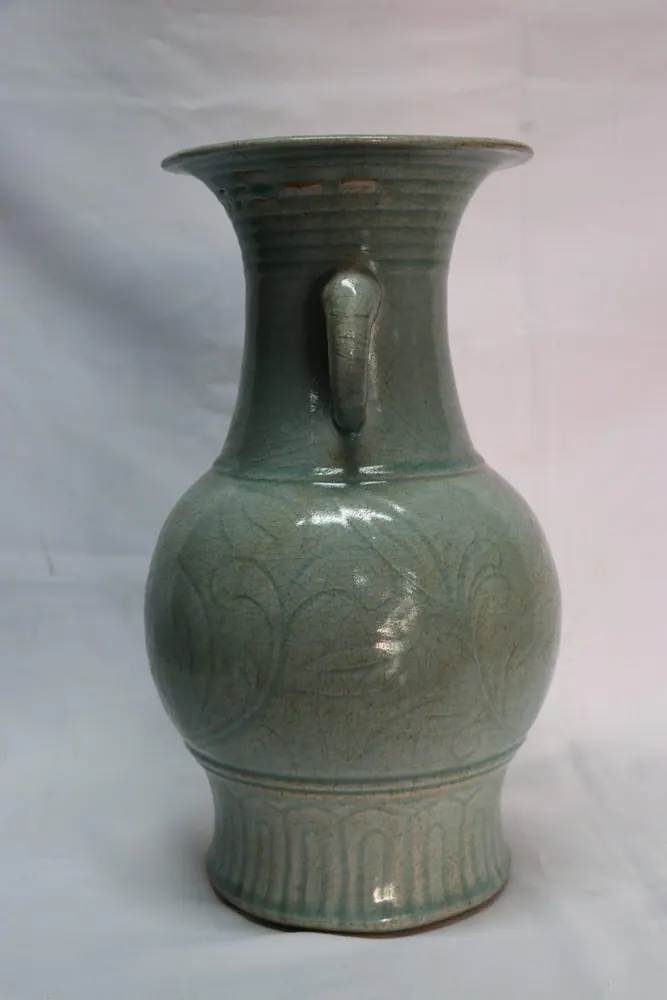
We sell antique Chinese porcelain from the Song, Yuan, Ming and Qing dynasties by private inquiry. Prices are not shown on the site. Each piece in our collection, such as a Song dynasty celadon vase, has a Request price form on its page.
- Send an inquiry through the Request price form on the piece you are interested in. It does not commit you to anything.
- We reply by email with the price, and we can send extra photographs on request.
- Ask us anything you wish to know about the piece before you decide.
- If you decide to buy, we agree payment with you by bank transfer, card or cryptocurrency.
- We ship by express delivery, fully insured and tracked.
All sales are final, which is why we encourage every question before a purchase rather than after it. We do not offer an identification, valuation or selling service. For anything not covered by a piece page, see our FAQ and terms and conditions, or contact us.