960–1279
Song Dynasty Porcelain and Ceramics: A Collector's Guide to the Classic Wares
Song dynasty porcelain set the standard by which Chinese ceramics have been judged ever since. This guide covers the main kilns of the north and south, the classic wares from Ru and Ding to Longquan celadon and qingbai, and how collectors date a Song piece from its form, glaze and base.
- Dates
- 960–1279 (Northern Song 960–1127, Southern Song 1127–1279)
- Main kiln regions
- Hebei, Henan and Shaanxi in the north; Zhejiang, Jiangxi and Fujian in the south
- Key wares
- Ru, Guan, Ge, Jun, Ding, Yaozhou and Longquan celadon, qingbai, Cizhou, Jian
- Reign marks
- Not used in the Ming and Qing sense; pieces are dated by body, glaze, form and firing
Why Song dynasty porcelain is the classic age
Between 960 and 1279 Chinese potters made ceramics of a restraint and technical control that later ages admired but seldom matched. Song taste prized form and glaze over painted ornament. A bowl might carry nothing but a single colour, and the quality of that colour, its depth, its sheen and the way it gathered in the hollows, was the point of the piece.
Several things came together. A prosperous, educated elite collected ancient bronzes and jades and wanted ceramics with the same quiet dignity, so many Song shapes borrow from archaic bronze vessels. Tea drinking, in which powdered tea was whisked in the bowl, created demand for bowls whose glaze would set off the pale froth. The court, above all in the reign of Emperor Huizong, is associated with wares of exceptional refinement. And a vast domestic and export market kept hundreds of kilns at work across the country.
A note on terms. The Chinese word ci covers all high-fired wares, so "Song porcelain" in everyday use includes much that a Western potter would call stoneware. Ding ware and qingbai are true porcelain, white and translucent where thin. Ru, Guan, Jun, Longquan, Cizhou and the dark tea wares are stonewares, fired hard but with a greyer or darker body. Collectors use "Song dynasty ceramics" for the whole field, and "Song dynasty pottery" is often used loosely in the same sense, although low-fired pottery plays only a small part in the Song story.
Much of the Song reputation was built by later collectors. Ming connoisseurs wrote about Song wares as antiques to be treasured, and the Qing emperors kept the finest in the palace collection, which is why so many of the best pieces are now in the Palace Museums of Beijing and Taipei.
Northern and southern kilns
Song ceramics are easiest to understand by geography. For most of the Northern Song (960–1127) the capital was Kaifeng, in Henan, and the great northern kilns lay within reach of it: Ding in Hebei, Ru and Jun in Henan, Yaozhou in Shaanxi, and the many kilns making Cizhou-type wares across Hebei and Henan. Our page on the Song dynasty covers the history of the period.
North and south fired differently. Northern potters used compact, round kilns, and from the Northern Song many of them burned coal, which tends to give a more oxidising atmosphere; it is one reason Ding porcelain has a warm ivory tone. Southern potters built long "dragon kilns" up the slopes of hills and fired them with wood, which suited the reducing atmosphere that turns celadon and qingbai glazes green and blue.
In 1127 the Jurchen Jin dynasty took Kaifeng and the Song court fled south, eventually settling at Lin'an, present-day Hangzhou. The northern kilns did not stop. Ding, Jun, Yaozhou and Cizhou potters worked on under Jin rule, and a good deal of what is sold as "Northern Song" was in fact made in the Jin period, between 1127 and 1234. Careful catalogues increasingly write "Northern Song or Jin" for that reason.
The south had its own long tradition, going back to the Yue celadons of Zhejiang. Under the Southern Song (1127–1279) it came into its own: the official Guan kilns at Hangzhou, the Longquan celadon kilns in south-western Zhejiang, Jingdezhen in Jiangxi with its qingbai porcelain, and the tea-bowl kilns of Jian in Fujian and Jizhou in Jiangxi. Ports such as Quanzhou and Guangzhou shipped these wares across Asia, and the export trade shaped much of what the southern kilns made.
The Five Great Kilns in brief
Later connoisseurs singled out five Song wares as the finest: Ru, Guan, Ge, Jun and Ding. The list reflects the taste of Ming and Qing collectors as much as Song opinion, but it remains the common vocabulary of the field. Our guide to the Five Great Kilns treats each ware in detail.
- Ru: a short-lived ware made for the Northern Song court at Qingliangsi, in Baofeng county, Henan, with a soft bluish-grey glaze and tiny spur marks on the base. Fewer than a hundred pieces are generally accepted as genuine.
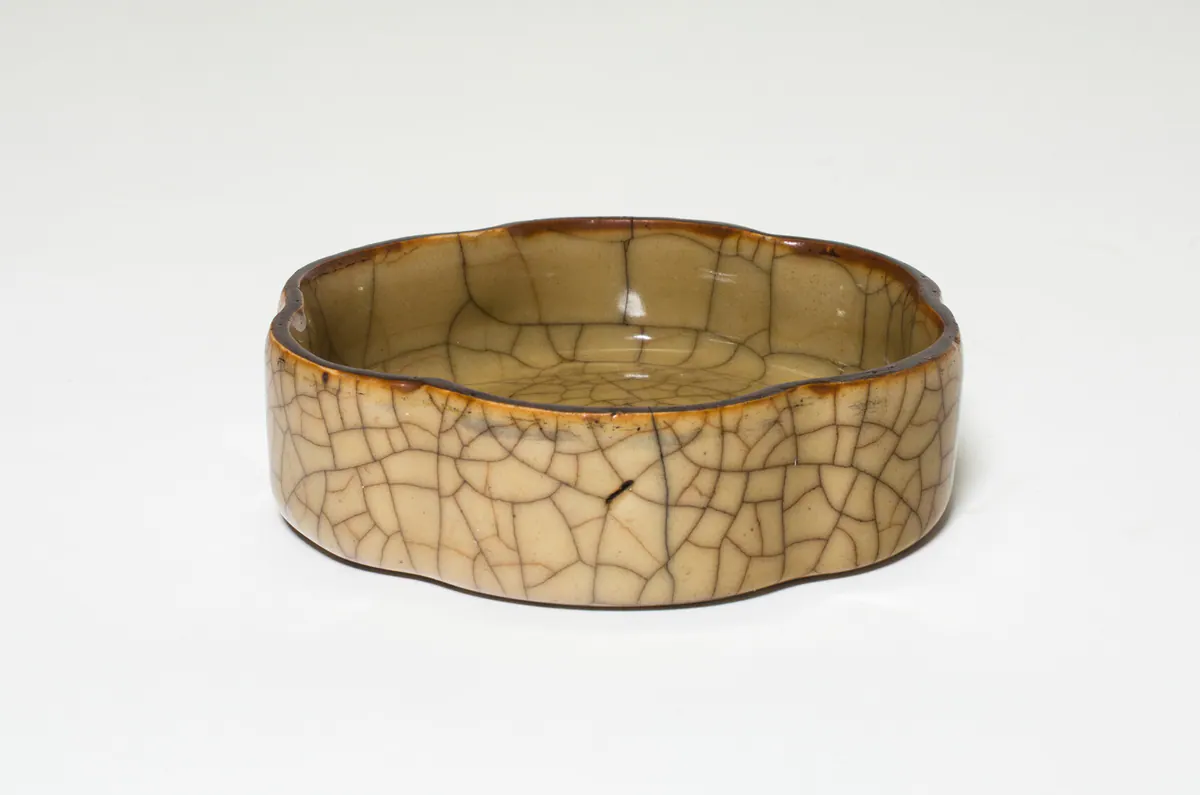
- Guan: "official" ware. The Southern Song Guan kilns at Hangzhou made thickly glazed, crackled pieces on a thin, dark body.
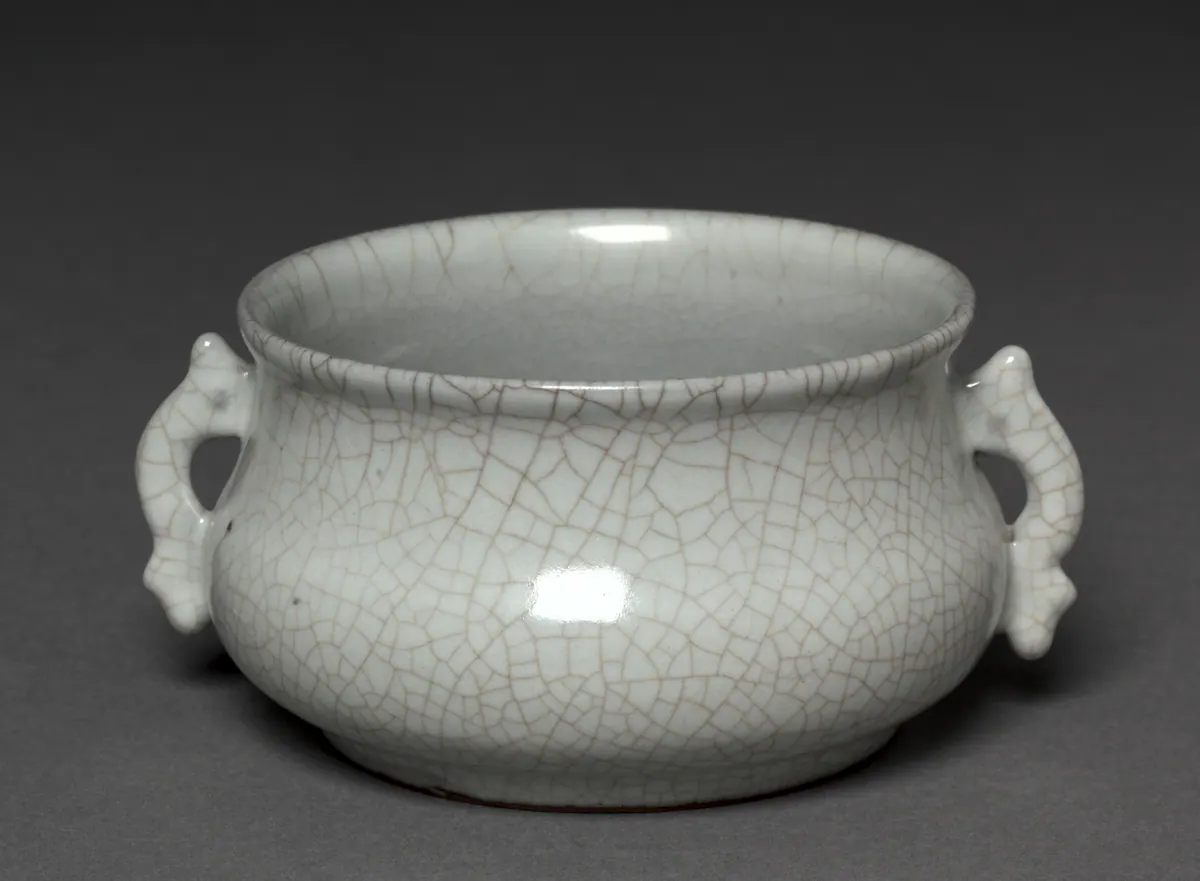
- Ge: "elder brother" ware, known for a double network of dark and golden-brown crackle. Where and when it was made is still debated.
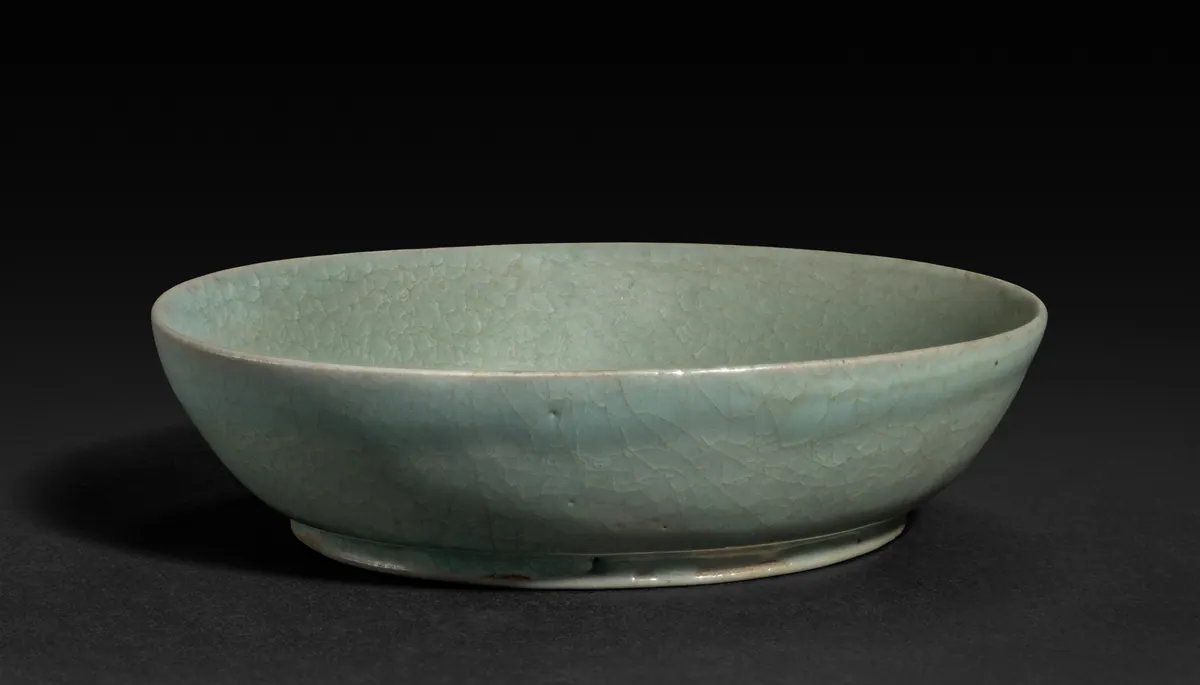
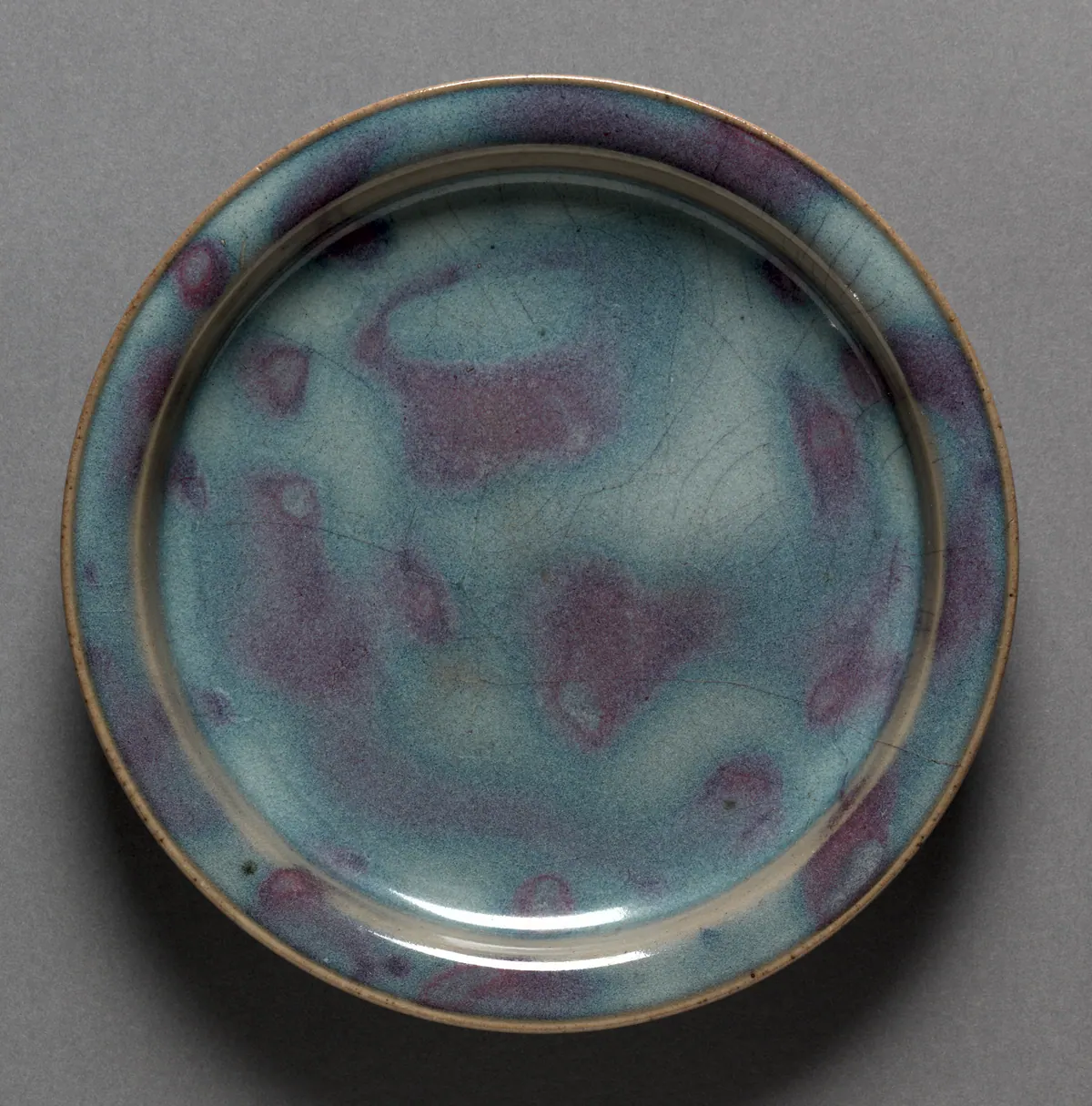
- Jun: stoneware from Yuzhou in Henan and many other northern kilns, with a thick, opalescent blue glaze, sometimes splashed with copper purple.
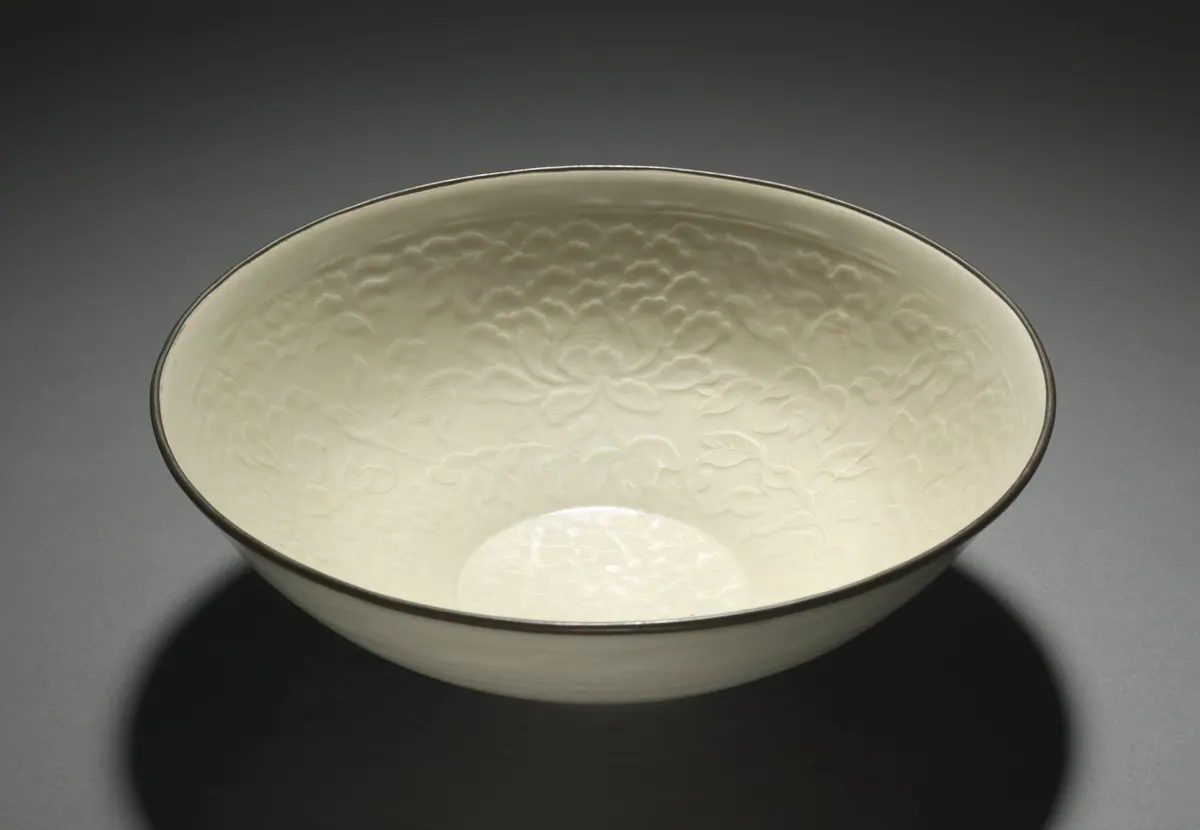
- Ding: fine ivory-white porcelain from Quyang in Hebei, often carved or moulded, and often fired upside down so that the rim was left bare.
Genuine Ru, Guan and Ge are among the rarest objects in Chinese art, and almost all are in museums. Ding and Jun survive in larger numbers. All five were copied repeatedly from the Ming onwards, by the imperial kilns as well as by commercial potters.
Below is one museum example of each ware, in the same order; the Five Great Kilns guide shows each again beside its full description.
Museum examples
Song celadon: Yaozhou and Longquan
Celadon is the Western name for the family of green glazes coloured by a little iron and fired in a kiln starved of oxygen. The Song made celadons at many kilns, but two stand out.
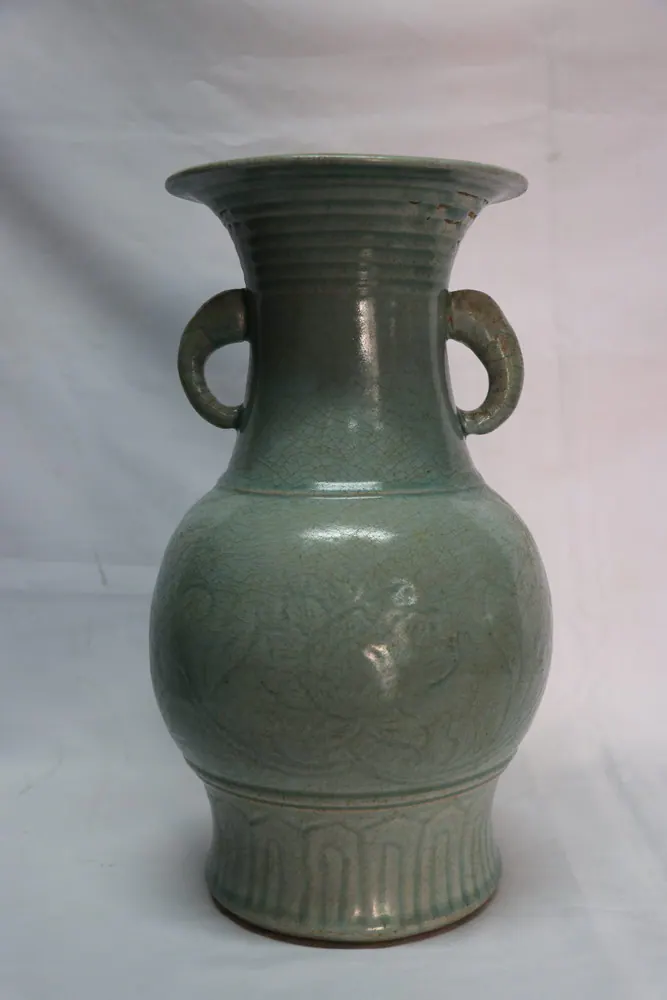
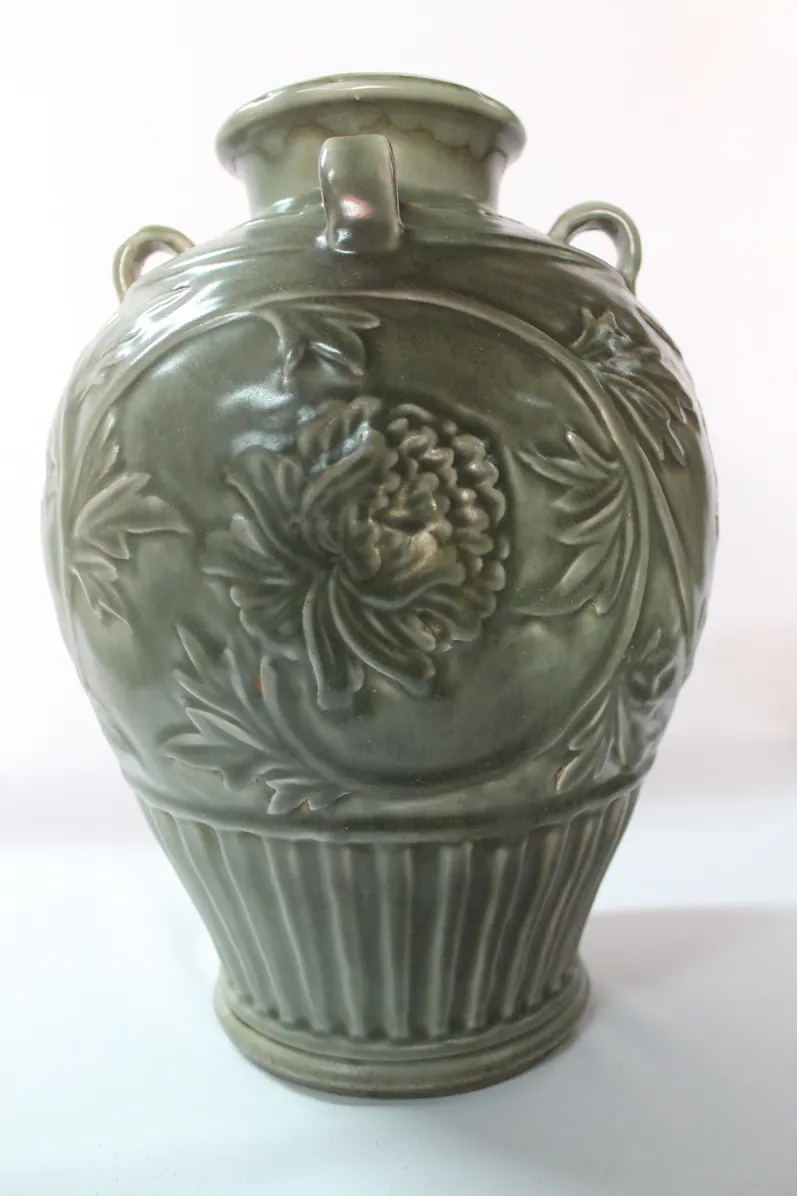
In the north, the Yaozhou kilns at Tongchuan in Shaanxi produced an olive-green celadon over a grey body. Their speciality was deep, confident carving: peonies and lotus cut with a slanting blade, so that the glaze pooled darker in the grooves and thinned over the ridges, giving the pattern depth. Later Yaozhou wares were often moulded, a quicker way to produce similar designs.
In the south, the Longquan kilns of Zhejiang reached their height under the Southern Song. Their best glazes were thick, applied in several layers and full of tiny bubbles, giving a soft, jade-like blue-green. Longquan relied on shape and glaze more than on decoration, and its wares were exported in huge quantities. Our guide to Longquan celadon covers the kilns, the colours and the later history.
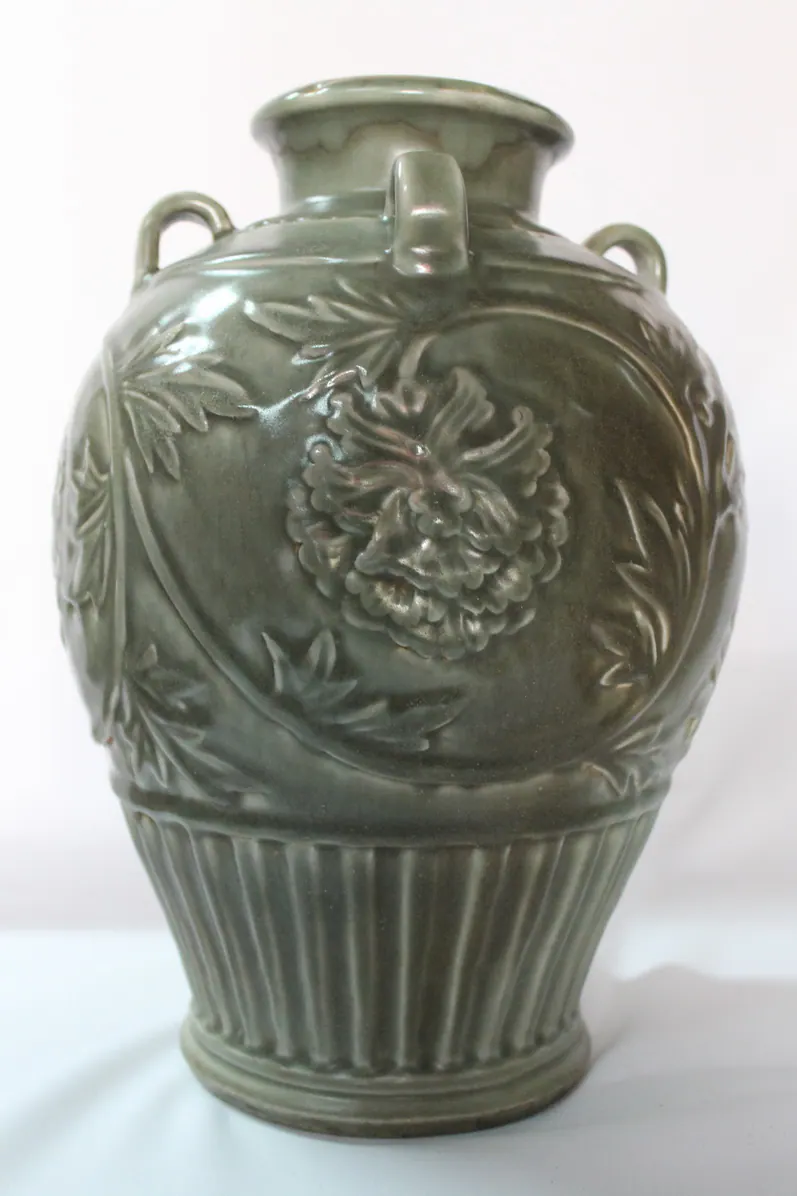
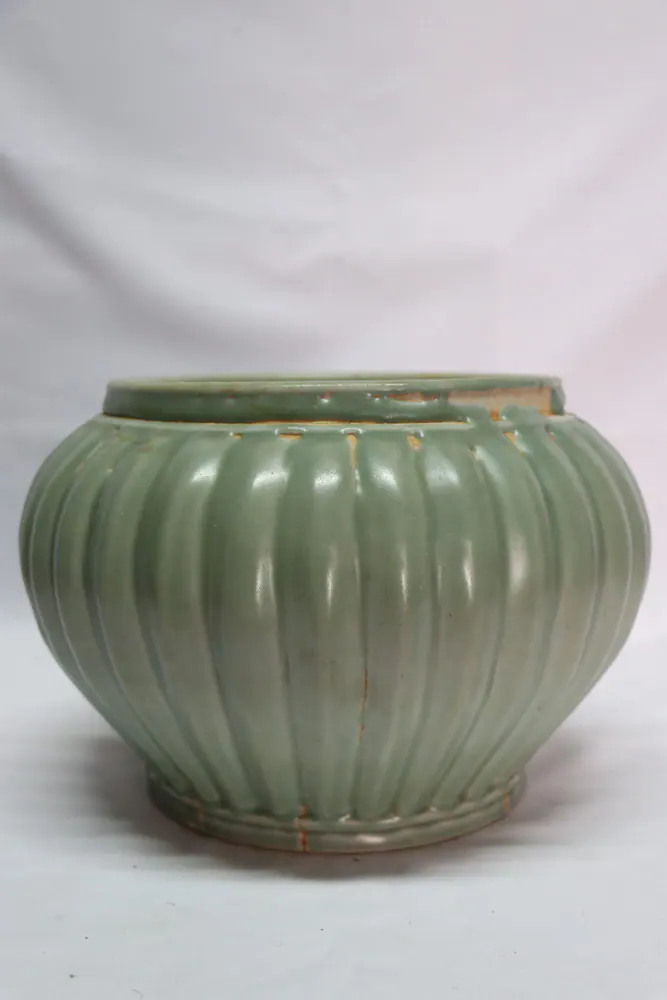
Many Song celadons cannot be given to a particular kiln with confidence, and smaller kilns in Zhejiang, Fujian and elsewhere worked in the leading styles. We catalogue our own pieces as Song celadon without naming a kiln. They include a Song celadon vase with two curved handles at the neck and carved flowers on the body, and a Song celadon jar with an olive-green glaze over a grooved body.
Typical Song celadon vase forms include the meiping, with its broad shoulder and narrow mouth, the mallet vase, the pear-shaped vase and the gu, a trumpet-mouthed shape borrowed from ancient bronze. Bowls, dishes, jars and incense burners were made in far greater numbers, and most celadons that reach the market today are of these everyday kinds.
Qingbai at Jingdezhen
Jingdezhen, in Jiangxi, is famous as the porcelain city of the Ming and Qing, but its reputation was made in the Song with qingbai, meaning "bluish white". The body was made from local porcelain stone, fine and white, and could be potted so thinly that it glows when held to the light. Over it went a clear glaze with a trace of iron that fired a pale, watery blue, deepest where it pooled in carved or combed lines.
Qingbai was made in great quantity: bowls, dishes, ewers with their warming bowls, vases, covered boxes, pillows and funerary jars. It was also made at kilns in Fujian, Guangdong and elsewhere, and exported widely. Our page on qingbai porcelain follows the ware from the Song into the Yuan, when Jingdezhen potters took the step to blue and white.
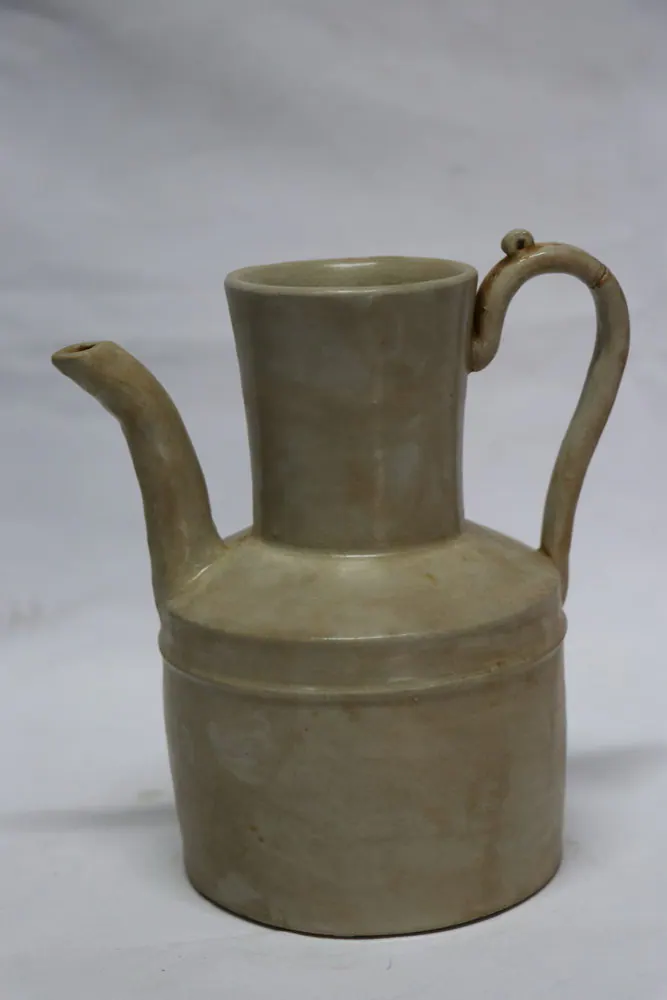
Not every pale-glazed Song piece can be placed so firmly. The Song ewer in our collection, with a tall cylindrical neck, a loop handle, a slender spout and no ornament beyond a raised band around the body, is catalogued simply as Song.
Early qingbai bowls were fired upright, each in its own saggar. Later, following the example of Ding, many were fired upside down on their rims, so a bare rim on a qingbai bowl is a clue to its date rather than a defect.
Cizhou and the tea wares of Jian and Jizhou
Not all Song ceramics were made for connoisseurs. The Cizhou-type kilns of northern China made robust stonewares for everyday use: jars, bowls, vases and pillows. Their potters covered a buff or grey body with white slip and then decorated it by carving or scratching through the slip to the darker clay beneath, or by painting in iron-black. The results are bold and direct, with flowers, animals, figures and inscriptions, and they look forward to the painted porcelain of later centuries.
Tea shaped several southern wares. Powdered tea was whisked in the bowl until it foamed, and a dark glaze showed the pale froth best. The Jian kilns in northern Fujian made heavy, dark-bodied bowls with a lustrous black glaze that separated in the firing into fine brown streaks, called "hare's fur", or into silvery "oil spots". In Japan such bowls became known as tenmoku and were treasured for centuries.
At Jizhou in Jiangxi, potters made lighter tea bowls with mottled "tortoiseshell" glazes and with designs made by resist: paper-cut patterns, or a real leaf laid on the glaze before firing, which burned away and left its image behind. These everyday and tea wares are an excellent way into Song ceramics, because they show the same concern with glaze and form as the court wares.
How Song wares are dated: form, glaze and base
Song ceramics do not carry reign marks of the kind used from the Ming onwards, so dating rests on comparison: with pieces from dated tombs, with shipwrecks whose cargoes can be dated, and with the kiln sites themselves, where excavation has recovered huge quantities of sherds. The Southern Song merchant ship known as Nanhai No. 1, raised off the Guangdong coast in 2007, is one such time capsule, packed with celadon, qingbai and other wares. A collector applies the same evidence on a smaller scale.
Form. Shapes changed over time and differ from kiln to kiln. A meiping, a mallet vase or a conical tea bowl each has a Song profile that later copies rarely capture exactly: the curve of the shoulder, the angle of the wall, the proportions of the foot.
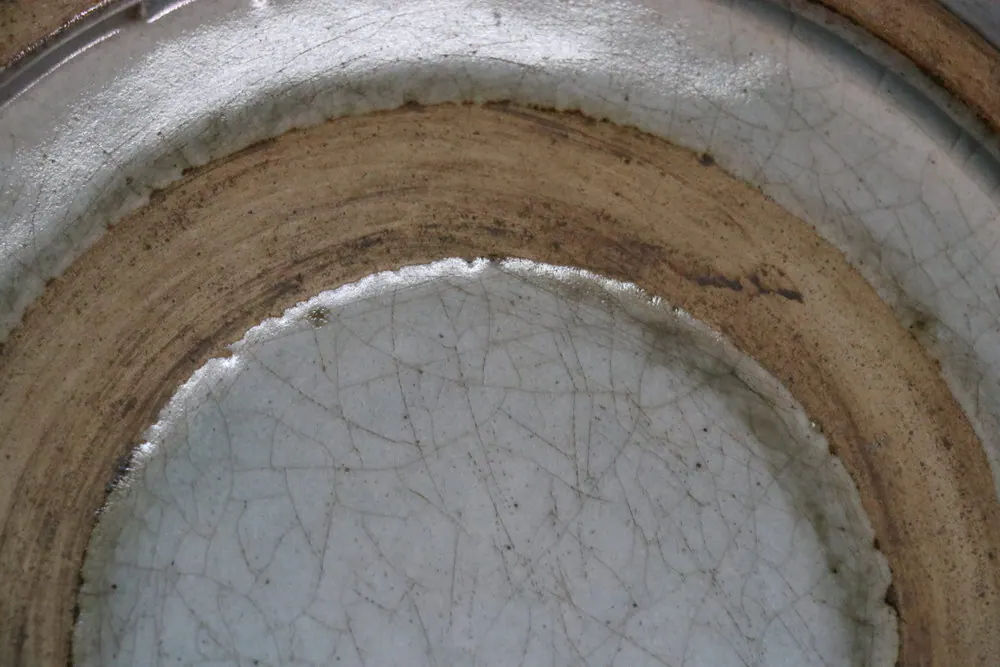
Glaze. Song glazes have depth. Under magnification most show bubbles suspended in the glaze, and the surface of an old piece has usually lost its first brilliance through centuries of handling or burial. Crackle can be intended, accidental or the result of age, and on its own it proves little; our guide to crackle and crazing explains why.
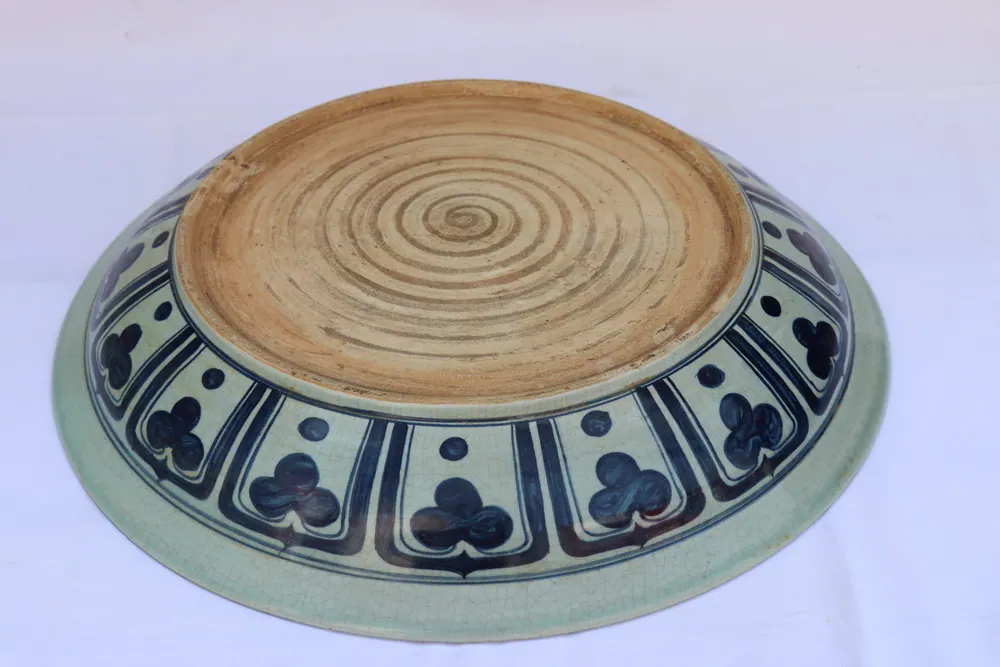
Firing supports and bases. The underside records how a piece was fired. Ru ware stood on tiny spurs that left small oval scars. Ding bowls fired upside down have an unglazed rim, often bound with metal. Much southern celadon stood on a pad or ring of clay, leaving an unglazed patch or ring on the base, and where iron-rich clay was left exposed it fired orange or brown. The foot should show wear consistent with its age, and the exposed clay should look fired through, not stained.
Burial and handling. Many Song pieces spent centuries in tombs, hoards or the ground, which can leave soil deposits, a dulled or slightly iridescent glaze and staining in cracks. Pieces handed down above ground show handling wear instead, on the rim, the foot and the high points. Either history should agree with everything else about the piece.
No single feature is decisive. A convincing glaze on the wrong body, or a period-looking foot under a shape the Song never made, should make you cautious.
Song dynasty vases and other pieces in our collection
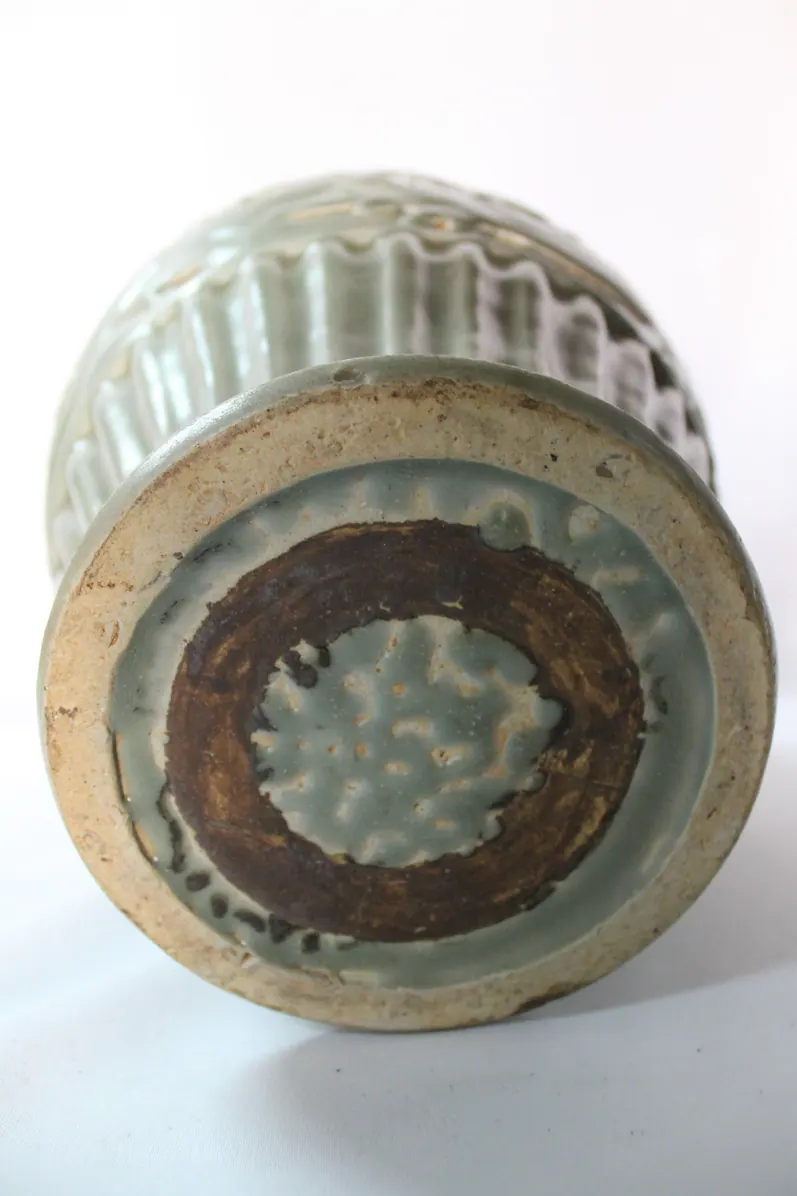
Our Song dynasty porcelain collection includes celadons and qingbai. Among them is a celadon vase with a carved peony medallion, catalogued as late Song to early Yuan. It shows the kind of evidence described above: one side darkened where it stood too close to the fire, and the glazed base has a broad brown ring round its centre.
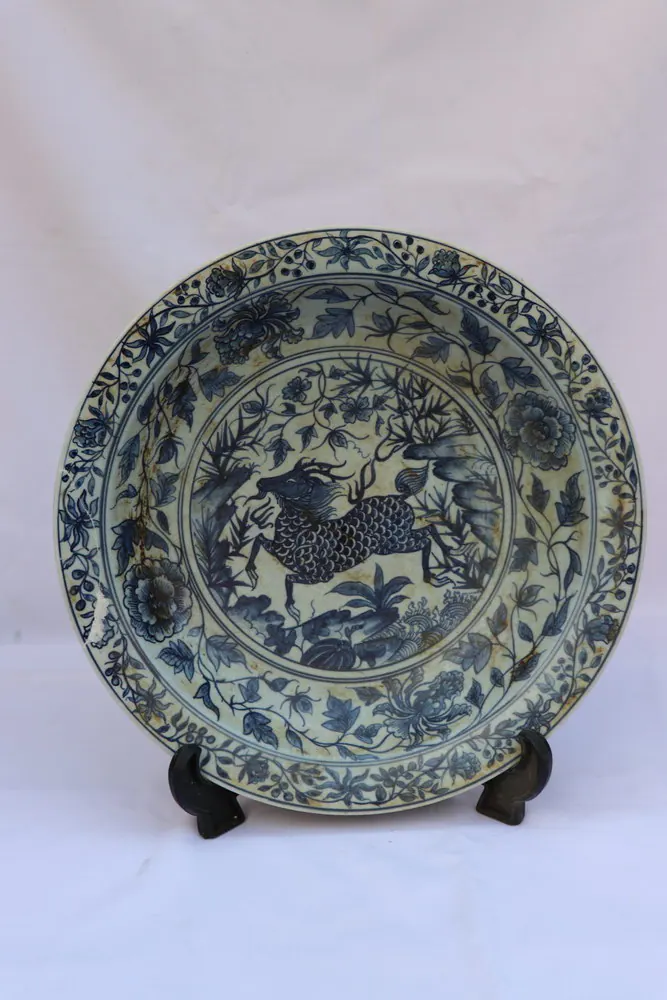
We have also sold Song celadon plates, among them a celadon plate with a qilin at its centre and a wave band around the rim.
What makes an antique Song dynasty vase or bowl valuable is the same as for any Chinese ceramic: its period, the quality of its potting and glaze, its condition, its rarity, its provenance and the state of the market. Condition deserves particular attention. Song pieces were often buried or heavily used, and restoration on a monochrome glaze can be hard to see. We describe each piece plainly, with several photographs, and buying is by private inquiry through the Request price form on each piece page. Shipping is fully insured, and all sales are final.