Accession and Government
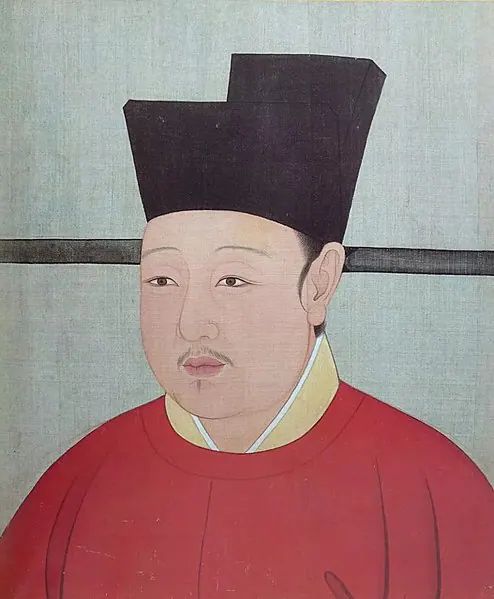
Zhao Ji was the eleventh son of Emperor Shenzong and held the title Prince of Duan. When his half-brother, Emperor Zhezong, died early in 1100 without a surviving son, Shenzong's widow, Empress Dowager Xiang, chose Zhao Ji as the next emperor. The chancellor Zhang Dun objected that the prince was too frivolous to rule, but he was overruled.
Empress Dowager Xiang shared in the government for the first months of the reign and died early in 1101. The first months of the reign were an attempt to heal the quarrel between reformers and conservatives that had divided the court since Shenzong's New Policies, and the era name for 1101, Jianzhong Jingguo, spoke of establishing a middle course. The truce did not last.
Cai Jing and the Return of Reform
From 1102 Huizong took the side of the reformers. The new era name, Chongning, meaning "honouring Xining", looked back to the reforms of his father's Xining era, and Cai Jing became chancellor. Cai Jing dominated the government for most of the next two decades. Leading conservatives, living and dead, were listed as members of a banned "Yuanyou faction", their names were carved on steles across the empire, and the writings of men such as Su Shi were proscribed.
Huizong also favoured Daoism, building temples and in 1117 taking a Daoist title as lord of the teaching. Political disputes were left unresolved, and favourites such as the eunuch Tong Guan, who commanded the armies of the north-west, received exceptional power.
The Genyue Garden and the Rebellion of Fang La
Huizong's greatest extravagance was the Genyue, an artificial mountain garden built in the north-east of the capital, Kaifeng, from 1117. Rare rocks and plants were shipped north for it from the south-east by the "Flower and Rock Network", run from Suzhou by Zhu Mian, and the demands fell heavily on the people of the region. In 1120 a rebellion led by Fang La broke out in Zhejiang, fed in part by anger at these exactions. Tong Guan suppressed it in 1121, at great cost.
The Alliance with the Jurchens
In 1115 the Jurchen leader Aguda founded the Jin dynasty and began to break the power of the Liao. Huizong saw a chance to recover the Sixteen Prefectures around modern Beijing, which the Liao had held since before the Song was founded. In 1120 the Song and Jin agreed to attack the Liao together, an agreement known as the Alliance Conducted at Sea, because the envoys crossed the Bohai Gulf by ship.
The Song campaigns against the Liao southern capital, Yanjing, failed in 1122. The Jin took the city themselves and handed it over in 1123 only in return for heavy payments, after carrying off much of its population and wealth. The victory over the Liao was an illusion: the weakness of the Song armies had been exposed, and once the last Liao emperor was captured in 1125 the Jin turned on their ally.