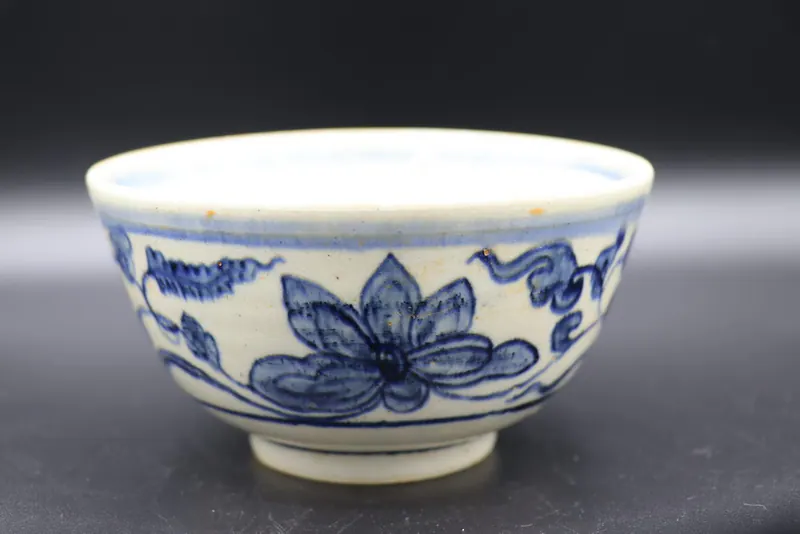
Song to Qing, 960–1912
Antique Chinese Porcelain: A Collector's Guide to Periods, Wares and Marks
Antique Chinese porcelain spans more than nine centuries, from the quiet celadons of the Song to the enamelled wares of the Qing court. This guide gives a collector the framework: how the porcelain was made, how the periods follow one another, which wares matter, and how marks, age and value are judged. Each part leads to a fuller guide.
- Song
- 960–1279: celadon, qingbai and the classic monochromes
- Yuan
- 1271–1368: the first mature blue and white, and copper red
- Ming
- 1368–1644: blue and white, doucai, wucai and kraak
- Qing
- 1644–1912: Kangxi blue and white, famille verte, famille rose
- Main centre
- Jingdezhen, Jiangxi province
- Reign marks
- Regular on imperial wares from the Xuande reign (1426–1435)
What makes Chinese porcelain different
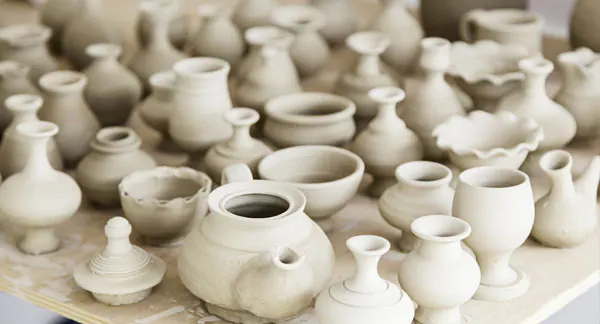
Porcelain is a white ceramic fired so hot that its body fuses into a hard, glassy mass. Chinese potters made it from two materials: porcelain stone, a rock of quartz and fine mica that was crushed and refined, and kaolin, the white clay named after Gaoling, a village in the hills near Jingdezhen. Fired to around 1,300°C, the mixture becomes dense and white and, where it is thin, lets light through.
The Chinese word ci covers all high-fired wares, including many that Western specialists would call stoneware, such as Longquan celadon. Collectors and dealers follow the Chinese usage loosely, so a Song celadon is often called porcelain although its grey body is neither white nor translucent. What matters more to a collector is that every kiln's body, glaze and firing method left recognisable traces, and those traces are how pieces are dated.
From the Yuan dynasty, potters at Jingdezhen in Jiangxi province began to mix kaolin with porcelain stone. The stronger body let them throw large jars and dishes, and the town became the centre of Chinese porcelain for the next six centuries. Production was divided among specialists: one workshop prepared the clay, others threw, trimmed, painted and glazed, and the pieces were fired in protective clay boxes called saggars in large wood-fired kilns. Under the Ming and Qing the imperial kilns there made porcelain for the court, while hundreds of private kilns supplied the home market and the export trade.
Europe did not learn to make hard-paste porcelain until the early eighteenth century, at Meissen. Before then Chinese porcelain had been traded for centuries across Asia, the Middle East and Europe, which is why so much of it survives outside China.
Chinese porcelain dynasties: a timeline from Song to Qing
Collectors date Chinese porcelain by dynasty and, for the Ming and Qing, by reign. This outline of Chinese porcelain history gives the periods most often met on the market, with the wares that define them.
- Song (960–1279). The Song dynasty ruled from Kaifeng until the north fell to the Jin in 1127, then from Hangzhou. Its kilns made the refined monochromes that later collectors revered: Ding, Ru and Jun in the north, Guan at the Southern Song capital, celadon at Longquan in Zhejiang and qingbai at Jingdezhen.
- Yuan (1271–1368). Under Mongol rule the Yuan set up the Fouliang Porcelain Bureau at Jingdezhen in 1278. By the second quarter of the fourteenth century Jingdezhen potters were painting in cobalt blue and copper red under the glaze, much of it for export to the Islamic world.
- Early Ming (1368–1435). The Ming set up imperial kilns at Jingdezhen early in the dynasty. The blue and white of the Yongle (1403–1424) and Xuande (1426–1435) reigns, painted with imported cobalt, set the standard for everything that followed.
- Mid Ming (1436–1521). After three reigns with few marked imperial wares, the Chenghua reign (1465–1487) produced small, delicate pieces in a soft blue and brought doucai enamelling to maturity. The Hongzhi and Zhengde reigns continued in a similar vein.
- Late Ming (1522–1644). Jiajing (1522–1566) and Wanli (1573–1620) wares have a strong purplish blue and bold wucai enamels. After private overseas trade was allowed again in 1567, Jingdezhen made thin, panelled kraak porcelain for European and Asian buyers.
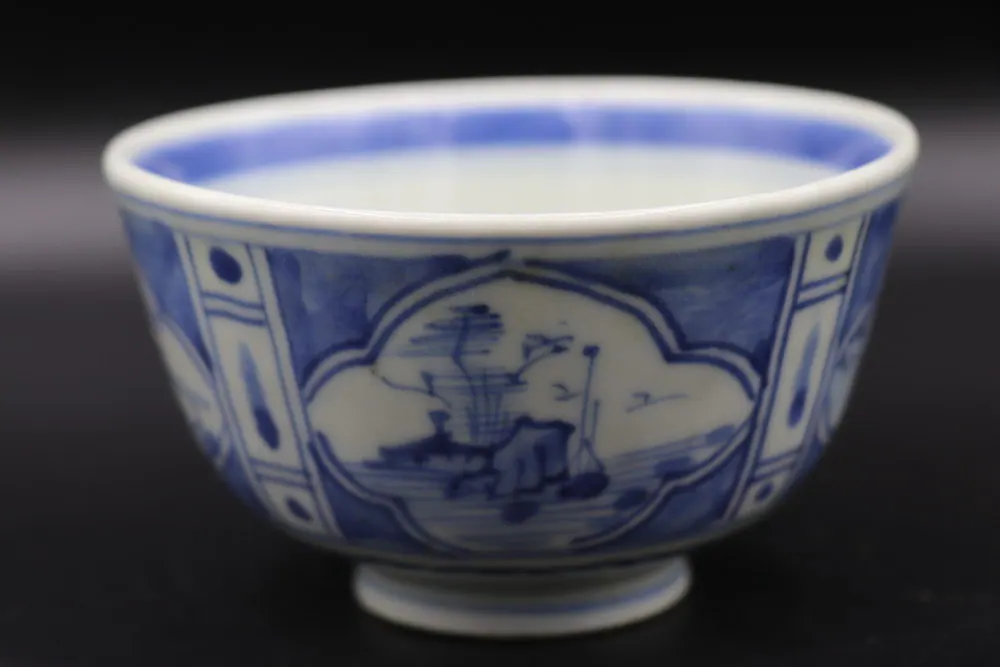
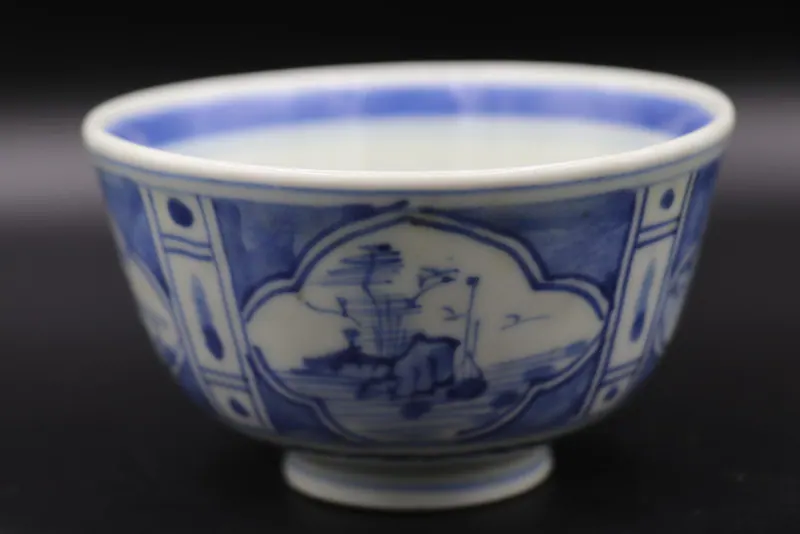
- Transitional (about 1620–1683). As imperial orders dwindled and the Ming fell, potters worked for private buyers in China, Japan and Europe, painting landscapes and figure scenes with new freedom.
- High Qing (1662–1795). The Qing imperial factory was reorganised in the 1680s. The Kangxi, Yongzheng and Qianlong reigns produced brilliant blue and white, famille verte and famille rose enamels, fine monochromes and faithful copies of earlier wares.
- Late Qing (1796–1912). Standards were uneven after 1800, and the imperial kilns were destroyed during the Taiping war in the 1850s and rebuilt under Tongzhi. Late Qing and early Republic potters copied earlier styles and marks on a large scale.
Our Ming emperors and Qing emperors timelines list every reign, and each emperor's page shows the reign mark used on porcelain of that reign.
Song ceramics and celadon
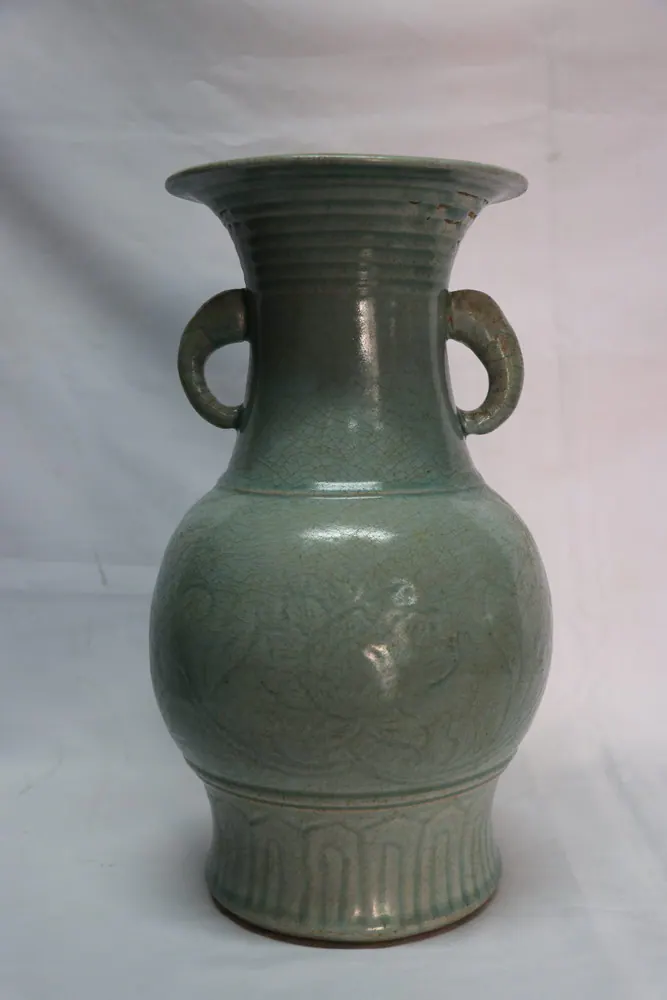
Song taste favoured simple shapes and deep, even glazes, and Song wares became the benchmark against which later Chinese ceramics were judged. Later connoisseurs named Ru, Guan, Ge, Jun and Ding as the five great kilns of the period.
Ding ware from Hebei is a thin, ivory-white porcelain, often carved or moulded, and from the late Northern Song often fired upside down, so the rim was left bare. Ru ware, made for only a short time for the Northern Song court, has a soft bluish glaze and is among the rarest of all Chinese ceramics. Jun ware has a thick, opalescent blue glaze, sometimes splashed with purple from copper. Guan ware, made for the Southern Song court near Hangzhou, has a thick, crackled glaze over a dark body, and Ge ware, the most debated of the five, is known for its bold crackle.
The Song wares a collector is most likely to meet are those made in quantity. The jade-green celadons of Longquan in Zhejiang were exported across Asia and made well into the Ming. Qingbai, a thin white porcelain under a glaze with a pale blue tinge, was made at Jingdezhen and widely exported too.
The great court wares were copied with care by the Ming and Qing imperial kilns and are copied heavily today, so a Song attribution needs particular caution. Our guide to Song dynasty ceramics is the main page for the period.
Blue and white and underglaze red
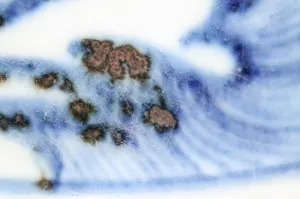
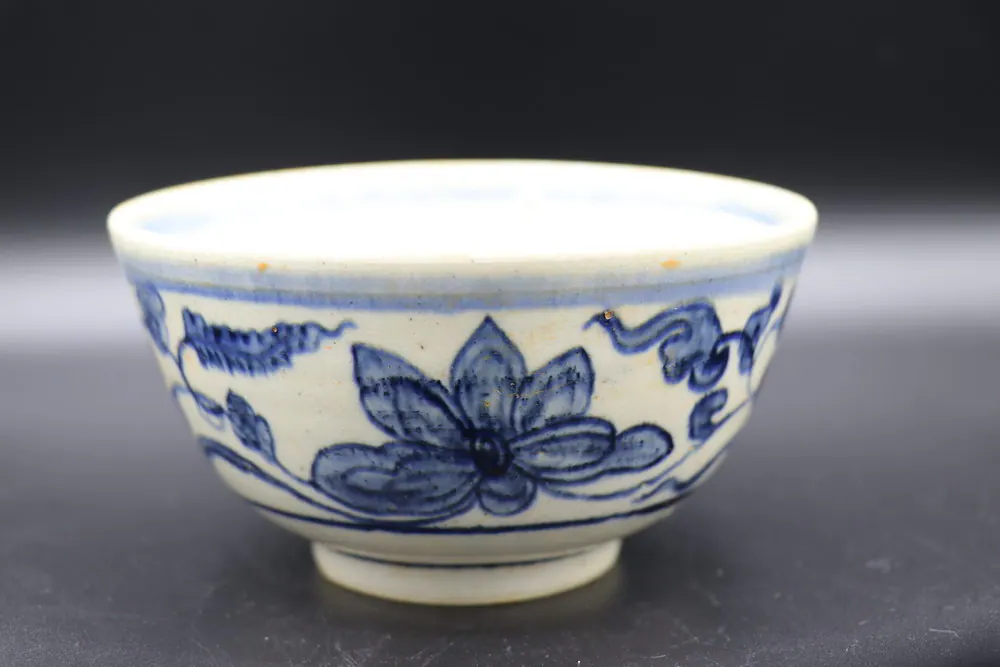
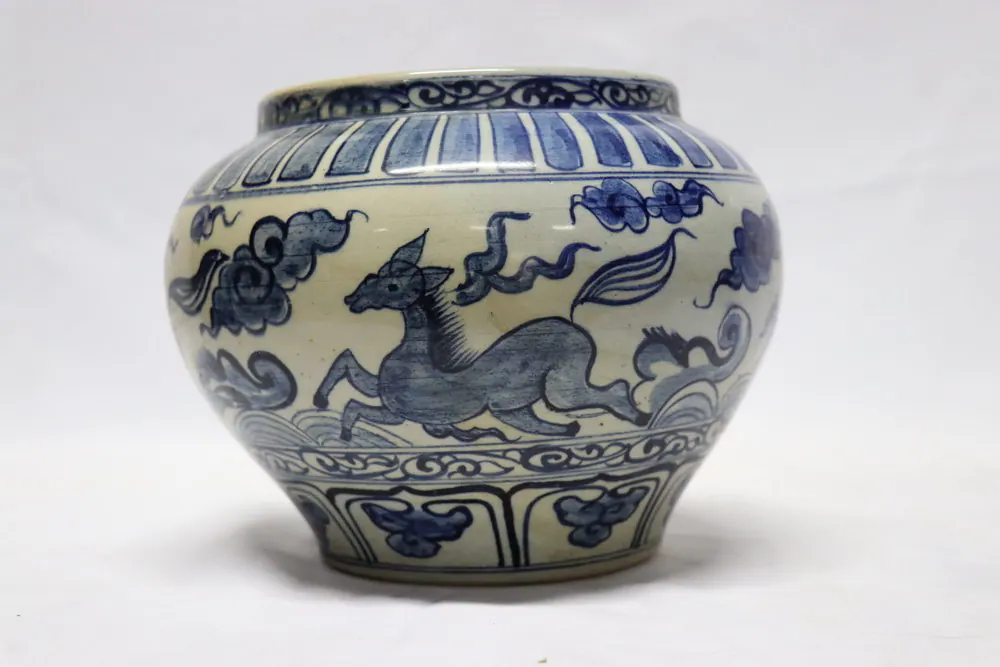
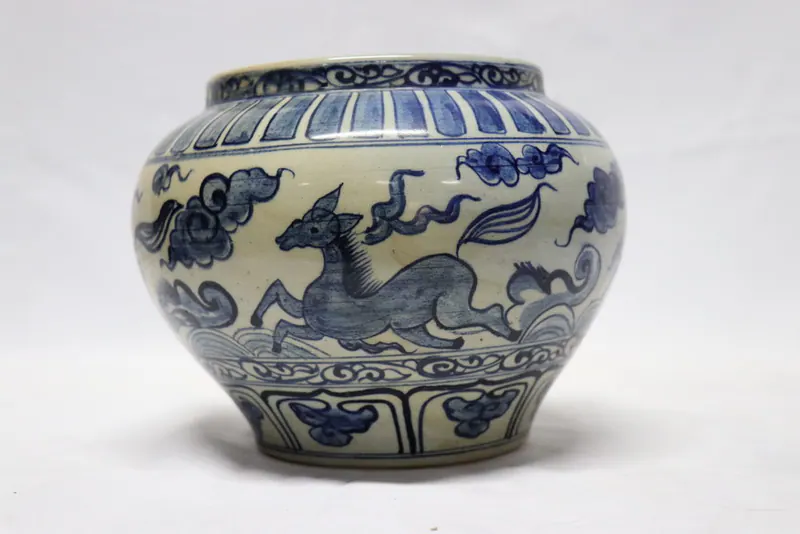
Blue and white is painted in cobalt on the unfired body, covered with a clear glaze and fired once. The technique reached maturity at Jingdezhen in the Yuan, using cobalt imported from Persia that was rich in iron and poor in manganese. Where it was laid on thickly, it gathered into dark, almost black spots with a slight sheen, one of the features collectors look for in Yuan blue and white and the early Ming wares that followed.
Chinese cobalt, higher in manganese, gives a softer or greyer blue, and the blend of native and imported ore changed from reign to reign: the soft, pale blue of Chenghua, the purplish blue of Jiajing, the pure, layered blue of Kangxi. The tone of the blue is one of the best guides to date, and our guide to cobalt blue through the periods sets out the differences.
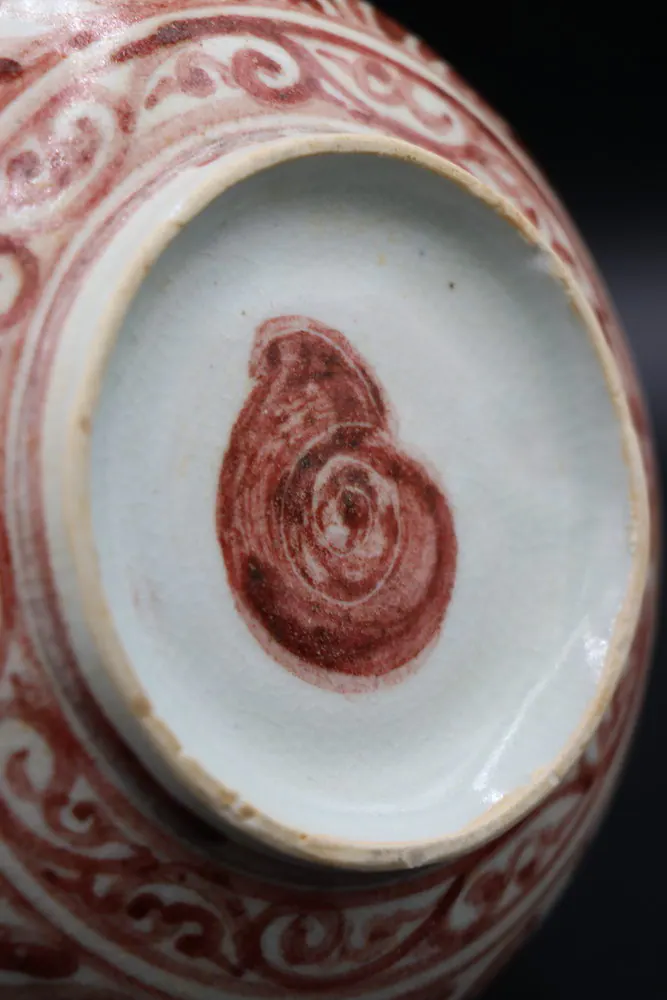
Underglaze red, painted in copper in the same way, is far harder to fire: too much heat or air and it turns grey or liver-brown, or burns away. It was used most in the Yuan and under Hongwu (1368–1398), and revived by Qing potters. From the late sixteenth century, kraak porcelain and then Transitional wares carried blue and white to new markets in Europe and Japan.
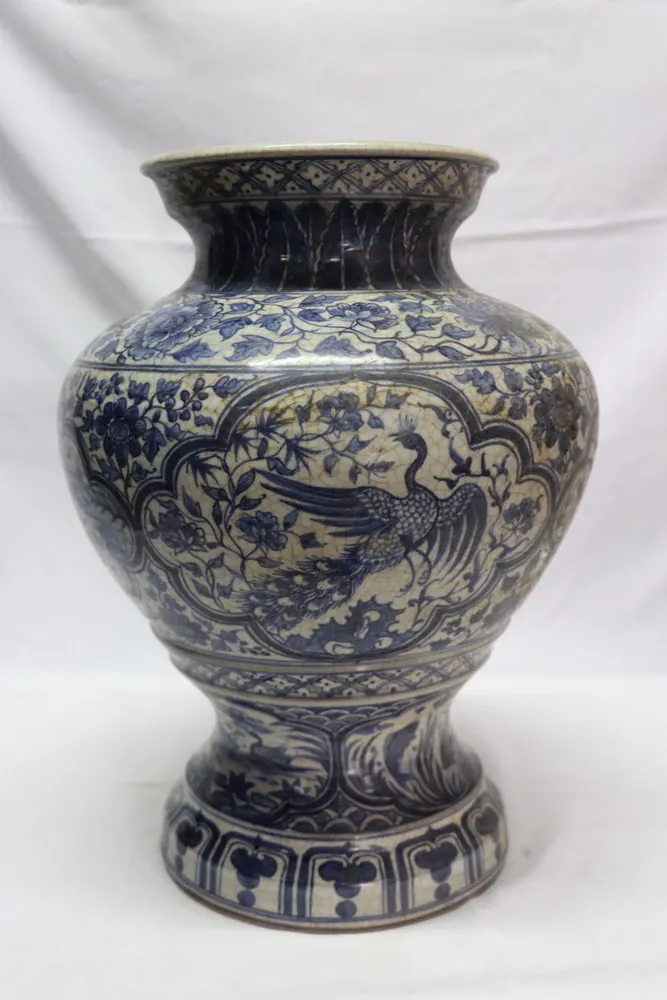
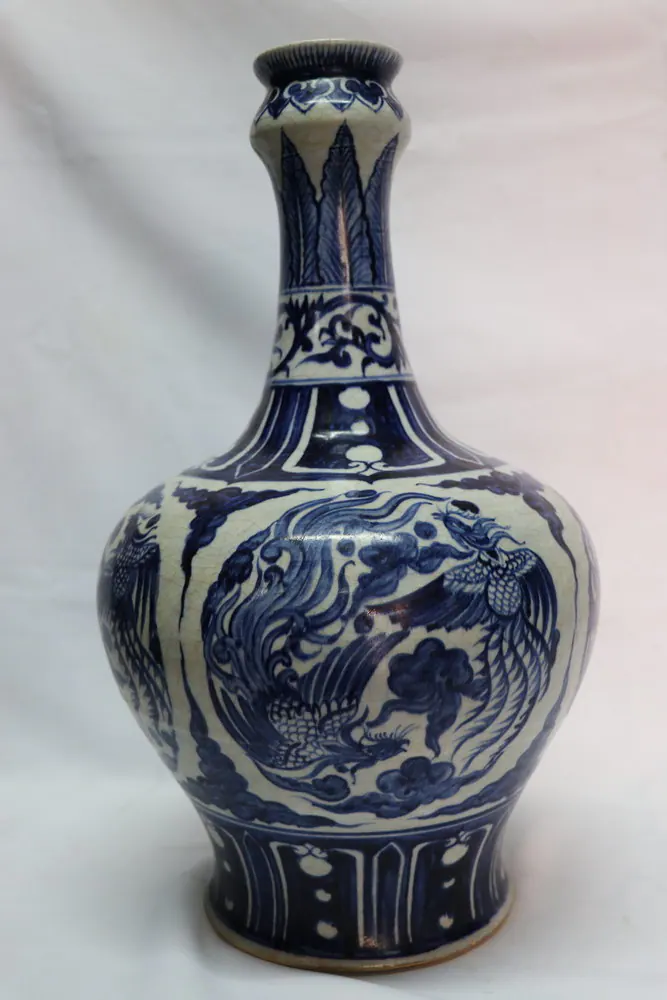
Blue and white makes up most of our collection, among it a vase painted with phoenixes among clouds, the piece shown at the top of this page. The guide to Chinese blue and white porcelain is the main page for the subject.
Ming and Qing: imperial wares, enamels and export
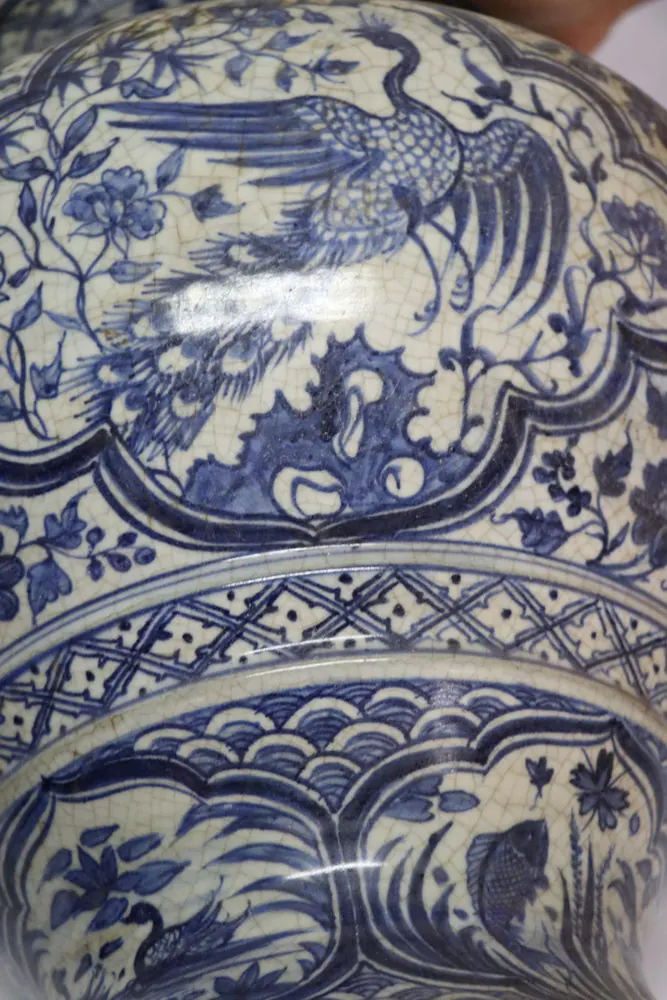
The Ming and Qing are the dynasties most collectors know first, because their porcelain survives in quantity and much of it can be dated closely. Two worlds ran side by side at Jingdezhen. The imperial kilns made wares to designs approved by the court, under strict control of quality, and in the early Ming rejected pieces were often smashed and buried at the factory. The private kilns, far more numerous, made porcelain for the home market and for export, often painted with a speed and freedom the court never allowed.
Enamels were the great addition. In doucai, perfected under Chenghua, overglaze colours fill outlines drawn in underglaze blue; wucai, prominent under Jiajing and Wanli, sets bolder enamels beside the blue. Our guide to doucai and wucai explains the difference. The Qing added famille verte, with its strong greens, under Kangxi, and famille rose, with opaque pinks introduced late in the Kangxi reign, which became the leading palette of the eighteenth century. Telling the two palettes apart is a skill in itself.
Monochrome glazes had a history of their own: the copper red of Xuande, the yellow of Hongzhi, and in the Qing new glazes such as peach bloom, clair de lune and tea-dust, made alongside careful revivals of Song and early Ming colours.
The private kilns deserve more attention than they get. Their blue and white, made for everyday use across China and Southeast Asia, is often livelier than court porcelain, and much of the Ming porcelain on the market is of this kind: see Ming folk kiln porcelain.
For the periods in detail, start with Ming dynasty porcelain and Qing dynasty porcelain. Porcelain made after about 1850, including the many copies of earlier styles, is covered in late Qing and Republic porcelain.
Reading marks
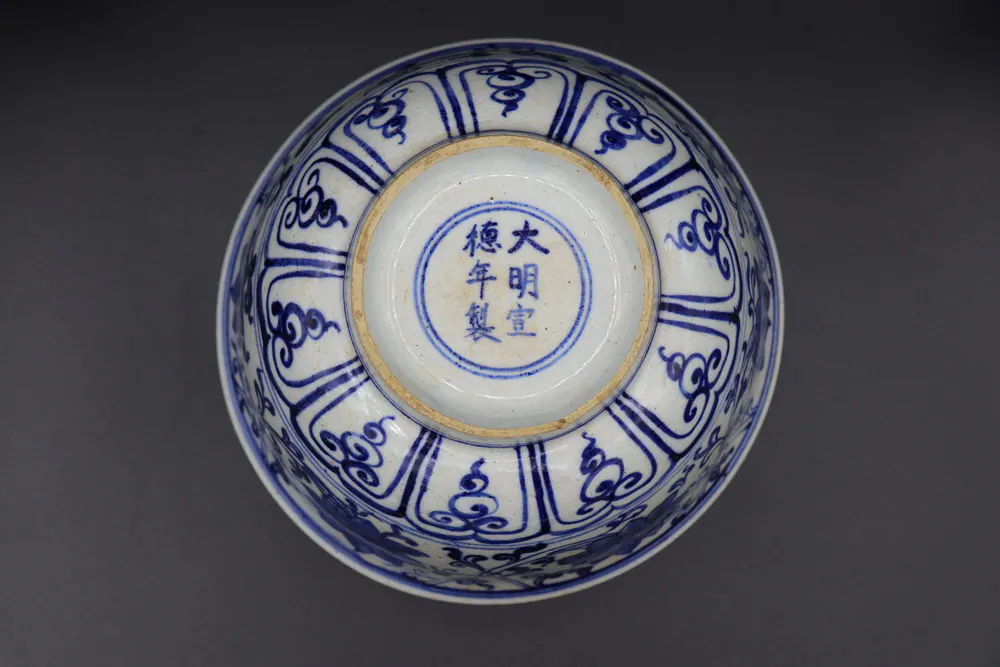
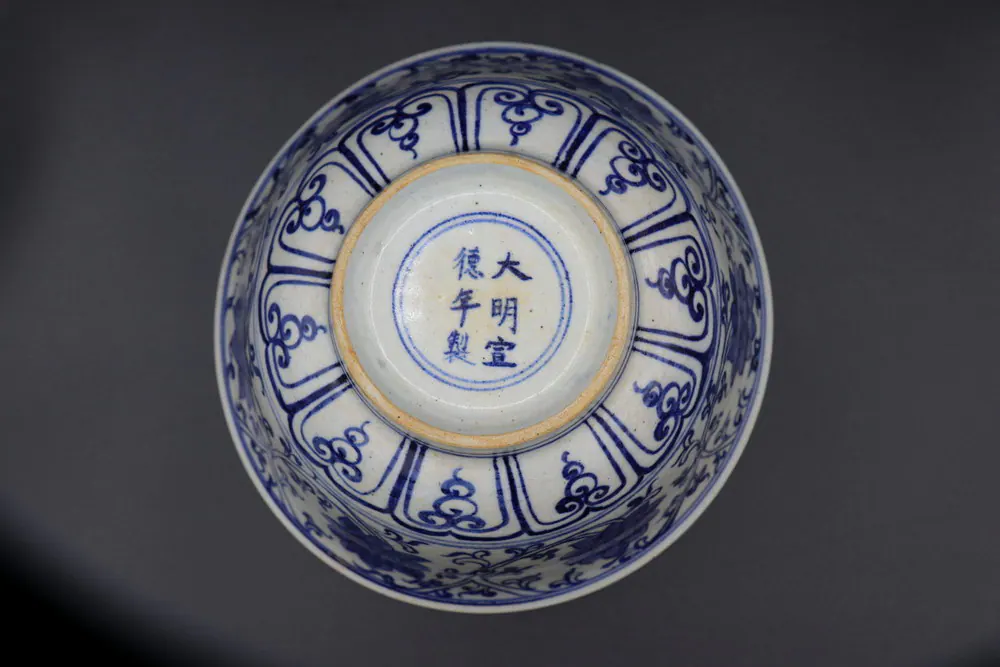
Most Ming and Qing imperial porcelain carries a reign mark on the base, usually written in underglaze blue. The standard form has six characters, often in two columns of three read from the top of the right-hand column: Da Ming Xuande nian zhi, "made in the Xuande reign of the Great Ming". Four-character marks leave out the dynasty. Ming marks are nearly always in regular script; in the Qing, seal script came into use under Yongzheng and became usual under Qianlong.
A mark records what was written on a piece, not when it was made. Later potters used the marks of admired reigns, Xuande, Chenghua, Jiajing and Kangxi among them, sometimes in homage and sometimes to deceive, and many private kiln pieces carry the mark of a reign that had ended long before. Such marks are called apocryphal marks. That is why we describe a piece as, for example, "with a Xuande mark", and date it by its body, glaze and painting rather than by the characters on its base.
Not every mark is a reign mark. Hall marks name a studio or residence, other marks give an auspicious phrase or praise the piece, and many private kiln wares carry a symbol, such as a leaf or a hare, in place of any writing. Symbol, hall and workshop marks have a guide of their own.
Our guide to Chinese porcelain marks is the main page for the subject. It leads to charts of Ming reign marks and Qing reign marks.
Judging age and spotting copies
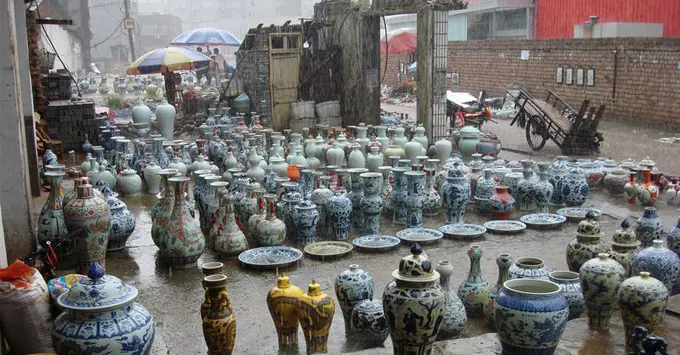
No single feature proves that a piece is old. Specialists read a piece as a whole, in a set order: shape and potting, the body and base, the glaze, the colours, the painting, the mark and, last, the wear. Each should point to the same period. A good copy usually gets one or two of these right and the rest nearly right, and the gap shows only when everything is compared at once.
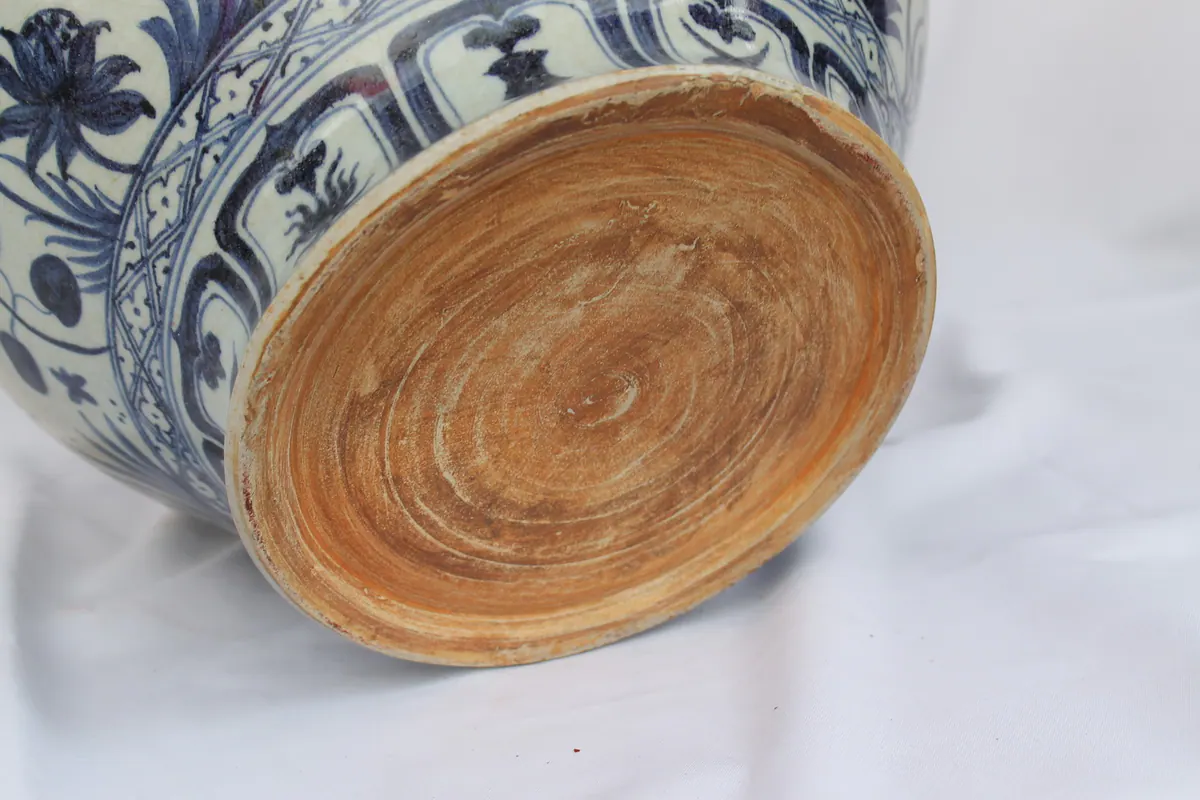
The base is often the most revealing part, because it records how a piece was trimmed, glazed and set in the kiln: see reading the base. Signs that build up with time, such as wear, staining and crackle, and signs fixed in the kiln, such as iron spots and glaze contractions, are explained in how to identify antique Chinese porcelain, the main page for dating, which leads to a guide on each sign.
Copying has a long history. Ming potters imitated Song glazes, Qing imperial potters copied early Ming blue and white and Chenghua enamels with great skill, and late Qing and Republic workshops reproduced almost every admired style. Modern reproductions, many made at Jingdezhen itself, now imitate wear and firing flaws as well. Our guide to detecting fakes covers the commonest deceptions.
The best training is to look at, and where possible handle, pieces of secure date. Museum collections, excavation reports and the catalogues of long-established specialists show what genuine pieces look like, and handling teaches the weight of a piece and the feel of its glaze, which no photograph can.
Two related questions need their own attention. Restoration can make a damaged piece look perfect, and condition and restoration explains what to check. Japanese and Vietnamese potters painted blue and white in Chinese styles, and Chinese, Japanese or Vietnamese? explains how to tell them apart.
Shapes and decoration
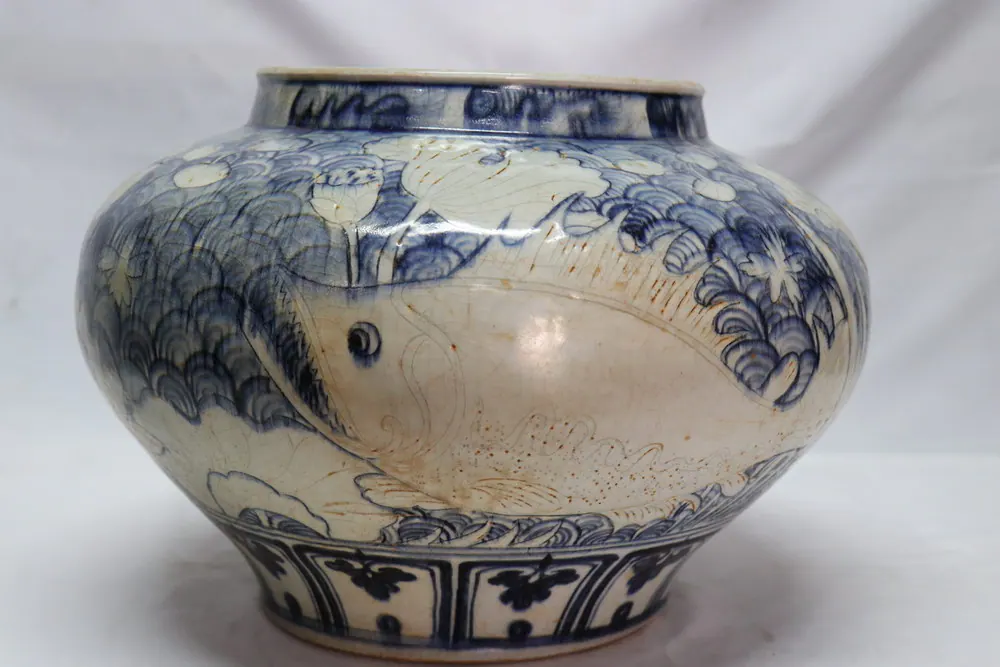
Shape is one of the surest guides to date, and one of the things copyists most often get wrong. The meiping, a high-shouldered vase with a small mouth, the pear-shaped yuhuchun vase, the guan jar, the stem cup and the kendi each changed profile over the centuries: the swell of a shoulder, the height of a neck and the cut of a foot all moved with fashion. A copy may reproduce the painting faithfully and still have a neck a little too long or a foot a little too neat. Chinese porcelain shapes is the main page for forms, and the kendi, a spouted drinking vessel made largely for Southeast Asian markets, has a guide of its own.
Decoration carries meaning. Fish stand for abundance, because the word for fish, yu, sounds like the word for plenty; the lotus stands for purity and the peony for wealth and honour. Phoenixes, qilin and scenes from drama and legend all have their own conventions, explained in symbols on Chinese porcelain.
Borders and secondary motifs are just as useful for dating as the main subject, because painters repeated them without thinking: the lotus-petal panels round the foot of a Yuan jar, the wave borders of early Ming dishes, the stiff leaves of later copies. Terms such as anhua, kraak and fencai are defined in our glossary.
Buying, value and our collection
The value of a piece rests on a handful of things: its period, the quality of its potting and painting, its condition, its rarity, its provenance, and the taste of the market at the time. A fine, undamaged piece from an admired period with a documented history will always be sought after; a damaged or heavily restored example of a common type far less so. Our guide to what makes antique Chinese porcelain valuable explains each factor. We do not offer a valuation or identification service.
Before you buy, know what to ask for: clear photographs of the base and any mark, a plain account of any damage or repair, and a plain statement of how the seller dates the piece and why. Buying antique Chinese porcelain covers this in full.
Our collection is antique Chinese porcelain from the Song to the Qing, with its greatest strength in Yuan and Ming blue and white. You can browse it all in antique Chinese porcelain, or by period:
- Song dynasty porcelain
- Yuan dynasty porcelain
- Ming dynasty porcelain
- Qing dynasty porcelain
- Blue and white porcelain
Each piece page has a Request price form, and we reply by email. Every piece is shipped fully insured, and all sales are final.