1644–1662
The Southern Ming Dynasty
The Southern Ming were the loyalist courts that carried on the Ming dynasty in southern China after rebels took Beijing in 1644. Four emperors and a regent held out against the Qing for eighteen years, from Nanjing to the borders of Burma, until the last of them, the Yongli Emperor, was put to death in 1662. This page follows each court in turn and looks at what the kilns of Jingdezhen were making while they fought.
- Dates
- 1644–1662
- Emperors
- Hongguang, Longwu, Shaowu and Yongli
- Regent
- Zhu Yihai, Prince of Lu (1645–1653)
- Courts
- Nanjing, Fuzhou, Shaoxing, Guangzhou, Zhaoqing, then the south-west
- Key events
- Fall of Yangzhou and Nanjing (1645); flight to Burma (1659); Yongli's death (1662)
- Porcelain
- Transitional wares from the private kilns of Jingdezhen
The fall of Beijing in 1644
In April 1644 the rebel army of Li Zicheng, who had proclaimed his own Shun dynasty earlier that year, took Beijing, and the Chongzhen Emperor hanged himself on the hill behind the palace. Weeks later the Ming general Wu Sangui, who held the Shanhai Pass at the eastern end of the Great Wall, joined forces with the Manchu regent Dorgon and defeated Li's army. The Manchus entered Beijing in June, and in the autumn the young Shunzhi Emperor was enthroned there as ruler of the Qing.
The south remained loyal to the Ming. Nanjing had been the dynasty's first capital and kept a full set of ministries as its southern capital, and many officials and members of the imperial clan had fled there. The regimes they formed, which resisted the Qing for almost two decades, are known as the Southern Ming dynasty. The decades before 1644 are covered on our late Ming dynasty page.
Hongguang at Nanjing (1644–1645)
With the fate of Chongzhen's sons unknown, the officials at Nanjing chose Zhu Yousong, the Prince of Fu, a grandson of the Wanli Emperor and the nearest heir by descent. Backed by the most powerful commanders, he was enthroned in June 1644 and reigned as the Hongguang Emperor.
His court was crippled by faction. The grand secretary Ma Shiying dominated the government, while Shi Kefa, the most respected minister, was sent to Yangzhou to command the armies north of the Yangtze, whose generals quarrelled among themselves. In 1645 the general Zuo Liangyu marched down the Yangtze from Wuchang, declaring that he would rid the court of corrupt officials, and troops that should have faced the Qing were sent to stop him.
The Qing armies reached Yangzhou in May 1645. The city fell after a short siege, Shi Kefa was killed, and a massacre followed; Wang Xiuchu's Account of Ten Days at Yangzhou put the dead at more than 800,000, a figure historians treat with caution. Nanjing surrendered without a fight in June. The Hongguang Emperor fled but was captured and taken to Beijing, where he died the following year.
That summer the Qing ordered all men to shave the front of the head and wear the Manchu queue. The order turned many who might have accepted the new dynasty into resisters, and cities in the Yangtze delta, Jiangyin and Jiading among them, held out and were sacked.
Longwu in Fujian and the Prince of Lu in Zhejiang (1645–1646)
After the fall of Nanjing two new centres of resistance emerged. At Fuzhou in Fujian, Zhu Yujian, the Prince of Tang, was proclaimed emperor in 1645 and reigned as Longwu. He was conscientious and well read in Ming government, but real power lay with his protector, the sea trader and admiral Zheng Zhilong.
At Shaoxing in Zhejiang, loyalist officials invited Zhu Yihai, the Prince of Lu, to act as regent. He never took the title of emperor, but neither would he accept Longwu's authority, and the two courts wasted their strength in rivalry. Zhu Changfang, whose title is also rendered in English as Prince of Lu, had already surrendered Hangzhou to the Qing without a fight.
In 1646 the Qing crossed the Qiantang River and scattered the regent's forces, and Zhu Yihai took to the islands off the coast. In Fujian, Zheng Zhilong, already negotiating with the Qing, withdrew his troops from the mountain passes. The Qing marched in, the Longwu Emperor was captured at Tingzhou and killed, and Zheng Zhilong went over to the new dynasty. His son Zheng Chenggong refused to follow him and became the most formidable loyalist commander of all, known in the West as Koxinga, a name that recalls the imperial surname Longwu had granted him.
Two emperors in Guangdong (1646–1647)
After Longwu's death the loyalist cause divided again. His younger brother, Zhu Yuyue, reached Guangzhou and was proclaimed emperor there as Shaowu in December 1646. Only days later Zhu Youlang, the Prince of Gui, another grandson of the Wanli Emperor, was proclaimed the Yongli Emperor at Zhaoqing, a short way up the West River.
Each claimed to be the rightful heir, and their armies fought each other. In January 1647, about forty days after Shaowu's accession, a Qing force took Guangzhou by surprise and Shaowu took his own life. The Yongli court fled west into Guangxi.
Other claimants appeared on the margins. The Prince of Huai is recorded as regent on the Guangdong coast in 1648 and 1649, though little is known of him. From 1647, however, the Yongli Emperor was the Ming for most loyalists.
The Yongli Emperor in the south-west (1647–1659)
The Yongli Emperor reigned for fifteen years, longer than all the other Southern Ming rulers together, but he was rarely master of his own court. He depended on regional commanders and, increasingly, on former rebels. In 1648 two Qing generals, Li Chengdong in Guangdong and Jin Shenghuan in Jiangxi, changed sides, and for a time much of the south was again under the Ming. The Qing recovered it by the end of 1650, retaking Guangzhou and Guilin.
The court then turned to the generals of the late rebel Zhang Xianzhong, who had made themselves masters of Yunnan and Guizhou. Sun Kewang took the emperor under his protection in 1652, while Li Dingguo won the greatest loyalist victories of the war that year, taking Guilin and defeating a Qing prince at Hengzhou. The two generals soon fell out. Li Dingguo brought Yongli to Kunming in 1656, and in 1657 Sun Kewang, defeated by Li, went over to the Qing.
His knowledge of the south-west served the Qing well. In 1658 three armies, one of them led by Wu Sangui, converged on Guizhou and Yunnan. Kunming fell early in 1659, and Yongli fled across the border into Burma.
Burma and the end of the Ming line (1659–1662)
King Pindale of Burma allowed the emperor and his followers to settle at Sagaing, across the river from his capital at Ava. Relations soon soured. The Burmese came to suspect the exiles, Li Dingguo's attempts to reach the emperor brought war to the frontier, and in 1661 Pindale was overthrown by his brother, Pye Min. On the new king's orders almost all of Yongli's male followers were killed; only the emperor and his family were spared.
At the end of 1661 Wu Sangui led a Qing army into Burma and demanded the emperor. The Burmese, unwilling to fight another war, handed Yongli and his family over in January 1662. He was taken back to Kunming and put to death there in 1662, together with his son. Li Dingguo died in the borderlands later the same year, and Zhu Yihai, the Prince of Lu, who had given up the title of regent in 1653, died on the island of Kinmen.
Historians usually end the Southern Ming here. Resistance did not stop entirely: Zheng Chenggong took Taiwan from the Dutch in 1662, and the Zheng government there went on dating its documents by the Yongli era until it surrendered to the Qing in 1683. The dynasty that followed is described on our Qing dynasty page.
Porcelain in the years of the Southern Ming
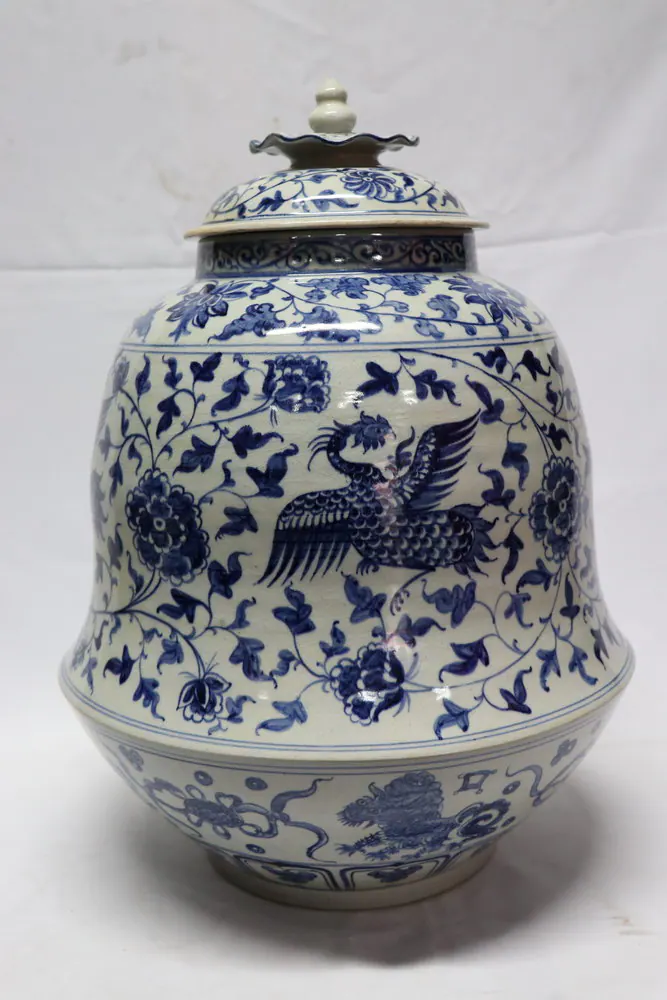
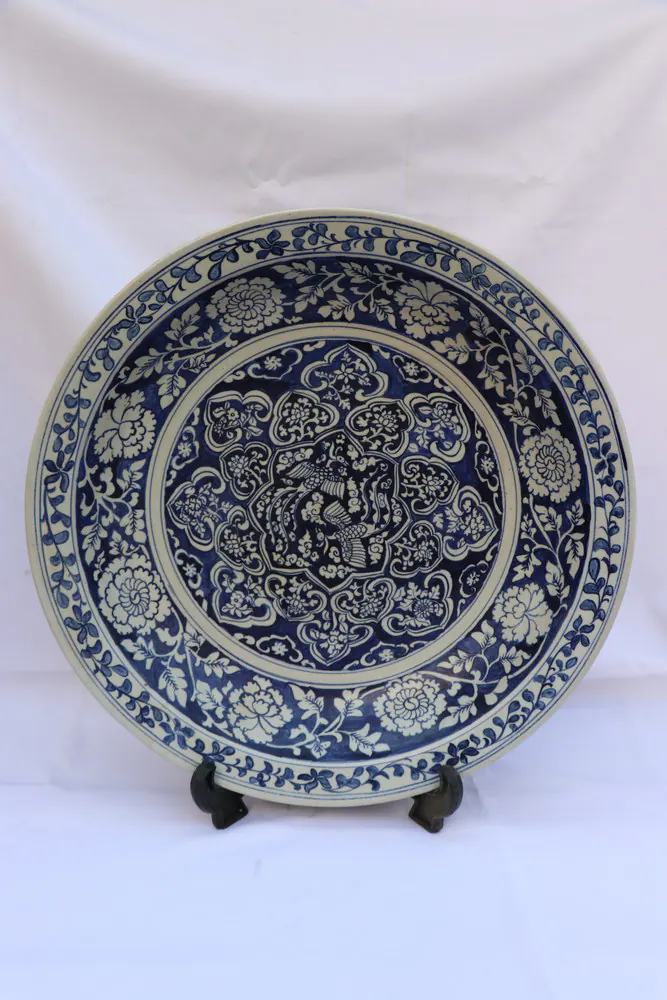
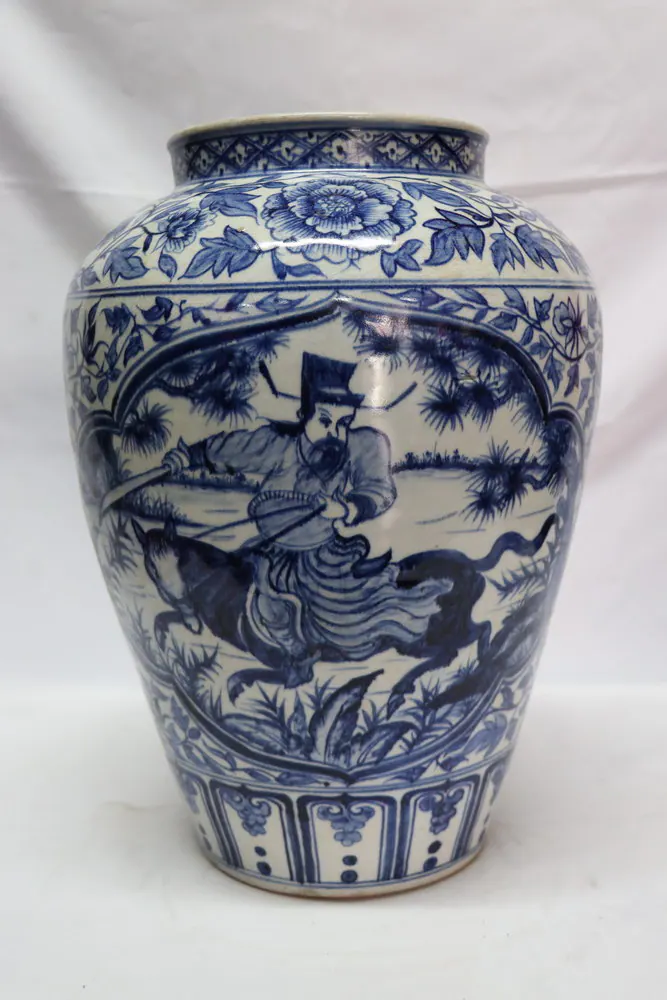
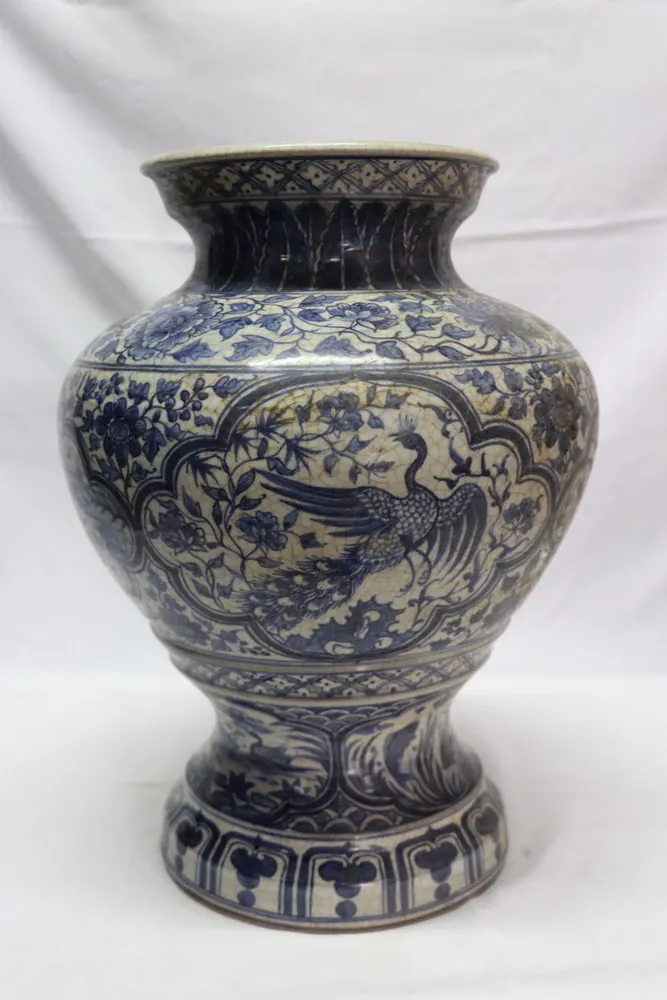
The Southern Ming courts, almost always on the move, are not known to have ordered porcelain from Jingdezhen, and imperial orders had already dwindled in the last decades of the Ming. The kilns did not stop. Their private workshops were making what collectors call Transitional porcelain, from about 1620 until the imperial factory was restored under the Kangxi Emperor in 1683.
The Southern Ming years fall in the middle of that period. Jiangxi was fought over and changed hands more than once, and the trade suffered, yet the best blue and white of the 1640s and 1650s is painted in a bright, clear blue with figure scenes from novels and plays, landscapes and drifting clouds. Reign marks are rare, but cyclical dates on some pieces let the style be followed decade by decade. From 1661 the Qing evacuation of the south-eastern coast, meant to starve Zheng Chenggong's forces of supplies, cut off much of the export trade, and by then the Dutch had already begun to buy Japanese porcelain instead.
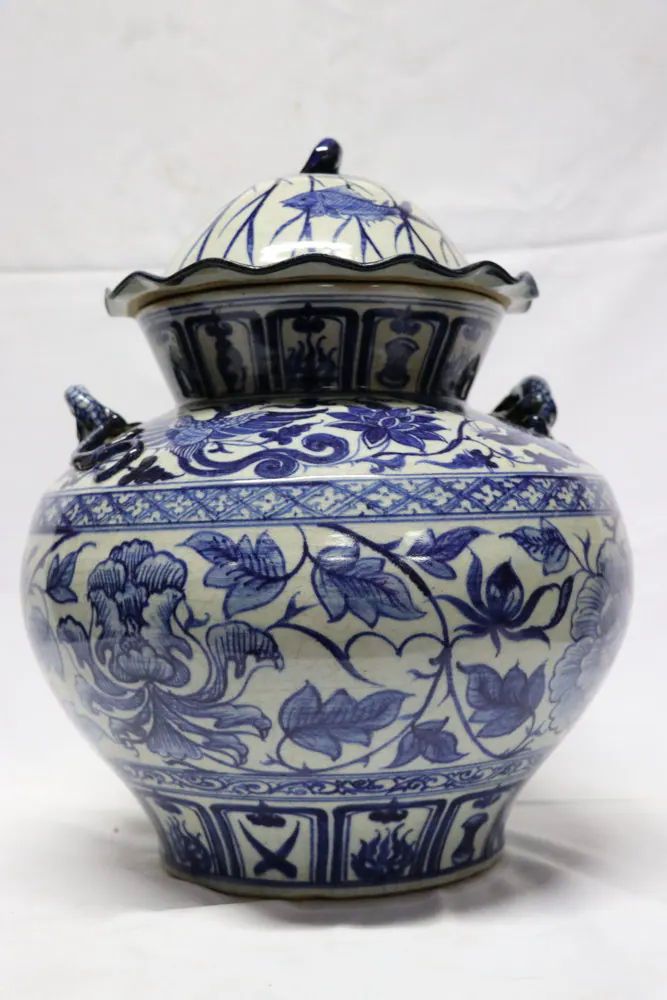
Private-kiln pieces from these unsettled decades are often hard to place in a single reign. A folk kiln vase with a shell mark in our collection, which we date to the late Ming or early Qing, and a blue and white kendi catalogued as early Qing and made at a private kiln, are examples of such work from around these years. More can be seen in our Ming dynasty porcelain collection.