1590–1644
Late Ming Porcelain, 1590–1644: Kraak, Tianqi and Chongzhen
Late Ming porcelain was made in the last half-century of the dynasty, while the court lost control of its finances and then its northern frontier. As imperial orders dwindled, Jingdezhen turned to merchants, to the Dutch and to Japanese tea masters. In doing so it produced kraak export ware, the playful Tianqi porcelain known in Japan as ko-sometsuke, and the finely painted Chongzhen wares at the heart of the Transitional period.
- Dates
- About 1590 to 1644
- Reigns
- Late Wanli, Taichang, Tianqi and Chongzhen
- Kilns
- Jingdezhen private kilns; Zhangzhou in Fujian
- Key wares
- Kraak, ko-sometsuke, Transitional blue and white
- Marks
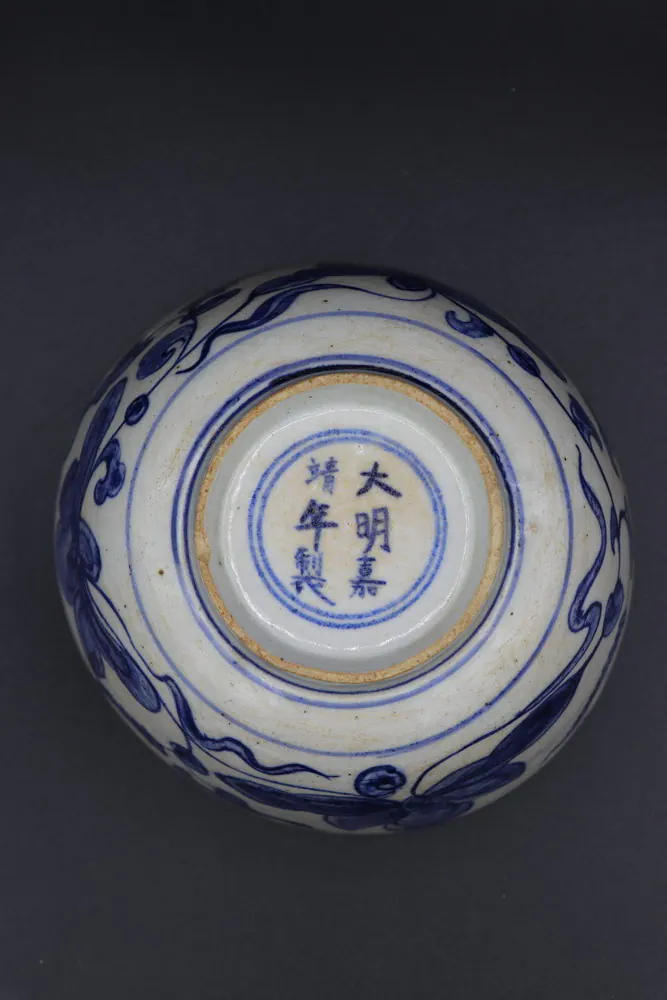
- Reign marks scarce after 1620; cyclical dates and symbols
War, an absent emperor and the kilns
We take the late Ming to begin around 1590, midway through the long reign of the Wanli Emperor (1572–1620), and to end with the fall of Beijing in 1644. The 1590s brought three costly campaigns, later called Wanli's Three Great Campaigns: the suppression of a mutiny at Ningxia in 1592, the defence of Korea against the invasions of Toyotomi Hideyoshi between 1592 and 1598, and the defeat of the chieftain Yang Yinglong at Bozhou in the south-west in 1600.
They were fought by a government whose head had stopped governing. From the late 1580s, after a long quarrel with his officials over the choice of heir, Wanli refused to hold audiences and left vacant posts unfilled. To raise money he sent palace eunuchs into the provinces as commissioners for mines and commercial taxes, and their demands provoked riots in several cities.
Jingdezhen felt this directly. The eunuch Pan Xiang, sent to Jiangxi around 1600 with charge of the imperial kilns, pressed the potters hard for difficult pieces such as very large jars. According to local tradition a potter named Tong Bin threw himself into a kiln in protest, and he was later honoured at Jingdezhen as a god of the kiln fire.
Late Wanli imperial porcelain
Imperial porcelain of the later Wanli years is plentiful but uneven. Wucai remained the showpiece, painted in iron red, green, yellow and underglaze blue, with phoenixes, flowers and auspicious symbols packed across the surface. Blue and white moved away from the violet tone of Jiajing towards a softer, sometimes greyish blue, and the finish of many pieces is less careful than before. Pieces with Wanli marks are common, and many come from private kilns working to imperial designs or simply writing the current reign mark.
Imperial orders shrank as the treasury emptied. After Wanli's death in 1620 they fell away almost entirely, which is why porcelain with Tianqi or Chongzhen reign marks is scarce. From then on the future of Jingdezhen lay with private buyers at home and abroad.
Kraak porcelain and the Dutch
For many collectors the defining late Ming ware is kraak porcelain, the blue and white made at Jingdezhen's private kilns for export from about the 1570s into the 1640s. Its name is usually derived from the Portuguese carrack, the type of merchant ship that carried it. In 1602 and 1603 Dutch ships captured two Portuguese carracks, the San Tiago and the Santa Catarina, and the sale of their porcelain in the Netherlands started a fashion across northern Europe. The Dutch East India Company, founded in 1602, soon became the largest European buyer.
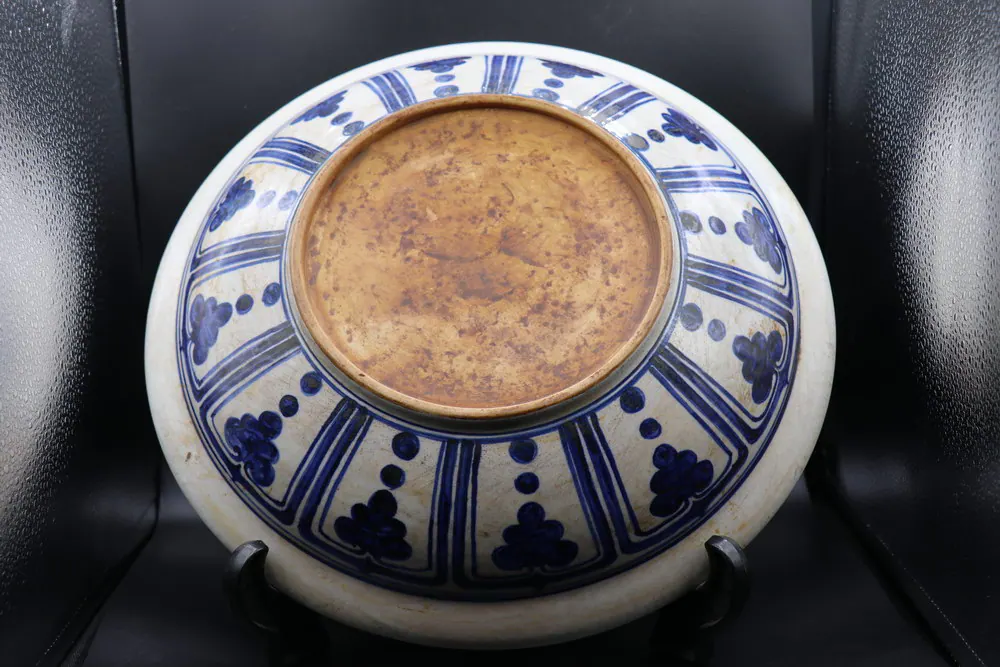
Kraak is easy to recognise once seen. Dishes and bowls are thinly potted, with the border divided into radiating panels, often alternating wide and narrow, around a central scene of birds on rocks, deer in a landscape, insects among flowers or a vase of flowers. The thin rims chip easily and the glaze often flakes at the edge. Bases commonly show radial chatter marks and grit from the kiln stuck to the footring. The same panelled style was copied, more coarsely, at the Zhangzhou kilns of southern Fujian.
Tianqi porcelain and ko-sometsuke for Japan
Wanli's son reigned as the Taichang Emperor for barely a month in 1620. The throne then passed to his eldest son, the Tianqi Emperor, who was fourteen and left government to the eunuch Wei Zhongxian and his own former wet nurse, Madam Ke. Wei purged the reforming Donglin officials. Meanwhile the Jurchen leader Nurhaci, who had declared war on the Ming in 1618 and destroyed a large Ming army at Sarhu in 1619, took Shenyang and Liaoyang.
At Jingdezhen the private potters found an eager market in Japan. Tea masters and their patrons ordered small dishes, bowls and water jars for the tea ceremony and the kaiseki meal served with it, many in playful shapes such as fans, leaves, fish and animals. The Japanese call this ware ko-sometsuke, ‘old blue and white’. Western collectors often call it Tianqi porcelain, although it was made from about the 1620s into the 1640s.
Ko-sometsuke is painted with quick, witty brushwork: sages, fishermen, animals, landscapes and inscriptions in a few strokes. The body is often a little rough, and the glaze tends to shrink away from the rims in tiny flakes, leaving bare spots the Japanese call mushikui, ‘moth-eaten’. Chinese taste would have counted this a flaw; Japanese tea taste valued it as natural and unforced. A finer group made for Japan in the 1630s and 1640s, with dense geometric borders like brocade, is known as shonzui.
Chongzhen porcelain and the Transitional style
The Chongzhen Emperor, Tianqi's younger brother, removed Wei Zhongxian within months of his accession in 1627, but inherited an empty treasury, a divided court and a war in the north-east. He trusted few ministers and replaced them constantly, and in 1630 he had the frontier general Yuan Chonghuan executed. Famine and unpaid troops fed great rebellions in the north-west through the 1630s, while Nurhaci's successor, Hong Taiji, renamed his state Qing in 1636.
Chongzhen porcelain is nonetheless among the finest of the late Ming. Without court orders, the best Jingdezhen workshops made blue and white for scholars and merchants in a bright, clear blue on a fine white body. Brush pots, sleeve vases, ovoid jars and bottles are painted with figures from novels and plays, scholars in landscapes and drifting clouds, often framed by lightly incised bands of scrolling at the shoulder and foot. Some pieces carry cyclical dates in place of reign marks, which allows the style to be dated closely.
Collectors call these wares, together with those of the early Qing that followed, Transitional porcelain, a period usually taken to run from about 1620 to 1683. By the late 1630s Dutch merchants were also ordering European shapes, such as mustard pots and tankards, from Jingdezhen.
The fall of Beijing
In April 1644 the rebel leader Li Zicheng took Beijing, and the Chongzhen Emperor hanged himself on the hill behind the palace, now Jingshan Park. Within weeks the Ming general Wu Sangui joined the Manchus at the Shanhai Pass and together they defeated Li's army. In the autumn of 1644 the young Shunzhi Emperor was enthroned in Beijing. Ming loyalists fought on in the south for almost twenty years, a story told on our Southern Ming Dynasty page.
For Jingdezhen the change of dynasty did not end the late Ming style at once. The private kilns went on working for merchants and export buyers, and the Transitional manner continued well into the Qing.
Late Ming porcelain in our collection
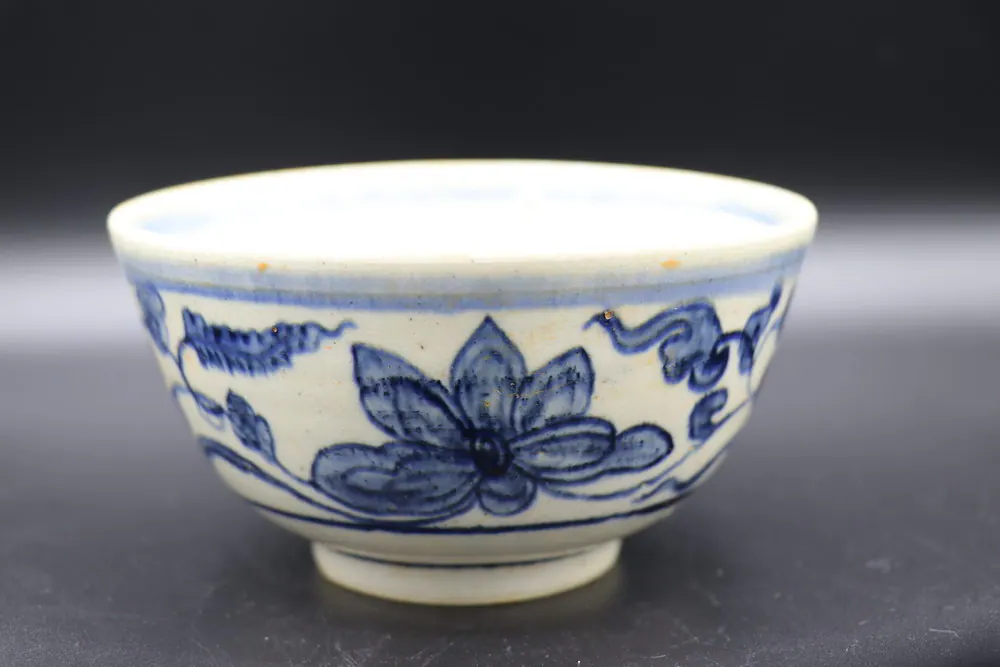
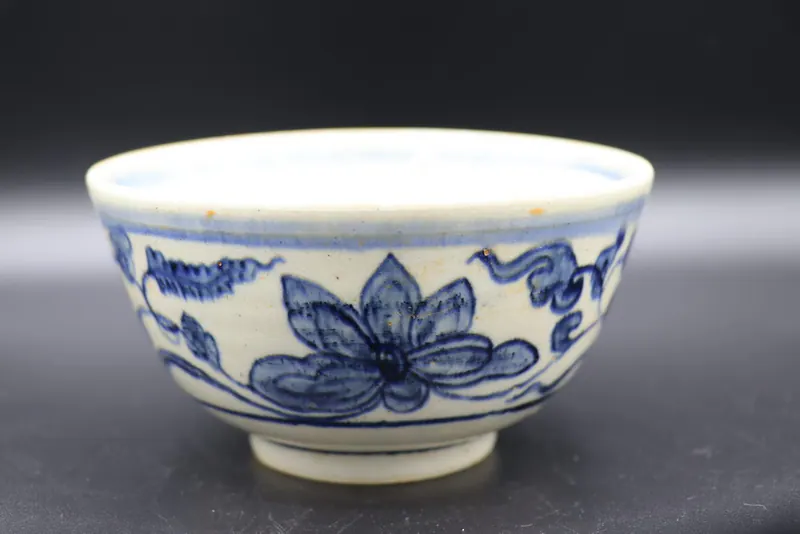
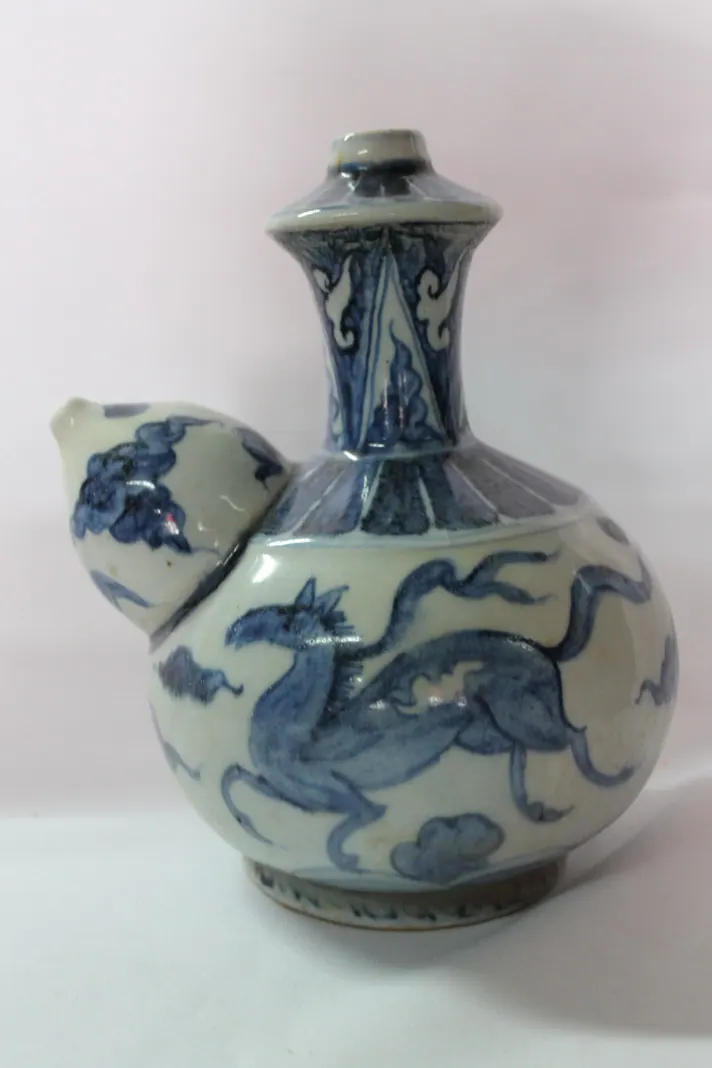
Most late Ming porcelain that reaches collectors today came from private kilns rather than the imperial works, and it deserves to be judged on its own terms. Our guide to Ming folk kiln porcelain explains how to look at it.
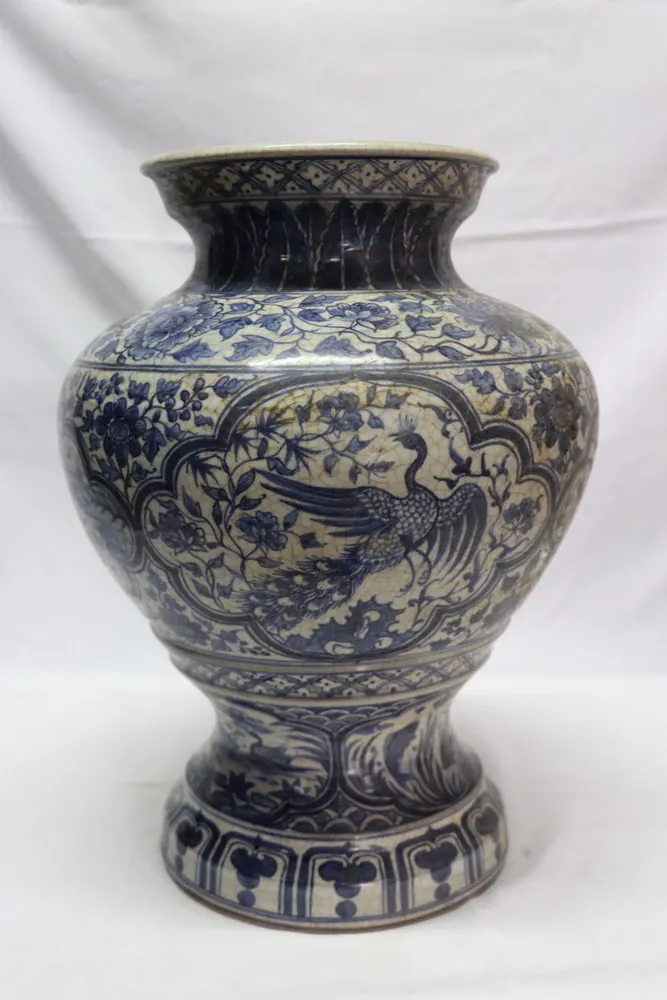
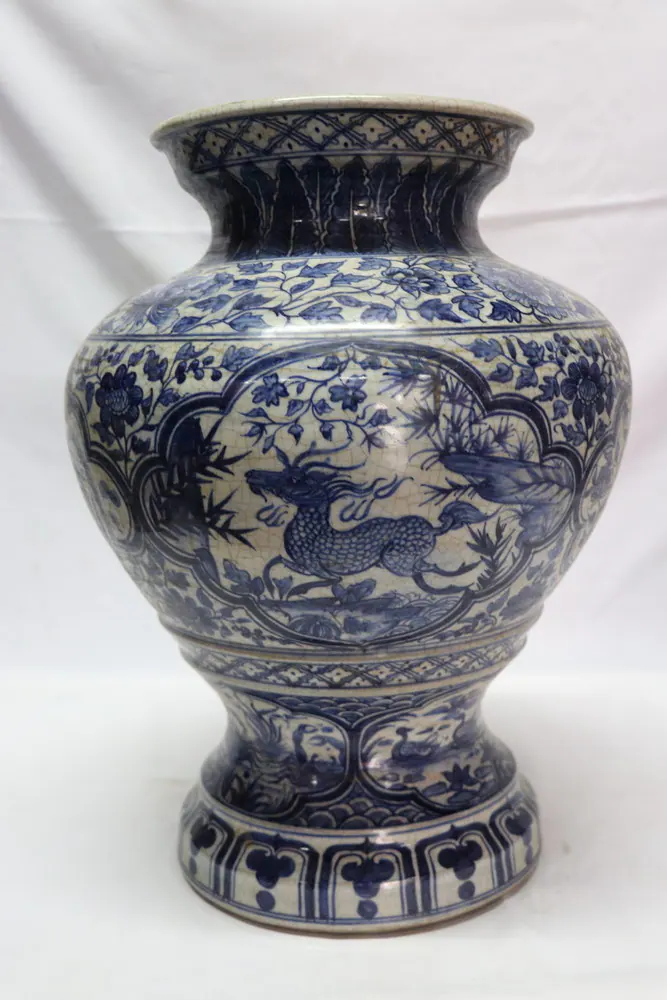
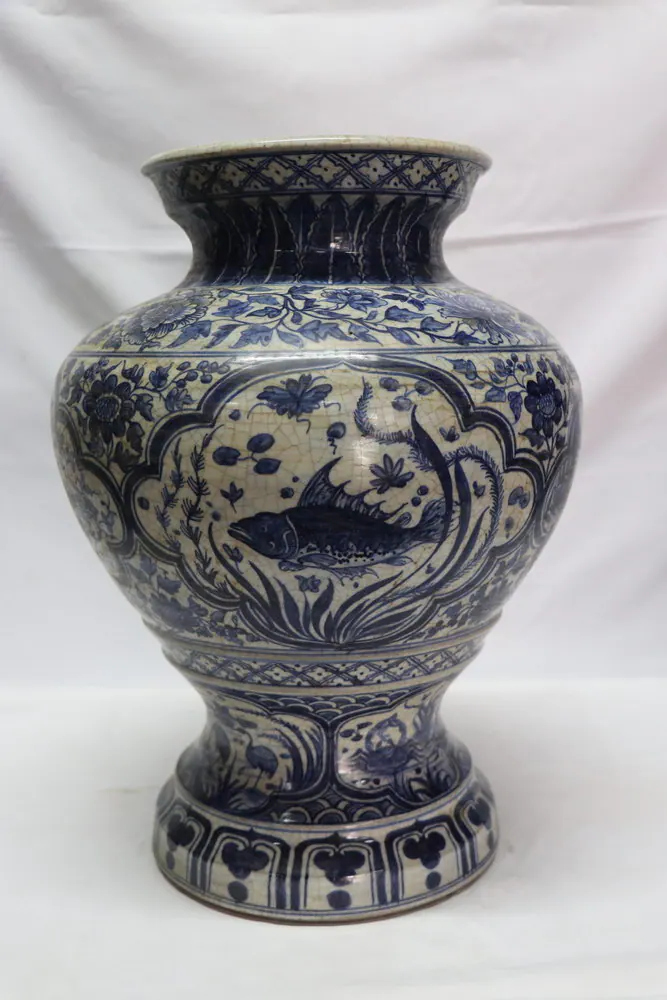
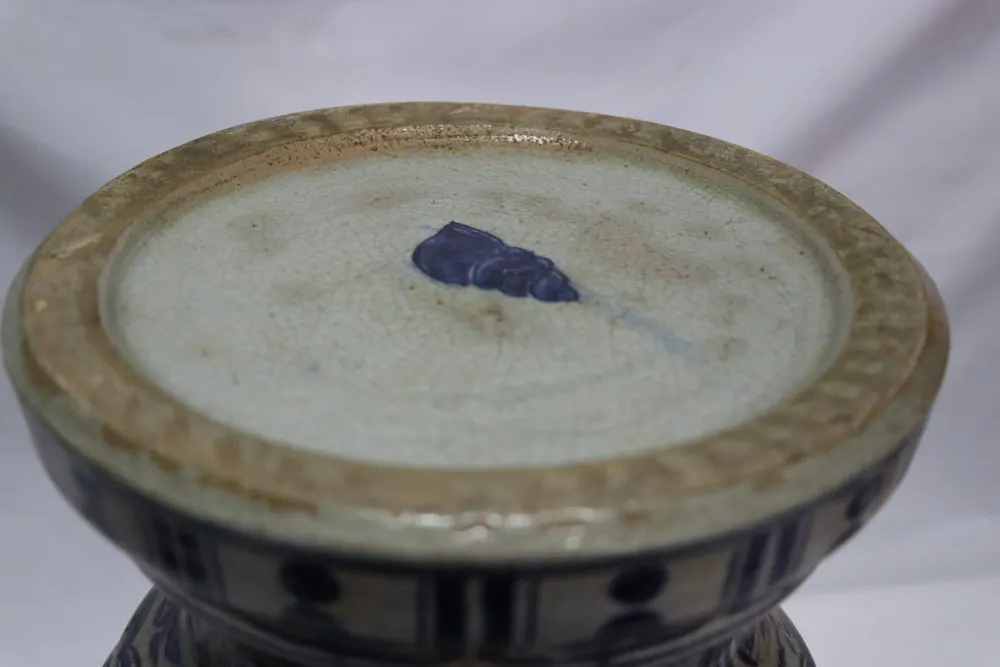
A folk kiln vase with a shell mark, which we date to the late Ming or early Qing, shows how freely such potters drew on the past. Its painting recalls Yuan blue and white, with panels enclosing a peacock, a qilin, a crane and a fish above a band of waves. In place of a reign mark, the base carries a small shell painted in underglaze blue. It is offered by private inquiry through the Request price form on its page, and more pieces can be found in our Ming dynasty porcelain collection. For the dynasty as a whole, see Ming dynasty porcelain.