1505–1590
Jiajing Porcelain and the Later Middle Ming, 1505–1590
Between the accession of the Zhengde Emperor in 1505 and about 1590, midway through the Wanli reign, Jingdezhen porcelain changed as much as in any comparable span of the Ming. This page follows it reign by reign: Zhengde blue and white inscribed in Arabic and Persian, Jiajing porcelain in its deep purplish blue and bold enamels, the brief Longqing reign, and the first decades of Wanli, when export porcelain began to reach Europe and the Americas in quantity.
- Dates
- 1505 to about 1590
- Reigns
- Zhengde, Jiajing, Longqing and early Wanli
- Kilns
- Jingdezhen: the imperial works and private kilns
- Key wares
- Blue and white, wucai, yellow and iron-red wares
- Marks
- Mostly six-character reign marks; Longqing marks usually end in zao
A period of change at Jingdezhen
Collectors and historians divide the Ming into early, middle and late periods, and the boundaries are conventions rather than events. We take the later middle Ming to run from 1505, when the Zhengde Emperor succeeded his father, the Hongzhi Emperor, to about 1590, by which time the Wanli Emperor had largely withdrawn from government. The decades before are covered on our Middle Ming Dynasty page. The decades that follow are described under the Late Ming Dynasty.
Three developments shape the porcelain of these years. The court was often run by eunuchs and grand secretaries while emperors pursued their own interests, yet its demand for porcelain grew rather than shrank. The cobalt used at Jingdezhen changed, producing the strong violet blue that identifies so much Jiajing work. And from 1567 private overseas trade was legal again, so that the private kilns, which had always far outnumbered the imperial works, found markets from Manila to Lisbon.
For the ceramics of the dynasty as a whole, see our guide to Ming dynasty porcelain.
Zhengde porcelain: Arabic and Persian inscriptions
The Zhengde Emperor left government to favourites, above all the eunuch Liu Jin, until Liu's fall and execution in 1510. He preferred hunting and military display, lived much of the time in a private compound outside the Forbidden City known as the Leopard House, and kept Muslim and Central Asian companions at court. He died in 1521 without a son, and the throne passed to his cousin.
The best-known Zhengde porcelain reflects that court. A distinctive group of blue and white pieces, many of them objects for the desk such as brush rests, table screens, boxes and pen cases, carries phrases in Arabic or Persian script, usually set in panels among scrolling flowers. They were long linked to Muslim eunuchs in the palace, although who used them, and how, is still debated.
The blue itself moved during the reign. Early Zhengde pieces often share the soft, pale tone of the Hongzhi period, while later ones show a stronger, brighter blue that points towards Jiajing. The imperial kilns also continued the yellow-glazed and green-enamelled wares made under Hongzhi.
Jiajing porcelain: purplish blue and Daoist themes
The Jiajing Emperor came to the throne at thirteen in 1521 and reigned for forty-five years. His early reign was consumed by the Great Rites Controversy, a bitter struggle with his officials over honouring his own father, a prince, with imperial rank. Later he gave himself to Daoist ritual and the search for long life. After palace women tried to strangle him in 1542 he withdrew from regular audiences and left government to grand secretaries such as Yan Song. He died in 1567, very probably poisoned by the mercury-rich elixirs he took.
Jiajing porcelain is recognised first by its colour. Imported cobalt known as huiqing, often translated ‘Mohammedan blue’, was mixed with Chinese ore to give a dense purplish or violet blue, strong enough to read clearly on large pieces. Where the mixture ran heavy it could spread in the firing, and many Jiajing pieces show a slightly blurred line. Our guide to cobalt blue on Chinese porcelain traces how the colour changes from reign to reign.
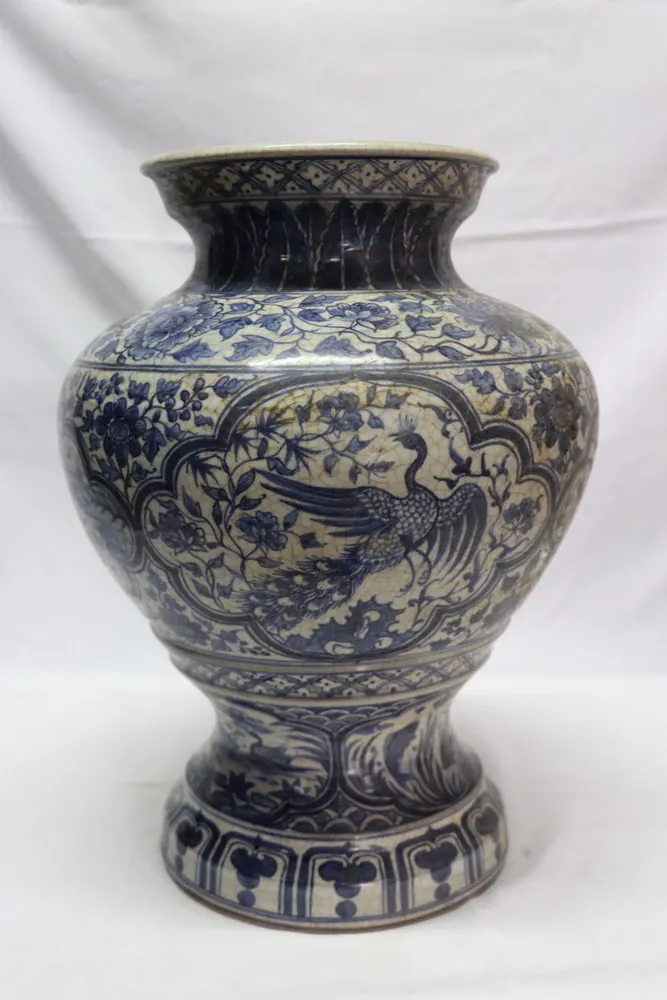
The emperor's Daoism is written on the porcelain. Cranes among clouds, peaches, pine trees, lingzhi fungus, the eight trigrams and the Eight Immortals all appear, as does the character shou, ‘long life’, sometimes formed from twisting branches. Scenes of boys at play, a wish for many sons, are another favourite. Shapes grew bolder too: massive jars of the kind known as fish jars, double-gourd vases with a square lower section, square and lobed boxes, and large dishes.
Wucai and coloured grounds
Jiajing is also the reign in which wucai, ‘five colours’, became a major imperial ware. It usually combines underglaze blue, fired first, with overglaze enamels in iron red, green, yellow, aubergine and black, added in a second, lower firing. The earlier doucai of the Chenghua period fills fine blue outlines with delicate enamels; Jiajing wucai is bold and densely coloured, and jars painted with golden carp among waterweeds are among its best-known designs. The difference between the two is explained in Doucai and Wucai.
Monochrome and two-colour wares were made in quantity: bright yellow glazes, iron red, and designs in one colour set against a ground of another, such as yellow with red or green with yellow. Private kilns also made a richly gilded ware, with gold leaf applied over iron-red or green enamel grounds. Much of it was exported, and it was so admired in Japan that it is still known there as kinrande, ‘gold brocade’.
Imperial orders and private kilns
Court orders in the Jiajing reign were enormous, often more than the imperial works could fire on time. The answer, which grew under Jiajing and became routine under Wanli, was to place part of each order with private kilns, a system known as guanda minshao, ‘official commission, private firing’. The line between imperial and private porcelain became less sharp, and the best private potters worked to imperial designs and standards.
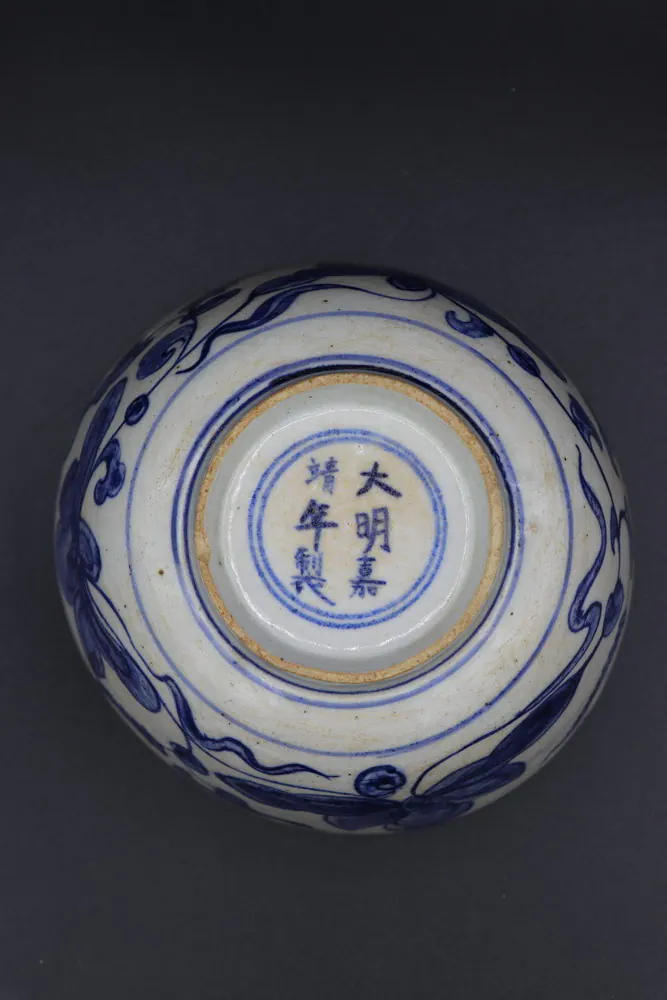
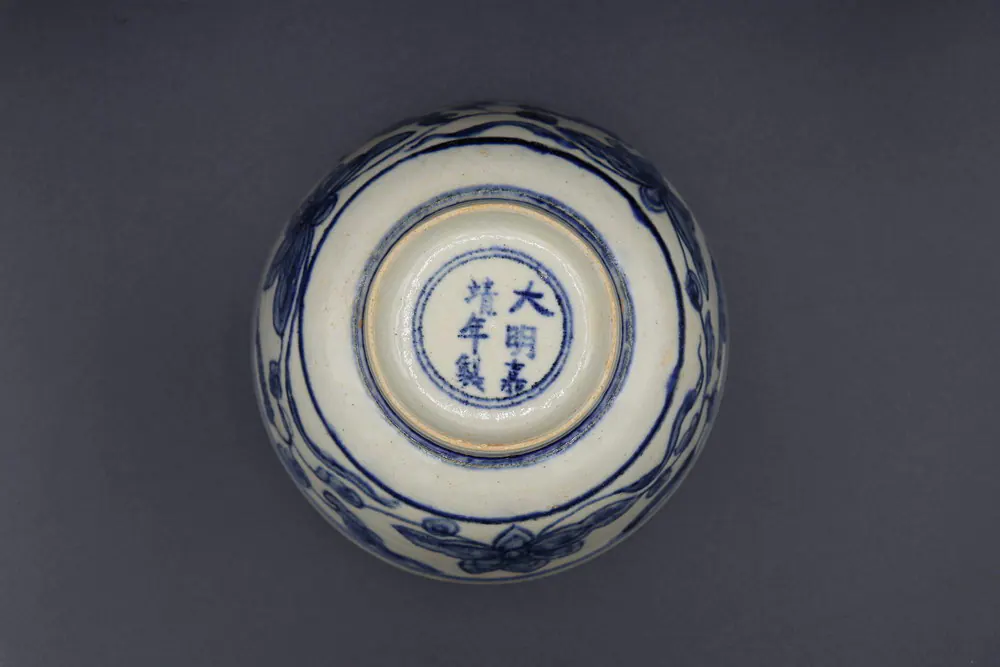
Private kilns also wrote reign marks. The six-character mark Da Ming Jiajing nian zhi, usually in a double ring, appears on imperial pieces and on a great deal of private porcelain of middling quality, and later potters borrowed it again. A mark records what the painter wrote, not when the piece was made, so each piece has to be judged by its body, glaze, cobalt and painting. Our guide to Chinese porcelain marks explains how.
Longqing: a short reign and an open sea
The Longqing Emperor reigned only from 1567 to 1572, but two decisions of his reign had lasting effects. In 1567 the ban on private overseas trade was relaxed, and Chinese merchants were licensed to sail from Yuegang in Fujian. In 1571 peace was made with the Mongol leader Altan Khan, who received a Ming title and the right to trade at frontier markets, ending decades of raiding.
Longqing porcelain continues the Jiajing style in its shapes, colours and themes. Because the reign was short, marked pieces are scarce. Unusually, Longqing marks usually read Da Ming Longqing nian zao, using the character zao for ‘made’ in place of the customary zhi.
Early Wanli and the export boom
The Wanli Emperor came to the throne as a boy in 1572 and reigned until 1620, the longest reign of the dynasty. For his first decade the grand secretary Zhang Juzheng ran the government, surveying land, reforming taxation and restoring the treasury. After Zhang died in 1582 the emperor stripped him of his honours, and by the late 1580s Wanli was himself withdrawing from public business.
Early Wanli porcelain made for the court carries on from Jiajing: dense wucai, crowded auspicious and Daoist motifs, and a strong blue. Over the reign the violet tone gradually gave way to a softer, often greyer blue as potters came to rely on cobalt from Zhejiang.
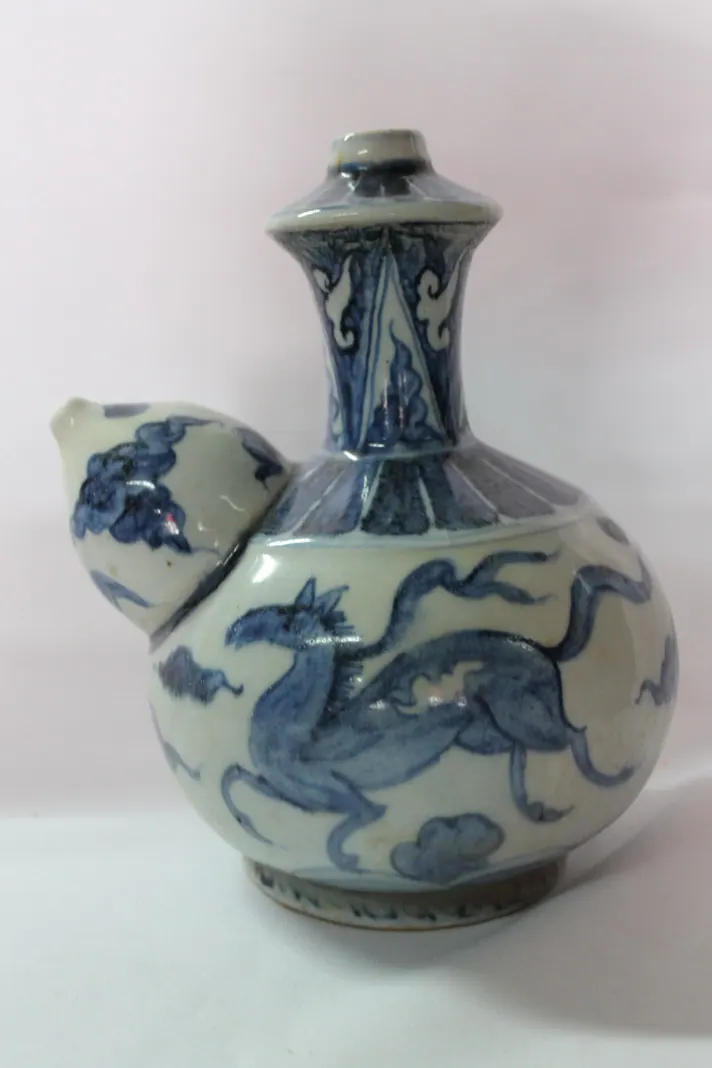
The larger change came abroad. With the sea open, private Jingdezhen porcelain left through the ports of Fujian in growing quantities. After the Spanish founded Manila in 1571, Chinese junks carried porcelain there for the galleons to Acapulco, while the Portuguese at Macau shipped it to Goa and Lisbon. From about the 1570s Jingdezhen made the thinly potted, panelled blue and white that Europeans came to call kraak porcelain. Southeast Asian buyers ordered their own forms, among them the kendi, a pouring vessel with a bulbous spout and no handle, filled through its neck.
Later middle Ming pieces in our collection
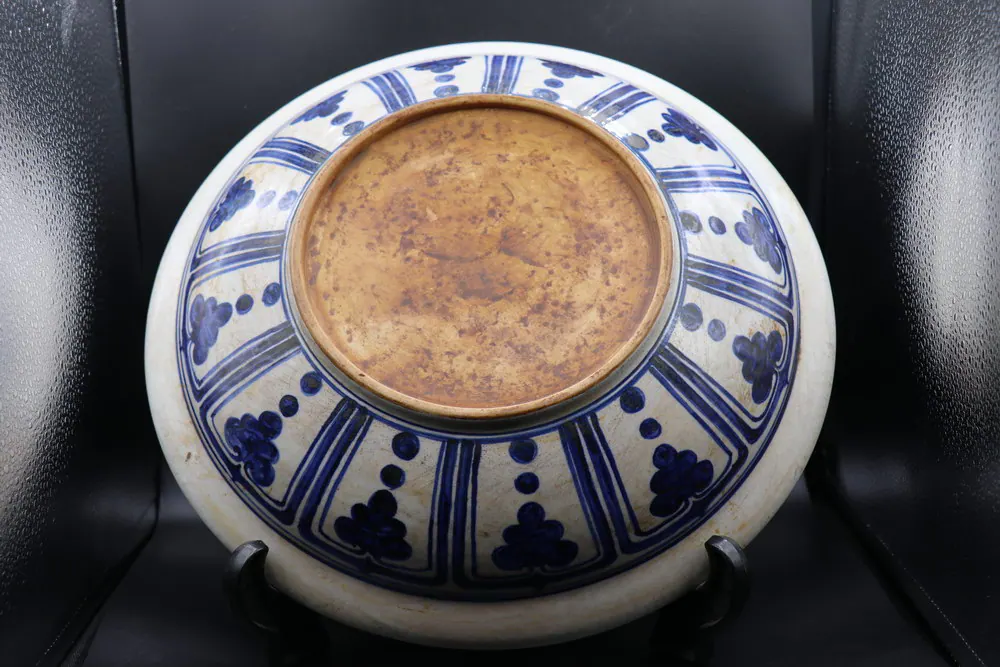
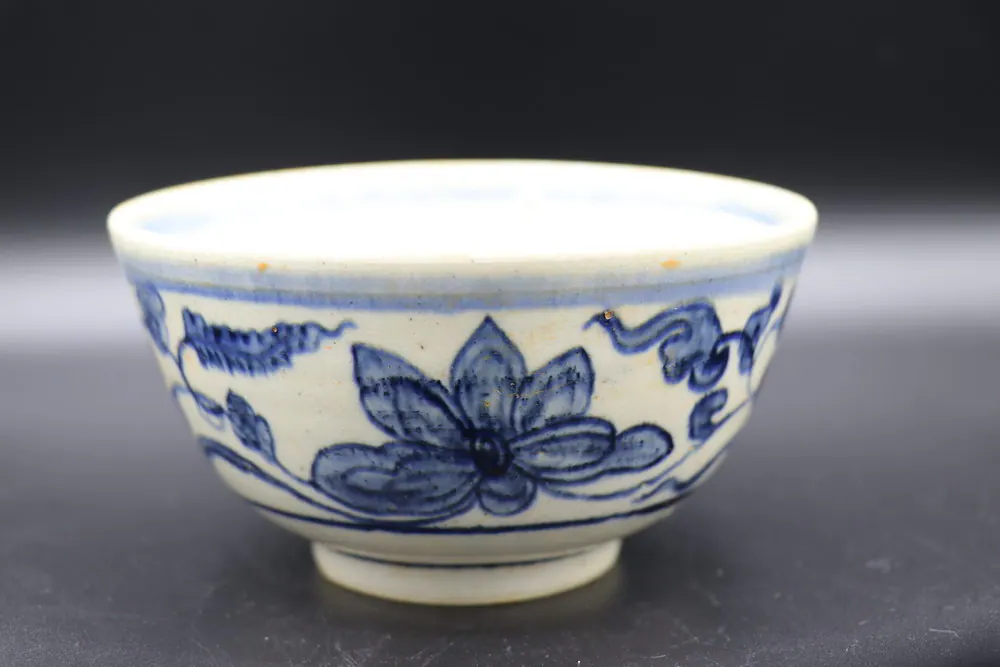
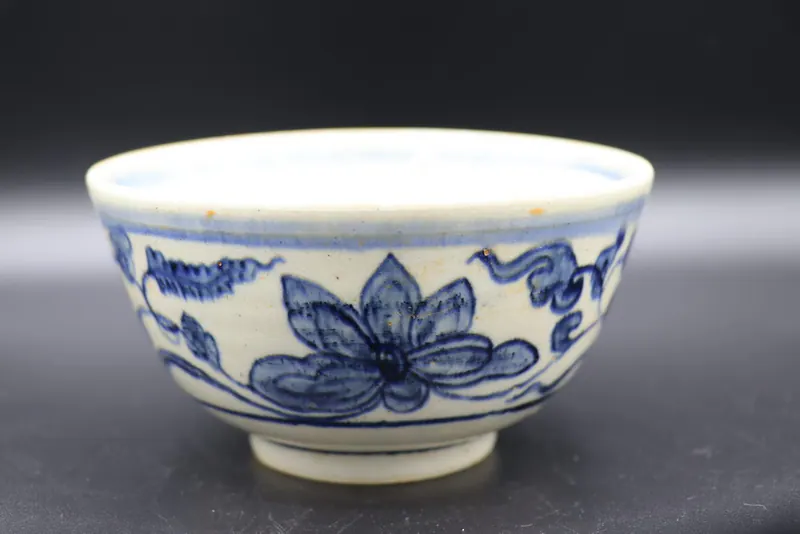
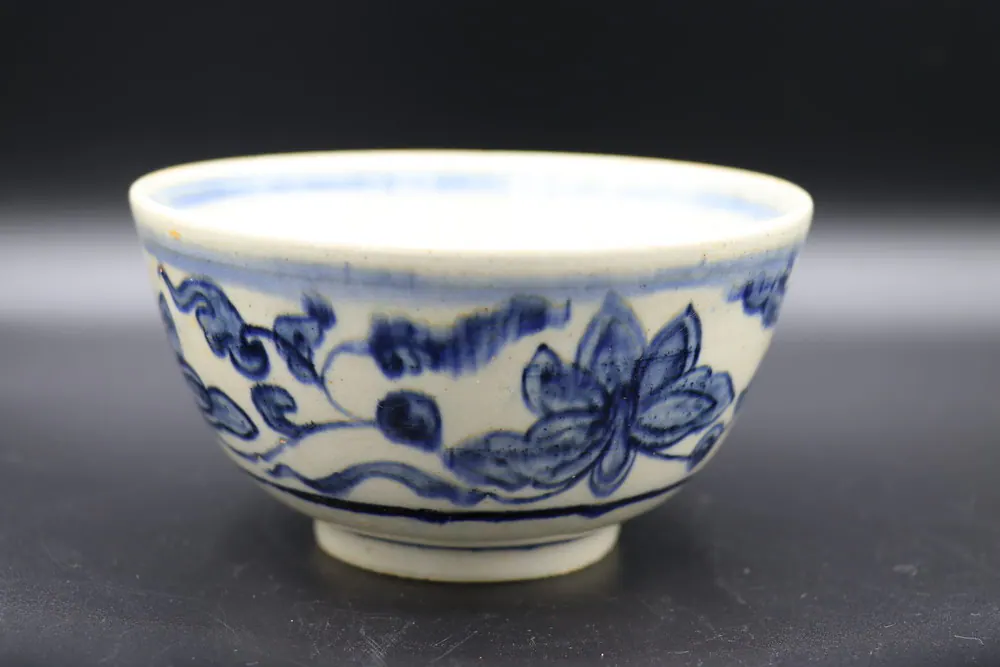
A blue and white bowl with a Jiajing mark is typical of the Jiajing-marked mid Ming blue and white that collectors most often meet: a lotus scroll outside, a fish swimming inside, and the mark in a double ring on the base. Its listing notes that the blue has blurred where the bowl stood too close to the fire.
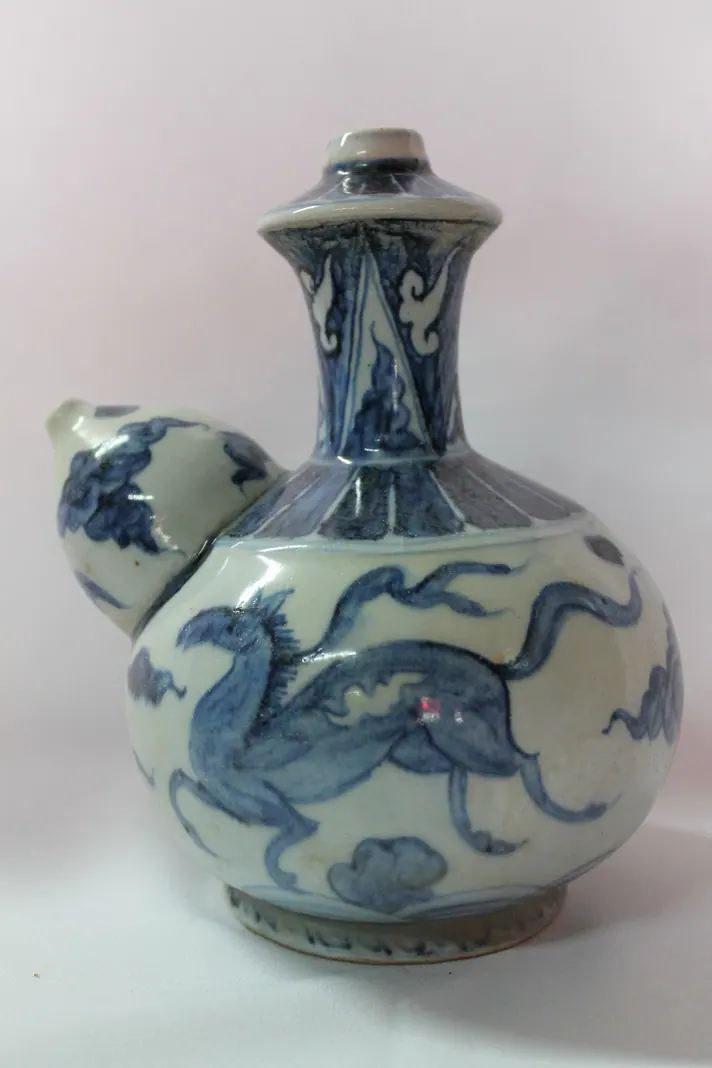
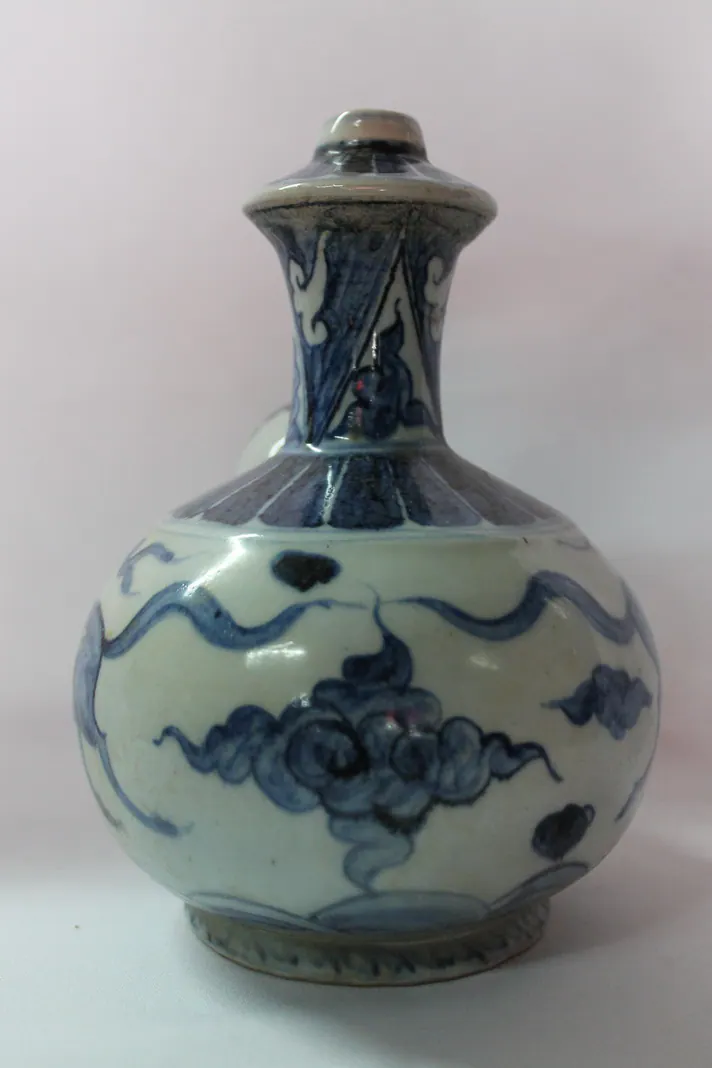
We also have a kendi of the Jiajing period, painted with horses among clouds and ribbons. Both are offered by private inquiry through the Request price form on each piece page, and more can be found in our Ming dynasty porcelain collection.