Guide
Antique Chinese Jade
Jade was the most esteemed material in China for thousands of years before porcelain existed, and its influence runs through Chinese art, ceramics included. This guide to antique Chinese jade explains what the stone is and how it was worked, how its use changed from the Neolithic to the Qing, how old jade is told from new, and why Chinese potters admired it so much that they tried to capture it in glaze.
What to look for
- Identify the stone first: serpentine, marble, glass and other look-alikes are often sold as jade.
- On excavated jade, check that any alteration follows the grain and fissures of the stone rather than sitting evenly on the surface.
- Examine the carving under magnification: abrasive work on wheels turned by hand or treadle leaves slightly irregular, overlapping lines; power tools leave crisp, uniform grooves.
- Make sure form, motif and carving technique all belong to the period claimed, not just one of them.
- Judge the piece itself, not the story or the previous owner attached to it.
What the Chinese call jade
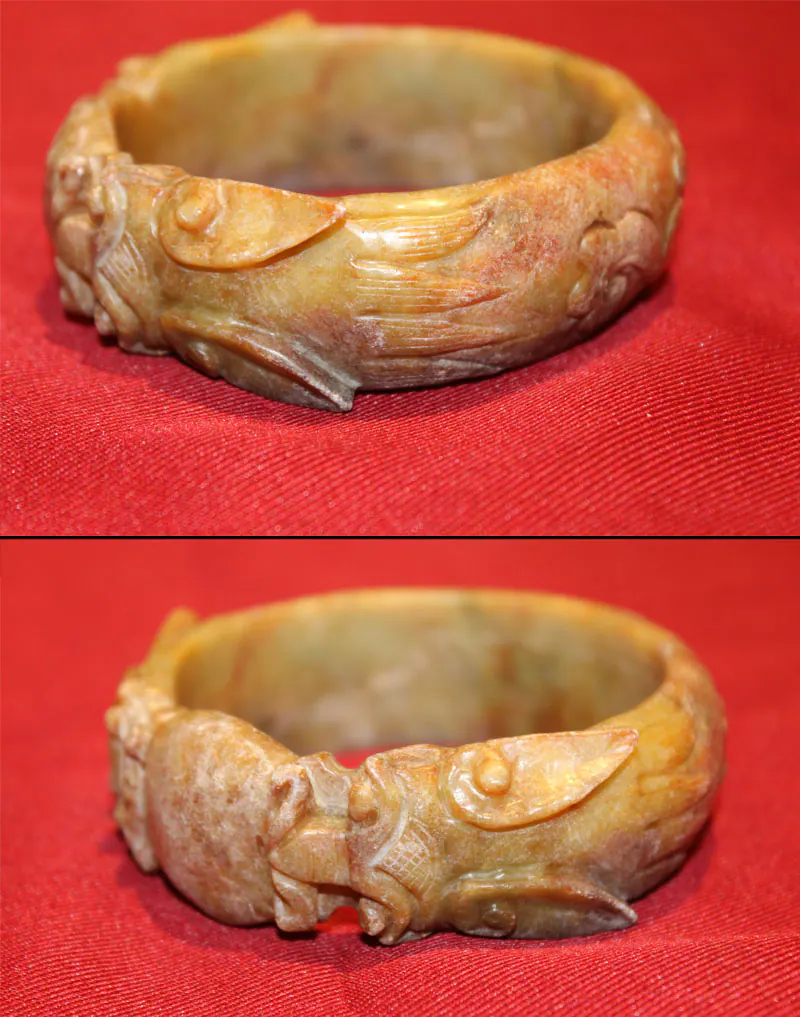
The Chinese word yu was traditionally used for a range of fine, hard stones that could be carved and polished. In the strict mineral sense, jade is two different stones. Almost all early Chinese jade is nephrite, a dense stone made of interlocking fibres, which makes it exceptionally tough. Its colours run from white and pale green through yellow, grey and brown to black, and many pebbles have a russet skin that carvers learned to use in their designs.
Jadeite, the brighter and often more translucent stone mined in Burma, came into wide use in China only from the late 18th century. Its vivid emerald greens became especially popular in the 19th century.
Neither stone can be cut with a blade. Both are worked slowly by abrasion: hard sand mixed with water and fed to drills, saws and rotating wheels, with the carver holding the stone against the tool. Fine carving could take months, which is one reason it was so highly regarded.
From early times jade stood for qualities that Chinese thinkers valued in people. The Book of Rites records that the gentleman compares his virtue to jade, and the stone came to stand for purity, integrity and endurance.
Early jade: the Neolithic to the Han
The earliest carved jades come from Neolithic cultures. The Hongshan culture of north-east China is known for its coiled pig-dragons, and the Liangzhu culture of the Yangzi delta for the bi discs and cong tubes buried with its elite. Their meaning is still debated, but their care and finish show how much effort these societies gave to jade.
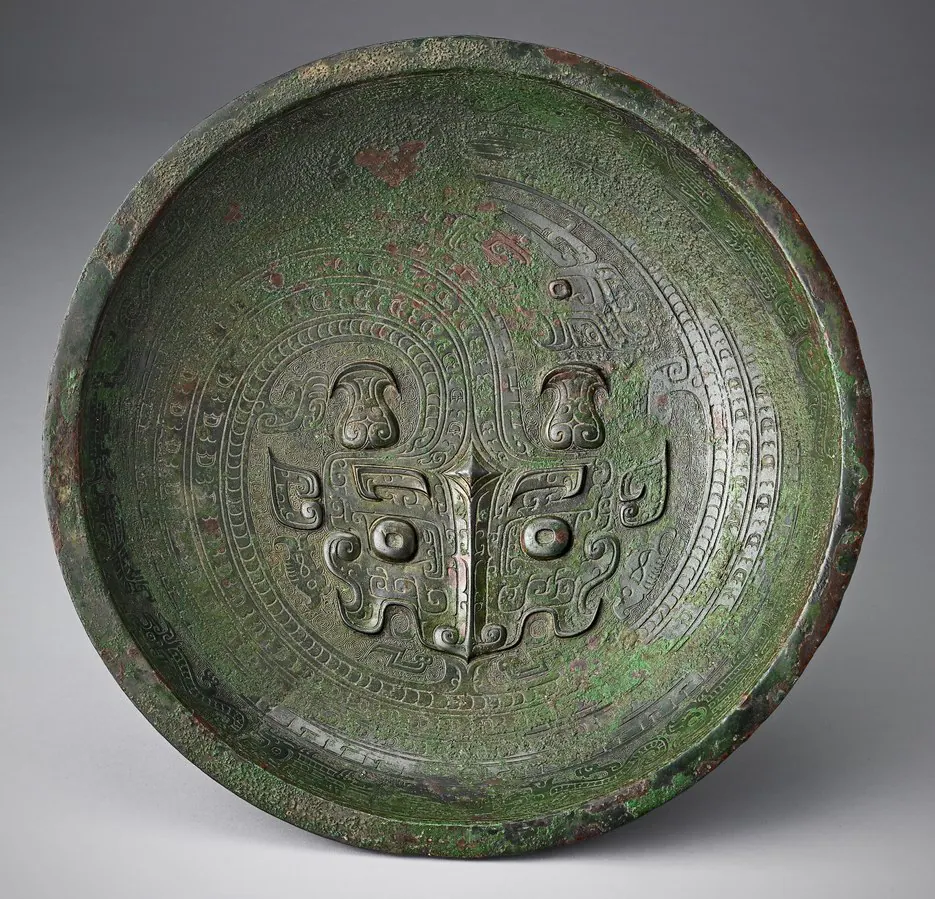
Under the Shang and Zhou, jade was carved into ritual objects, ceremonial blades and personal ornaments. The tomb of Fu Hao, a royal consort of the late Shang excavated at Anyang in 1976, contained several hundred jades. The finest work of the Warring States period shows a remarkable command of pierced and relief carving.
By the Han dynasty, jade was believed to protect the body after death. The best-known examples are the jade burial suits of Prince Liu Sheng and his consort Dou Wan, excavated at Mancheng in Hebei in 1968, each made of more than two thousand small plaques joined with gold wire.
Jade from the Song to the Qing
Later carvers looked back to these early forms. Song scholars collected and catalogued ancient bronzes and jades, and from the Song through the Ming and Qing archaic shapes and decoration were often copied, out of reverence for antiquity and for the collectors who admired it. Many of these later archaistic pieces are fine works in their own right, and they are not fakes unless they are offered as early.
In the Ming, Suzhou became the leading centre of jade carving, known for its delicate work. The Qing conquest of Xinjiang in the late 1750s brought a steady supply of fine nephrite to the imperial workshops, and the Qianlong reign (1736–1795) is regarded as a high point of Chinese jade carving. Its ambition is best seen in the great jade mountain showing Yu the Great controlling the floods, carved in Yangzhou in the 1780s and now in the Palace Museum, Beijing.
Where the finest jade came from
The most prized nephrite came from Hetian, the old Khotan, in Xinjiang. Some was quarried in the Kunlun mountains, but the finest was found as pebbles and boulders in the rivers below them. Tumbled for centuries in fast-flowing water, the stone was worn smooth and its weaker, flawed parts broke away, leaving dense, even pebbles. White nephrite of this kind, called mutton-fat jade for its soft, oily lustre, has always been the most highly regarded.
Jade and porcelain
Chinese potters long admired jade, and some of the most celebrated Chinese ceramics were made to look like it. In the 8th century the tea master Lu Yu wrote in his Classic of Tea that the green-glazed Yue ware of south-east China resembled jade, and preferred it for that reason to the white Xing ware of the north.
The ideal reached its height under the Song. Potters at the Longquan kilns in Zhejiang applied their glaze in several thick layers and fired it so that it did not melt completely. Countless tiny bubbles and unmelted particles caught the light and gave the soft, deep green of the best pieces. Our guide to Longquan celadon explains how it was made and how to recognise it.
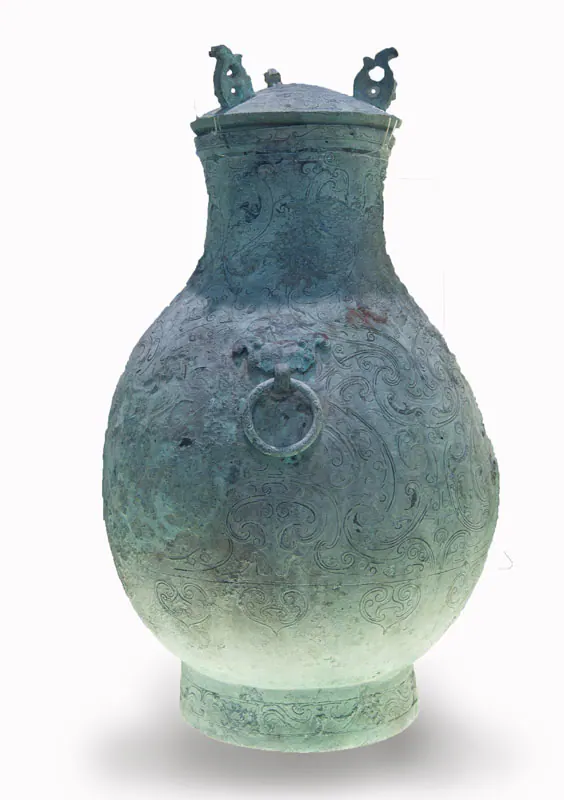
The debt went beyond colour. Song and later potters borrowed shapes from ancient jades and bronzes, among them the square-sectioned vase modelled on the Neolithic cong. The thick, lustrous glazes of the Song court wares were valued for the same quiet depth as fine jade, as our guide to Song dynasty ceramics describes. You can see the result in pieces such as those in our Song dynasty porcelain collection.
Telling old jade from new
Because good antique jade is scarce, copies are common. Some are new carvings in the style of earlier periods, some are artificially aged, and many are made of other materials, such as serpentine, bowenite, dyed marble or glass, and sold as jade. The general principles in our guide to detecting fakes apply to jade as much as to porcelain. The main points to examine are these:
- The stone. Nephrite is dense and tough, with a waxy, slightly fibrous look under magnification. Serpentine and marble are much softer and show wear and scratches more readily.
- Surface alteration. Jade that has lain in the ground for centuries often shows whitish alteration, sometimes called chicken-bone, soil staining that has penetrated along natural fissures, and slight pitting. Genuine alteration follows the structure of the stone. Colour added with heat, acid or dye tends to sit on the surface or look too even.
- Tool marks. Old tool marks are often slightly irregular, with fine overlapping lines. Modern rotary tools leave crisper, more uniform grooves and a more mechanical finish.
- Style. A piece described as Han should look like Han work in every respect: form, motif and carving technique, not just one of them.
Value in jade depends on several things at once: the quality of the stone (its colour, translucency and evenness), the skill of the carving, age, rarity, condition and size. A documented history helps to place a piece, but judge the piece itself, not the name of a previous owner or the story attached to it.
We deal only in antique Chinese porcelain and do not buy, sell or value jade. This page is background for collectors; for a jade carving, consult a specialist in that field.