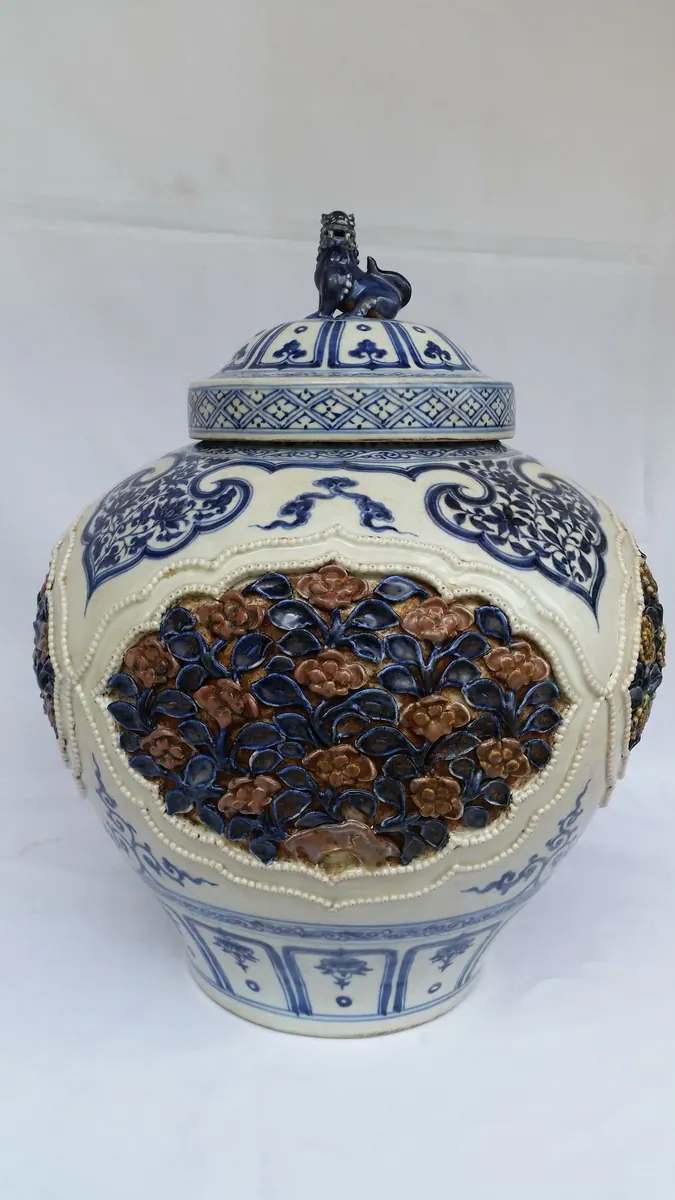
1436–1505
Middle Ming Porcelain (1436–1505): The Interregnum to Hongzhi
Mid-Ming porcelain, made between the death of the Xuande Emperor in 1435 and the end of the Hongzhi reign in 1505, runs from the unmarked wares of the so-called Interregnum to the refined imperial porcelain of Chenghua. This page explains what was made in each reign, how the wares are recognised, and what collectors actually meet today.
- Dates
- 1436–1505
- Reigns
- Zhengtong, Jingtai, Tianshun, Chenghua, Hongzhi
- Kilns
- Jingdezhen, imperial and private
- Key wares
- Chenghua doucai and blue and white, Hongzhi yellow, private-kiln figure painting
- Reign marks
- Almost unknown for 1436–1464; regular from Chenghua
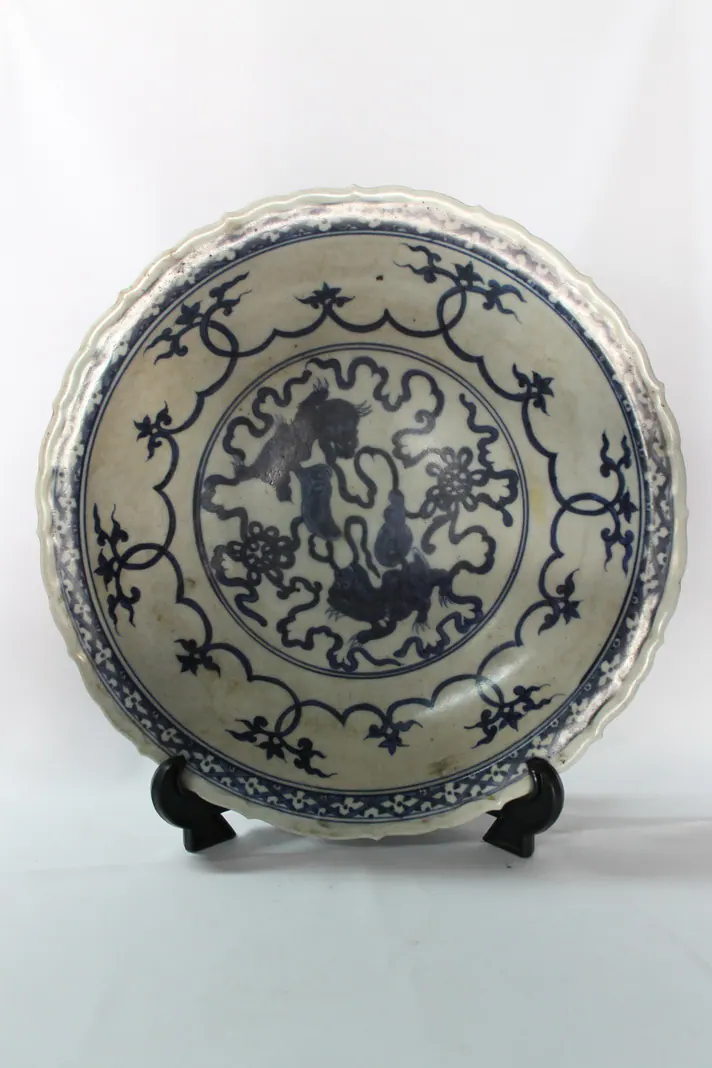
Mid-Ming porcelain: five reigns in seventy years
The Xuande Emperor died early in 1435 and was succeeded by his young son, who reigned as the Zhengtong Emperor. In 1449 he led an army against the Oirat Mongols and was captured at Tumu, one of the worst defeats the Ming ever suffered. The court put his half-brother on the throne as the Jingtai Emperor. The captive was released the following year and kept under house arrest, and in 1457 he took the throne again, reigning as Tianshun until his death in 1464.
His son, the Chenghua Emperor, reigned from 1464 to 1487. He was followed by the Hongzhi Emperor, who reigned until 1505 and is remembered as one of the most conscientious rulers of the dynasty.
Writers divide the Ming in different ways, and the dates given for the "middle Ming" vary from book to book. On this site the middle Ming runs from 1436 to 1505. The reigns from Zhengde to Wanli are covered in Ming porcelain from 1505 to 1590, and the whole dynasty in our guide to Ming dynasty porcelain.
The Interregnum, 1436 to 1464
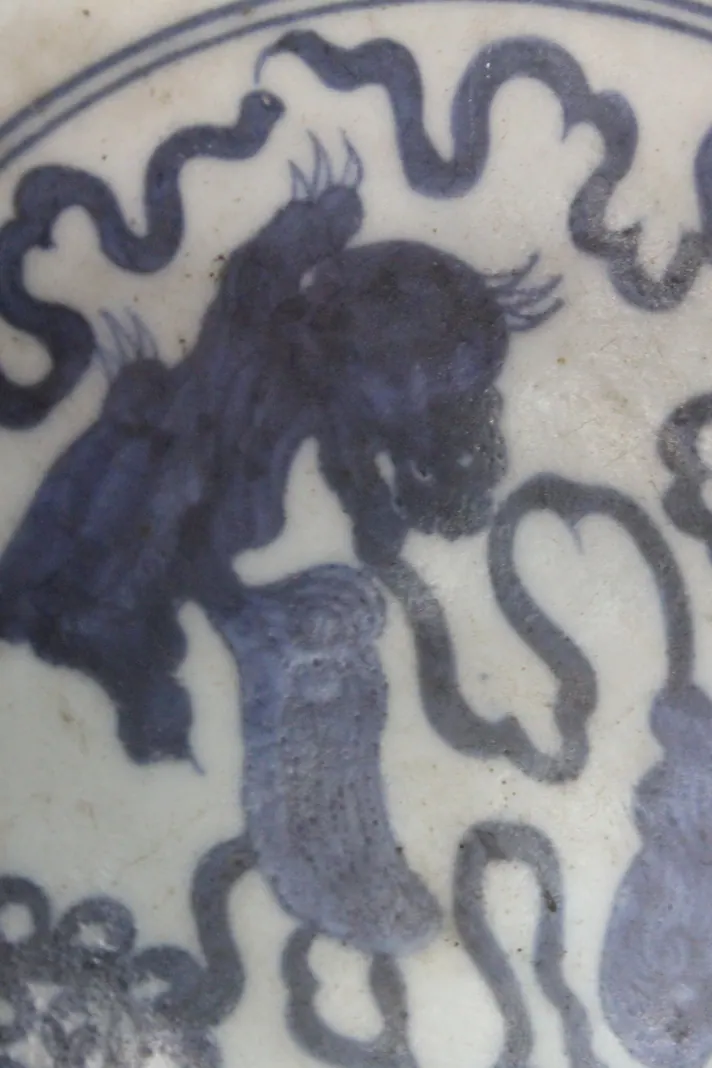
For the three reigns of Zhengtong, Jingtai and Tianshun, porcelain bearing the reign mark of the day is almost unknown. Collectors therefore call these years the Interregnum, and older books sometimes call them the "dark age" of Ming porcelain. Imperial orders appear to have been reduced in years of war and financial strain, but the imperial kilns did not close. Excavations at the imperial kiln site in Jingdezhen have recovered unmarked imperial wares that archaeologists now attribute to these reigns.
The private kilns, meanwhile, were busy. Their blue and white of the period, much of it jars, meiping vases and bowls, is painted with scholars, immortals and ladies in landscapes and pavilions, often separated by bands of swirling cloud. The blue varies from a strong, dark tone to grey, and the painting is lively rather than precise. Once hard to place, these wares are now far better understood, helped by finds in dated tombs and by material recovered in South-East Asia.
For collectors, the lack of marks cuts both ways. An Interregnum piece can only be dated by its style, body and painting, so every attribution rests on comparison with excavated and documented examples.
Chenghua porcelain: the refinement of the imperial wares
Chenghua porcelain (1465–1487) is prized for its restraint rather than its size. The imperial wares of the reign are mostly small: cups, bowls, dishes and jars made for use at court. The body is fine, white and thinly potted, and the glaze is soft and slightly milky, with a gentle sheen rather than a glassy surface. The blue, now largely from Chinese cobalt, is pale, even and soft, a clear contrast with the dark, spotted blue of Xuande.
The painting matches. Designs are spacious and delicate: lotus, flowering plants, fruiting sprays, children at play and small figures, drawn with a light, careful line. Imperial pieces have glazed bases, where the mark is written, and neatly finished foot rims. By the late Ming, Chinese collectors already valued Chenghua cups as highly as any porcelain, and that reputation has never faded.
Not every Chenghua piece looks like this. Excavated material suggests that the refined style belongs mainly to the later part of the reign, while early Chenghua wares are closer to those of the preceding decades.
Doucai and the chicken cups
The reign is best known for doucai, usually translated as "contrasting" or "dovetailed" colours. The design is first outlined in underglaze blue, and the piece is glazed and fired at full heat. Overglaze enamels in red, yellow, green and aubergine are then painted within the blue outlines and fixed in a second, lower firing. The result is a small picture in which soft washes of colour sit inside fine blue lines.
The most famous doucai pieces are small wine cups painted with a cockerel, a hen and chicks among flowers and rocks, known as chicken cups. Very few survive, and they have been copied ever since, first in the late Ming and then, with great skill, in the Kangxi and Yongzheng reigns of the Qing. Our guide to doucai and wucai explains how the technique developed and how it differs from the wucai of the 16th century.
Chenghua marks, and why so many are later
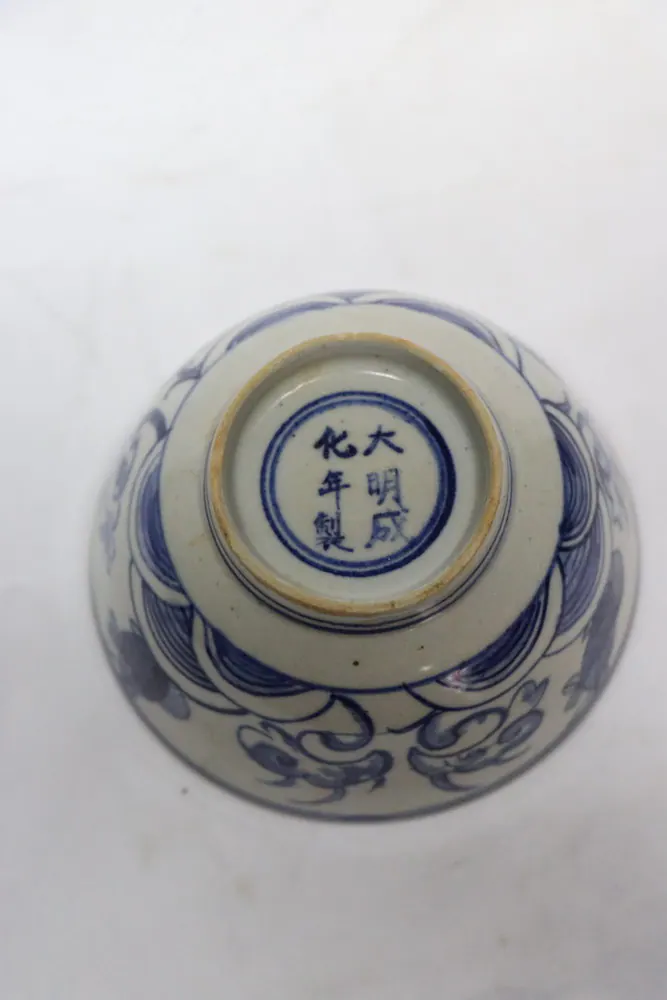
The Chenghua mark, Da Ming Chenghua nian zhi, is written in six characters of regular script in underglaze blue, usually within a double circle on blue and white wares and within a double square on many doucai cups. Specialists have studied its calligraphy stroke by stroke, and copyists rarely reproduce the genuine hand exactly.
No Ming mark was copied more often. Potters of the later Ming added it to their own wares, Qing potters reproduced it as a sign of respect, and it appears on modern copies and everyday wares in great numbers. A mark records what was written on a piece, not when it was made. A blue and white bowl with a Chenghua mark that we sold, painted with fish above waves and clouds, shows how the mark is usually laid out: two columns of three characters within a double ring.
Our chart of Ming reign marks shows the Chenghua mark beside those of other reigns. The guide to apocryphal marks explains why it appears on so much later porcelain.
Hongzhi porcelain: continuity and yellow
The Hongzhi reign (1488–1505) continued the Chenghua style with little change, and Hongzhi blue and white can be hard to tell from Chenghua without the mark. The blue is similarly pale, sometimes a little greyer, and the painting tends to be slightly looser.
The reign is especially admired for its yellow. Dishes and bowls covered in a clear, bright, low-fired yellow glaze, applied to porcelain that had already been fired, are among the finest monochromes of the Ming. Yellow-ground dishes with designs in underglaze blue were also made, continuing a type first produced under Xuande.
The private kilns carried on making blue and white for the home and export markets through the reign, and their later wares begin to lead into the bolder style of the Zhengde reign that followed.
What reaches the market today
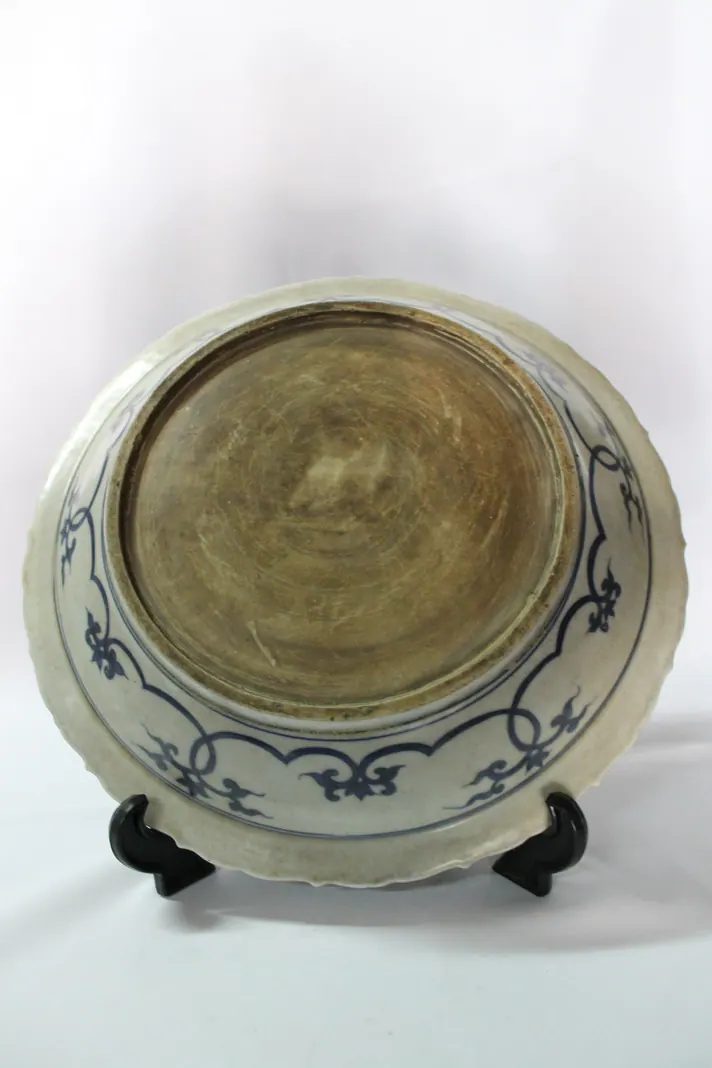
Imperial Chenghua porcelain is among the rarest of all Chinese ceramics. Most surviving pieces are in the former palace collections in Beijing and Taipei and in a small number of other museums, and a genuine piece seldom comes to market.
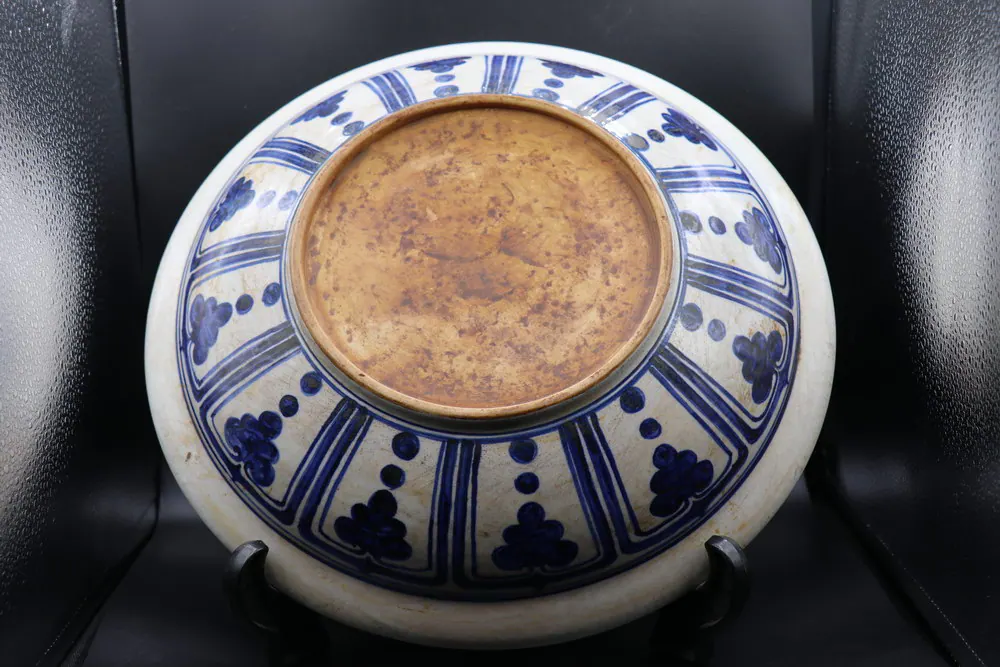
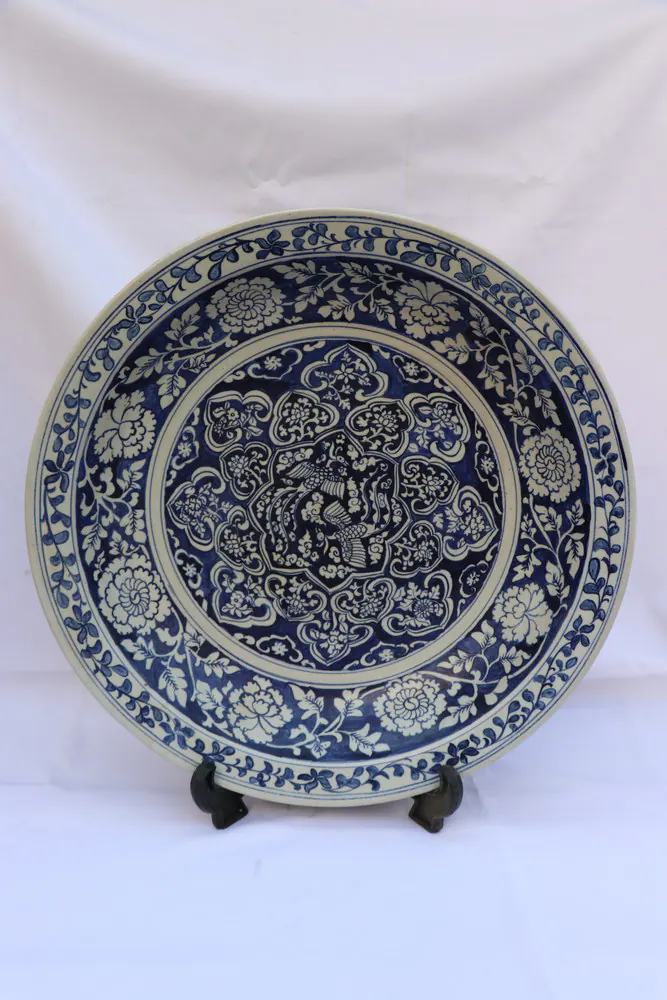
What collectors meet in practice is private-kiln porcelain: Interregnum jars and bowls, dishes and bowls from the later 15th century, and export wares that travelled to South-East Asia and beyond. Much of it has an unglazed base, fired orange where the body was exposed, and shows the wear, iron spotting and small firing faults of kiln and use. A blue and white plate in our collection, described as middle Ming, has an unglazed base.
Because these wares are unmarked or carry borrowed marks, dating them depends on comparing body, glaze, blue and painting with documented examples. When a piece is offered as mid-Ming, it is fair to ask what the attribution rests on. A pale blue alone does not make a piece Chenghua: later copies imitate it, and private-kiln wares of other periods can share it. The form of the foot, the finish of the base and the style of the painting all need to agree. Our guide to telling a real Ming vase sets out the checks. Every piece in our Ming dynasty porcelain collection has its own page with detailed photographs and a form to request the price.