Guide
Apocryphal Marks: Why Ming Reign Marks Appear on Later Porcelain
An apocryphal mark on Chinese porcelain is a reign mark that names an earlier reign than the one in which the piece was made. Such marks are among the commonest things a collector meets. This guide explains why potters used them, where they occur most, how to date a piece that carries one, and what they mean for value.
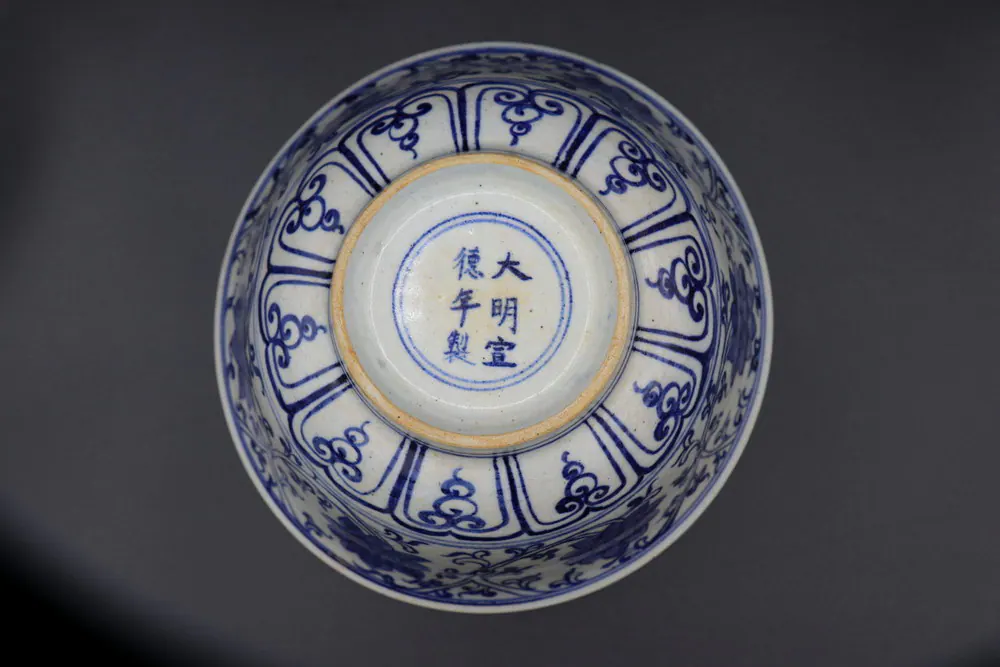
What to look for
- Treat the mark as a record of what was written, and date the piece by everything else.
- Ask whether the calligraphy belongs to the reign the mark names or to a later hand.
- Compare the body, foot, glaze and blue with documented pieces of the reign the mark names.
- Look for shapes or motifs that the named reign did not use: they show the piece is later.
- Read catalogue wording closely: "mark and period" is a claim about date, "with a mark" is not.
What an apocryphal mark means
"Apocryphal" is the collector's word for a mark that does not match the date of the piece: a Chenghua mark on a bowl made under Kangxi, for instance, or a Xuande mark on a dish of the sixteenth century. The word describes the mark, not the piece. A porcelain bowl with an apocryphal mark may be a fine antique of its own period.
Two phrases in catalogues and dealers' descriptions follow from this. Mark and period means that, in the writer's opinion, the piece was made in the reign its mark names. With a mark, or "bearing a mark", reports what is written on the base and makes no claim about date. The difference is easy to overlook and matters a great deal.
Our guide to Chinese porcelain marks explains how to read a mark, and the chart of Ming reign marks shows the genuine forms reign by reign.
Reverence rather than deceit
Most apocryphal marks were not written to cheat anyone. By the sixteenth century the porcelain of the Xuande and Chenghua reigns was already regarded as a classic, much as later generations looked back to Kangxi and Qianlong. Late Ming writers recorded the high prices paid for Chenghua cups.
Writing the mark of an admired reign was a way of honouring it and of placing a new piece in its tradition. It also signalled quality to the buyer, in the way a respected name does today. Many buyers knew perfectly well that the piece in front of them was new.
The Qing court took part too. Under the Yongzheng and Qianlong emperors the imperial kilns made careful copies of fifteenth-century porcelain, and some of these carry the earlier mark rather than the mark of their own reign.
Where apocryphal marks occur most
- Jiajing and Wanli. Sixteenth-century potters, especially in the private kilns, wrote Xuande and Chenghua marks on wares of their own day.
- Kangxi. Chenghua marks on Kangxi porcelain are especially common, alongside Xuande and Jiajing marks. A local order of 1677 is said to have forbidden potters to write the reigning emperor's name on porcelain. It is often given as one reason for these earlier marks, and for the many Kangxi pieces with only an empty double ring on the base.
- Yongzheng and Qianlong. Court copies of Ming pieces, some with Ming marks, as described above.
- The nineteenth century. Late Qing potters revived Kangxi styles and often used Kangxi marks, and Yongzheng and Qianlong marks appear widely on late Qing and Republic porcelain.
- Japan. Japanese potters of the seventeenth century and later often wrote Chinese marks, above all Chenghua, on their own porcelain. Our guide to Chinese, Japanese or Vietnamese porcelain explains how to tell them apart.
Yongle marks were also copied from the late Ming onwards. The Qing reign marks chart shows the marks of the later reigns that were themselves copied in turn.
Dating a piece that carries an earlier mark
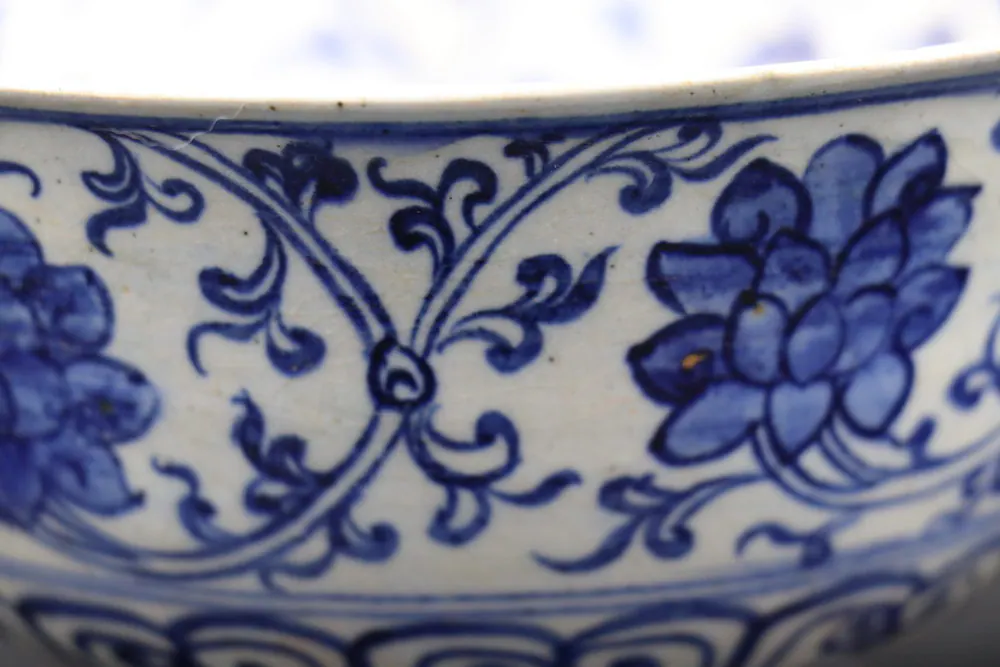
A piece with an apocryphal mark is dated in the same way as an unmarked one: by its body, foot, glaze, shape, painting and blue. The mark can be set aside until the end.
The mark itself is often the best clue. A potter copying an earlier mark wrote it in the calligraphy of his own day, so a Chenghua mark written under Kangxi usually looks like Kangxi writing, crisp and orderly. Specialists who know the hands of each period can often date a piece from its mark while agreeing that the mark names the wrong reign.
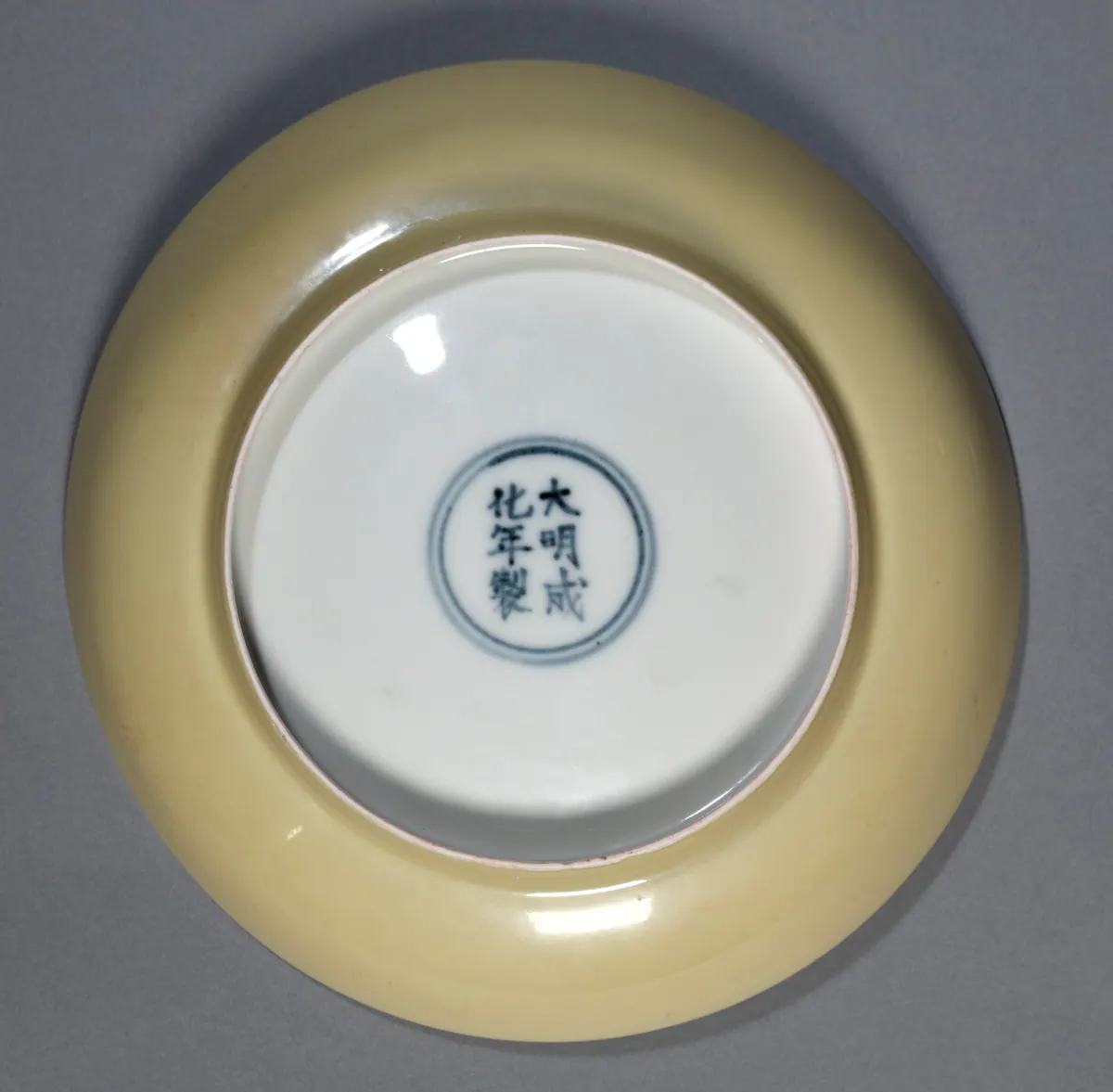
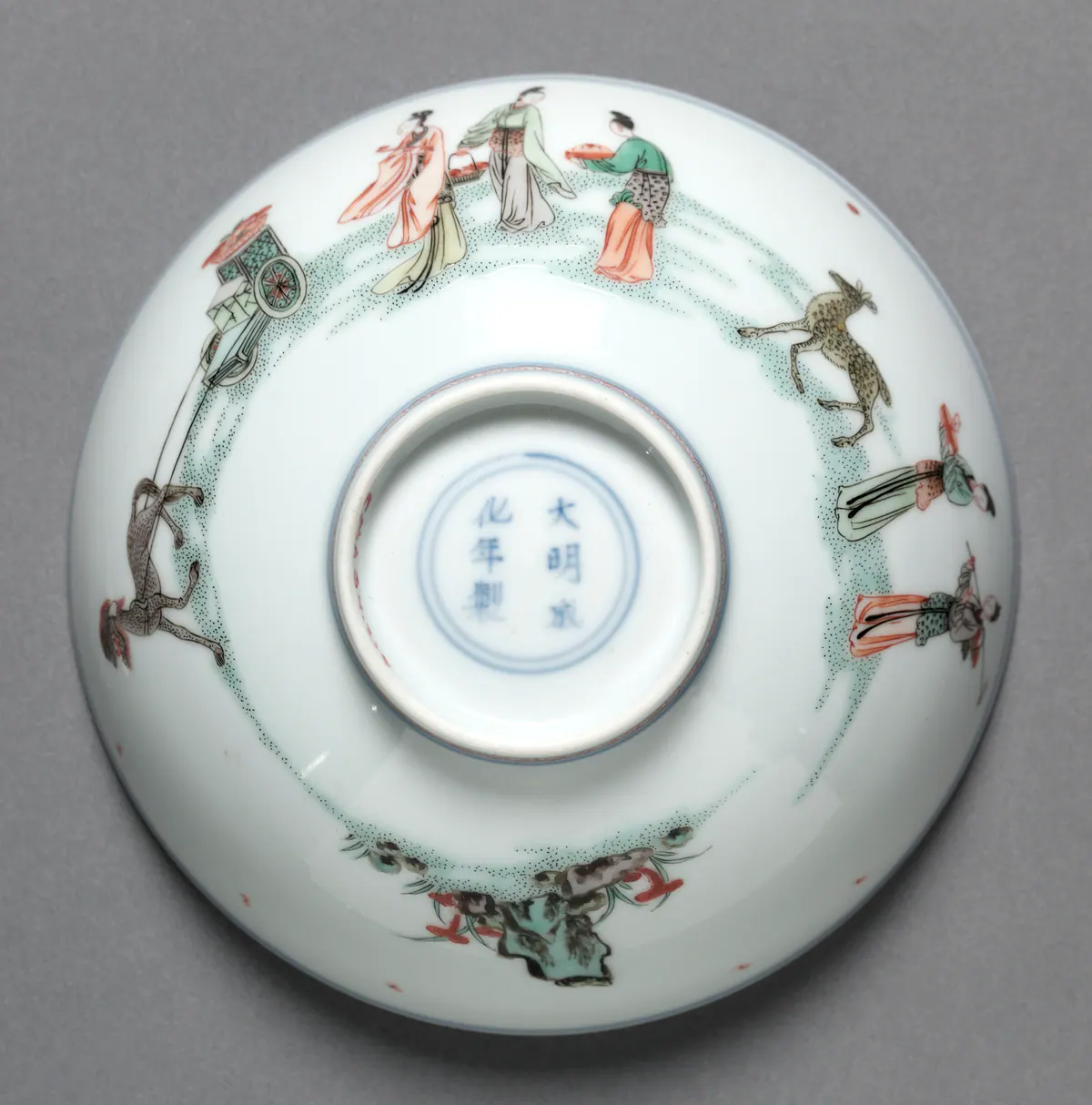
A Chenghua mark on Kangxi porcelain is the classic case. The piece around the mark usually shows the hallmarks of its own time: a fine white body, a neatly cut foot, a clear glaze and the bright, even blue of the Kangxi kilns. Chenghua porcelain looks quite different, with a softer glaze and a gentler blue, and the two are rarely confused once seen side by side.
The two museum bases below show a Chenghua mark of the period and one written under Kangxi.
A Xuande mark on a later copy is judged in the same way. Genuine Xuande blue and white typically has a heavy, dark cobalt that pools into spots along the brushstrokes, and a later copy that imitates the design seldom reproduces the colour, the weight or the glaze convincingly.
Decoration helps too. A Xuande mark on a later copy may sit below a design the Xuande potters never painted, or on a shape that only appeared a century later. The foot and the exposed body are harder to imitate than the painting: our guide to reading the base shows what to look for.
Museum examples
Modern marks written to deceive
Not every apocryphal mark is innocent. Reproductions made in the last hundred years, and in great numbers in the last few decades, carry the marks of every famous reign, and some are made to be sold as period pieces.
Their marks tend to share certain faults. The calligraphy is copied from a book or a photograph, so it is often stiff, over-careful or subtly wrong in a single stroke. The blue may imitate the dark spots of early Ming cobalt with dabs that sit on the surface of the line. The glaze over the mark can be glassy and even, and the base around it is often stained, ground or rubbed to suggest age. Some modern marks are printed rather than painted.
A few deceptive marks are added to genuine old pieces, for instance in overglaze enamel on an unmarked base. Our page on detecting fakes covers these and other tricks.
How apocryphal marks affect value
An apocryphal mark does not make a piece a fake. A Kangxi dish with a Chenghua mark is valued as Kangxi porcelain, on its own period, quality, condition, rarity and provenance. The earlier mark does not give it the value of a Chenghua piece, and in most cases it takes little away. Some groups, such as Kangxi blue and white with Chenghua marks, are collected as a field in their own right.
The mark matters when it is used to claim a date. A piece sold as "mark and period" is priced on that basis, and if the claim is wrong the gap between the description and the object is a serious one. That is why the wording of a description deserves as much attention as the piece. Our guide to what makes Chinese porcelain valuable sets out the other factors.
How we word marks in our own descriptions
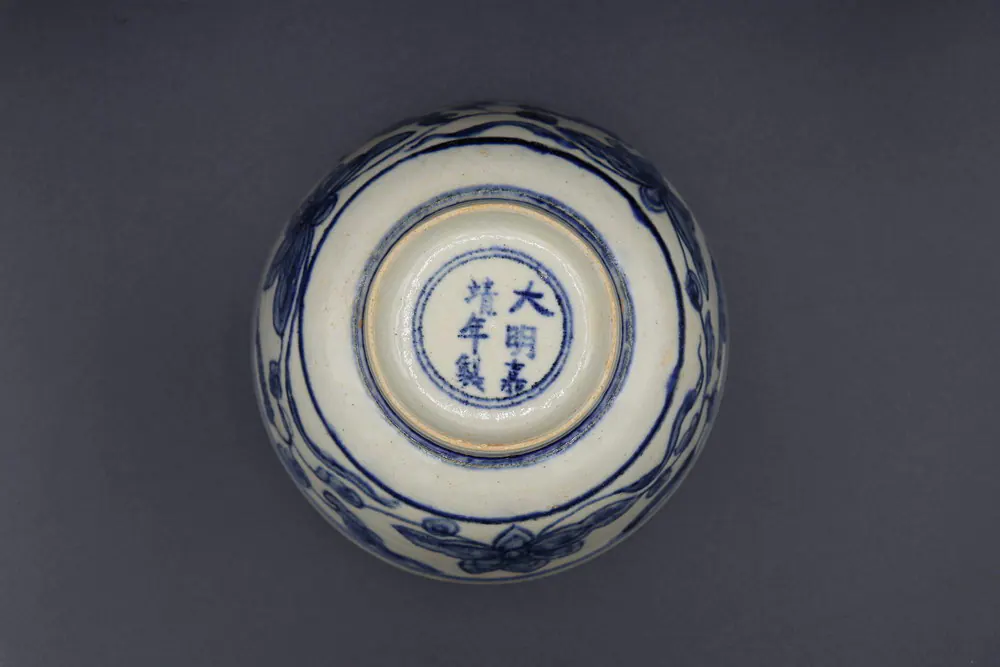
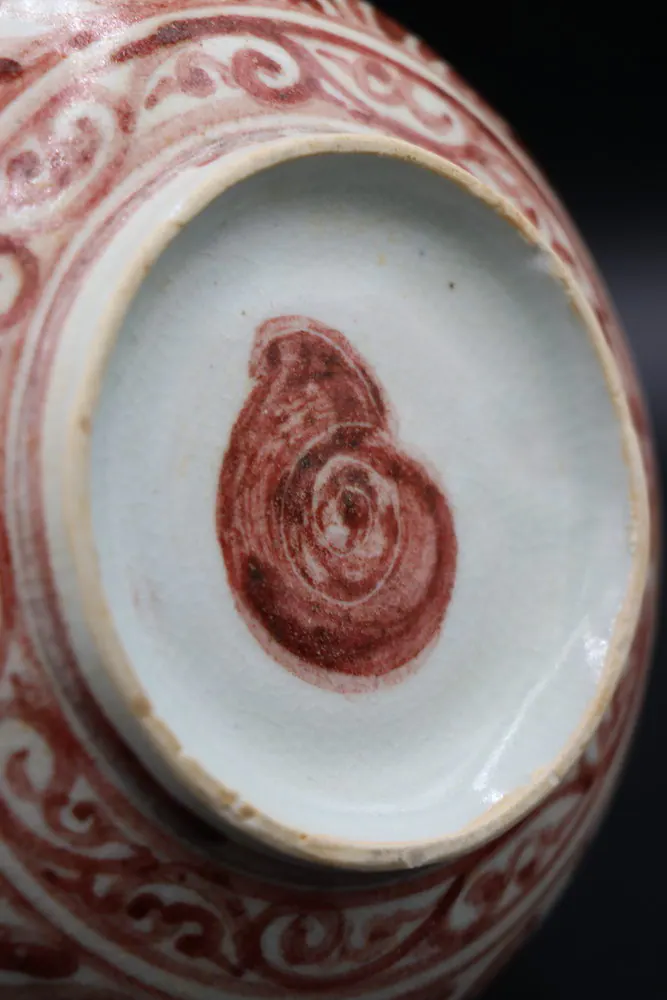
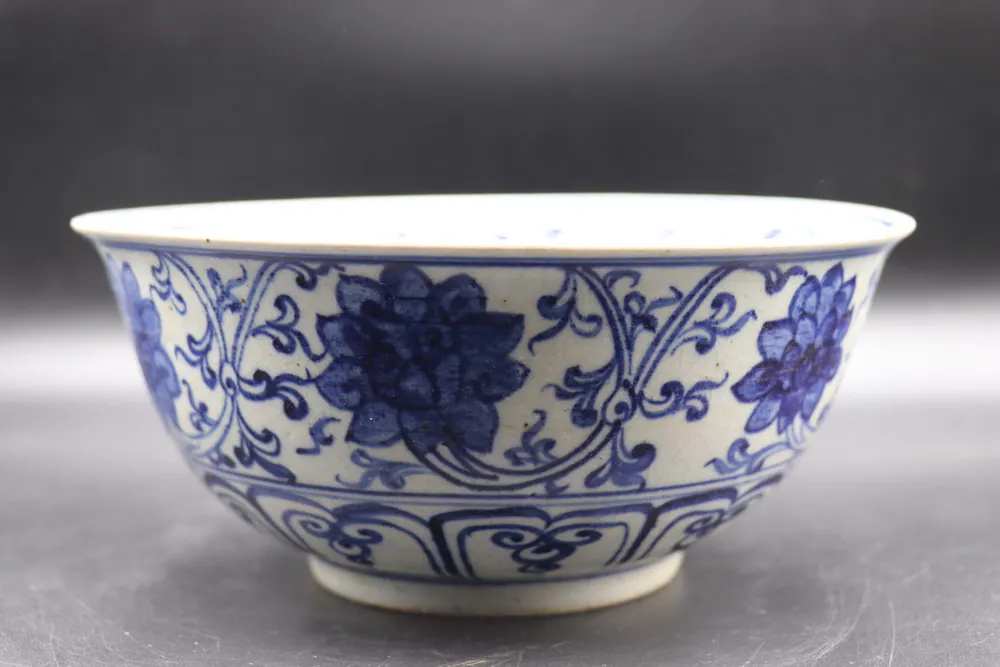
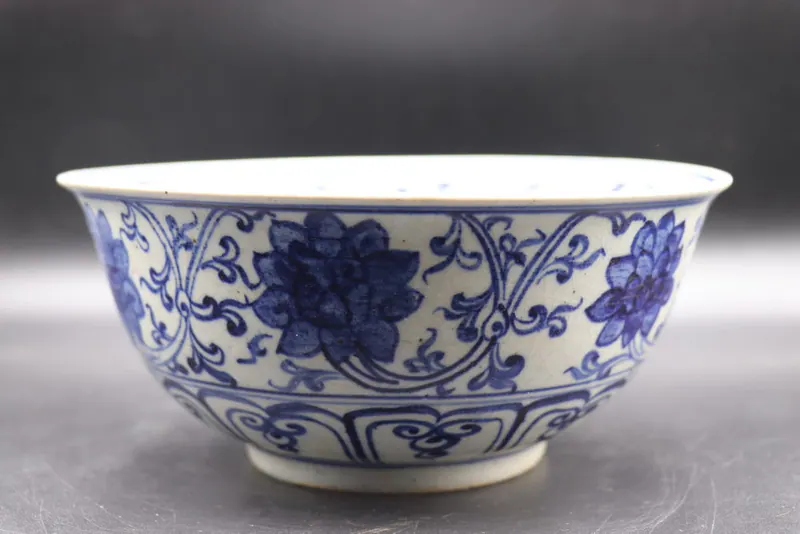
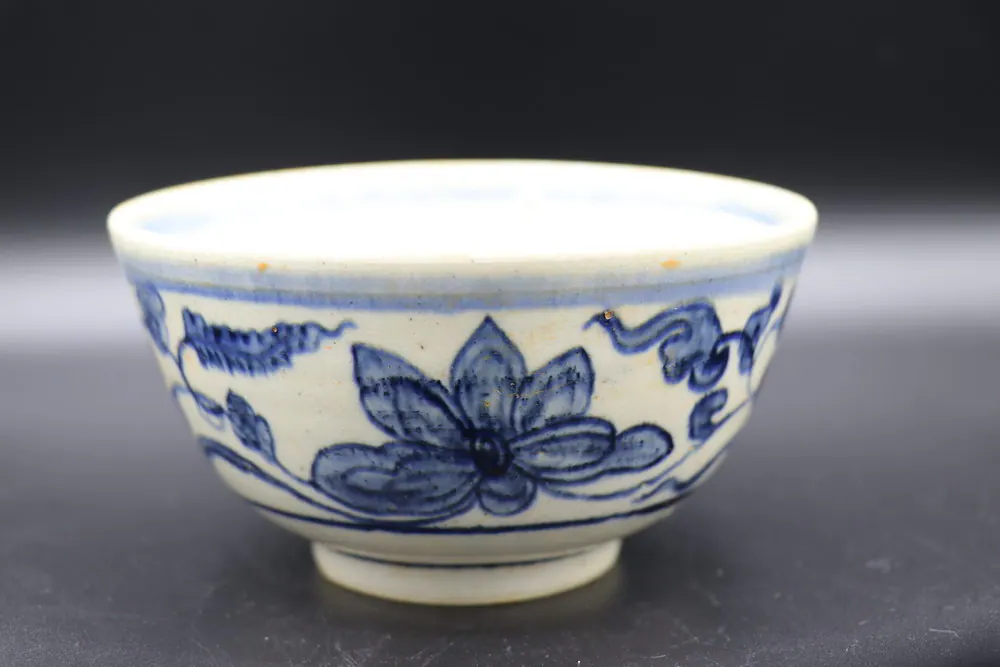
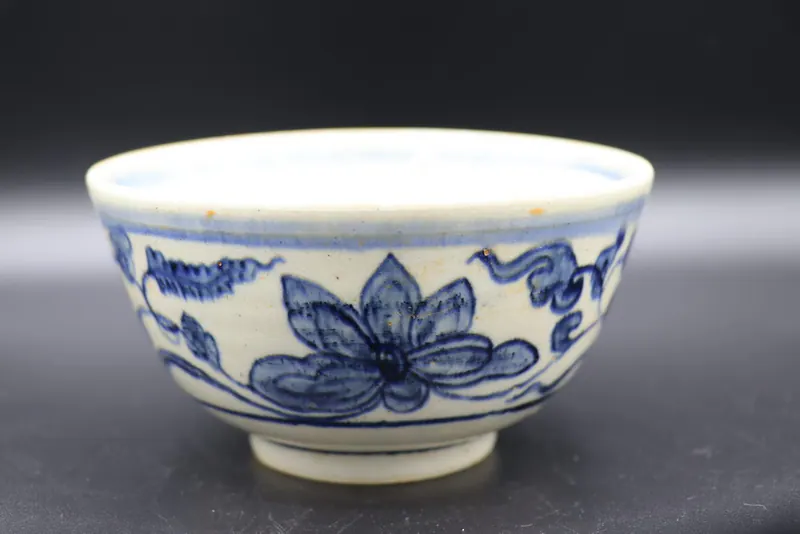
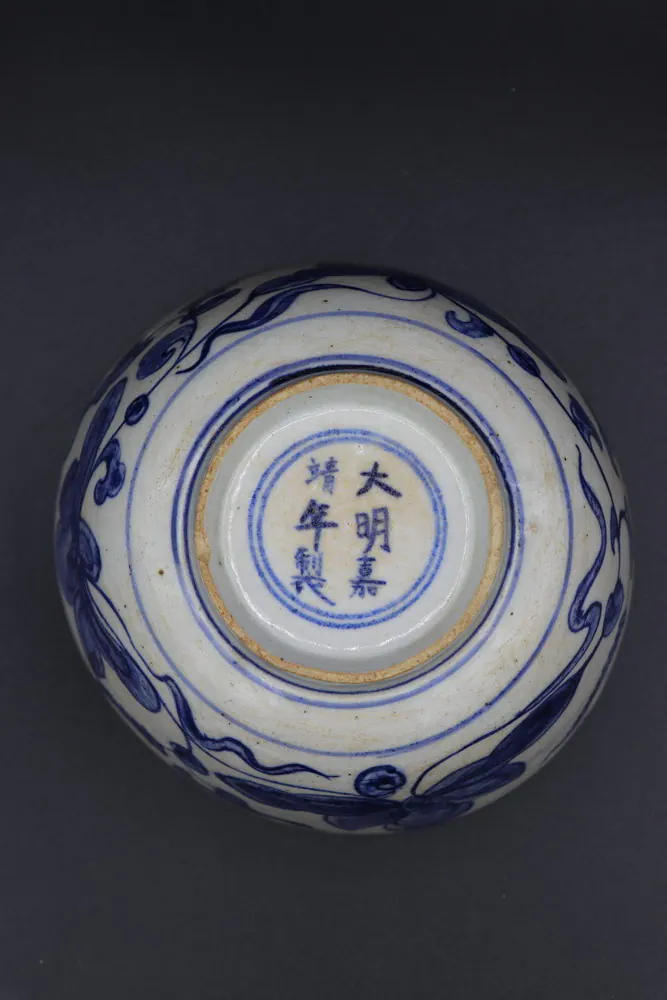
We name a mark exactly as it reads and treat it as one piece of evidence among many. A title such as a blue and white bowl with a Jiajing mark reports the inscription on the base, and a blue and white bowl with a Xuande mark does the same. Neither phrase is in itself a claim about when the bowl was made.
The listings for both bowls include photographs of the base, so you can see the mark and the foot together. If you have a question about a mark, ask it when you inquire through the form on the piece page.