Guide
Condition and Restoration on Chinese Porcelain: How to Detect Repairs Before You Buy
Few pieces of antique Chinese porcelain survive centuries of use without a mark, and many damaged pieces have been repaired, some so well that the repair is hard to see. This guide explains the terms used to describe condition, how to tell a kiln fault from later damage, and how to detect restoration on Chinese porcelain with good light, a loupe, your fingers and an ultraviolet torch.
What to look for
- Go over the rim, foot, spout, handles and finial first: they take the knocks, and restorers work there most often.
- Hold the piece against a strong light to find hairlines that run through the body.
- Look for patches where the glaze changes gloss, the crackle stops or the painted blue looks soft and slightly blurred.
- Scan the whole surface with a longwave ultraviolet torch in a dark room, looking for areas that glow differently.
- Check whether a crack has glaze flowed into it (made in the kiln) or sharp, bare edges (later damage).
- Ask the seller in writing about restoration, hairlines, replaced covers and drilled bases before you commit.
The vocabulary of condition
Dealers and condition reports use a small set of terms, each with a fairly precise meaning.
- Frits are tiny chips of glaze along a rim or foot, sometimes called nibbles. They are very common on thinly potted Ming export wares.
- Chips are larger losses that take away body as well as glaze. A flake is a shallow, scooped loss, usually of glaze.
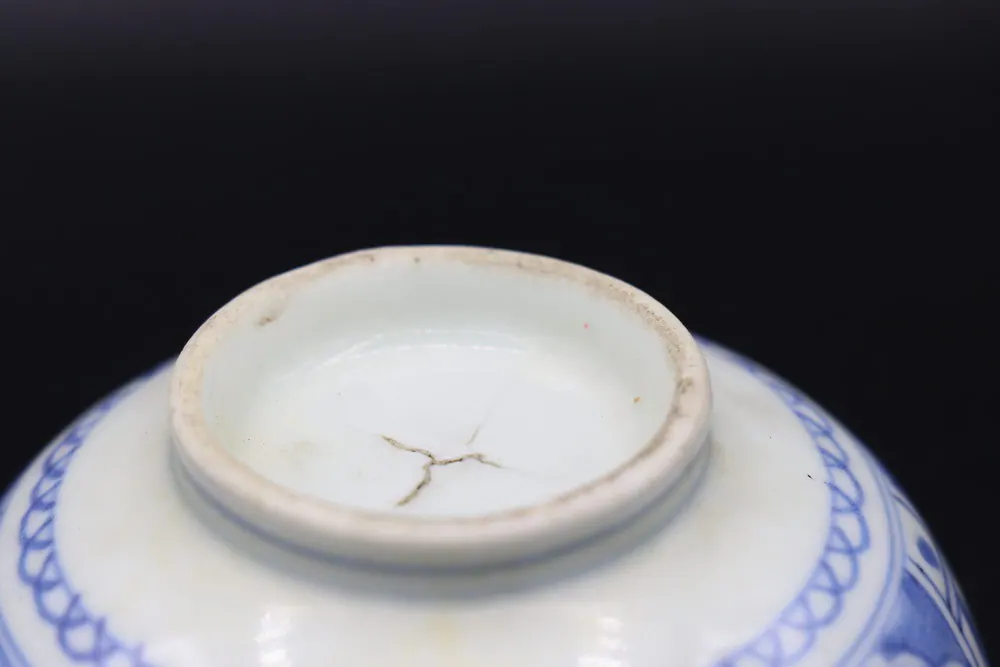
- Hairlines are very fine cracks through the body, often visible only against a light. A crack is the same on a larger scale; a star crack radiates from one point, usually in a base or the centre of a dish.
- Glaze lines are short lines that stay within the glaze. Crazing or crackle is a network of them, deliberate on some wares.
- Firing cracks, glaze skips and kiln grit are faults of manufacture, described below.
- Rubbing and wear mean loss of gloss, gilding or enamel on the high points, from handling and use.
Our guides to hairlines, glaze lines and cracks and to crackles and crazing go into each kind of line in more detail. Condition is also part of the wider evidence for age set out in our guide to antique porcelain age signs.
Damage or manufacture?
Many marks on old porcelain were made in the kiln, not afterwards, and a buyer should be able to tell them apart. Kiln faults are part of how a piece was made and, within reason, are accepted on pieces from market kilns. Later damage is a condition point.
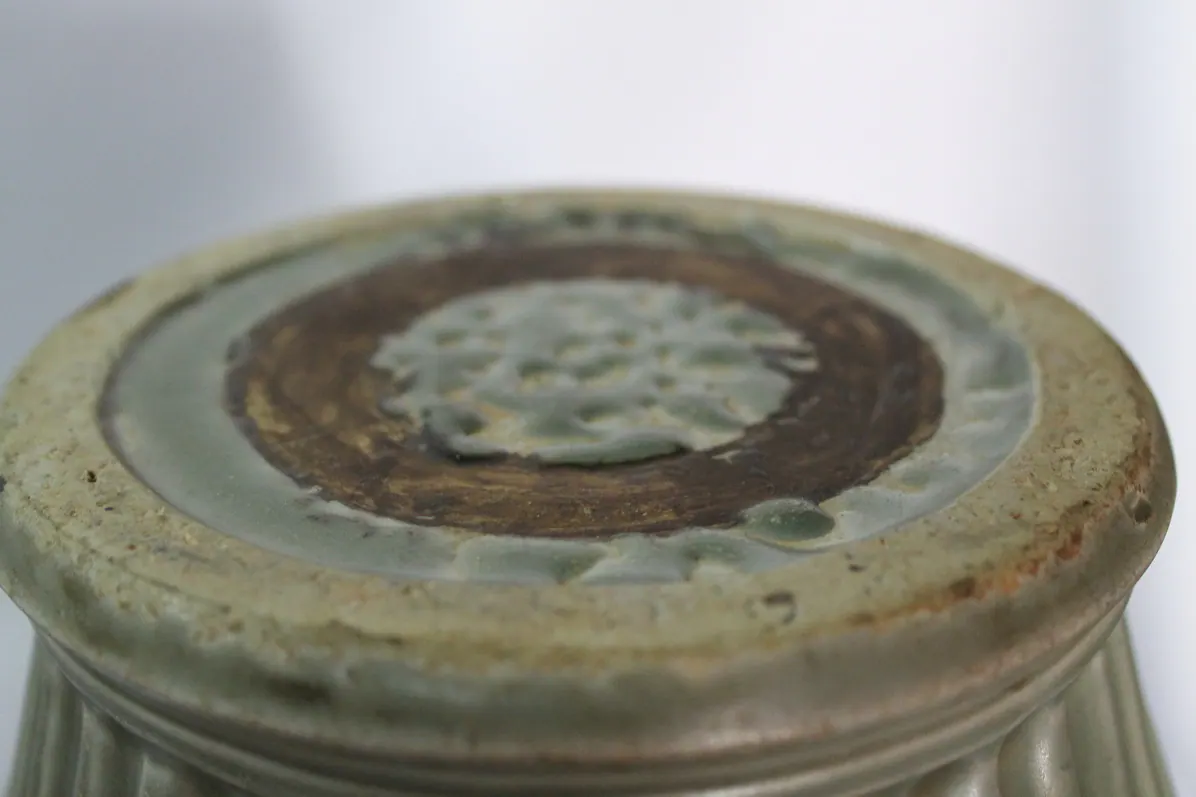
The test is usually the glaze. A crack that opened in the kiln did so while the glaze was still soft, so glaze has often run into it and its edges are rounded and glossy. A crack that happened later has sharp edges, bare body inside and, if it is old, dirt in the opening. In the same way, a glaze skip has smooth, rolled edges where the molten glaze drew back, while a chip is an angular break. Grit fused into a foot rim, a firing blush on the bare clay and a dish that sagged slightly in the heat are all records of the kiln.
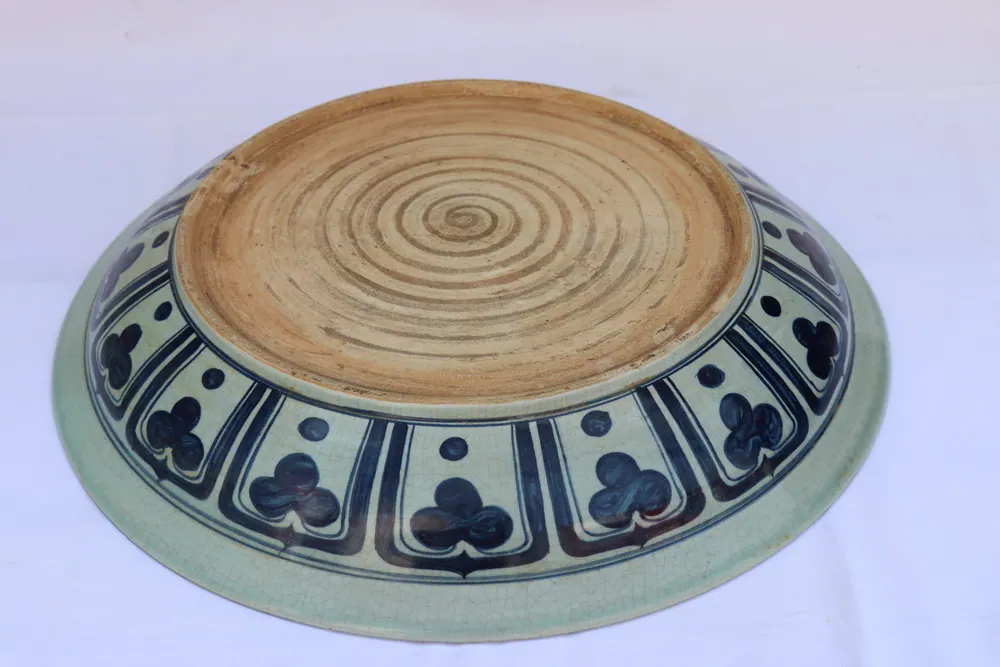
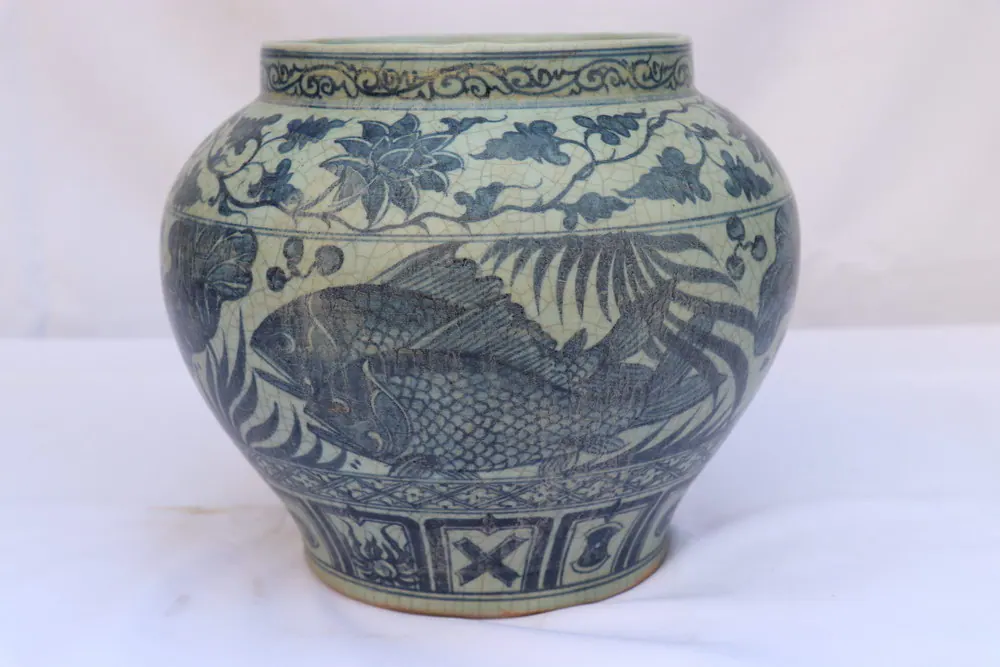
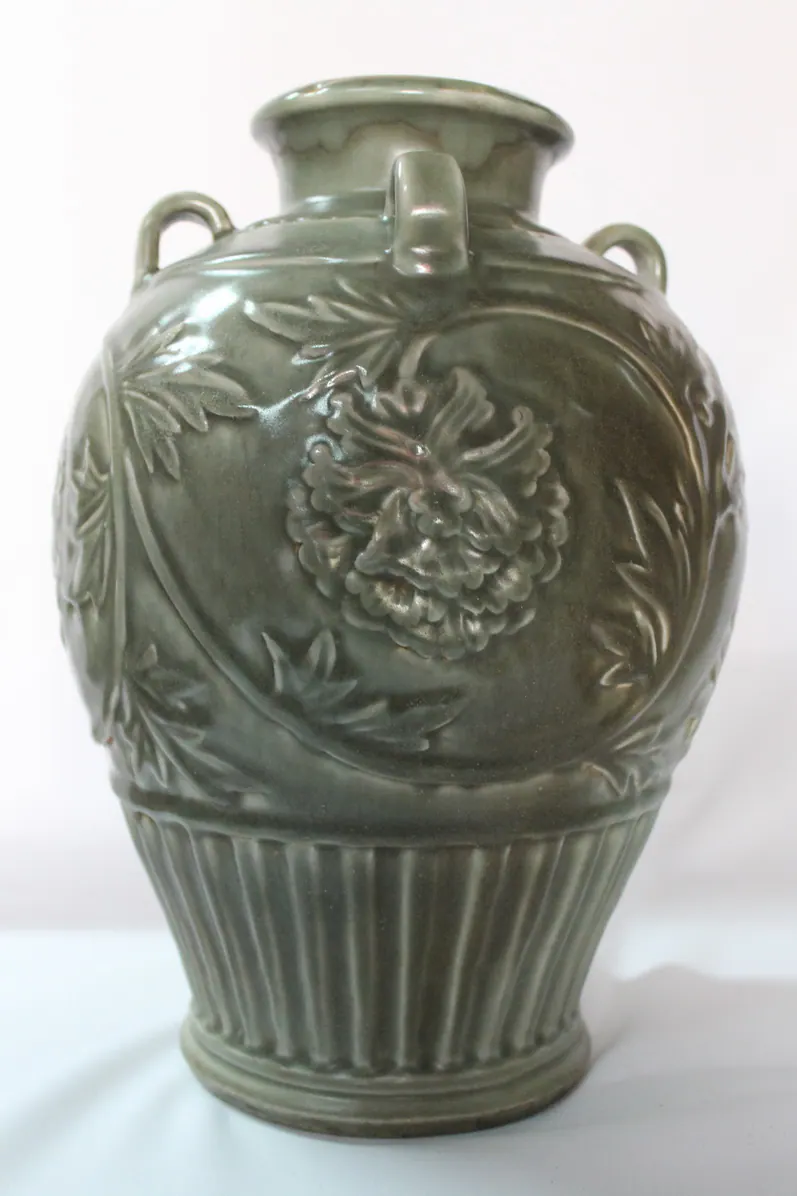
The celadon vase in our collection shown at the top of this page illustrates features of this kind. Its listing notes that one side darkened where it stood too close to the fire in the kiln. Our guides to kiln firing faults and glaze contractions show more examples.
How porcelain is restored
Restoration ranges from an honest, visible mend to work intended to be invisible.
The oldest repairs are the easiest to spot. Broken pieces were once held together with metal staples, or rivets, set into drilled holes on either side of the break; in Japan, breaks were often mended with lacquer and gold. Such repairs are usually obvious and are sometimes of interest in themselves.
Modern restoration usually starts by bonding the break with adhesive and filling losses with a resin or similar compound. The fill is then shaped and polished and painted to match. Because matching a small area of glaze is difficult, restorers often spray colour and a clear coating well beyond the damage, so that the join disappears into the surrounding surface. This overpainting can cover a large part of a piece. The "glaze" of a restoration is not fired glass but a lacquer or resin, which is softer and less durable than true glaze and may yellow with age.
Other work changes the shape. A chipped rim may be ground down and polished, leaving it slightly thin or flat. A damaged neck may be cut down, or a missing one replaced. Covers and finials are often replacements, some borrowed from another piece. Many vases were drilled through the base in the past to be converted into lamps.
How to detect restoration on Chinese porcelain
Start with light. Hold the piece under a single lamp and turn it slowly so that the light rakes across the surface. Restored areas often show a change in gloss, a slightly waxy or matt patch, or a faint ridge at the edge of the sprayed area. Look for places where the crackle stops abruptly, where iron specks and pinholes disappear, or where underglaze blue looks soft and flat instead of lying deep in the glaze. Then use a 10x loupe on anything suspicious: brush marks, tiny bubbles in the paint and colour lying on top of the glaze are all signs of overpaint.
Use touch and sound. Restoration materials feel warmer and slightly softer than glaze, and a restored area may feel faintly tacky or less smooth. A sound piece tapped gently with a fingernail usually rings; a cracked or heavily restored one gives a duller note. Shape and thickness change the sound too, so treat this only as a prompt to look harder.
Finally, use an ultraviolet torch. A longwave torch, usually labelled 365 nanometres, is inexpensive and works best in a darkened room. Fired glaze usually shows an even response across the piece, while resins, paints and adhesives often appear as patches or lines that are darker, brighter or a different colour. It is a strong aid, not proof: some modern restoration materials are made to respond like glaze, and some enamels and old deposits glow on their own. Check the rim, foot, handles, spout, neck and finial with particular care, and hold a cover up to the light separately.
How condition bears on value
Condition is one of the main things that decide value, alongside period, quality, rarity, provenance and the state of the market. How much it matters depends on the piece. A small frit on the rim of a thinly potted Ming export dish is expected and changes little. A hairline in a common nineteenth-century vase matters a great deal, because perfect examples are easy to find. With rare early pieces, collectors accept more: an important Yuan or early Ming piece with a repaired chip may still be more desirable than a perfect later one. Our guide to what makes Chinese porcelain valuable explains these factors in general terms.
Extensive or undisclosed restoration can reduce value more than the damage it hides, partly because it may conceal more than it seems to. A piece with an honestly described chip is easier to judge than one with an unknown area of overpaint. What matters most is not perfection but knowing exactly what you are buying. Disclosed damage can be weighed; undisclosed restoration cannot.
Reading a condition report, and the questions worth asking
Condition descriptions vary in how much they say. Phrases such as "good condition for age" or "wear consistent with age" tell you little on their own. "No restoration visible to the naked eye" is not the same as "examined under ultraviolet light". A precise report names each point and where it is: "two frits to the rim, a 2 cm hairline from the rim at four o'clock, the cover with a restored chip to the finial".
Before buying, it is reasonable to ask:
- Has the piece been examined under ultraviolet light, and did anything show?
- Is there any restoration, including to the cover, finial, handles or foot?
- Are there hairlines visible only against a light?
- Is the cover original to the piece?
- Has the base been drilled or the rim or neck ground down?
- Can you see further photographs of the rim, foot, base and interior?
Our guide to buying antique Chinese porcelain covers the other questions to ask before a purchase.
Sold as seen, with extra photographs on request
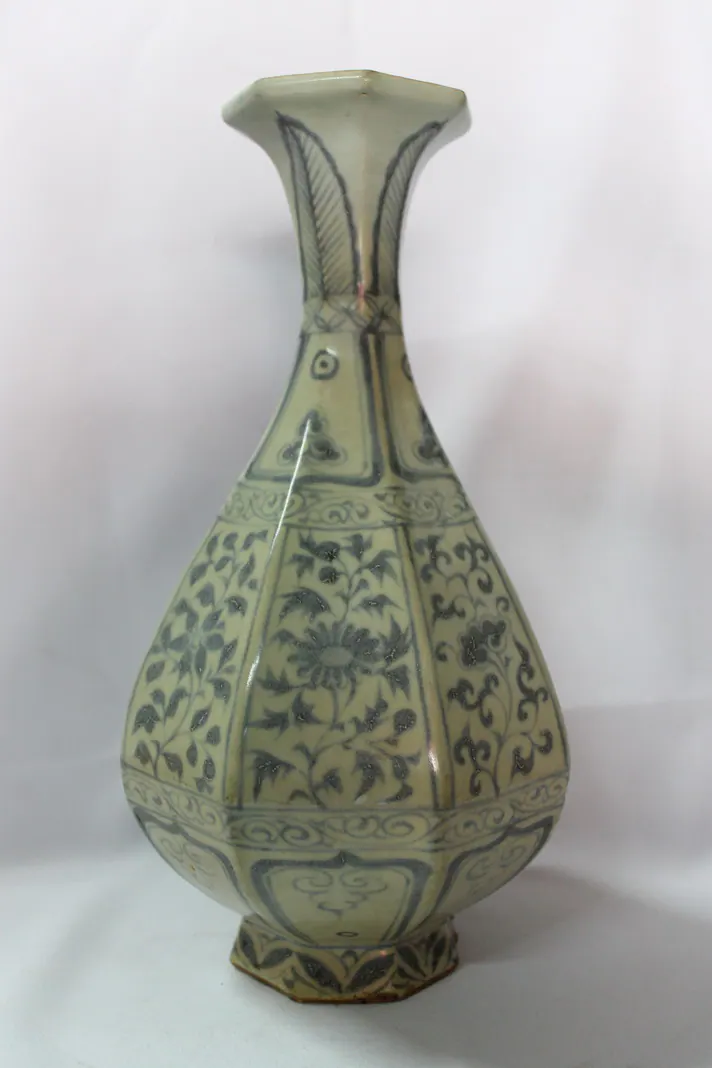
Each piece in our collection is photographed from several angles, usually including the base, and is sold as seen: the photographs show its condition, and where we know of damage, the listing states it. An early Ming vase in our collection, for example, has a break running right round the body, and its listing and photographs show it plainly.
If you would like more detail on a piece, use the Request price form on its page or contact us, and ask for further photographs of any area that concerns you. Because all sales are final, we would rather answer every question about condition before you decide. Shipping is fully insured. Our FAQ covers the practical details of buying from us.