Guide
Glaze Contractions
A glaze contraction is a small patch where the glaze pulled back from the body during firing, leaving the clay bare. On Chinese porcelain these little flaws say a good deal about how and when a piece was made. This guide explains why they form, what they look like on genuine early wares, and how to tell them from the imitations made to deceive.
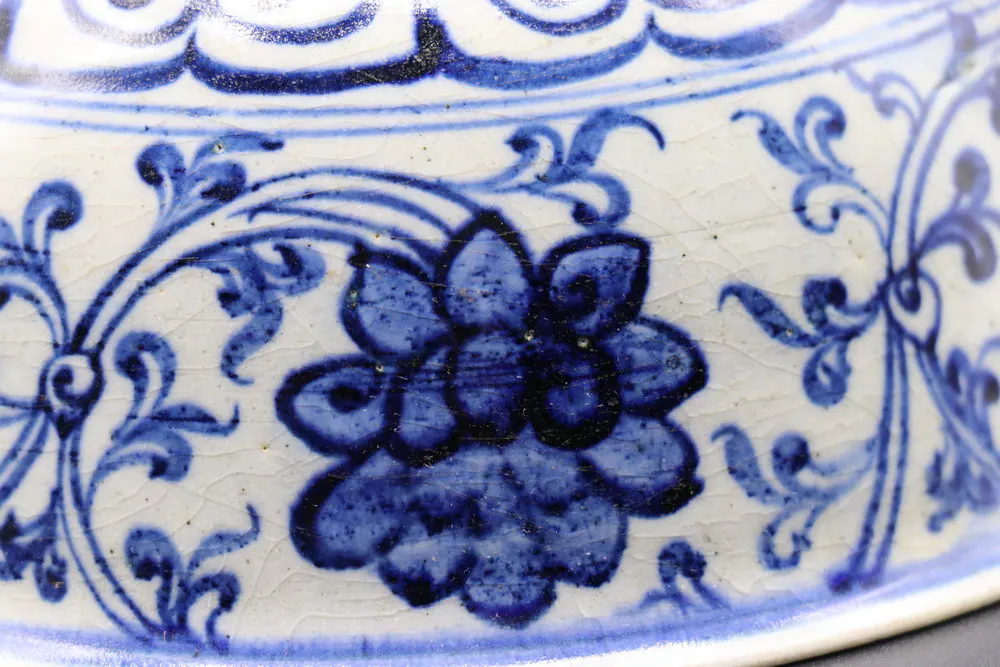
What to look for
- Look for small bare patches where the glaze has pulled back, with smooth, rounded or slightly rolled edges.
- Check the colour of the exposed body: on old Jingdezhen wares it has usually fired to an orange or reddish-brown tone.
- Search the places where contraction is most common: near the foot, on the base and on the lower body.
- Be wary of patches that are all the same size, evenly spaced, or have sharp, cut-looking edges.
- Check that dirt and wear inside the bare patches match the rest of the surface.
- Tell contractions apart from pinholes, which are tiny round holes, and from chips, which break into the body.
What a glaze contraction is
Glaze is a thin coat of glass fused to the surface of a pot in the kiln. Chinese porcelain was fired at about 1,250 to 1,300°C, hot enough for the glaze to melt into a smooth, glossy skin. Most of the time it clings evenly to the body. Sometimes, as it melts, it draws back from a spot and gathers into a thicker rim around it, like water beading on a greasy plate. Potters call this crawling; collectors of Chinese ceramics usually call the result a glaze contraction or shrinkage spot.
The usual causes are dust, grease or oil on the unfired body, which stop the glaze from gripping; a glaze coat applied too thickly, which cracks as it dries and then pulls apart in the heat; or a glaze recipe that shrinks strongly as it melts. Closely related are pinholes: gas escaping from the body bursts through the molten glaze and leaves a tiny crater that does not heal before the kiln cools.
Why contractions help with dating
A contraction is not an age sign in itself. It records the conditions in the workshop and kiln: how carefully the body was cleaned, how the glaze was mixed and applied, and how the firing went. A modern piece can have one, and a genuine early piece may have none.
What makes them useful is that they follow the practice of a period. Yuan and early Ming blue and white from Jingdezhen, and wares from provincial kilns in general, often show contractions and pinholes, especially near the foot and on the base, where glazing and handling were least careful. The finest imperial porcelain of the 18th century, made with carefully refined materials, shows far fewer. A piece whose flaws match what is known of its supposed kiln and period is more convincing than one whose flaws do not.
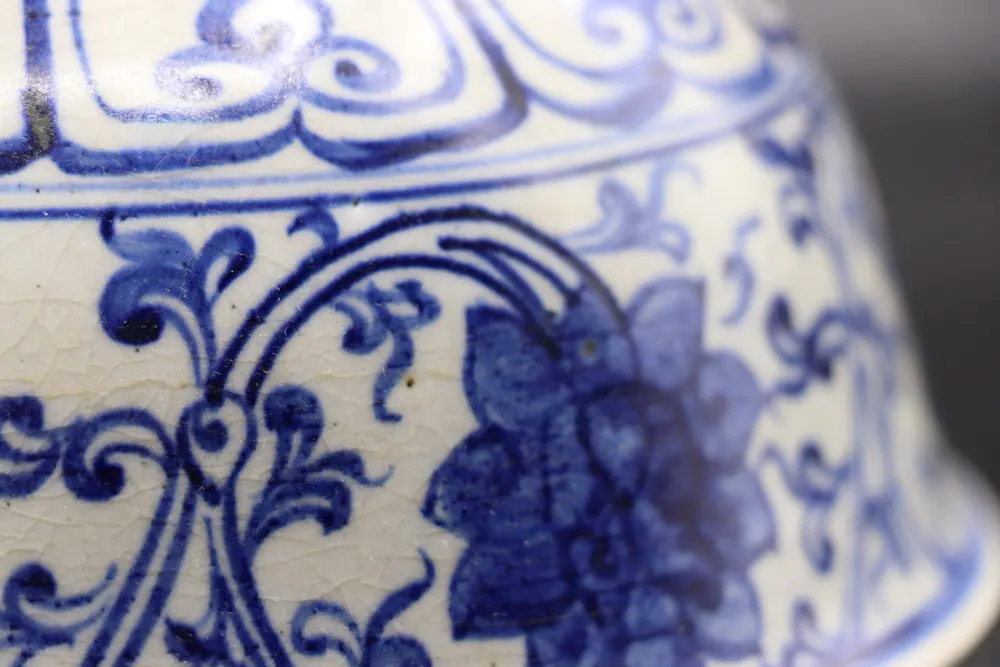
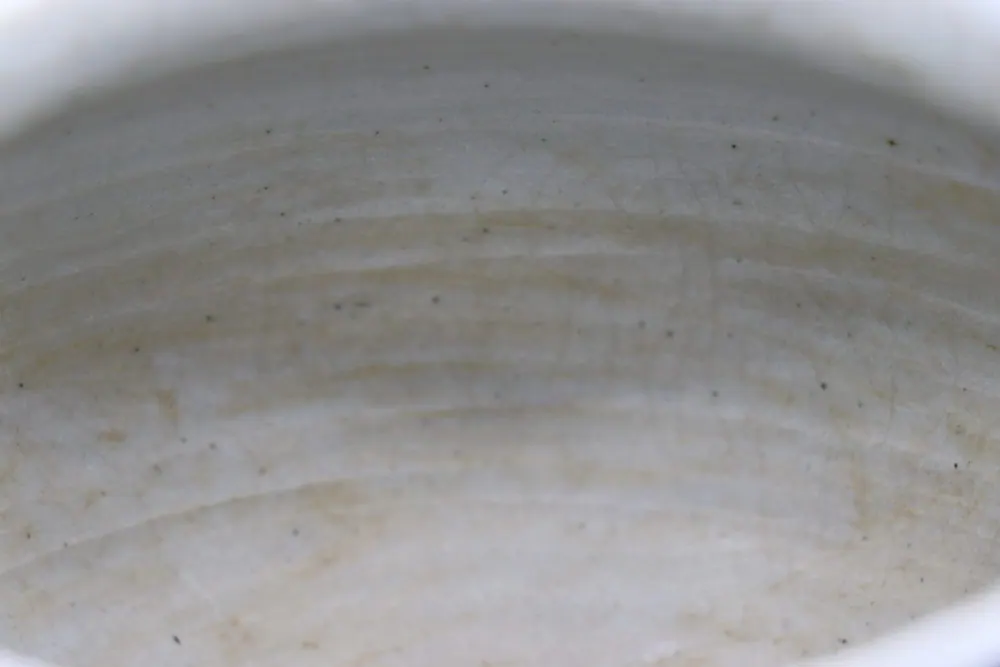
The Xuande-marked bowl in our collection has small pits and dark specks in its glaze, visible in the close-ups on this page.
What genuine contractions look like
On an old piece, the glaze around a contraction ends in a smooth, glossy edge, often a little thicker than the surrounding glaze, because it shrank back while molten. The patches vary in size and shape, and their distribution is random.
The exposed body tells you most. The iron in Jingdezhen porcelain clay oxidises where it is left bare in the kiln, so unglazed patches on Yuan and Ming pieces usually show an orange or reddish-brown flush, the same tone seen on an unglazed foot ring. Over centuries these rough little hollows collect dirt that sits deep in the texture of the clay and is hard to remove.
How copies differ
Because collectors look for them, contractions are deliberately imitated. Some copyists smear oil or wax on the body before glazing to make the glaze crawl. The patches this produces tend to be too many, too similar in size or too neatly placed, and the body inside is often a pale, clean white without the orange flush of an old kiln.
Other imitations are made after firing, by grinding or chipping the glaze away. Their edges are sharp and angular rather than rounded, since the glaze never flowed. Colour painted into the bare spot to suggest firing or age often sits on the surface and does not go into the grain of the clay. Grime rubbed in to fake age lies loose and wipes away more easily than genuine ingrained dirt.
How to examine a piece yourself
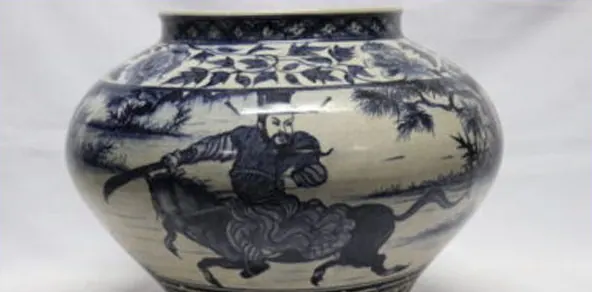
Work in good daylight or under a lamp held at a low angle, which throws the edges of any contraction into relief. A 10x loupe is enough to see whether an edge is rounded or cut. Start at the foot and base, then work up the lower body.
For each patch, ask three questions. Did the glaze flow back from it while molten? Does the exposed body have the colour you would expect from the kiln? Do the dirt and wear inside it match the rest of the piece?
No single feature settles a piece's age. Read contractions together with the other evidence: the pattern of crackle in the glaze, the character of any rust spots in the cobalt, and the wear on the foot and rim. When they all tell the same story, the case is strong.