Guide
Discolouration and Glaze Deterioration
The glaze is where a porcelain piece shows its history most openly. Use, burial and storage leave stains in cracks, dull the surface and wear away enamels, while the kiln leaves faults that were there from the day the piece was made. This guide explains what causes each kind of change and how to tell genuine age from deterioration that has been faked. It is part of our series on signs of age in antique porcelain.
What to look for
- Staining in crazing and hairlines should sit inside the cracks and vary in strength from place to place.
- Wear and loss of shine belong on the rim, the foot and raised areas, not evenly over the whole surface.
- A flat, matt glaze that looks the same everywhere, even in sheltered areas, suggests acid treatment.
- Pinholes, bare patches and glaze runs should have smooth, fused edges under a lens.
- Kiln faults show how a piece was made, not how old it is: judge them alongside other signs.
What glaze is and how it changes
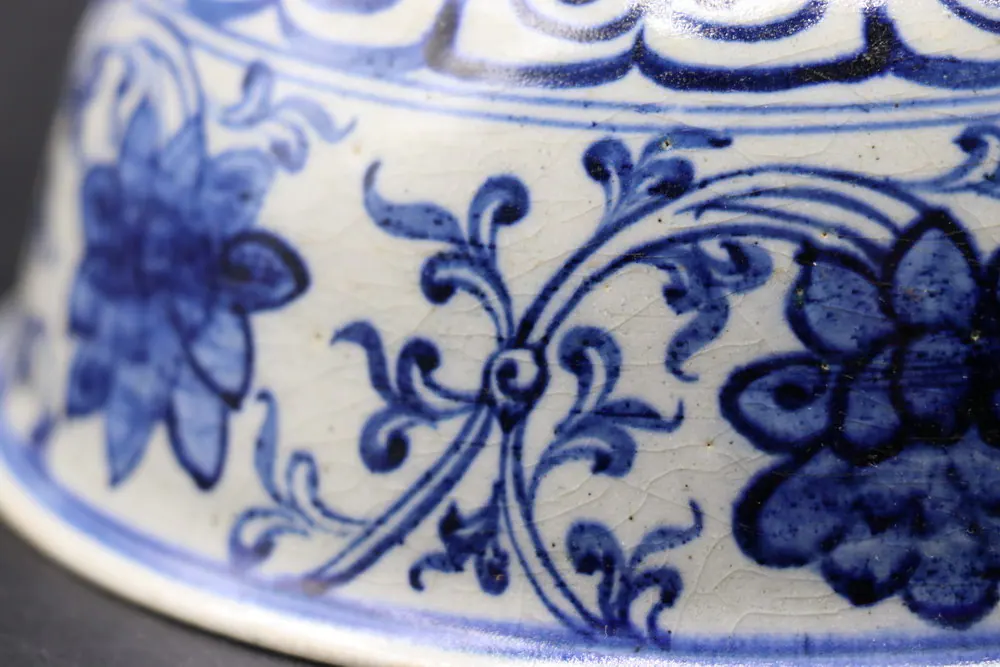
A glaze is a thin layer of glass fused to the body in the kiln. Chinese potters made theirs mainly from ground porcelain stone with a flux such as limestone or plant ash, applied as a liquid and fired at high temperature. On porous earthenware and stoneware the glaze seals the surface so that the vessel holds liquid. High-fired porcelain is itself dense and almost non-porous, so there the glaze gives a smooth, hard surface that is easy to clean and a ground for decoration.
Two kinds of change are worth keeping apart. Some faults arise in the kiln: the glaze cracks, runs, blisters or pulls away because of the recipe, the way it was applied or the firing. Others develop over time: the glaze wears, stains, loses its shine or, after burial or long immersion in the sea, begins to break down. The first kind tells you how a piece was made. Only the second tells you about its life since.
Crazing and staining
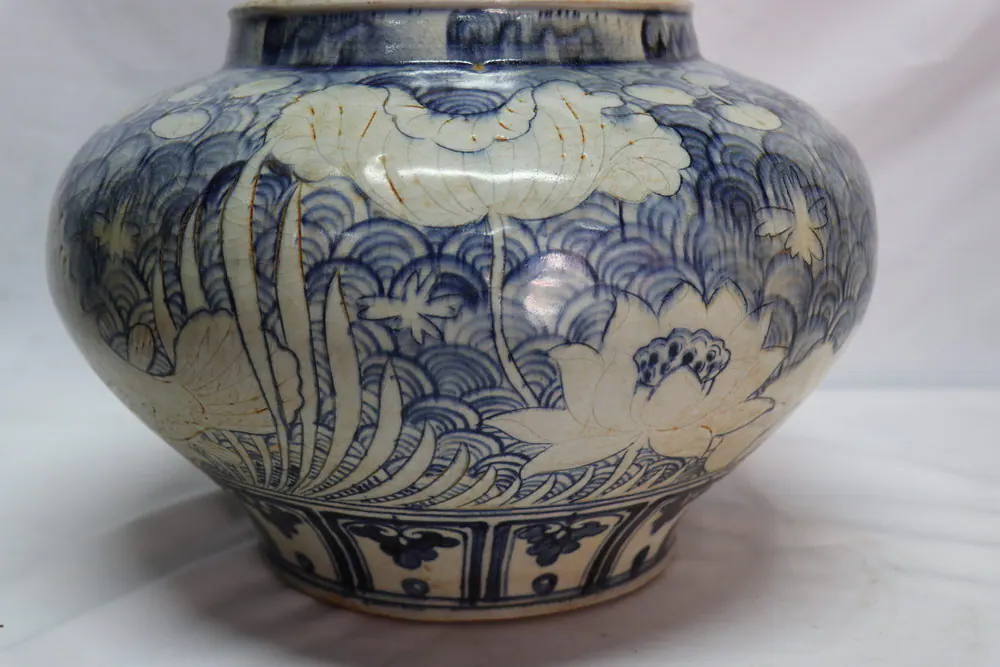
Crazing is a network of fine cracks in the glaze. It forms when the glaze contracts more than the body as the piece cools, which leaves the glaze under tension. It can appear in the kiln or develop gradually over years. On some wares, such as Guan and Ge, crackle was cultivated on purpose, and our guide to crackles covers those.
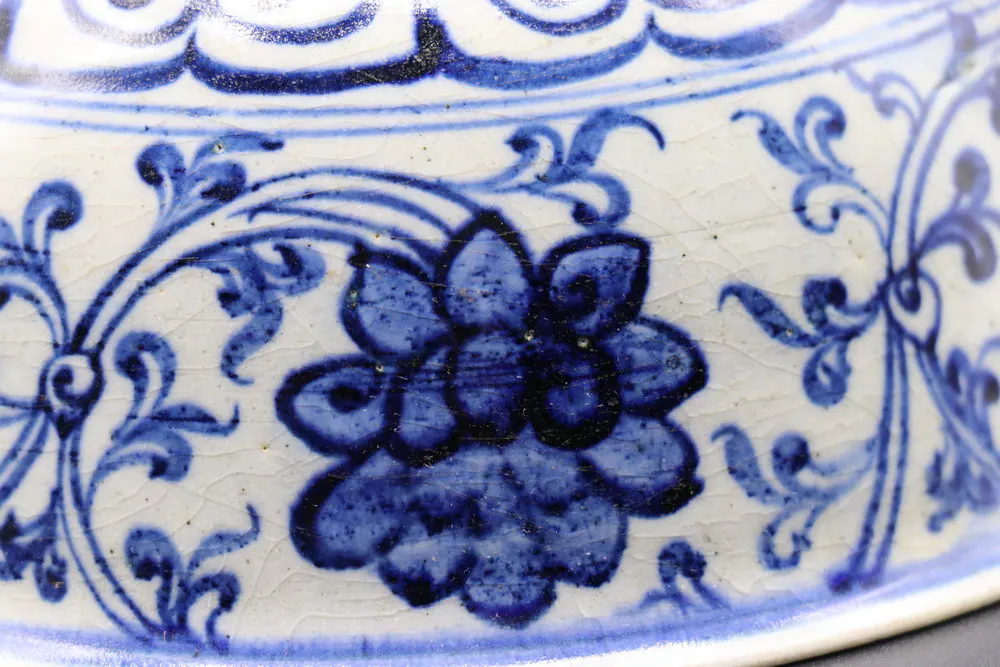
Crazing on its own says little about age. What matters is what has happened inside the cracks. Over a long life, dirt, grease, tea and, on excavated pieces, minerals from the soil work their way in, and the lines darken to grey or brown. On a genuine piece the staining is uneven: stronger where the piece was handled or stood in damp, fainter elsewhere. The same happens along hairlines and cracks that run into the body, where the stain can spread outwards from the line.
Porcelain that has spent centuries buried or under water shows more. The glaze may lose its gloss and become slightly matt or pitted, low-fired lead glazes can develop a silvery iridescence, and overglaze enamels, which are softer than the glaze beneath, may wear away almost entirely.
Faults from the kiln
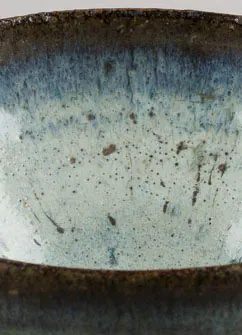
Many of the blemishes collectors notice were there from the start. The common ones are:
- Crawling. The glaze pulls back into islands or beads, leaving patches of bare body. Dust or grease on the body, or glaze laid on too thickly, are the usual causes. The small bare spots that result are often called glaze contractions.
- Shivering. The reverse of crazing: the glaze contracts much less than the body, is squeezed, and flakes away, usually at the rim or other edges.
- Pinholes. Tiny holes left where gas escaped late in the firing and the glaze did not flow back to seal them.
- Blisters. Bubbles raised in the glaze by gas, which may burst and leave small craters.
- Running and unevenness. A glaze that is too fluid, too thick or unevenly applied runs towards the foot in drips and pools, leaving the upper part thin.
More faults of this kind are described in our guide to kiln firing faults. None of them proves age by itself, because modern kilns produce them too. They should, however, look natural: the edges of a pinhole or bare patch are smooth and glossy where the glaze melted, not cut, drilled or filled.
What fakes do differently
Because buyers look for these signs, fakers imitate them. A new glaze is bright and glassy, so the commonest trick is to dull it, usually with acid, sometimes by abrasion or by burying the piece for a time. The result is a matt surface that is the same everywhere: on the rim and foot, but also inside the foot ring and under the lip, where genuine wear would hardly reach.
Staining is faked too. Crazing can be darkened with tea, ink or chemical stains, and dirt can be rubbed into the surface and fixed with glue or wax. Faked staining tends to be even in strength, to sit on the surface rather than in the cracks, and to appear on areas that the piece's use would have protected. Faked wear is often a pattern of fine parallel scratches from abrasive paper, rather than the random, softened marks of long handling.
The reverse mistake is also common. A piece with no crazing, staining or wear may still be old if it was well kept, and many modern copies reproduce old faults faithfully. The glaze should always be judged together with the body, the painting and the signs of wear.
How to examine a piece yourself
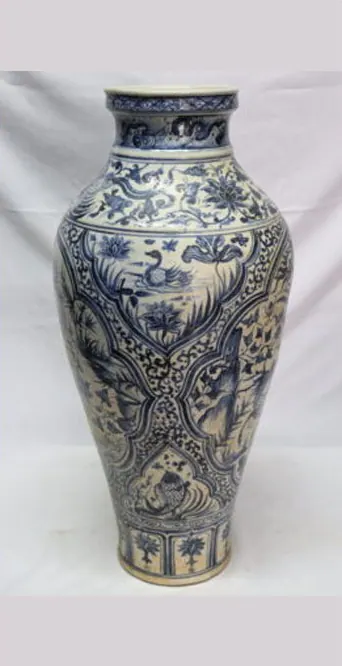
Good light and a hand lens of about ten times magnification are enough to begin. Tilt the piece under a light and watch the reflection move across the glaze. A surface that has aged naturally usually keeps some depth and shine, with softer areas on the high points, while an acid-treated surface looks flat and even all over.
Then work around the piece in order. Look at the rim and the foot ring, which take the most handling. Follow any crazing under the lens and check whether the staining lies inside the cracks and varies from place to place. Examine pinholes, bare patches and runs to confirm that their edges are fused glaze. Finally, compare the inside with the outside and the base with the body: a genuine piece tells one consistent story in every part. Our guide to detecting fakes sets these checks in a wider context.
If you have a question about a piece in our collection, you are welcome to contact us, and we can send further photographs of the whole piece, the base and any area you would like to see.