Guide
Hairlines, Glaze Lines and Cracks
Almost every old piece of porcelain has a line somewhere, and knowing which kind it is matters for both value and authenticity. This guide explains the difference between crazing, glaze lines, hairlines and cracks, where each tends to appear, and how to find them.
What to look for
- Hold the piece to a strong light: a hairline through the body shows from both sides, a glaze line only on one.
- Check the base, the centre of dishes and bowls, and the rim, where most cracks start.
- Look for glaze flowing into a line: that points to a crack formed in the kiln rather than later damage.
- Run a fingertip gently around the rim and foot to feel for small chips.
- Use an ultraviolet lamp to find filled or overpainted repairs.
- Treat the tap test as a hint only: a dull note can also come from shape or thickness.
Why porcelain cracks
Porcelain is fired at very high temperatures, and the body and the glaze shrink by slightly different amounts as they cool. That builds tension into every piece. Some of it is released in the kiln, some years later, and some only when the piece is knocked or suddenly heated or chilled.
The result can be a network of fine lines in the glaze, a single line through the body, or a crack that radiates from a point of impact. They look similar at first glance, but they mean quite different things, and dealers use distinct terms for them.
Crazing and glaze lines
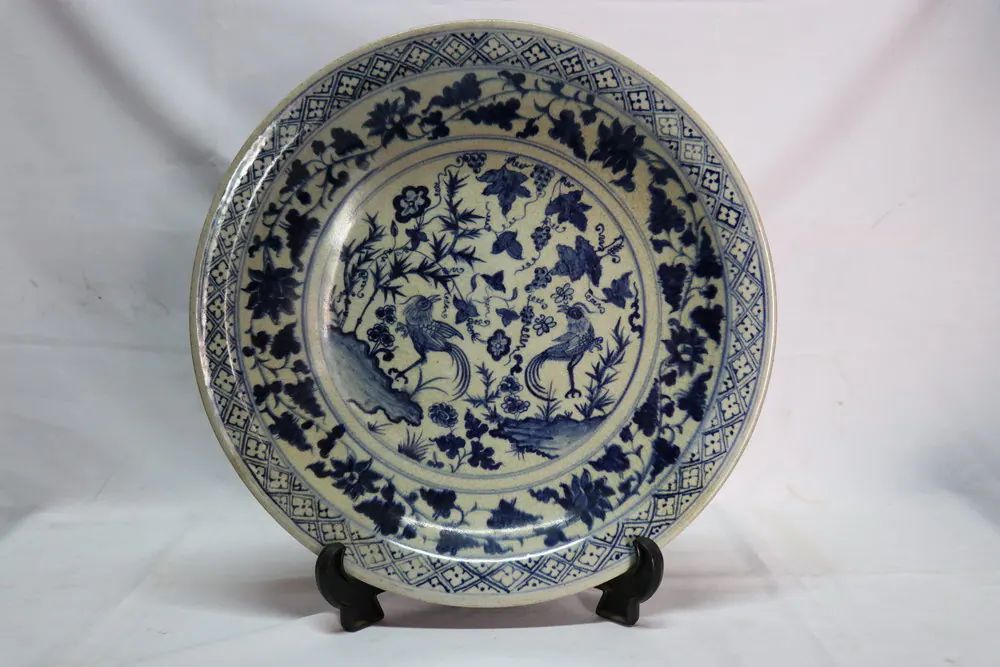
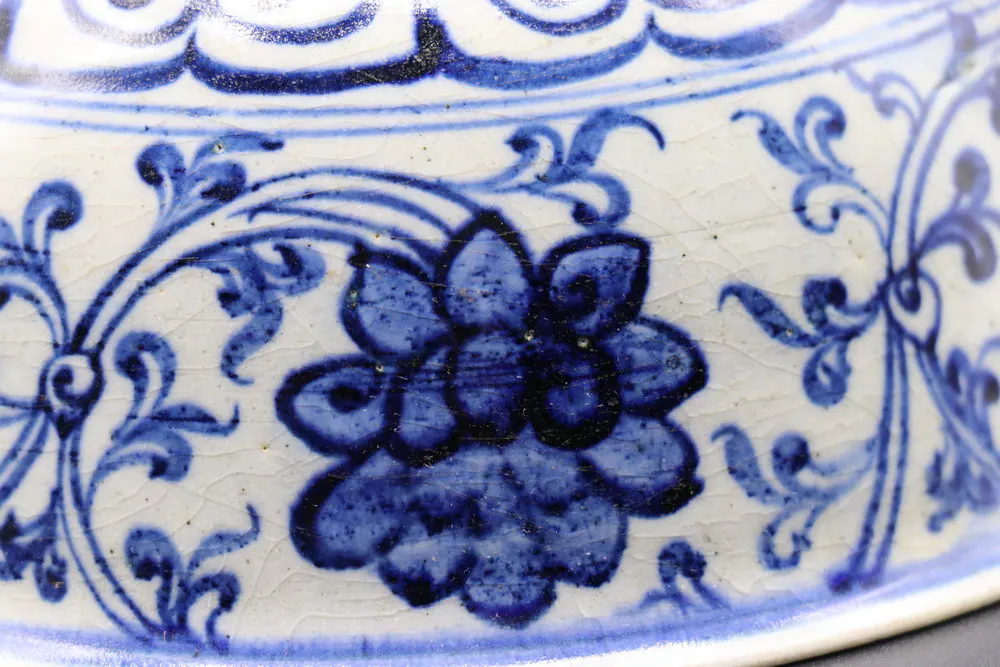
Crazing, also called crackle, is a network of fine lines that lies in the glaze only. It occurs when the glaze contracts more than the body on cooling, so the glaze is left under tension and splits. It can form as the piece leaves the kiln or develop gradually over many years.
On some wares crazing was deliberate. Song potters prized it on Guan and Ge wares, and later kilns reproduced it on purpose. Where it occurs on blue and white, it is usually a feature of the glaze and does not weaken the piece. Over time the lines often darken with dirt, and uneven staining of this kind is one of the signs described in our crackles guide.
A single glaze line, running a short way across an otherwise clear glaze, usually does not go into the body. It is a minor condition point, but it is worth checking with a light that it is not a hairline.
Hairlines and cracks
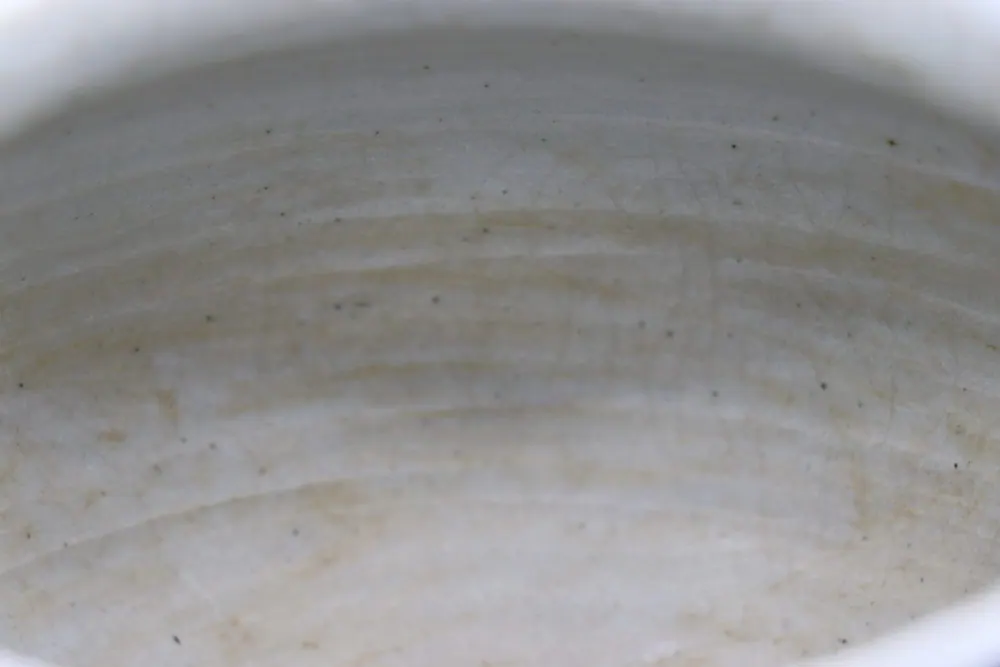
A hairline is a very fine crack that runs through the body, not just the glaze. It can be almost invisible on a busy painted surface, but it will usually show on both sides of the wall when the piece is held against a strong light. Hairlines are easier to see on plain areas, such as the inside of a bowl or the neck of a jar.
A crack is the same thing on a larger scale: wider, longer or clearly open. Spider or star cracks radiate from a single point, usually in the base or the centre of a dish, and are often caused by a blow or by heat, such as hot liquid poured into a cold vessel.
Hairlines and cracks affect value far more than crazing, and they can grow. Pieces with them should be kept away from sudden changes of temperature and never washed in hot water.
Firing cracks, rims and bases
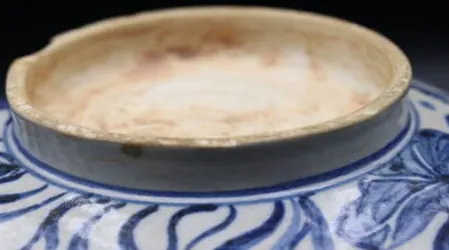
Some cracks formed in the kiln. In a firing crack the glaze has often run into the opening and melted smooth, which shows it was there before the glaze set. Firing cracks are common on large early pieces and are generally judged less serious than later damage, although they should still be described.
Rims and feet take the most knocks. Tiny chips along the edge of the glaze, called frits, are very common on old pieces, especially Ming export wares with thin, brittle rims. Larger chips often have a short hairline running from them. Run a fingertip gently around the rim and foot, and look at the unglazed foot under a lens.
Checking a piece, and what fakers do
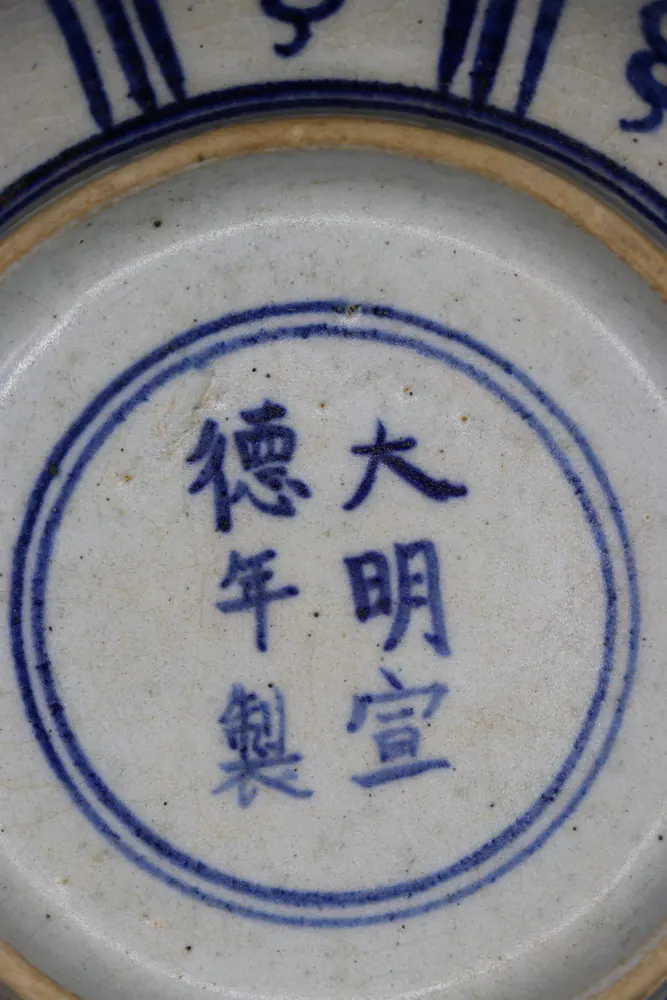
Use good light and a lens, and work around the piece methodically: rim, body, foot, base and interior. An ultraviolet lamp helps find repairs, because modern fillers and overpaint usually glow differently from the original glaze.
Tapping a piece lightly with a fingernail is an old test: a sound piece tends to ring, a cracked one to give a dull note. Shape, thickness and even how it is held change the sound, so use it only as a prompt to look more closely.
Forgers sometimes add crazing, stain it, or crack a new piece deliberately to suggest age. Damage alone proves nothing about date. Our guides to kiln firing faults and signs of wear explain what to look for alongside it.