Guide
Signs of Wear
A piece of porcelain that has been used, moved and cleaned for centuries carries the marks of that life. Genuine wear is one of the harder things to fake well, so it is worth learning to read. This guide covers where wear appears, what it looks like, how it is imitated and how repairs are hidden.
What to look for
- Wear should sit where hands, tables and utensils touched the piece: foot rim, base, rim and raised areas.
- Genuine scratches cross at random and vary in depth; artificial ones run in parallel or cover the surface evenly.
- Overglaze enamel and gilding wear before the glaze does; underglaze blue should not be rubbed away.
- An unglazed foot should show smoothing and dirt in the grain, not fresh sanding marks.
- Check under an ultraviolet lamp for filled chips and overpainted repairs.
Why wear matters
Wear is the record of how a piece was used. A dish used at the table, a jar that stood on a shelf for two hundred years and a vase that spent centuries buried will each show different marks, in different places.
That makes wear useful evidence, but not proof. Some genuine pieces were stored so carefully that they show almost none, and forgers work hard to add it. The question is always whether the wear makes sense for the object: its shape, its likely use and the rest of its age signs.
Scratches, chips and where to look
The foot rim is the first place to look. Every time a piece was set down or slid across a surface, the foot rim rubbed against it. On an old piece the unglazed edge is smoothed and slightly polished, with dirt worked into the grain of the body.
The base, the inside of bowls and the centre of dishes collect fine scratches from utensils, stacking and cleaning. These scratches run in all directions and vary in depth and age. The shine of the glaze is often softened where they are densest.
Rims and the high points of moulded or applied decoration pick up small chips and rubbing. Tiny chips along the glaze edge of a rim, called frits, are especially common on thinly potted pieces. Our guide to hairlines, glaze lines and cracks covers more serious damage.
Enamels and gilding
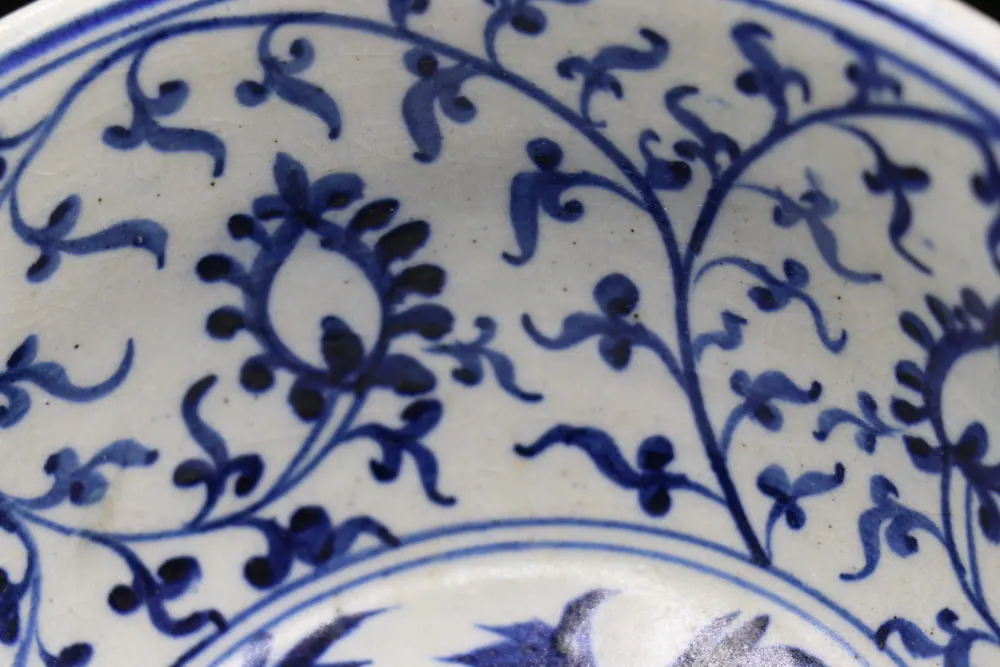
Where colour sits matters. Underglaze blue and red were painted before the glaze was applied, so the glaze protects them. On a sound surface they should not be worn away, although the glaze above them can be scratched.
Overglaze enamels and gilding were painted on top of the fired glaze and fixed in a second, lower firing. They are much softer, and on a piece that has been used they wear first: gilding thins or disappears from rims and raised areas, and enamels become rubbed or flaked. Wear of this kind should follow the places that were handled, not be spread evenly across the surface.
Stains, burial and the sea
Stains usually enter through damage: a crack, a chip, crazing in the glaze or an unglazed area. Food, oil and tea can leave brown staining in these places on pieces that were used, and they are very hard to remove completely.
Pieces recovered from the ground or from shipwrecks show a different kind of wear. Burial can leave soil stains and a dull or iridescent surface. Long immersion in the sea can etch the glaze, leaving it matt and pitted, and marine deposits often cling to the surface. These changes follow the conditions each piece was in, so they are rarely uniform. Our guide to discolouration and glaze deterioration shows more.
How wear is faked
Forgers rub new pieces with abrasive paper, stones or grit to put scratches on the foot and base, and treat the glaze with acid to remove its fresh shine. They stain crackle and unglazed areas with tea, oil, soil or chemicals, and sometimes chip a rim on purpose.
The giveaways are consistency and placement. Abrasive scratches run in parallel sets or look the same everywhere. Acid dulls the whole surface evenly, including recesses no hand could reach. Stains sit on the surface or wash off. And the wear often appears in places a real owner would never have touched.
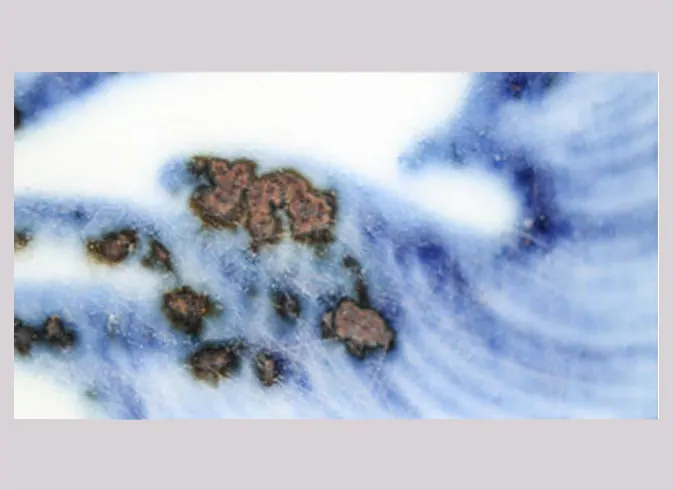
Be careful, too, not to mistake kiln features for wear. Iron spots, glaze contractions and firing cracks formed when the piece was made, and they are covered in our guide to kiln firing faults.
Repairs and restoration
Chips, cracks and breaks are often restored, sometimes very skilfully. Fillers and overpaint can hide damage completely to the naked eye.
An ultraviolet lamp is the simplest check: modern fillers, adhesives and retouching usually glow or show as dark patches that differ from the original glaze. Restored areas can also feel warmer or softer than porcelain, and may sound different when gently tapped.
Honest restoration is not a problem in itself, and many fine pieces have some. What matters is that it is disclosed, because it affects value. Our pieces are sold as seen, so if you are considering one, ask and we will send extra photographs of any area you would like to check.