Guide
Crackles and Crazing
A network of fine cracks in a glaze can be a fault, a deliberate decoration or a sign of age, and sometimes all three. This guide explains why crazing happens, how the famous crackled wares were made, and how to tell old crazing from new when you examine a piece.
What to look for
- Use a loupe: old crazing lines usually hold dirt, most densely near the foot and where the piece is handled.
- Be wary of staining that is even across the whole surface; it is often added with tea, ink or chemicals.
- Check that the lines stay in the glaze; a crack that runs into the body is damage, not crazing.
- Ask whether crazing suits the ware: many fine Jingdezhen porcelains rarely craze at all.
- Never treat crazing alone as proof of age; modern pieces craze too.
What crazing is and why it happens
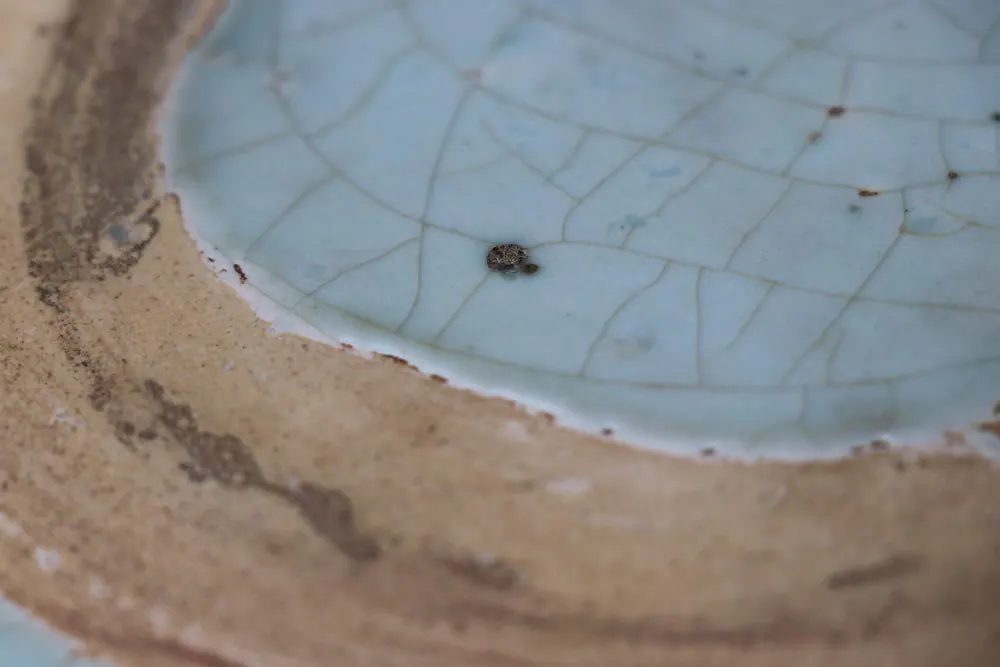
Crazing is a network of fine cracks in a glaze. It happens when the glaze and the body beneath it do not shrink by the same amount as they cool. A glaze that contracts more than its body is left under tension, and it relieves that tension by cracking. A well-fitted glaze does the opposite: it is held slightly compressed by the body, which makes the whole piece stronger.
Potters distinguish two kinds. Immediate crazing appears as the piece cools in the kiln or soon after, because the glaze and body were a poor match. Delayed crazing can appear months or years later, mainly in porous earthenware and underfired stoneware: the body slowly absorbs moisture from the air and expands, until the glaze can no longer stretch with it.
Crazing is usually densest where the glaze is thickest, such as around the foot, in the well of a dish and where glaze has pooled.
Crackle as decoration
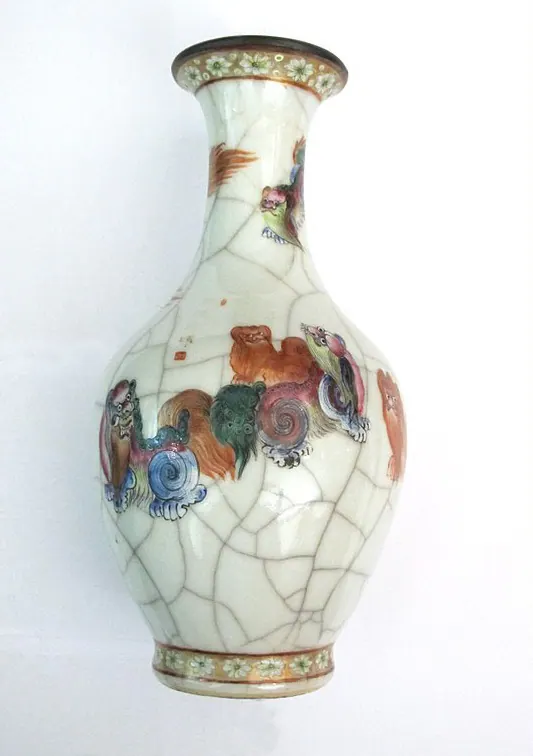
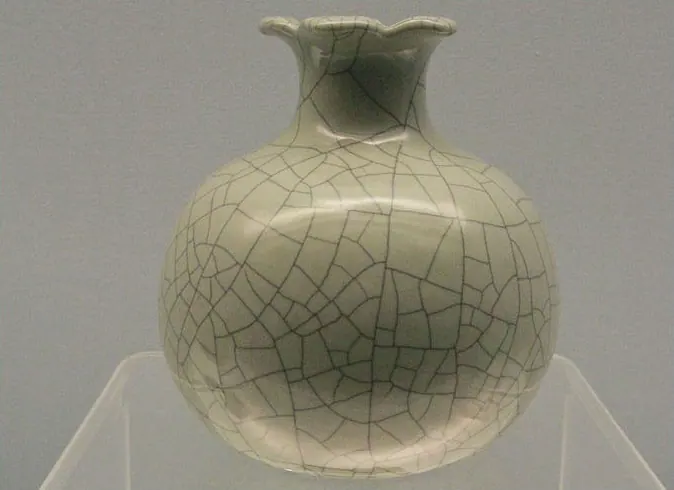
Chinese potters learned to control crazing and use it as ornament. The most admired crackled wares are associated with the Song dynasty: Guan ware, made for the court, and Ge ware, whose name means "elder brother". A late tradition says Ge ware was made by the elder of two brothers named Zhang who ran kilns in Longquan, but where and when Ge ware was actually made is still debated by specialists.
The classic Ge crackle combines two networks: a bold, dark crackle known as "iron wire" and a finer, golden-brown one known as "golden thread". The darker lines are generally thought to have been stained deliberately after firing, while the finer crackle continued to open up, and to take on colour, as the glaze settled over time. Other named patterns include the large, angular "ice crackle" and the very fine "fish-roe" crackle.
Crackle glazes remained popular long after the Song. Jingdezhen potters of the Qing imitated Ge and Guan wares, and in the nineteenth century crackled grounds were often combined with enamel decoration.
Crazing as a sign of age
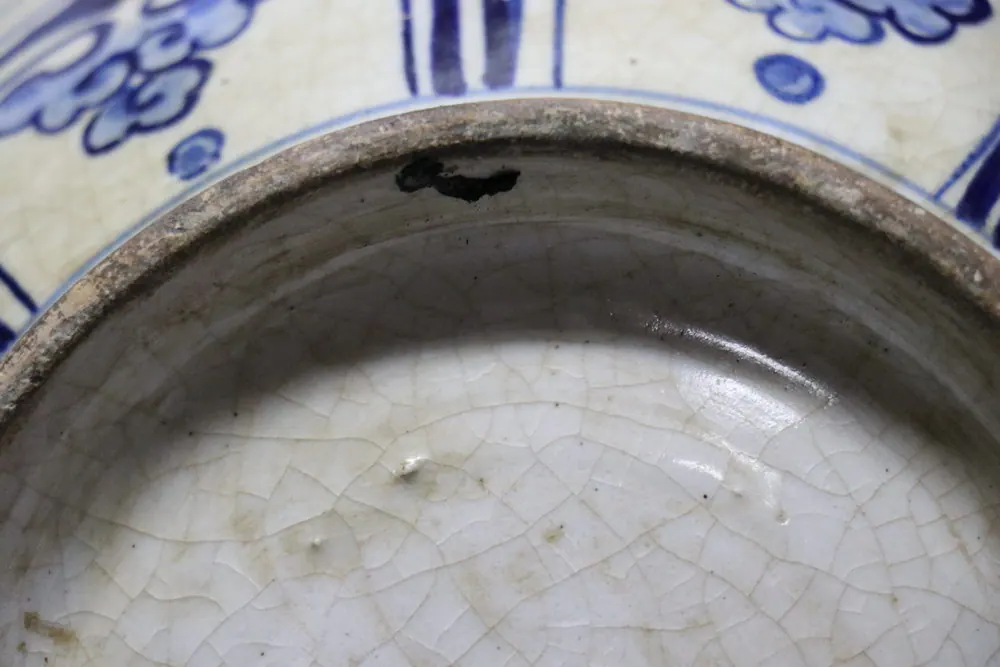
On some antique pieces, crazing that was faint or invisible when the piece left the kiln becomes more pronounced over decades or centuries as the piece is handled, washed and moved between warm and cold places. Over the same years dirt and grease work into the cracks, so old crazing lines tend to be darker where the piece has been used and handled, and cleaner in protected areas.
This uneven, lived-in pattern is what an experienced eye looks for. Genuine age crazing rarely looks uniform; it may cover only one side of a piece, or be concentrated near the foot or the rim.
Crazing is only one sign among several, and it must be read together with wear, the glaze surface and the foot. Our guide to antique porcelain age signs describes the others.
How copies and fakes differ
Modern crackle is easy to produce, either with a glaze made to craze or by shocking a warm piece with cold water. The result tends to be too regular, with a network of even density over the whole surface.
The colour of the lines is the other giveaway. To imitate old dirt, fakers rub tea, ink or chemical stains into new crazing. This usually leaves every line the same colour, including in places no hand would reach, and the stain may sit on the surface around the lines rather than deep within them.
Our guide to detecting fakes covers these and other techniques.
Examining a piece yourself
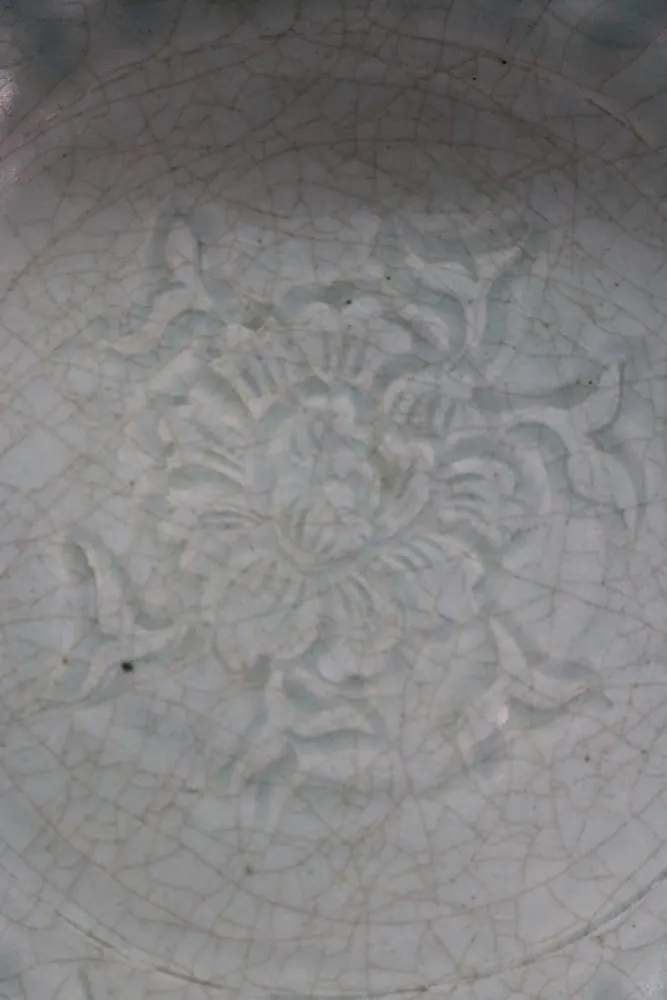
Work in good daylight or under a raking light, with a ten-times loupe. Look first at the foot and the lower body, where dirt collects and where crazing is often densest, then at the areas a hand would hold.
Follow individual lines. Crazing forms a closed network within the glaze. A single line that runs across the network, continues through the body or can be seen on both faces of a bowl is a crack, and our guide to hairlines, glazelines and cracks explains how to assess it.
Finally, consider whether the crazing fits the ware. Crackle is expected on Guan and Ge wares and common on celadons and provincial wares, but it is unusual on fine imperial porcelain. If you have a question about the crackle on a piece in our collection, ask us and we can send further photographs.