Guide
Ming Folk Kiln Porcelain: The Blue and White of Everyday China
Ming folk kiln porcelain, called minyao in Chinese, was made by private kilns for ordinary buyers rather than for the court. It accounts for most of the Ming porcelain that survives outside museums, including much of what we handle. This guide explains how folk kiln wares differ from imperial porcelain, how to read their painting, bodies, bases and marks, and why the best of them are collected in their own right.
What to look for
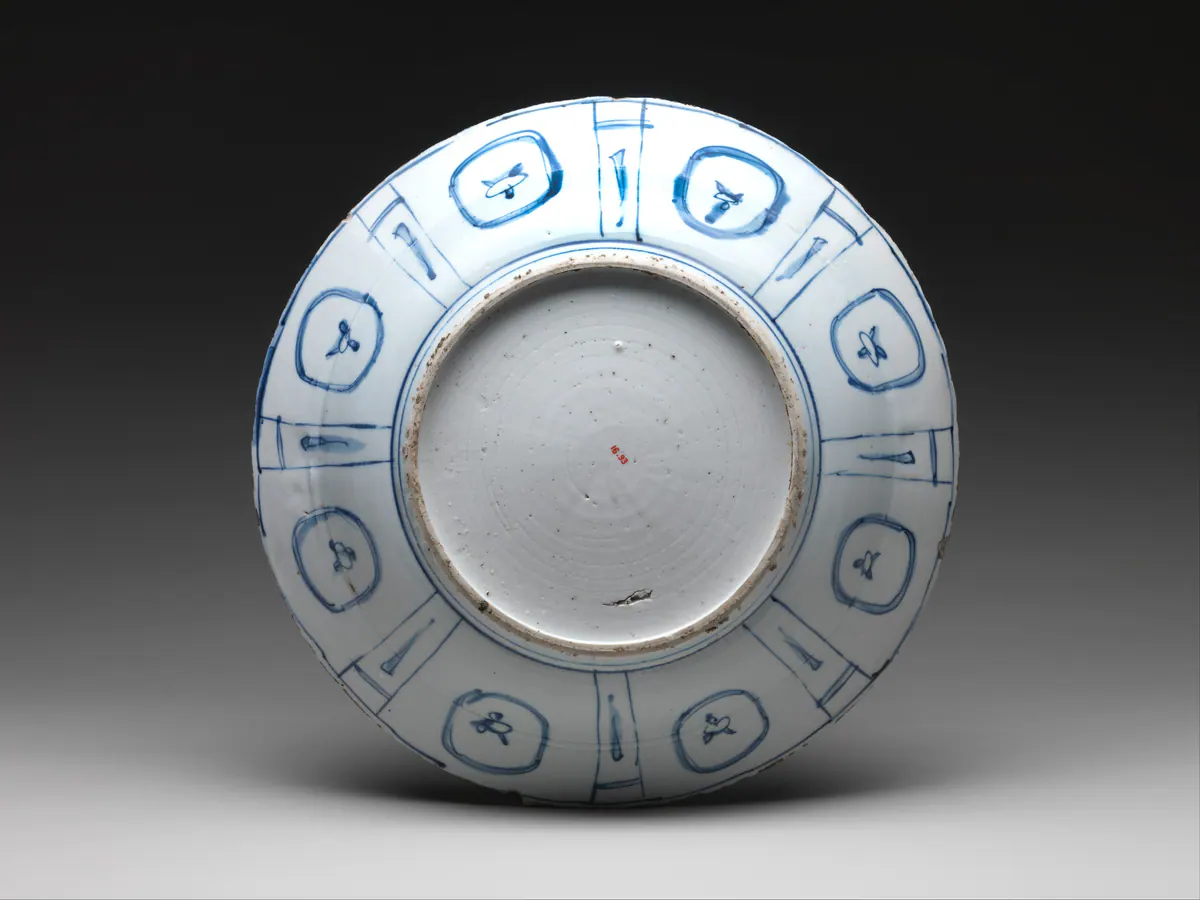
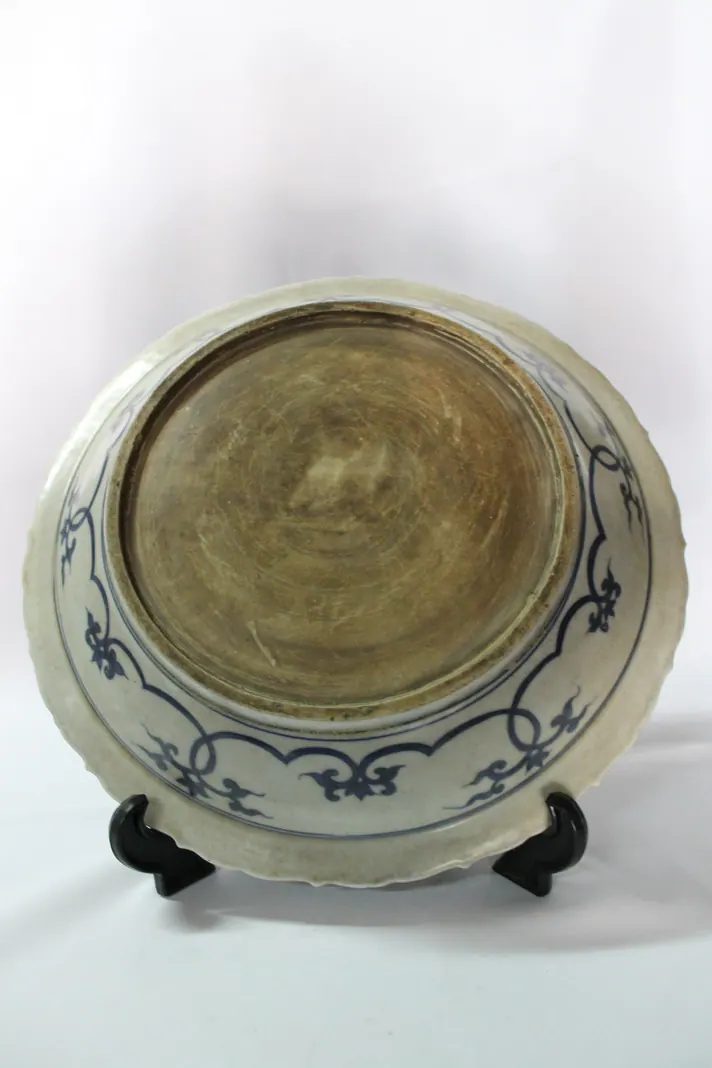
- Turn it over: expect a quickly trimmed foot, often with kiln grit, and an orange flush where bare body met the fire.
- Look for fast, confident brushwork. Laboured, hesitant or over-neat lines are a warning.
- Check that the tone of the blue suits the period the style suggests.
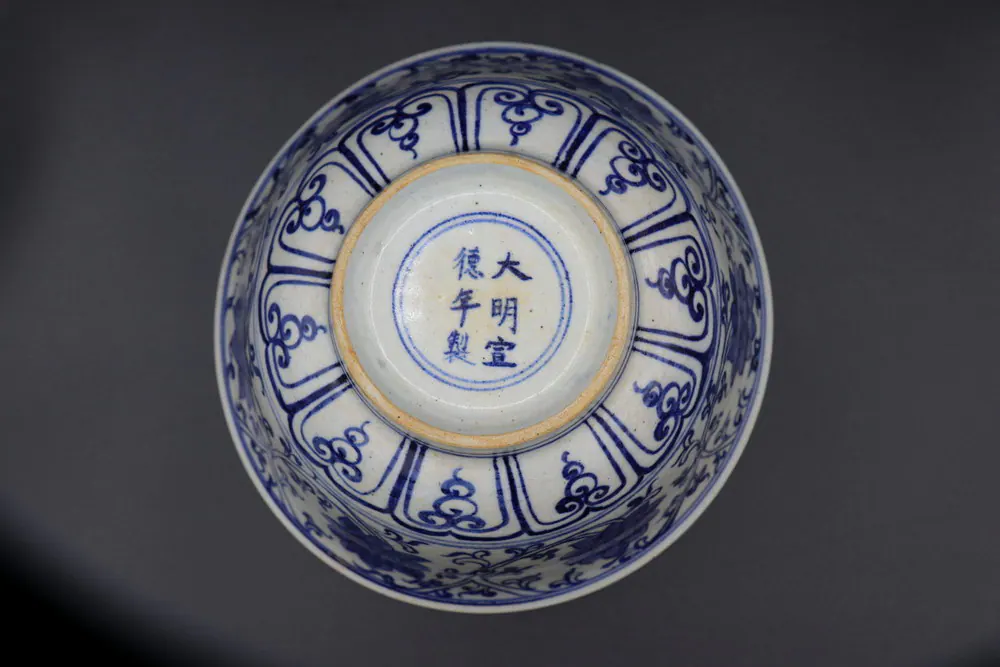
- Read the mark as a label, not a date: phrases, symbols and borrowed reign marks are all normal.
- Expect a glaze with a faint blue or green tint, pinholes and small firing flaws.
- Match the wear to the use: rims, footrings and interiors should show gentle, uneven wear.
Imperial kilns and private kilns
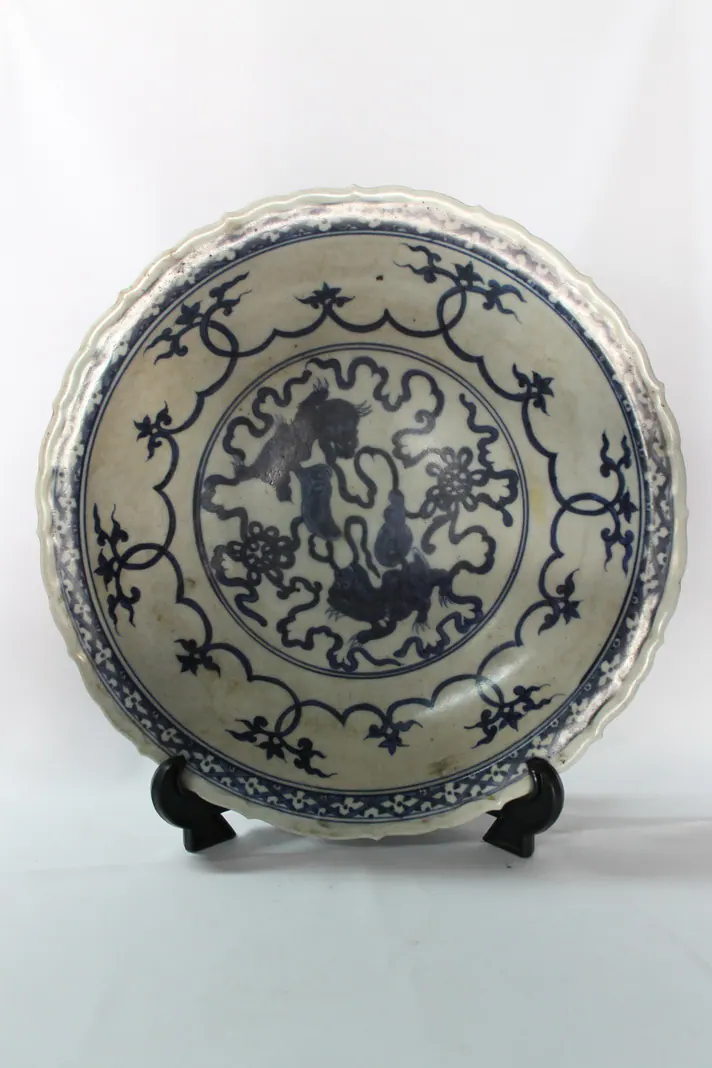
From early in the Ming the court ran its own porcelain works at Jingdezhen, in Jiangxi province, making wares to designs sent from the palace. Collectors call its products guanyao, ‘official kiln’ wares. Around it worked a far larger number of private kilns, minyao, ‘people's kilns’, which made porcelain for sale. In English they are called folk kilns or private kilns, and Ming private kiln porcelain and folk kiln porcelain mean the same thing.
The two worlds were never sealed off from each other. They drew on the same clays and the same cobalt, and often on the same craftsmen. From the Jiajing reign (1521–1567) the imperial works placed part of its orders with private kilns, a system known as guanda minshao, ‘official commission, private firing’, and the best private kilns reached a very high standard. After imperial orders fell away in the 1620s, private kilns made nearly all the fine porcelain of the last Ming decades, as our page on the late Ming dynasty describes.
Jingdezhen was not the only source. Kilns in southern Fujian, notably around Zhangzhou, made blue and white for export from the late sixteenth century, and there was provincial blue and white elsewhere in the south, including Yunnan. Ming provincial blue and white is usually coarser in body and freer still in its painting than the Jingdezhen wares. For the wider story, see our guide to Ming dynasty porcelain.
The table sums up the differences this guide describes.
| Court (guanyao) | Folk kiln (minyao) | |
|---|---|---|
| Foot | Trimmed with more care | Trimmed quickly, often with kiln grit and an orange flush |
| Body | Finer and more perfectly refined | A little coarser, with thicker walls and uneven potting |
| Painting | Careful | Fast and free, with motifs reduced to a few strokes |
| Mark | Often a reign mark, from the Xuande reign on | Mostly unmarked; good wishes, symbols or reign marks, often borrowed |
Who bought folk porcelain
At home, folk kilns supplied almost everyone below the court: officials, merchants, farmers, temples and shops. Ming dynasty everyday porcelain meant rice and soup bowls, dishes, wine cups, storage jars, incense burners and vases for household altars, and small boxes and water droppers for the scholar's desk. Most of it was bought to be used, and much of it was used hard.
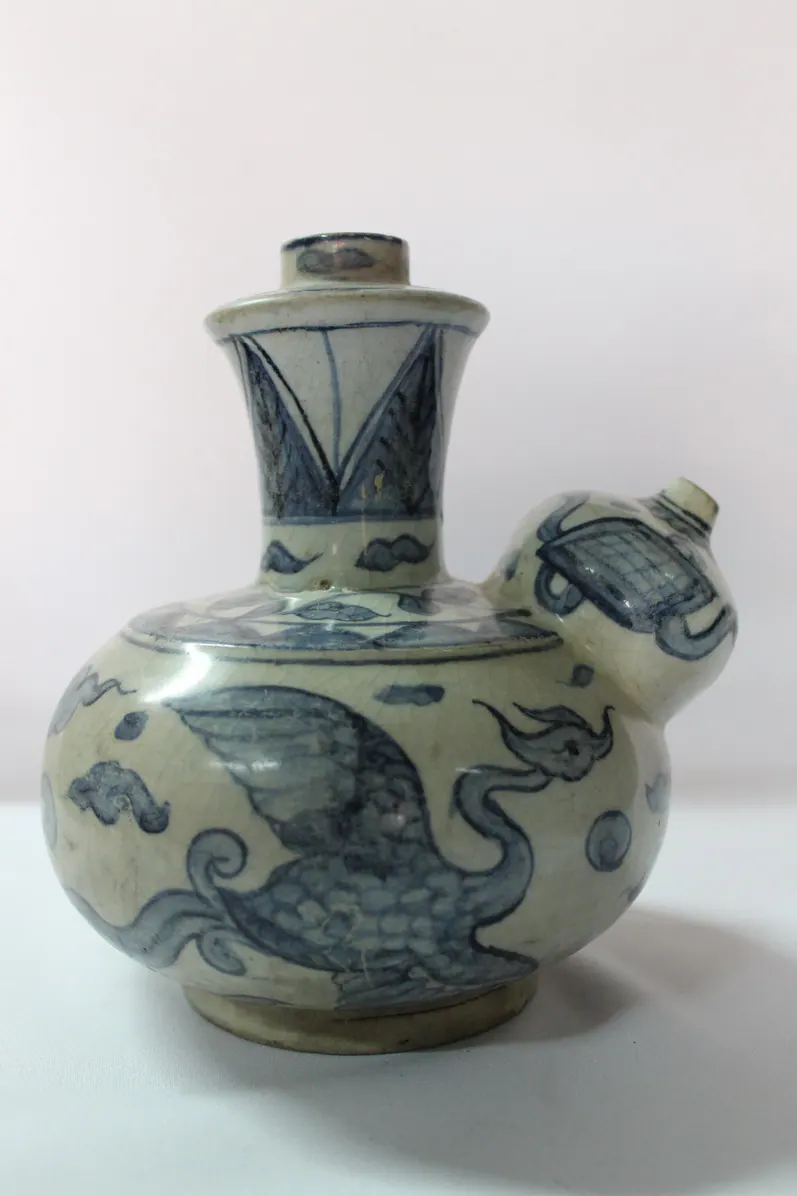
Abroad, the market was even larger. Folk kiln porcelain went by sea to Southeast Asia, Japan, India, the Middle East and East Africa, and from the sixteenth century to Europe and the Americas. Buyers asked for their own forms, such as the kendi, a spouted drinking and pouring vessel popular in Southeast Asia, or large dishes for shared meals in the Islamic world. Cargoes recovered from shipwrecks in Southeast Asian waters have helped scholars date particular styles. The export trade, including the kraak ware of the late Ming, is traced in our history of Chinese blue and white porcelain.
The painting: speed, freedom and recurring motifs
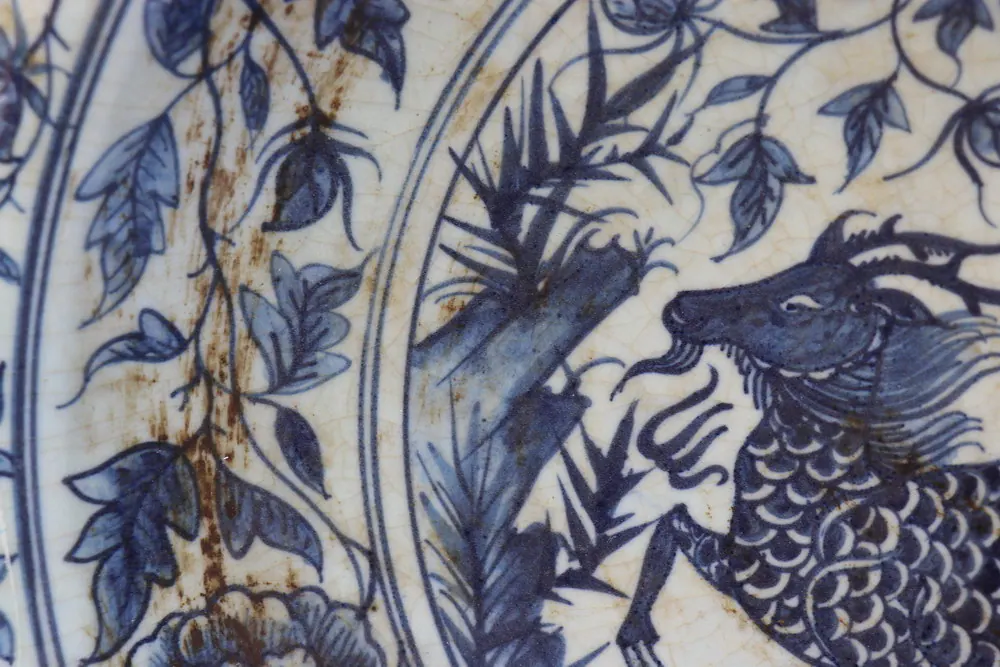
Folk kiln painters repeated the same designs over and over, often at great speed, and speed produced a style of its own: motifs reduced to a few strokes, lines that run on without hesitation, washes laid in quickly while the brush was still loaded. At its best this has a freedom that careful imperial painting lacks. At its worst it is careless, but even then it is rarely stiff.
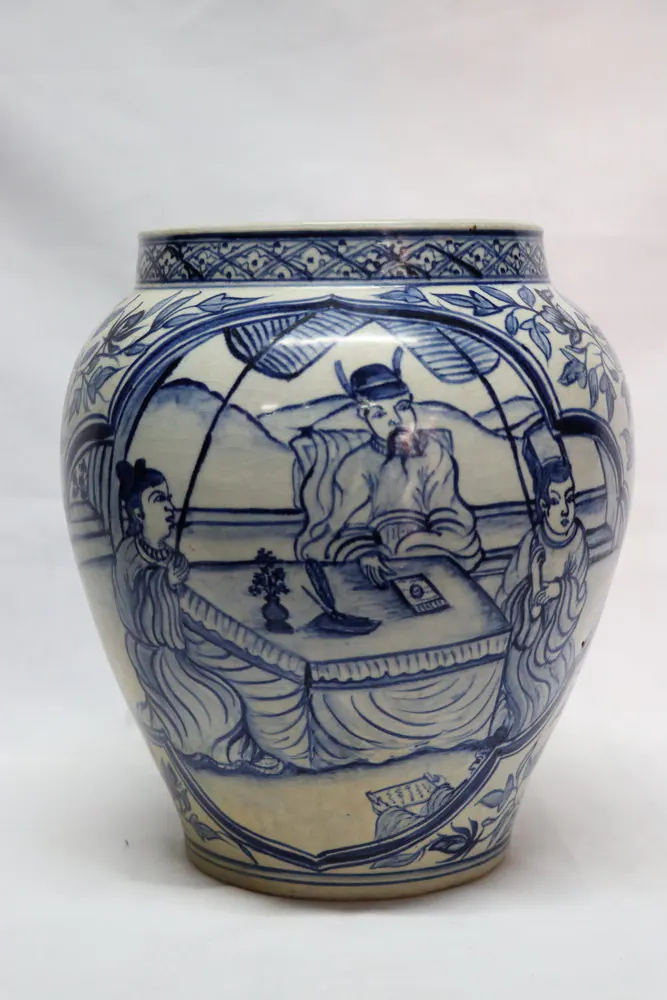
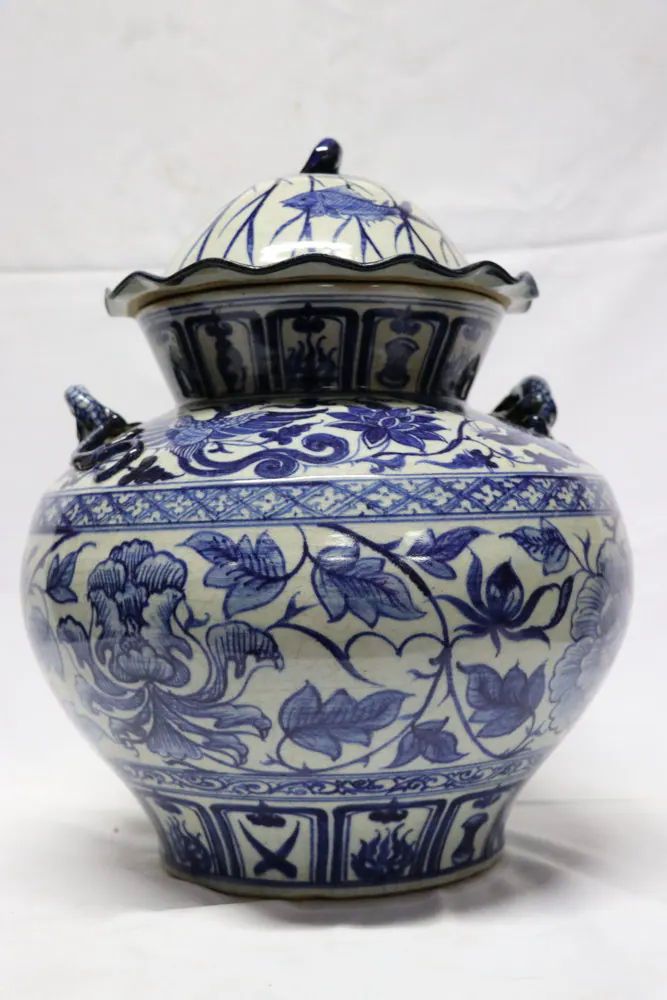
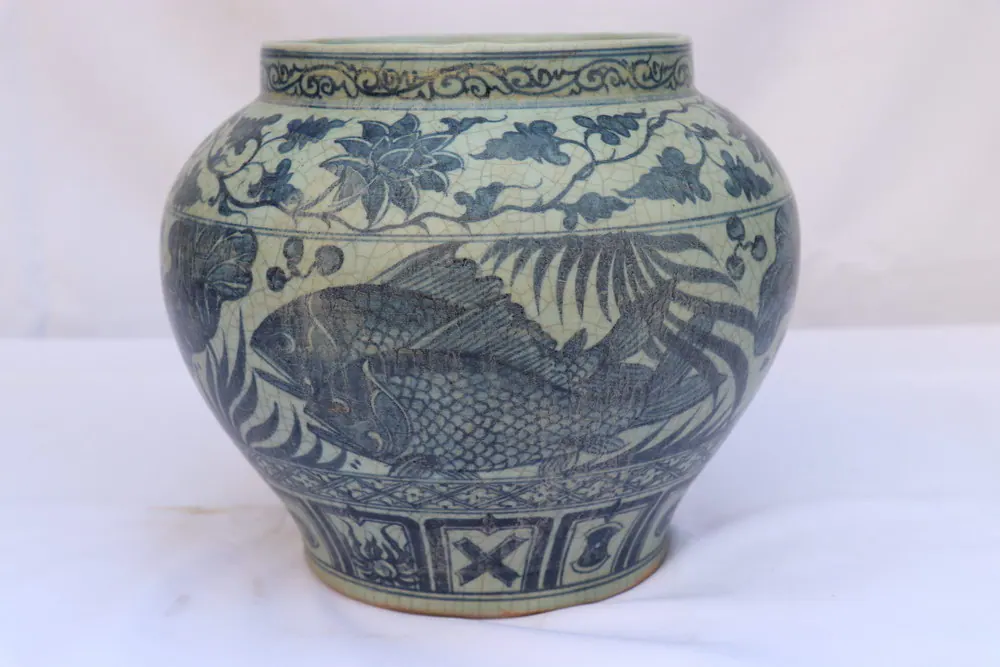
Certain subjects recur. Fish among waterweeds stand for abundance, because the word for fish, yu, sounds like the word for surplus. The qilin, a mythical beast of good omen, appears often, as do lotus and peony scrolls, cranes, deer, lions, the pine, bamboo and plum, Buddhist and Daoist emblems, and the character shou for long life. Figure scenes, from scholars in landscapes to children at play, became common from the fifteenth century onwards. Our guide to symbols on Chinese porcelain explains what the main motifs mean.
The style changed with the times. In the middle decades of the fifteenth century, roughly 1436 to 1464, imperial production was reduced and reign-marked pieces are almost unknown. Folk kilns of those years made some of their most original work, such as figures walking among swirling clouds, and collectors sometimes call the period the Interregnum. In the sixteenth century folk painting followed the court fashion for dense decoration and Daoist themes, and in the late Ming it grew looser and more inventive again.
Bodies, glazes and bases
A folk kiln body is usually a little coarser than imperial porcelain, less perfectly refined and sometimes greyish or slightly buff where it is exposed. Walls are often thicker and the potting can be uneven, with a bowl sitting slightly off level or a dish sagging towards the centre. None of this counts against a piece in the eyes of an experienced collector. It is simply what production at scale looks like.
The glaze tends to be thicker and more bubbly than on imperial wares, with a faint blue or green tint where it pools. Pinholes, small unglazed patches, specks of kiln debris and glaze that has crawled back from an edge are all common; our page on kiln firing faults explains how they arise.
The base usually tells you most. Many folk kiln bowls and dishes have footrings trimmed quickly with a blade, with sand or grit from the kiln stuck to the unglazed rim. Where the bare body met the heat of the kiln it often turned an orange or reddish brown, a flush Chinese collectors call huoshihong, ‘fire-stone red’. Some bases are left entirely unglazed; others are glazed but show radial chatter marks from the trimming tool. Some bowls have a small raised point at the centre of the underside, known in Chinese as a ‘chicken heart’ base. Our guide to antique porcelain age signs covers the wear and surface changes that follow centuries of use.
Marks on folk porcelain
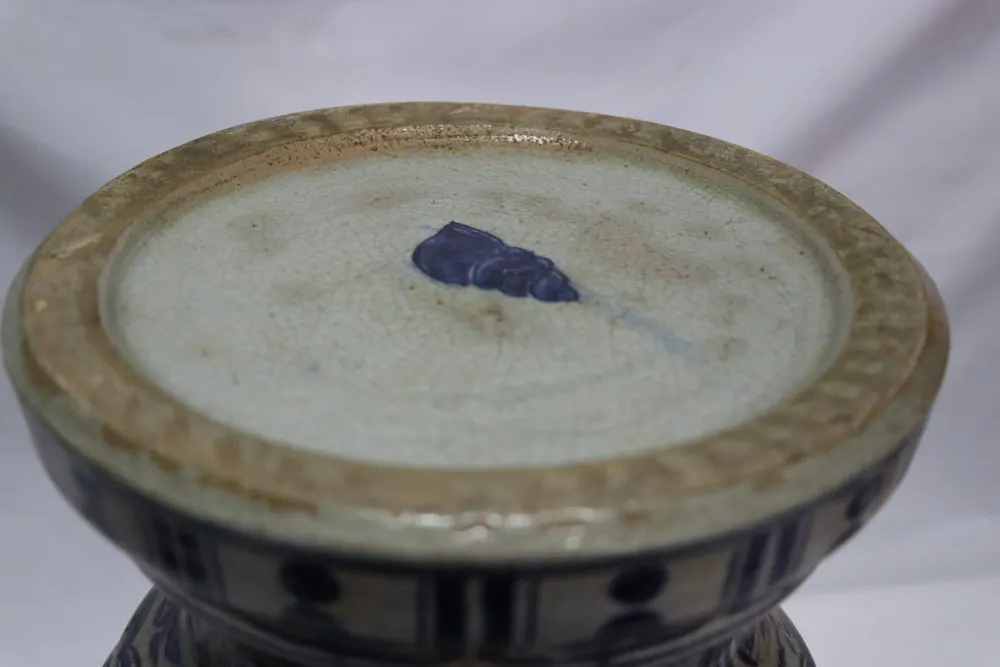
Most folk kiln porcelain is unmarked. Where there is a mark, it is more often a good wish than a date. Common phrases include fu gui jia qi, ‘fine vessel for the rich and honoured’, chang ming fu gui, ‘long life, riches and honour’, and wan fu you tong, ‘may infinite blessings be shared by all’. Marks in the form of a hall name, such as yu tang jia qi, ‘fine vessel of the jade hall’, are frequent on late Ming wares and are best read as compliments rather than as the name of a real owner.
Symbol marks are equally common: a shell, a leaf, a flower spray, a lingzhi fungus or a simple seal-like square, and on some pieces no more than a flourish of the brush. Our guide to symbol, hall and workshop marks illustrates the main types.
Reign marks appear too, and they need care. Private kilns sometimes wrote the current emperor's mark, particularly in the Jiajing and Wanli reigns, and they often borrowed the marks of earlier reigns admired for their porcelain, above all Xuande and Chenghua. Others wrote Da Ming nian zao, ‘made in the Great Ming’, without naming a reign. A mark records what the painter wrote, not when the piece was made. The reasons for borrowed marks are set out in our guide to apocryphal marks.
Why good folk porcelain is collected in its own right
For a long time the market judged Ming porcelain by imperial standards and treated folk wares as the lesser relation. That has changed. Japanese tea masters prized late Ming folk porcelain in the seventeenth century, and collectors everywhere now value its directness: a design painted in seconds by someone who had painted it countless times, with an ease that is very hard for a copyist to reproduce.
Folk porcelain is also the everyday record of Ming life. It shows what ordinary households ate from, what they wished for and which stories they knew, and export pieces trace the trade routes of the age.
What makes one piece more desirable than another is the same as for any Chinese porcelain: period, the quality of the painting and potting, condition, rarity of form or subject, and provenance. A well-painted folk kiln jar in good condition can be a more rewarding object than a dull imperial piece. Our guide to what makes antique Chinese porcelain valuable discusses these factors.
Ming folk kiln porcelain in our collection
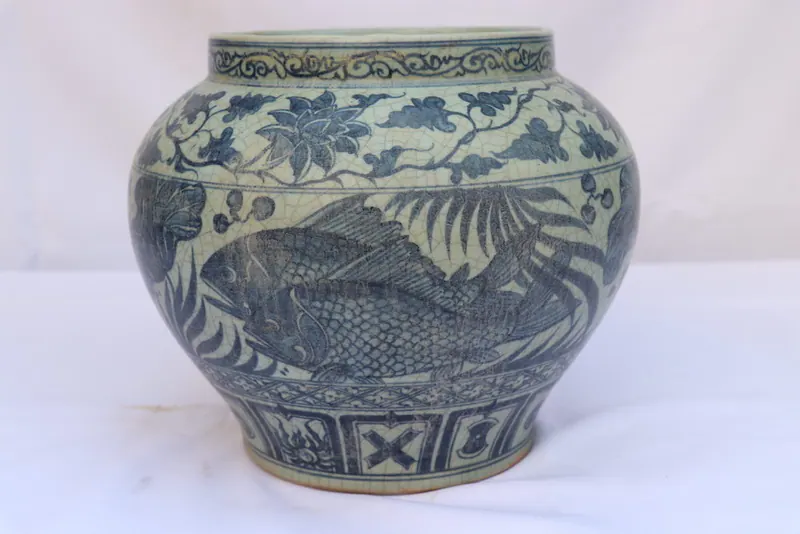
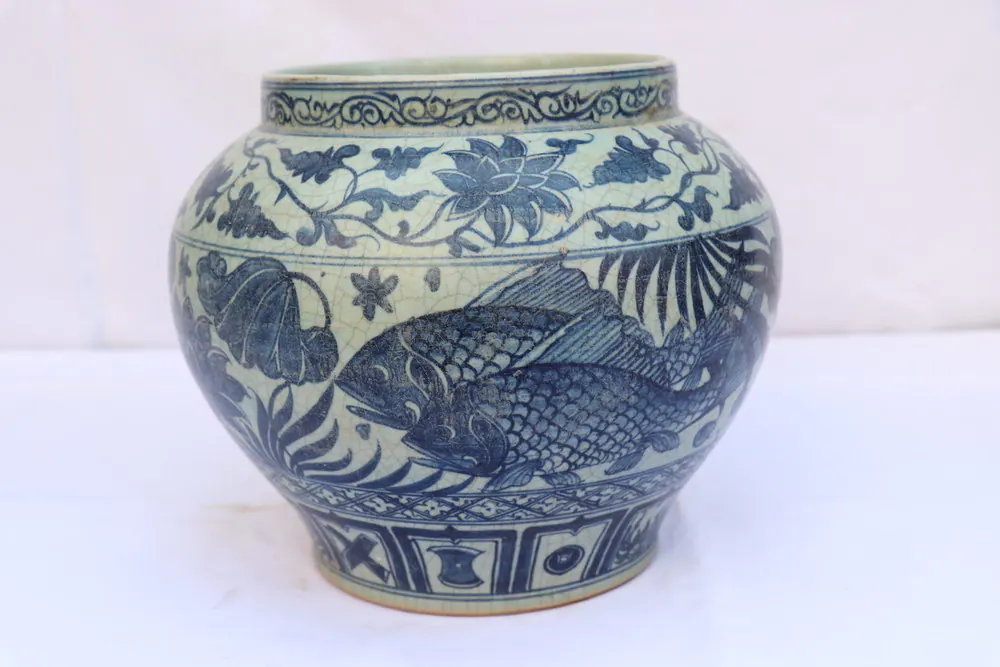
Much of the Ming porcelain we offer comes from folk kilns, and we describe it that way. A Ming blue and white fish pot, which its listing attributes to a local maker, shows the fluent painting of the type, with fish among waterweeds and lotus.
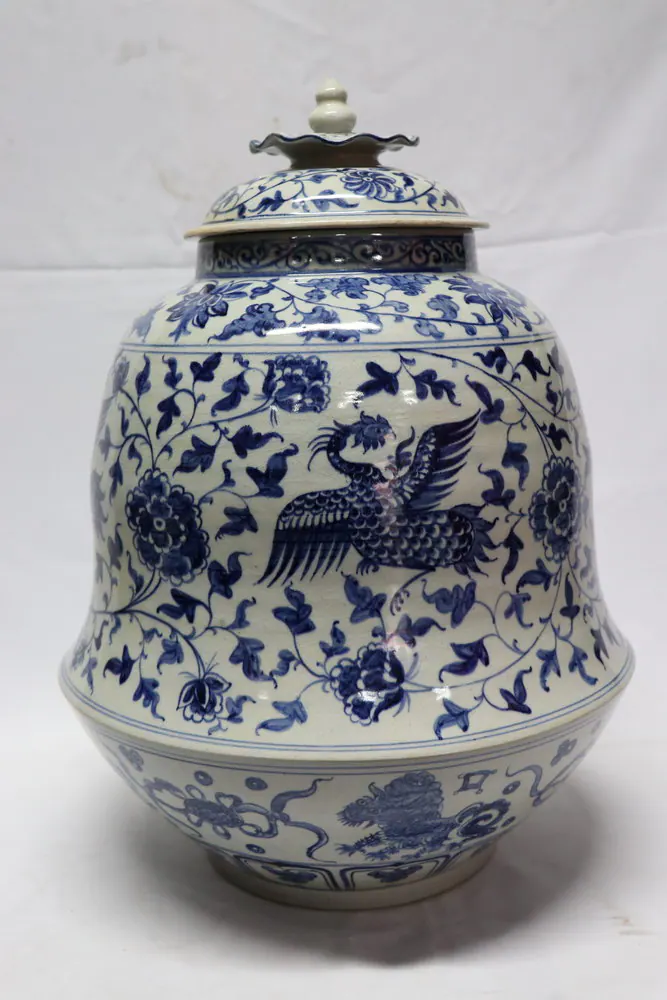
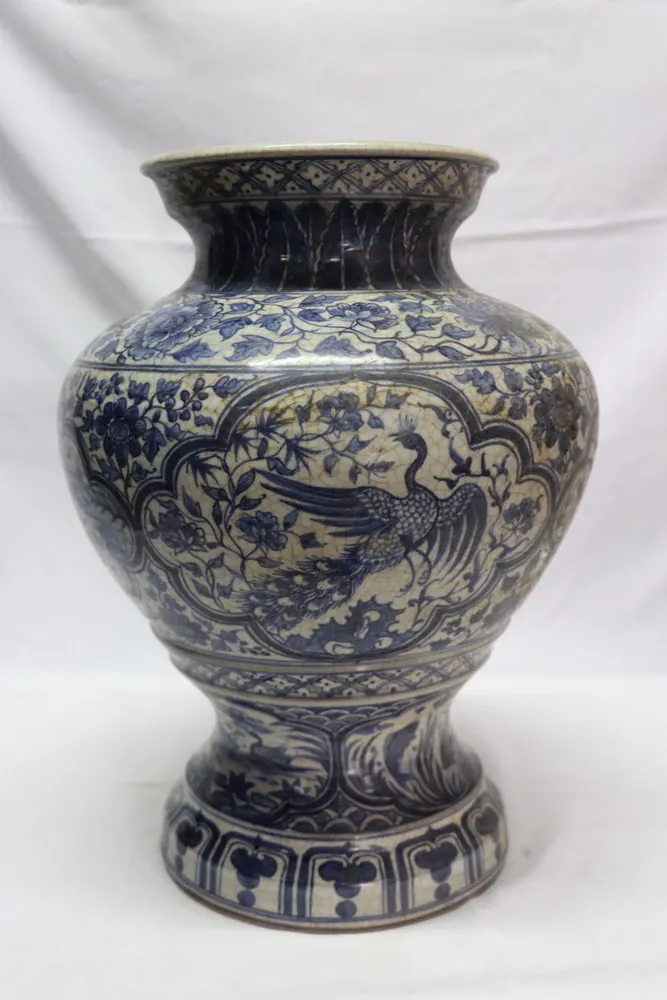
A folk kiln vase with a shell mark, dated to the late Ming or early Qing, borrows its panelled design from Yuan blue and white, with a peacock, a qilin, a crane and a fish. The qilin also appears at the centre of a Ming blue and white plate, framed by peony scrolls; its listing records a break that has been glued back.
The folk kiln tradition did not stop in 1644, as an early Qing kendi from a local kiln shows. Each piece is offered by private inquiry through the Request price form on its page, and more can be found in our Ming dynasty porcelain collection.