Guide
Chinese, Japanese or Vietnamese? How to Tell Asian Blue and White Apart
Japanese and Vietnamese potters made blue and white for many of the same buyers as China, often copying Chinese designs and even Chinese marks. The question of Chinese vs Japanese porcelain, or of either against Vietnamese ware, is mostly settled by turning the piece over and looking closely at the body, the base, the glaze and the brushwork. This guide explains what to look for, with a side-by-side summary.
What to look for
- Turn the piece over first: look for small spur marks on the base (Japan) or a brown wash inside the foot (Vietnam).
- Look at the colour and texture of the bare clay on the foot rim.
- Compare the glaze: glassy and thin, soft and slightly grey, or thin, greenish and often crazed.
- Study the borders and the handling of the brush as closely as the main subject.
- Treat a Chinese reign mark as a claim to be tested, not a sign of Chinese manufacture.
- Judge all the features together; a single feature can mislead.
Why the confusion arises
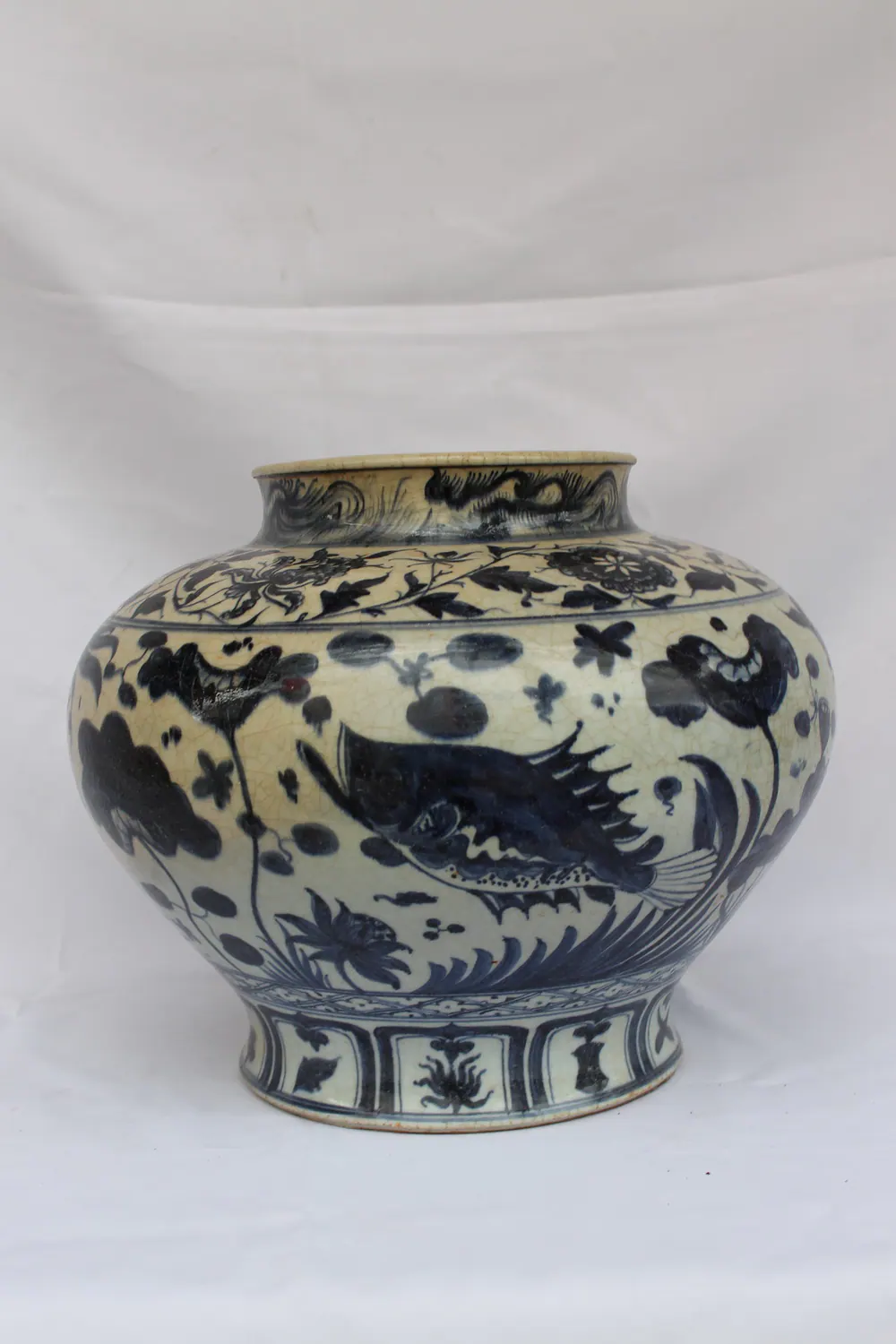
Chinese blue and white set the standard across Asia and beyond, and potters elsewhere answered the same demand whenever Chinese supply fell short.
In the fifteenth and sixteenth centuries, kilns in northern Vietnam, in the region of Hai Duong, made blue and white for markets in Southeast Asia and the Islamic world. Their output grew during the long periods when the Ming restricted private overseas trade and Chinese exports to those markets thinned. Vietnamese painters drew on Yuan and early Ming designs, so their dishes, jars and kendi share a vocabulary of lotus panels, peony scrolls and fish with Chinese pieces of the same age.
Japan came later. True porcelain was first made around Arita, in Hizen province on Kyushu, in the early seventeenth century. When the upheavals of the Ming to Qing transition interrupted Chinese exports in the mid-seventeenth century, the Dutch East India Company turned to Arita, whose potters copied the Chinese kraak and Transitional styles the European market knew. The ware was shipped through the port of Imari, which gave Japanese export porcelain its name in the West.
The traffic went both ways. Chinese kilns also made wares specifically for Japanese taste in the late Ming, and later copied Japanese Imari. A Japanese-looking style is therefore no guarantee of Japanese manufacture, and the reverse is equally true.
Chinese vs Japanese porcelain: bodies and bases
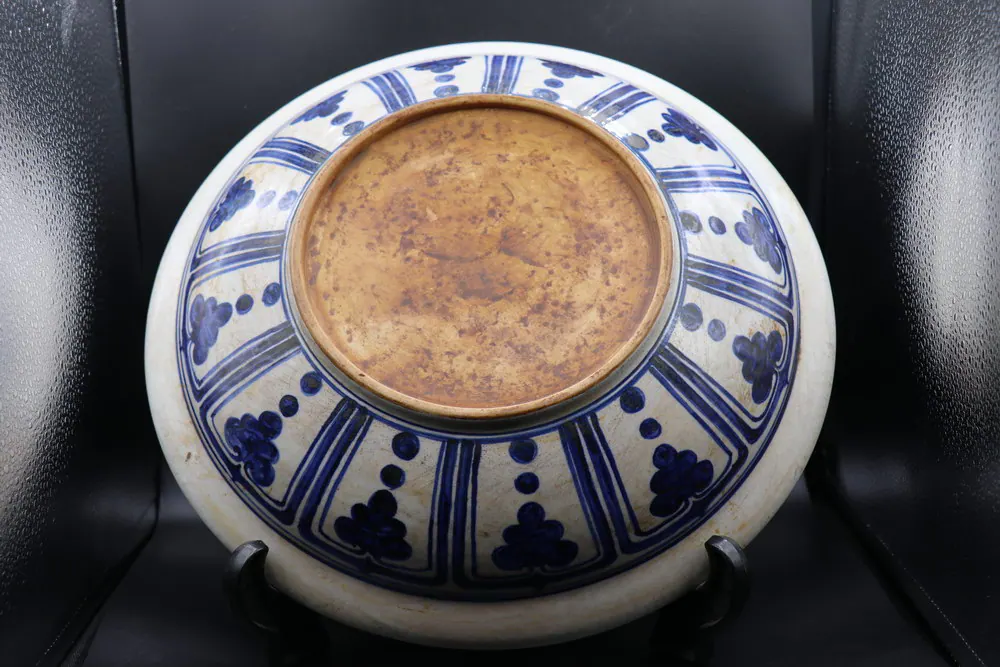
The base usually tells you most, because potters took less trouble to disguise it.
Chinese. Jingdezhen porcelain has a fine white body. Where the clay is bare, on the foot rim and on unglazed bases, iron in the body often fires to an orange or reddish-brown blush. Ming export and market wares frequently have kiln grit fused to the foot rim and radiating chatter marks on the base, left by the trimming tool, and some are left unglazed underneath. Our guide to foot rings and bases describes how these features change by period.
Japanese. Arita porcelain is often a little greyer or softer in tone than Jingdezhen porcelain. The clearest sign is on larger dishes: small round scars on the glazed base, usually several in a ring, where clay spurs held up the centre to stop it sagging in the kiln. Jingdezhen dishes were not normally fired on spurs in this way. Japanese foot rims tend to be neatly finished and clean, without adhering grit. Some Japanese wares have distinctive feet of their own: Nabeshima dishes, for example, are known for a comb-tooth pattern painted around the foot.
Vietnamese. The body is usually heavier and greyer, closer to a porcellanous stoneware than to Chinese porcelain. Many pieces have a recessed base coated in a brown iron wash, often called a chocolate base; the foot rim itself is left bare. Bowls and dishes sometimes show an unglazed ring inside, where another piece was stacked on them in the kiln, a practice also found on some Chinese folk wares.
Glaze and blue
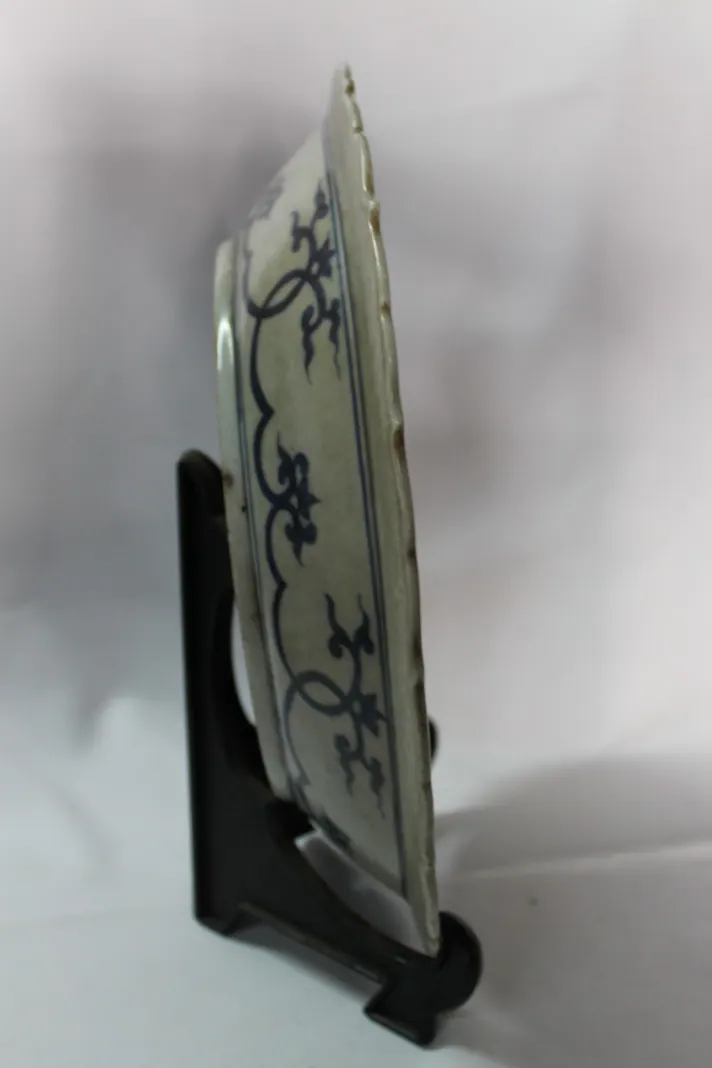
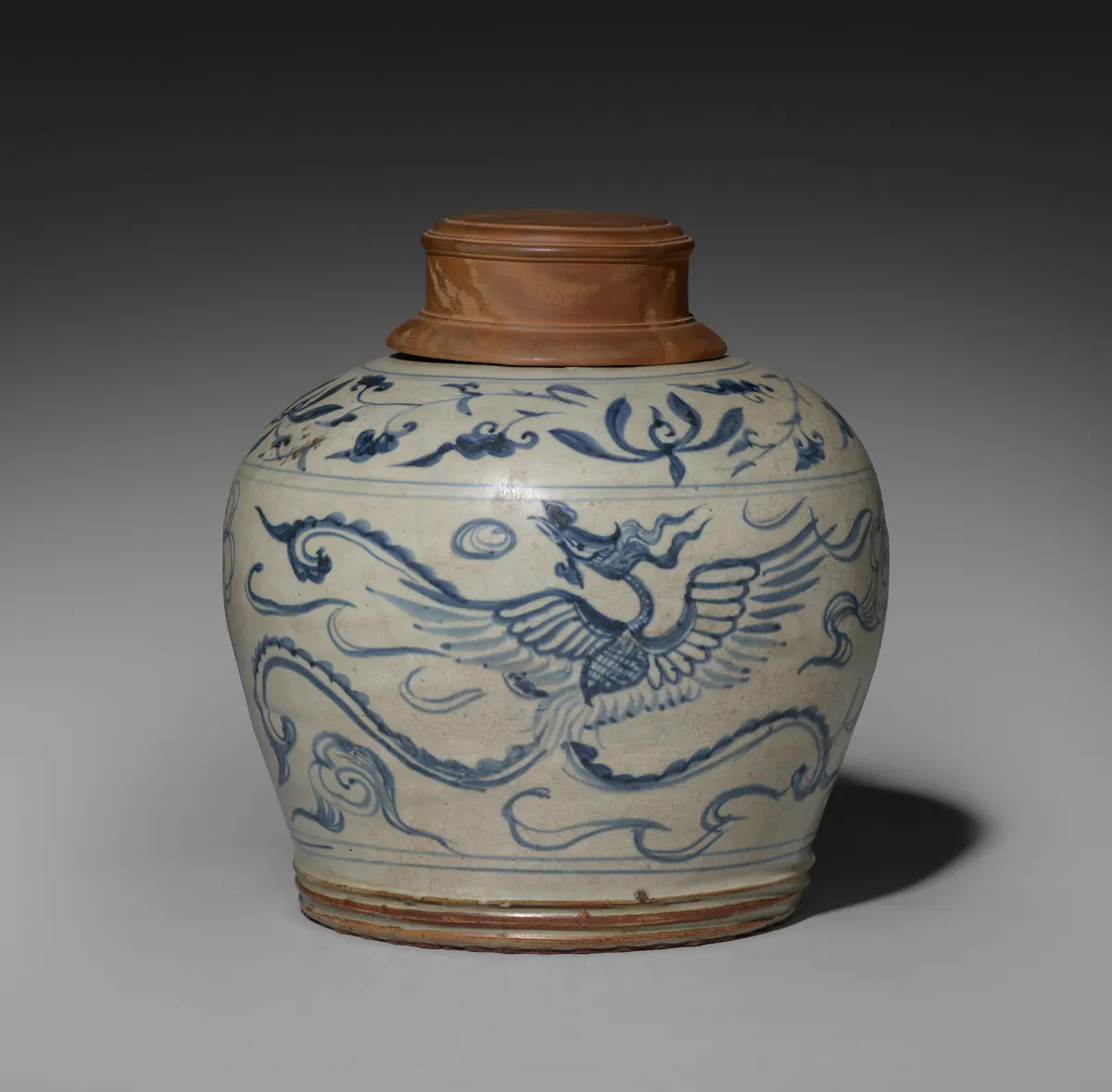
Glaze. Ming glazes from Jingdezhen are usually glassy with a faint blue or green tint, and Kangxi and later Qing glazes are often thinner, clearer and whiter. Japanese glazes are often a little thicker and softer, with a greyish or bluish cast and a slightly clouded look. Vietnamese glazes are generally thin, greenish or greyish and are often crazed; on some pieces they have flaked from the edges.
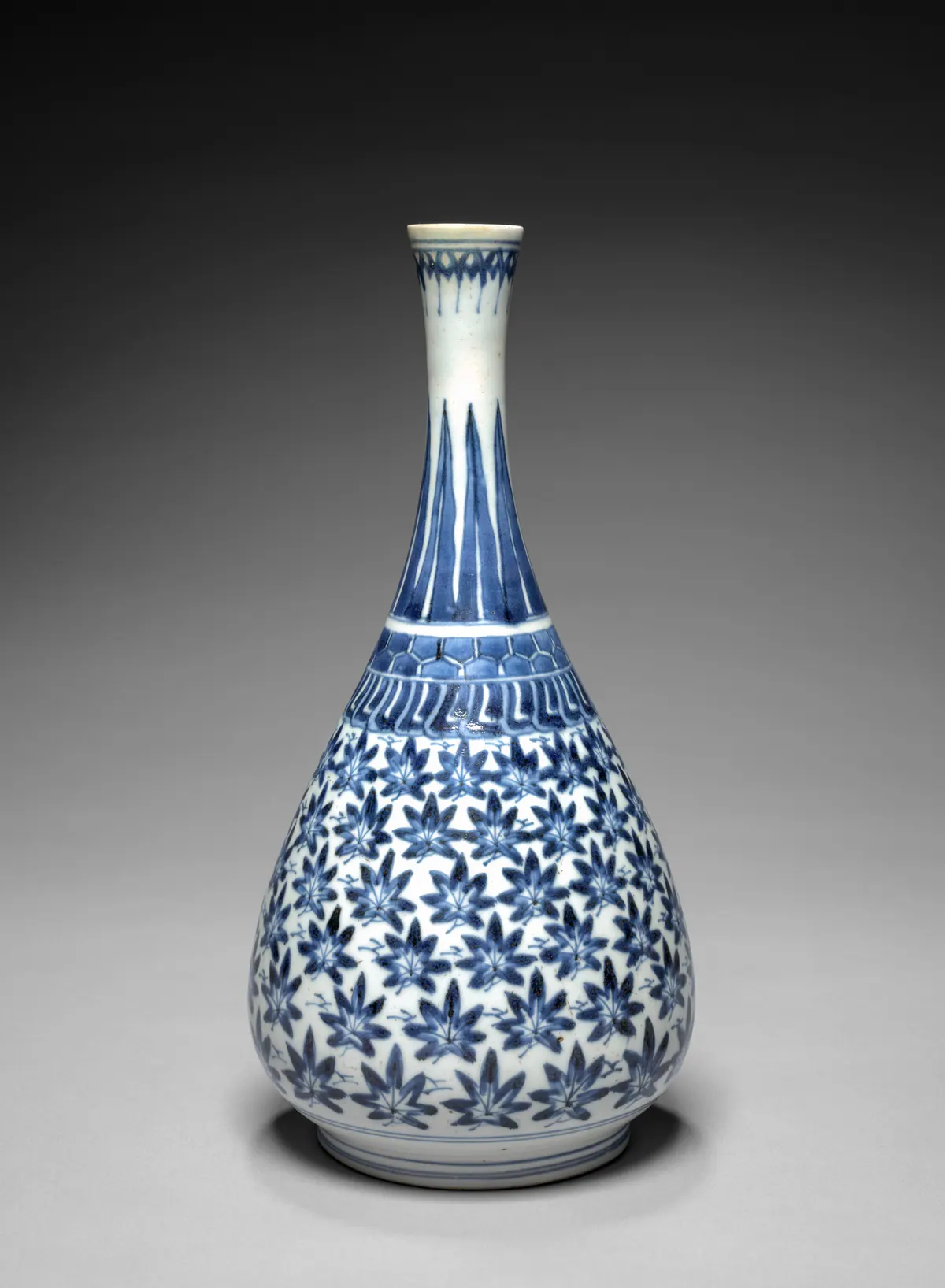
Blue. Chinese cobalt varies by period, from the dark, spotted blue of the Yuan and early Ming to the clear sapphire of Kangxi, as our guide to cobalt blue explains. Japanese blue is more often a greyish, blackish or slightly dull blue, laid on in flat, even washes within outlines. Vietnamese blue is frequently greyish or blackish and tends to blur at the edges of the strokes, spreading into the glaze.
These are tendencies, not rules. A poorly fired Chinese piece can look grey and blurred, and fine Japanese porcelain can be very white. The glaze and the blue help most when they agree with the base.
Painting styles and borders
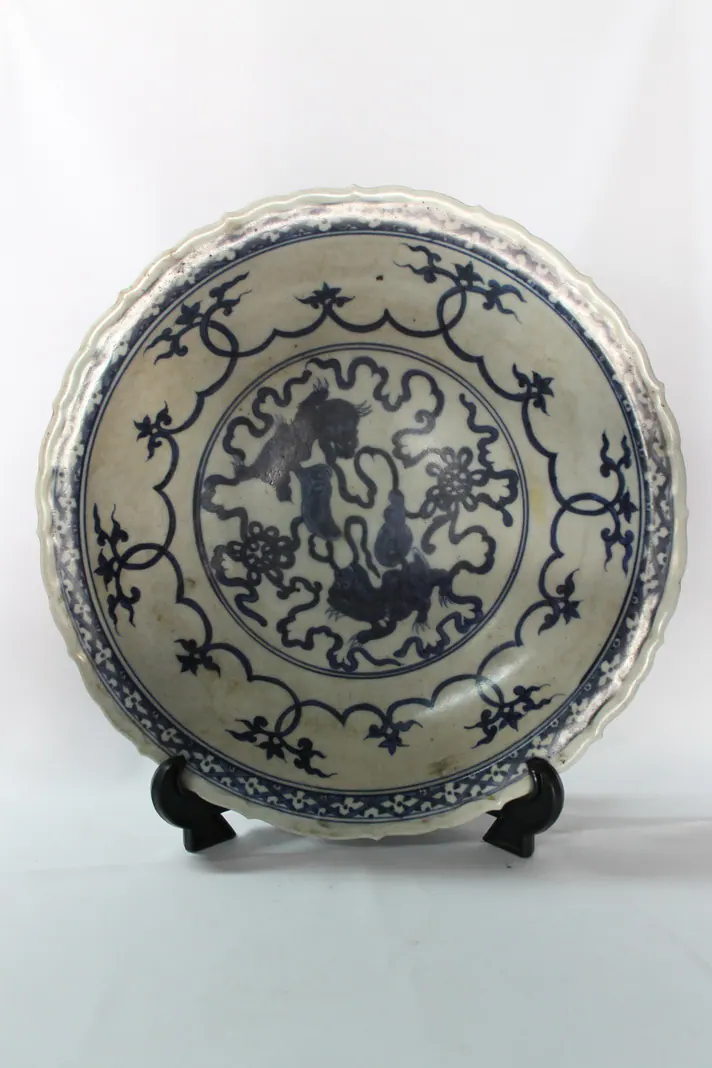
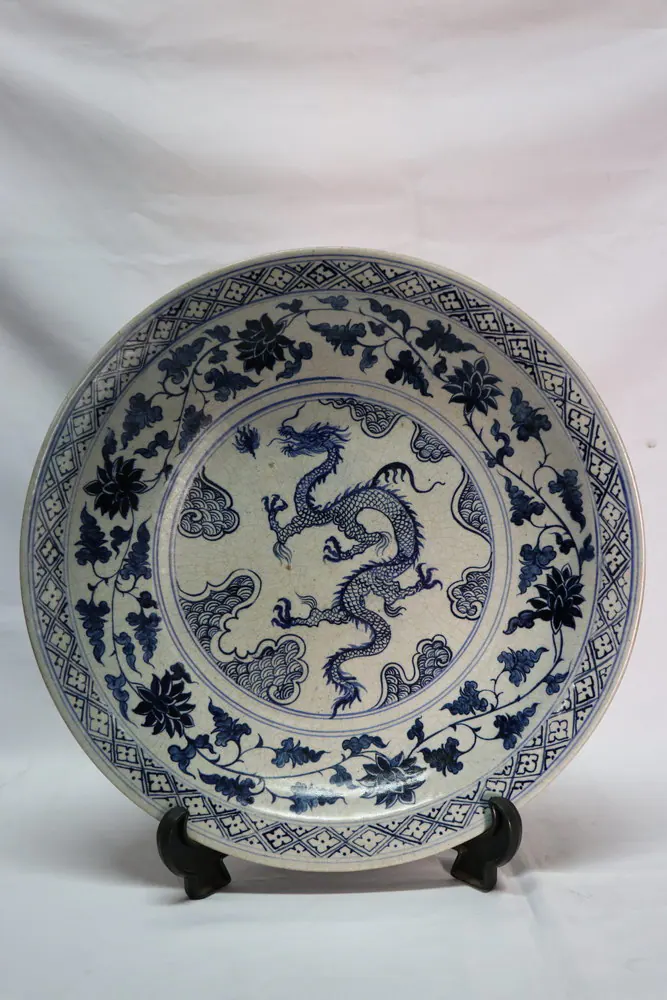
Chinese painting on good pieces is fluent and controlled. Borders follow a well-established repertoire: classic scroll, keyfret, lappets, waves, lotus panels. Designs are usually balanced and fill their space in a disciplined way, and on Kangxi pieces the blue is graded in several tones within a single scene. Market wares of the Ming, such as the middle Ming plate in our collection, are painted rapidly and loosely, but with a practised hand.
Japanese potters often borrowed Chinese designs and then changed their balance. Japanese compositions tend to use asymmetry and open space more freely, and scenes may be set off-centre. Dense scroll patterns filling whole grounds, sometimes called octopus scroll, are characteristic of later Japanese blue and white. Figures, flowers and landscapes can have a flatter, more graphic quality, with the blue laid in even washes.
Vietnamese painting is lively and quick. The motifs derive from Yuan and early Ming China, but the lines are freer, the scrolls looser and the borders simpler, often drawn with a few confident strokes. Broad bands of lotus panels around the lower body are common.
Borders repay attention, because copyists concentrate on the main subject and often fall back on their own habits in the border.
Marks: Chinese reign marks on Japanese porcelain
A Chinese reign mark does not make a piece Chinese. Japanese potters of the seventeenth and eighteenth centuries often wrote Chinese Ming reign marks on their porcelain, including the Chenghua mark, much as Chinese potters themselves did. These are usually written more freely than a Chinese mark, and characters may be simplified, miswritten or mixed. A single character such as fu, "good fortune", written in a square is also common on Japanese ware.
Some marks are clearly Japanese. A mark naming a Japanese era, a Japanese maker or place, or reading Dai Nippon, "Great Japan", identifies a Japanese piece, generally of the nineteenth or twentieth century. Vietnamese blue and white is seldom marked.
A mark records what was written on a piece, not where or when it was made. Our guide to Chinese porcelain marks explains how to read the characters and how the calligraphy of genuine marks changed over time.
Side by side
The table below summarises the usual features. Each describes a tendency, and any one can be absent on a particular piece.
| Feature | Chinese | Japanese | Vietnamese |
|---|---|---|---|
| Body | Fine and white, with orange-red blush on bare clay | Fine, often slightly grey | Heavier, greyer, near stoneware |
| Base and foot | Grit on the foot rim and chatter marks on Ming market wares; no spur marks | Spur marks on the base of larger dishes; clean foot rims | Brown wash on the base; sometimes a stacking ring inside |
| Glaze | Glassy, faintly blue or green in the Ming; clear and white in the Qing | Softer and slightly thicker, greyish or bluish | Thin, greenish or greyish, often crazed |
| Blue | Varies by period, from dark and spotted to clear sapphire | Often greyish or blackish, in flat washes | Greyish or blackish, often blurred |
| Painting | Fluent, balanced, a fixed repertoire of borders | Freer use of space and asymmetry, dense scroll grounds | Quick, loose, Yuan and early Ming motifs |
| Marks | Reign, hall and symbol marks | Chinese Ming marks written loosely, the fu mark, Japanese era or place names | Rarely marked |
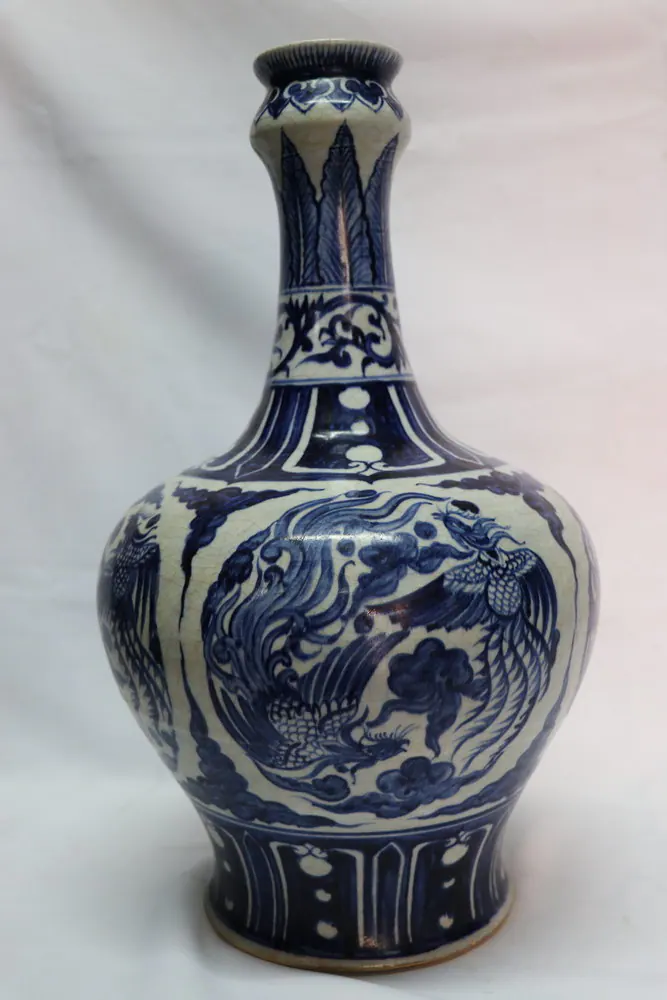
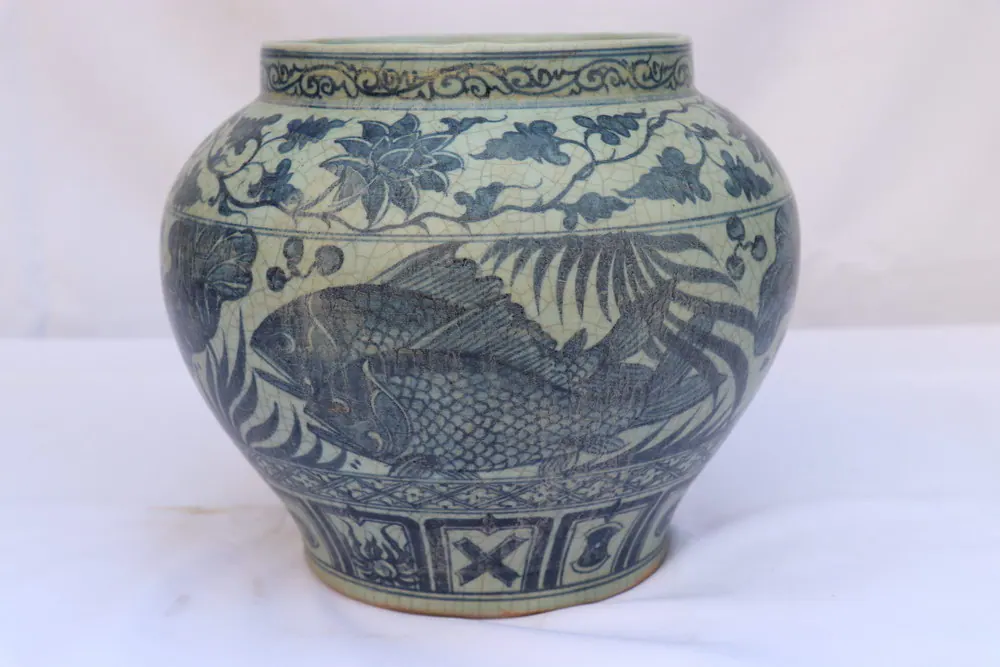
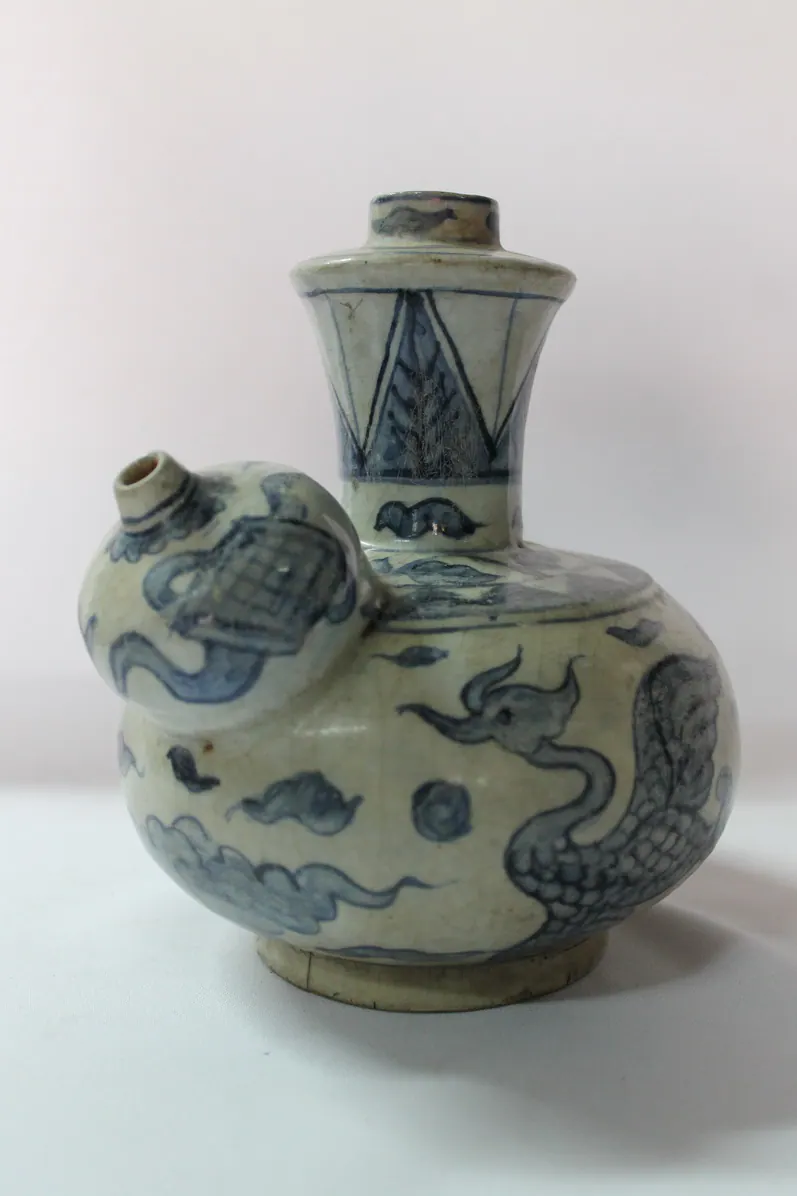
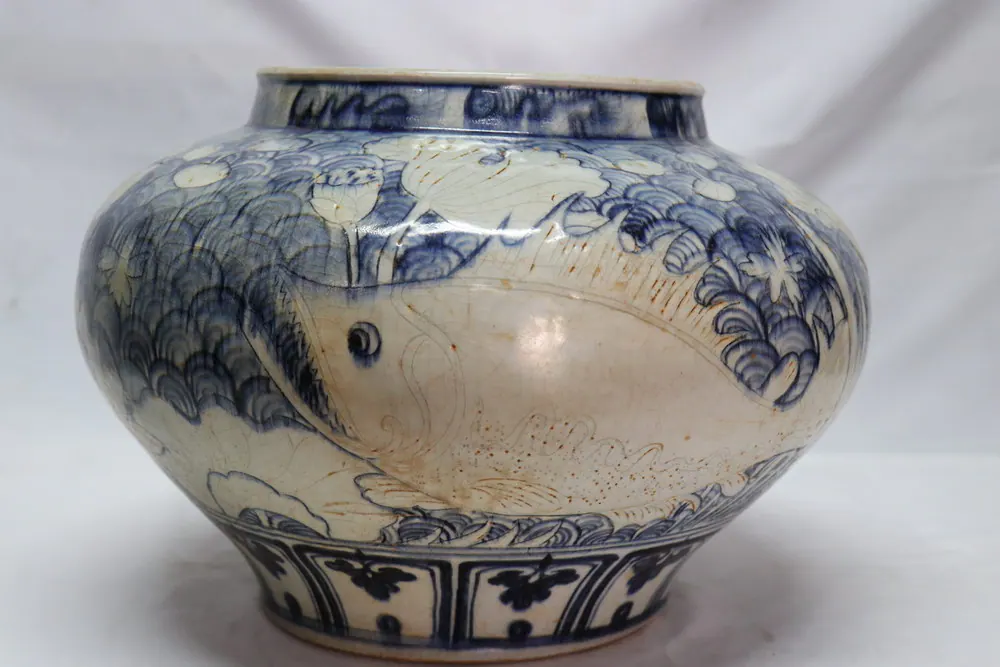
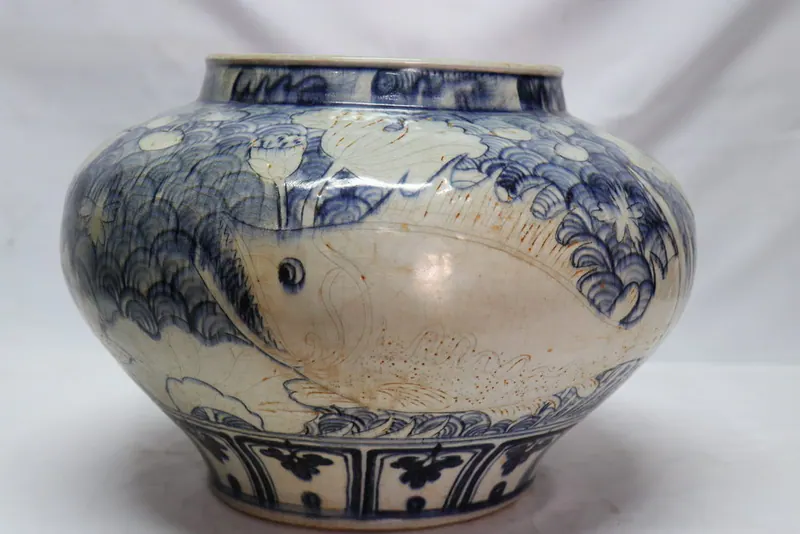
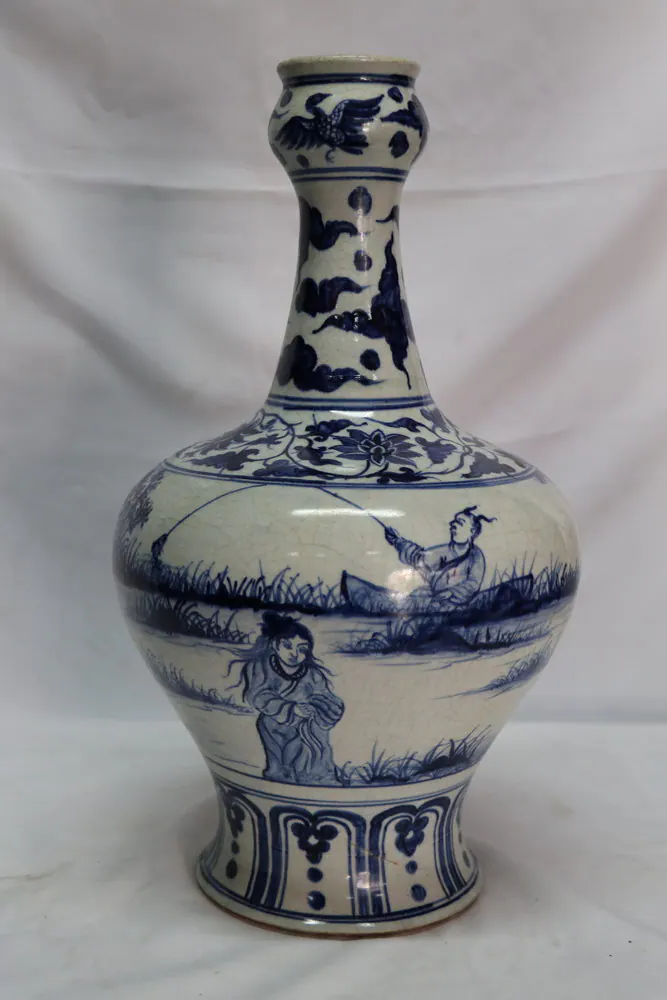
The photographs below set a jar from our collection, which we catalogue as Chinese and Ming, beside two museum examples from Japan and Vietnam.
When to ask a specialist
Most pieces can be placed with some confidence once you have looked at the base, the glaze and the brushwork together. The harder cases are pieces made deliberately in another country's style: Japanese copies of Chinese kraak and Transitional porcelain, Chinese copies of Japanese Imari, and Vietnamese pieces closely following Chinese models. Later reproductions of all three add another layer.
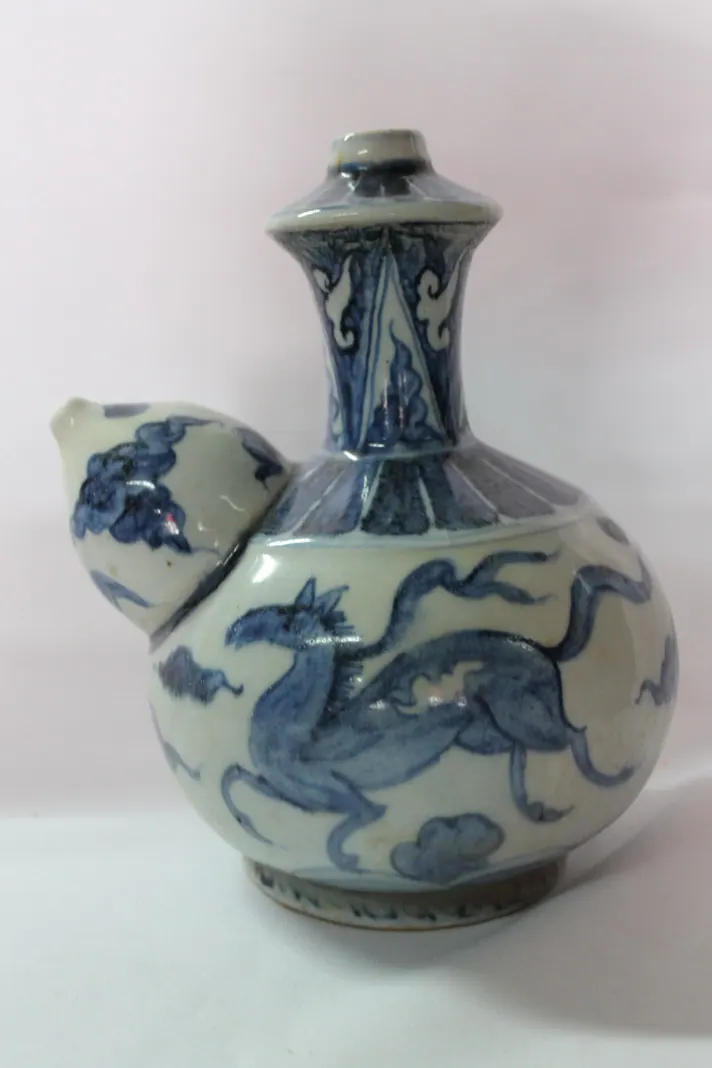
If the features disagree, or a piece matters to you financially, have it handled by someone with long experience of all three traditions before you buy, and ask the seller for clear photographs of the base, foot rim and interior. Our guide to Chinese blue and white porcelain gives the Chinese background, and our guide to antique porcelain age signs covers the tests of age that apply to all of them. The Jiajing period kendi in our collection, painted with horses, is an example of the kendi, a drinking vessel that Chinese kilns made largely for Southeast Asian buyers, the same market Vietnamese potters served.