Guide
The Kendi: A Chinese Pouring Vessel Made for Southeast Asia
A kendi is a drinking and pouring vessel with a rounded body, an upright neck and a spout on the shoulder, but no handle. Chinese kilns made kendis in porcelain for centuries, mostly for buyers in Southeast Asia. This guide explains how the kendi was used, where the form came from, how Chinese kendis changed from the Yuan to the Qing, and what to check when you examine one. For other forms, see our guide to Chinese porcelain shapes.
What to look for
- Examine the spout first: it is the part most often chipped, broken and restored.
- Check that the glaze runs unbroken over the joins where the spout and neck meet the body.
- Look inside the neck for throwing rings and the join with the body.
- Turn it over: the foot and base should suit the kiln and period claimed.
- Compare the painting, borders and tone of blue with well-documented kendis of the same period.
- Expect wear where a kendi was handled and used: the foot, the mouth rim and the tip of the spout.
What a kendi is and how it was used
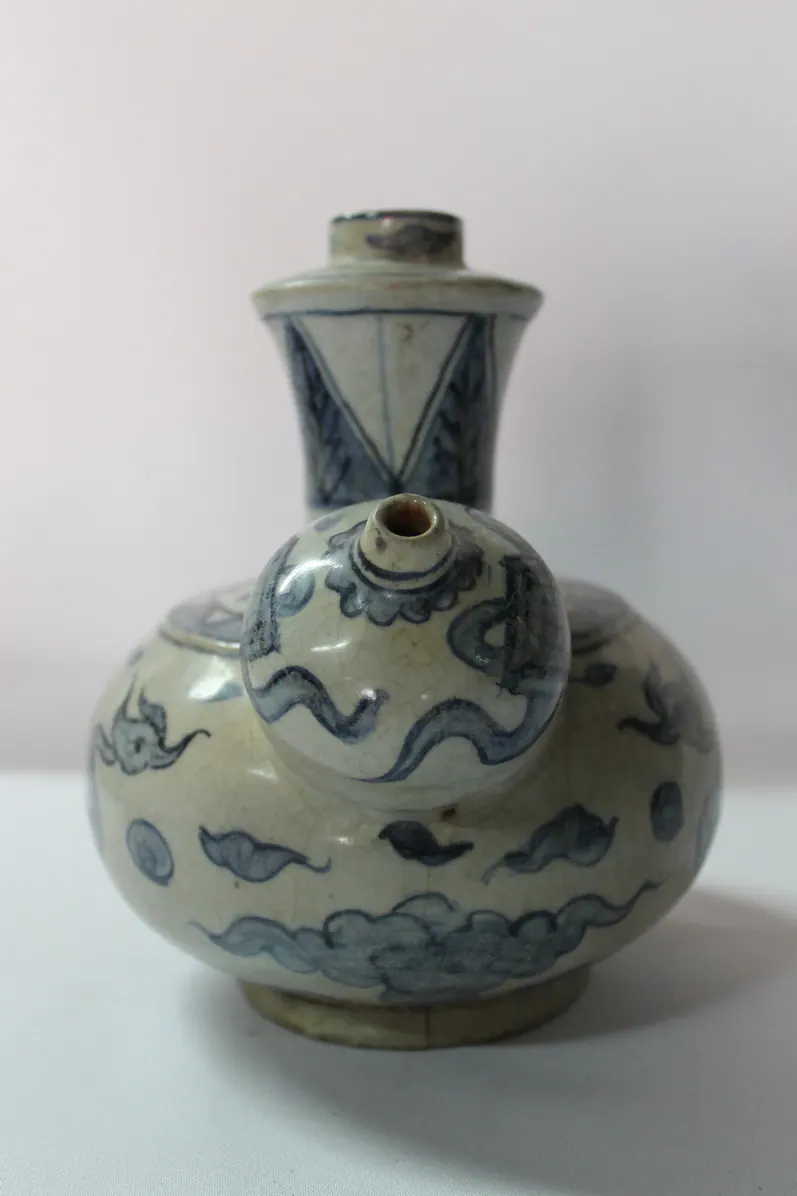
Three features identify a kendi: a globular or squat body, a neck rising from the top, and a spout set on the shoulder. There is no handle. The vessel was held by the neck, filled through the mouth and tipped forward so that water ran from the spout in a thin stream. Drinking this way, without the lips touching the vessel, is the reason usually given for the shape, and it made a kendi easy to share.
Kendis held drinking water in the home and on journeys, and they had a place in religious and ceremonial life as well. The word is Malay, and it is the name collectors and museums now use for the whole family of these vessels, whatever their country of origin.
From the Indian kundika to the Malay kendi
The kendi descends from the kundika, a water vessel of ancient India used in Hindu and Buddhist ritual and often shown in the hands of deities and ascetics in Indian sculpture. As Indian religions spread through Southeast Asia, the vessel travelled with them, and potters in the region made their own kendis in earthenware.
The two vessels are related but not identical. Specialists usually describe the kundika as filled through an opening on the side and emptied through its tall, narrow neck. The kendi works the other way round: it is filled through the neck and emptied through the spout.
The kundika also reached China with Buddhism. The Chinese name for these vessels, junchi, is a transliteration of the Sanskrit word, and a related form, the jingping or ‘clean water vase’, is the vessel often held by Guanyin, the bodhisattva of compassion. The kendi was therefore not an entirely foreign shape to Chinese potters, but the versions they made for export were shaped and painted for the taste of overseas buyers.
Chinese kendis from the Yuan to the Qing
Southern Chinese kilns were already making kendis for Southeast Asian markets in the Song and Yuan periods, in qingbai and celadon and, from the fourteenth century, in blue and white. Yuan blue and white kendis are rare, and many of the known examples were found in Southeast Asia rather than in China.
Production grew in the Ming. Jingdezhen supplied the trade throughout the period, joined from the late sixteenth century by the kilns around Zhangzhou in Fujian. A Ming kendi of the mid sixteenth century is usually painted freely, with animals, flowers or landscapes, and by the Wanli reign (1572–1620) kendis were being made in great numbers, many in the kraak style that also filled the cargoes of Portuguese and Dutch ships.
Kendis were also made outside China: in Vietnam and Thailand from the fifteenth century, and at Arita in Japan in the seventeenth, when the fall of the Ming interrupted Chinese supply. Our guide to telling Chinese, Japanese and Vietnamese porcelain apart explains the differences. Once Jingdezhen recovered under the Kangxi Emperor, Chinese kendis returned to the market in blue and white and, later, in enamelled colours.
Forms: mammiform spouts, animal kendis and trumpet necks
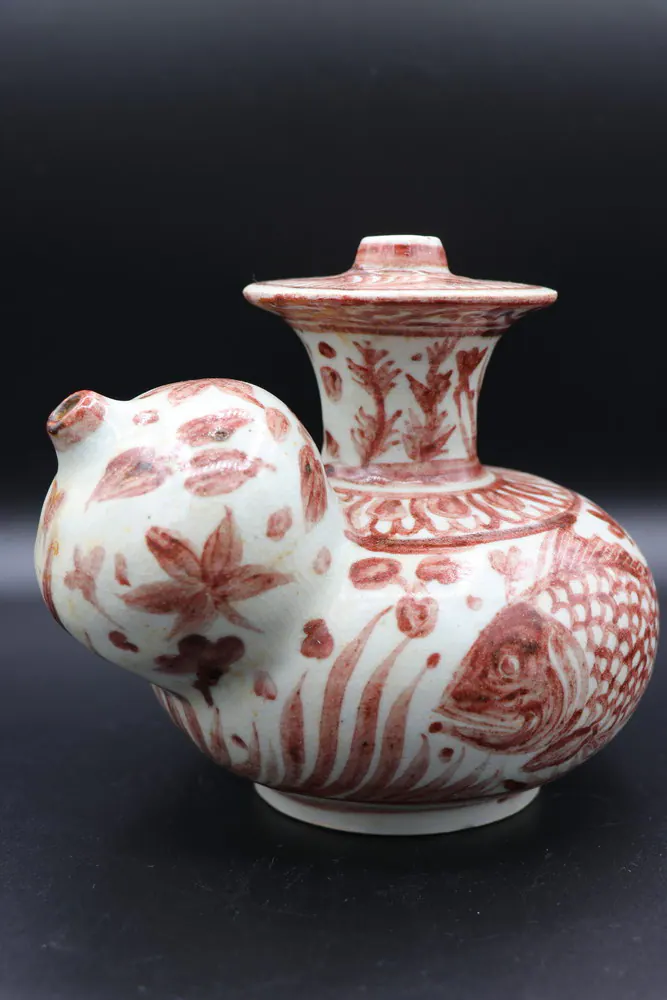
The most distinctive kendis have a mammiform spout: a large, rounded, breast-like spout with a small opening at its tip. It is typical of late Ming export kendis, where the body is often squat and the spout almost as prominent as the body itself. Other kendis have a straight or tapering tubular spout, and some spouts carry their own painted decoration.
Animal kendis were modelled as elephants, frogs and other creatures, with the neck rising from the animal's back. They were made above all in the late Ming.
Necks range from narrow straight tubes with a flat, everted mouth to wider, flaring trumpet necks. Bodies vary from globular to low and compressed, and they may be moulded in lobes or panels or fluted around the lower part.
Decoration, including kraak-style panels
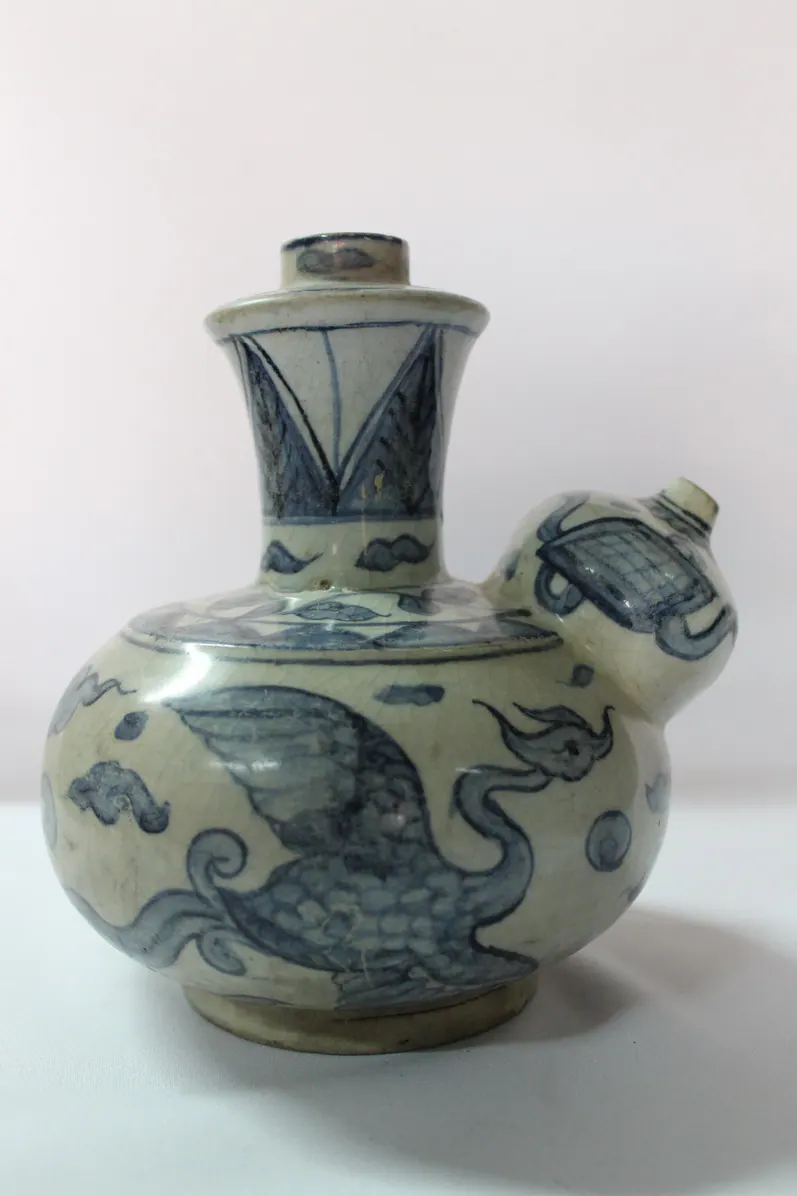
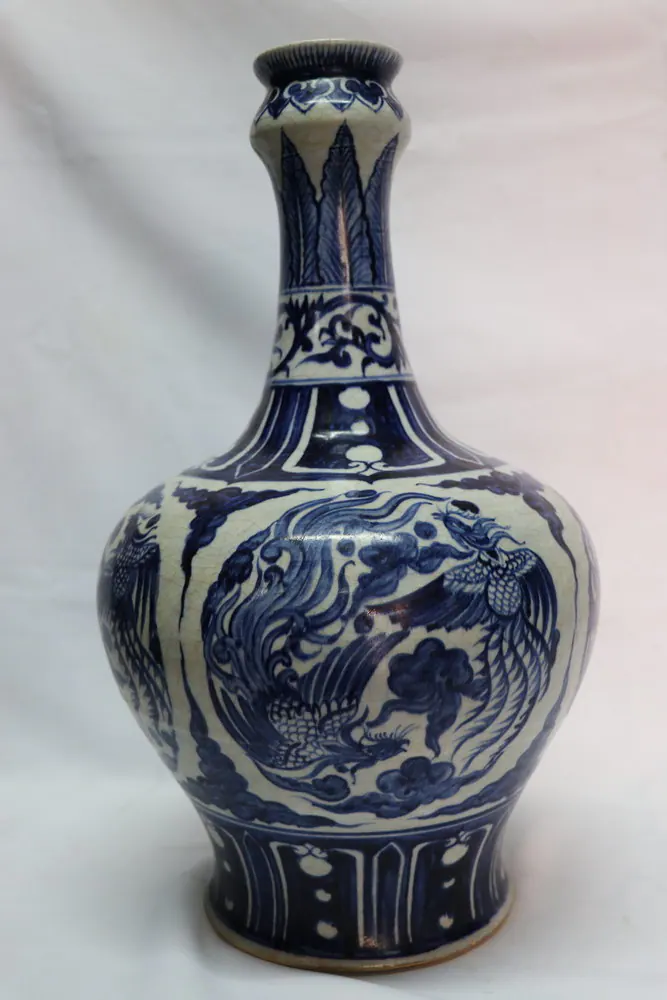
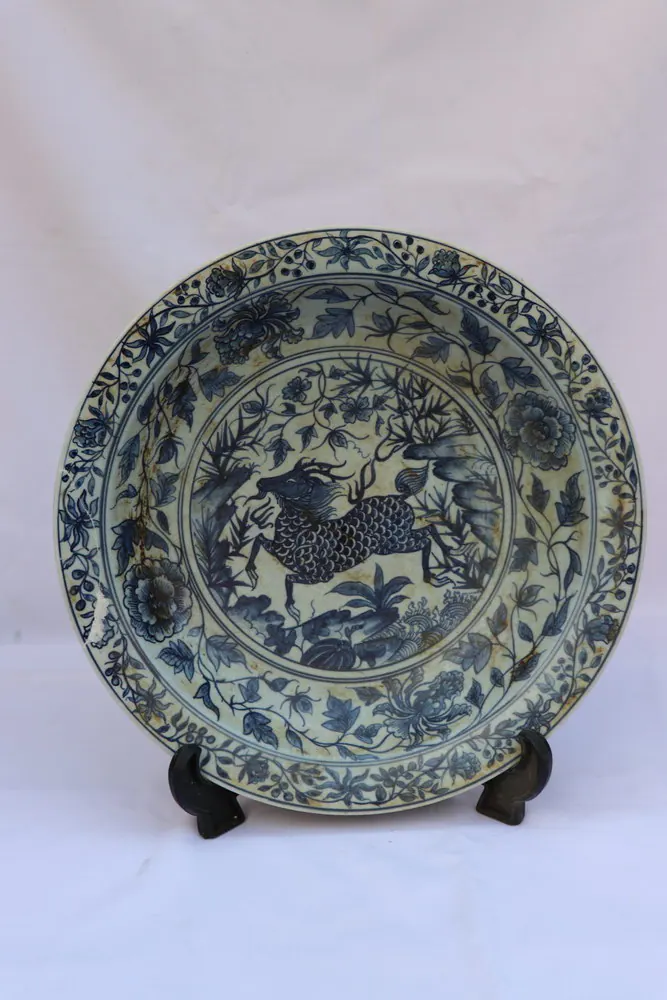
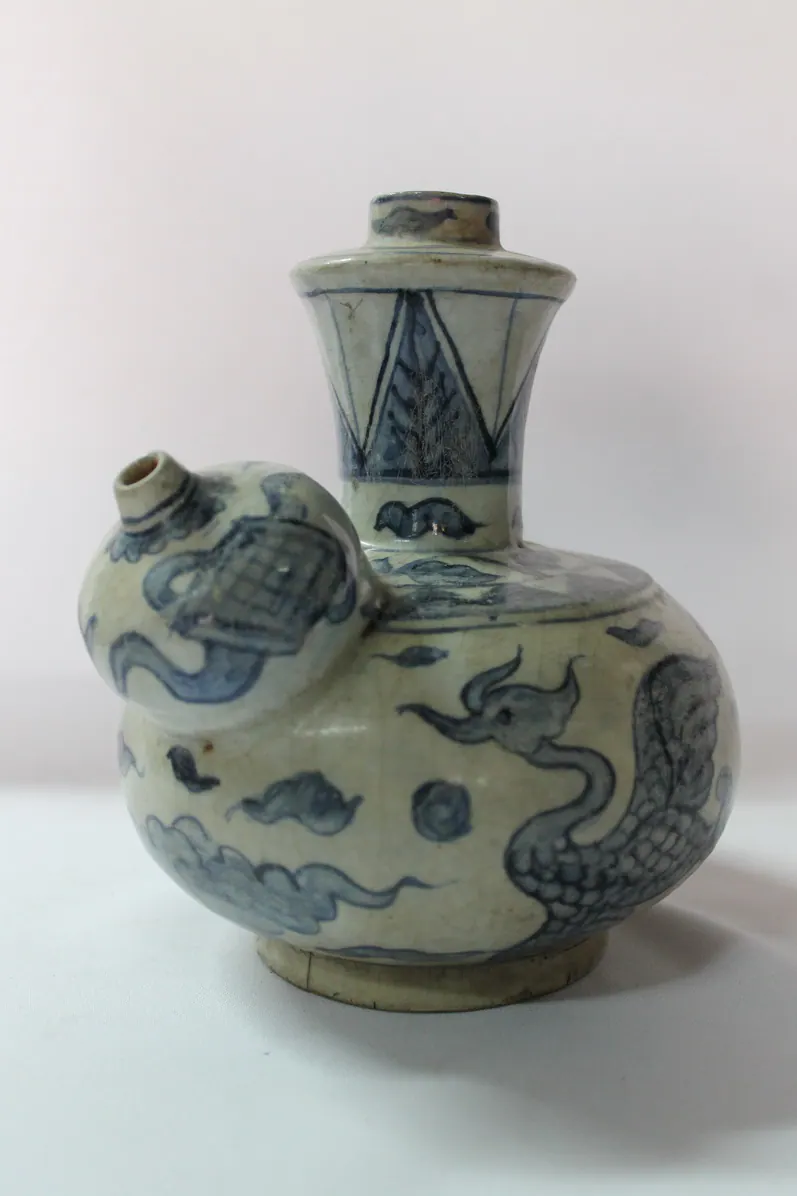
Chinese kendis were painted in the styles of their day. Late Ming kraak kendis carry the familiar radiating panels, filled with flowers, auspicious emblems or insects, often in a bright blue with a purplish tone. Birds, deer, horses, landscapes and flowering plants appear on less formal pieces, and the dragon and phoenix remained popular into the Qing. Our guide to symbols on Chinese porcelain explains these motifs.
As on vases and jars, the painting on a kendi is usually arranged in zones that follow the shape: a band or a few simple motifs on the neck, the main design around the widest part of the body, and a border of panels, petals or scrolls towards the foot. The spout is often treated as a separate field, with its own flower spray, dots or small medallions. The way these zones are laid out, and the border patterns used, changed from period to period, which makes them useful evidence when a kendi is being dated. A layout that mixes the borders of one period with the main design of another is worth questioning.
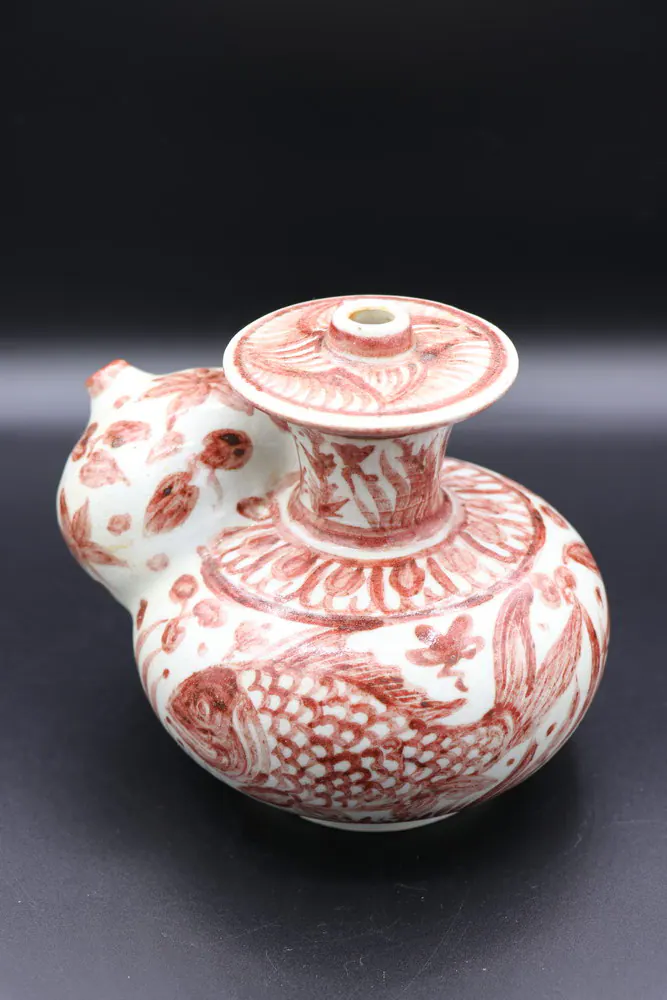
Most Chinese kendis are blue and white, but they were also made in celadon, in qingbai, with overglaze enamels and, more rarely, in underglaze copper red, a colour that is difficult to fire well.
Examining a kendi
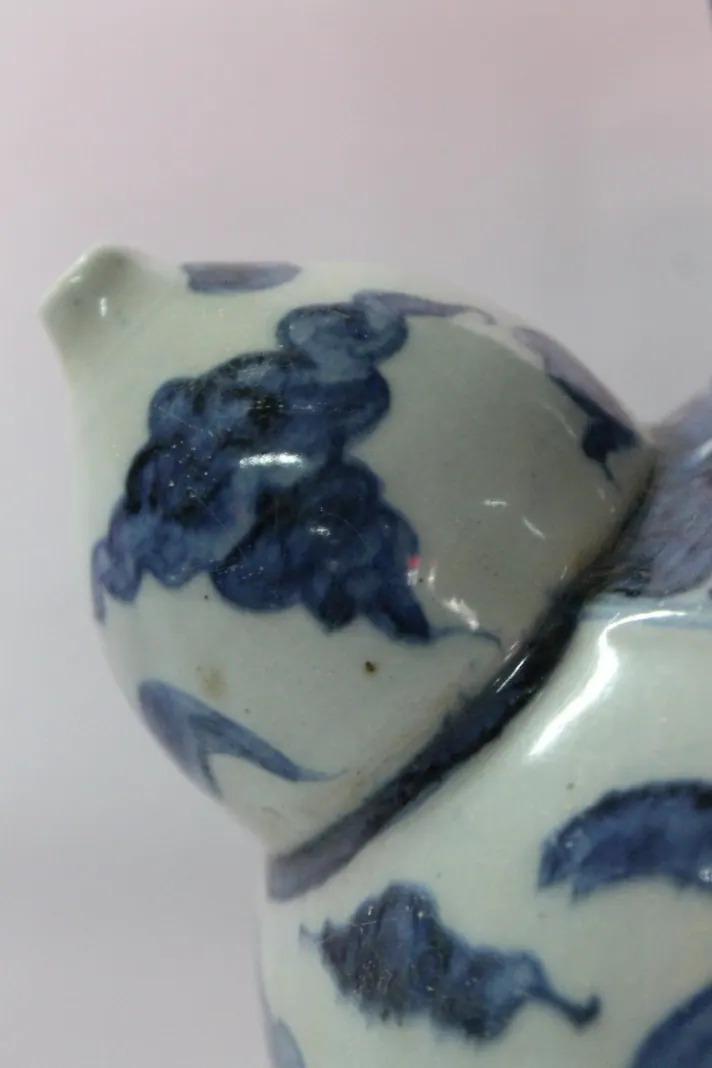
The spout is the weak point. Prominent and hollow, it is the part most often chipped or broken and then restored, so look closely at its tip and at the join with the body for any change in colour, texture or gloss. Ultraviolet light helps to show restoration.
The spout and neck were usually made separately and attached to the body before glazing, so on an original piece the glaze runs over the joins without a break. Inside the neck you can often see throwing rings and the join with the body.
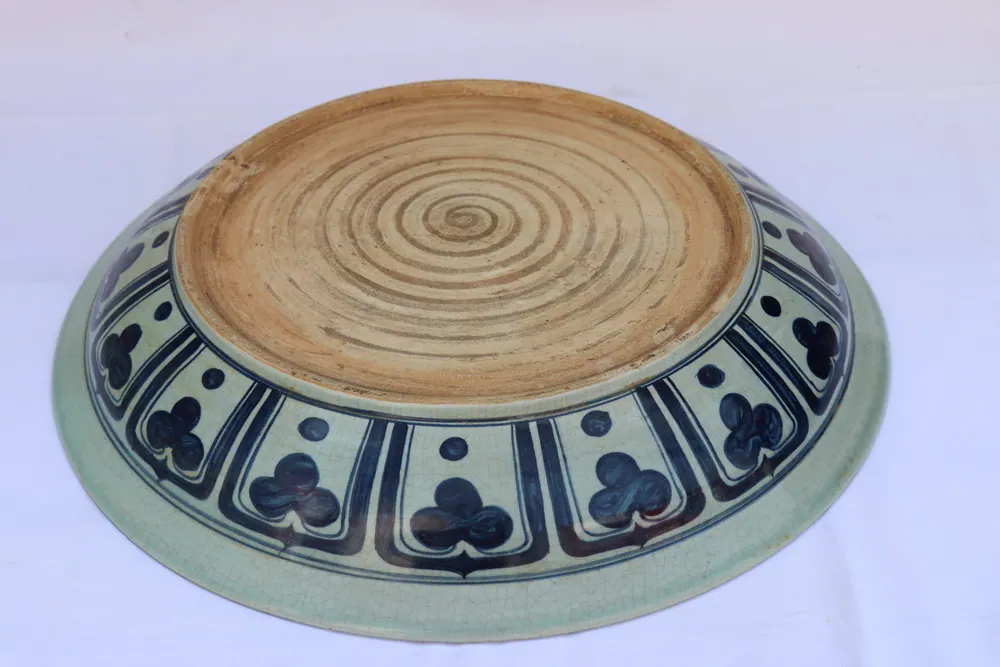
Bases vary with the kiln and the period. Export kendis often have unglazed or partly glazed bases, sometimes with grit from the kiln adhering, and small kiln firing faults are common on wares made for the market rather than the court. Neatness alone proves nothing either way: what matters is that the base, the potting, the blue and the painting all agree with the period claimed. Our guide to age signs explains what else to look for.
Kendis in our collection
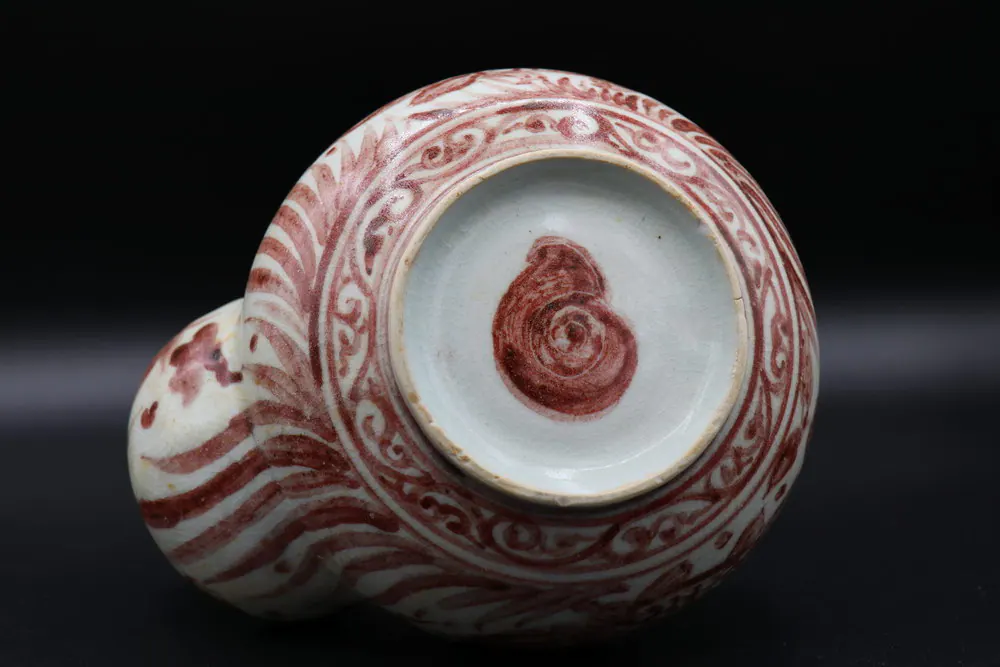
Three kendis in our collection show different sides of the form.
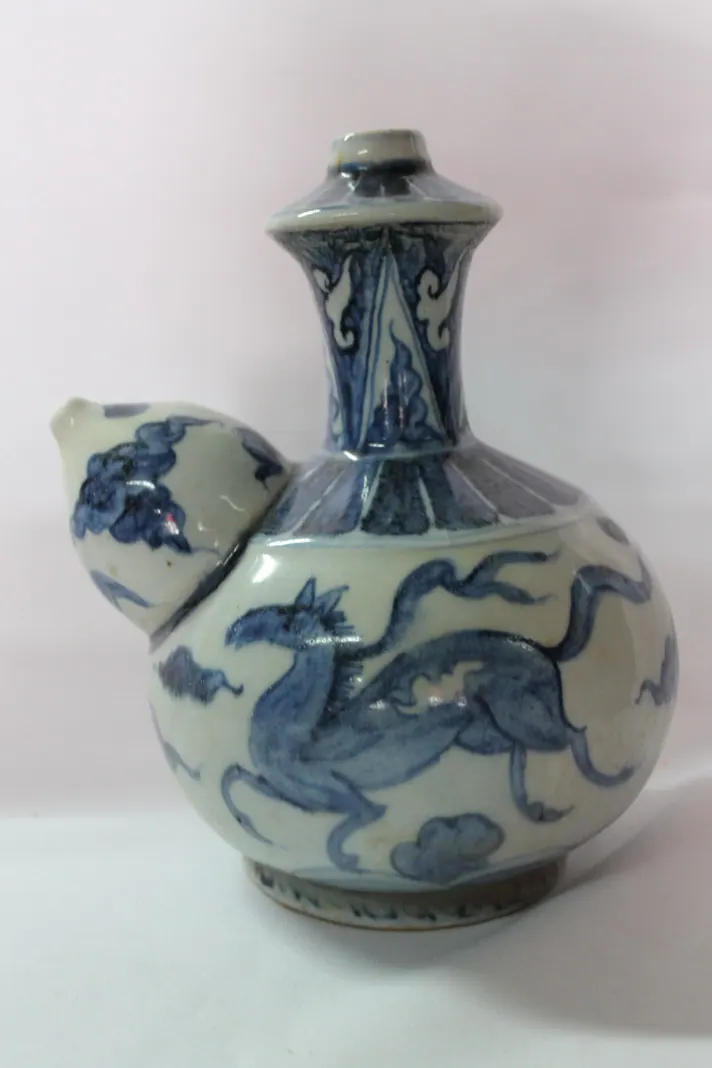
- A blue and white kendi from the Jiajing period (1522–1566) of the Ming dynasty, painted with horses among clouds.
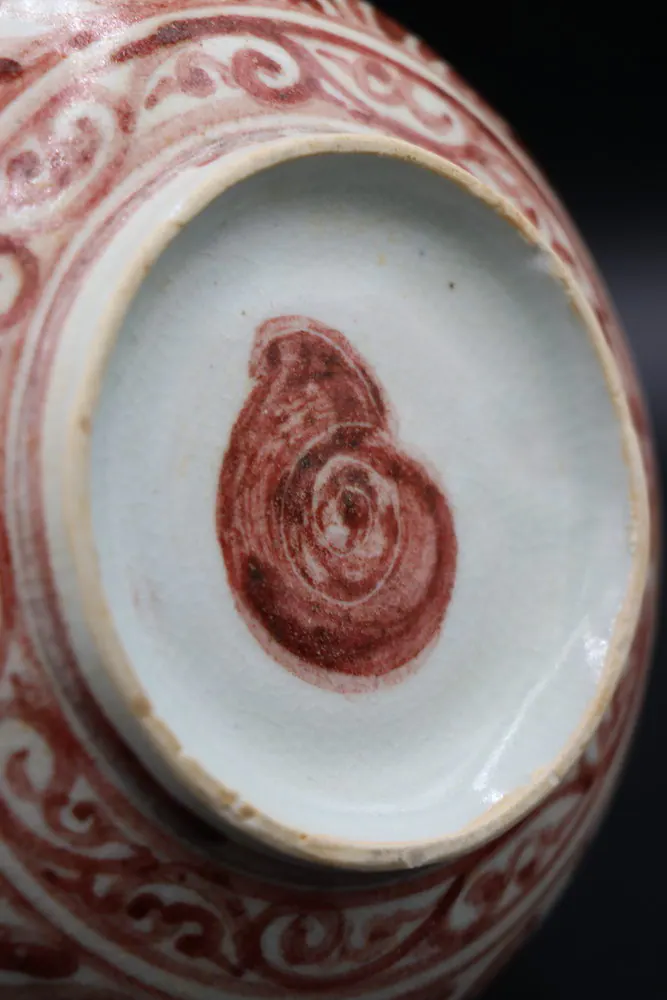
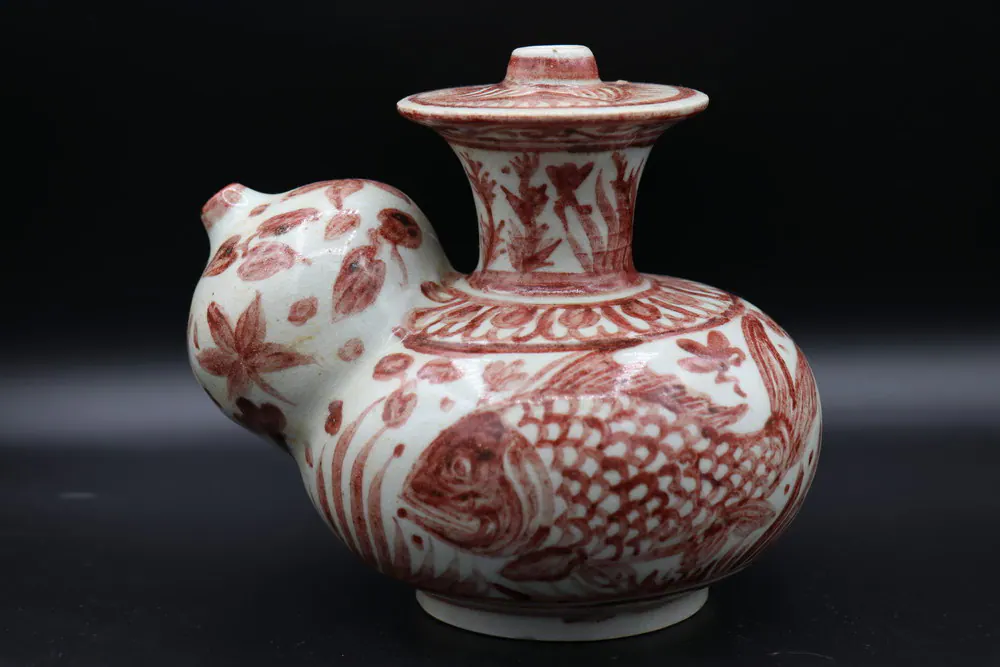
- A kendi painted in underglaze red with fish among water plants and flowers, from the middle to late Ming and possibly the Southern Ming. It has a domed spout, and a conch shell, one of the eight Buddhist emblems, is painted on the base.
- A blue and white kendi from the early Qing dynasty, painted with a large winged bird among clouds, phoenix-like with a crested head and a long sweeping tail, and with a rounded spout. Its listing describes it as the work of a local kiln rather than an official one, and its glaze has an even crackle.
Each piece can be seen in detail on its own page, where the ‘Request price’ form will reach us directly.