Guide
The Blue in Blue and White: From Heaped and Piled Cobalt to Kangxi Sapphire
The cobalt blue on Chinese porcelain changed with its sources, from the dark, heaped and piled cobalt of the Yuan and early Ming to the soft blue of Chenghua, the purplish blue of Jiajing and the clear sapphire of Kangxi. This guide explains what each looks like, why it looks that way, and how copies differ, so that you can use the colour of the blue as one test among several when dating blue and white.
What to look for
- Look for dark spots in the blue where the brush was loaded: on Yuan and early Ming pieces they are sunk into the glaze and glint like metal.
- Check that any spotting follows the brushwork, gathering at the ends of strokes and in dense shading, not dotted evenly along outlines.
- Compare the tone with the claimed reign: soft and pale for Chenghua and Hongzhi, strong and purplish for Jiajing, clear and graded for Kangxi.
- Be wary of a flat, even, inky blue with no variation in depth; it points to refined modern cobalt.
- Compare the blue of the mark with the blue of the decoration; on a genuine piece they were normally painted with the same pigment.
- Read the blue together with the body, glaze, foot and painting style; it never dates a piece on its own.
Why cobalt was the one reliable underglaze colour
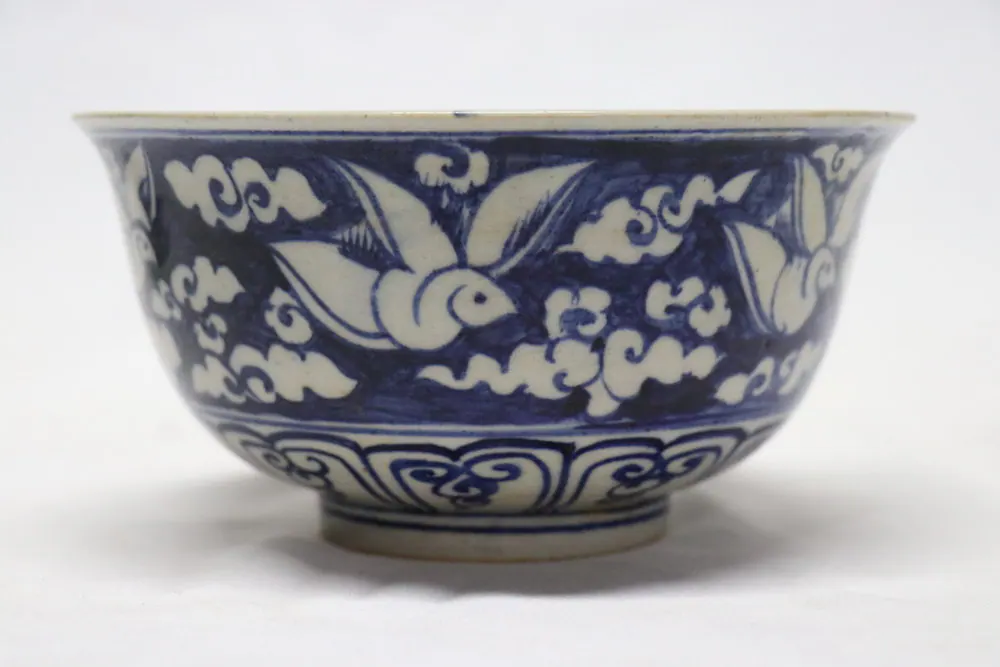
Blue and white porcelain is painted before it is glazed. The pigment goes onto the dried, unfired body, the piece is dipped in or sprayed with a clear glaze, and the whole is fired once to about 1,300°C. Very few colourants survive that heat under a skin of molten glaze. Copper, which gives underglaze red, often fired grey or brown or burnt away altogether, which is why so much early underglaze red is muddy or patchy. Cobalt oxide came through the firing as a stable, strong blue, and a very small quantity coloured a great deal of glaze.
That reliability is what made blue and white the most successful product of the Jingdezhen kilns for five centuries. It also makes the blue useful to collectors. Cobalt ores are never pure. They carry iron, manganese and other minerals in proportions that differ from one source to another, and those impurities, together with how the ore was refined and how thickly it was painted, decide the final colour. When the source changed, the blue changed, and several of those changes can be placed in time. Our history of Chinese blue and white porcelain sets out the wider story.
Heaped and piled cobalt in the Yuan and early Ming
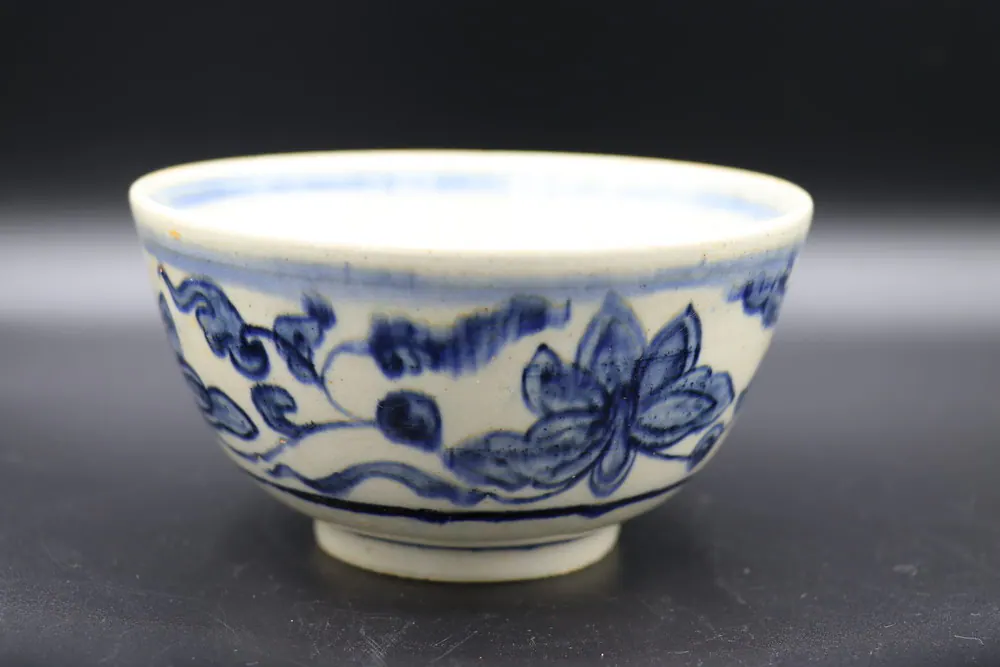
Mature blue and white was established at Jingdezhen in the Yuan dynasty, by the middle of the fourteenth century. The painters used cobalt imported from the Middle East, traditionally said to come from Persia. This ore was high in iron and low in manganese, and it produced a deep, intense blue with a slightly purplish or inky tone.
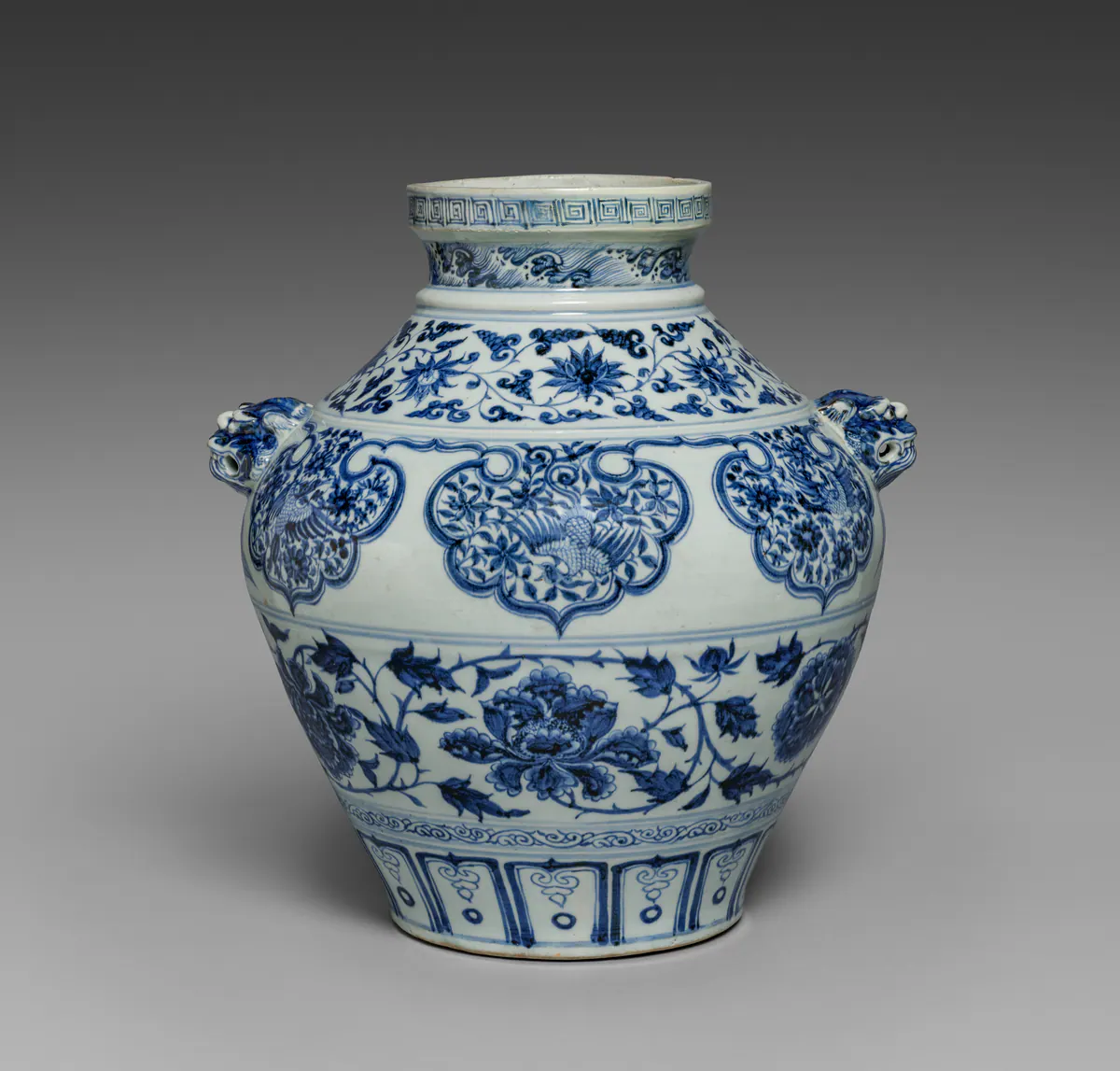
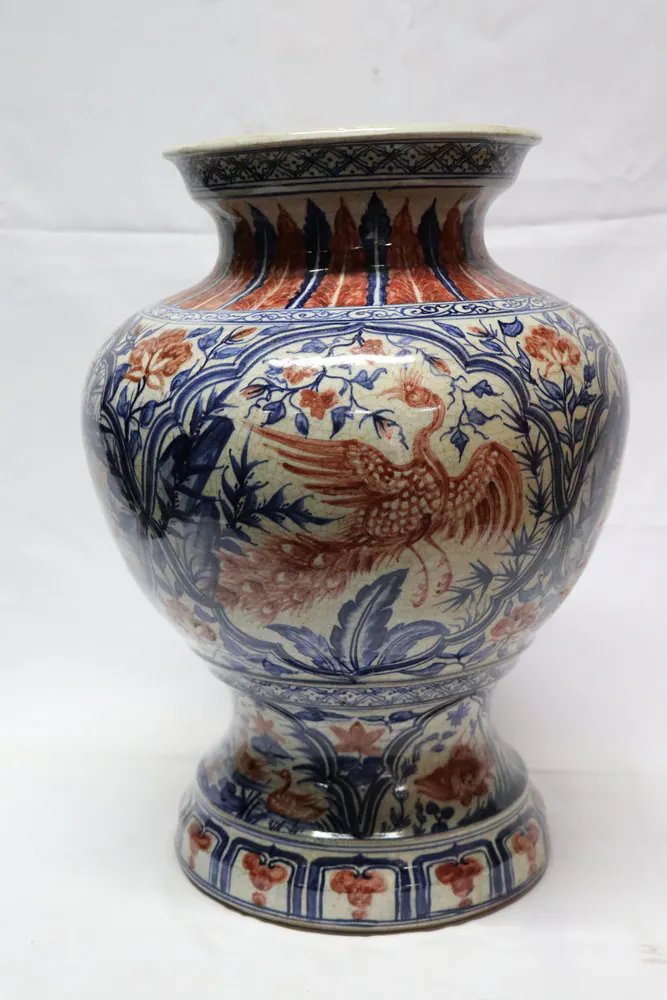
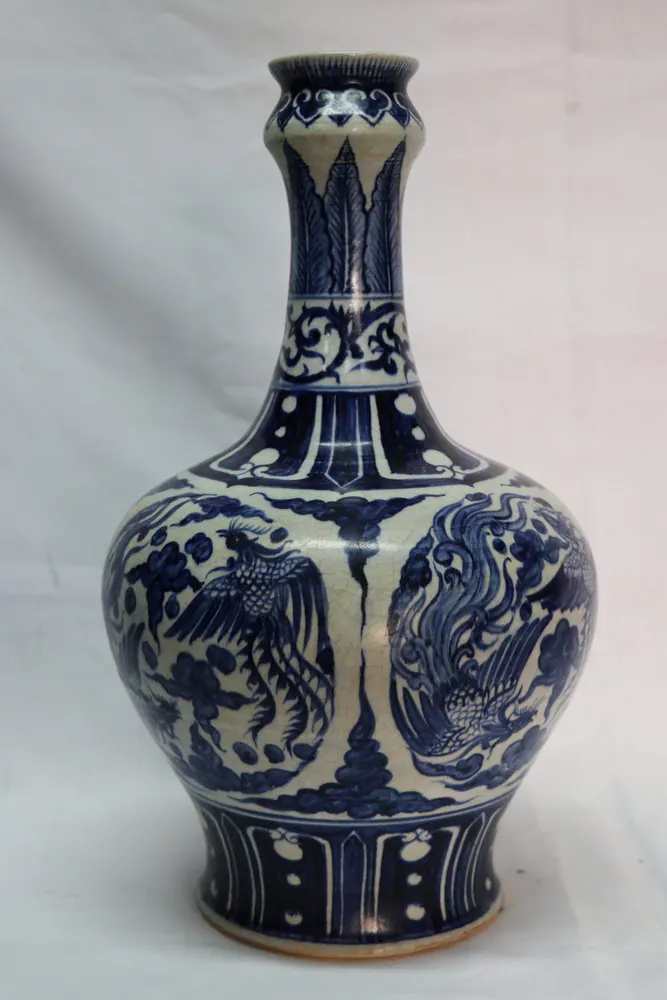
Where the painter loaded the brush, the iron in that cobalt crystallised during firing into dark spots, blackish or brownish, often with a silvery or metallic sheen. The glaze over them frequently dips into small hollows, and under a lens the dark colour can be seen breaking through towards the surface. Chinese connoisseurs call this effect duiji, usually translated as "heaped and piled". Collectors also speak of iron spots or rust spots. On a Yuan blue and white vase with phoenixes in our collection, the thickly painted areas are a deep, dark blue.
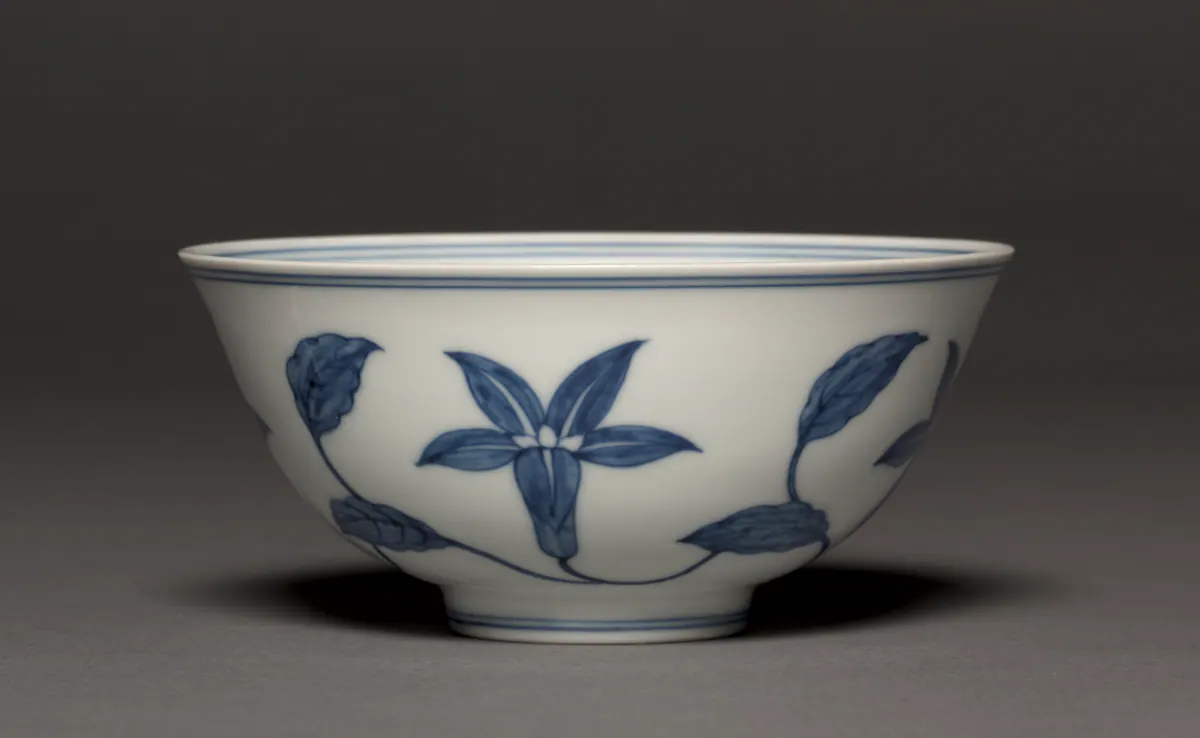
Supplies were uneven after the fall of the Yuan. Blue on pieces attributed to the Hongwu reign (1368–1398) is often greyish or blurred, and the kilns made much use of underglaze red in these years. Under Yongle (1403–1424) and Xuande (1426–1435) imported cobalt was again plentiful, and the heaped and piled effect reached its fullest form. Later Ming writers refer to this imported material as sumali or sumaqing, names whose origin is still debated. It is commonly linked with the maritime trade of the early fifteenth century. The bowl with a Xuande mark in our collection is painted in this deep, strong manner. Much early fifteenth-century painting also used Chinese cobalt, alone or mixed with the imported ore, so not every piece of the period shows strong spotting.
By the middle of the century the imported supply had dwindled, and the heaped and piled effect largely disappears.
Chenghua and Hongzhi: a softer Chinese blue
The finest porcelain of the Chenghua reign (1465–1487) was painted with a Chinese cobalt, recorded in later texts as pingdeng qing and associated with Leping in Jiangxi province, close to Jingdezhen. It is lower in iron than the imported ore and was carefully refined. The result is a soft, pale, even blue, sometimes with a faint grey or lavender cast, lying in a smooth, warm white glaze.
The painting changed with the pigment. Instead of the dense, dark brushwork of the early century, Chenghua painters drew fine outlines and filled them with light, even washes. There is little or no spotting, because there was little iron to form it. This restrained blue is the basis of the Chenghua style, including the outlines of its famous doucai wares.
Hongzhi (1488–1505) blue continues the same manner and is often a little paler or greyer. Early Zhengde (1506–1521) pieces follow on from Hongzhi; later in the Zhengde reign a stronger blue begins to appear. Among provincial kilns the picture is more varied, and everyday wares of this period often show a greyish or dull blue that owes more to cheaper materials than to date. Our guide to Ming folk kiln porcelain covers those wares.
Jiajing and Wanli: Mohammedan blue and its successor
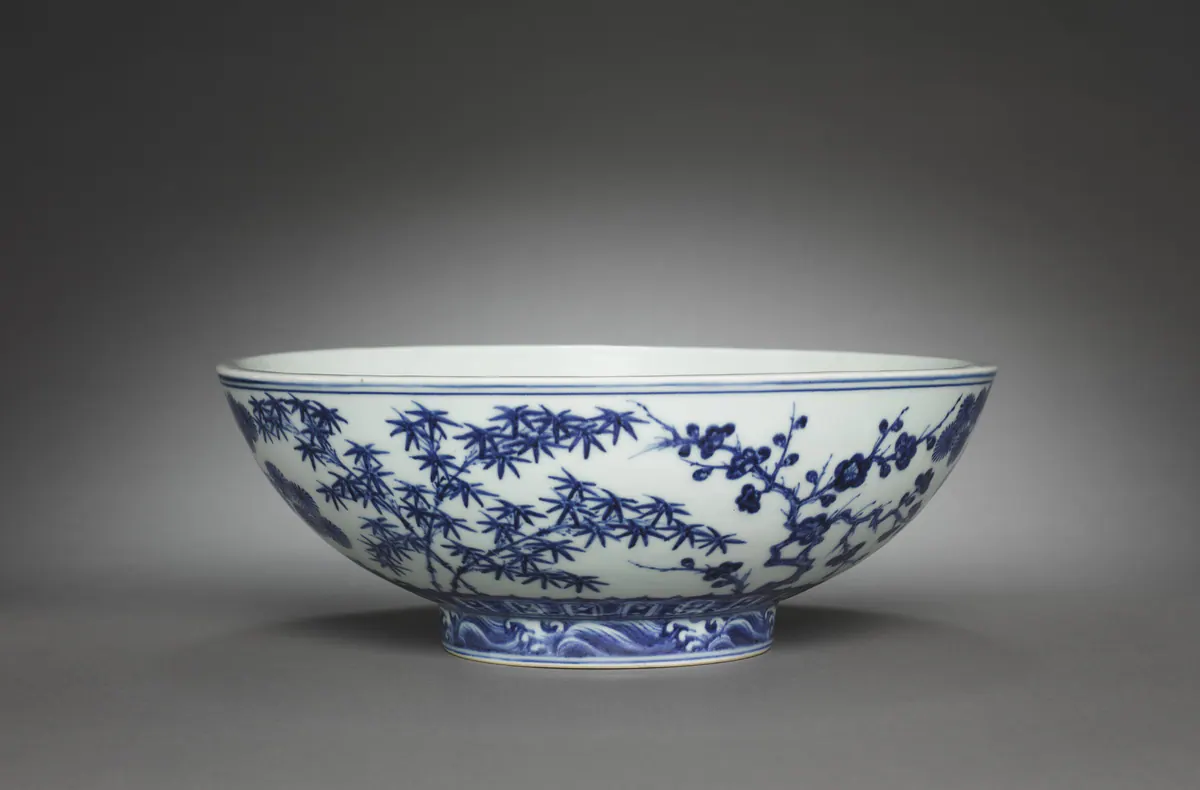
From the later Zhengde years, and above all under Jiajing (1522–1566), the kilns used a cobalt known as huiqing, described in Ming records as imported and often translated as "Mohammedan blue". Used alone it tended to run in the firing, so it was mixed with a Chinese cobalt, and the proportions governed the tone. The best Jiajing blue is strong and brilliant with a distinct purplish or violet cast, quite unlike the dark, spotted blue of the early century or the pale blue of Chenghua. Heavily applied, it can look almost black-violet.
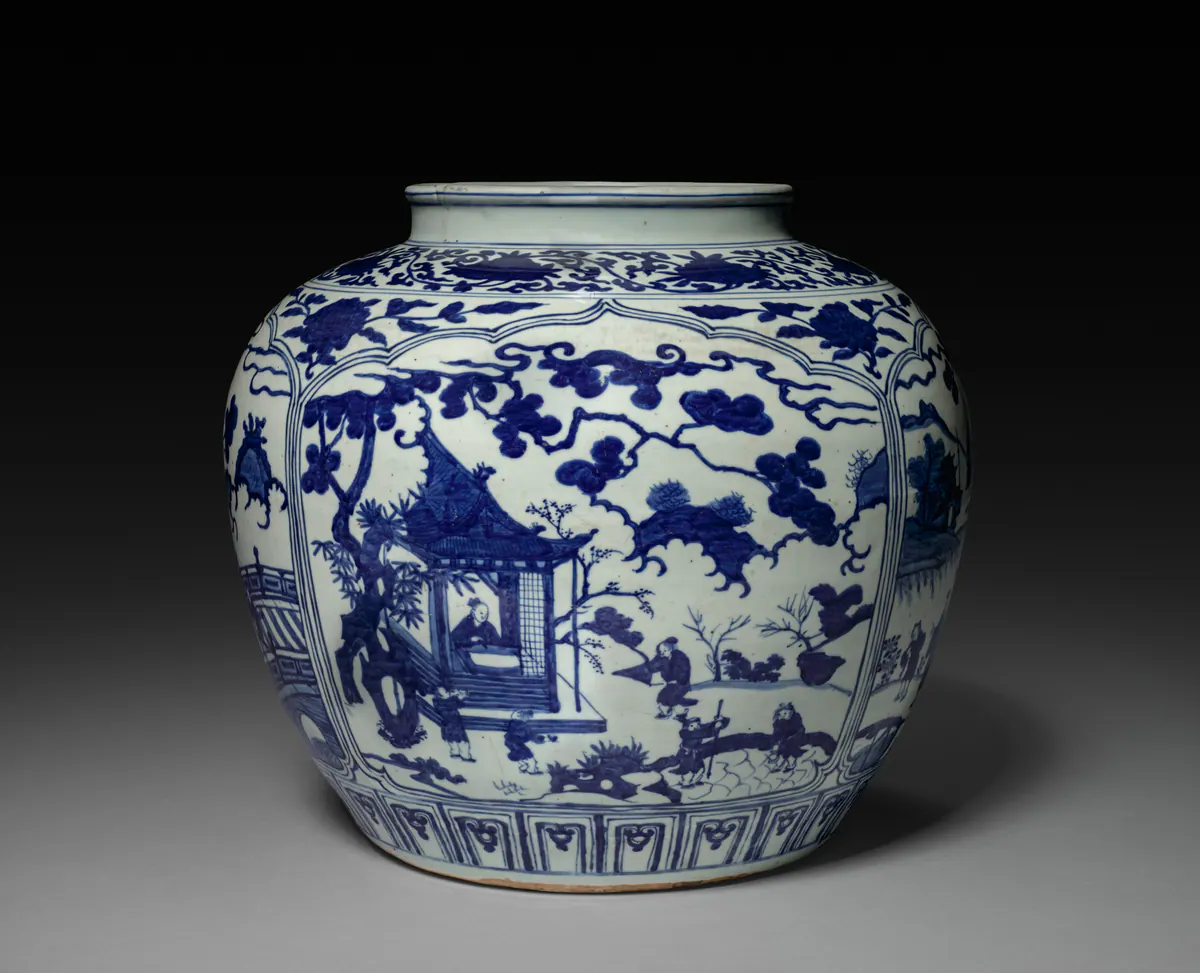
The same blue carried on through Longqing (1567–1572) and the early part of the Wanli reign (1572–1620). As the supply of huiqing failed, later Wanli blue is often greyer, paler or silvery, painted with Chinese cobalt from Zhejiang. Much of the kraak porcelain made for export in these decades shows the whole range, from bright violet-blue to a thin grey-blue.
A bowl with a Jiajing mark in our collection shows another thing the blue can tell you: it sat too close to the fire, and the cobalt has blurred. Blurring of this kind is a firing accident, not a sign of a particular reign, and it can happen in any period.
Transitional and Kangxi: clear violet and sapphire washes
As court orders dwindled in the last Ming decades, the Jingdezhen kilns worked increasingly for merchants, scholars and export buyers. The Transitional porcelain of about 1620 to 1683 is painted in a well refined cobalt from Zhejiang, and at its best the blue is a clear, bright violet-blue on a fine white body under a thin, glassy glaze. Collectors sometimes describe blue of this kind, a clean colour with a faint purple cast lying in a soft white, as "violets in milk". The phrase is used loosely and is not tied to a single reign.
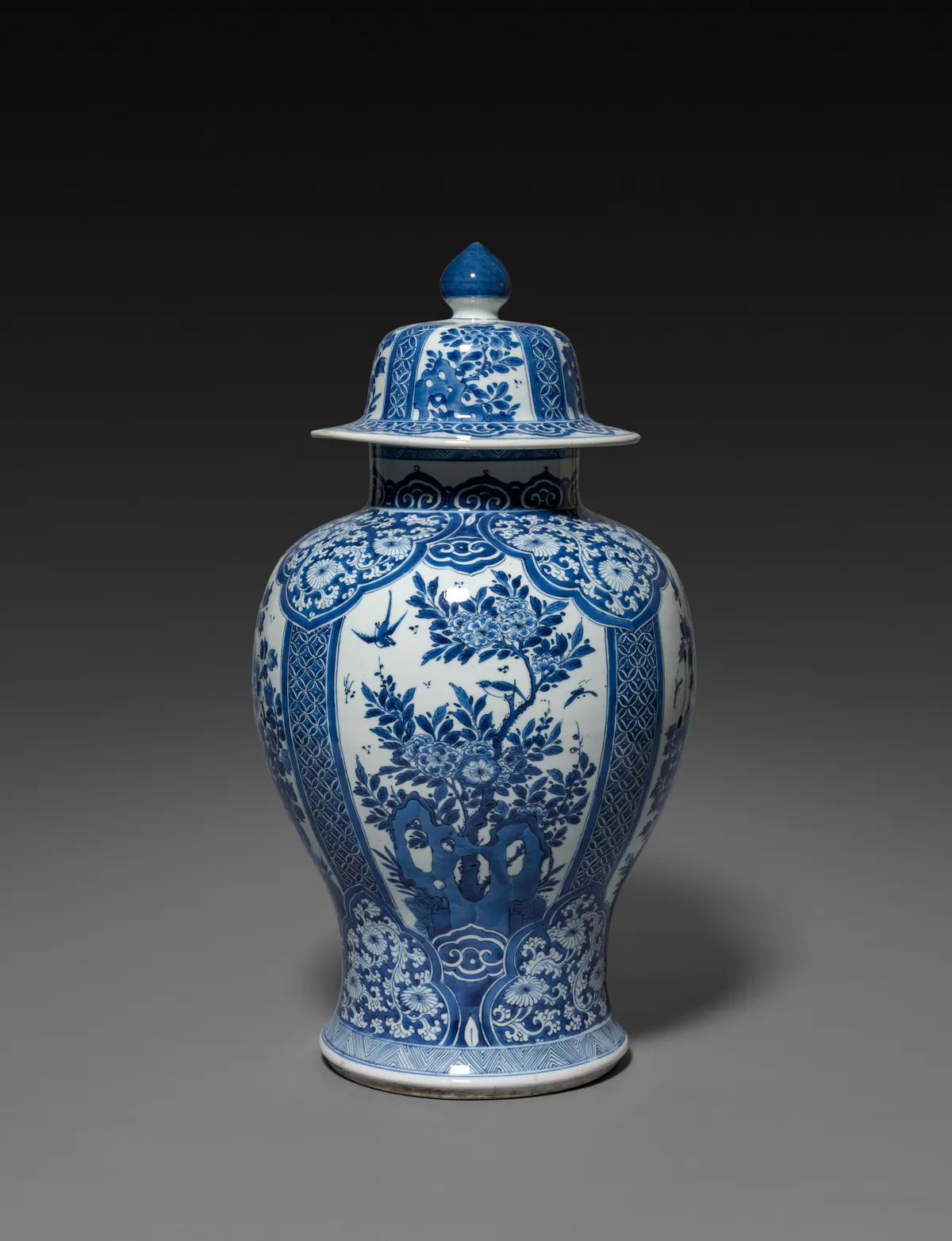
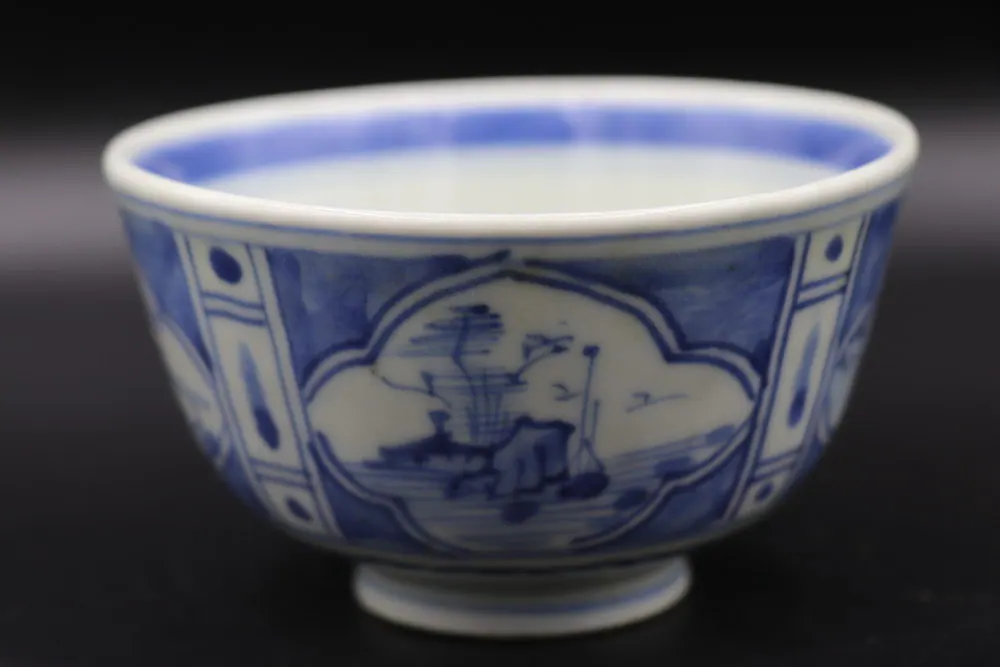
Under Kangxi (1662–1722), once the kilns had been reorganised in the 1680s, cobalt refining reached a new standard. The finest Kangxi blue is a brilliant, pure sapphire, set off by a clean, bright white body. Painters diluted the pigment to several strengths and laid it on in graded washes, so that a single landscape may run from near-black in the foreground to a pale wash in the distance. The effect is crisp and even, with no heaping. The same reign produced powder blue, in which cobalt was blown onto the body through a tube covered with gauze to give a fine, speckled ground.
The Kangxi bowl with a leaf mark in our collection shows the approach: its landscape cartouches are drawn in outline, and the ground around them is laid in cobalt washes of different depths.
Later copies and modern cobalt
The early fifteenth-century blue was admired and copied almost as soon as it disappeared. Under Yongzheng (1723–1735) and Qianlong (1736–1795) the court kilns made fine versions of Yongle and Xuande blue and white. Their painters used a purer Chinese cobalt and imitated the heaped and piled effect by adding small dots of darker pigment by hand. These dots are neat, regularly spaced and usually placed along outlines. They lack the sunken surface and metallic glint of the originals. Many such pieces carry the mark of their own reign; others carry an early Ming mark, which is discussed in our guide to apocryphal marks.
From the late nineteenth century, refined and then manufactured cobalt oxide became available. It gives a flat, even blue, sometimes bright and harsh, sometimes an inky blue-black, with little variation in depth from one stroke to the next. Modern copies of Yuan and early Ming pieces often combine this blue with imitation spotting: round black dots painted on the surface or scattered evenly across the design, with no relation to how heavily the pigment was applied. Under a lens they sit on top of the blue instead of growing out of it.
A modern blue can also be too perfect in another way. Old cobalt shows slight differences in tone within each stroke, where the brush was reloaded or the pigment pooled. A blue that is identical everywhere on a large piece deserves a closer look.
Using the blue as one test among several
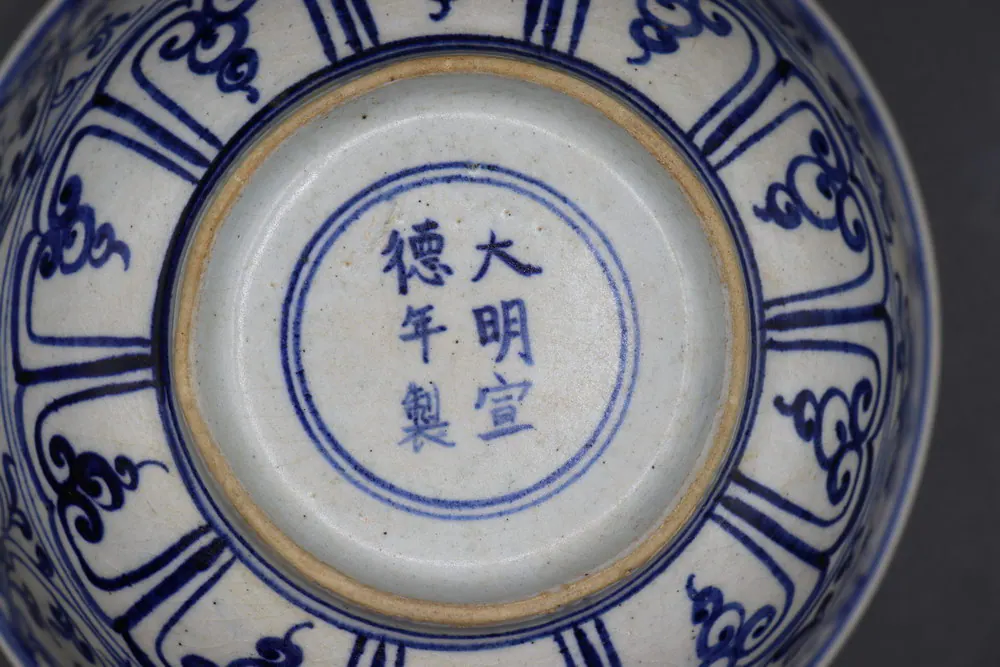
Look at the blue in daylight, then under a lamp held low so that the light rakes across the surface, and finally with a 10x loupe. Note the overall tone, whether it varies within strokes, where any dark spots fall and whether they are sunk into the glaze or sit on it. Then ask whether all of that agrees with the reign and kiln the piece claims.
Compare the mark with the decoration. On a genuine piece the mark was written in the same cobalt as the decoration, before glazing, so its tone should belong with the rest. A mark records what was written on a piece, not when it was made, and our guide to Ming reign marks explains how to read one. Colour belongs with the other evidence set out in our guide to the presence or absence of certain colours.
The blue is persuasive when it agrees with everything else: the body and the colour of the unglazed foot, the glaze, the shape, the painting style, the wear. It is never enough on its own. A skilled copyist can match a tone, and a genuine piece may have been fired badly. Our guide to antique porcelain age signs brings these tests together.
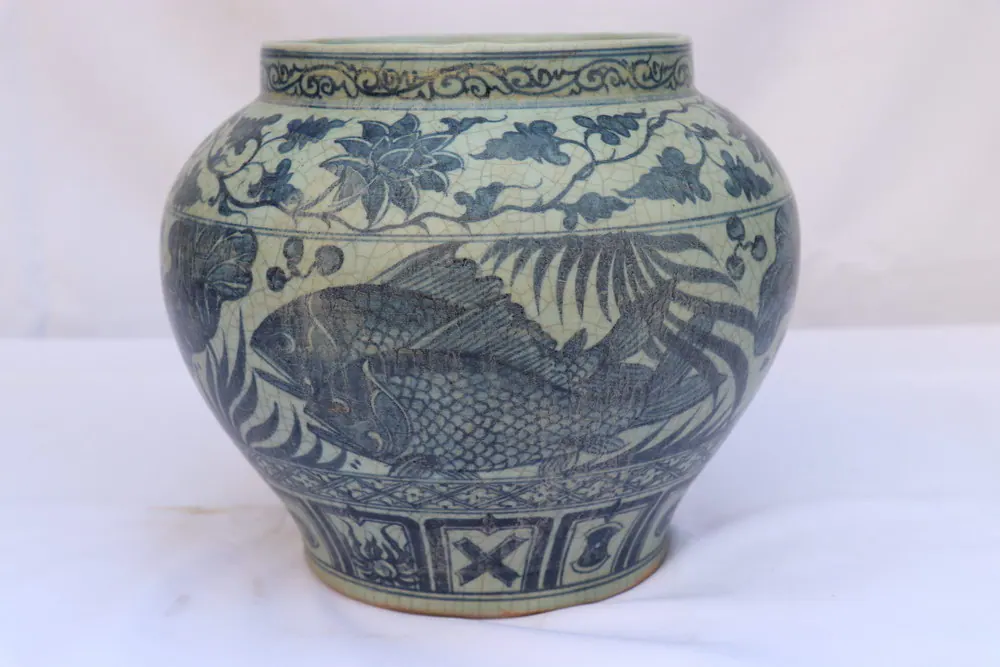
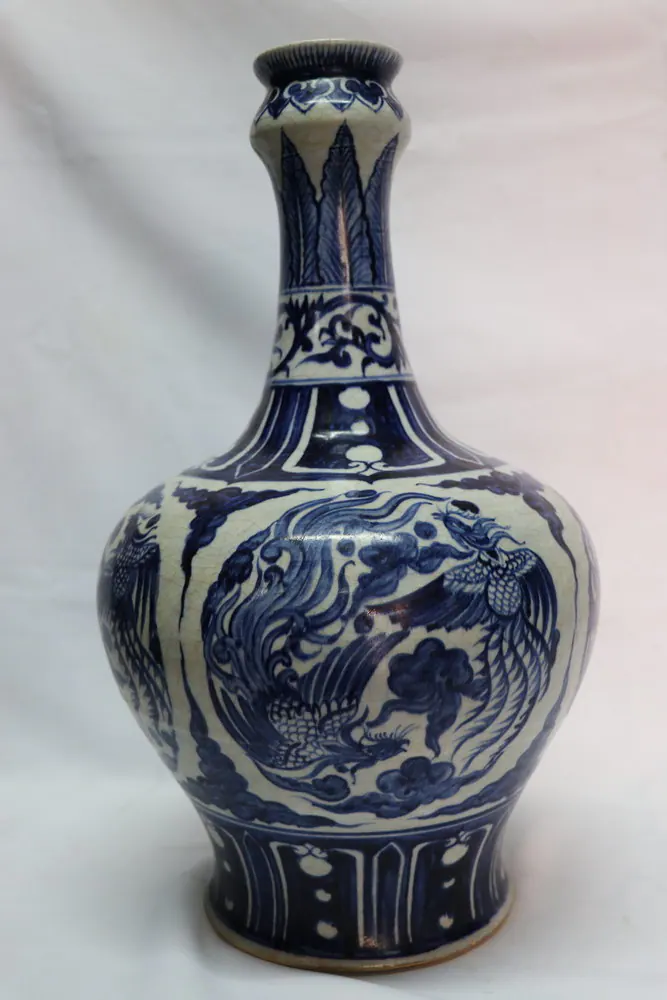
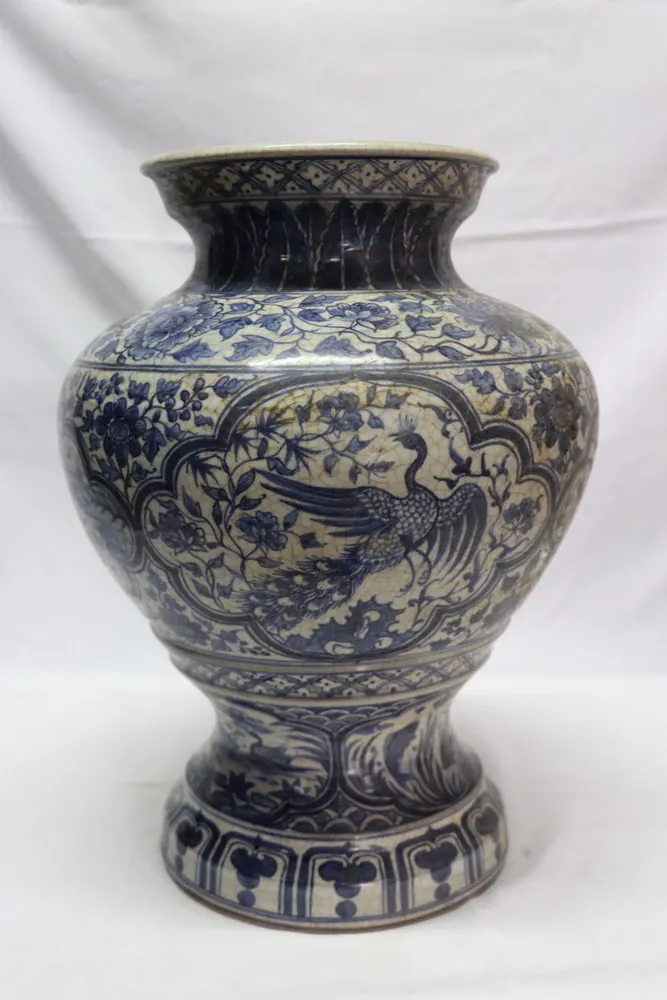
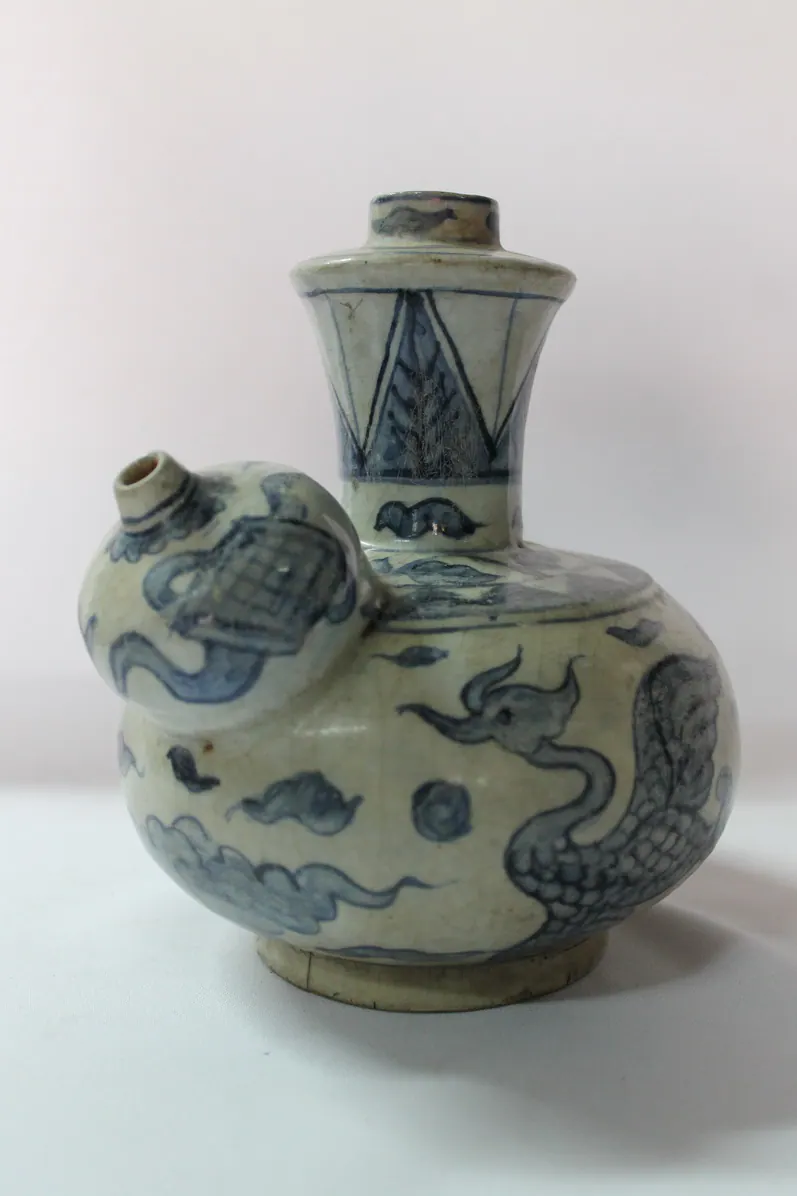
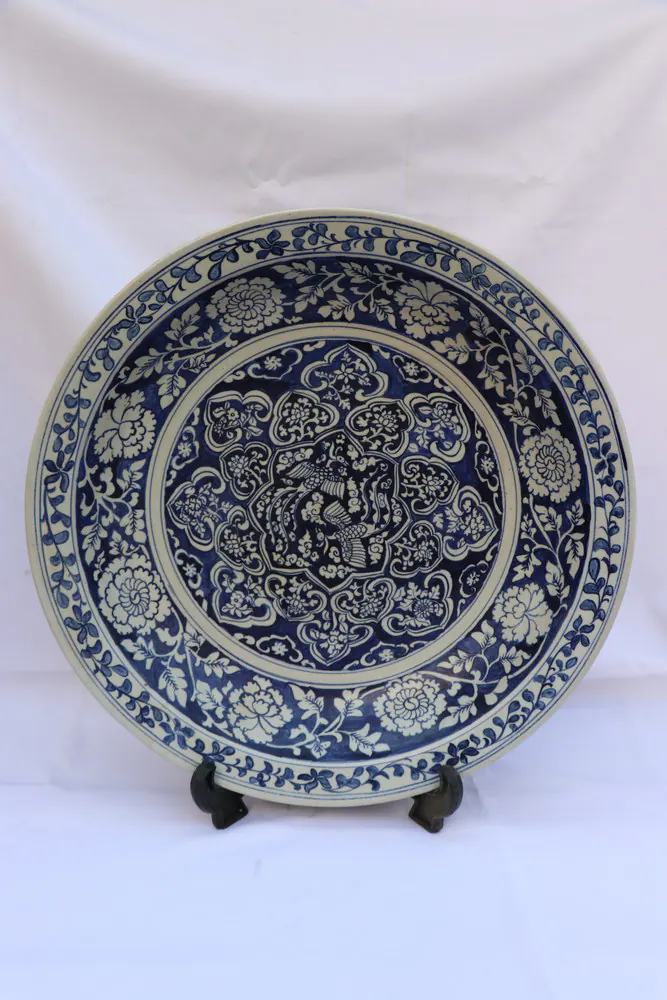
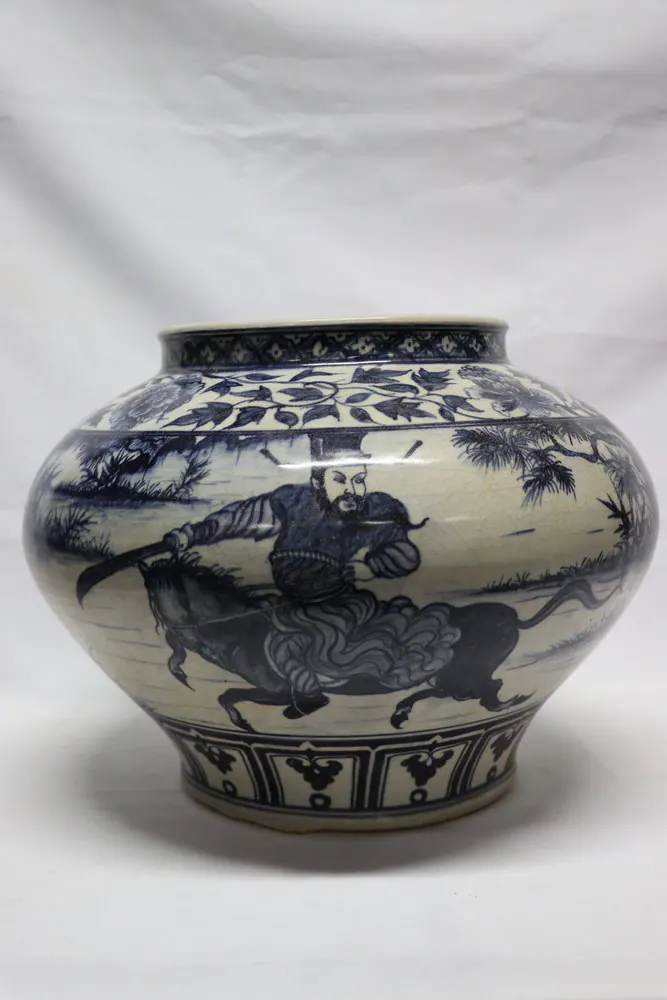
For comparison, the four museum pieces below set the main tones side by side, from the Yuan to the Kangxi reign.
Museum examples