Guide
Presence or Absence of Certain Colours
Every colour on Chinese porcelain has a history. Each glaze and enamel depended on particular raw materials and firing methods, and many can be dated to the period in which they first appeared. A colour that did not exist at the claimed date is one of the clearest signs that a piece is later than it appears. This guide is part of our series on signs of age in antique porcelain.
What to look for
- List every colour on the piece, including small details, before you think about its date.
- Check that each colour existed at the claimed date: opaque rose pink, for example, means no earlier than about the 1720s.
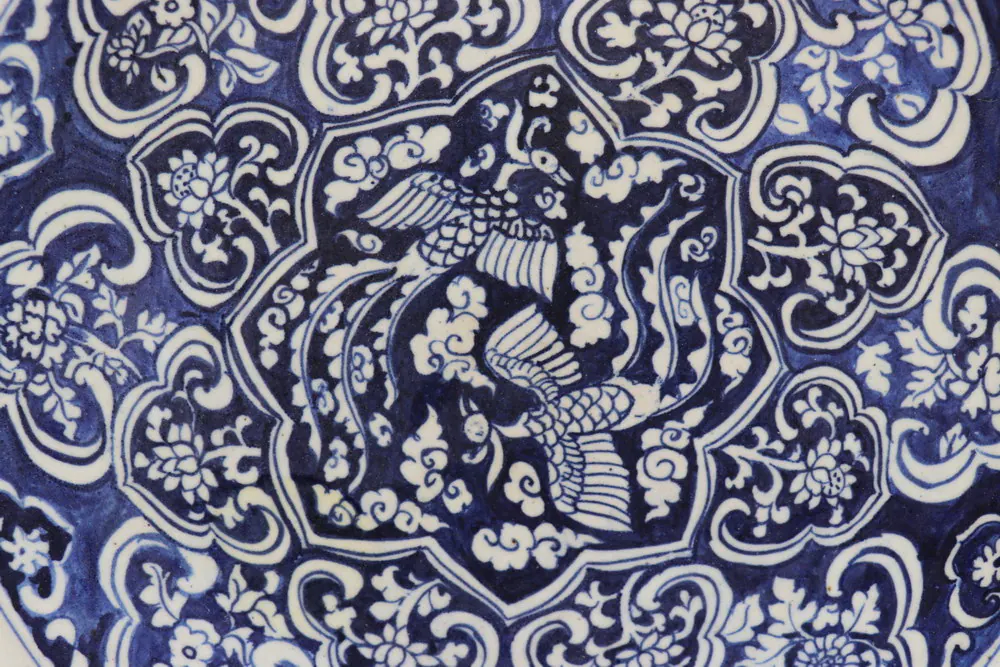
- Judge the tone of the blue: deep with dark spots, soft and pale, purplish, or flat and even.
- Decide whether each colour lies under the glaze or was painted on top of it.
- Remember that the right palette does not prove age, but the wrong one proves a piece is later.
Why colour dates a piece
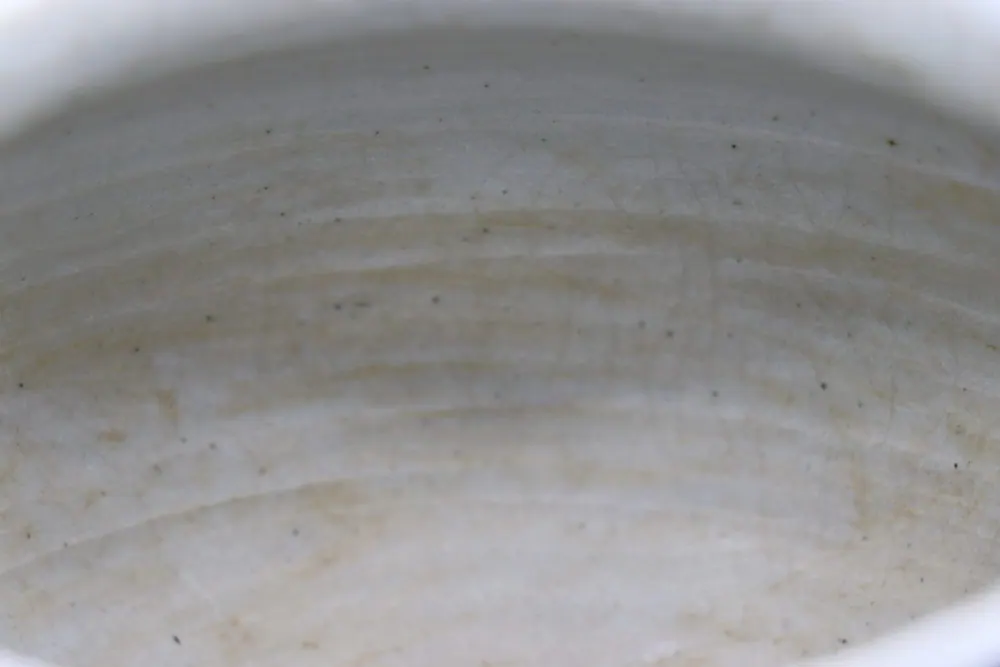
Three things decided which colours a potter could use. The first was the colourant. Iron gives the greens, browns and blacks of celadon and black-glazed wares, copper gives red or green, cobalt gives blue, and manganese gives purple and brown. The second was the firing. Underglaze blue and red had to survive the full heat of the kiln, while overglaze enamels were painted on the fired glaze and fixed in a second, much cooler firing. The third was trade, because some of the best materials had to be imported.
New colours tended to arrive at identifiable moments and then spread quickly through the kilns. We use colour as the second check, after shape and potting. It works best as a test of exclusion: the right palette does not prove that a piece is old, but the wrong one proves that it is not.
From the earliest pottery to the Song
The earliest Chinese pottery was unglazed. Neolithic potters of the Yangshao and Majiayao cultures, working between about 5000 and 2000 BCE, painted red earthenware with black and red pigments made from iron and manganese minerals, while Longshan potters in the east made thin, burnished black ware. A "Neolithic" pot with a true glaze is not what it claims to be.
Glaze had appeared by about the 15th century BCE, under the Shang, as a thin yellowish or olive-green coating on high-fired stoneware, the ancestor of celadon. Han potters used low-fired lead glazes, green from copper or amber-brown from iron, on tomb wares; after long burial the green often develops a silvery iridescence. Early white porcelain appeared in northern China in the late 6th century and was refined under the Tang.
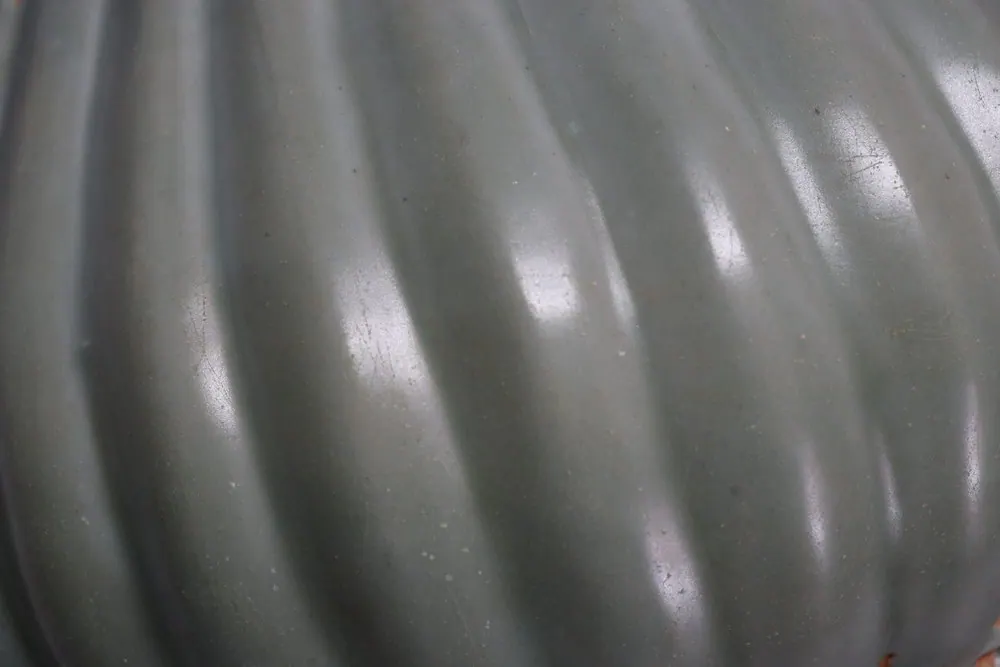
Tang sancai combines lead glazes of amber, green and cream. Cobalt blue appears on some sancai, but it was rare and costly, so a sancai piece splashed with blue deserves close scrutiny. The Song valued glaze above painted colour: the bluish grey of Ru, the crackled glazes of Guan and Ge, the blue of Jun splashed with copper purple, the ivory of Ding, the pale bluish white of qingbai and the green of Longquan celadon. Our Song dynasty porcelain collection includes celadon and qingbai pieces.
Blue, red and enamels in the Yuan and Ming
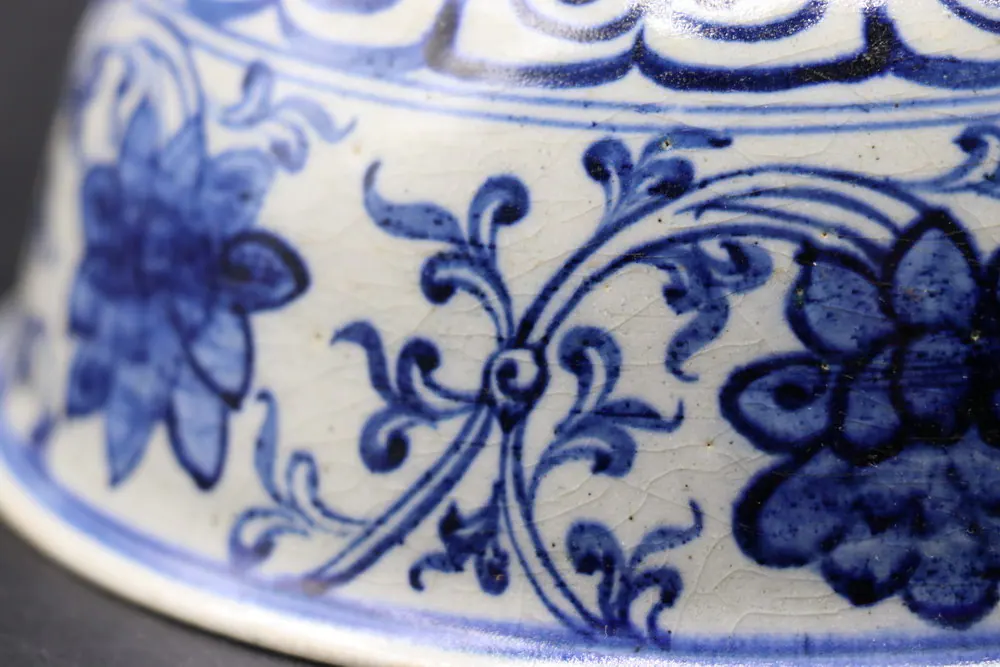
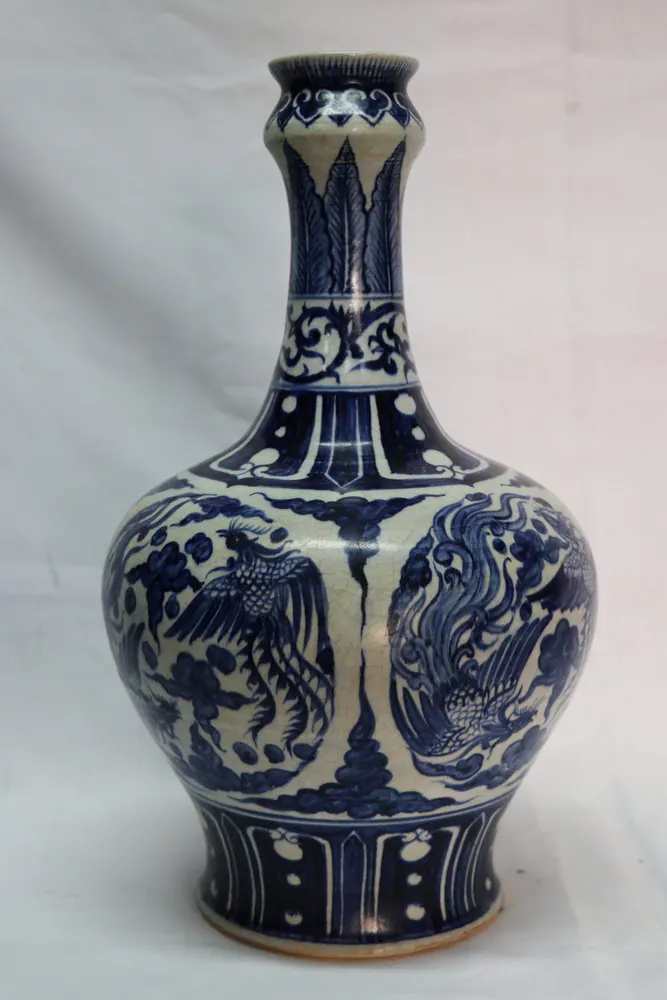
Underglaze cobalt blue on white porcelain was established at Jingdezhen under the Yuan, by the middle of the 14th century, using cobalt imported from the Middle East. Underglaze copper red was used alongside it but was harder to control and often fired grey or brown.
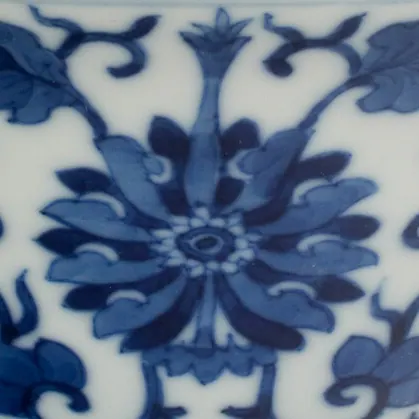
The imported cobalt of the Yuan and early Ming gives a deep blue with dark, almost black spots where the pigment pooled, known as "heaping and piling". We have a late Yuan to Ming blue and white vase in our collection. Chenghua porcelain (1465–1487) has a pale, even blue from largely Chinese cobalt, and Jiajing wares (1522–1566) a vivid purplish "Mohammedan blue".
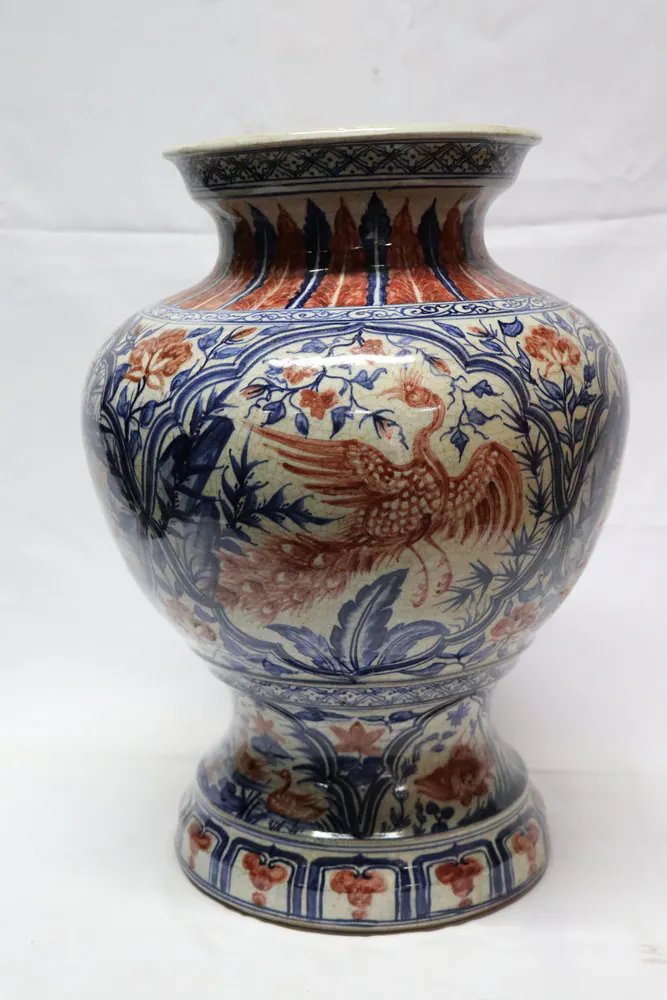
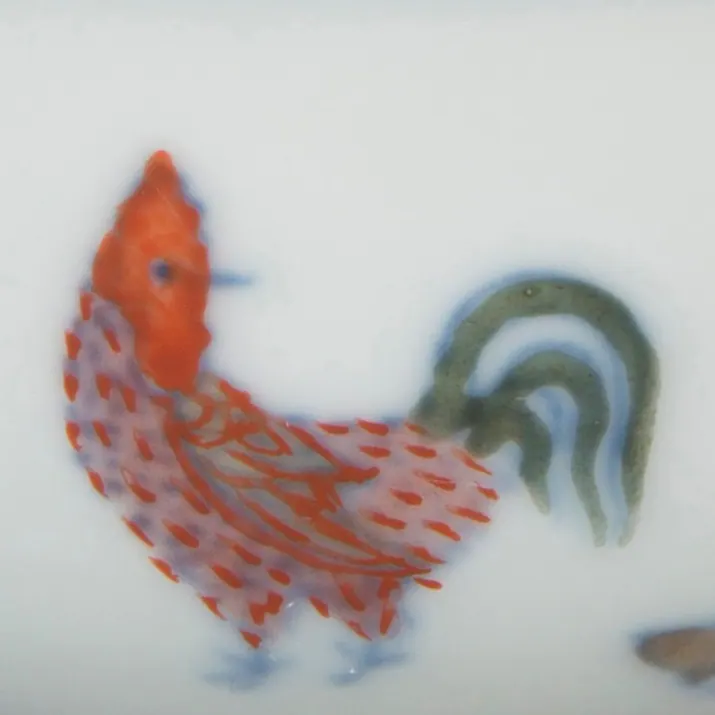
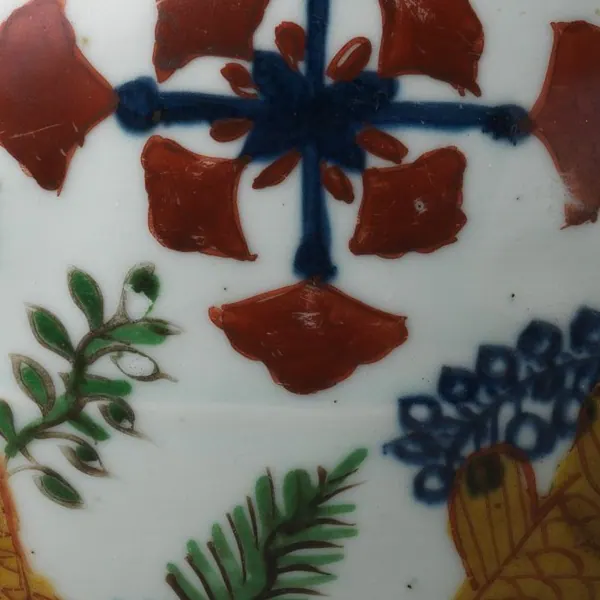
Overglaze enamels became established in the Ming. Chenghua doucai fills underglaze blue outlines with enamels painted over the glaze; the technique was first tried under Xuande (1426 to 1435) and perfected under Chenghua. From the Jiajing and Wanli reigns, wucai, "five colours", adds strong red, green, yellow and aubergine to underglaze blue. Coloured glazes had their own moments too: the copper red of Xuande, the yellow of Hongzhi, and fahua, which separates turquoise, deep blue and aubergine glazes with raised lines of slip. No Ming palette includes the opaque rose pink of the later famille rose.
New colours in the Qing dynasty
After the upheavals of the mid-17th century, the imperial kilns at Jingdezhen were reorganised in the 1680s, and a run of new glazes and enamels followed. Later records credit Zang Yingxuan, who supervised the kilns for the Kangxi Emperor, with snakeskin green, eel-skin yellow and turquoise. The deep copper red called langyao, or sang de boeuf, is traditionally linked to Lang Tingji, governor of Jiangxi in the early 18th century. Peach bloom, a soft pink copper red mottled with green, was reserved for small vessels for the scholar's desk.
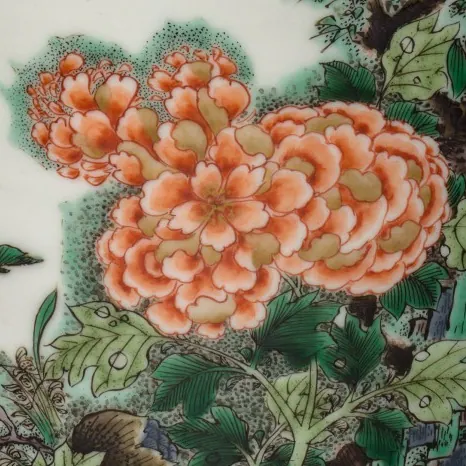
Famille verte, the "green family", is the enamel palette of the Kangxi reign: several greens with iron red, yellow, aubergine and black. Its key novelty is an overglaze blue enamel, which on many pieces replaced the underglaze blue of Ming wucai.
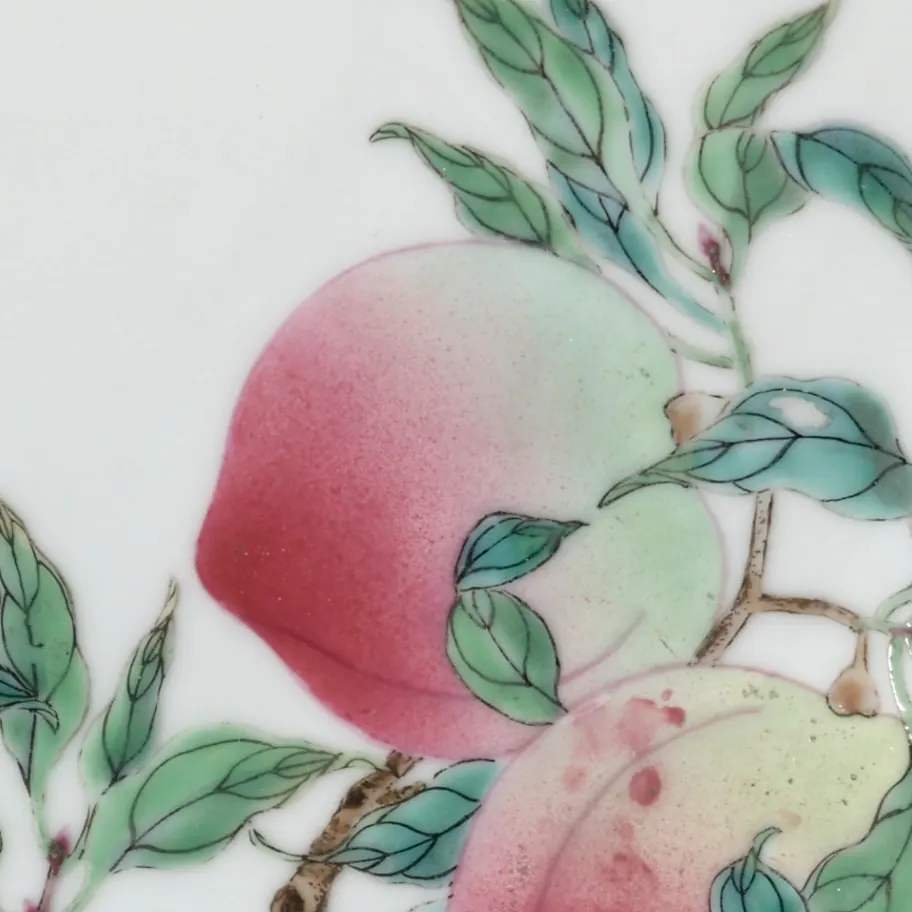
Famille rose brought two colours new to Chinese porcelain: an opaque rose pink made from colloidal gold, a technique learnt from Europe, and an opaque white that let painters shade and blend. It appears from about the 1720s, was perfected under Yongzheng and dominated the 18th and 19th centuries. In Chinese these enamels are called fencai, "powder colours", or yangcai, "foreign colours". Our Qing dynasty porcelain collection covers this long period.
Museum examples
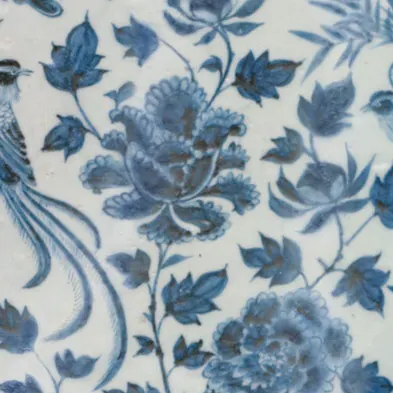
Using colour to test a piece
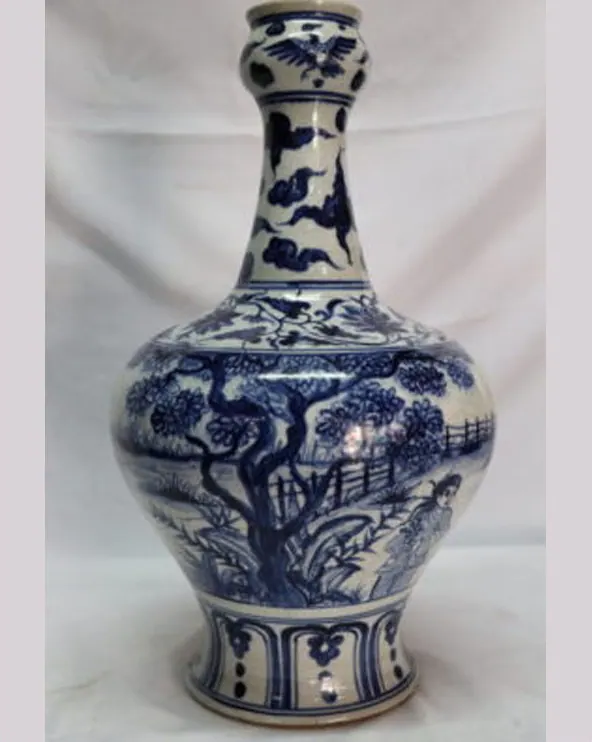
Later copies usually give themselves away in one of three ways. Some use a colour that did not yet exist: famille rose pink on a piece claiming to be Ming or early Kangxi, or blue on a supposed Neolithic pot. Some use the right colour in the wrong tone. From the late 19th century imported refined cobalt gave a flat, bright, even blue, quite unlike the varied tones of earlier ores, and many copies of early blue and white imitate the dark spots of imported cobalt by adding dots deliberately with the brush, which tend to look placed and regular rather than following the flow of the pigment. Others are a whole type made later than they suggest: many famille noire vases, with black enamel grounds, were made in the late 19th and early 20th centuries rather than in the Kangxi reign they evoke.
To examine a piece, work in good daylight and with a hand lens. Underglaze colours lie beneath a continuous skin of glaze and are flush with the surface. Overglaze enamels stand slightly proud, can often be felt with a fingertip and wear first on the high points. Note every colour, place each one under or over the glaze, and ask whether all of them could have been used together at the claimed date. Check the result against the shape, the potting and the style of painting. Our guide to crackles covers another feature of the glaze that repays the same close look.