Guide
Doucai and Wucai: Ming Enamelled Porcelain Explained
The difference between doucai and wucai is one that every collector of Ming and Qing porcelain meets sooner or later. Both combine underglaze blue with overglaze enamels, and both were made at Jingdezhen, but they use the blue in different ways and look quite different once you know what to see. This guide explains each technique, the famous Chenghua chicken cups, the Qing revivals and what later copies get wrong.
What to look for
- Follow the blue. If it outlines the whole design and the enamels fill the outlines, it is doucai; if blue fills areas as one colour among several, it is wucai.
- Look at the enamels. Doucai colours are thin, soft and translucent; wucai colours are bold and dense, led by iron red and green.
- Consider the scale. Chenghua doucai is small and delicate; Jiajing and Wanli wucai includes large jars, vases and dishes.
- Read a Chenghua mark with caution. It was copied from the late Ming onwards and is still copied today, so judge the body, glaze and painting first.
- Check the edges of the enamels under magnification. Thick, glassy colour and heavy, uniform outlines are typical of later copies.
Doucai: outlines in blue, filled in enamel
In doucai porcelain the whole design is drawn in fine underglaze blue lines, sometimes with light blue washes, before the first firing. After it, the enamels are painted inside the blue outlines, like colour added to a drawing. The name is usually translated as "contending" or "joined" colours; it came into use after the Ming, and Ming writers often called these wares wucai as well.
Excavations at the imperial kiln site in Jingdezhen have shown that the technique was already being tried in the Xuande reign (1426–1435). It was perfected under the Chenghua Emperor (1465–1487), whose doucai is the benchmark for all later work. Chenghua pieces are small: cups, little jars and saucer dishes of thin, warm white porcelain with a soft, slightly unctuous glaze.
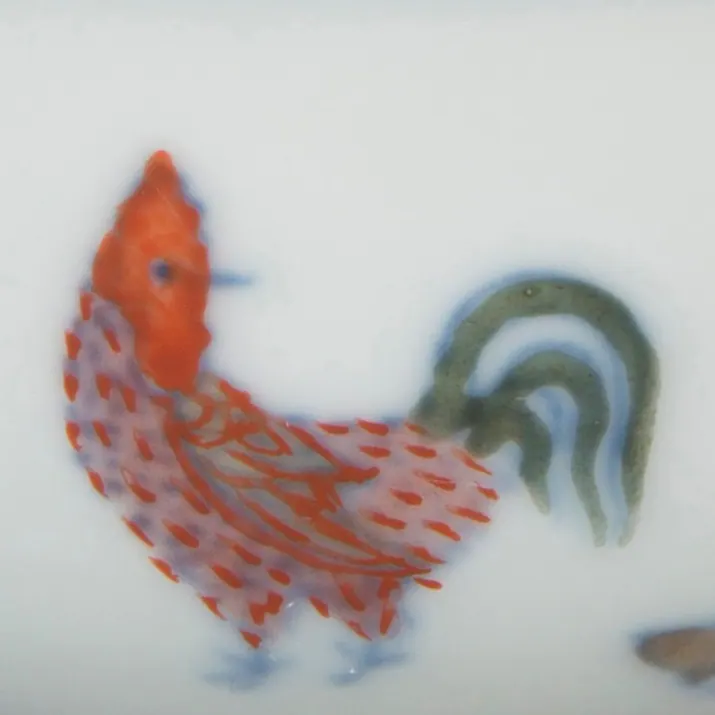
The Chenghua enamels are thin and translucent: a clear leaf green, a pale yellow, a soft red and an aubergine purple. They are applied with restraint, sometimes straying slightly over the blue line, and the effect is delicate rather than bright.
The Chenghua chicken cups
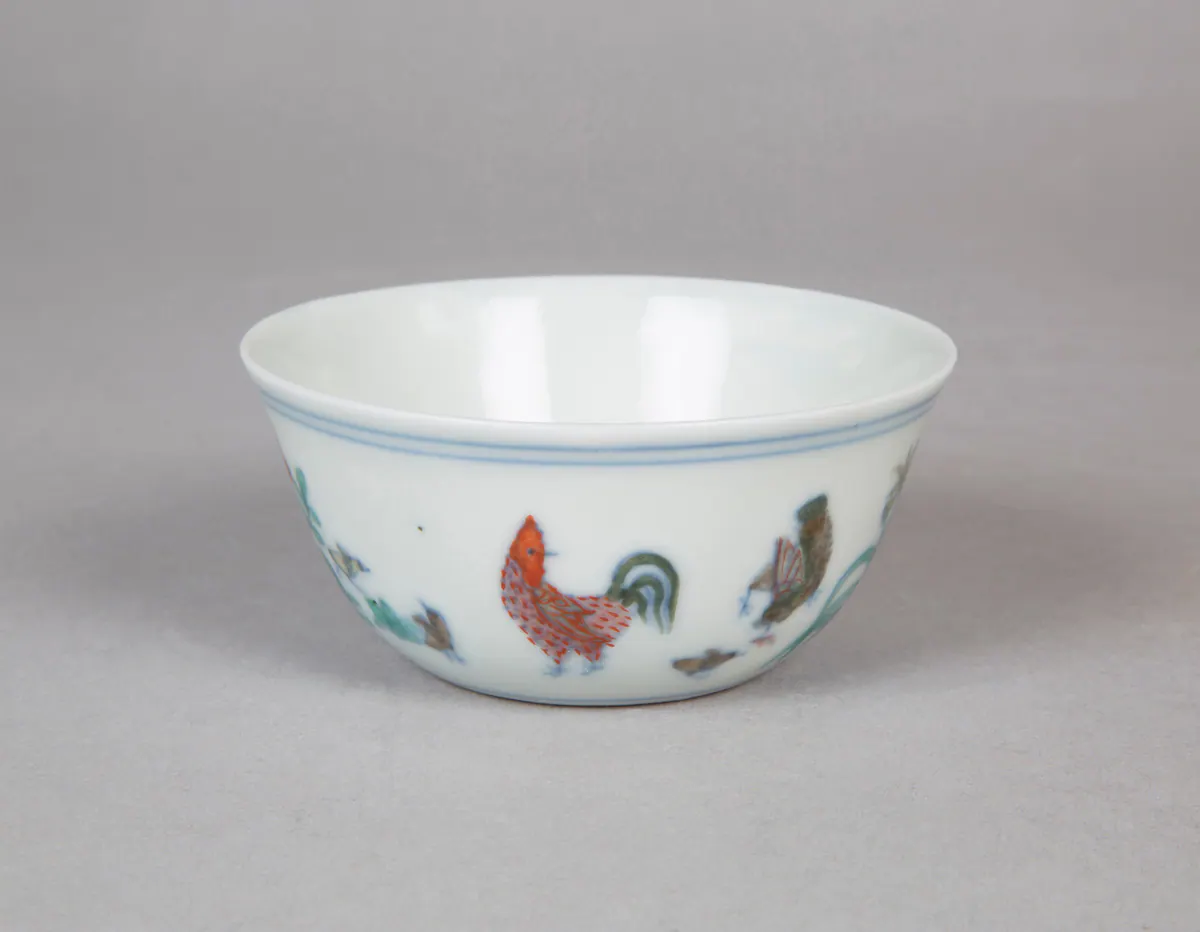
The most famous doucai of all are the small wine cups known as chicken cups, painted with a rooster, a hen and chicks among rocks and flowering plants. The base usually carries a six-character Chenghua mark in underglaze blue within a double square. Their fame is old: late Ming writers already recorded them as costly and sought after.
Very few genuine examples are known, and most are in museum collections. Their influence far exceeds their number. Qing potters copied them under Kangxi, Yongzheng and Qianlong, the Qianlong Emperor wrote a poem about them, and some copies of his reign carry it. Copies have been made in every period since, many with the Chenghua mark.
For a collector the lesson is simple. A chicken cup with a Chenghua mark is, in almost every case, a later piece, and the questions worth asking are when it was made and how well.
Wucai: blue as one colour among many
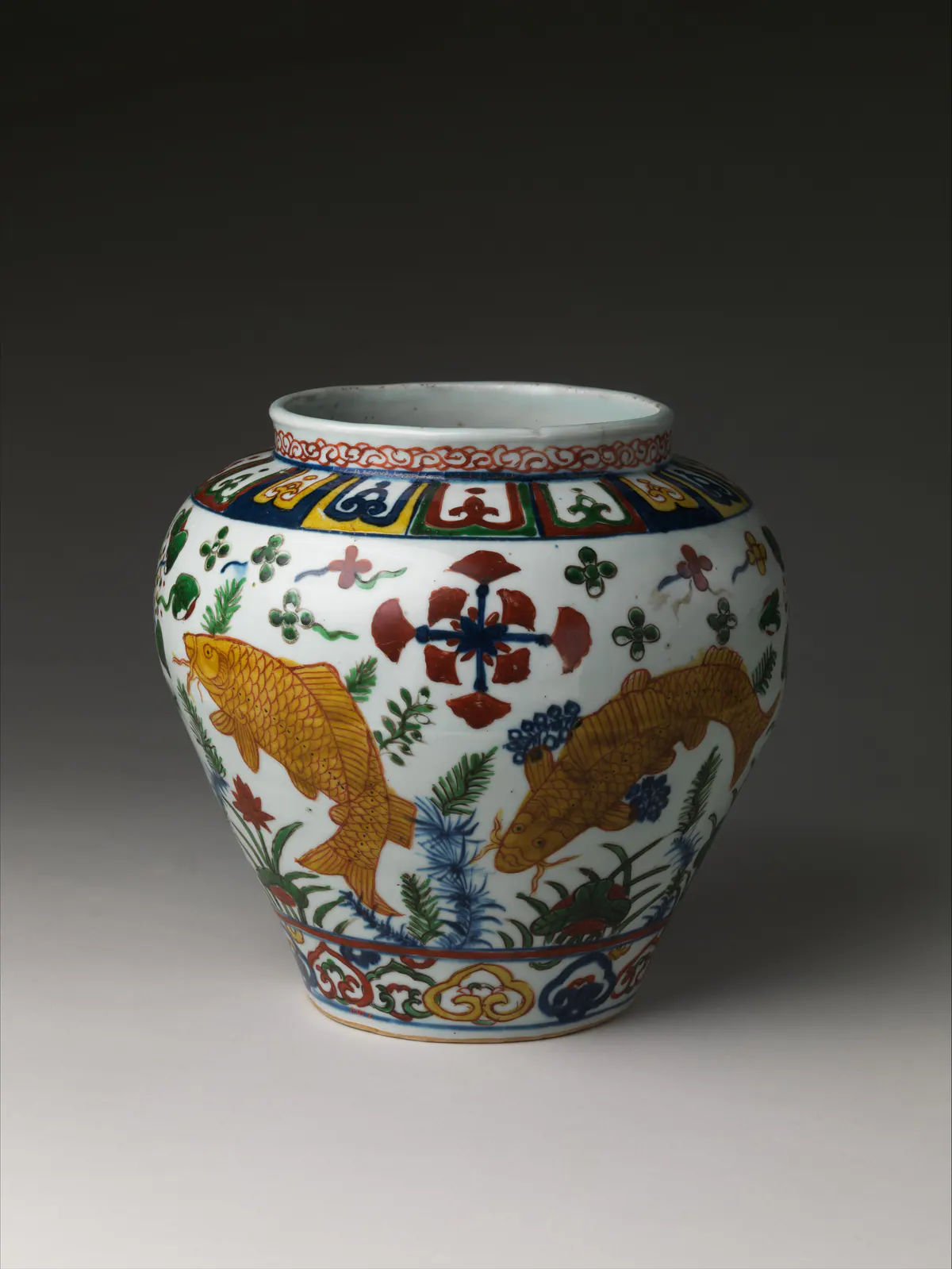
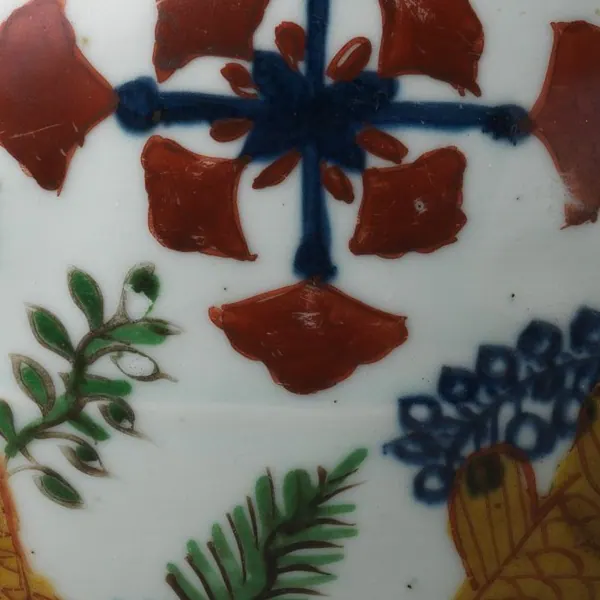
Wucai means "five colours", though the number is loose; it simply means many. In wucai porcelain underglaze blue is used as a colour in its own right, filling areas of the design, while the enamels provide the rest. Outlines are often drawn in iron red or a dark brown-black rather than blue. Some wucai uses no underglaze blue at all, so the term is broader than doucai.
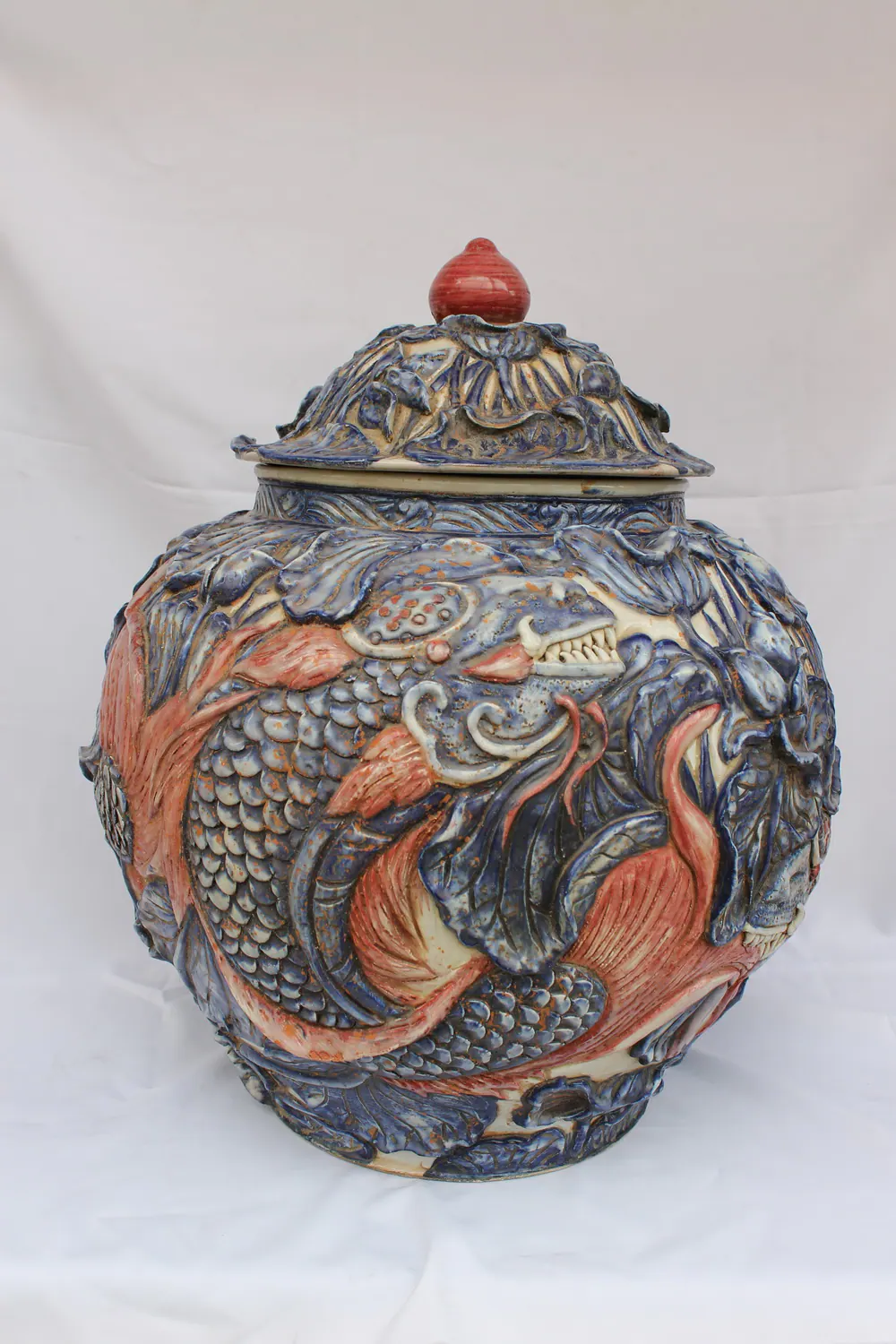
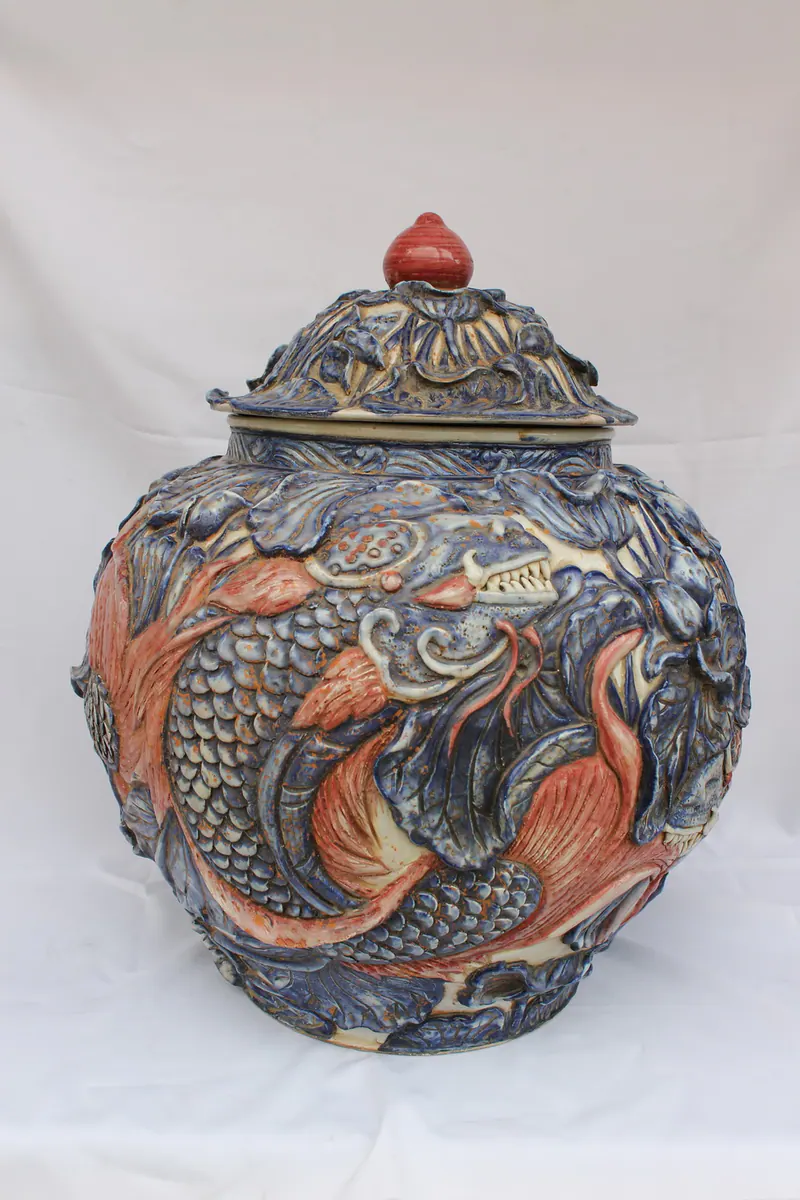
Wucai reached its height under the Jiajing Emperor (1522–1566) and the Wanli Emperor (1572–1620). The palette is strong, dominated by iron red and green with yellow, turquoise, aubergine and a deep blue, and the painting is dense, filling the surface with little white ground. Favourite subjects include fish among water weeds, boys at play, flowers and auspicious characters, on covered jars, boxes, dishes and vases. The Jiajing Emperor was a devoted Daoist, and cranes, immortals and characters for longevity are common on the porcelain of his reign.
Wanli wucai pushed the style further, with boxes of many shapes, brush holders and vessels for the scholar's desk, and some pieces pierced or moulded as well as painted. Large wucai jars were made for households as well as for the court, and quality varies widely.
Where Chenghua doucai is quiet and precise, Jiajing and Wanli wucai is vigorous and crowded. Both are fine in their way, and they are not competing attempts at the same thing.
Qing revivals of both
Wucai in the Ming manner continued into the Shunzhi and early Kangxi reigns. It was then largely replaced by famille verte, which used a blue enamel over the glaze instead of underglaze blue, as explained in our guide to famille verte and famille rose. In Chinese, famille verte is still often called Kangxi wucai.
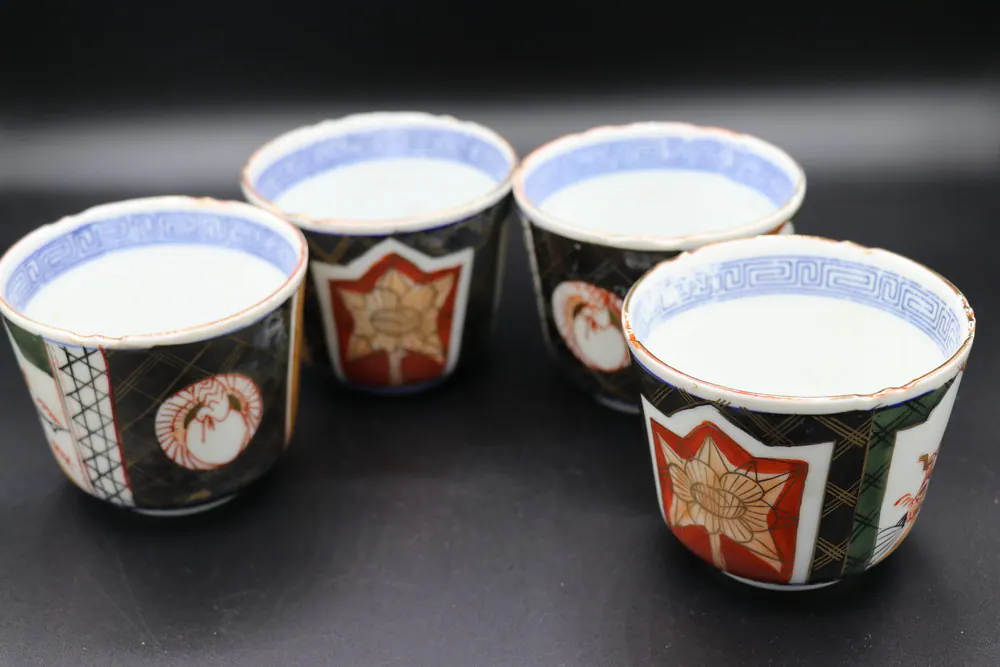
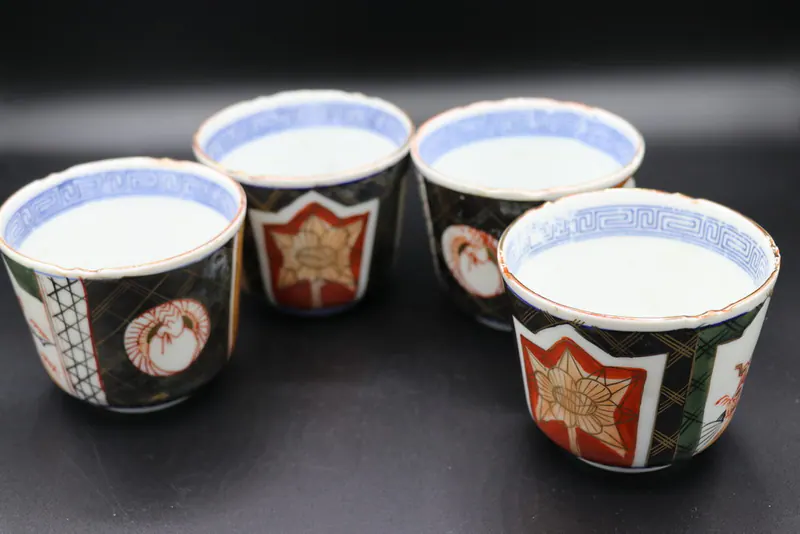
Doucai returned strongly under the Yongzheng Emperor (r. 1723–1735). Yongzheng potters made close copies of Chenghua doucai, many with the Chenghua mark, and new designs of their own. Under Qianlong doucai outlines were often combined with famille rose enamels, giving a softer and wider palette, and doucai continued to be made through the nineteenth century. Our guide to Qing dynasty porcelain places these revivals in the history of the imperial kilns.
The best Yongzheng copies of Chenghua doucai are so good that specialists still debate individual pieces. They are prized in their own right.
Doucai vs wucai: how to tell them apart at a glance
- Role of the blue: in doucai, a continuous outline of the whole design; in wucai, filled areas used as one colour.
- Outlines: blue in doucai; usually red or brown-black in wucai.
- Enamels: thin, soft and translucent in doucai; bold and dense in wucai.
- Composition: open, with plenty of white ground, in doucai; crowded in wucai.
- Scale: small cups, jars and dishes for Chenghua doucai; large jars, vases and dishes are common in Jiajing and Wanli wucai.
- Classic periods: Chenghua, then Yongzheng and Qianlong, for doucai; Jiajing and Wanli for wucai.
Look at the blue first. It answers the question on most pieces within seconds.
Museum examples
Copies and what they miss
Doucai and wucai have been copied since the Ming itself, and marks are no guide on their own; our page on apocryphal marks explains why earlier reign marks appear on later porcelain. Later nineteenth- and twentieth-century copies tend to fail in the same places.
- The line. Blue outlines are heavy, even and mechanical, without the variation of a period brush.
- The enamels. Colours are thick, glossy and opaque, the red too bright and the green too flat. Chenghua enamels look almost like watercolour by comparison.
- The body and glaze. The porcelain is too white and the glaze too glassy and thin, or artificially dulled to suggest age.
- The mark. The calligraphy of Chenghua marks is distinctive and hard to imitate; copies are often too neat or too awkward.
- The base. The foot, the exposed body and the finish underneath should all agree with the period claimed.
A copy that gets all of these right is most often an eighteenth-century one, made under Yongzheng or Qianlong, and should be judged as the fine Qing porcelain it is.