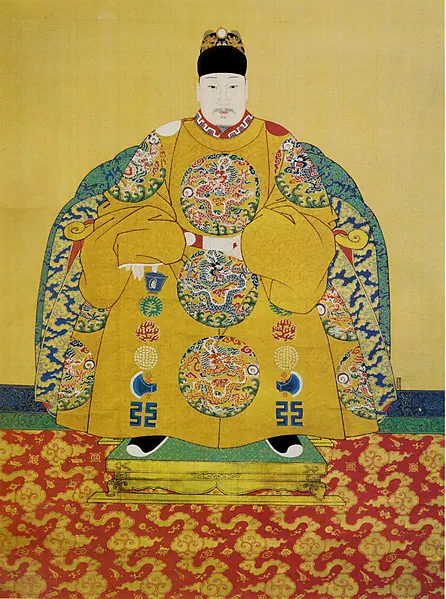
Portrait: public domain, via wikipedia.org

Ming Dynasty1572–1620

Wanli Emperor

萬曆

Reign facts and reign mark
Reigned
1572–1620 (48 years)
Lived
1563–1620
Personal name
Zhu Yijun 朱翊鈞
Temple name
Shenzong 神宗
Era name
Wanli 萬曆 1573–1620
Reign markMade in the Wanli reign of the Great Ming. How to read reign marks

Zhu Yijun (朱翊鈞, 1563–1620), known by his era name Wanli and by the temple name Shenzong, reigned from 1572 to 1620. His forty-eight years on the throne make his the longest reign of the Ming dynasty.

The reign began well. Under the direction of the Senior Grand Secretary Zhang Juzheng, the government was reformed and the treasury refilled. After Zhang's death, however, the emperor grew estranged from his officials, and for much of the last three decades of his reign he refused to hold court audiences or fill vacant posts. Many historians see these years as the beginning of the Ming decline.

In Korea his reputation is quite different. He sent Ming armies to defend the Joseon kingdom against the Japanese invasions of 1592 and 1597, and he was long honoured there for it.

A Child on the Throne

Zhu Yijun succeeded his father, the Longqing Emperor, in 1572, when he was eight years old. His mother, Empress Dowager Li, had entered the palace as a maidservant and had no powerful family behind her. She placed her trust in Zhang Juzheng, who ran the government for the next decade and also supervised the young emperor's education. Wanli treated him with great respect as his teacher and chief minister.

The Reforms of Zhang Juzheng

Zhang's reforms aimed to make the existing system work rather than to replace it. He cut superfluous posts, introduced a strict system for checking the performance of officials against deadlines, and tightened control of state finances. He ordered a new national survey of land to bring hidden holdings back onto the tax registers, and he extended the Single Whip reform, which combined many taxes and labour duties into a single payment in silver.

The reforms did not end corruption or the concentration of land in the hands of the powerful, but they restored order to the finances. The frontiers facing the Mongols and the Jurchens were held by capable commanders at moderate cost, and by the early 1580s the state granaries and treasuries held large reserves. Chinese historians call these years the Wanli Restoration.

Wanli's Personal Rule

Zhang Juzheng died in 1582. Freed from his tutor, the emperor soon turned against his memory. Zhang was posthumously disgraced, his property was confiscated in 1584, and his family was treated harshly. Many of his measures were reversed.

In the early years of his personal rule Wanli was still an attentive ruler who met his ministers and took part in the business of government. The economy remained strong, and the empire fought three major campaigns in the 1590s, known as the Three Great Campaigns of Wanli.

The Ordos Campaign

In 1592 Pubei, a Ming officer of Mongol origin commanding at Ningxia in the northwest, rebelled with the support of Mongol allies. A Ming army besieged Ningxia and put down the rising within the year.

The Imjin War in Korea

In 1592 Toyotomi Hideyoshi, the ruler of Japan, invaded Korea, a Ming tributary state. Wanli sent troops to Korea's aid and ordered the defences of Liaodong strengthened. The first Ming force was defeated, but a larger army under Li Rusong retook Pyongyang in 1593, and the war settled into a long period of negotiation.

Japan invaded again in 1597. Hideyoshi died in 1598, and the Japanese commanders began to withdraw. At the Battle of Noryang at the end of that year, the combined fleets of the Ming commander Chen Lin and the Korean admiral Yi Sun-sin attacked the retreating Japanese; Yi was killed in the battle. The war ended with the Japanese evacuation of Korea.

The Bozhou Campaign

The third campaign was fought against Yang Yinglong, the hereditary chieftain of Bozhou in the southwest, whose forces had defeated a Ming army. In 1600 a large expedition under Li Hualong captured his mountain stronghold, and Yang Yinglong took his own life.

Withdrawal from Government

From the late 1580s Wanli withdrew more and more from public business, and after the Bozhou campaign he rarely appeared before his officials at all. He stopped attending court audiences, left memorials unanswered and declined to make appointments, so that by the end of his reign many posts in the capital and the provinces stood empty. He did, however, take a close interest in the building of his own tomb.

Two causes are usually given. The first was his resentment of the moralising criticism his officials directed at him, often couched in strict Confucian terms. The second was the long quarrel over the succession.

The Succession Dispute

Wanli wished to make Zhu Changxun, his third son by his favourite, Noble Consort Zheng, heir to the throne. His ministers insisted on the rights of his eldest son, Zhu Changluo, and the dispute dragged on for some fifteen years. In 1601 the emperor gave way and named Zhu Changluo crown prince; he later reigned briefly as the Taichang Emperor. Zhu Changxun was made Prince of Fu and eventually sent to his fief at Luoyang.

Before he died, Wanli asked that Lady Zheng be made empress and buried with him. Neither wish was carried out, and she was buried elsewhere.

Death and Burial

The Wanli Emperor died in 1620 and was buried at Dingling, one of the largest of the Ming Tombs north of Beijing. Dingling was excavated in the 1950s, the only imperial Ming tomb to have been opened, and it is now open to visitors.

Wanli is often blamed for the rapid collapse of the dynasty a generation after his death. Explanations for his withdrawal still vary: besides his quarrels with his officials, some writers point to poor health, and it has been claimed that he used opium, although the evidence for this is disputed.

Wanli Porcelain

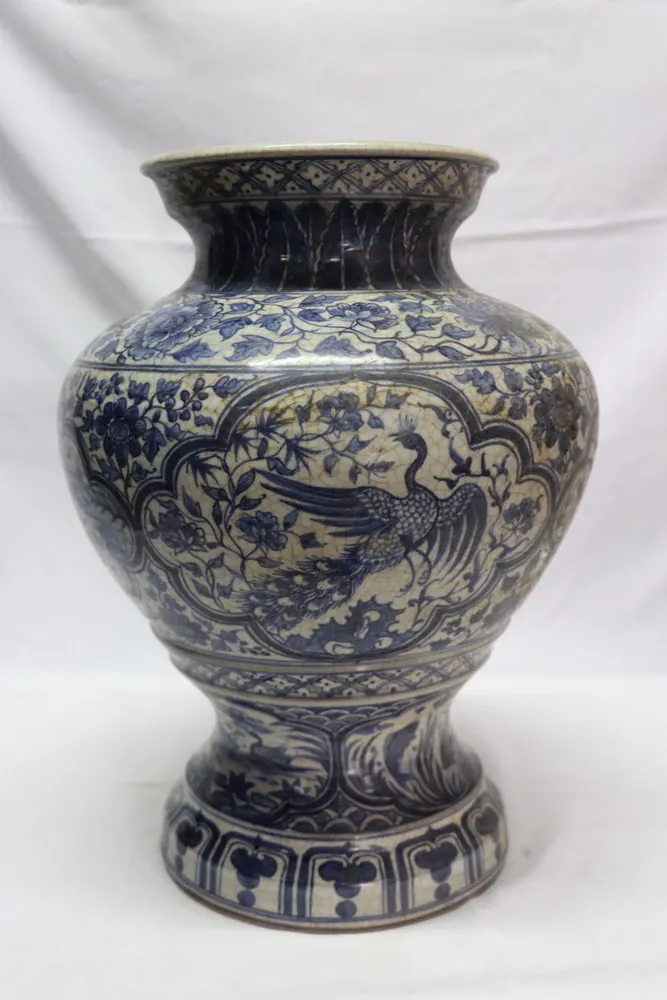
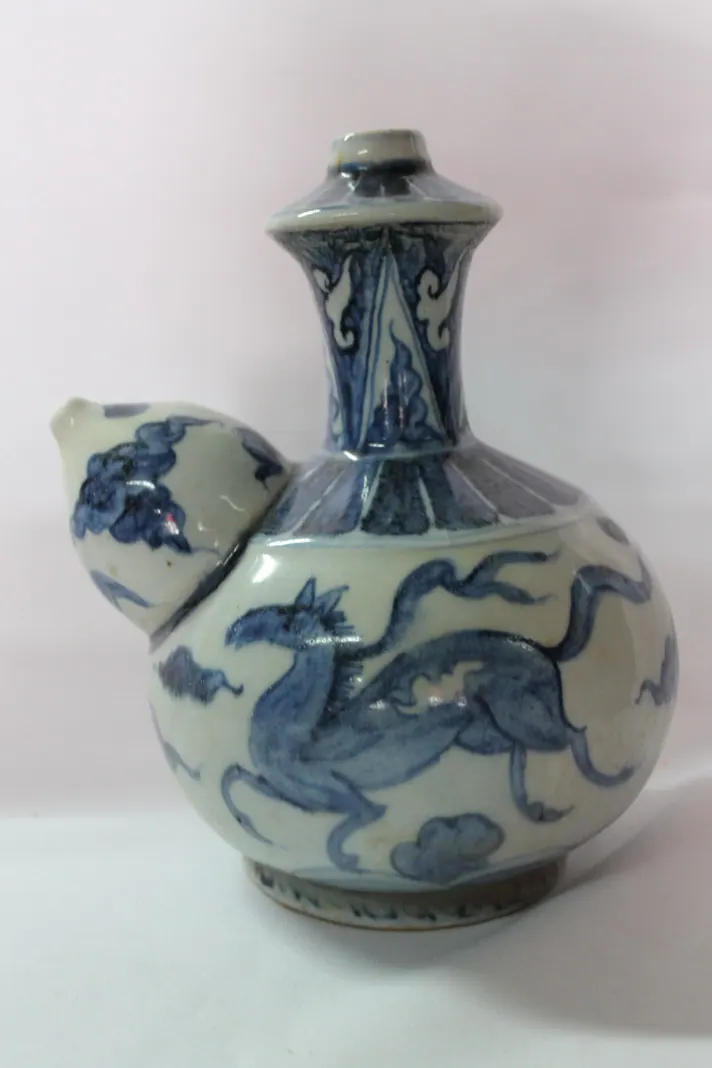
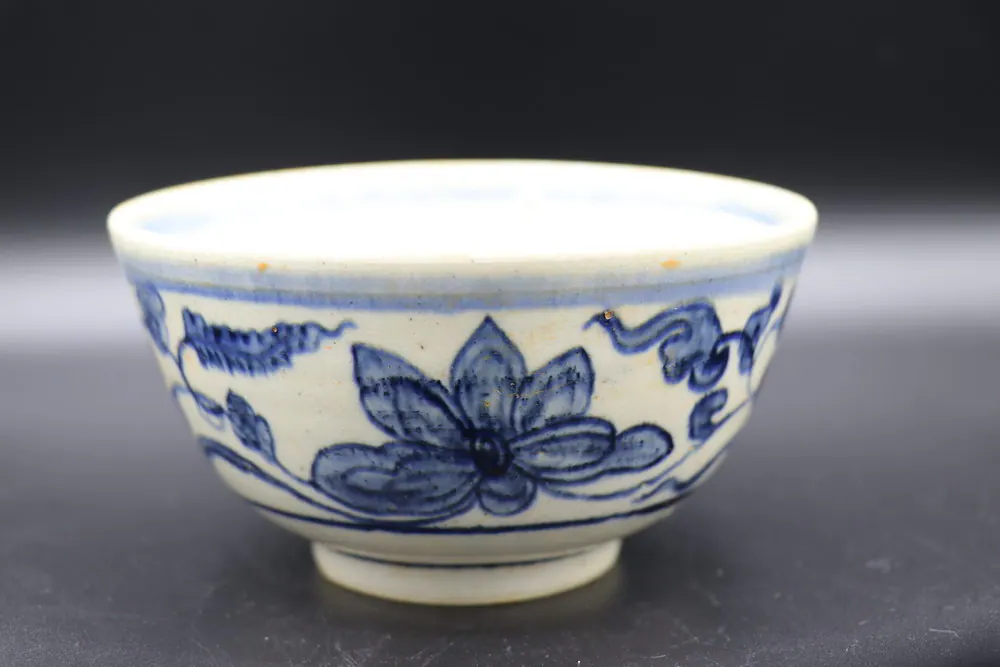
The imperial kilns at Jingdezhen were kept busy in the early part of the reign with very large court orders, but official production fell away later as the court's finances weakened. Marked imperial wares carry the six-character mark 大明萬曆年製 (Da Ming Wanli nian zhi), normally in underglaze blue in two columns within a double circle.

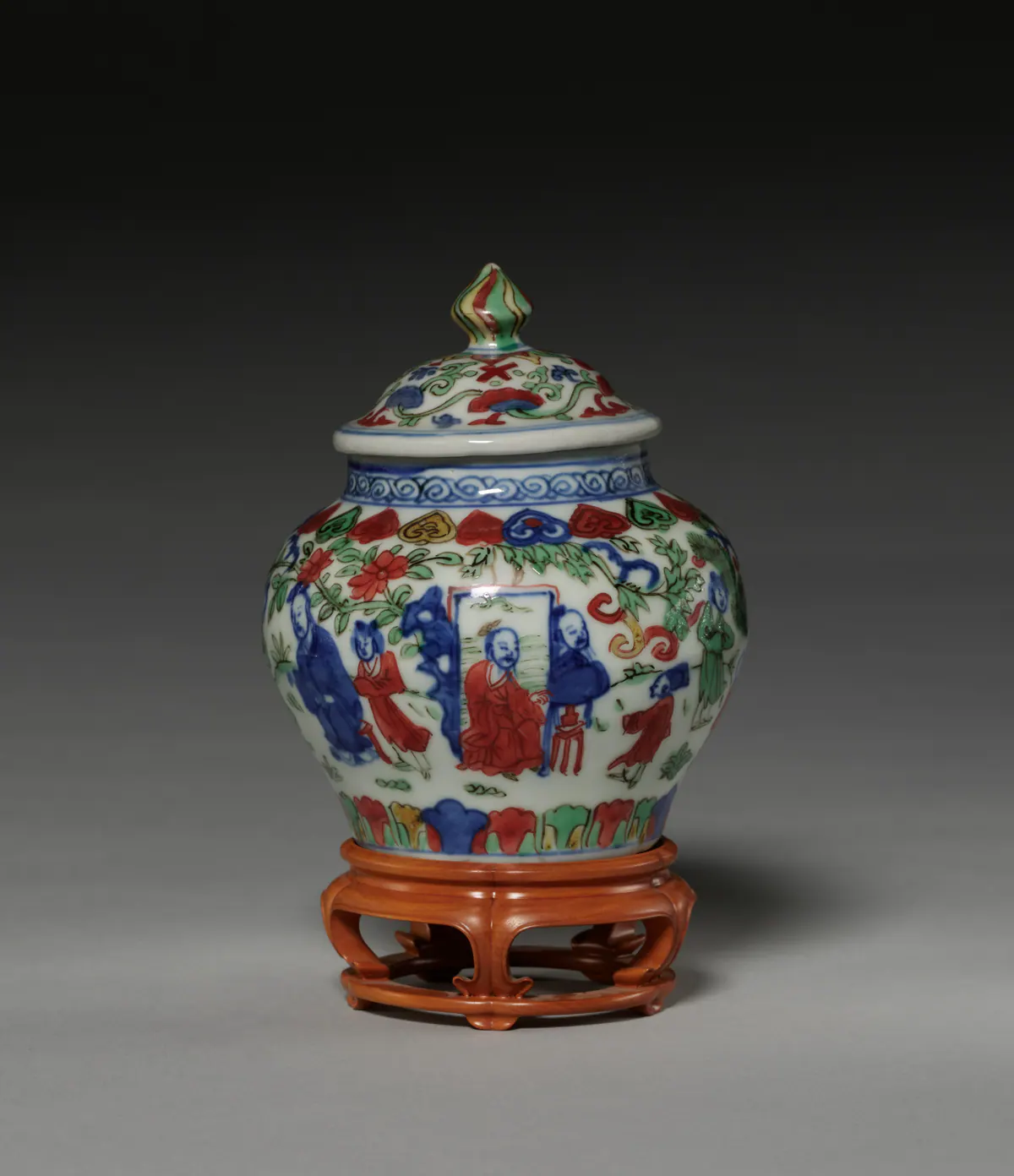
A small Wanli covered jar painted in wucai enamels and underglaze blue with figures in a garden, a band of floral motifs at the shoulder, standing on a carved wooden stand.
Museum exampleA small covered jar painted in wucai enamels and underglaze blue with figures in a garden, dated by the museum to the Wanli reign (1573–1620).Cleveland Museum of Art, 1957.62. Public domain (CC0).

Two groups are especially important to collectors:

  • Wucai, the five-colour style in which underglaze blue is combined with overglaze enamels, usually red, green and yellow. It continued from the Jiajing and Longqing reigns and is characteristic of Wanli imperial wares.
  • Kraak porcelain, the thinly potted blue and white made at Jingdezhen's private kilns for export, with its decoration arranged in radiating panels. Named after the Portuguese carracks that carried it, it reached Europe in large quantities and is usually unmarked.

For the wider picture of the period, see our article on the late Ming dynasty. Pieces from across the dynasty are in our Ming porcelain collection.

From the Ming Dynasty

View all Ming Dynasty PorcelainAsk about a piece

Be the first to see new pieces

Join our collectors' list for new arrivals, rare finds and private offers.