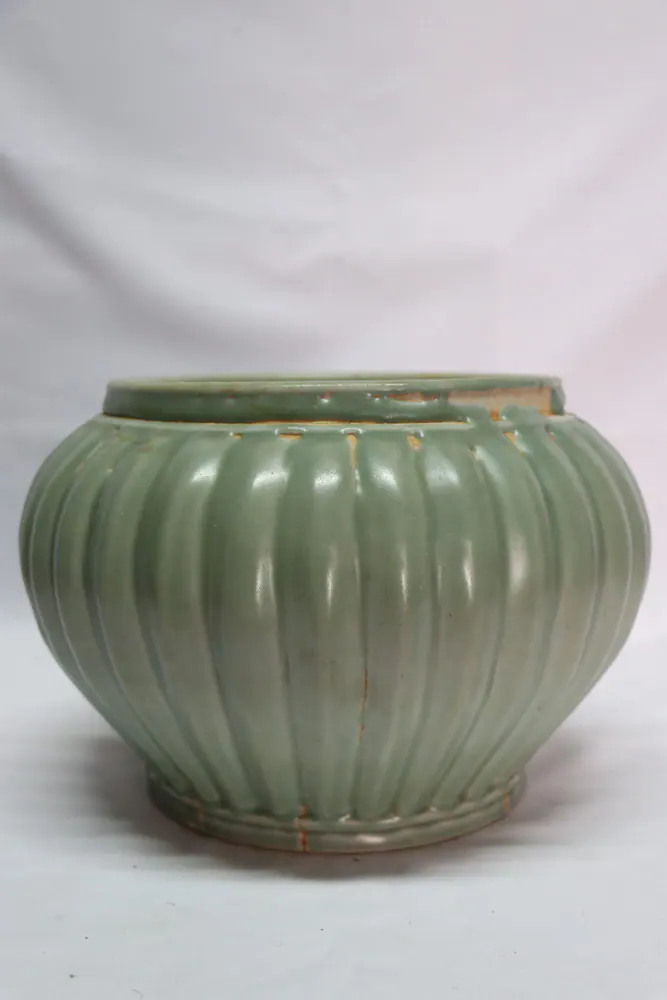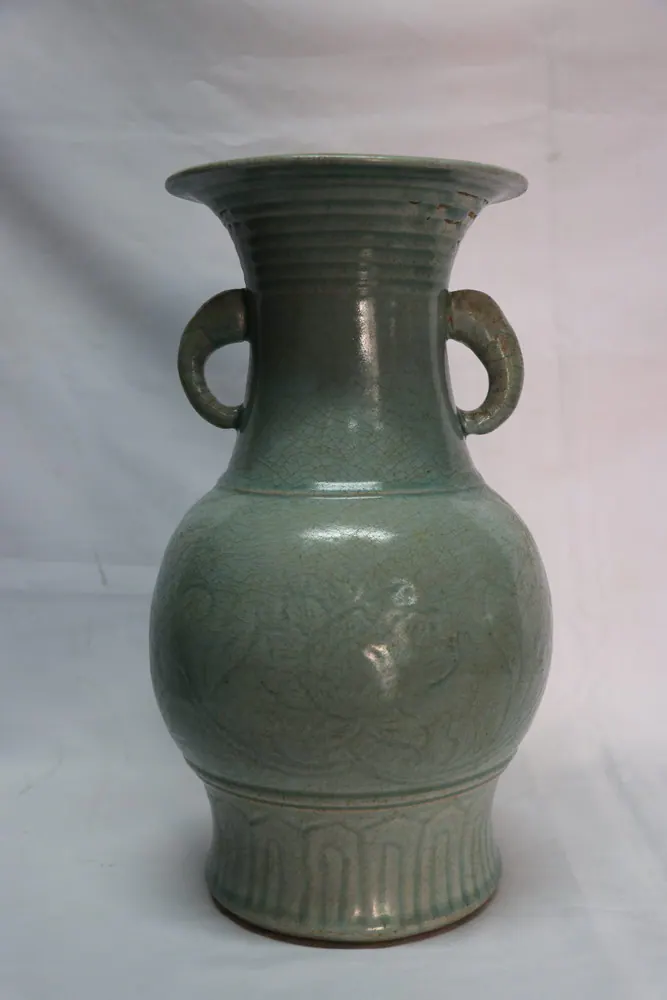
Song dynasty, 960–1279
The Five Great Kilns of the Song: Ru, Guan, Ge, Jun and Ding
The five great kilns, Ru, Guan, Ge, Jun and Ding, are the Song wares that Chinese connoisseurs ranked above all others. This guide explains where the list comes from, what each ware looks like and how it was made, and why so much of what is offered under these names is a later imitation or a modern copy.
- Ru
- Baofeng, Henan; late 11th to early 12th century; bluish-grey glaze, spur marks
- Guan
- Hangzhou kilns of the Southern Song; thick crackled glaze on a dark body
- Ge
- Kiln and date debated; dark and golden-brown double crackle
- Jun
- Yuzhou, Henan, and many other kilns; opalescent blue, copper-purple splashes
- Ding
- Quyang, Hebei; ivory-white porcelain, carved or moulded
Where the list of five great kilns comes from
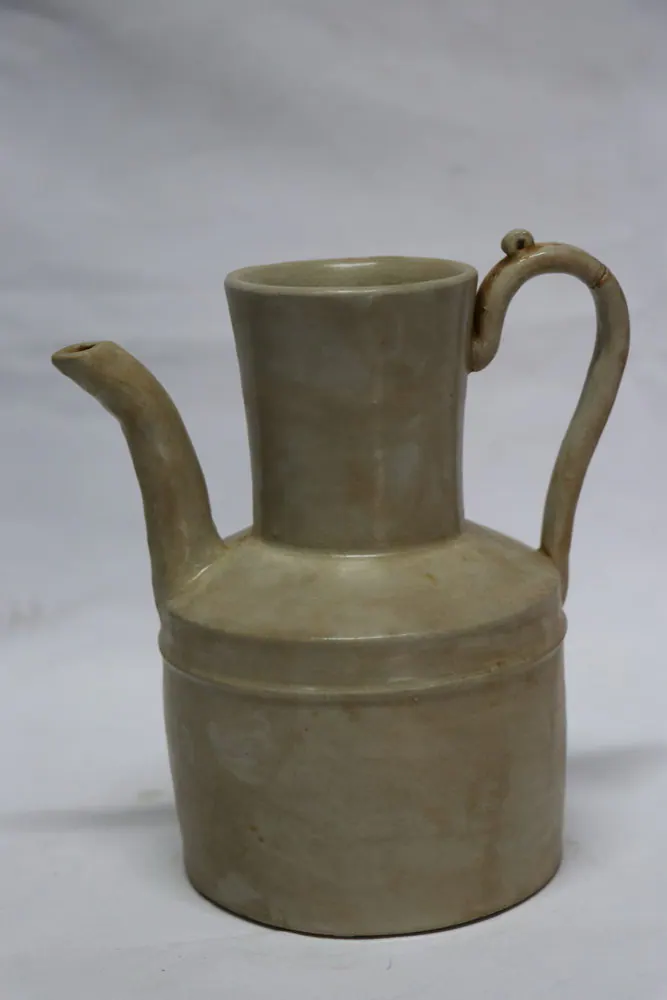
The Song did not rank its own wares in a list of five. The idea of a small canon grew up later, as Ming and Qing scholars wrote about antiques and the imperial collection absorbed the finest Song pieces. Cao Zhao's Gegu yaolun of 1388, one of the earliest Chinese guides to connoisseurship, already discusses Ru, Guan, Ge and Ding wares together with the legendary Chai. In later writing the names Ru, Guan, Ge, Jun and Ding settled into the standard set, and that is how collectors and museums use the term today.
Chai drops out because no one has ever found it. Chai ware is said to have been made for Chai Rong, the Later Zhou emperor Shizong, who reigned from 954 to 959, just before the Song. Later texts describe it in poetic terms, as blue like the sky after rain, thin as paper and ringing like a chime stone, but no kiln site has been identified and no surviving piece is accepted as Chai. The set of five that collectors use leaves it out and includes Jun.
The list is a statement of later taste. It favours wares associated with the court and with scholarly collectors, and it leaves out kilns that were just as accomplished, such as the celadon kilns of Yaozhou and Longquan and the qingbai kilns of Jingdezhen. Our guide to Song dynasty porcelain and ceramics covers the wider picture.
Museum examples
Ru ware
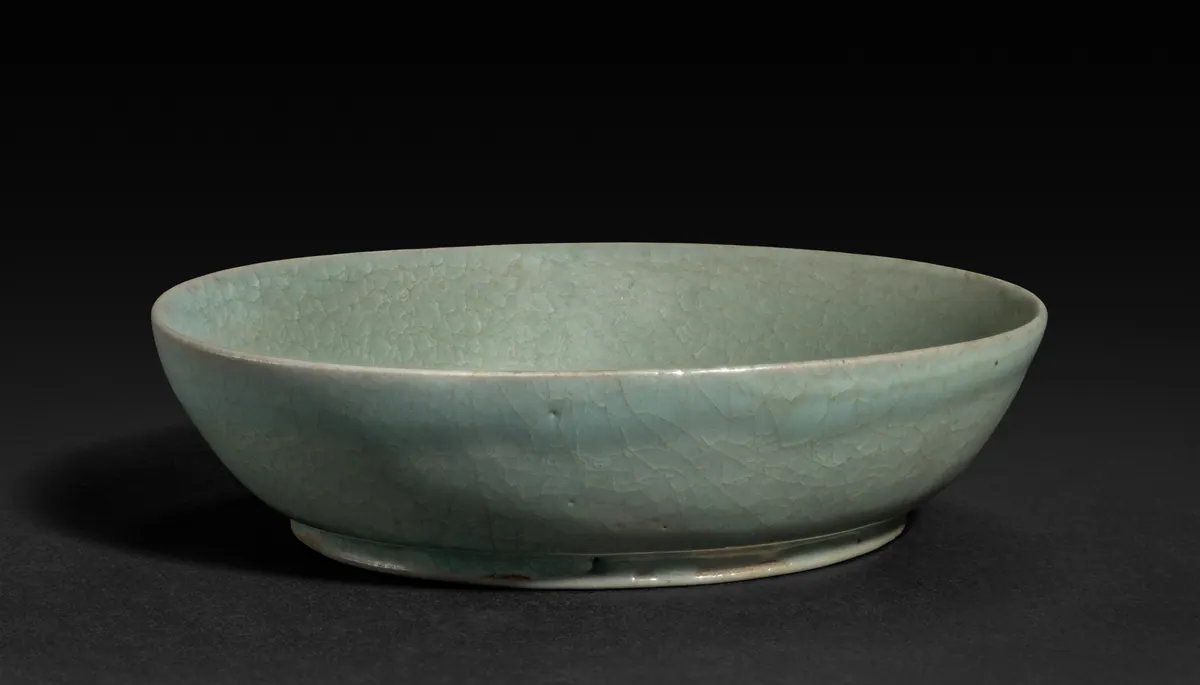
Ru is the rarest and most admired of the five. It was made for the Northern Song court for a short period in the late eleventh and early twelfth centuries, at Qingliangsi in Baofeng county, Henan, a site identified only in the 1980s and excavated since. It is often associated with the reign of Emperor Huizong, though production seems to have begun before he came to the throne.
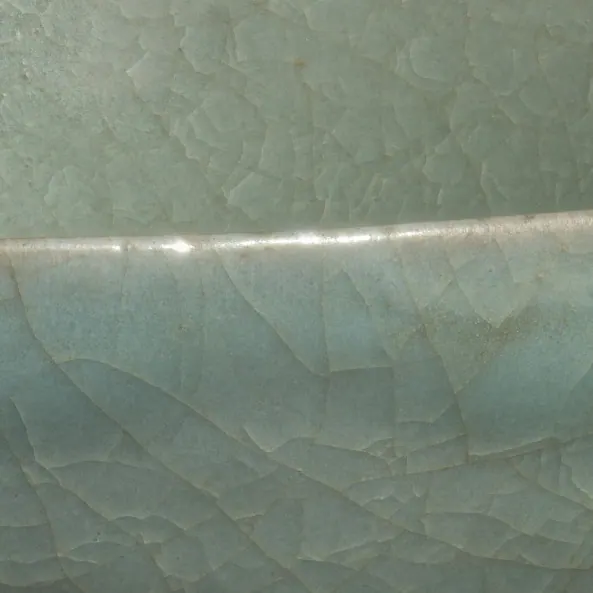
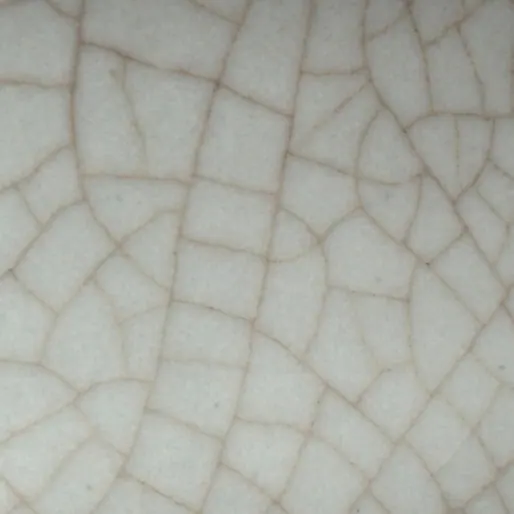
The glaze is an opaque, soft bluish-grey to pale blue-green, with a gentle sheen rather than a glassy shine, and usually a fine network of crackle. The body is a light grey stoneware, often likened to the colour of incense ash. Most pieces were glazed all over, including the base and foot, and fired standing on tiny spurs, which left small oval scars on the base, usually three or five of them. Shapes are small and simple: shallow dishes, brush washers, bowls, bottles, a famous oval narcissus basin and a few vases.
Fewer than a hundred genuine Ru pieces are generally accepted, most of them in the Palace Museums in Beijing and Taipei and in a few other public collections, among them the Percival David Collection at the British Museum. The Qianlong emperor admired Ru so much that he had his poems inscribed on the bases of pieces in the palace collection. For a collector the practical point is simple: a piece offered as Song Ru without an exceptional, documented history is almost certainly a later imitation or a copy.
Guan ware
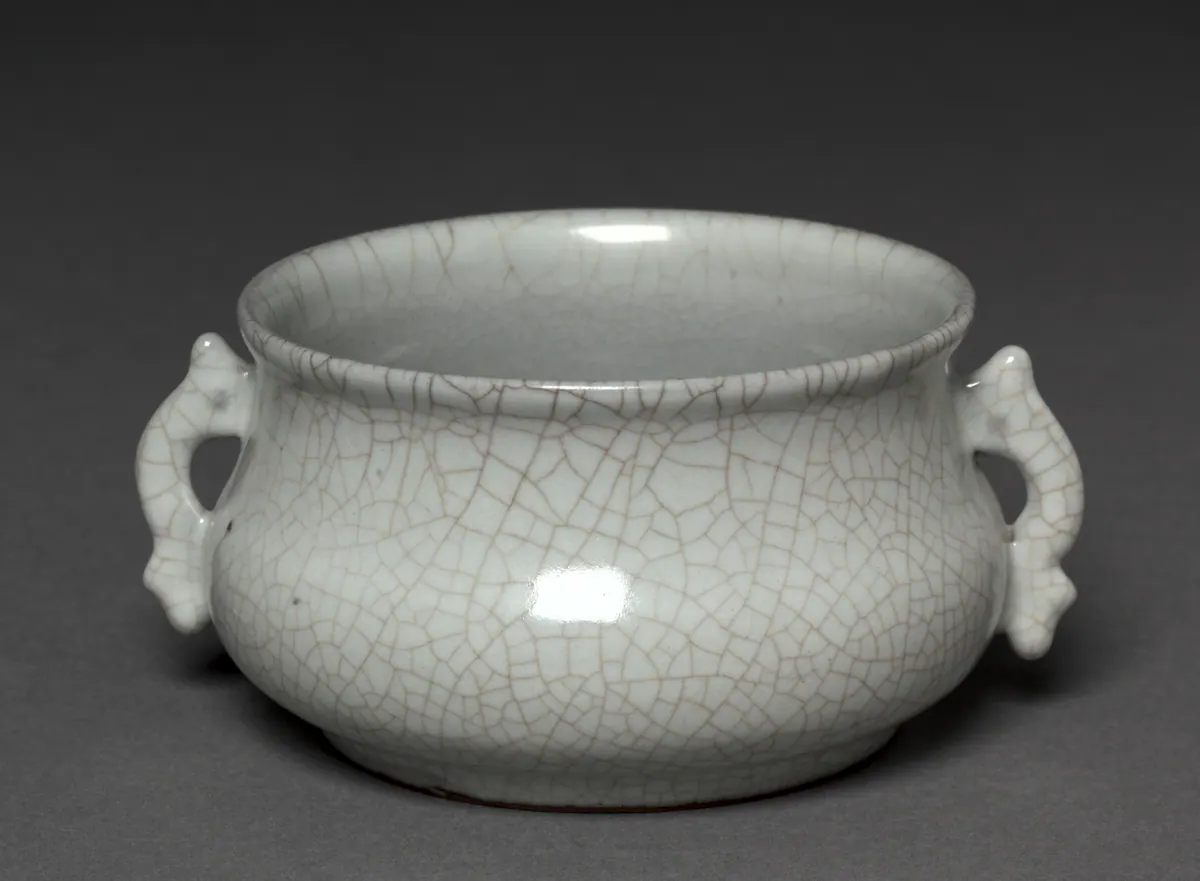
Guan simply means "official", and the term covers wares made at kilns run for the court. Texts record an official kiln in the Northern Song capital at Kaifeng, but no site has been securely identified, and what it made remains a matter of debate.
The Southern Song Guan kilns are better known. After the court settled at Hangzhou, official kilns were set up near the city, and two sites have been excavated: Laohudong, generally identified with the kiln the texts call Xiuneisi, and Jiaotanxia, below the altar used for state sacrifices.
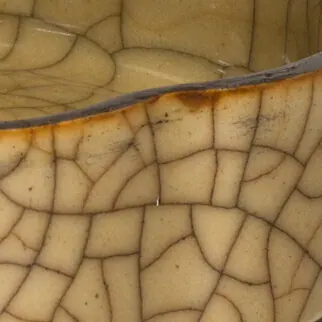
Southern Song Guan has a thin, dark grey to almost black body and a thick glaze, applied in several layers, in shades from grey-blue to greenish or creamy beige. On the finest pieces the glaze is thicker than the body itself. It is usually crackled in a bold, widely spaced pattern. Where the glaze thins at the rim the dark body shows through as a brownish tone, and the bare foot fired dark: the combination is known as "purple mouth and iron foot". Many shapes copy archaic bronzes and jades, in keeping with the antiquarian taste of the court.
Ge ware
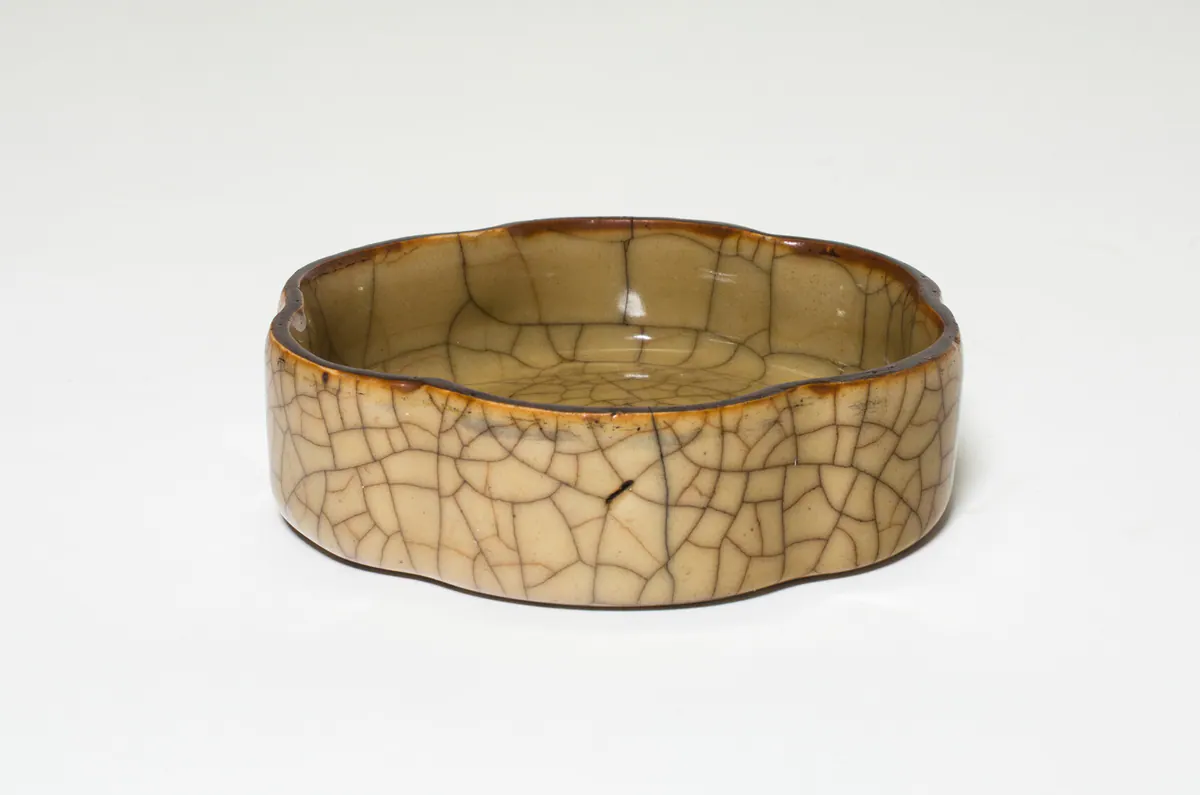
Ge means "elder brother". A tradition first recorded in the Ming tells of two brothers named Zhang who ran kilns at Longquan: the elder made the crackled ware that bears his name, the younger the green Longquan celadon. It is a good story, but not evidence, and specialists still debate where Ge ware was made and when. Some place it in the Southern Song, close to Guan; others date much of it to the Yuan. Dark-bodied, crackled wares have also been found at Longquan kiln sites, which keeps the old story in the discussion.
The ware that collectors call Ge, based on the pieces handed down in the imperial collection, has a thick, opaque glaze of greyish or pale beige tone with a double network of crackle: larger dark lines known as "iron wire" and a finer mesh of golden-brown lines called "golden thread". The body is dark, and the foot often shows the same "iron foot" as Guan.
The effect was so admired that it became a decorative style in its own right, imitated for centuries on vases, brush pots and even enamelled porcelain. Our guide to crackle and crazing explains how crackle forms and how old crazing differs from new.
Jun ware
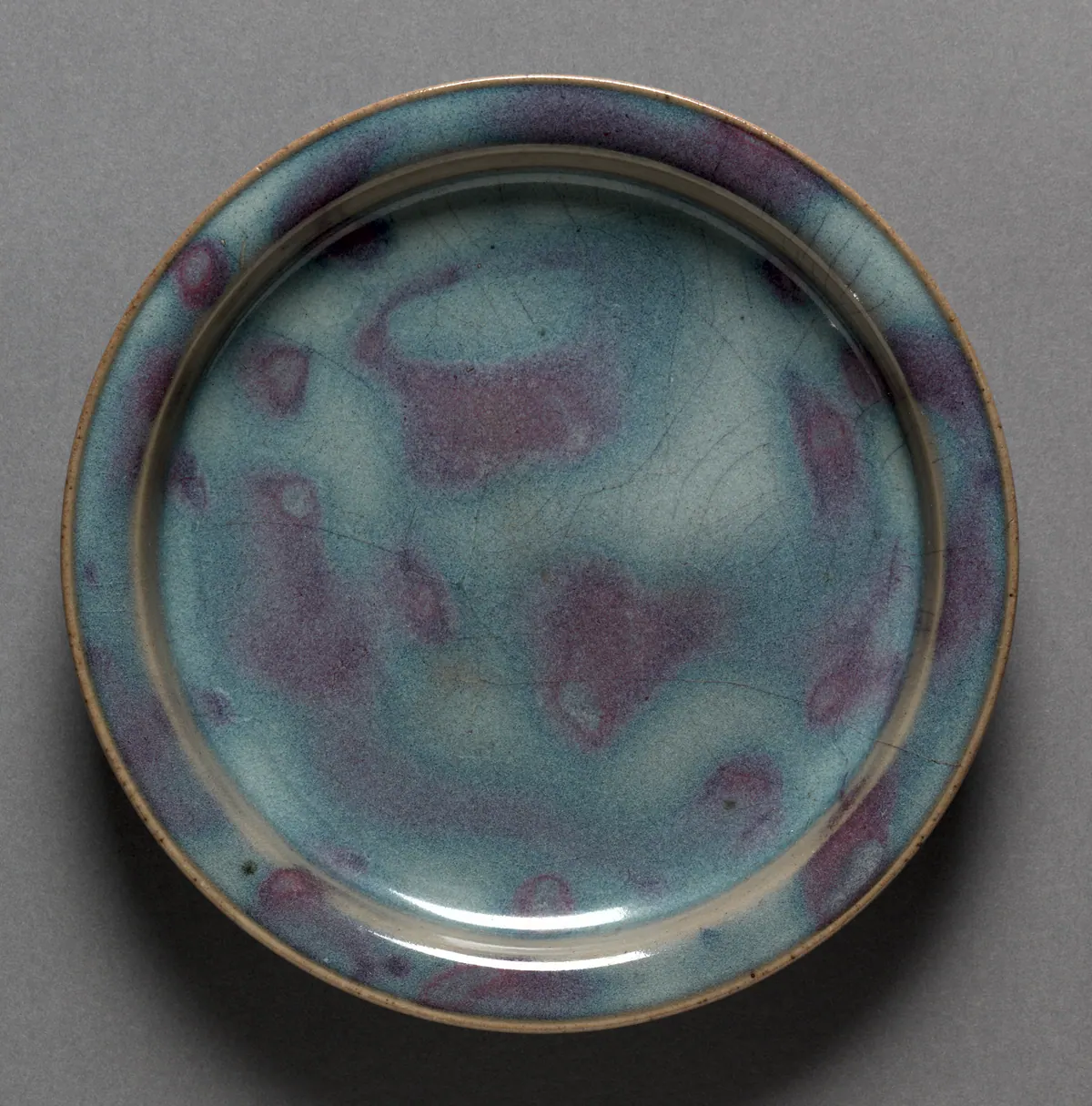
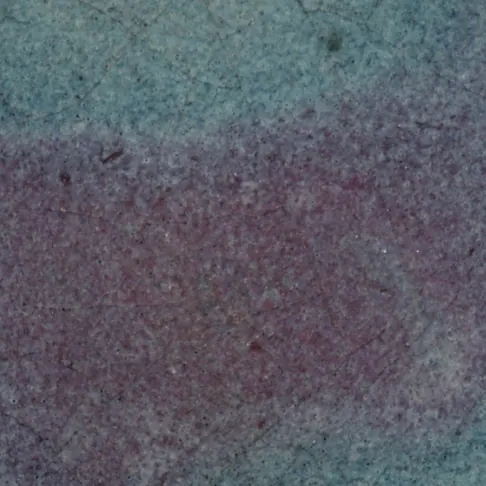
Jun ware takes its name from Junzhou, now Yuzhou in Henan, where the main kilns lay. It is a stoneware with a thick, opalescent glaze that ranges from pale lavender-blue to a deeper sky blue. The milky, light-scattering effect comes from the structure of the glaze itself, which separates into minute droplets as it cools, rather than from any added colourant. On many pieces copper was brushed on to create splashes of purple or crimson, and some are suffused with purple all over.
Jun was made over a long period and by many kilns across Henan and neighbouring provinces, from the Northern Song through the Jin and the Yuan. Bowls and dishes for daily use survive in reasonable numbers. The most famous group, the heavy flowerpots and basins with a numeral from one to ten incised on the base, has been dated by some scholars to the Northern Song and by others to the Yuan or early Ming. The question is still open.
Look for the thick glaze stopping short of the foot in a heavy roll, and for "earthworm tracks": fine, wandering lines in the glaze where cracks in the dried glaze coating healed as it melted. The body is a buff or grey stoneware.
Ding ware
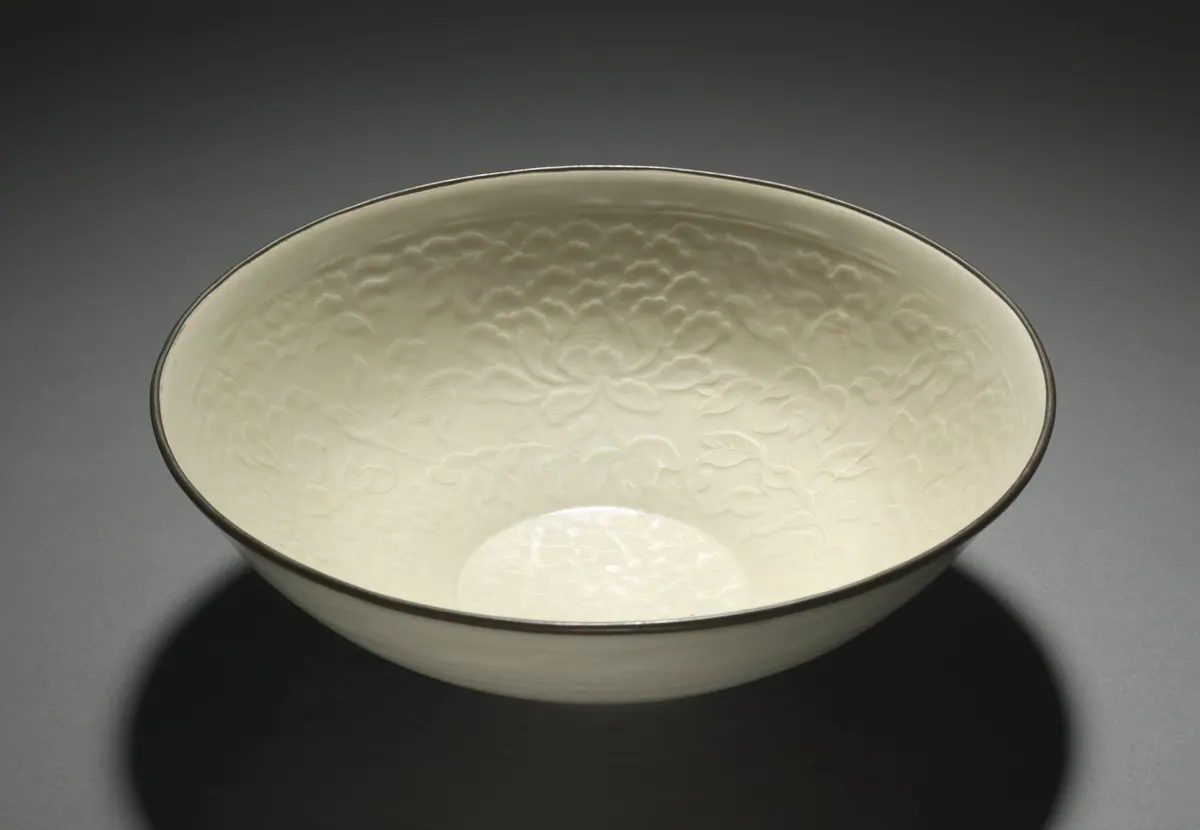
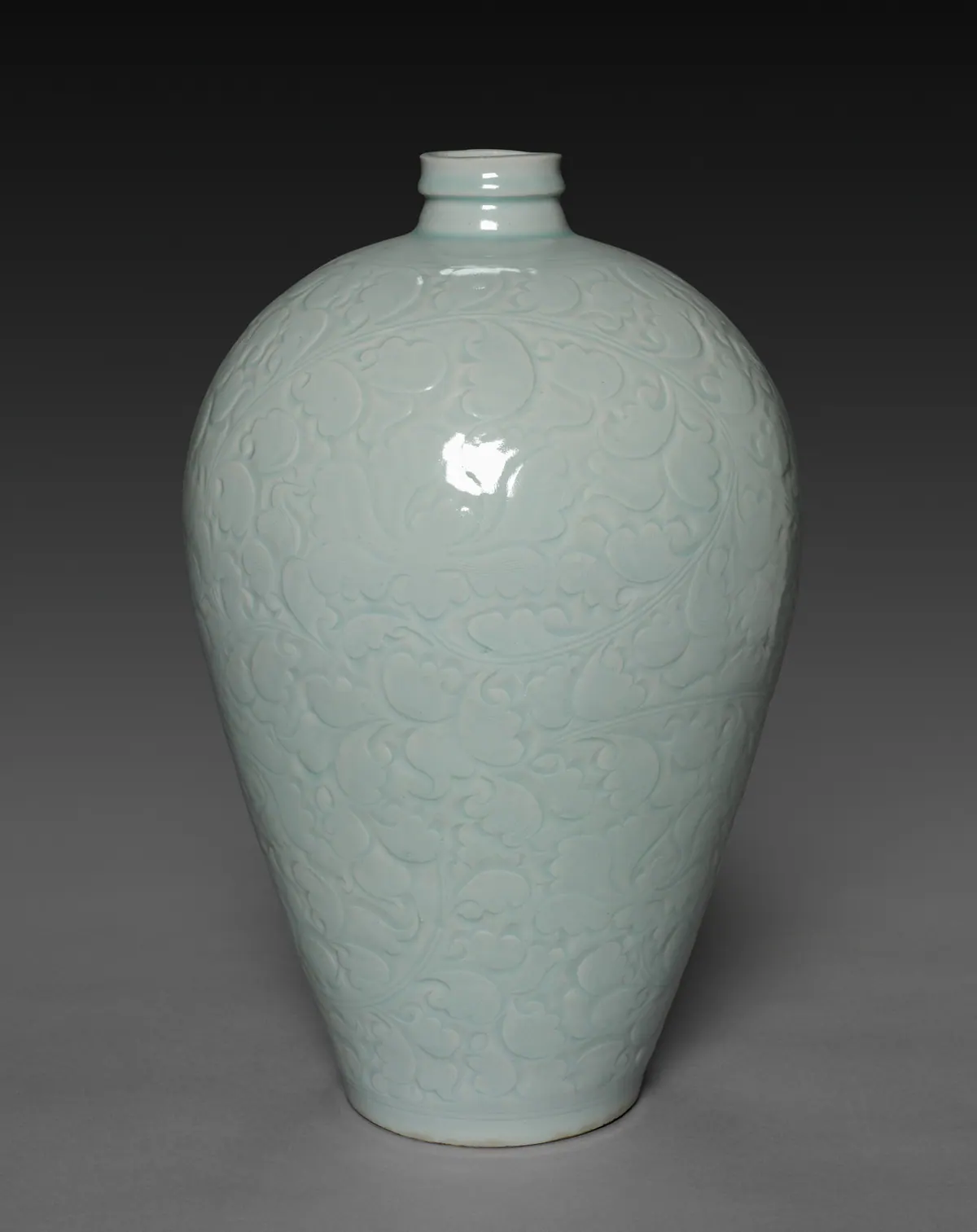
Ding is the one true white porcelain among the five. It was made at Quyang in Hebei, at kilns active from the Tang, and reached its peak under the Northern Song and Jin. The body is fine and white and the glaze has a warm ivory tone, partly because the kilns came to fire with coal, which gave a more oxidising atmosphere than the wood-fired kilns of the south. Where the glaze has run on the outside it gathers in drops that collectors call "tear marks".
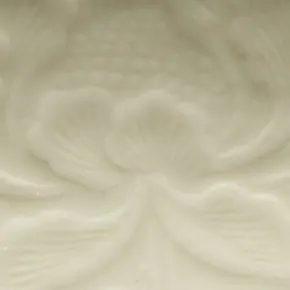
Decoration is carved, incised or moulded: lotus, peony, ducks, fish among waves and dragons. Carving came first; moulding, which gave dense, detailed designs from a single mould, spread in the later Northern Song and Jin. From the eleventh century Ding bowls and dishes were commonly fired upside down on their rims in stepped supports, which allowed thin pieces to be stacked without warping. The rim was left bare and slightly rough, and it was often bound with a band of copper, silver or gold.
Ding was used at court, and some pieces have characters such as guan, "official", incised on the base. The kilns also made rarer black and persimmon-brown wares. Ding survives in larger numbers than Ru, Guan or Ge, and plain or moulded bowls and dishes of the Northern Song and Jin still appear from time to time.
Later imitations under Yongzheng and Qianlong
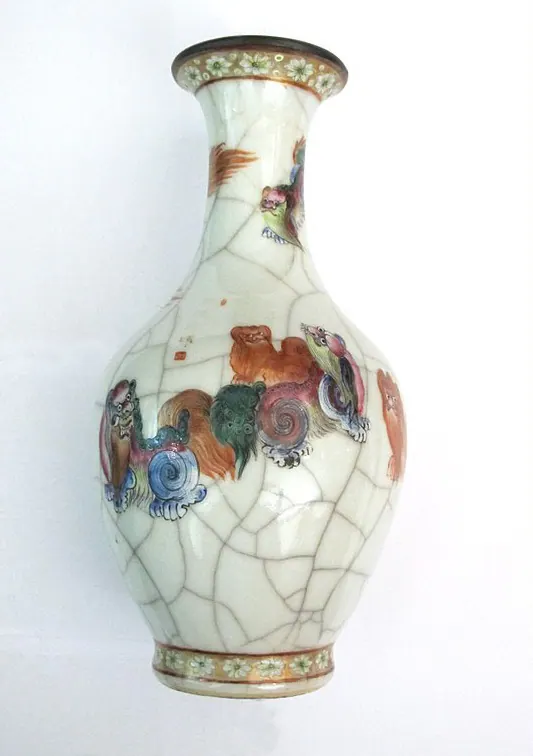
The five wares were copied almost as soon as they became famous. The Ming imperial kilns at Jingdezhen made Ge-type and Ru-type pieces in the fifteenth century, but the great age of imitation came under the Qing.
The Yongzheng emperor (r. 1723–1735) collected antiques with real discernment and wanted his kilns to reproduce them. Under the supervision of Nian Xiyao and his assistant Tang Ying, Jingdezhen developed glazes in imitation of Ru, Guan, Ge and Jun, and Tang Ying's record of the kilns' work, dated 1735, lists these imitations among dozens of glaze types. Production continued under Qianlong (r. 1736–1795).
These Qing pieces are not fakes. They are imperial porcelains in their own right, many carry the reign mark of the emperor who ordered them, and they are highly regarded. They differ from Song originals in ways a careful eye can learn:
- The body is fine white porcelain, where the Song wares had grey, buff or dark stoneware bodies. To imitate the "iron foot" of Guan and Ge, Qing potters often washed the foot with a brown dressing.
- The glaze is thinner, more even and more glassy, and the crackle can look regular or deliberately drawn.
- Shapes follow Qing taste: crisper, more symmetrical and often more elaborate than anything a Song kiln made.
- Qing imitation Jun glazes, and the related flambé glazes, tend to run in streaks of red, purple and blue quite unlike the thick, pooling glaze of Song Jun.
Commercial potters imitated the classic wares too. The Yixing kilns in Jiangsu and the Shiwan kilns in Guangdong, for example, made stonewares with Jun-type glazes that collectors call Yixing Jun and Guangdong Jun.
Modern copies and what reaches the market
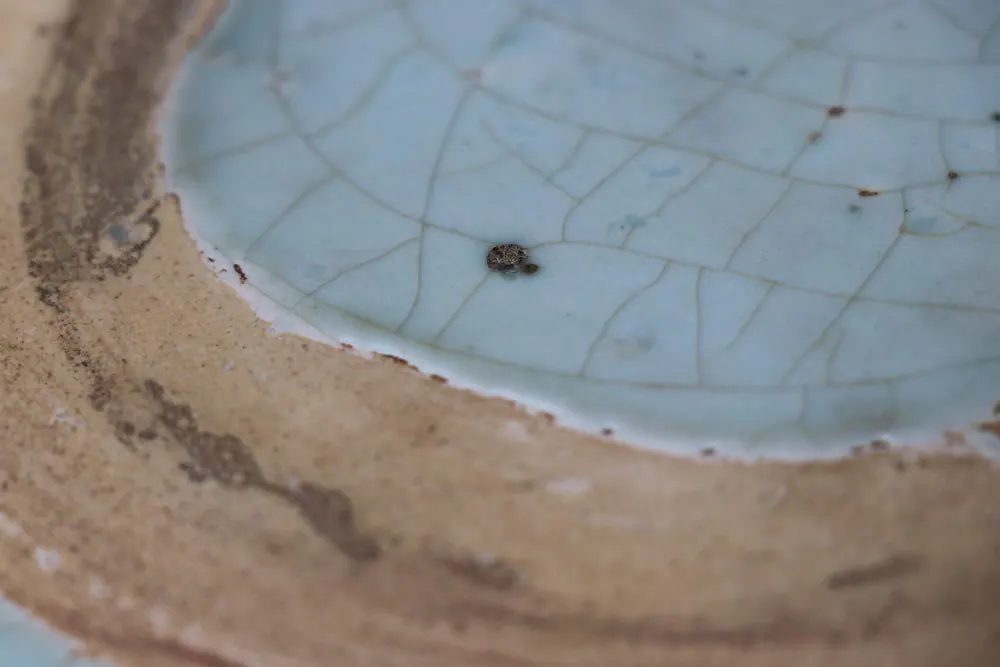
Copies of all five wares are made today, some by skilled potters working near the original kiln sites with local materials. The best are hard to tell from Song pieces in a photograph. Most are aged artificially: the glaze is dulled with acid or abrasion, dirt is rubbed into the crackle, and the foot is stained to look old.
Genuine Ru, Guan and Ge almost never come to the open market. Ding and Jun appear more often, especially bowls and dishes of the Jin and Yuan periods, and so do the Qing imperial imitations. When a piece is offered under one of the five names, the first question is which of these it really is.
Examine the body wherever it is exposed and compare it with what the ware should have: light grey for Ru, dark for Guan and Ge, buff or grey for Jun, white for Ding. Look at how the piece was fired, the spur marks, bare rims or glazed bases, and at wear that follows the way it would have been used. Crackle on its own proves nothing.
Value follows the same principles as for any Chinese ceramic: period, quality, condition, rarity, provenance and the market. For the five wares provenance weighs especially heavily, because a record of ownership going back many decades is one of the few independent checks on a piece that modern copyists have studied closely.