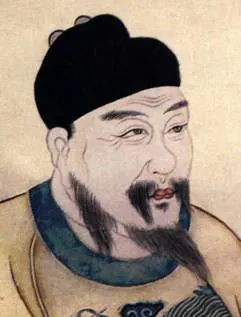
Painted bust portrait of Zhu Yujian, the Longwu Emperor, with a black cap, goatee and yellow robe
Portrait: public domain, via commons.wikimedia.org

Southern Ming1645–1646

Prince of Tang (Zhu Yujian)

隆武

Reign facts
Reigned
1645–1646 (1 year)
Lived
1602–1646
Personal name
Zhu Yujian 朱聿鍵
Temple name
Shaozong 紹宗
Era name
Longwu 隆武 1645–1646

Zhu Yujian (1602–1646), Prince of Tang, reigned as the Longwu Emperor of the Southern Ming, the loyalist court that fought on in the south after the fall of Beijing in 1644. He took the throne at Fuzhou in 1645 and ruled until 1646, when Qing forces captured him. His temple name is Shaozong.

He was an eighth-generation descendant of Zhu Jing, the first Prince of Tang, who was the 23rd son of Zhu Yuanzhang, the Hongwu Emperor and founder of the Ming Dynasty.

He was known for his closeness to his wife, who had shared the hardships of his imprisonment. Unusually for a Chinese ruler, he refused to take any concubines.
Early Life of Zhu Yujian

Family conflict overshadowed Zhu Yujian's early years. His grandfather, the reigning Prince of Tang, disliked his father, Zhu Qisheng, and kept father and son imprisoned for years. His father died of poisoning, reportedly at the hands of an uncle.

Zhu Yujian nevertheless inherited the title Prince of Tang, whose fief lay at Nanyang in Henan province.

As a prince he went against the Ming rule that imperial princes should stay out of politics. He took a keen interest in government, knew Ming institutions and history well, and wanted the princes to play a larger part in public affairs.

His initiatives cost him dearly. The Chongzhen Emperor stripped him of his title and had him confined at Fengyang. The title passed to his younger brother, Zhu Yumo, who died in 1641 when Li Zicheng's rebels took Nanyang.

After the Chongzhen Emperor's death in 1644, his successor in the south, the Hongguang Emperor, released the Prince of Tang.

The Prince of Tang as Emperor

When the Qing army took Nanjing in 1645, the Prince of Tang fled to Hangzhou. There he urged Zhu Changfang, the Prince of Lu, to lead the resistance against the Qing, but Zhu Changfang, fearing for his life, refused.

With the help of Zheng Hongkui, a younger brother of the Fujian commander Zheng Zhilong, he travelled on to Fujian. Later in 1645, backed by Zheng Zhilong and the scholar-official Huang Daozhou, he took the throne at Fuzhou, with Longwu as his reign name.

Early in 1646 he left Fuzhou with his army, meaning to lead the campaign against the Qing in person, and moved his court inland to Yanping.

Zheng Zhilong, who controlled the Fujian army, was meanwhile going over to the Qing. He left the Xianxia Pass open, and when the Qing invaded Fujian in 1646 he surrendered. His son Zheng Chenggong, better known as Koxinga, refused to follow him and withdrew to the sea to continue the fight.

The Longwu Emperor fled once more, but was captured by the Qing army at Tingzhou in Fujian.

End of Rule

Zhu Yujian was taken in October 1646. Accounts of his death differ: some say the Qing executed him soon after his capture, others that he died of hunger in captivity.

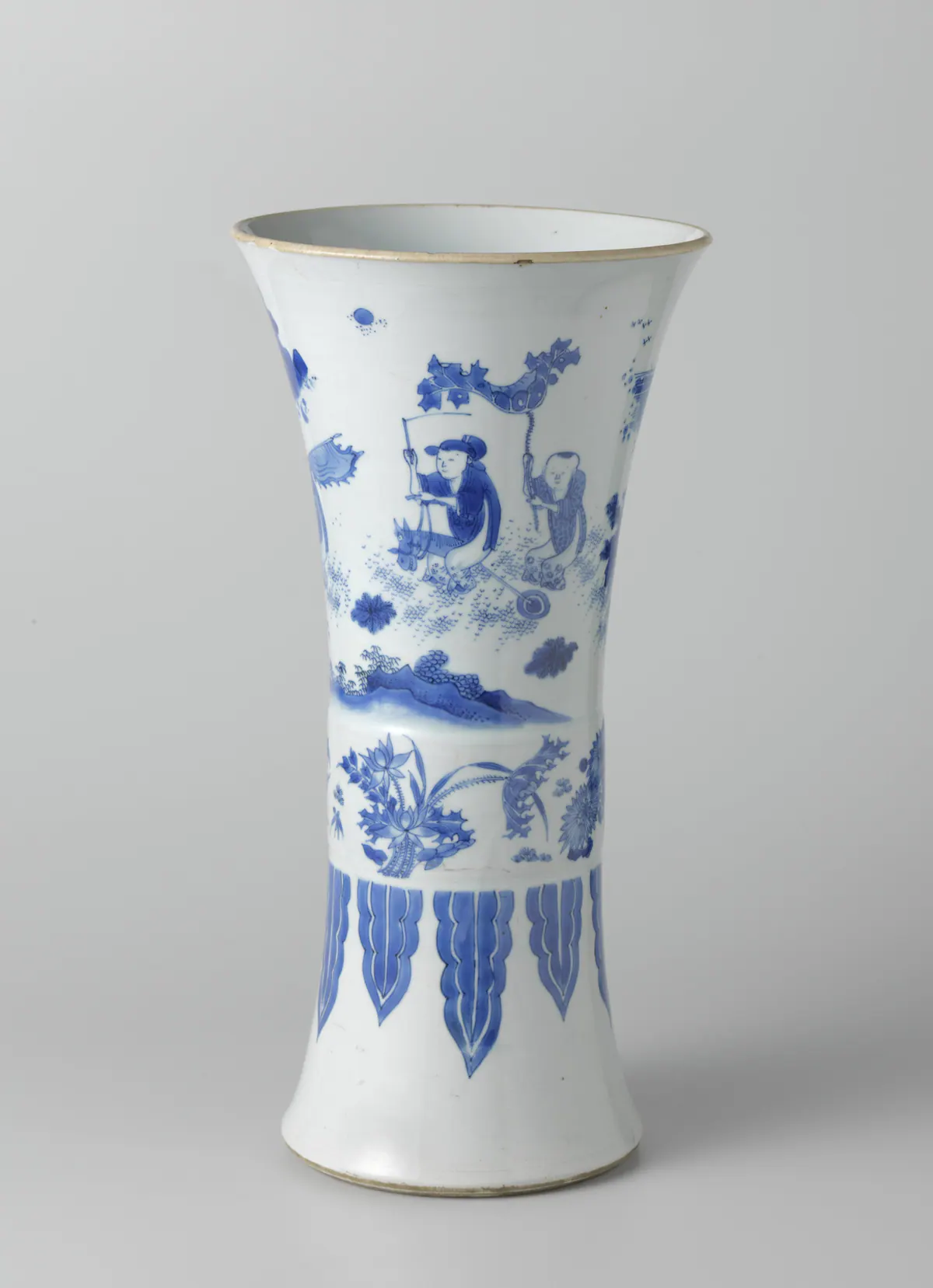
A Transitional blue and white beaker vase with a wide flared mouth, painted with boys playing in a landscape, one on a hobby horse, above a band of flowers and tall stiff leaves.
Museum exampleA Transitional blue and white beaker vase with boys at play in a landscape, dated by the museum to about 1635–50, a span that includes his Longwu reign.Rijksmuseum, AK-NM-6657. Public domain.

His reign lasted little more than a year, yet later generations held him in high regard for his single aim of recovering the lost territory and restoring the Ming.

After his death the loyalist cause passed to other princes, among them his younger brother Zhu Yuyue, who briefly claimed the throne at Guangzhou.

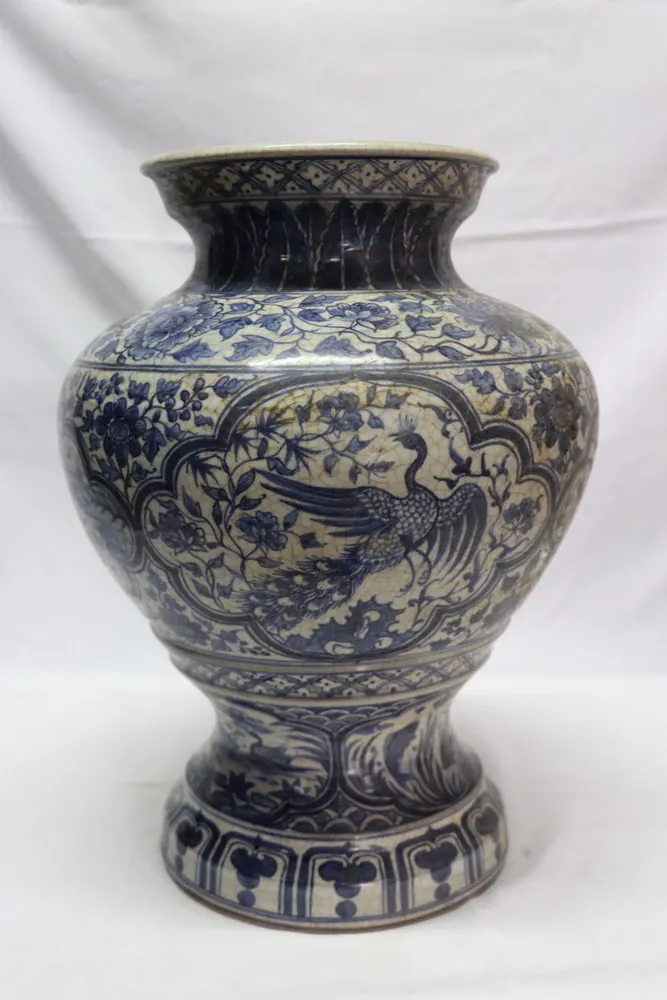
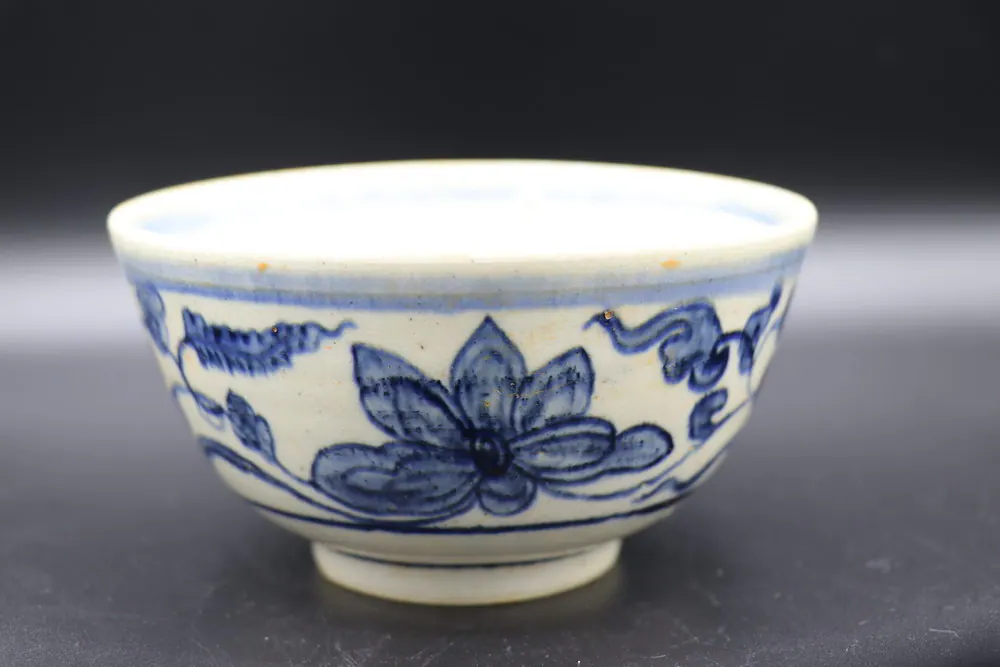
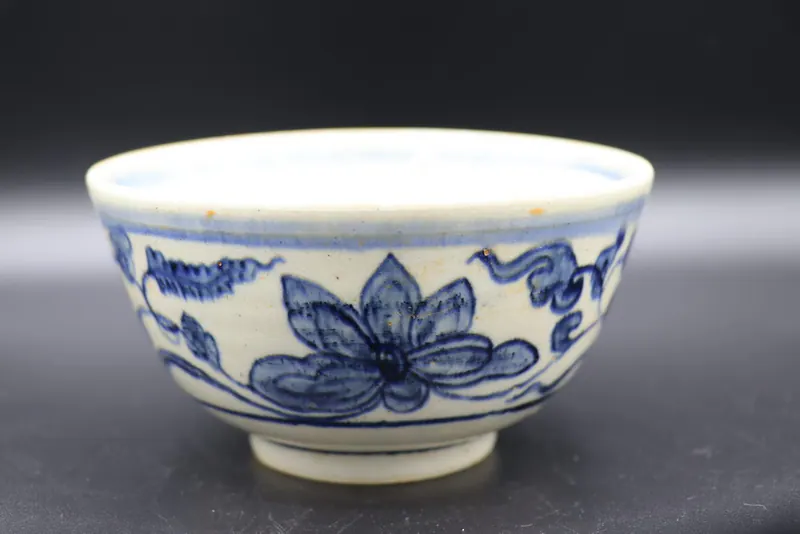
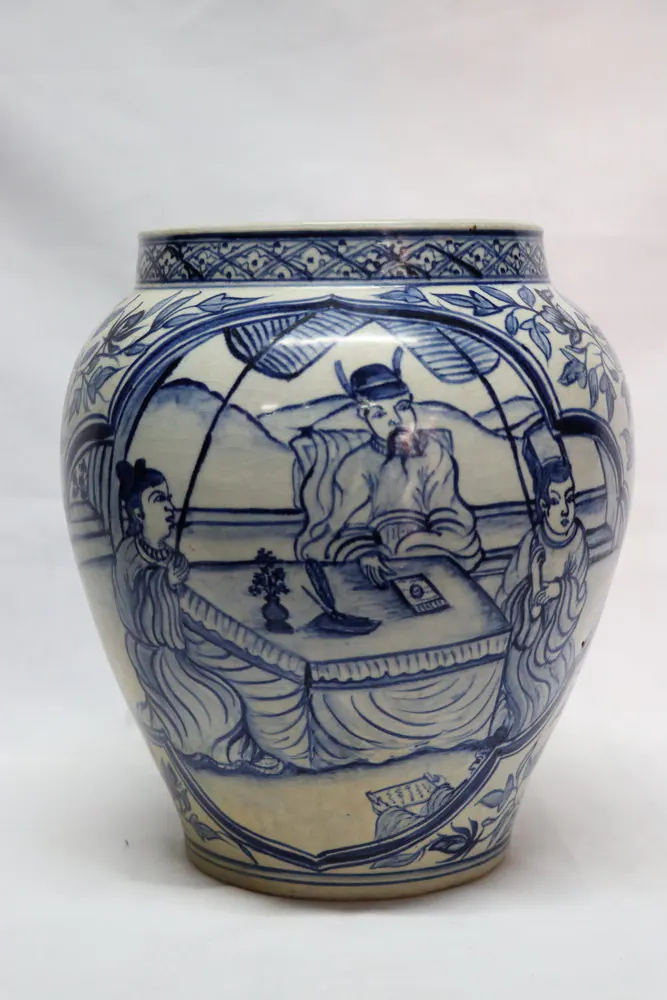
For collectors, his reign falls within what is known as the Transitional period, the decades between the late Ming and the early Qing when imperial orders to the Jingdezhen kilns had largely lapsed and the potters worked for private buyers at home and abroad. No porcelain can be tied to his court, but the wares of those decades are much collected, and our guide to Transitional porcelain describes them.

From the Ming Dynasty

View all Ming Dynasty PorcelainAsk about a piece

Be the first to see new pieces

Join our collectors' list for new arrivals, rare finds and private offers.