
c. 2070–1600 BC (traditional)
The Xia Dynasty
Chinese tradition names the Xia as the country's first dynasty, founded by Yu the Great, the hero who tamed the floods. No writing from the period has been found, so the Xia sits on the border between legend and history. This page sets out what the ancient texts say, what archaeology at Erlitou has revealed, and what survives from the period for collectors.
- Dates
- c. 2070–1600 BC (traditional)
- Founded by
- Yu the Great, in tradition
- Capital
- Uncertain; the texts name several, most placed in western Henan
- Known for
- The flood legend and the first hereditary rule
- Key wares
- Erlitou bronzes, jade blades, turquoise inlay

What the sources say

Everything written about the Xia comes from texts composed many centuries later: above all the Book of Documents (also called the Classic of History), the Bamboo Annals and Sima Qian's Records of the Grand Historian, completed around 90 BC. Sima Qian lists seventeen Xia kings.
The texts place the Xia on the middle reaches of the Yellow River, in what is now western Henan and southern Shanxi. They describe a royal house supported by the heads of allied clans, each bound to the king by loyalty. The conventional dates of about 2070 to 1600 BC come from a modern chronology project and rest on these traditions rather than on inscriptions.
The Xia is also credited with a calendar, and the traditional Chinese lunisolar calendar is still sometimes called the Xia calendar (xiali).
Before the Xia: the sage kings
The traditional histories set the Xia after the age of the Three Sovereigns and Five Emperors, the legendary rulers credited with founding Chinese civilisation. Sima Qian begins his history with Huangdi, the Yellow Emperor, whose war with Chi You ended at the Battle of Zhuolu. Later legend credits his court with the calendar, medicine and music, and his consort Leizu with the discovery of silk.
In the traditional sequence the Yellow Emperor was followed by Zhuanxu, Ku, Yao and Shun. Yao and Shun were revered as model rulers who chose their successors for virtue rather than birth: Yao chose Shun, and Shun chose Yu. Sima Qian traces Yu's own descent from Zhuanxu through his father, Gun.
These stories show how later Chinese understood the origins of their culture. They are not events that can be dated.
Yu the Great and the flood
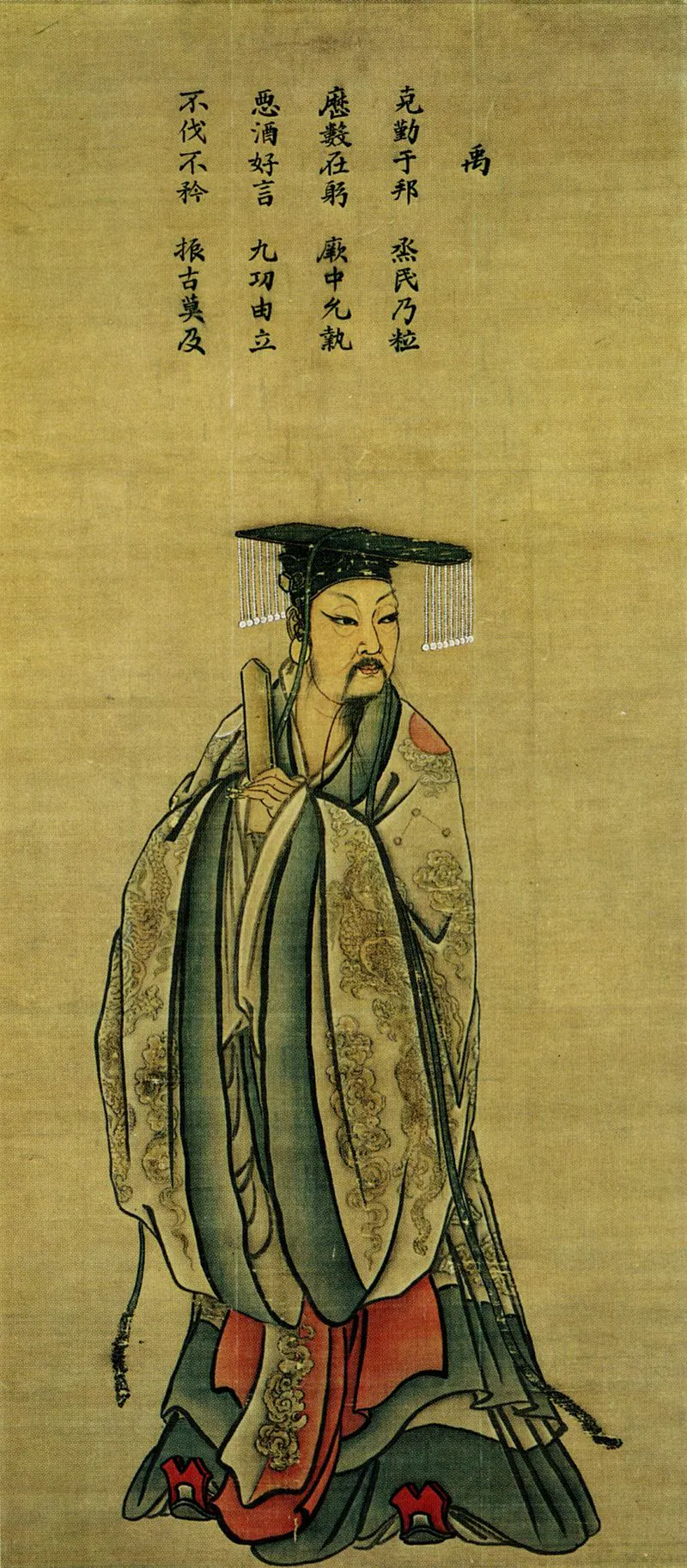
During Yao's reign, the story goes, the Yellow River flooded so badly that farmland was lost and many people drowned or were driven from their homes. Yao gave the task of controlling the waters to Gun, who spent nine years building dykes to hold them back. The dykes failed. Shun, by then in power, punished Gun at Feather Mountain (Yushan); the texts disagree on whether he was executed or banished.
Shun gave the work to Gun's son, Yu, who took the opposite approach. Instead of containing the rivers, he had channels dug to lead the water away to the sea, and he enlisted the neighbouring tribes to help. He is said to have laboured for thirteen years and to have passed his own house three times without going in.
Yu's success made him the natural heir to Shun, and for more than two thousand years Confucian writers held him up as the model of a ruler who serves his people. A famous tradition in the "Tribute of Yu" chapter of the Book of Documents credits him with dividing the known world into nine provinces.
From merit to inheritance
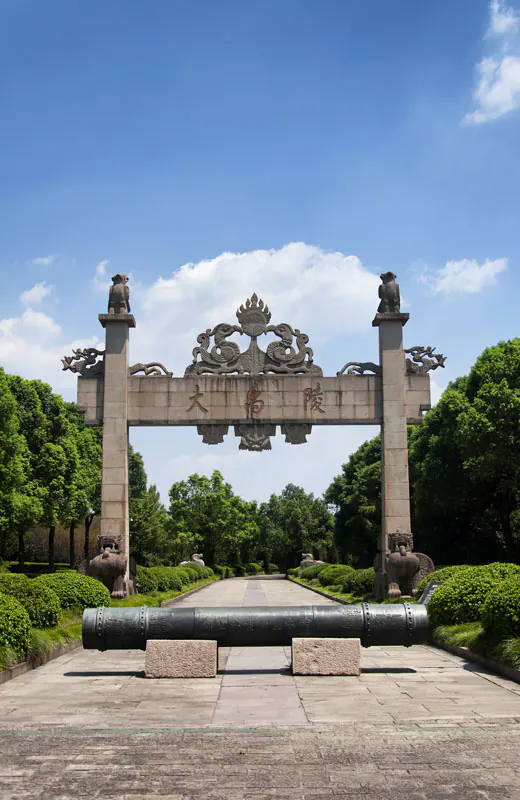
The histories record a campaign against the Sanmiao, a southern people long in conflict with the tribes of the central plains, which strengthened Yu's position. When Shun grew old he passed the throne to Yu.
Yu is said to have named a worthy minister, Yi, as his own heir, but after Yu's death the nobles turned instead to his son Qi. That succession is traditionally taken as the beginning of hereditary rule in China, and it is why the Xia counts as the first dynasty.
Later texts name several Xia capitals, among them Yangcheng and Zhenxun. Their locations are still debated, although most proposals lie in western Henan.
Did the Xia exist?
The central difficulty is the lack of written evidence. The earliest mature Chinese writing is found on the oracle bones of the late Shang, from about 1250 BC, several centuries after the traditional end of the Xia. No inscription naming the Xia has yet been found.
Some scholars have argued that the Zhou, who came to power around 1046 BC, shaped or even created the story of the Xia to support their own claim to rule. The Zhou justified their conquest of the Shang through the Mandate of Heaven, and the fall of the last Xia king to the Shang offered a convenient precedent for the fall of the last Shang king to the Zhou.
Scepticism has been wrong before. Until the excavations at Anyang in the 1920s and 1930s, many scholars doubted that the Shang had existed either, and the oracle bones found there confirmed the names of Shang kings recorded by Sima Qian. For the Xia, the strongest candidate is the Erlitou culture. Many Chinese archaeologists identify it with the late Xia; others prefer to leave the question open until written evidence is found.
Erlitou: the archaeological evidence
The Erlitou culture, named after its type site near Yanshi in Henan, flourished on the central plains between about 1900 and 1500 BC. It is generally regarded as China's earliest state-level society, and its dates and location overlap with the late Xia of the traditional chronology.
Excavations since 1959 have revealed a large planned settlement. At its centre stood a walled palace compound with several large rammed-earth foundations, bounded by roads. Nearby were specialist workshops for casting bronze and working turquoise, and in the surrounding districts lay smaller houses, pottery kilns and ordinary graves.
Elite burials in the palace area contained jade, bronze, lacquer and turquoise. The most celebrated find is a dragon-shaped object made from some two thousand pieces of turquoise, excavated from a tomb in 2002.
Bronze, jade and turquoise
Erlitou's foundries produced the earliest known Chinese bronze ritual vessels. They were cast in sectional piece moulds rather than hammered, the technique that defines the whole Chinese bronze tradition. Most of the first vessels, such as the tripod wine cup called the jue, were made for serving wine in ceremonies. They are thin-walled and sparsely decorated, quite unlike the heavy, densely ornamented bronzes of the later Shang.
Bronze was reserved for the ritual vessels, weapons and ornaments of the elite; everyday tools were still made of stone, bone and wood. Erlitou also produced large, thin jade blades and ceremonial implements that continue Neolithic traditions, and bronze plaques inlaid with turquoise. Pottery was made in quantity for daily and ritual use.
Genuine objects from this period are extremely rare, and nearly all known examples come from controlled excavations. Anything offered as "Xia" deserves close scrutiny; our guide to detecting fakes explains what to look for, and our guide to antique Chinese jade follows the material through the later dynasties.
The fall of the Xia and its memory
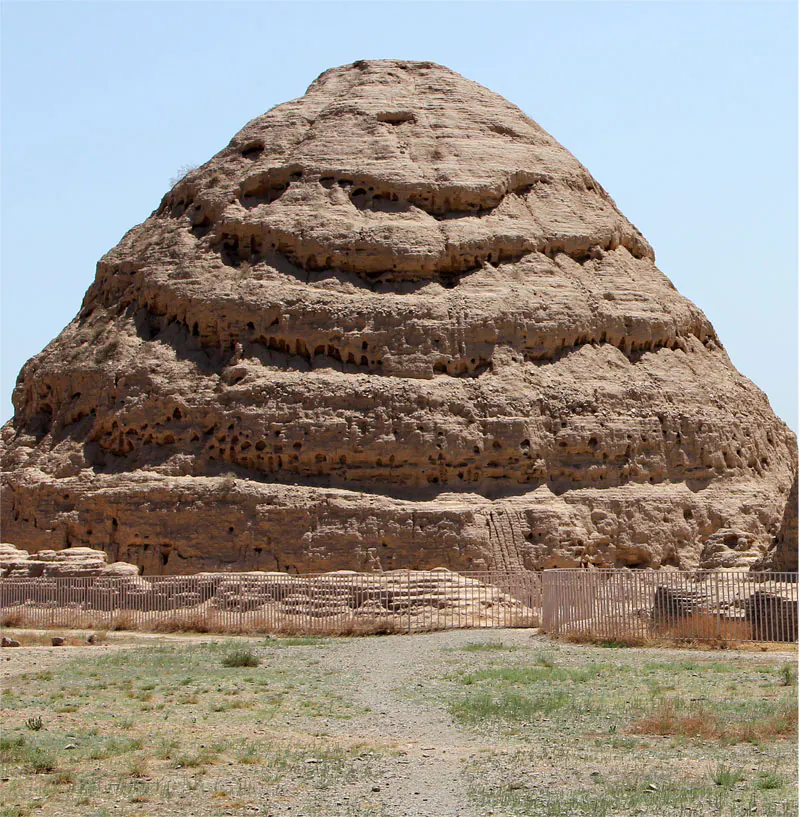
Tradition blames the last Xia king, Jie, for the dynasty's collapse. Later histories portray him as cruel and extravagant, and in thrall to his consort Meixi. Tang, the leader of the Shang, rose against him, defeated him at the Battle of Mingtiao and founded the Shang dynasty. The story became the model for every later account of a virtuous founder overthrowing a corrupt last ruler.
The memory of the Xia lived on. The Zhou granted descendants of the Xia royal house the small state of Qi so that sacrifices to their ancestors could continue, and the kings of Yue in the south traced their descent from Yu. The name itself was later borrowed by other states, including the Tangut kingdom known as the Western Xia, which had no connection with the ancient dynasty.