
c. 1600–1046 BC
The Shang Dynasty
The Shang was the first Chinese dynasty to leave written records of its own. Its kings ruled the middle and lower Yellow River valley from about 1600 to 1046 BC, and what survives of their world is the foundation of Chinese archaeology: bronze ritual vessels, worked jades, early glazed stoneware and more than 100,000 inscribed oracle-bone fragments.
This page follows the Shang from its founding to its fall, and explains what its bronzes, jades and ceramics look like and why they matter to anyone interested in Chinese art.
- Dates
- c. 1600–1046 BC
- Founded by
- Tang of Shang, by tradition
- Capital
- Zhengzhou, later Yin (Anyang)
- Known for
- Bronze casting and the oracle bones
- Key wares
- Ritual bronzes, jades, early glazed stoneware
Origins and rise
The founding story comes from later histories, above all Sima Qian's Records of the Grand Historian. Tang, a chief of the Shang people, rose against Jie, the last ruler of the Xia dynasty, whose cruelty, in the telling of later writers, had cost the Xia the Mandate of Heaven. Tradition says Tang won at the Battle of Mingtiao, fought in a thunderstorm, and remembers him as a model ruler who reduced conscription and relieved the poor.
These accounts were written long after the events, and archaeology cannot confirm them. The traditional date for Tang's victory is 1766 BC; the Xia–Shang–Zhou Chronology Project, published in 2000, places the start of the dynasty around 1600 BC.
What archaeology does show is a powerful Bronze Age state. At Zhengzhou an early Shang city was enclosed by a rammed-earth wall nearly seven kilometres long, with workshops for bronze casting, bone carving and pottery outside it. According to tradition, King Pan Geng later moved the capital to Yin, near modern Anyang, where it remained until the fall of the dynasty.
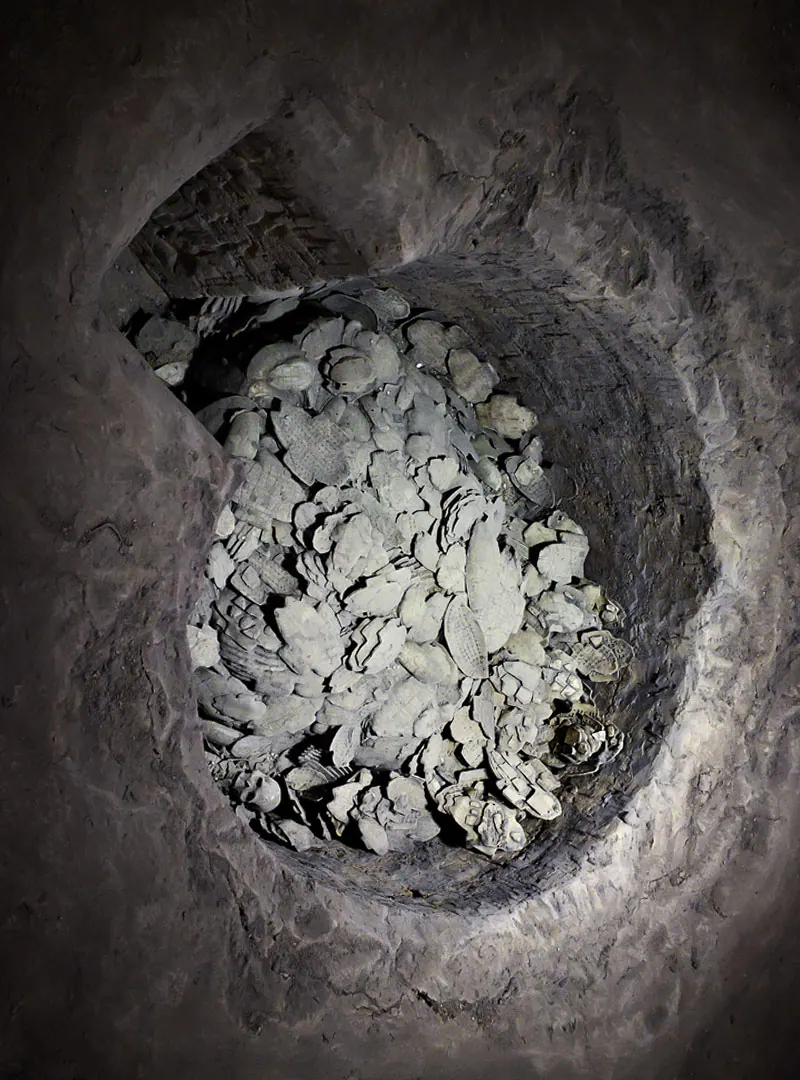
The site, now called Yinxu ("the Ruins of Yin"), has palace and temple foundations, the royal cemetery, foundries and the pits that held the oracle-bone archives. Excavation began in 1928, and Yinxu became a UNESCO World Heritage Site in 2006.
King, court and society
The Shang king was ruler, war leader and chief priest at once. Only he could approach the royal ancestors, whose goodwill was believed to decide harvests, battles and the health of the court. The throne often passed from brother to brother before moving to the next generation.
The king governed a core domain around the capital directly. Beyond it lay territories held by lords and allied chiefs, many related to the royal house, who sent tribute, joined campaigns and relied on the king's protection. Historians once called this arrangement feudal, but the term is now used with caution: it was a network of personal and kinship ties that held only while the king remained strong.
Below the royal lineage, the military nobility and the diviners came the craftsmen, and at the base the farmers who grew millet and kept pigs, dogs, cattle and sheep. Silk was already being produced.
Burials show these ranks most clearly. The largest royal tombs at Xibeigang, in Anyang, are deep cross-shaped pits approached by long ramps and surrounded by human and animal sacrifices. Lesser graves hold fewer offerings, and most ordinary people were buried with a few pots or nothing at all.
War and the chariot
War was constant. The oracle bones record the king's questions about campaigns, the size of his forces and the prospects of victory. The Shang fought neighbouring peoples on every side, among them the Qiang to the west, whose captives appear in the inscriptions as sacrificial victims.
For large campaigns the king summoned nobles and allied lords, who brought their own contingents. An often-cited inscription has Lady Fu Hao, a consort of King Wu Ding, leading 13,000 troops against the Qiang. Most soldiers were infantry levied from the farming population, armed with bows, spears and the ge dagger-axe, the characteristic Shang weapon. Bronze helmets and the finest bronze weapons belonged to the nobility.
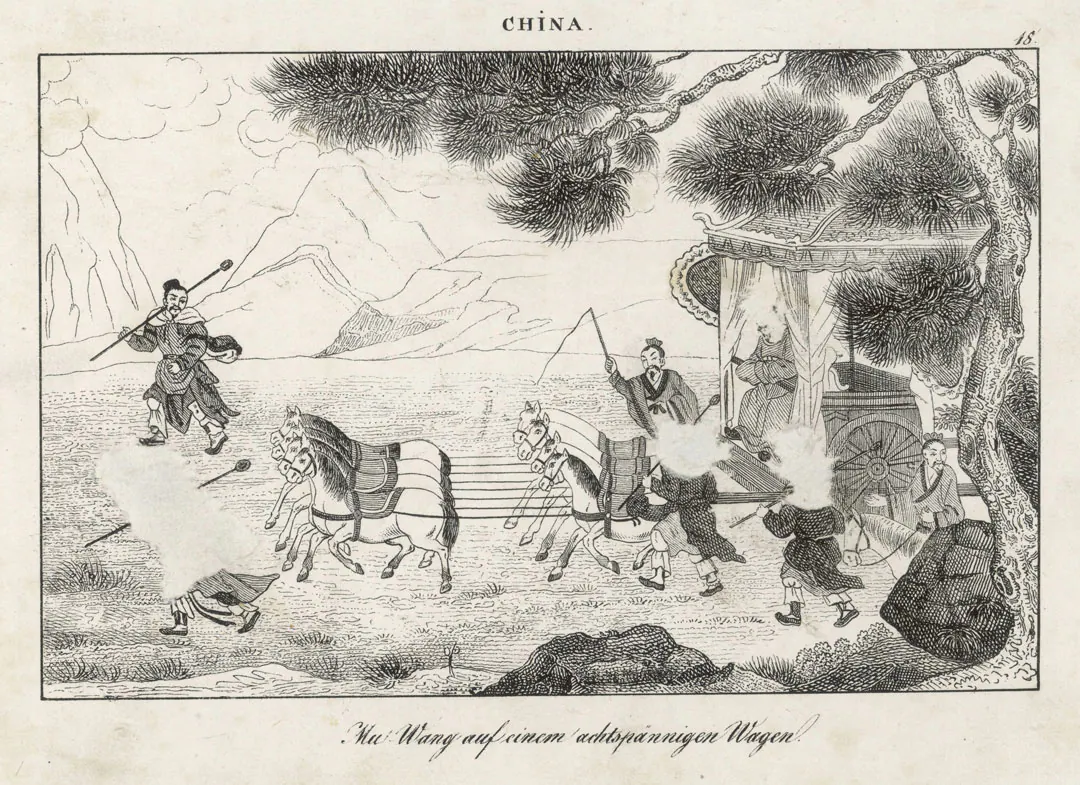
The horse-drawn chariot appears at Anyang around 1200 BC, already fully developed. Its light, two-wheeled design with many-spoked wheels closely resembles chariots of the steppe and western Asia, and most scholars think the technology reached China from the north-west. Chariots have been found buried with their horses in the Anyang cemeteries. Horses, vehicles and the long training needed to use them were affordable only to the nobility, so chariot warfare tied military leadership ever more closely to birth.
Divination and the oracle bones
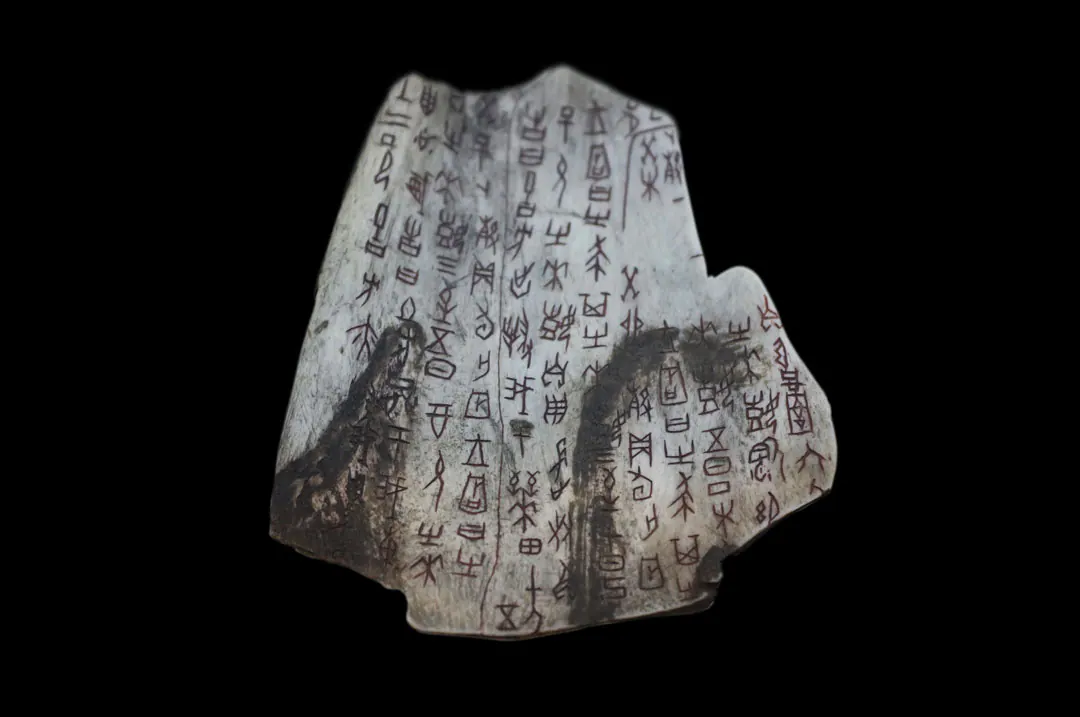
Shang kings consulted their ancestors through divination on bone and shell. A diviner cut hollows into the back of an ox shoulder blade or a turtle shell, then applied heat until cracks appeared on the front. The king or his diviner read the cracks as answers, and the question, sometimes with the prediction and the outcome, was carved beside them.
More than 100,000 inscribed fragments have been recovered, nearly all from Anyang and from the reign of King Wu Ding, around 1250 BC, onwards. Scholars first recognised them as writing in 1899. The questions cover sacrifices, harvests, rain, hunting, warfare, childbirth, illness and dreams: the daily concerns of a royal household.
The inscriptions are the earliest substantial body of Chinese writing, and their script is the direct ancestor of the characters used today. They also count days in cycles of ten and twelve signs, combined into the cycle of sixty that Chinese calendars still use for years.
Behind the divination lay a clear religious order. The Shang worshipped a high god, Di, who commanded rain, wind and thunder but was too remote to approach directly. Offerings went instead to the royal ancestors, who could intercede with Di, and to powers of nature such as the Yellow River. Ritual meant sacrifice: cattle, sheep, pigs and dogs, wine and grain, and on a large scale human beings, most of them captives.
Bronze casting
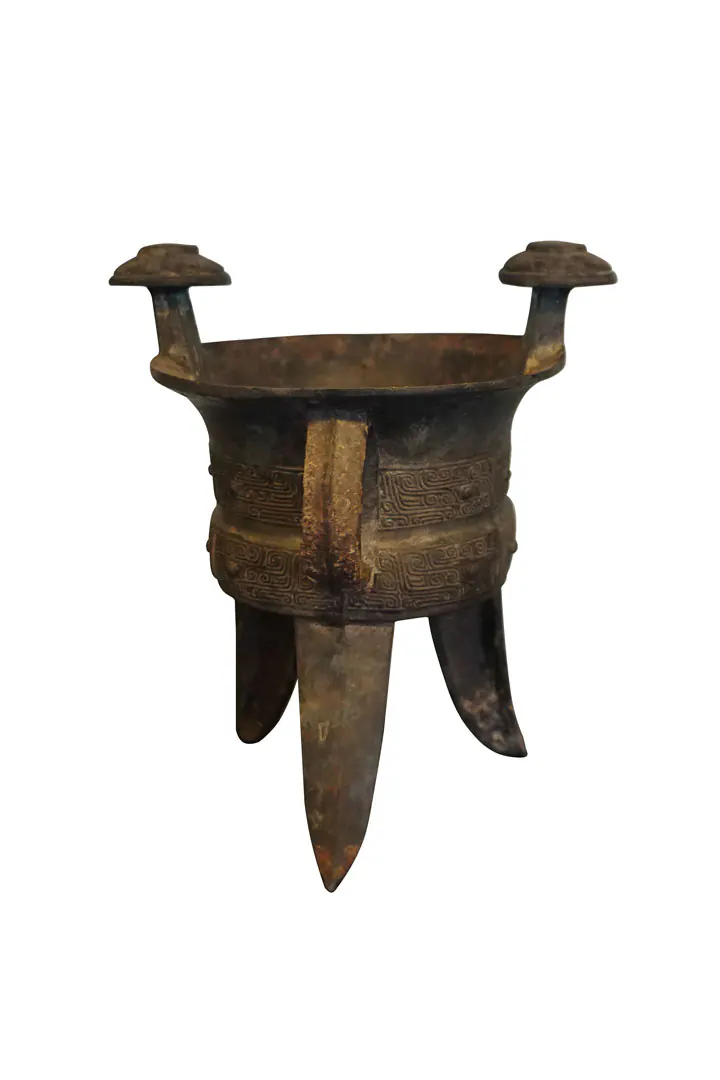
Bronze was the defining material of Shang power. Shang foundries used piece-mould casting: a clay model was made, moulds were taken from it in sections, and molten bronze was poured into the space between the moulds and a core. The method gave crisp, deeply cast decoration and allowed very large vessels. The Houmuwu ding, a rectangular cauldron found at Anyang and now in the National Museum of China, weighs more than 800 kilograms.
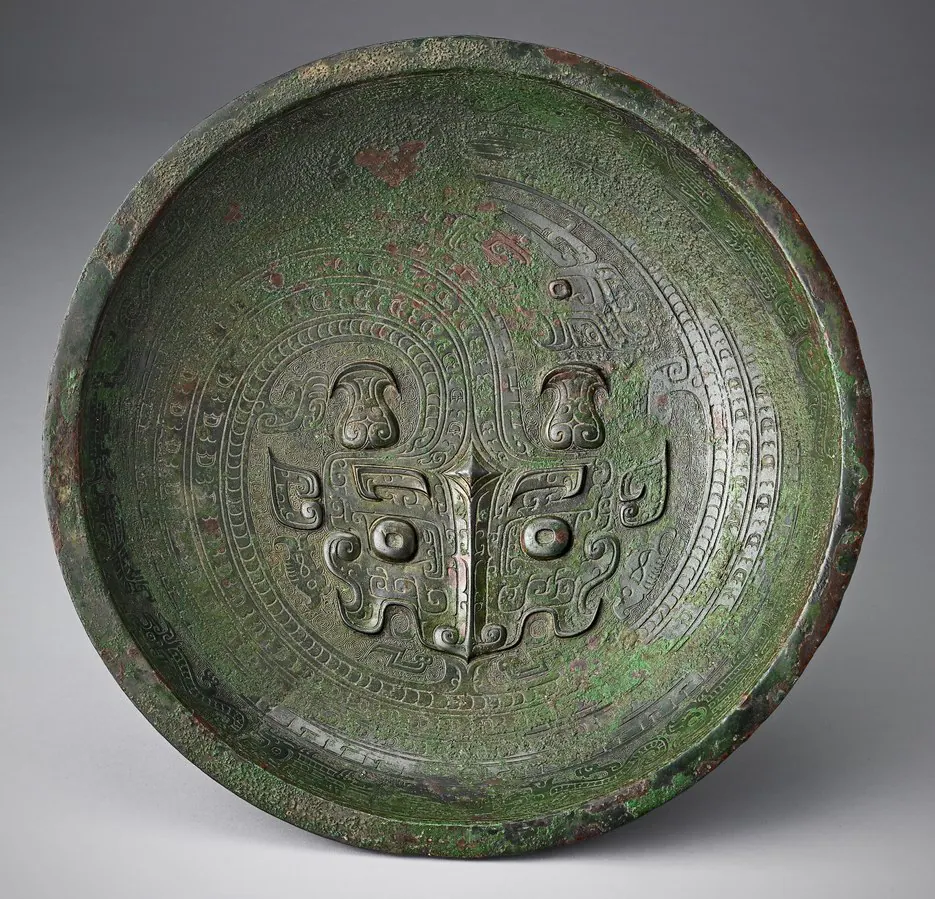
The main vessel types served offerings of food and wine to the ancestors: the ding cauldron, the gui food bowl, the jue and jia for warming wine, the tall gu beaker, and the zun and you wine containers. Their surfaces carry the taotie, a symmetrical animal mask, among dragons, birds and fine spiral grounds.
Many late Shang bronzes bear short cast inscriptions, usually a clan sign and the name of the ancestor honoured. The tomb of Lady Fu Hao, excavated in 1976, held more than 460 bronzes and some 750 jades, and is the only Shang royal tomb found intact.
Scholars date Shang bronzes by their form, the style and density of their decoration, their inscriptions and, above all, by comparison with excavated groups. Shang bronzes have been copied since at least the Song dynasty, so these comparisons matter.
Jade, pottery and the first glazes
Jade is too hard to cut with metal tools, so it was worked slowly with abrasive sand. Shang workshops made ritual discs (bi), tubes (cong), ceremonial blades and a wide range of small animal and bird pendants. The Fu Hao tomb included jades that were already ancient when she was buried, a sign that the Shang elite valued the past as well. Our guide to antique Chinese jade follows the material through later periods.
Everyday pottery was grey earthenware. Anyang also produced a rare white ware made from a kaolin-rich clay and carved with the same designs as the bronzes, an early step towards the white body of porcelain.
The other step was glaze. By the middle of the second millennium BC, Shang potters were firing stoneware hot enough to carry a thin yellowish-green glaze, among the earliest glazed ceramics in China. Examples have been found at Zhengzhou, at Anyang and at Wucheng in Jiangxi. Our guide to colours by period traces how that palette developed.
Fall and legacy
The last Shang king, Di Xin, is remembered in Zhou sources as a tyrant given to cruelty and excess. Those sources were written by his conquerors, and historians read them with care.
The Zhou, a people of the Wei River valley to the west who had been subordinate allies of the Shang, rose against him under King Wu. At the Battle of Muye, dated by most modern scholars to 1046 BC, much of the Shang army is said to have refused to fight or changed sides, and by tradition Di Xin took his own life. The Zhou dynasty that followed lasted until 256 BC, longer than any other in Chinese history.
The Zhou did not destroy the Shang royal house. According to Sima Qian, Weizi Qi, an elder half-brother of Di Xin, was made Duke of Song and charged with keeping up the sacrifices to the Shang kings. The state of Song survived until 286 BC, and Confucius traced his own family to its nobility.
The Shang left China its script, its tradition of bronze ritual vessels and its first high-fired glazed ceramics. We do not offer Shang bronzes or oracle bones. The line that begins with those early glazes, however, runs through more than two thousand years to the celadons of the Song dynasty, and examples of those are in our Song dynasty porcelain collection.