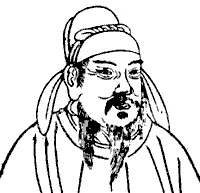
Portrait: public domain, via wikipedia.org

Tang Dynasty705–710

Emperor Zhongzong (Second Reign)

神龍 · 景龍

Reign facts
Reigned
705–710 (5 years)
Lived
656–710
Personal name
Li Xian 李顯
Temple name
Zhongzong 中宗
Era names
Shenlong 神龍 705–707Jinglong 景龍 707–710

Emperor Zhongzong, Tang Dynasty: His Second Reign

Li Xian (李顯, 656–710), a son of Emperor Gaozong and Wu Zetian, reigned twice. His first reign, in 684, lasted only a few weeks before his mother deposed him. After fourteen years in exile he was recalled, made crown prince again, and in 705 restored to the throne, which he held until his death in 710. His era names were Shenlong (神龍, 705–707) and Jinglong (景龍, 707–710).

The Return from Exile

From 684 Li Xian, then known as Li Zhe and demoted to Prince of Luling, lived under guard at Fangzhou, far from the capital. In 696 the Khitan leaders Li Jinzhong and Sun Wanrong rose against Wu Zetian's Zhou state, and their proclamations asked why the rightful heir was still in exile. Senior ministers, among them the chancellor Di Renjie, urged the empress to settle the succession on her own son.

In 698 she recalled him to Luoyang. His younger brother Li Dan, the future Emperor Ruizong, yielded the position of heir, and Li Zhe was made crown prince once more. His name was changed back to Li Xian, and he was later given his mother's surname, Wu.

The Fall of Wu Zetian

In her last years Wu Zetian relied heavily on two favourites, the brothers Zhang Yizhi and Zhang Changzong, who were widely feared and were rumoured to be plotting against the crown prince. Early in 705, when the empress was seriously ill, a group of officials and generals led by the chancellor Zhang Jianzhi entered the palace, killed the brothers and forced her to hand power to Li Xian.

Wu Zetian was moved to a detached palace and died at the end of the year. Zhongzong restored the dynastic name Tang and buried his mother beside his father, Emperor Gaozong, at Qianling.

The Tombs of 706

One of Zhongzong's early acts was to honour members of his family who had died under his mother's rule. In 706 his daughter Li Xianhui, Princess Yongtai, and his son Li Chongrun, Crown Prince Yide, were reburied with full honours in satellite tombs at Qianling. Both tombs have been excavated. Their wall paintings of court ladies, guards and processions, and their groups of glazed earthenware tomb figures, are among the best-dated works of early 8th-century Tang art and a valuable reference for anyone studying Tang pottery.

The Second Reign under Empress Wei

Zhongzong rewarded the five leaders of the coup with high office, but real influence at court passed to his wife, Empress Wei, and to Wu Sansi, Wu Zetian's nephew, who became her close ally. Within months the empress persuaded the emperor that the coup leaders were dangerous. They were made princes, which removed them from the chancellery, and in 706 they were exiled. None survived.

In the same year Wang Tongjiao, husband of one of Zhongzong's daughters, was accused of plotting to kill Wu Sansi and depose the empress, and he and his alleged associates were executed.

The Question of the Heir

Empress Wei disliked Li Chongfu, Prince of Qiao, the emperor's eldest surviving son, and accused him of a part in the death of her own son Li Chongrun, who had been killed on Wu Zetian's orders in 701. Li Chongfu was sent away to serve as a provincial prefect under guard. Zhongzong is said to have offered to make his brother Li Dan heir, but Li Dan declined, and in 706 another son, Li Chongjun, born to a concubine, was made crown prince.

Li Chongjun was humiliated by Wu Sansi and by the emperor's daughter Li Guo'er, Princess Anle, who wanted to be named heir herself. In 707 he rose with a small force and killed Wu Sansi and his son, but the attack on the palace failed and he was killed as he fled.

Government by Favour

After 707 the empress and Princess Anle dominated the court, with the princess's sister Princess Changning, the empress's sister, and the emperor's consort Shangguan Wan'er, a gifted poet who drafted imperial edicts. Offices were openly sold. Appointments were made by "slant-sealed" edicts that bypassed the Secretariat and the Chancellery, the normal channels of government, and the number of officials swelled far beyond need.

The Frontiers

In 708 a dispute over the leadership of the Turgesh, a Turkic people in the Tianshan region, drew in the Tang. Suoge, who had succeeded his father, was challenged by his father's former subordinate Juechuo Zhongjie, who bribed officials at the Tang court to support a joint attack on him. Suoge struck first and killed the Tang official Feng Jiabin. The court then recognised Suoge's position and the fighting ended.

To the south-west, Zhongzong sought peace with the Tibetan empire. In 710 he sent Princess Jincheng, daughter of his nephew Li Shouli, Prince of Yong, to marry the Tibetan ruler Me Agtsom.

Death of Emperor Zhongzong

Zhongzong died suddenly in the summer of 710. The traditional histories say he was poisoned by Empress Wei and Princess Anle, who hoped to rule through a more pliable successor, and this is widely believed, although it cannot be proved. He was buried at Dingling in Fuping County, Shaanxi.

The empress placed Li Chongmao, a young son of Zhongzong by a concubine, on the throne and prepared to govern in his name. Within weeks Zhongzong's sister, Princess Taiping, and his nephew Li Longji, the future Emperor Xuanzong, led a coup in which the empress and Princess Anle were killed. Li Chongmao gave up the throne, and Li Longji's father, Li Dan, was restored as Emperor Ruizong.

Ceramics of the Reign

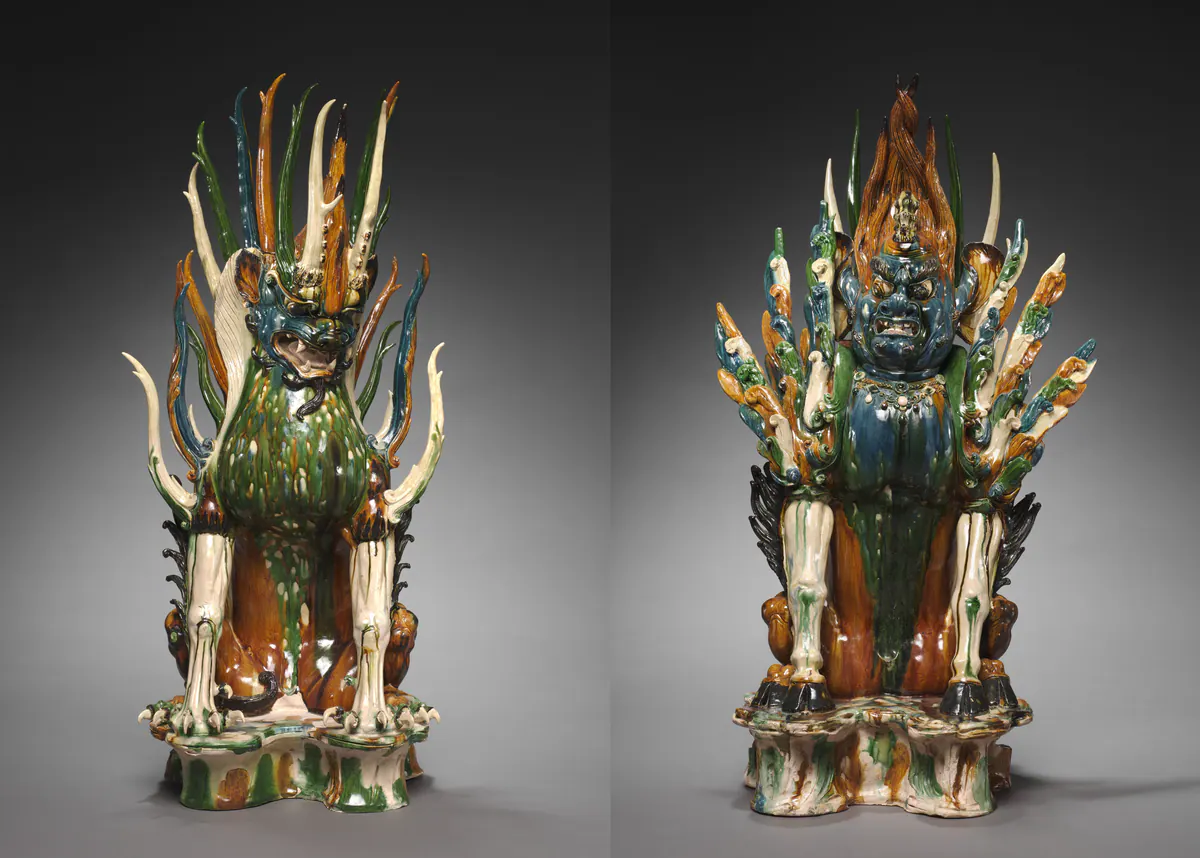
Zhongzong's second reign falls at the height of sancai, the lead-glazed earthenware splashed in amber, green and cream, sometimes with costly cobalt blue, that the Tang made chiefly for burial. The tombs of 706 at Qianling, described above, held large groups of glazed and painted figures, and their dated epitaphs make them a fixed point for the study of the style. Tomb guardians with animal and human faces, armoured heavenly kings, horses and camels were moulded in sections, assembled and fired at kilns near Chang'an and at Gongxian in Henan.

A pair of seated sancai tomb guardian beasts, one with an animal face and one with a human face, both with flame-like crests and wings glazed green, amber, blue and cream.
Museum examplePair of sancai tomb guardians, probably made in Xi'an, dated by the museum to the early 700s, the years of the Qianling reburials of 706.Cleveland Museum of Art, 2000.118. Public domain (CC0).

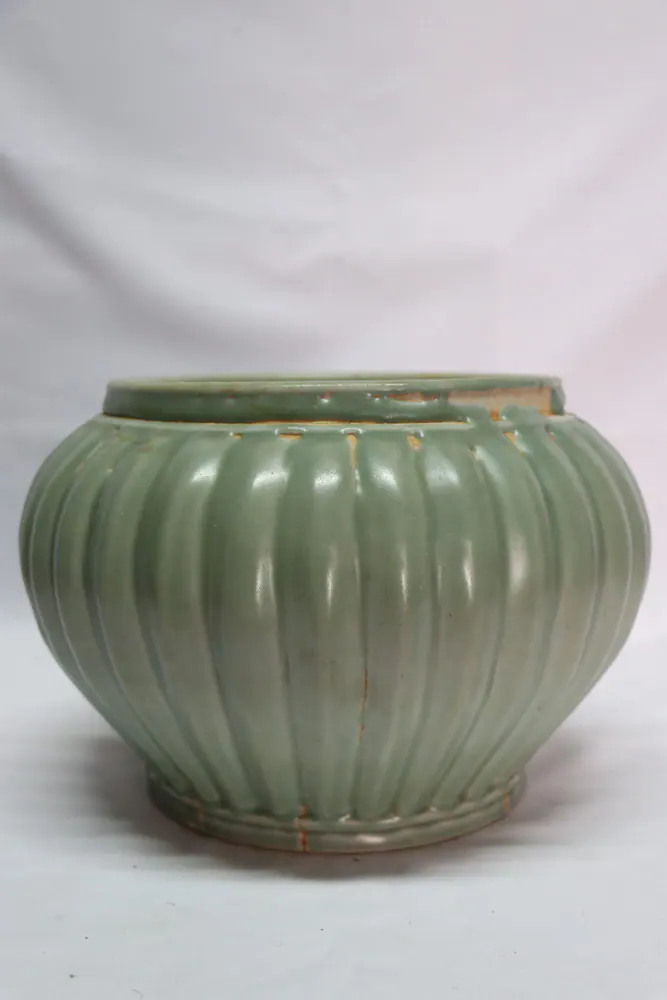
For everyday use, the white wares of Xing in Hebei and the green Yue wares of Zhejiang were already well established.

The wares that followed: Song porcelain

View all pieces in the collectionAsk about a piece

Be the first to see new pieces

Join our collectors' list for new arrivals, rare finds and private offers.