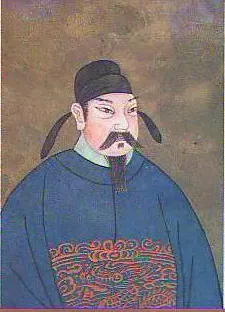
Portrait: public domain, via wikipedia.org

Tang Dynasty762–779

Emperor Daizong

寶應 · 廣德 · 永泰 …

Reign facts
Reigned
762–779 (17 years)
Lived
726–779
Personal name
Li Yu 李豫
Temple name
Daizong 代宗
Era names
Baoying 寶應 762–763Guangde 廣德 763–764Yongtai 永泰 765–766Dali 大曆 766–779

Li Yu (李豫, 726–779), born Li Chu and known by his temple name Daizong, reigned over the Tang dynasty from 762 to 779. He was the eldest son of Emperor Suzong.

His father's reign had been consumed by the An Lushan rebellion. As supreme commander, Li Chu led the Tang armies which, with the help of Uighur cavalry, recaptured Chang'an and Luoyang from the rebel Yan state in 757. As emperor he saw the rebellion brought to an end in 763, but only by leaving the regional military governors stronger than the court.

Daizong is credited with removing Li Fuguo, the overbearing eunuch who had helped put him on the throne. Even so, much of his reign was dominated by powerful favourites: the eunuchs Cheng Yuanzhen and Yu Chao'en, and later the chancellor Yuan Zai.

Early Life

Li Chu was born in 726, when his father, the future Suzong, was Prince of Zhong under Emperor Xuanzong. His mother was his father's concubine, Consort Wu. He was the eldest of Xuanzong's many grandsons, of whom there were more than a hundred. In 740, after his father had become crown prince, Li Chu was created Prince of Guangping.

When Suzong claimed the throne during the rebellion in 756, he made Li Chu supreme commander of the imperial forces. Li Chu and his brother Li Tan, Prince of Jianning, were entrusted with the keys to the makeshift palace, so that one of them was always at hand to receive urgent military reports.

Intrigue at Suzong's Court

Suzong wished to make Li Chu crown prince, but Li Chu and the emperor's adviser Li Mi argued that it would be improper before Chang'an had been recovered. The court was divided. The eunuch Li Fuguo had allied himself with Suzong's favourite, Consort Zhang, and the two worked against Li Mi, Li Chu and Li Tan.

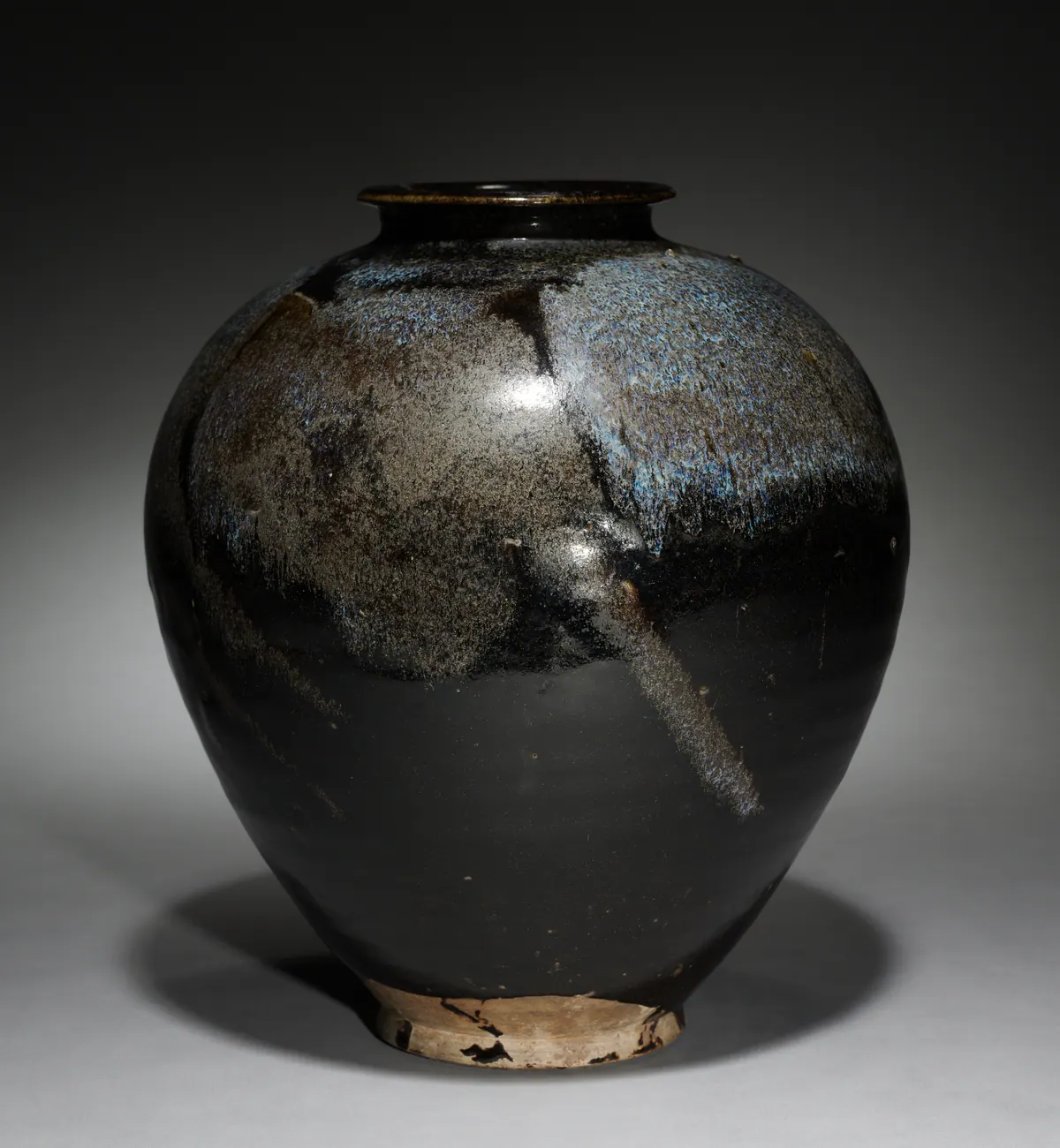
An ovoid stoneware jar under a glossy black glaze, its shoulder streaked with splashes of mottled bluish-white glaze, the foot left unglazed.
Museum exampleBlack-glazed stoneware jar with pale splashes from the Huangdao kilns in Henan, dated by the museum to the 700s, the century of Daizong's reign.Cleveland Museum of Art, 1915.381. Public domain (CC0).

Early in 757 Li Tan and Li Fuguo traded accusations. Persuaded that Li Tan meant to kill his brother, Suzong ordered him to take his own life. Li Chu, fearing for his own safety, considered killing Consort Zhang and Li Fuguo, but Li Mi talked him out of it. He was made crown prince in 758, after the recapture of the two capitals.

The Reign

When Suzong lay dying in 762, Empress Zhang, as Consort Zhang had become, plotted against the crown prince. Li Fuguo and Cheng Yuanzhen foiled the plot, the empress was killed, and Li Yu succeeded his father. Li Fuguo now expected to govern, and is said to have told the new emperor to stay in the palace and leave the business of state to him.

Daizong was privately furious but kept his counsel. He honoured Li Fuguo with the title Shangfu ("venerable father") and made him Sikong, one of the Three Excellencies, and Zhongshu Ling, head of the Legislative Bureau. Meanwhile, command of the palace troops passed to Cheng Yuanzhen.

Later in 762, at Cheng's suggestion, Daizong issued an edict stripping Li Fuguo of his offices and his military command and ordering him to live outside the palace, although he was allowed to keep the title Prince of Bolu. Not long afterwards Li Fuguo was killed by an unknown assassin.

The End of the Rebellion

The An Lushan rebellion finally ended in 763 with the death of the last rebel leader, Shi Chaoyi. To secure peace, many former rebel generals were confirmed as military governors in the northeast, where they ruled almost independently. The same year a Tibetan army briefly occupied Chang'an and Daizong fled the capital; the general Guo Ziyi recovered the city, and Cheng Yuanzhen, blamed for the disaster, was dismissed. In 764 and 765 the general Pugu Huai'en also rose in revolt.

Restoring the Grain Supply

The official Liu Yan led the reopening of the Bian Canal, which linked the Huai and Yellow rivers and had carried grain from the south to the capital before the rebellion. Fighting had left it silted and unusable. Once it was restored, Chang'an again received adequate food supplies, and the region could begin to recover from the war.

Buddhism at Court

Daizong had at first favoured Daoism but became a devout Buddhist, influenced by his chancellors Yuan Zai, Du Hongjian and Wang Jin. Yuan argued that the Buddha's protection had carried the dynasty through the rebellions of An Lushan and Pugu Huai'en.

Buddhist principles came to shape much of the emperor's policy. He showed great honour to the monk Amoghavajra (Bukong), who was given a ducal title, the monasteries of Chang'an grew rich, and monks and nuns were exempted from corporal punishment. Traditional historians blamed this influence for the poor government and lax justice of the reign.

Favourites and Governors

After Cheng Yuanzhen's fall, the eunuch Yu Chao'en rose to dominate the palace armies until he was killed in 770 in a plot organised by Yuan Zai. Yuan in turn became notorious for corruption and was executed in 777.

The weakness of the court was plain in 776, when the acting military governor of Biansong Circuit, Tian Shenyu, died and the officer Li Lingyao seized control. Daizong ordered the neighbouring circuits to attack, and Li Lingyao was quickly defeated. The court gained little: several of Biansong's prefectures went to the military governor of Pinglu, Li Zhengji, who moved his headquarters into the territory he had taken.

Death and Succession

Daizong fell ill in the summer of 779 and died soon afterwards. He was succeeded by his eldest son, Li Kuo, who reigned as Emperor Dezong and tried, with mixed results, to bring the military governors back under central control.

The wares that followed: Song porcelain

View all pieces in the collectionAsk about a piece

Be the first to see new pieces

Join our collectors' list for new arrivals, rare finds and private offers.