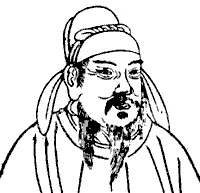
Portrait: public domain, via wikipedia.org

Tang Dynasty684

Emperor Zhongzong (First Reign)

嗣聖

Reign facts
Reigned
684 (1 year)
Lived
656–710
Personal name
Li Xian 李顯
Temple name
Zhongzong 中宗
Era name
Sisheng 嗣聖 684

Emperor Zhongzong's First Reign, Tang Dynasty

Li Xian (李顯, 656–710), known by his temple name Zhongzong, was the fourth emperor of the Tang dynasty. He reigned twice: for less than two months in 684, under the era name Sisheng, and again from 705 to 710. During the 680s he was known as Li Zhe, and for a time under his mother's rule he bore her surname, Wu.

His first reign was nominal. Power lay with his mother, the Empress Dowager Wu, and when he showed signs of acting independently she deposed him. This page covers that reign and his long exile. The story continues on the page for his second reign (705–710).

Crown Prince

Li Zhe was a son of Emperor Gaozong and Empress Wu. He became crown prince in 680, after his elder brother Li Xian (李賢, a different name in Chinese) was deposed. By 681 Gaozong was seriously ill, and Li Zhe was given a share of the imperial authority.

In 682 Li Zhe's wife, Crown Princess Wei, gave birth to a son, Li Chongzhao (later renamed Li Chongrun). Gaozong was delighted and created him Imperial Grandson Heir, a title with no precedent.

Later that year a famine in the Guanzhong region around Chang'an led Gaozong to move the court to Luoyang. He left Li Zhe in charge at Chang'an, assisted by the chancellors Pei Yan, Liu Rengui and Xue Yuanchao. The crown prince was said to spend much of his time on hunting and other amusements, and Xue repeatedly remonstrated with him. When Gaozong heard of this he rewarded Xue and summoned him to Luoyang.

In 683, as his illness worsened, Gaozong called Li Zhe to Luoyang and left the infant Li Chongzhao at Chang'an with Liu Rengui. Gaozong died at the end of that year, and Li Zhe succeeded him. Real power, however, passed to Empress Wu, now empress dowager and regent.

Eight Weeks on the Throne

Zhongzong made his wife Empress Wei, and he tried at once to promote her family. He proposed to appoint her father, Wei Xuanzhen, head of the Examination Bureau, one of the posts held by chancellors, and to give fifth-rank office to the son of his wet nurse.

Deposition

The chancellor Pei Yan refused to carry out these appointments. The emperor is recorded as retorting in anger that he could hand the whole empire to Wei Xuanzhen if he wished. Alarmed, Pei reported the remark to the empress dowager.

Early in 684, less than two months after his accession, Empress Dowager Wu had him removed. He was reduced to Prince of Luling, and his younger brother Li Dan was placed on the throne as Emperor Ruizong, a ruler in name only.

After the Deposition

The deposed emperor spent the next fourteen years in exile, while his mother governed first through Ruizong and then, from 690, in her own name. He was not recalled to the capital until 698.

Exile

Empress Dowager Wu sent the Prince of Luling and his family into exile in Fang and Jun prefectures, in the area of modern Shiyan in Hubei. He was kept under house arrest and lodged for a time in the residence once used by his uncle Li Tai, who had been banished to the region after losing the succession struggle of 643.

He lived in constant fear. His mother had shown she would not spare her own children: his elder brother Li Hong had died suddenly in 675, amid rumours that she had poisoned him, and in 684 she forced the former crown prince Li Xian to take his own life. Whenever messengers arrived from the capital, Zhongzong is said to have considered suicide, convinced they had come with orders for his death. His wife, Lady Wei, steadied him through these years, and he promised her that if they ever regained their fortunes he would deny her nothing, a promise that shaped his second reign.

A Symbol of Resistance

Opponents of the empress dowager used the exiled emperor as a rallying point. In 684 Li Jingye, Duke of Ying, rose in revolt at Yangzhou, declaring that he intended to restore Li Zhe to the throne. The rising was crushed within months, and later plots against the empress dowager also invoked his name.

In 690 Empress Dowager Wu had Ruizong yield the throne to her and proclaimed herself ruler of a new Zhou dynasty, interrupting the Tang. Ruizong was made her heir with the title huangsi, while Zhongzong's position in exile was at first left unchanged.

Return

In 698, on the advice of ministers who urged her to settle the succession on her own sons, Wu Zetian recalled Zhongzong to Luoyang, and Ruizong stood aside so that he could be made crown prince again. In 705, as she lay ill, a coup forced her to abdicate, and Zhongzong returned to the throne for his second reign.

Ceramics of the Reign

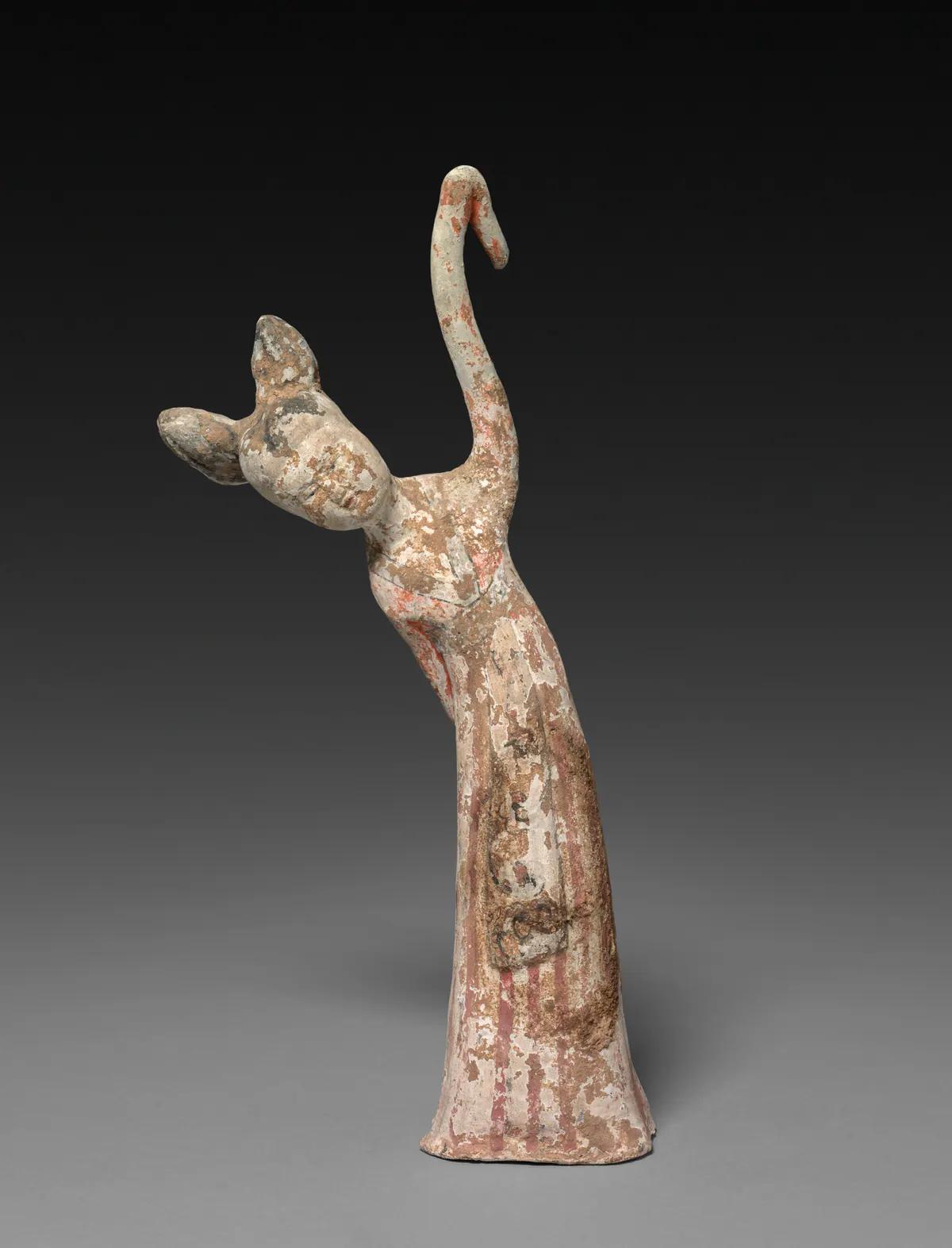
Zhongzong's brief first reign left no ceramic legacy, but his youth and exile coincided with a formative period in Tang pottery. The best-known wares of the late 600s are the earthenware figures made for the tombs of the elite: dancers, musicians, horses, camels and guardians, painted in pigments over a white slip. In the later decades of the century lead-glazed sancai, 'three-colour' ware splashed in amber, green and cream, began to be made in quantity at kilns near Chang'an and at Gongxian near Luoyang.

Painted earthenware tomb figure of a female dancer bending to one side with a long sleeve swung up over her head, with worn red and white pigment on a striped skirt.
Museum examplePainted earthenware tomb figure of a dancer, dated by the museum to 650–700, the decades of Zhongzong's youth and his brief first reign in 684.Cleveland Museum of Art, 1983.26. Public domain (CC0).

For daily use, the Xing kilns in Hebei made white wares and the Yue kilns in Zhejiang green-glazed stonewares, both of which reached their height in the later Tang.

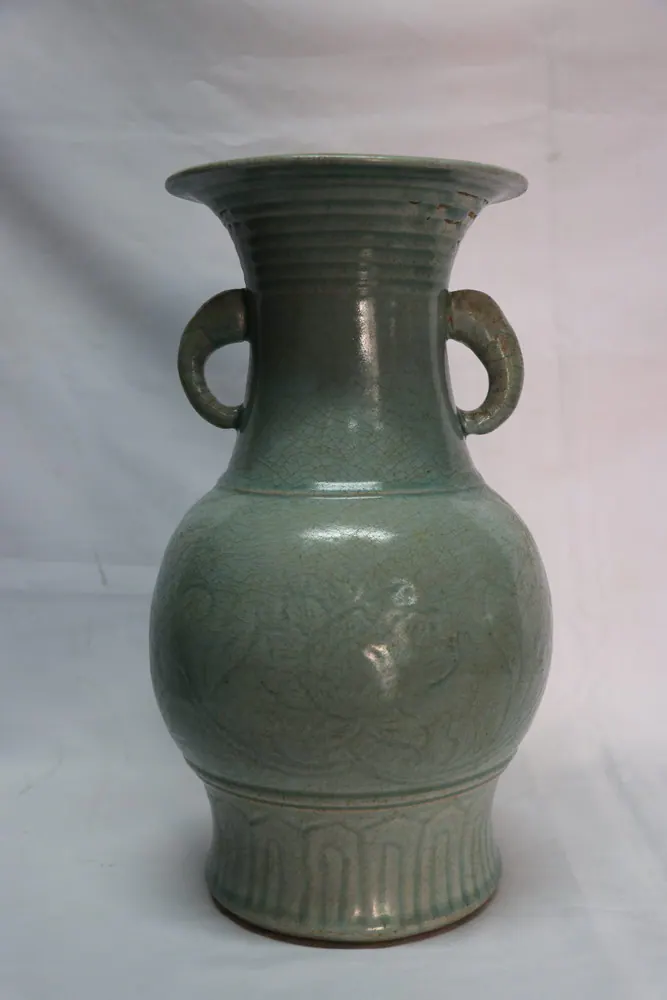
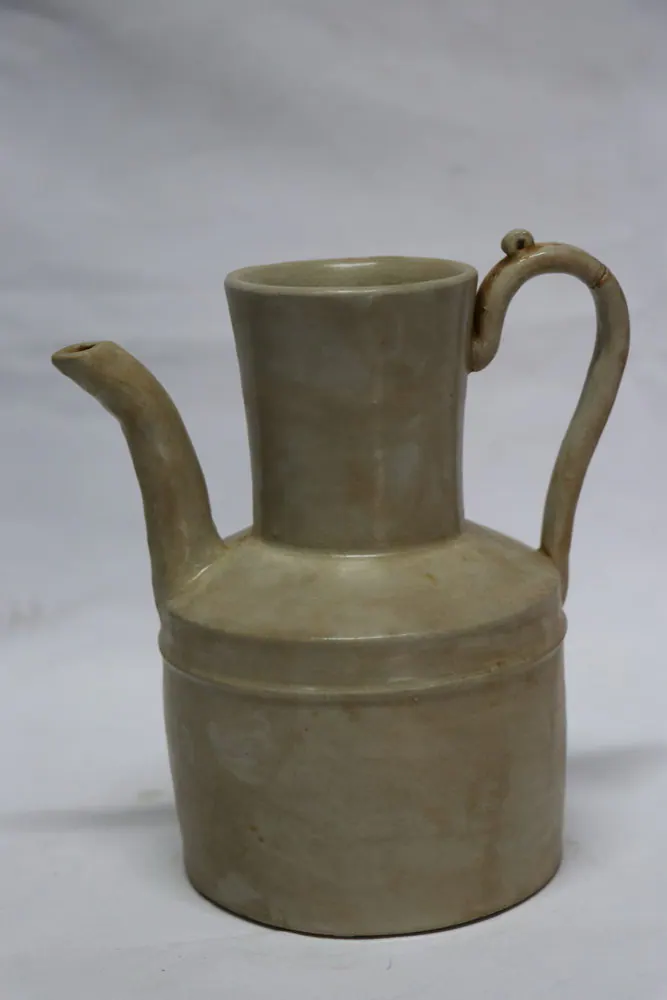
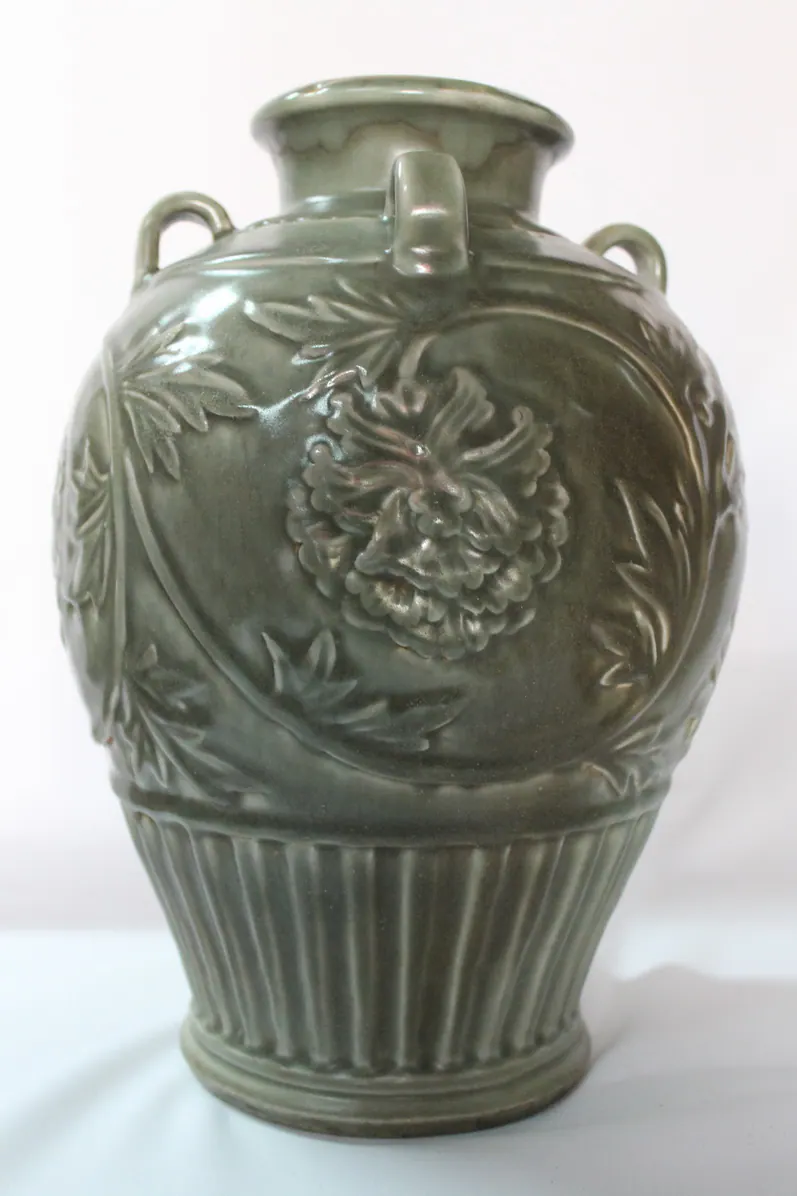
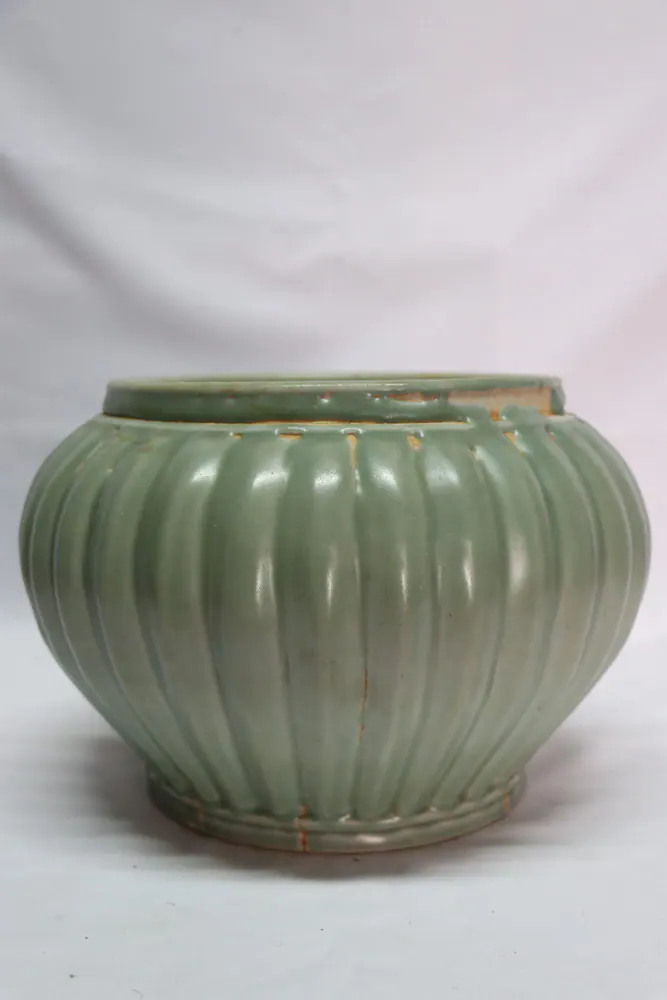
The wares that followed: Song porcelain

View all pieces in the collectionAsk about a piece

Be the first to see new pieces

Join our collectors' list for new arrivals, rare finds and private offers.