The Regency of Empress Dowager Liu
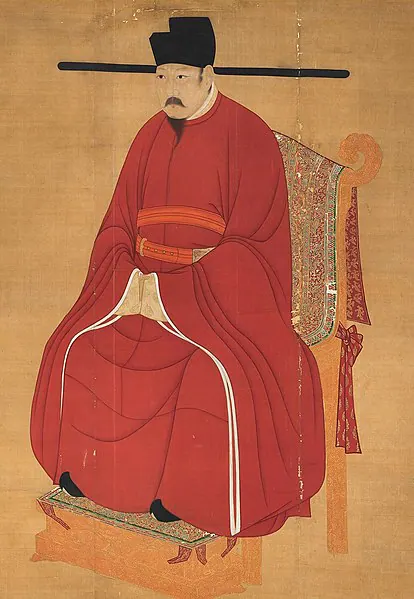
Zhao Zhen was the sixth son of Emperor Zhenzong and the only one to survive childhood. His name at birth was Zhao Shouyi. His mother was a palace attendant surnamed Li, but he was brought up by Zhenzong's consort, later Empress Liu, as her own son. By most accounts he learned who his mother was only after Liu's death.
When Zhenzong died in 1022, the new emperor was eleven years old. Empress Dowager Liu governed on his behalf and kept control of the court long after he came of age. She held power until her death in 1033, and only then did Renzong rule in his own right.
Liu was a capable administrator, and her regency was stable. One of its measures has a lasting place in economic history. In 1023 the government set up an office in Sichuan to take over the issue of jiaozi, the paper notes used there by merchants. They are generally regarded as the first paper money issued by a government.
War with the Western Xia and Peace with the Liao
In 1038 the Tangut leader Li Yuanhao declared himself emperor of the state known to historians as the Western Xia, on the Song north-west frontier. The Song refused to recognise him, and war followed. Song armies suffered heavy defeats in 1040, 1041 and 1042. The frontier was held largely thanks to commanders such as Fan Zhongyan and Han Qi.
A settlement was reached in 1044. Li Yuanhao accepted nominal Song overlordship, and in return the Song sent the Xia annual gifts of silk, silver and tea.
The Liao empire to the north took advantage of the war. In 1042 it pressed claims to Song territory, and the envoy Fu Bi negotiated a settlement instead. The annual payments agreed under Zhenzong were raised by 100,000 taels of silver and 100,000 bolts of silk. This was a heavy charge, but far cheaper than war, and the northern border stayed at peace for the rest of the reign.
The Qingli Reforms
The wars exposed deeper problems. The army had grown to more than a million men, and the civil service was swollen with officials who owed their posts to family privilege. The treasury was under strain. In 1043 Renzong brought Fan Zhongyan and Fu Bi into the government and asked them for proposals.
Fan answered with a memorial of ten points. It called for promotion on merit rather than seniority, and for limits on the privilege by which senior officials placed their sons in office. It also proposed examinations that tested policy rather than verse, government schools in the prefectures and better local administration. Ouyang Xiu and Han Qi were among its supporters.
The reforms, named after the Qingli era (1041–1048), threatened too many interests. Opponents accused the reformers of forming a faction, a serious charge at the Song court, and Ouyang Xiu replied with his well-known essay "On Factions". By 1045 Fan, Fu Bi and Han Qi had all been sent to posts in the provinces, and most of the measures were dropped.
The questions they raised returned a generation later, in the far larger reforms of Wang Anshi under Emperor Shenzong. Fan Zhongyan's own ideal survived in his "Record of Yueyang Tower", written in 1046 while he served away from the capital. Its closing lines describe the true official as the first to worry about the world's troubles and the last to enjoy its pleasures.
Government, Justice and Rebellion
Renzong was a cautious ruler who preferred consultation to command. He allowed the censors and remonstrating officials unusual freedom to criticise him. Upright officials such as Bao Zheng, later the hero of the popular "Judge Bao" stories, rose to high office in his reign. He is also said to have urged his judges to take particular care in capital cases.
The reign was not free of unrest. Soldiers and peasants rose in several provinces, and a rebellion at Beizhou in Hebei in 1047 took two months to put down. The most serious rising came in the far south. There the Zhuang leader Nong Zhigao proclaimed his own state in 1052 and besieged Guangzhou. The general Di Qing defeated him early in 1053.
Learning, Letters and Science
The court's patronage made the reign one of the great periods of Chinese literature. Ouyang Xiu led the movement for clear prose on classical models. Mei Yaochen wrote poems on the details of everyday life that later poets greatly admired.
In 1057 Ouyang Xiu was chief examiner of the metropolitan examination. The successful candidates that year included the brothers Su Shi and Su Zhe, the essayist Zeng Gong and the philosophers Zhang Zai and Cheng Hao. It is often called the most distinguished list in the history of the examinations.
Technical learning flourished too. The military compendium Wujing Zongyao, completed in 1044 at the emperor's command, contains the earliest known written formulas for gunpowder. In the Qingli era a commoner named Bi Sheng invented printing with movable clay type, a process recorded a few decades later by the scholar Shen Kuo.
Ceramics of the Renzong Reign
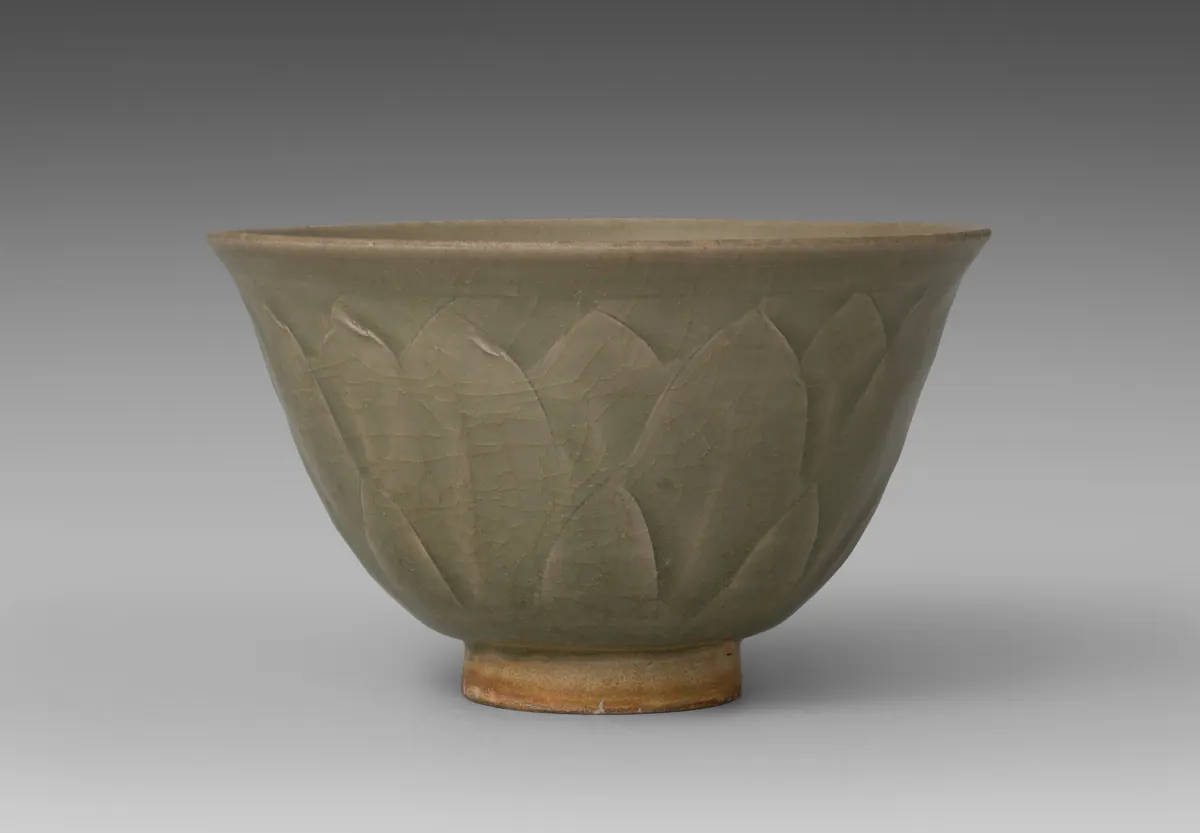
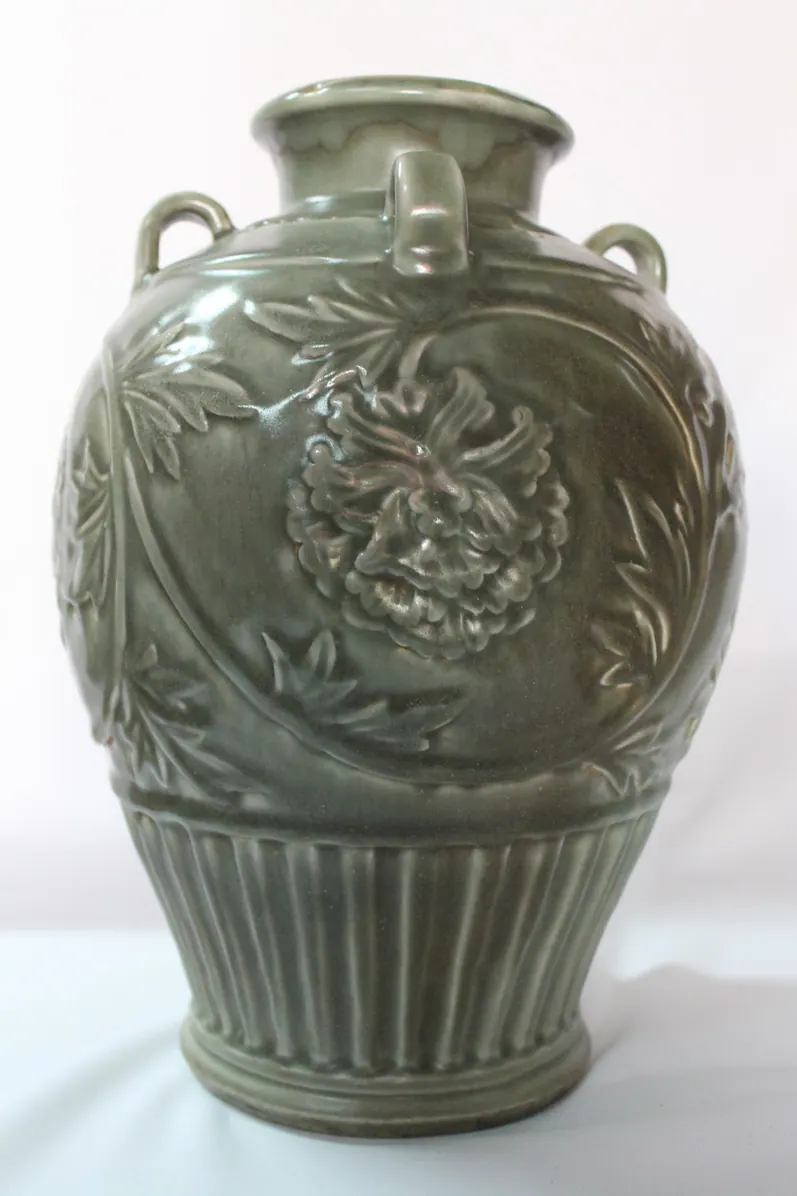
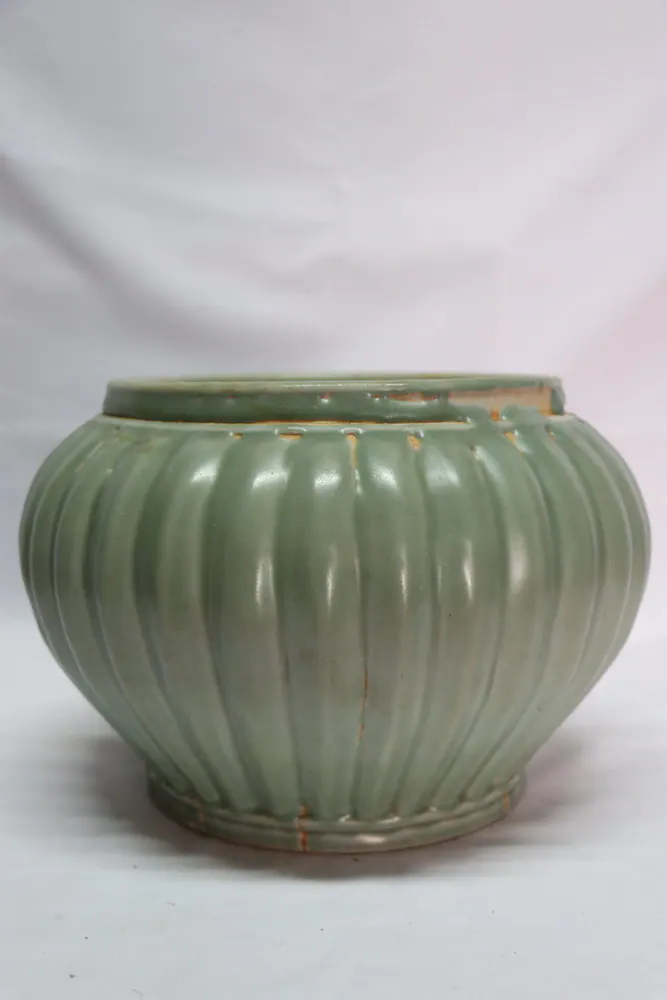
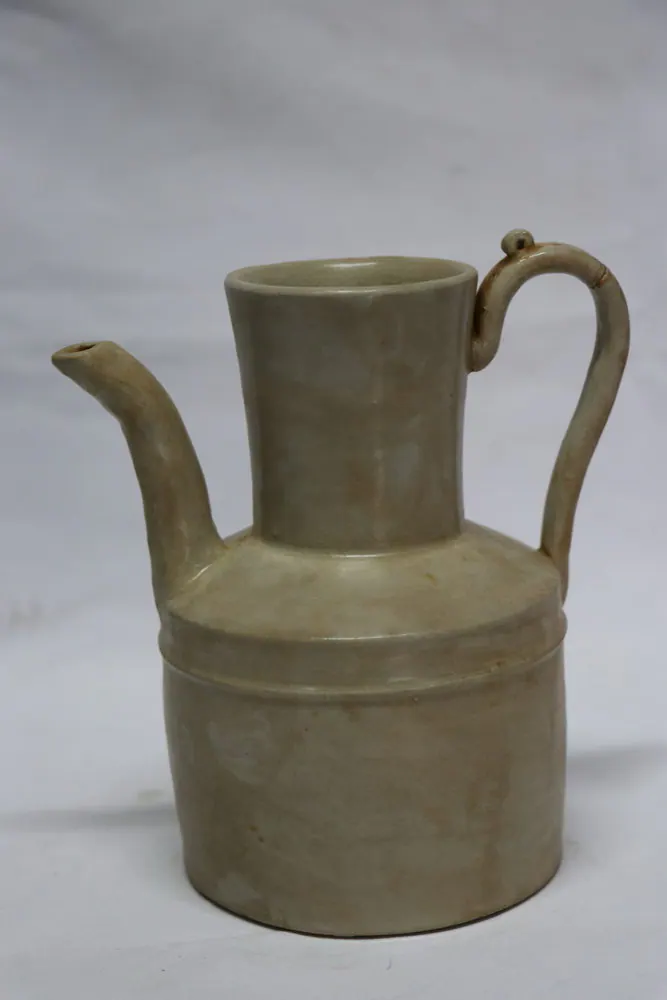
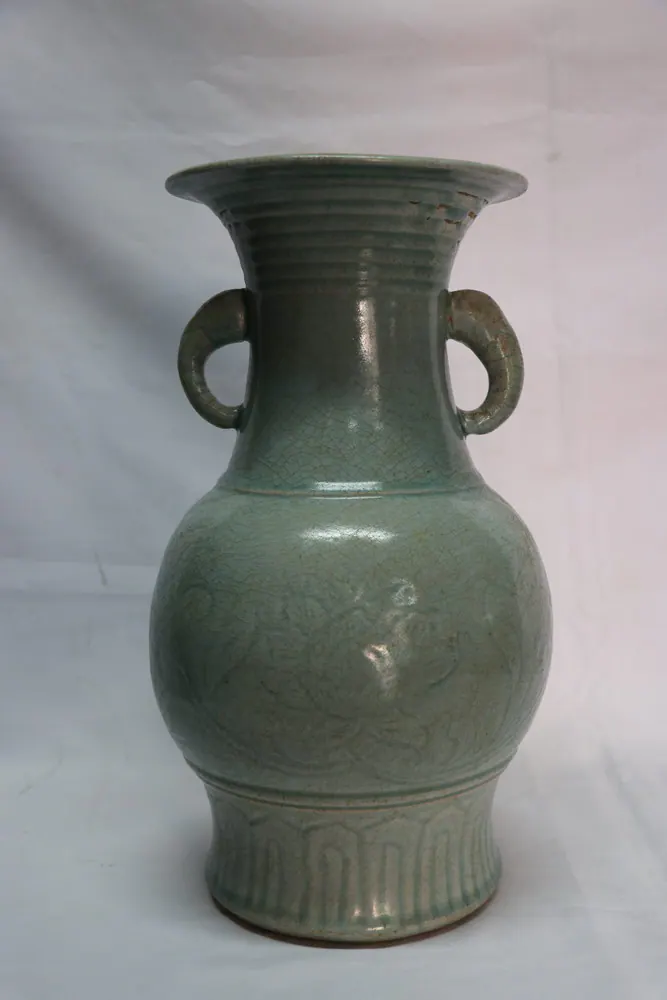
Renzong's four decades fall in the middle of the Northern Song, when the great ceramic traditions of the dynasty were well established. In the north, the Ding kilns of Hebei made fine white porcelain with an ivory tone, often with carved decoration. The Yaozhou kilns of Shaanxi made olive-green celadon, deeply carved or moulded. In the south, Jingdezhen was producing its pale bluish-white qingbai porcelain, and the Longquan kilns of Zhejiang were developing the celadons that reached their height under the Southern Song.
The fashion for whisked tea shaped the ceramics of the age. In the Huangyou era (1049–1054) the official Cai Xiang presented Renzong with his Record of Tea. It praises the dark-glazed bowls of Jian in Fujian, with their streaked "hare's fur" glaze, as the best for showing off the white froth. The celebrated Ru ware made for the court belongs to a later generation, at the end of the eleventh century and the start of the twelfth.
Celadon and qingbai wares of the Song can be seen in our Song dynasty porcelain collection.