Image Source: Public Domain
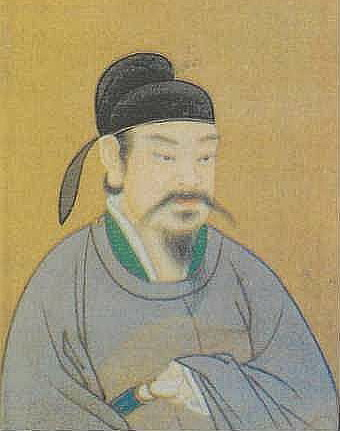
About Emperor Ruizong
Reign Years:710 – 712 A.D
Given Name: Li Dan
Reign Name:Emperor Ruizong – His Second Rule of the Tang

Image Source: Public Domain
Reign Years:710 – 712 A.D
Given Name: Li Dan
Reign Name:Emperor Ruizong – His Second Rule of the Tang
Emperor Ruizong of Tang was Emperor Gaozong’s son with his second wife, Empress Wu. When Gaozong died, his older brother, Li Xian, was instilled as Emperor Zhongzong of Tang. However, the empress had full control and power despite having an emperor present.
Unfortunately, his brother was demoted when the empress saw him trying to rule independently. Later, she named Ruizong as the Tang emperor but acted as a puppet under her control.
Emperor Ruizong was forced to step down from his first reign to have Empress Wu become ruler of the Tang. She took the throne as the empress regnant, where she created the new Zhou Dynasty. Doing so somehow interrupted the Tang Dynasty.
During this time, she demoted the Tang emperor’s position to crown prince, then changed his name to Lun. That was also the time she had him use her surname, Wu.
Yet in 710, a coup led by Ruizong’s son was initiated, thus, putting the Tang Dynasty emperor back in power. Unfortunately, his second rule as the Tang emperor was short-lived compared to the first.
The Second Reign of Emperor Ruizong
After taking back the throne, Emperor Ruizong was quickly faced with an issue. It was who should take the title of the crown prince.
Based on the Confucian principles of succession, Li Chengqi should take the title. Yet after declining, the Tang emperor made his other son, Li Longji, as the crown prince.
The Tang Dynasty emperor reversed a lot of Emperor Zhongzong’s actions. He even posthumously honored those people who lost their lives under Wu Zetian’s rule.
Emperor Ruizong was considered a meek ruler, so the court ended up being dominated by competing factions. These were parties of Princess Taiping and Li Longji.
Each time chancellors delivered proposals to the Tang emperor, he’d ask them whether they’d consulted Taiping and Longji first. He would only act if they consulted the two first.
At some point, the princess found that Longji wasn’t receptive to her influences. So, she started spreading lies about Longji’s offenses, hoping that it would remove him from his position.
In 711, a few chancellors attempted to fix the situation by sending the princess to the Pu Prefecture. They also had princes with better claims to the throne than Li Lonji, out of the capital. The chancellors planned to have them serve as prefects in certain areas.
In 712, the princess had astrologers warn Emperor Ruizong that their predictions showed a change in the emperor’s position. She believed that doing this would lead Ruizong to suspect Longji of plotting against him.
Instead, the Tang Dynasty emperor offered to pas Li Longji the throne. He reasoned that the predicted change would be something of an orderly transition in the court.
Princess Taiping opposed it while Li Longji declined. But due to the insistent demand of Emperor Ruizong, Longji accepted and then took the throne as Emperor Xuanzong.
But as suggested by Princess Taiping, Ruizong still retained most of the imperial power as retired emperor. With that, his edicts continued carrying greater force than Xuanzong’s.
During Emperor Ruizong’s time as retired emperor, Princess Taiping continued influencing and managing governmental matters via Ruizong. As for the government chancellors and officials, they were mostly her associates.
There were chancellors made at her recommendation. These were Xiao Zhizhong, Dou Huaizhen, Cui Shi, Cen Xi, and Lu Xiangxian. However, the latter wasn’t considered as part of her group.
With the approval of Emperor Xuanzong, general Zhang Wei and Liu Youqiu planned to mobilize the imperial guards. It was to have them kill a couple of those chancellors. However, Zhang informed the imperial censor, Deng Guangbin, of the plan, so the news was leaked immediately.
Liu was eventually arrested and was set for execution. However, Xuanzong interceded together with Emperor Ruizong. Instead, Liu, Deng, and Zhang were separated and exiled.
By 713, the princess, together with a couple of officials and generals, plotted to overthrow the Tang Dynasty emperor Xuanzong. It was even claimed that they had the lady in waiting, Lady Yuan, poison the aphrodisiac that Xuanzong routinely took.
However, Emperor Xuanzong ordered Wang Maozhong to take hundreds of troops to the imperial guard camp in July. It was to behead both Li Ci and Chang, who were part of those who plotted against the emperor. After, Cen, Xiao, Jia, and Li You were arrested, then executed as well.
When Ruizong heard of this, he immediately ascended the Chengtian Gate tower to ascertain the situation. Guo then reported Xuanzong’s intentions, and Ruizong felt compelled to confirm Xuanzong’s actions in an edict.
The next day, the retired Tang emperor Ruizong issued an edict that transferred all authorities to Xuanzong. He then moved to Baifu Hall, a secondary palace.
Meanwhile, Princess Taiping fled to a temple somewhere in the mountains and only appeared after three days. Xuanzong then ordered her to commit suicide while putting her sons and associates to death.
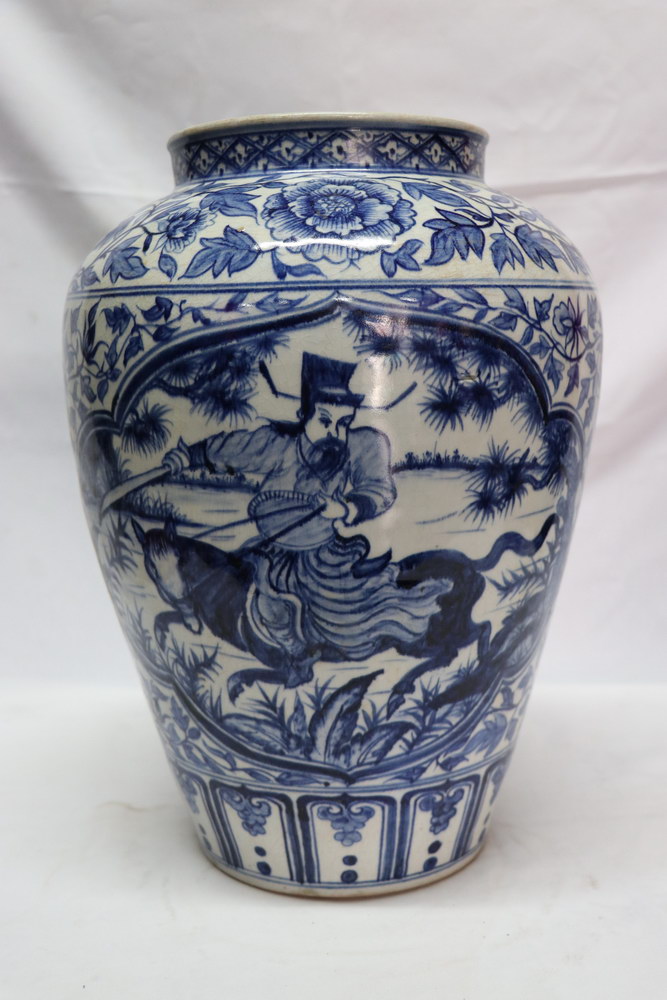
This magnificent ฺBlue and White Ming vase is perfectly preserved with traditional cobalt oxide blue tones that still glow like the first day. The piece begins with a slim foot that makes way for exquisitely defined arches spread across the base.
Buy Now!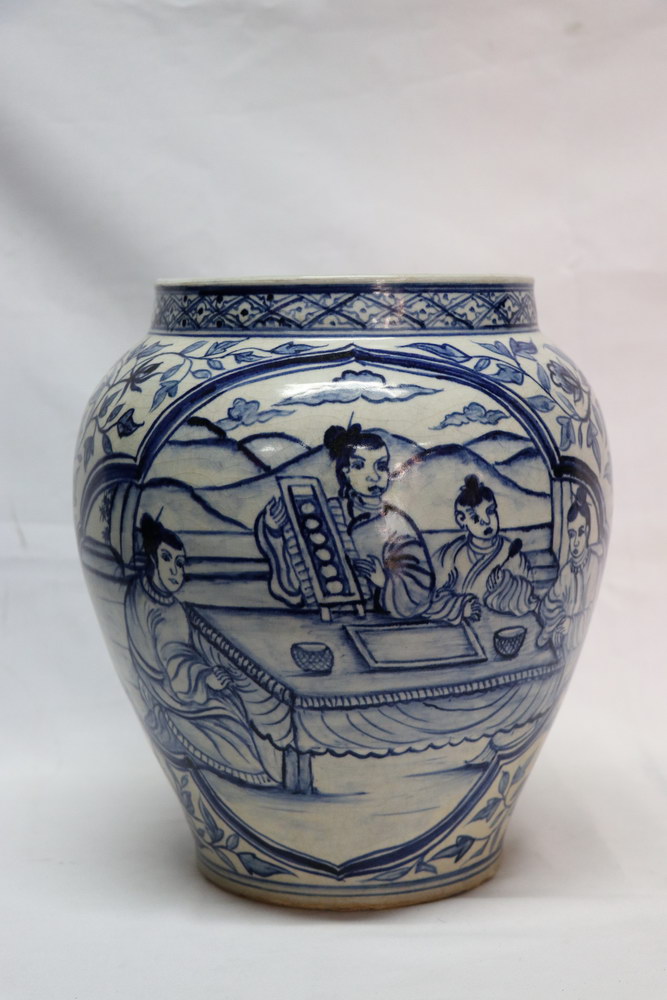
The blue glaze of the traditional cobalt oxide of this early Ming Dynasty porcelain jar shines like the first day.Its base with a slim foot opens the way to a double-line medallion that cements the main figure
Buy Now!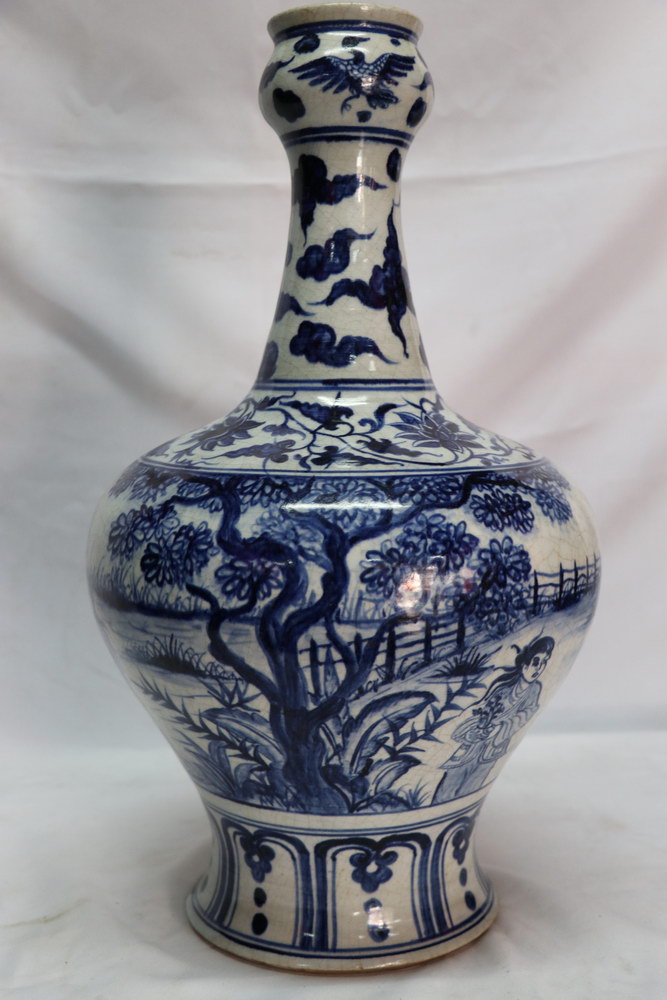
This elegant blue and white Ming vase was painted exclusively in exquisite blue tones of traditional cobalt oxide has been superbly preserved. Its base begins with elegant floral arches between two double medallions.
Buy Now!In 716, Emperor Ruizong died at Baifu Hall. He was buried in the imperial temple with Xuanzong’s mother, Consort Dou. She was posthumously honored as an empress.
To seek blessings for Emperor Ruizong, Emperor Xuanzong had Princess Wan’an, his daughter, become a Taoist nun.