
Emperor Jingzong (敬宗), born Li Zhan (李湛, 809–827), ruled the Tang dynasty from 824 to 827. He was the eldest son of Emperor Muzong and came to the throne as a boy of fourteen. His only era name was Baoli (寶曆, 825–827). He cared little for government, spent his time on polo, hunting and entertainment, and after little more than two years on the throne was murdered by the eunuchs and athletes who shared his amusements.
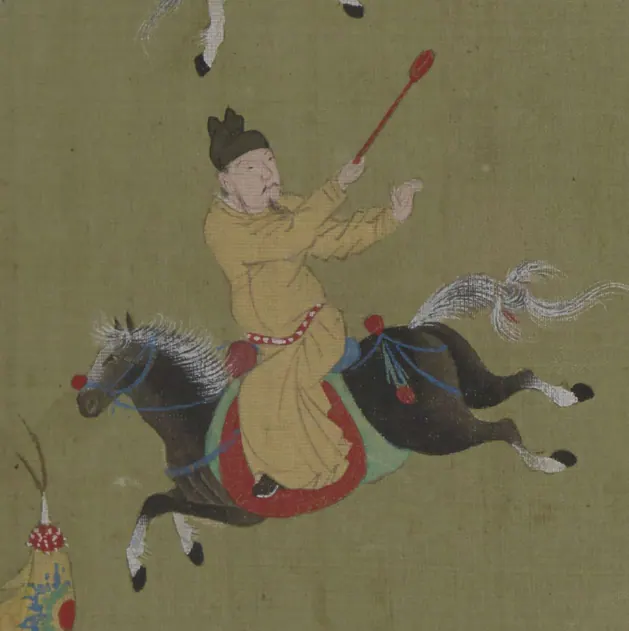
Tang Dynasty824–827
Emperor Jingzong
寶曆
Reign facts
- Reigned
- 824–827 (3 years)
- Lived
- 809–827
- Personal name
- Li Zhan 李湛
- Temple name
- Jingzong 敬宗
- Era name
- Baoli 寶曆 825–827
Before the Throne
Li Zhan was born in 809, the eldest son of Li Heng, then Prince of Sui, and of his concubine Consort Wang. When Emperor Xianzong died in 820, Li Heng succeeded him as Emperor Muzong, and in 821 Li Zhan was created Prince of Jing.
Late in 822, while Muzong was playing polo, one of the eunuchs in the game was thrown from his horse. The emperor was badly frightened and soon afterwards suffered a stroke that left him unable to walk. His officials urged him to name an heir, and Li Zhan was made crown prince.
Muzong partly recovered but fell ill again at the start of 824 and asked his son to act as regent. Some of the eunuchs suggested that Muzong's mother, the Empress Dowager Guo, should take charge of the government instead. She refused, saying that she had no wish to follow the example of Wu Zetian. Muzong died that same night, and Li Zhan took the throne.
The Reign of Emperor Jingzong
Jingzong honoured his grandmother as Grand Empress Dowager and his mother as Empress Dowager. Real power lay with the eunuchs who commanded the palace armies, above all Wang Shoucheng, and with the chancellor Li Fengji.
The young emperor showed little interest in government. He arrived late for court audiences, sometimes leaving his officials waiting for hours, and spent his days on polo, wrestling, music and feasting, rewarding eunuchs, musicians and entertainers with silks, offices and treasure. He was especially fond of hunting foxes by night. Officials who criticised him were sometimes rewarded for their frankness, but there is little sign that he changed his ways.
His neglect of security was shown in 824, only a few months into the reign. A fortune-teller, Zhang Shao, and a group of more than a hundred workers from the imperial dye works hid weapons in carts, broke into the palace while the emperor was playing polo and reached the inner halls. Jingzong fled to the camp of the Shence Army, whose troops killed the intruders.
Beyond the capital, the gains of Xianzong's reign were already slipping away. The Hebei provinces had broken free of the court again under Muzong, and Jingzong's government made no serious attempt to recover them.
The Belitung Shipwreck: A Dated Cargo
For collectors of Tang ceramics, Jingzong's reign has a very precise significance. In 1998 the wreck of an Arab-style sewn ship was found off Belitung Island, Indonesia, still carrying a cargo of about 60,000 Chinese ceramics bound for the Persian Gulf. One Changsha bowl in the cargo is inscribed with a date in the second year of Baoli, Jingzong's era, equivalent to 826.
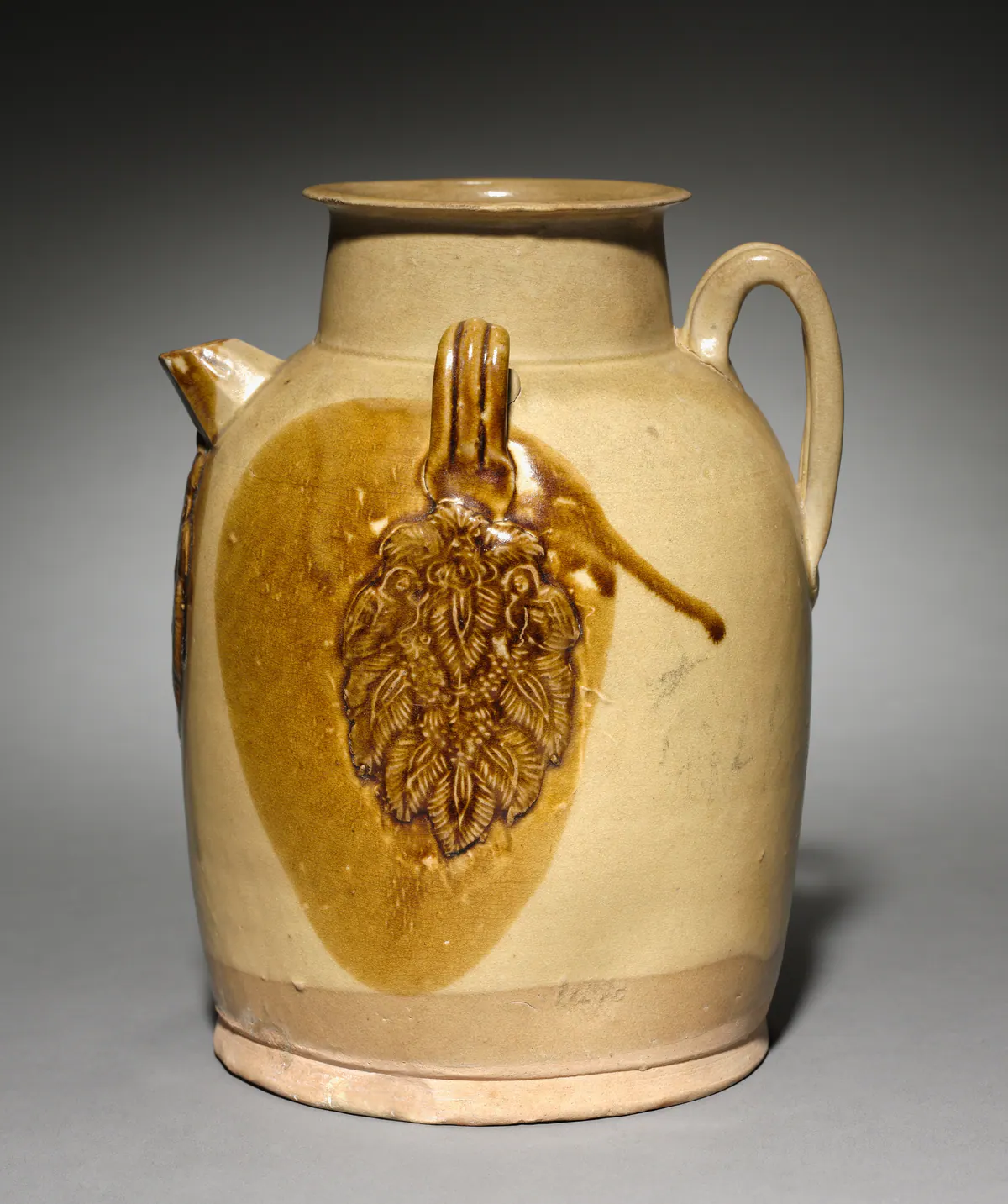
The cargo is therefore a dated snapshot of Chinese export ceramics in the 820s. Most of it consists of Changsha bowls painted under the glaze in brown and green, but it also includes Yue celadons, northern white wares, green-splashed wares and three dishes painted in underglaze cobalt blue, among the earliest complete pieces of Chinese blue and white known. The collection is now in the Asian Civilisations Museum in Singapore. Our article on Tang dynasty art and inventions describes the period's crafts more widely.
Death of Emperor Jingzong
Jingzong's closest companions were eunuchs, polo players and strongmen who wrestled with him and were richly rewarded. He was also quick-tempered: those who displeased him could be beaten, exiled or have their property seized, and many of his attendants came to fear and resent him.
At the start of 827, after a night of fox hunting, Jingzong returned to the palace to drink with a group of eunuchs, among them Liu Keming, Tian Wucheng and Xu Wenduan, and several polo players. When he left the room to change his clothes, the candles were suddenly put out, and he was killed. He was seventeen.
Liu Keming had the scholar Lu Sui draft a will in the dead emperor's name placing Li Wu, Prince of Jiang, a younger brother of Muzong, in charge of the state. The eunuchs who commanded the palace armies, led by Wang Shoucheng, refused to accept this. Their troops killed Liu Keming, his fellow conspirators and Li Wu, and they placed Jingzong's younger brother Li Ang on the throne as Emperor Wenzong.
The wares that followed: Song porcelain
The collection begins with the Song dynasty. These pieces show the porcelain that followed this period.
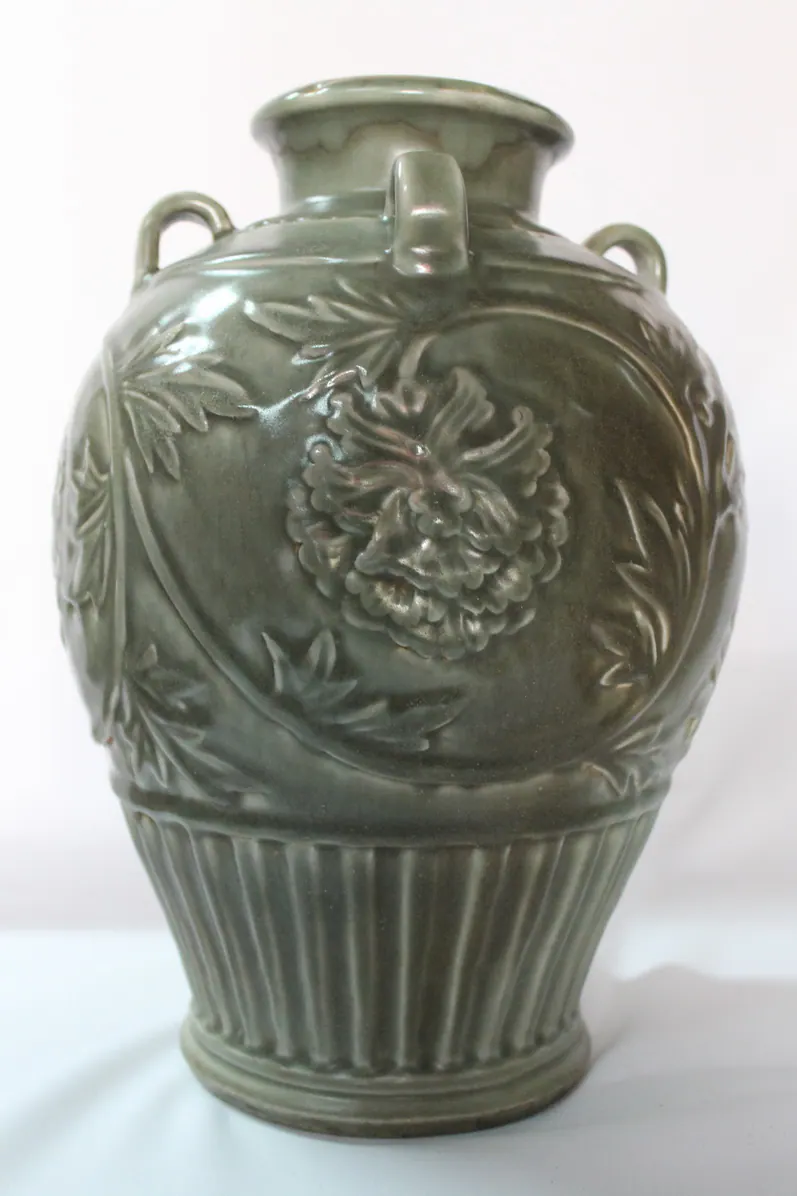 Song Dynasty PorcelainCeladon Vase with Carved Peony Medallions, Song to Yuan DynastySong Dynasty Porcelain
Celadon Vase with Carved Peony Medallions, Song to Yuan Dynasty
Request priceView full details and all photos →Ovoid celadon vase with loop handles round the neck, the shoulder carved in relief with peony blossoms in large round medallions above a fluted lower body, Song to Yuan dynasty.
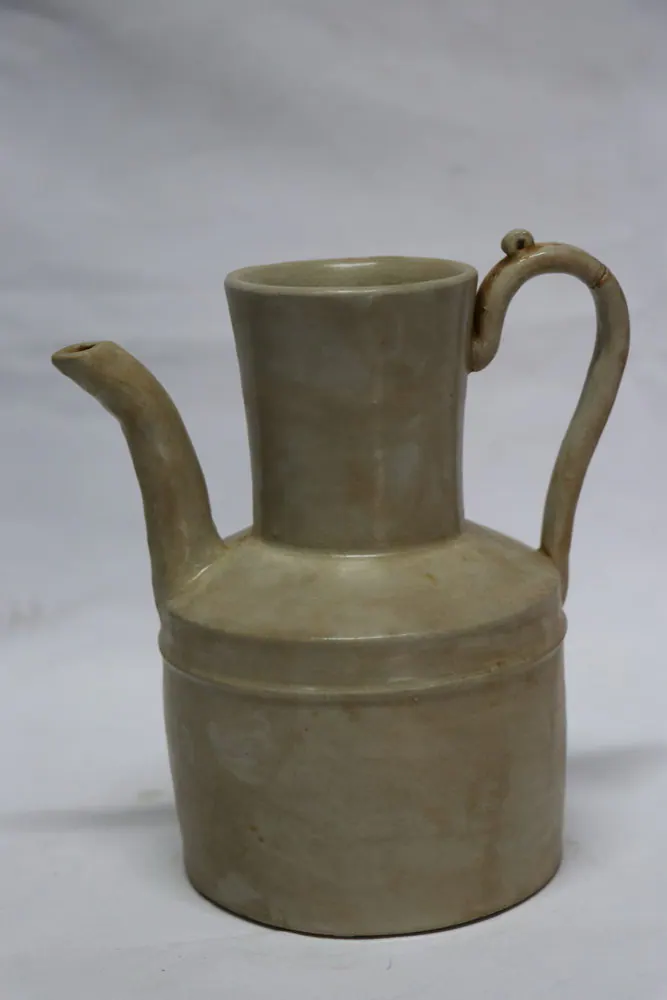 Song Dynasty PorcelainEwer with a Pale Glaze and a Ridged Shoulder, Song DynastySong Dynasty Porcelain
Ewer with a Pale Glaze and a Ridged Shoulder, Song Dynasty
Request priceView full details and all photos →Undecorated ewer under a pale greyish buff glaze, with a straight-sided body, a raised ridge below the shoulder, a tall neck, a curved spout and a loop handle, Song dynasty.
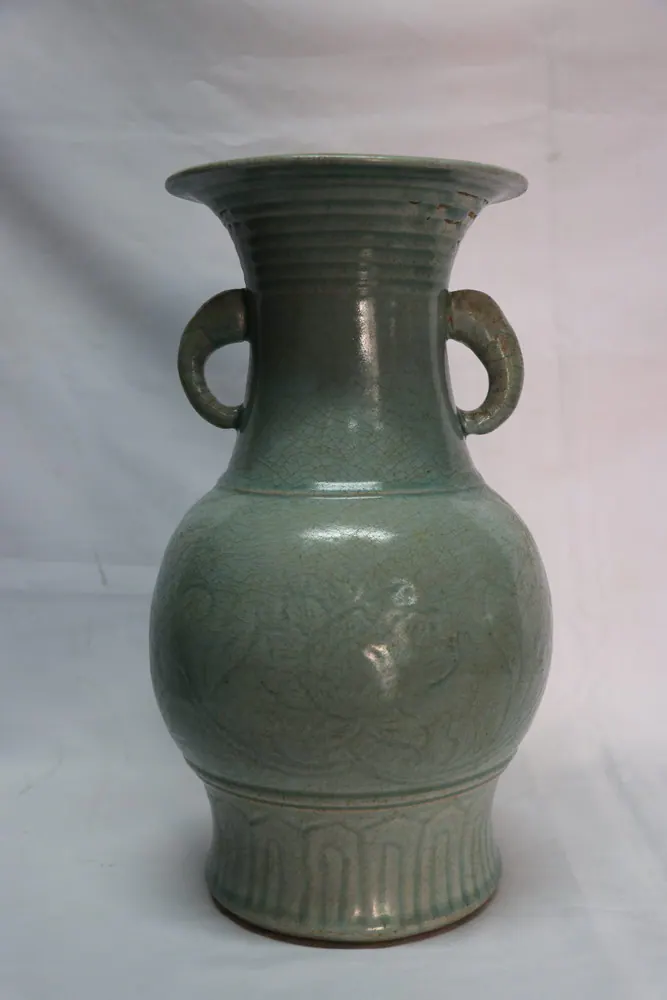 Song Dynasty PorcelainCeladon Vase with Two Loop Handles and Carved Lotus, Song DynastySong Dynasty Porcelain
Celadon Vase with Two Loop Handles and Carved Lotus, Song Dynasty
Request priceView full details and all photos →Celadon vase with a ribbed, flaring neck and two loop handles, the rounded body carved with lotus among leaves and stems, Song dynasty.
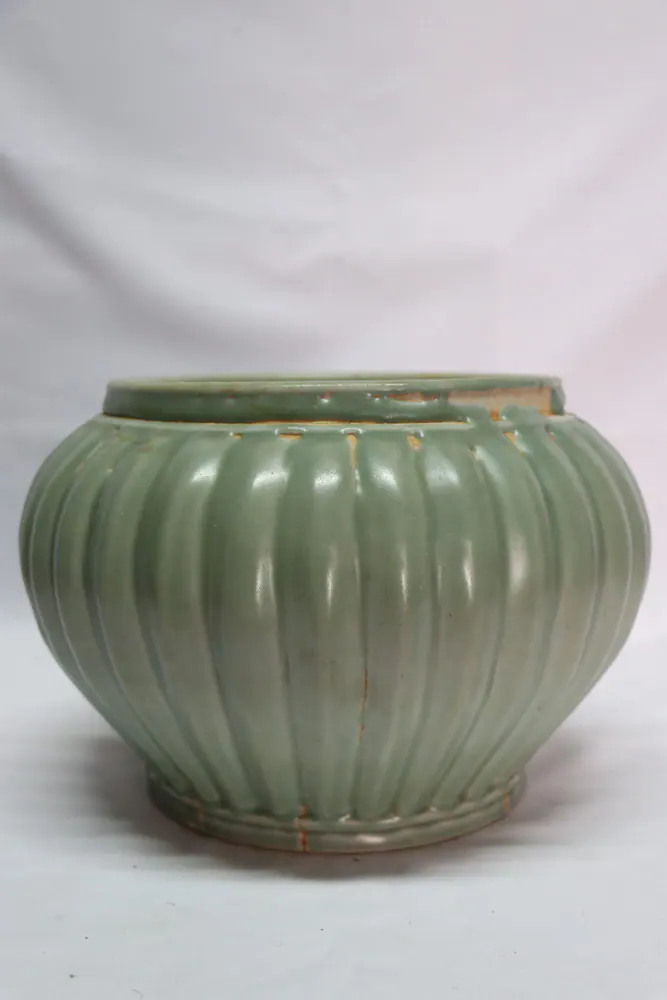 Song Dynasty PorcelainCeladon Jar with a Fluted Melon-Shaped Body, Song DynastySong Dynasty Porcelain
Celadon Jar with a Fluted Melon-Shaped Body, Song Dynasty
Request priceView full details and all photos →Squat celadon jar with a fluted, melon-shaped body and a short upright rim, covered in an even grey-green glaze, Song dynasty.
Be the first to see new pieces
Join our collectors' list for new arrivals, rare finds and private offers.