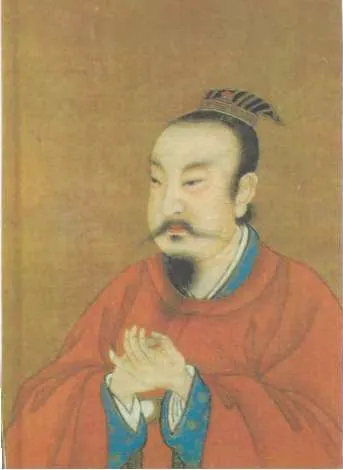
Portrait: public domain, via wikipedia.org

Tang Dynasty779–805

Emperor Dezong

建中 · 興元 · 貞元

Reign facts
Reigned
779–805 (26 years)
Lived
742–805
Personal name
Li Kuo 李适
Temple name
Dezong 德宗
Era names
Jianzhong 建中 780–783Xingyuan 興元 784Zhenyuan 貞元 785–805

Li Kuo (李适), known by his temple name Dezong, ruled the Tang Dynasty from 779 to 805. He was the eldest son of Emperor Daizong, and his reign of twenty-six years was one of the longest of the dynasty. He used three era names: Jianzhong (780–783), Xingyuan (784) and Zhenyuan (785–805).

He began as a frugal and energetic ruler, determined to restore the authority of the court after the An Lushan Rebellion. His tax reform of 780 was one of the most important in Chinese history. But his attempt to bring the provincial governors to heel led to a wider war and a mutiny that drove him from his capital. In his later years he treated the provinces cautiously, distrusted his officials and placed the palace armies in the hands of eunuchs.

Early Life

Li Kuo was born in 742 in the capital, Chang'an, during the reign of his great-grandfather, Emperor Xuanzong. His father was Li Chu, then Prince of Guangping and later Emperor Daizong, and his mother was Consort Shen. As a boy he was made Prince of Fengjie.

When the An Lushan Rebellion broke out in 755, the court fled Chang'an. Xuanzong escaped to Sichuan, while his son, the future Emperor Suzong, went north with Li Chu and rallied the loyalist armies. Li Kuo's movements are not recorded, but he probably stayed with his father. His mother was less fortunate. Left behind, she was captured by the rebels, briefly recovered when the Tang retook Luoyang, and lost again when the city fell a second time. She was never found.

In 762 Li Kuo was given nominal command of the armies that finally defeated the rebels, and in 764 his father, by then emperor, made him crown prince. He succeeded to the throne on Daizong's death in 779.

The Early Reign

Dezong quickly marked a break with his father's court. He sent away many palace women, released animals kept in the imperial menagerie, cut back tribute from the provinces and forbade eunuchs sent on imperial errands to accept gifts. He exiled the chancellor Chang Gun, whom he considered too powerful, and appointed Cui Youfu, on whose recommendation Yang Yan also became chancellor.

He also moved against powerful governors where he could. Cui Ning, who had governed Xichuan in Sichuan for more than a decade with little regard for the court, was kept at Chang'an when he came to pay his respects, and the court took back control of his province.

The Two-Tax Reform of 780

Yang Yan's great achievement was the two-tax system (liangshui fa), introduced in 780. The old system of taxes and labour service, which assumed that every household held an equal allotment of land, had collapsed during the rebellion. It was replaced by a tax assessed on each household's actual land and property, paid twice a year, in summer and autumn, and largely reckoned in money. Merchants were brought into the system for the first time.

The reform gave the Tang a workable source of revenue for the rest of the dynasty, and the principle of taxing property twice a year lasted for centuries.

War with the Provinces

Since the rebellion, the military governors (jiedushi) of the north-east had ruled their provinces almost as independent states and passed them on to their sons. In 781 the governor of Chengde, Li Baochen, died, and his son asked to succeed him. Dezong refused, as he meant to refuse all such hereditary claims. Chengde, Weibo and Pinglu rose in revolt, and the war soon spread. In 782 four rebel governors proclaimed themselves princes, and Li Xilie in Huaixi, whom the court had sent against the rebels, joined the rising.

The Jingyuan Mutiny of 783

Late in 783 troops from the Jingyuan circuit, passing through Chang'an on their way to the front, mutinied over poor rations and rewards and sacked the city. Dezong fled to Fengtian, north-west of the capital, where he was besieged. The mutineers made Zhu Ci, a former general, their emperor.

Early in 784 the emperor issued an edict blaming himself for the disaster and pardoning most of the rebel governors. Soon afterwards the general Li Huaiguang, who had come to his rescue, rebelled as well, and Dezong fled again, to Liangzhou in the south-west. The loyal general Li Sheng recaptured Chang'an later that year, and the emperor returned. Zhu Ci was killed while fleeing, and Li Xilie was killed by one of his own officers in 786.

Three Lasting Consequences

Caution towards the governors. Having nearly lost his throne, Dezong never again challenged the north-eastern governors directly. Hereditary succession in the provinces went largely unchecked for the rest of his reign.

The rise of the eunuchs. Dezong had begun his reign wary of eunuch influence. But during the flight of 783 the regular palace guard failed him, while eunuchs such as Dou Wenchang and Huo Xianming stood by him. He came to trust them above his officials, and in 796 he formally placed the Shence Armies, the main palace forces, under eunuch commanders. This gave the eunuchs a power base that allowed them to dominate the court, and even to make and unmake emperors, in the ninth century.

From frugality to greed. The emperor who had cut back tribute began to demand it. After his return to Chang'an he encouraged provincial governors to send him private gifts, and eunuch purchasing agents for the palace, who paid little or nothing for goods in the markets of the capital, became notorious.

Relations with Tibet

Tibet had taken much of the Tang north-west during and after the An Lushan Rebellion. Dezong made peace with Tibet in 783, but relations broke down again, and in 787 a Tibetan army ambushed the Tang delegation at a peace meeting at Pingliang. The court later sought alliances with the Uyghurs and with the kingdom of Nanzhao in the south-west to contain Tibetan power.

Ceramics in Dezong's Time

For collectors, the late eighth century is the period in which tea drinking spread widely in China, with lasting effects on ceramics. The Classic of Tea by Lu Yu, completed around 780, compares the tea bowls of the leading kilns and ranks the green-glazed Yue wares of the south above the white wares of Xing in the north. More on the period can be found in our page on Tang Dynasty art and inventions.

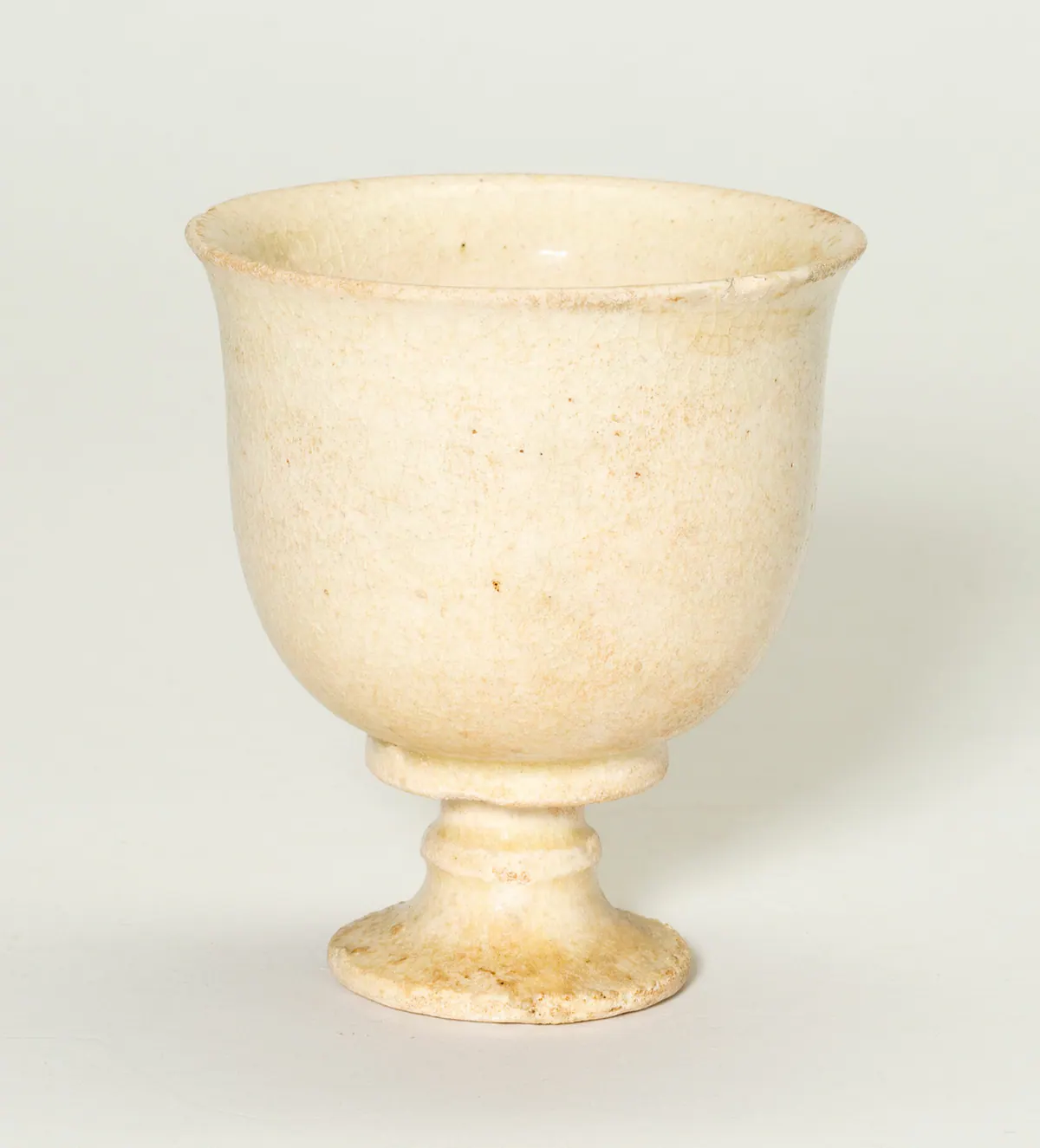
A small stoneware stem cup with a deep rounded bowl, a ringed stem and a spreading foot, covered in a finely crackled ivory-white glaze.
Museum exampleStoneware stem cup with an ivory glaze, dated by the museum to the 8th century, when Lu Yu was comparing the white wares of the north with Yue celadon.Art Institute of Chicago, 1930.498. Public domain.

Death of Emperor Dezong

At the end of 804 the crown prince, Li Song, suffered a stroke that left him unable to speak. Dezong, already unwell, is said to have been deeply distressed by his son's illness. He died early in 805.

Li Song succeeded him as Emperor Shunzong, but his illness made him unable to rule, and he abdicated in favour of his son, Emperor Xianzong, the same year.

The wares that followed: Song porcelain

View all pieces in the collectionAsk about a piece

Be the first to see new pieces

Join our collectors' list for new arrivals, rare finds and private offers.