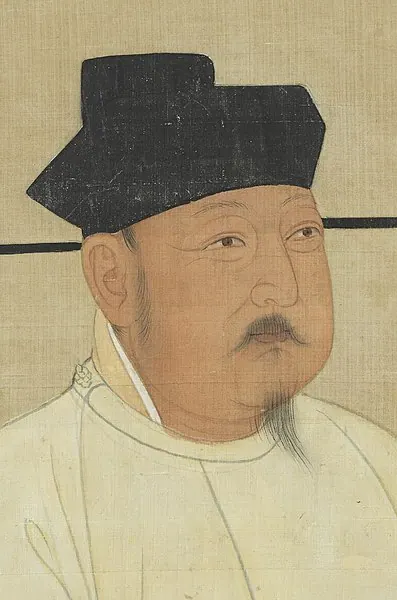
Portrait: public domain, via wikipedia.org

Northern Song976–997

Emperor Taizong of Song

太平興國 · 雍熙 · 端拱 …

Reign facts
Reigned
976–997 (21 years)
Lived
939–997
Personal name
Zhao Guangyi 趙光義
Temple name
Taizong 太宗
Era names
Taiping Xingguo 太平興國 976–984Yongxi 雍熙 984–987Duangong 端拱 988–989Chunhua 淳化 990–994
1 moreZhidao 至道 995–997
On this page
  1. Early Life and Accession
  2. Reunification and War with the Liao
  3. Civil Government and Learning
  4. The Succession and Taizong's Death
  5. Ceramics in Taizong's Reign

Emperor Taizong, whose personal name was Zhao Guangyi (趙光義), was born in 939 and died in 997. The younger brother of the founder, Emperor Taizu, he was the second emperor of the Song dynasty and reigned from 976 to 997, beginning with the era name Taiping Xingguo (976–984) and ending with Zhidao (995–997).

Born Zhao Kuangyi, he changed his name to Zhao Guangyi in 960 so as not to share a character with his brother's personal name, and after taking the throne he was known as Zhao Jiong. He completed the reunification of China that Taizu had begun, but his attempts to take the northern frontier lands from the Khitan Liao ended in heavy defeats. At home he built the civil, examination-based state that shaped the Song for the rest of its history.

Early Life and Accession

Zhao Guangyi was twelve years younger than his brother. When Taizu seized the throne of the Later Zhou in 960, Guangyi is said to have been among those who organised the coup. During his brother's reign he served for many years as prefect of Kaifeng, the capital, an office that gave him great influence at court, and in 973 he was made Prince of Jin.

Taizu died suddenly one winter night in 976, at the age of 49, and Guangyi took the throne in place of Taizu's grown sons. The succession has been debated ever since. A later account tells of candle shadows and the sound of an axe in the emperor's chamber on the night he died, and some historians have suspected foul play, though nothing was ever proved.

In 981 the minister Zhao Pu produced a document, known as the Golden Casket pact, said to record a promise made to the brothers' mother, Empress Dowager Du, that Taizu would pass the throne to his brother. Whatever its origin, it strengthened Taizong's claim. Within a few years the other possible heirs were gone. Taizu's son Zhao Dezhao took his own life in 979, his fourth son Zhao Defang died in 981, and the emperor's younger brother Zhao Tingmei was demoted in 982 and died in exile in 984.

Reunification and War with the Liao

The Last Independent States

Taizong completed the reunification his brother had begun. In 978 the rulers of Wuyue and of the Zhangzhou and Quanzhou region on the south-east coast surrendered their territories peacefully. In 979 he led the campaign against the Northern Han himself. Its capital, Taiyuan, was besieged, a Liao relief army was driven back, and the Northern Han ruler surrendered. The conquest brought the Five Dynasties and Ten Kingdoms period to a close. The old city was afterwards razed, and a new Taiyuan was built nearby.

Gaoliang River, 979

Straight after this victory, Taizong marched on Youzhou (modern Beijing), the chief city of the Sixteen Prefectures, a band of northern territory held by the Khitan Liao. At the Gaoliang River in 979 his army was routed and the emperor, wounded, escaped with difficulty. It was the first great defeat of the Song army, and it pushed the dynasty towards a defensive stance in the north.

During the confusion some officers had proposed making Taizu's son Zhao Dezhao emperor. Taizong's suspicion of his nephew afterwards is well recorded, and Dezhao took his own life later the same year.

The Yongxi Campaign, 986

In 982 the Liao emperor Jingzong died and was succeeded by his young son, Shengzong, with the Empress Dowager Xiao as regent. Seeing an opportunity, Taizong launched a new offensive in 986, during the Yongxi era. Three armies were sent to converge on Youzhou from different directions.

The eastern army under Cao Bin took Zhuozhou but had to withdraw for lack of supplies. When it advanced again, poorly coordinated with the other armies, it was caught by Liao forces under the Empress Dowager and the general Yelü Xiuge and almost destroyed at Qigou Pass. The western army was also forced back, and its general Yang Ye was captured and died in Liao hands. The campaign ended in failure, and the frontier remained hostile until Taizong's successor, Emperor Zhenzong, agreed the Treaty of Chanyuan in 1005.

Civil Government and Learning

After the failures against the Liao, Taizong gave his attention to government at home. He carried on the centralising policies begun under the Later Zhou and continued by his brother. The power of the regional military governors (jiedushi) was further reduced, and authority was concentrated in the hands of the emperor and the court.

His most lasting work was the expansion of the civil service examinations. Many more candidates than before were admitted to office, and the examinations became the main route into government, producing a bureaucracy of scholar-officials loyal to the throne rather than to military patrons. In 997 the empire was divided into fifteen circuits (lu), each supervised by officials appointed by the court.

Taizong sponsored great compilations of learning. The Taiping Guangji, a vast collection of stories, was completed in 978 and the Taiping Yulan encyclopedia in 983, both named after his first era, Taiping Xingguo. A third, the Wenyuan Yinghua, gathered the finest literature of earlier ages. In 992 he had a collection of model calligraphy from the imperial collection carved on wooden blocks so that rubbings could be taken, the Chunhua Ge Tie, which shaped the study of calligraphy for centuries.

Unrest at the Edges

The reign was not peaceful everywhere. From 982 the Tangut leader Li Jiqian resisted Song control in the north-west, the beginning of the power that later became the Western Xia. In Sichuan a rising led by Wang Xiaobo and Li Shun broke out in 993 and took Chengdu in 994 before it was put down.

The Succession and Taizong's Death

Taizong's own succession was troubled. His eldest son, Zhao Yuanzuo, became mentally ill and was removed after setting fire to his palace in 985, and the second son, Zhao Yuanxi, died in 992. In 995 the third son, Zhao Heng, was named crown prince.

Taizong died in 997. Empress Li and the eunuch Wang Ji'en tried to place Zhao Yuanzuo on the throne instead, but the chancellor Lü Duan outmanoeuvred them, and Zhao Heng succeeded as Emperor Zhenzong. The settlement the two brothers built, which relied on the civil bureaucracy rather than the army, shaped the Song state for the rest of its history.

Ceramics in Taizong's Reign

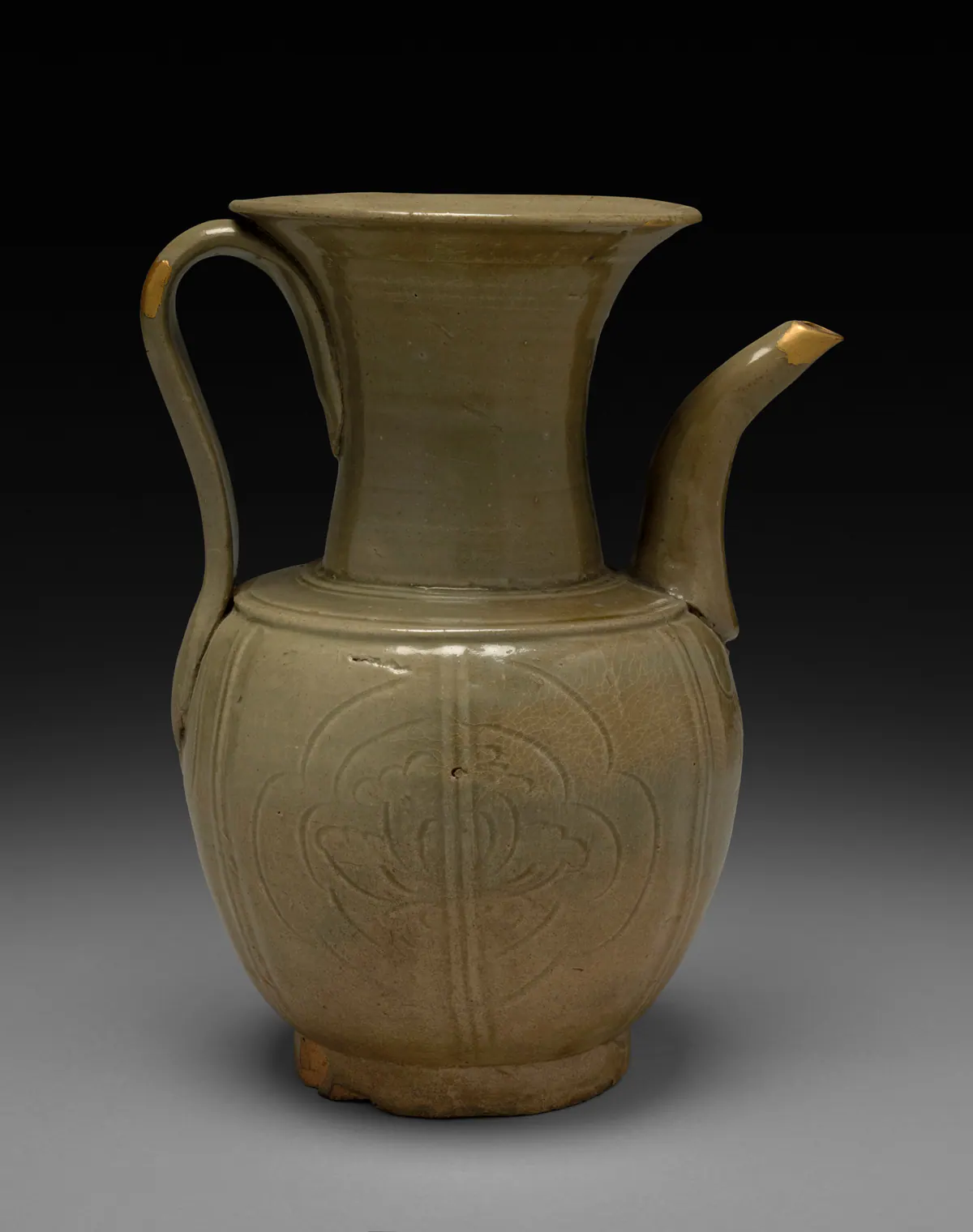
The ceramics of Taizong's reign belong to the early Northern Song, when many kilns were still working in late Tang and Five Dynasties traditions. Until Wuyue surrendered its lands in 978, its rulers sent large quantities of Yue ware, the green-glazed ware of Zhejiang, to the Song court as tribute. In Hebei the Ding kilns were already making fine white wares; examples were found in the crypt of a pagoda at Dingzhou sealed in 977, and finds with a firm date like this are how specialists date early Ding.

A Yue ware wine jug with a tall flared neck, a strap handle and a curved spout, its olive-green glaze over a lobed body with faint incised flower medallions.
Museum exampleYue ware wine jug from Zhejiang, 900s: the green-glazed ware that Wuyue sent to the Song court as tribute until it surrendered its lands in 978.Cleveland Museum of Art, 1928.177. Public domain (CC0).

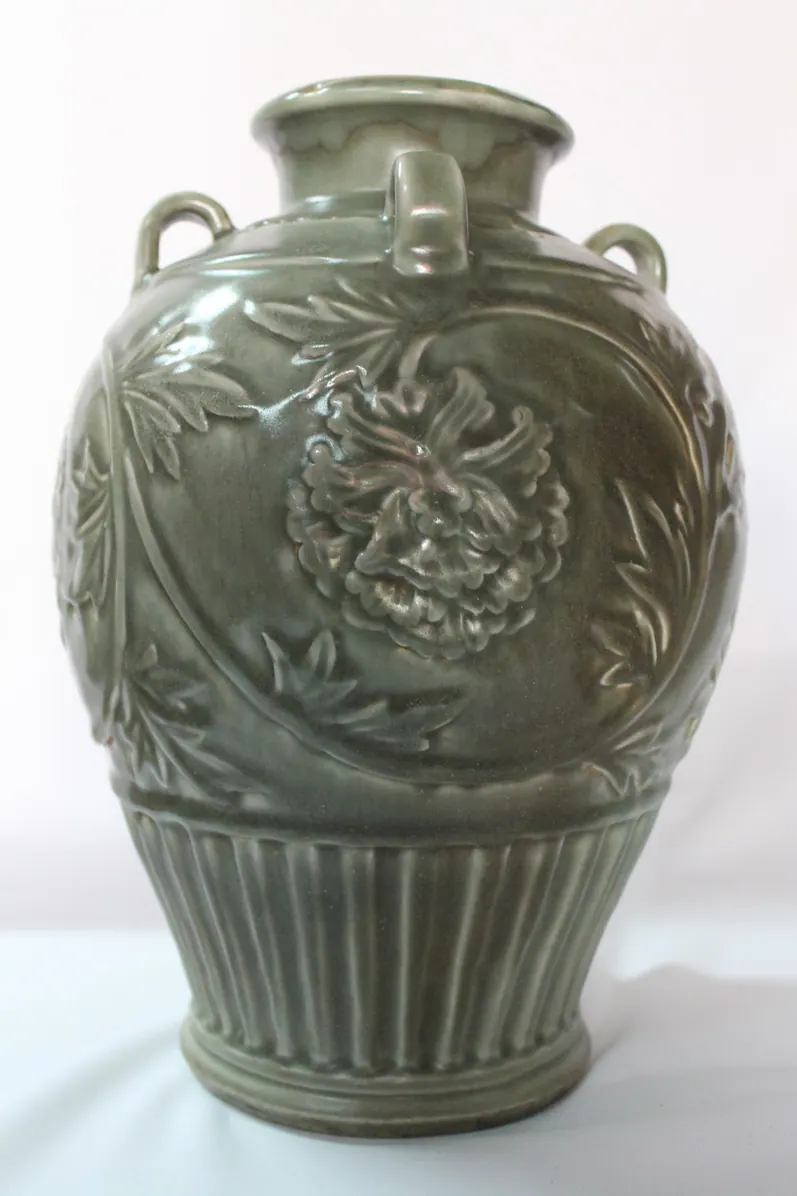
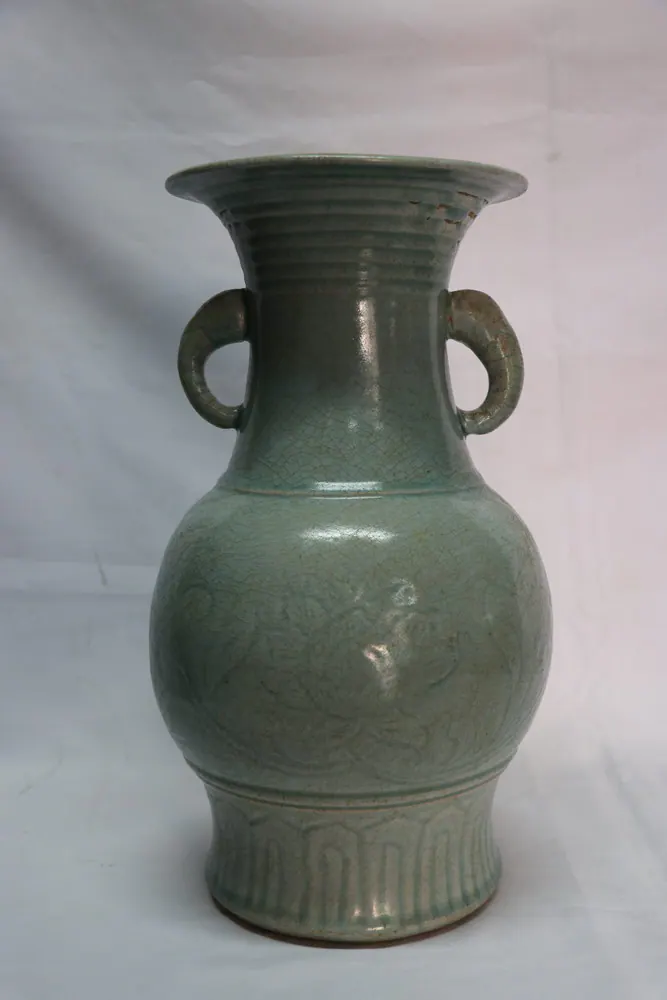
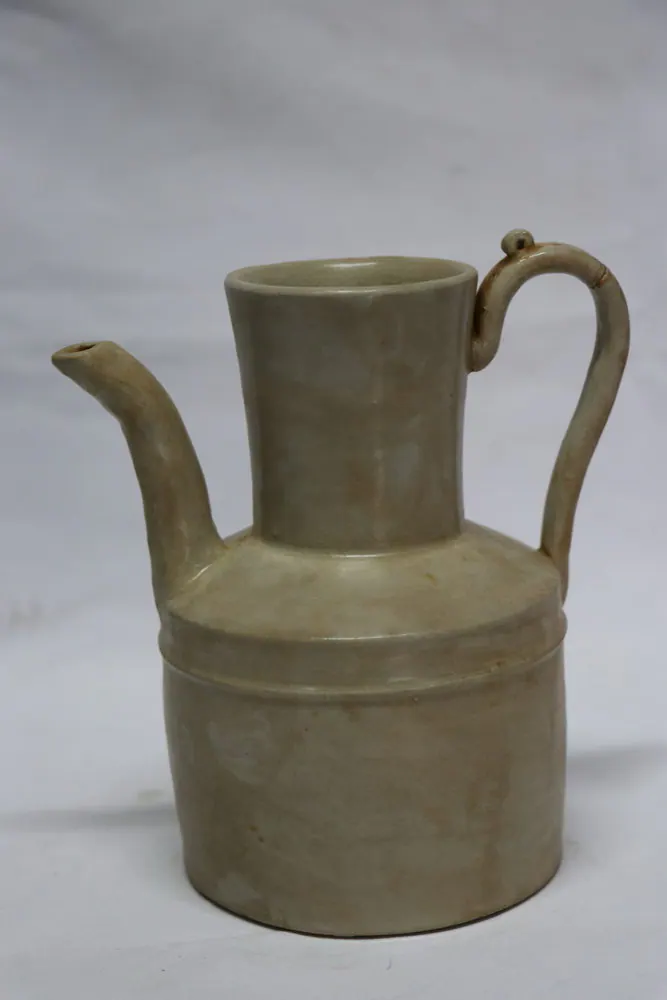
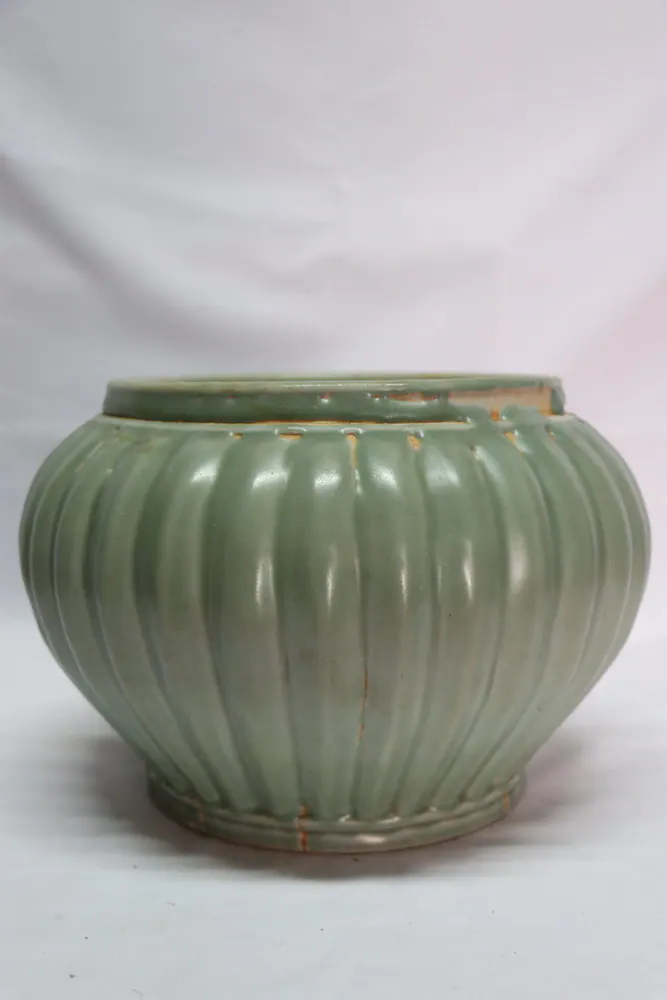
No Song piece carries Taizong's reign mark, and none can be tied to him. Our guide to Song dynasty ceramics follows the wares that developed over the next three centuries, and Song celadons are represented in our Song dynasty porcelain collection.

From the Song Dynasty

View all Song Dynasty PorcelainAsk about a piece

Be the first to see new pieces

Join our collectors' list for new arrivals, rare finds and private offers.