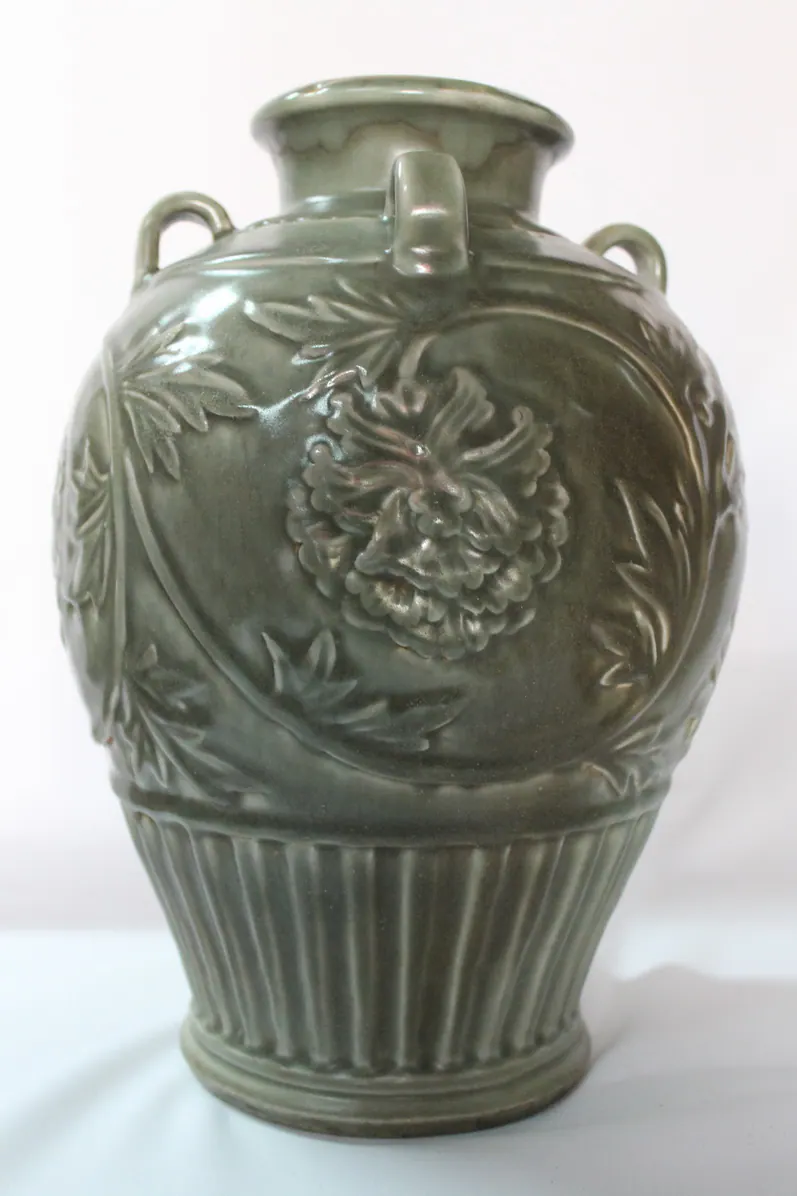
Album portrait of Zhao Xian, Emperor Gong of Song, in a red dragon robe and tall red hat
Portrait: public domain, via commons.wikimedia.org

Southern Song1274–1276

Emperor Gong

德祐

Reign facts
Reigned
1274–1276 (2 years)
Lived
1271–1323
Personal name
Zhao Xian
Era name
Deyou 德祐 1275–1276

Zhao Xian, known as Emperor Gong, was the sixteenth emperor of the Song Dynasty and the seventh of the Southern Song. He was a son of his predecessor, Emperor Duzong, and reigned from 1274 to 1276 under the era name Deyou (德祐).

He came to the throne as a small child and was still only four when his court surrendered the capital to the Mongols in 1276. His life after the fall was long and unusual: he was ennobled by Kublai Khan, became a Buddhist monk in Tibet, and died by imperial order in 1323.

The Enthronement of Emperor Gong

Emperor Duzong died in 1274, his health said to have been ruined by drink and pleasure. His young son Zhao Xian, born in 1271 and not yet three years old, was placed on the throne.

Two women acted as regents: his mother, Empress Dowager Quan, and Grand Empress Dowager Xie, the widow of Emperor Lizong. Real control of government and the army, however, remained with the chancellor, Jia Sidao, who had dominated the court for years.

The Mongol Invasion

By the time Emperor Gong came to the throne, the Song had already lost the north and much of the south-west. The great fortress of Xiangyang on the Han River had fallen in 1273 after a siege of five years, and in the winter of 1274 the Mongol commander Bayan crossed the Yangtze and advanced on the Song capital, Lin'an (modern Hangzhou).

Grand Empress Dowager Xie tried two approaches at once. She called on loyal officials and generals across the empire to come to the aid of the throne, and she also sought terms from the Mongols.

Neither saved the dynasty. The Mongol army took one prefecture after another along the middle and lower Yangtze.

In 1275 Jia Sidao led a large Song army against Bayan near Wuhu and was routed. He was dismissed and sent into exile, and was killed on the road by the officer escorting him.

The Fall of Lin'an

By the second year of Emperor Gong's reign, the Mongols held most of the region south of the lower Yangtze.

In January 1276 Bayan's army arrived outside Lin'an. The court sent envoys, among them Lu Xiufu, to seek terms, but the Mongols would accept nothing less than surrender. Early in 1276 Grand Empress Dowager Xie surrendered the capital and handed over the imperial seal in the young emperor's name.

Loyal officials escaped south with two of Emperor Gong's brothers. In Fuzhou they proclaimed his elder brother, Zhao Shi, as Emperor Duanzong. Duanzong died of illness in 1278, and his younger brother Zhao Bing, Emperor Bing, perished in 1279 at the Battle of Yamen, the final defeat of the Song.

Life under the Yuan Dynasty

Emperor Gong's own life continued far from the south. After the surrender, Bayan sent him north to be presented to Kublai Khan.

Zhao Xian at the Mongol Court

The boy left Lin'an for Shangdu, the Mongol summer capital, with his mother, Empress Dowager Quan, his grandfather Zhao Yurui, and many officials of the palace and the court.

Kublai received him and gave him the title Duke of Ying. The former emperor and his family were given a residence in Dadu and treated with consideration.

In 1288, when he was about seventeen, Kublai sent him to Tibet. He became a Buddhist monk at the Sakya monastery and in time a respected scholar, remembered in Tibetan tradition for his translations of Buddhist texts.

Death of Emperor Gong

According to Buddhist records, in 1323 the former emperor, then in his fifties, received an imperial order to take his own life, and died in Hexi, the Gansu corridor.

The order came from the Yuan emperor Shidebala, the Gegeen Khan. Later Chinese historians attributed it to the emperor's anger at a poem by Zhao Xian that seemed to lament the fallen Song; others suggest that the Yuan court feared he might become a focus for rebellion.

Ceramics of the Reign

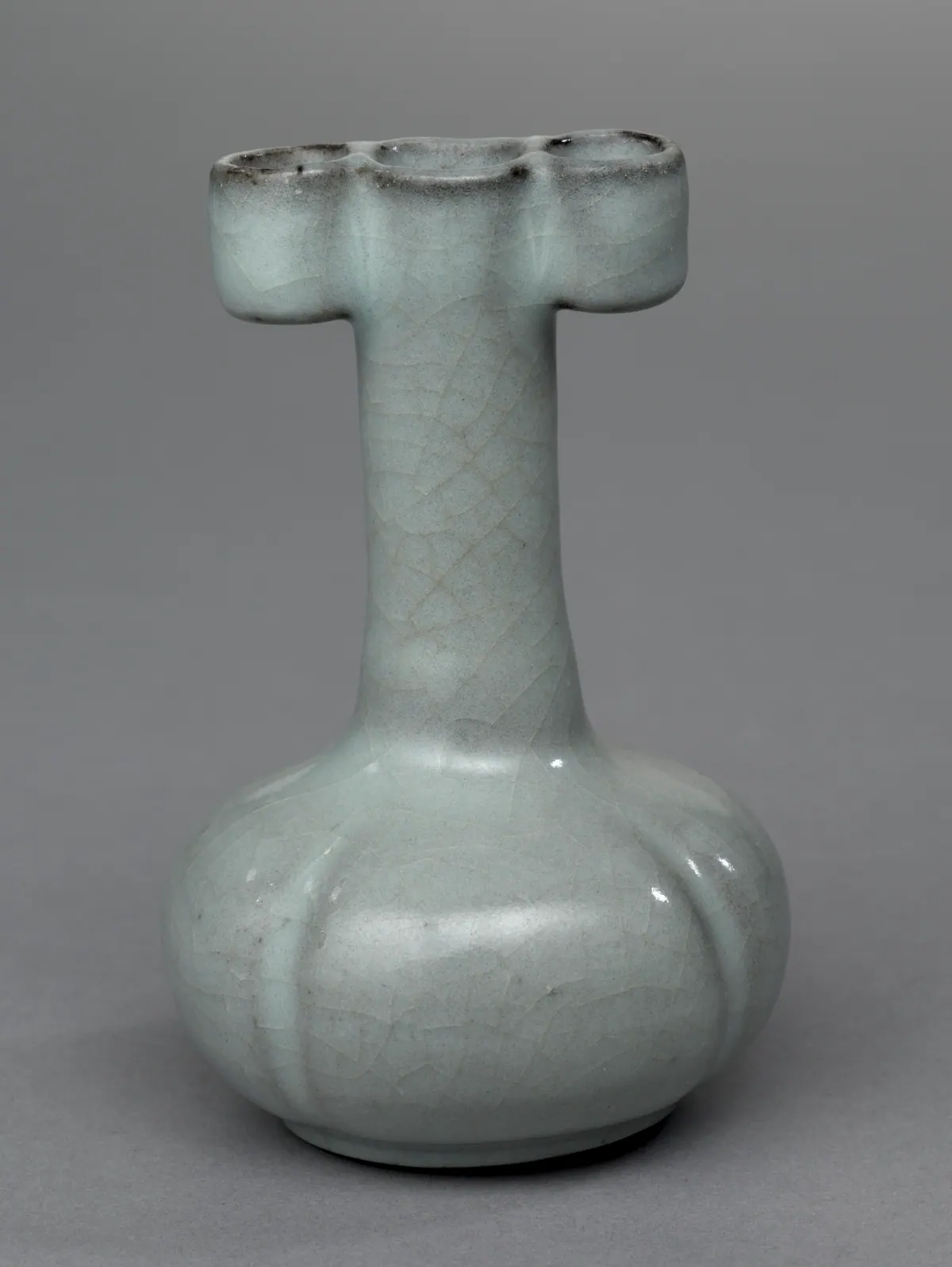
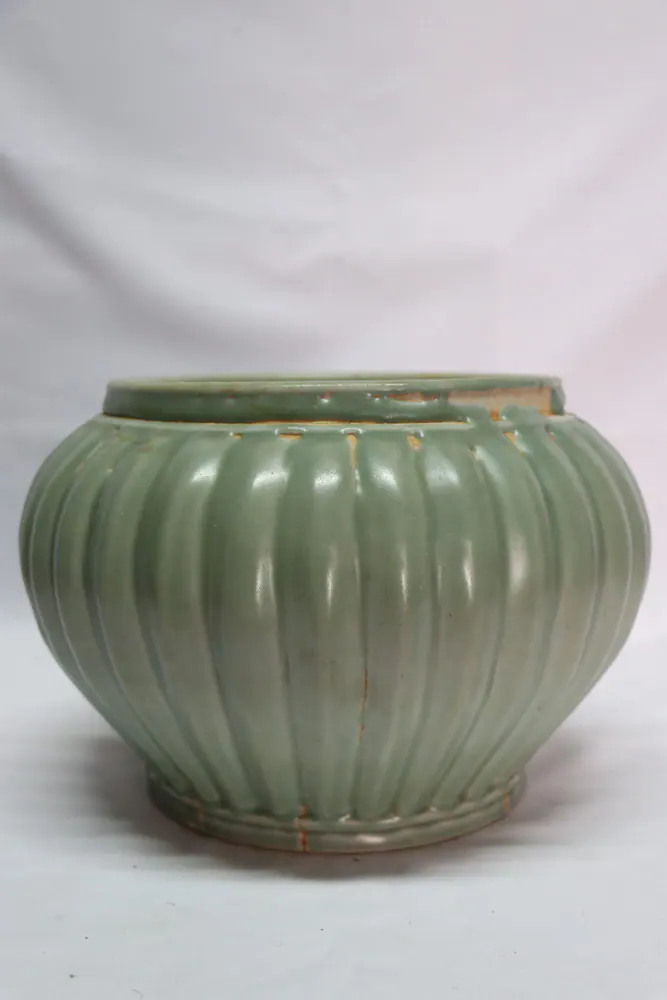
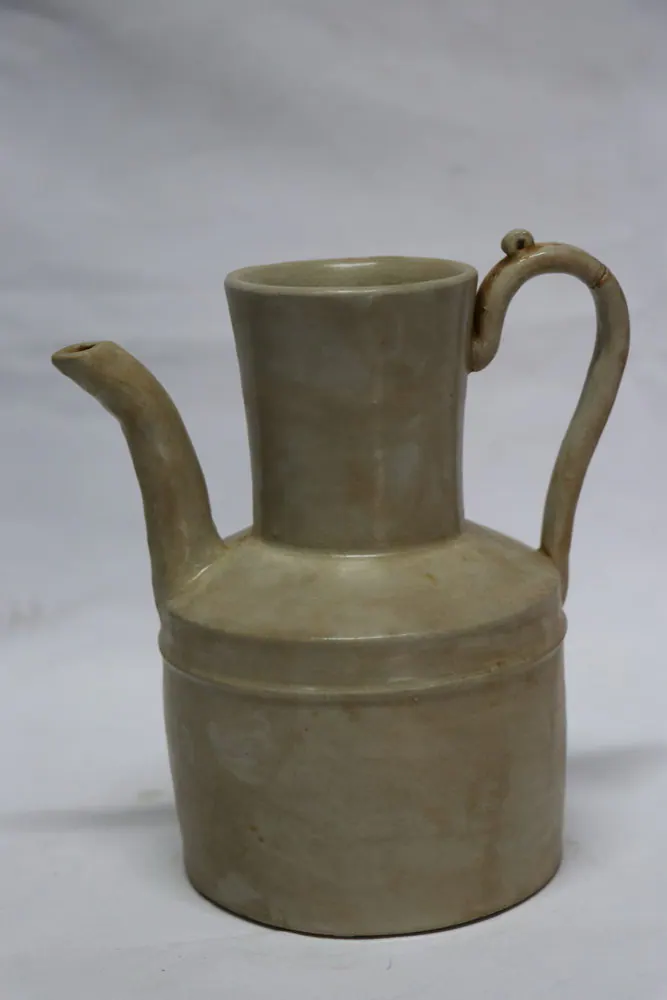
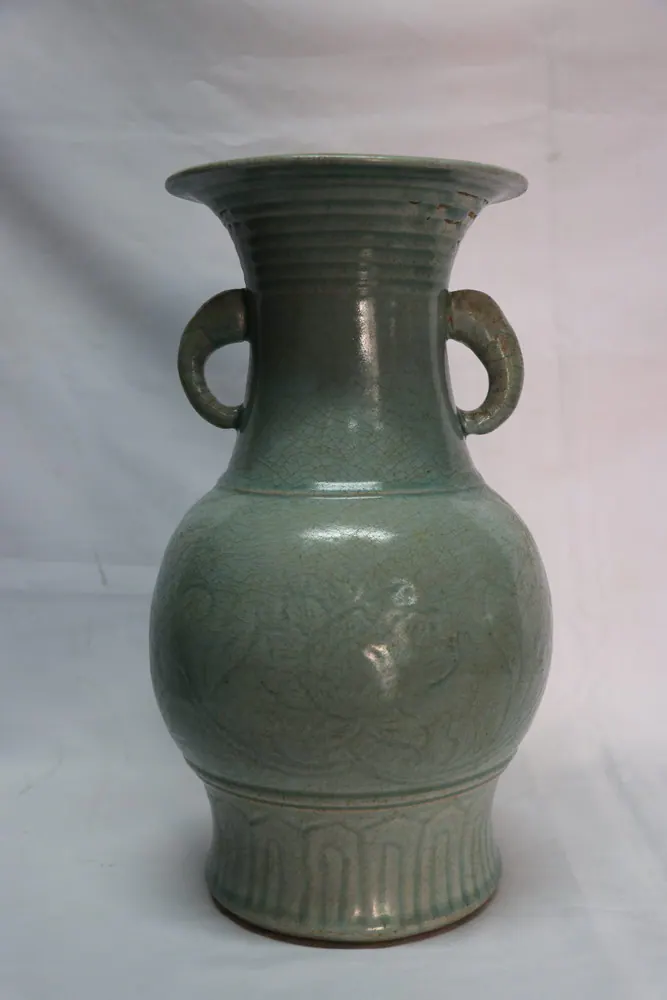
Emperor Gong's two years on the throne were too short and too troubled to produce a ceramic style of their own, and no wares can be dated to them with confidence. The pottery of the period is that of the late Southern Song. At Hangzhou the official Guan kilns, among them the kiln below the Suburban Altar, made thickly glazed, crackled stonewares for the court. Longquan in southern Zhejiang produced its finest bluish-green celadons, Jingdezhen made qingbai porcelain under a pale blue-tinged glaze, and the Jian kilns of Fujian made dark-glazed tea bowls.

A Guan ware arrow vase with a squat lobed body and a tall straight neck, its mouth flanked by two tubular loops, under a pale grey glaze with a fine network of crackle.
Museum exampleGuan ware arrow vase made at Hangzhou in the 1200s. Hangzhou, then called Lin'an, was the capital that Emperor Gong's court surrendered to the Mongols in 1276.Cleveland Museum of Art, 1957.65. Public domain (CC0).

Longquan celadon, qingbai and Jian tea bowls left in large quantities through the ports of Quanzhou and Ningbo for Japan, Korea and South-East Asia, a trade the Yuan continued after Lin'an surrendered in 1276.

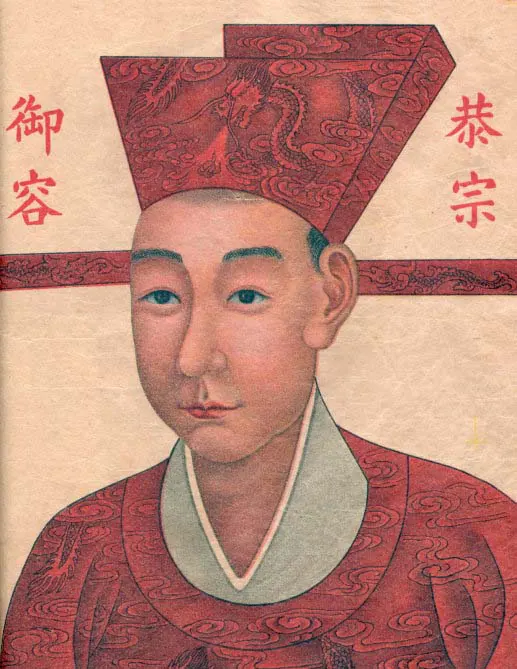
From the Song Dynasty

View all Song Dynasty PorcelainAsk about a piece

Be the first to see new pieces

Join our collectors' list for new arrivals, rare finds and private offers.