
The history of the Xia Dynasty was recorded in classic Chinese writings. One of these is the Classic of History & the Records of the Grand Historian. Yet, there are no known archaeological discoveries confirming these writings.
Generally, the Xia Empire had several clans and lived along the lower areas of the Yellow River.
Origins of the Xia Dynasty
One can trace the development of the Xia in the Three Sovereigns and Five Emperors. Based on ancient Chinese texts, there are frequent battles before the reign of the Xia Empire. These conflicts were between the Xia tribe and Chi You’s tribe.
Three Sovereigns and Five Emperors were two groups of mythical deities. They were from ancient northern China. In more recent history, they have been assigned dates in a period between 2852 BC and 2070 BC.
The Xia Dynasty in Folklore and Tales
Based on folklore, this dynasty ruled over 4,000 years. At the time, a selection of god-like rulers embodied the principles of Chinese culture. One of the Five Emperors of the period granted this authority to them. The Xia was able to rule a good amount of land along the Huang He River.
The Xia Dynasty was a monarchy, thus, ruled by a king. Under his command, feudal lords ruled regions and provinces throughout the area. Each of these lords swore their loyalty to the king. Legend states that Yu the Great split the land into nine different provinces.
Chinese Antiques for Sale
Rare collection of Chinese antique porcelain and pottery.
See The CollectionAncient China
Yu the Great of the Xia Dynasty
The Xia Dynasty lasted from around 2070 to 1600 BCE and established by Yu the Great. He was born in the year 2059 and claimed as a descendant of the Yellow Emperor. Yu the Great was a quasi-mythical figure who worked for 13 years to prevent the great flood.
This led him to introduce irrigation to the Yellow River valley. Due to his works, he became an ideal ruler and hero, and then became the God of the soil.
Innovation
Who Were the Xia?
Like every other place, the Chinese started benefiting from their fertile river valleys. They preyed on this thousands of years ago to grow food. The perfect areas to grow large crops of millet, rice, and wheat were along the Huang He and Chang Jiang Rivers.
These areas were the Yellow and Yangtze Rivers. Like the rest of the world, these distributed farming villages became small nations. In time, these small nations turned into empires.
From Chinese folklore, the Xia Dynasty was the very first dynasty to rule the country. But, according to historians, its actuality in Chinese folklore is still inadequate. It is not enough to justify its existence in history.
About
The Xia Society – How were they like?
There were several issues anent to the reality of the Xia Dynasty. One was that the dynasty had only a few legitimate records found. Oracle Bone Writing was the earliest form of writing in the country. This came to existence during the Shang Dynasty.
With that, a lot of researchers assume that the Xia were not that literate. They survived during the Bronze Age and did not have lots of distinctive features. This characteristic disconnected them from other cultures present during the period.
Though no clues were present to prove these, the Xia organized their way of living. It made them keen on flood control. The rivers were their lifeblood, but could also be their ruin.
If little water appeared, their crops would not grow. Too much would destroy crops and even the homes of farmers. But whether it was the Xia or another society, the people had communal labor for civic loads.
History
Debate over the Existence of the Xia Dynasty
There is a lot of debate on the existence of the Xia Dynasty. Scholars argue that the Zhou Dynasty fabricated the idea of the Xia. This was to support their claims that China was always ruled by a single leader.
The Zhou Dynasty made the thought of the “Mandate of Heaven”. It stated that there could only be one genuine Chinese ruler at any given time. If he ruled well, he had heaven’s support. If he was a dictator, he would be ousted from the position.
The Xia Dynasty may be an incomplete fabrication. Yet recent evidence may back its existence. For some time, people believed that the later Shang Dynasty could have been a myth. This was until archaeology confirmed that the dynasty was real.
Archaeologists were able to find China’s advanced Bronze Age Culture. Its capital was Erlitou – a huge city that flourished in 2000 BCE. The people from the capital may have been the society referred to in mythology as the Xia. They say that the Xia established an ancient writing system, yet there was no evidence of this.
Though there were other evidences suggesting that the Xia did create agricultural processes. These provided them with considerable prosperity and growth. Unfortunately, their absence of flood protection and irrigation made Erlitou prone to floods. Other natural disasters often occurred as well.
“A good traveller has no fixed plans, and is not intent on arriving.”
~ Lao Tzu
The Rise of the Xia Dynasty
Historians like Sima Qian claim that there was one great ruler called Huang Ti or Huang Di. He was better known as the Yellow Emperor. This individual appeared from pre-historic China’s tribal system to rule the Shandong region.
This emperor first established the Chinese culture. He later on created a type of government that would last throughout centuries. The emperor developed the production of silk and the invention of musical instruments.
He also instituted customs & laws, as well as the development of agriculture & medicine. These made people acknowledge and respect him further.
Upon death, the emperor’s burial was in a mausoleum in Huangling County, Shaan Xi province. Today, the mausoleum has become a popular tourist attraction.

The Successor of Huang Ti
Huang Ti’s successor was his grandson Zhuan Xu, one of the Five Emperors who founded the Xia Dynasty. After defeating their opponents, the Xia created the very first dynasty in China. Its leader was Emperor Yao.
The emperor ordered to build great palaces. This made the little hut villages flourish into urban centers. Zhuan Xu was also known as a great philosopher and king. He did not only rule well, but also worked in the people’s best interests. Zhuan Xu followed the precepts of his grandfather, Huang Ti.
The Flooding
When Mother Nature StrikesDuring the rule of Yao, he had great problems with managing the floods caused by the Yellow River. It disrupted the area’s agriculture, as well as the displacing or drowning of his people. With that, he selected an individual named Gun – a man revered as a Demigod in lots of accounts – to control the situation.
For years, Gun tried to stop the flood, but the water intensified, lands got covered, and more people died. Finally, Gun decided to create a collection of dikes, hoping it would hold back the water. Unfortunately, his dikes fell apart which caused more devastation and deaths.
By this time, Emperor Yao had already passed on his rule to his successor, Yu Shun. He was not pleased with Gun’s performance, and his failure to prevent the flooding. Because of this, some tales claim that Gun killed himself; others say that Yu Shun imprisoned him. Though other reports claim that Gun exiled himself to the far mountains.
When he left, Emperor Shun chose Yu, Gun’s son to complete the task of his father of stopping the floods.

Yu the Great
Yu was one of Emperor Shun’s trusted people, thus, appointed him to complete the work of his father. When stopping the flood, Yu had a different process from his father. He coordinated people from different tribes and ordered them to help build canals.
The canals built were in all the primary rivers that flooded to lead the water out into the sea. Yu dedicated himself to his work and people admired his perseverance. This inspired them and everyone else, causing other tribes to join in the work.
Legend claims that Yu completed his task in thirteen years. Yet he was successful in stopping the floods. He never returned to his home to rest and continued working until he accomplished this.
Establishment
The success of Yu in stopping the flood improved the agricultural production. With that, the power of the Xia tribe also increased. This led Yu to become the head of the neighbouring tribes.
Soon, Emperor Shun commanded Yu to lead a great army to restrain the San Miao tribe. They were a group who abused the bordering tribes. After defeating the tribe, Yu exiled the San Miao to the south along the Han River area. This triumph strengthened the power of the Xia tribe further, making Emperor Yu proud.
When Emperor Shun began to age, he decided on a successor. He then passed on the throne to Yu whom he claimed to be worthy. His succession then marked the beginning of the Xia Dynasty. When he neared his death, Yu passed the throne to Qi, his son. This set the criterion for the Hereditary System or dynasty rule.
The Xia Dynasty started the period of clan control. Zhen Xun, today’s Gongyi, was a dynasty capital.
Erlitou Culture
The Erlitou culture was from the central plains in Northern China. It was the country’s very first state level society, and the remains correlate to the Xia dynasty. This culture had eight identified palaces.
These were large-scale establishments featuring elite artifacts and architecture. Three of which were completely excavated where the most recent was in the year 2003. The excavations show that the city planned specialized ceremonial areas, buildings, and workshops. It even featured a main palatial complex that enclosed two foundation palaces.
For elite burials, these were in the palace courtyards. These featured grave goods like wares made from jade, bronze, lacquer, and turquoise. Other discovered tombs scattered all over the area instead of in a cemetery. Erlitou also planned to create a grid of roads.
Other portions of the city had remnants of smaller dwellings. These also featured pottery kilns, workshops, and tombs. For vital crafting areas, these included turquoise workshops, and casting foundries of bronze. It was also known for their bronze.
Created in Erlitou’s foundries were the earliest vessels made from this material. The very first bronze vessels made were for the ritualistic consumption of wine. The wine was often based on wild grapes or rice.
Xia Dynasty Arts and Culture
The Xia Dynasty was also an important era in the arts of the Chinese. Some historical chronicles accepted Xia as the first dynasty of China. Some of these chronicles included the Bamboo Annals and Classic History of Records.
Another title that claimed Xia as the first dynasty is the Records of Grand Historian. Archaeological evidence was insufficient, which is why people depended on traditional chronology. It is also believed that the Xia Dynasty lasted for around five centuries with 17 emperors.
The empire served as a bridge between Neolithic art and recorded history. Most of the people of Xia were farmers. They had created bronze casting. However, their everyday tools were made from stone and bone.
The Xia developed agricultural practices such as irrigation. They also invented the calendar. Sometimes, they considered the origin of the traditional Chinese calendar.
Xia Dynasty culture is well-known for its bronze-making. These techniques included goldsmithing, the piece-mold casting technique, and other metalwork. Other forms of art were also significant in the Xia culture. These included Chinese pottery, jade and ivory carving, as well as Chinese lacquerware.
During the last years of the dynasty, the first forms of calligraphy appeared.

Fall of the Xia Dynasty
Jie, the last king of Xia, was blamed for the fall of the empire. He fell in love with a beautiful yet evil woman and became a tyrant. Jie was also corrupt, which led the people to start a rebellion that Zi Lu led. He was the Tang emperor who established the Shang Dynasty.
Tang gave the small state of Qi as a fief to the remaining family that ruled Xia. This practice is “the two crownings and the three respects”. The Kings of the State of Yue acknowledged Zengzi as a descendant of the Xia Dynasty Kings. He was a descent through Shao Kang.
Antique Chinese Porcelain for Sale
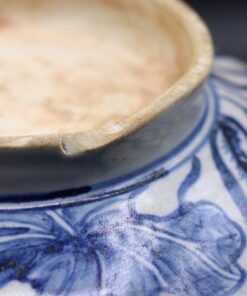
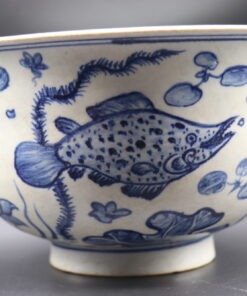
Antique Chinese Porcelain
Yuan Dynasty Blue and White Porcelain Bowl with Fish and Lotus
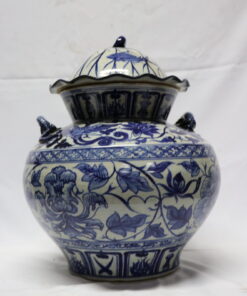
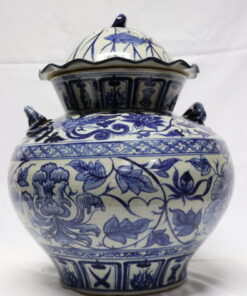
Antique Chinese Porcelain
Blue and White Antique Chinese Porcelain Vase Ming Dynasty Lizard Handles
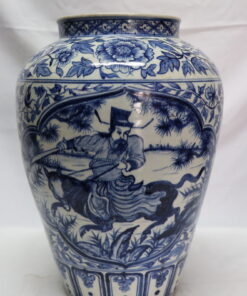
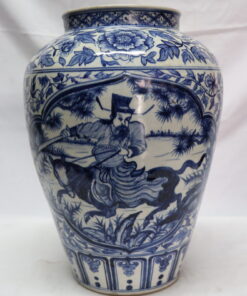
Antique Chinese Porcelain
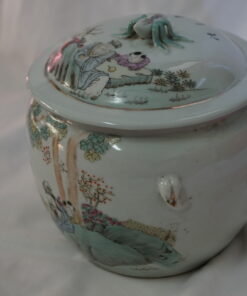
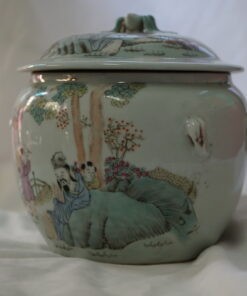
Antique Chinese Porcelain
Soup Bowl Jar Hand Painted by Artist Zhou Xiao Shun Late Qing Dynasty
Antique Chinese Porcelain
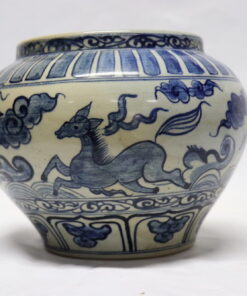
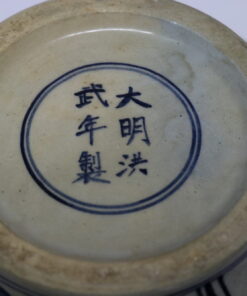
Rare Blue and White Ming Dynasty Pot with Mark of Emperor Hongwu
Antique Chinese Porcelain
Antique Chinese Porcelain
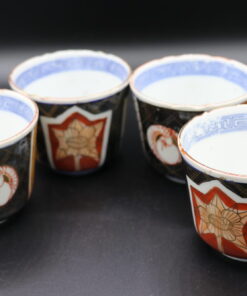
Antique Chinese Enameled Porcelain Cup Set Late Qing Dynasty
Antique Chinese Porcelain