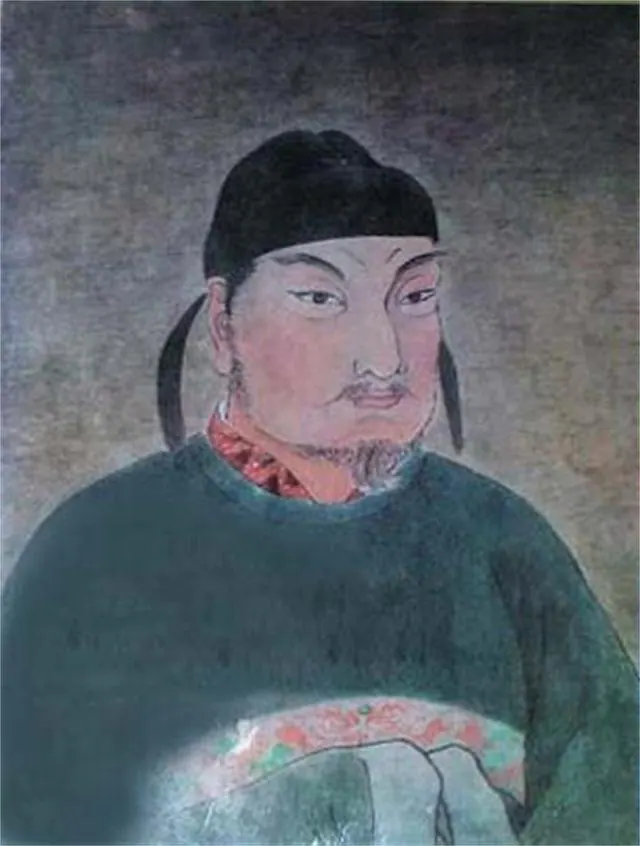
Portrait: public domain, via wikipedia.org

Tang Dynasty888–904

Emperor Zhaozong

龍紀 · 大順 · 景福 …

Reign facts
Reigned
888–904 (16 years)
Lived
867–904
Personal name
Li Ye 李曄
Temple name
Zhaozong 昭宗
Era names
Longji 龍紀 889Dashun 大順 890–891Jingfu 景福 892–893Qianning 乾寧 894–898
3 moreGuanghua 光化 898–901Tianfu 天復 901–904Tianyou 天祐 904

Emperor Zhaozong (867–904) was the second-to-last emperor of the Tang dynasty. Born Li Jie, he took the name Li Min when he was made crown prince and later changed it to Li Ye. He reigned from 888 until his murder in 904, under a succession of seven era names from Longji (889) to Tianyou (904).

He was intelligent and determined to restore the authority of the throne, but he came to power when the dynasty was already beyond saving. Eunuchs controlled the palace armies, and the provinces were in the hands of military governors who ruled as independent warlords. His attempts to reassert imperial power ended in defeat, captivity and death.

Early Life

Li Jie was born in 867 in Chang'an, a son of Emperor Yizong by his consort Lady Wang. In 872 he was made Prince of Shou. His elder brother, who became Emperor Xizong in 873, was close to him, and during Xizong's reign he received a number of honorary offices and titles.

Xizong's reign was overwhelmed by the great rebellion of Huang Chao, who took Chang'an in 881 and forced the court to flee to Sichuan. The rebellion was eventually defeated with the help of provincial warlords, and the court returned to the capital, but the dynasty never recovered its control of the provinces.

When Xizong fell gravely ill in 888, the officials favoured another brother, Li Bao, as his successor. The powerful eunuch Yang Fugong preferred Li Jie, and an edict in Xizong's name made him crown prince. Xizong died soon afterwards, and Li Jie, now Li Min, came to the throne.

The Reign of Emperor Zhaozong

Zhaozong set out to rebuild the power of the throne, raising new armies for the court and challenging the most powerful warlords. Each attempt failed, and each failure left him weaker.

The Campaigns against Chen Jingxuan and Li Keyong

Early in his reign the emperor tried to remove Chen Jingxuan, military governor of Xichuan in Sichuan and a relative of a eunuch who had dominated Xizong's court. Chen refused to hand over his post to Wei Zhaodu, and Zhaozong sent an army against him. The siege of Chengdu dragged on, the treasury ran low, and in 891 the court abandoned the campaign. The city fell soon afterwards to the general Wang Jian, who took Sichuan for himself.

At the same time the emperor, urged on by the chancellor Zhang Jun, launched a campaign in 890 against Li Keyong, the powerful military governor of Hedong. It ended in the defeat of the imperial army. Zhaozong was forced to restore Li Keyong's titles and to send Zhang Jun and his fellow chancellor Kong Wei into exile.

Yang Fugong and Li Maozhen

Yang Fugong had put Zhaozong on the throne, but the two soon fell out. In 891 the emperor forced him into retirement. Amid rumours that he was plotting rebellion, imperial guards attacked his mansion, and Yang fled to the south-west with his adoptive sons, who held commands there, and rose in revolt.

Li Maozhen, military governor of Fengxiang, offered to lead the campaign against them. The emperor was reluctant to give him more power, but had little choice, and by 892 Li Maozhen and his allies had defeated Yang's forces. Li Maozhen then demanded control of the conquered territory. In 893 Zhaozong sent an imperial army against him, but its inexperienced troops broke before Li Maozhen's veterans. Li Maozhen advanced on Chang'an and forced the emperor to put to death the chancellor who had advised the campaign.

A Captive Emperor

For the rest of the reign Zhaozong was at the mercy of the warlords. In 895 three military governors marched on Chang'an and killed two of his chancellors, and only the intervention of Li Keyong saved him. In 896 he fled the capital and spent two years under the control of Han Jian, the governor of Huazhou, who had a number of imperial princes killed.

In 900 the palace eunuchs deposed him and put the crown prince on the throne, and he was restored only after loyal officers killed the plotters early in 901. Late in 901 the eunuchs carried him off to Li Maozhen at Fengxiang to keep him out of the hands of Zhu Quanzhong, the most powerful warlord in the east. Zhu besieged Fengxiang until Li Maozhen surrendered the emperor early in 903. With Zhu's backing, the chancellor Cui Yin then had the palace eunuchs massacred, ending their long domination of the court.

The End of the Reign

The emperor was now Zhu Quanzhong's prisoner. In 904 Zhu forced him to move the court from Chang'an to Luoyang, which was under his control, and had the palaces and much of the old capital dismantled. Later that year, fearing that the emperor might find allies among the other warlords, Zhu had him murdered by his officers.

Zhu then placed Zhaozong's young son Li Zuo on the throne as Emperor Ai. In 907 he forced the boy to abdicate and proclaimed his own dynasty, the Later Liang, bringing the Tang to an end after almost three centuries. Zhu Quanzhong, a former follower of Huang Chao, is better known by his personal name, Zhu Wen.

Ceramics of the Reign

Zhaozong's reign saw central authority collapse, and the kilns increasingly lay in the territories of regional rulers. The Yue kilns of northern Zhejiang were in the lands of Qian Liu, the warlord who held the region from the 890s and founded the kingdom of Wuyue in 907; under Wuyue their finest celadons were sent as tribute to the northern courts.

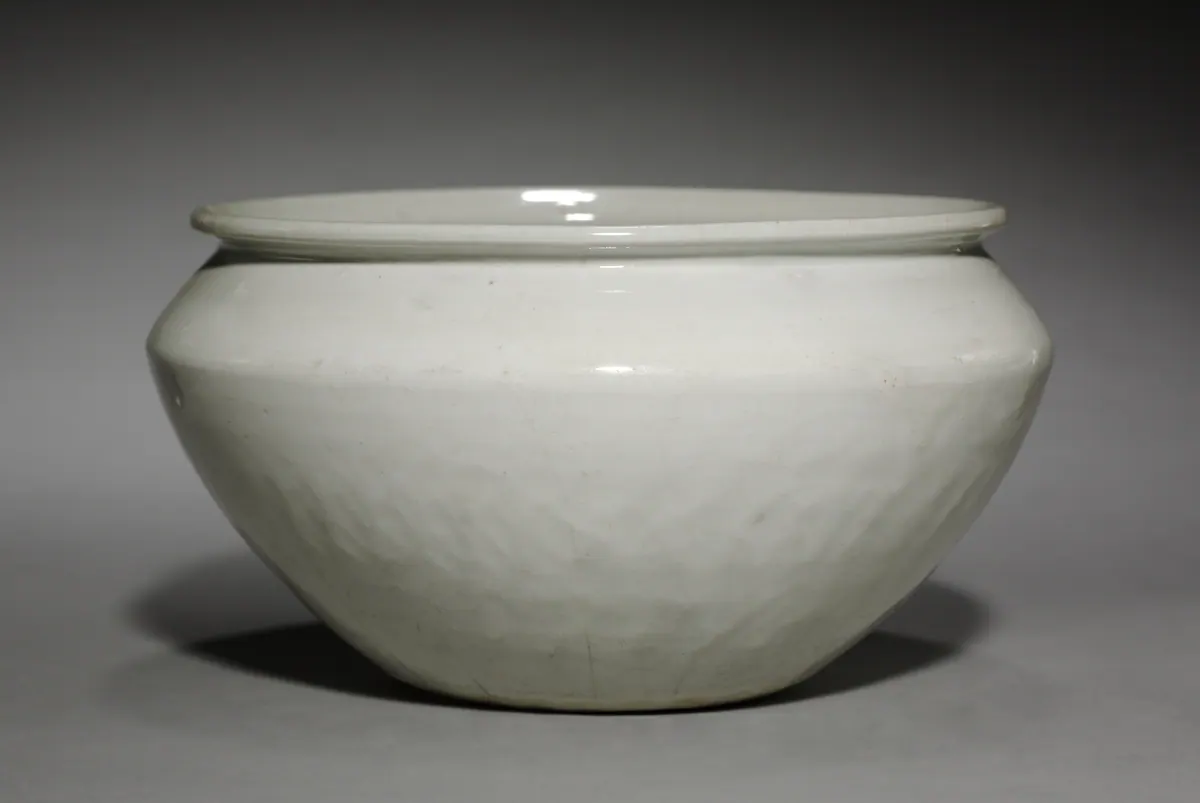
A deep white porcelain bowl with an angular shoulder and a rolled rim, covered in a glossy white glaze with fine crackle.
Museum exampleSouthern white ware bowl, dated by the museum to the late 800s or early 900s, the last decades of the Tang under Zhaozong.Cleveland Museum of Art, 1918.470. Public domain (CC0).

In the north, the Ding kilns of Hebei were developing the white porcelain that would lead in the following centuries. Kilns in the south, among them those near Jingdezhen in Jiangxi, were making white wares by the end of the Tang or soon afterwards, and southern white bowls like the one shown here belong to the same development. Yue and northern white wares continued to be shipped to South-East Asia and the Middle East.

The wares that followed: Song porcelain

View all pieces in the collectionAsk about a piece

Be the first to see new pieces

Join our collectors' list for new arrivals, rare finds and private offers.