
Li Shimin (李世民, 598–649), known by his temple name Taizong, was the second emperor of the Tang dynasty and is regarded as one of the greatest rulers in Chinese history. As Prince of Qin he led the campaigns that won the empire for his father, Emperor Gaozu. He took power in 626 after killing two of his brothers at the Xuanwu Gate, and reigned until his death in 649 under a single era name, Zhenguan (貞觀, 627–649). The Zhenguan years, with their able ministers, open debate at court and victories over the Eastern Turks, became the model of good government for every later dynasty.
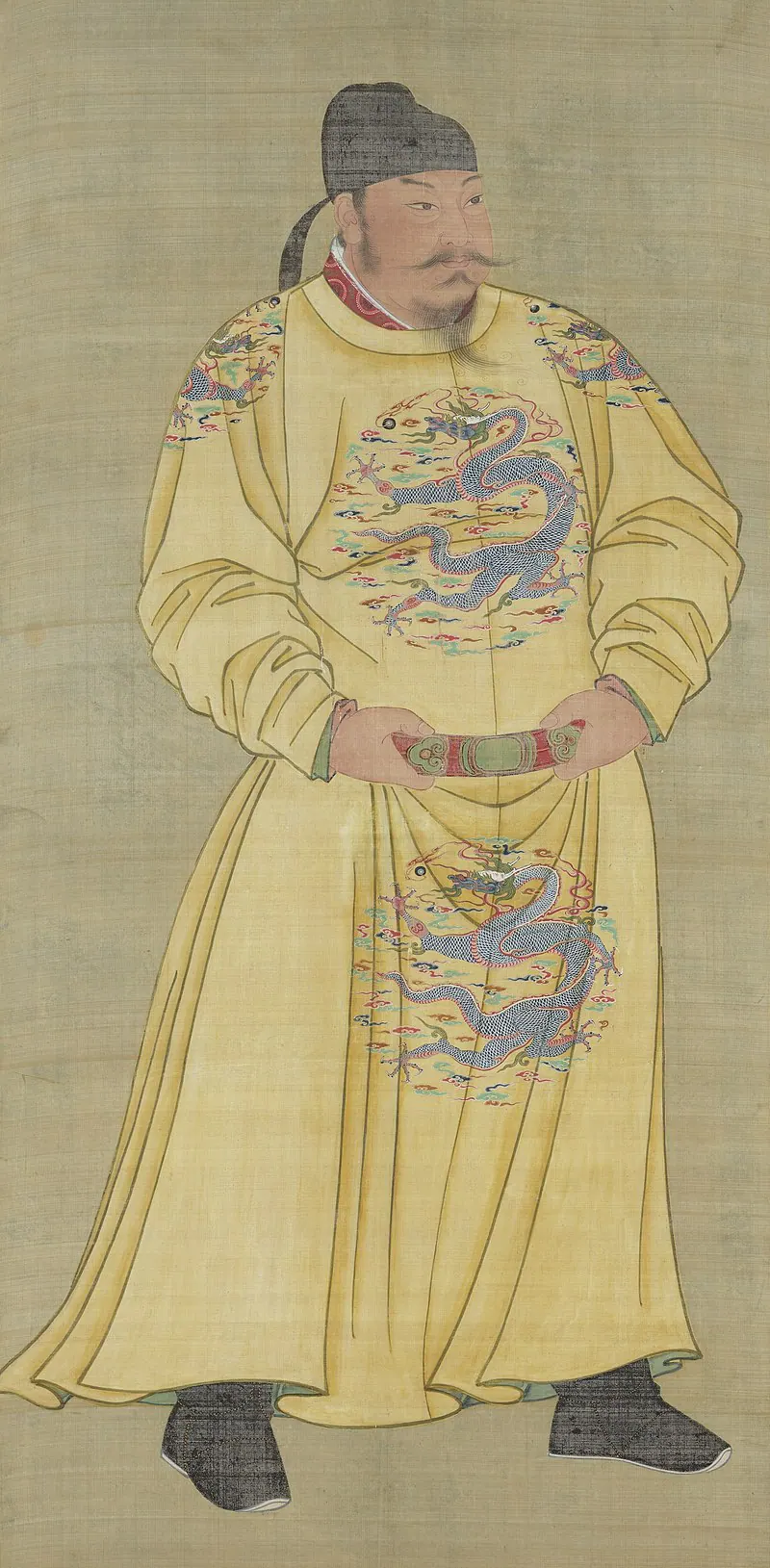
Tang Dynasty626–649
Emperor Taizong
貞觀
Reign facts
- Reigned
- 626–649 (23 years)
- Lived
- 598–649
- Personal name
- Li Shimin 李世民
- Temple name
- Taizong 太宗
- Era name
- Zhenguan 貞觀 627–649
The Prince of Qin
Li Shimin was born in 598, the second son of Li Yuan, a member of the north-western military aristocracy who served the Sui as a general and governor. He showed military ability young. In 615, at about sixteen, he joined the army sent to relieve Emperor Yang of the Sui when the Eastern Turks besieged him at Yanmen.
According to the official histories, it was Li Shimin who urged his father to rebel as Sui rule collapsed. Those histories were compiled under Taizong and his successors, and they may well enlarge his part. In 617 Li Yuan rose at Taiyuan; by the end of the year his forces had taken Chang'an, and he took the title Prince of Tang. When he proclaimed the Tang dynasty in 618, Li Shimin, who had been Duke of Qin, was made Prince of Qin.
Over the next four years the Prince of Qin defeated the main rivals for the empire: Xue Rengao in the north-west in 618, Liu Wuzhou in the north in 620, and in 621, in a single campaign, both Wang Shichong at Luoyang and Dou Jiande, who had marched to his aid. The victory over Dou Jiande at the Hulao Pass made Li Shimin the most celebrated commander of the age. He kept his own circle of advisers, the Eighteen Scholars, several of whom later served him as ministers.
The Xuanwu Gate Incident
Li Shimin's fame made him a dangerous rival to his elder brother, the crown prince Li Jiancheng, who feared that Li Shimin would replace him and was supported by their younger brother Li Yuanji. Believing that the two were plotting against him, Li Shimin accused them before their father. The next morning, in July 626, he ambushed and killed both brothers at the Xuanwu Gate of the palace in Chang'an.
Within days Gaozu named him crown prince, and two months later he abdicated in his favour. Some historians believe that Li Shimin forced his father to step down; others see the throne as the reward for his achievements as Prince of Qin. Taizong, "Grand Ancestor", is the temple name given to him after his death, not a name he chose for himself.
The Zhenguan Era
Taizong reigned under one era name, Zhenguan, usually translated as "upright vision". Later generations looked back on the Zhenguan period as the model of what government should be.
Ministers and Government
Taizong chose able ministers, including men who had served his enemies. Wei Zheng had been an adviser to Li Jiancheng, yet he became the emperor's most outspoken critic at court, and Taizong listened. Fang Xuanling and Du Ruhui ran the administration, and Zhangsun Wuji, the brother of Taizong's empress, was his closest adviser. When Wei Zheng died in 643, Taizong is recorded as saying that he had lost the mirror in which he could see his own faults.
The government built on the system of three departments and six ministries inherited from the Sui. Taizong cut the number of officials in the capital, kept taxes and labour service light after years of war, and maintained the equal-field system on which taxation rested. The examinations begun under the Sui were extended, and a revised law code was issued in 637. The Grand Canal carried grain and goods between north and south, and the Silk Road brought foreign trade and a great exchange of culture and religion.
Wars and Diplomacy
In 630 Tang armies defeated the Eastern Turks and captured their ruler, Illig Qaghan, and the steppe peoples acknowledged Taizong as "Heavenly Khagan". He defeated the Tuyuhun in 635, conquered the oasis kingdom of Gaochang (Turpan) in 640 and extended Tang power into the Tarim Basin, taking Kucha in 648. In 641 Princess Wencheng, a member of the imperial clan, was sent to marry Songtsen Gampo, the king of Tibet. His one great failure was in Korea: his invasion of Goguryeo in 645 took several fortresses but stalled at the siege of Anshi and ended in retreat.
Religion and the Arts
The Tang emperors claimed descent from Laozi, and Taizong officially ranked Daoism ahead of Buddhism. Even so, in 645 he welcomed the monk Xuanzang back from his long journey to India and supported the translation of the Buddhist texts he had brought home. Taizong was himself a fine calligrapher and a devoted collector of the work of Wang Xizhi. According to tradition, Wang's most famous work, the Orchid Pavilion Preface, was buried with the emperor.
The Succession and Death
Taizong's last years were troubled by the succession. In 643 the crown prince, Li Chengqian, was found plotting against his father and was deposed, and his rival brother Li Tai was sent away from court. Taizong named his ninth son, Li Zhi, as heir.
Taizong died in 649 after an illness recorded as dysentery, and Li Zhi succeeded him as Emperor Gaozong. Gaozong continued his father's wars against the Turks, and in 668, in alliance with the Korean kingdom of Silla, he finally destroyed Goguryeo. Taizong was buried at Zhaoling, on Mount Jiuzong north-west of Chang'an, where stone reliefs of six of his war horses were set up; two of them are now in the Penn Museum in Philadelphia.
As custom required, those of his consorts who had borne him no children shaved their heads and entered a Buddhist convent. Among them was the young Wu Zhao, who returned to the palace as Gaozong's consort and later ruled in her own name as Empress Wu Zetian.
His Reputation
Taizong became the standard against which later emperors were measured. His discussions with his ministers, collected in the early eighth century as Essentials of Government of the Zhenguan Era (Zhenguan zhengyao), were read as a handbook of good rule by later emperors in China, Korea and Japan. His image owes something to histories written under his own reign, but his achievement in building a stable and lasting state after the civil wars that ended the Sui is not in doubt.
Ceramics of the Early Tang
The Tang ceramics best known to collectors, the three-colour sancai wares, belong to the late seventh and early eighth centuries, after Taizong's death. Tomb figures of his time were mostly of painted earthenware. High-fired wares continued the advances of the Sui: northern kilns made white stonewares and porcelain, the forerunners of the Xing white wares, while the Yue kilns of the south made green-glazed celadons. No surviving piece can be tied to the emperor himself. Our guide to Tang dynasty art and inventions follows these wares through the dynasty, and the wider tradition is covered in our guide to antique Chinese porcelain.
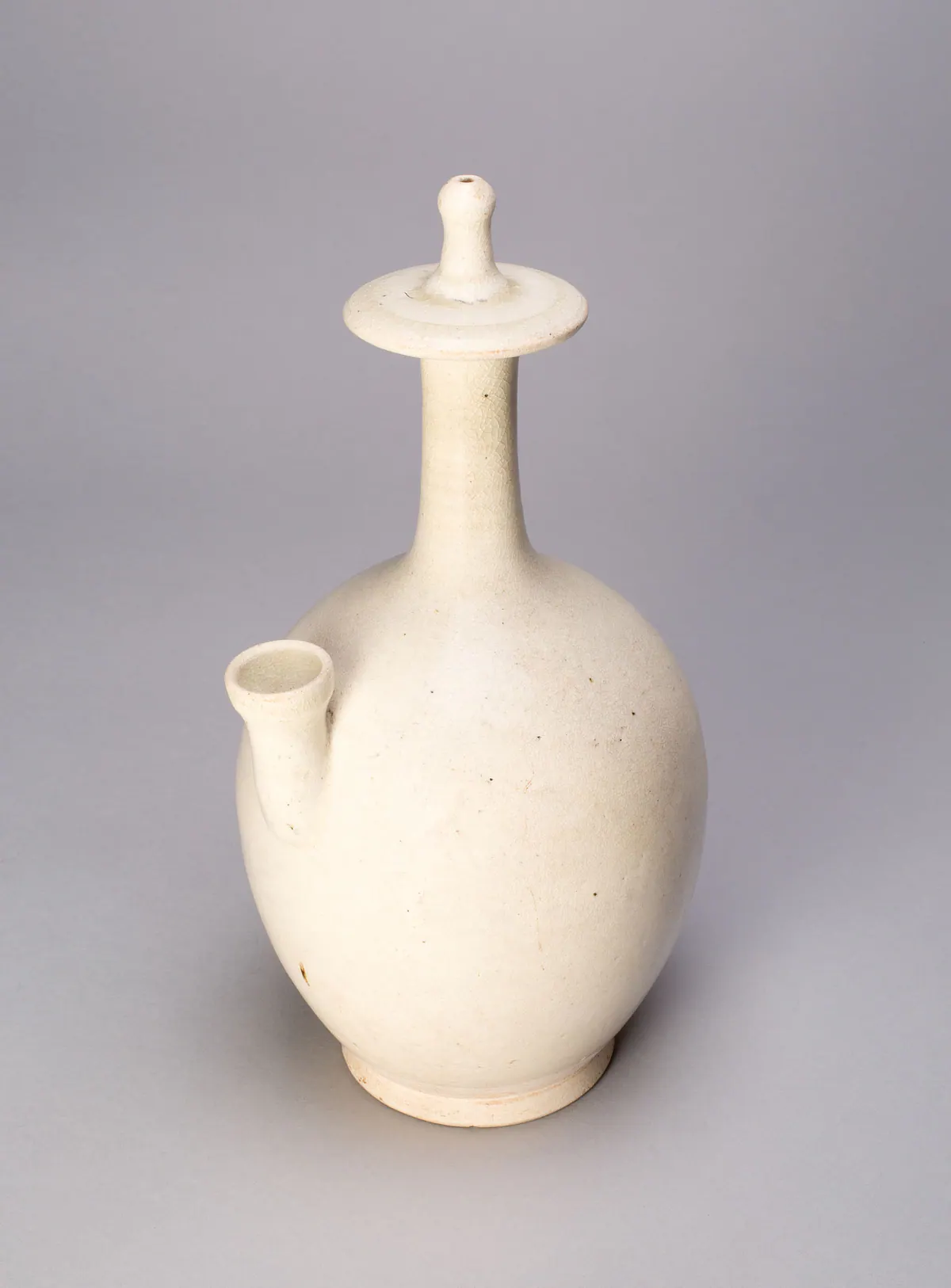
The wares that followed: Song porcelain
The collection begins with the Song dynasty. These pieces show the porcelain that followed this period.
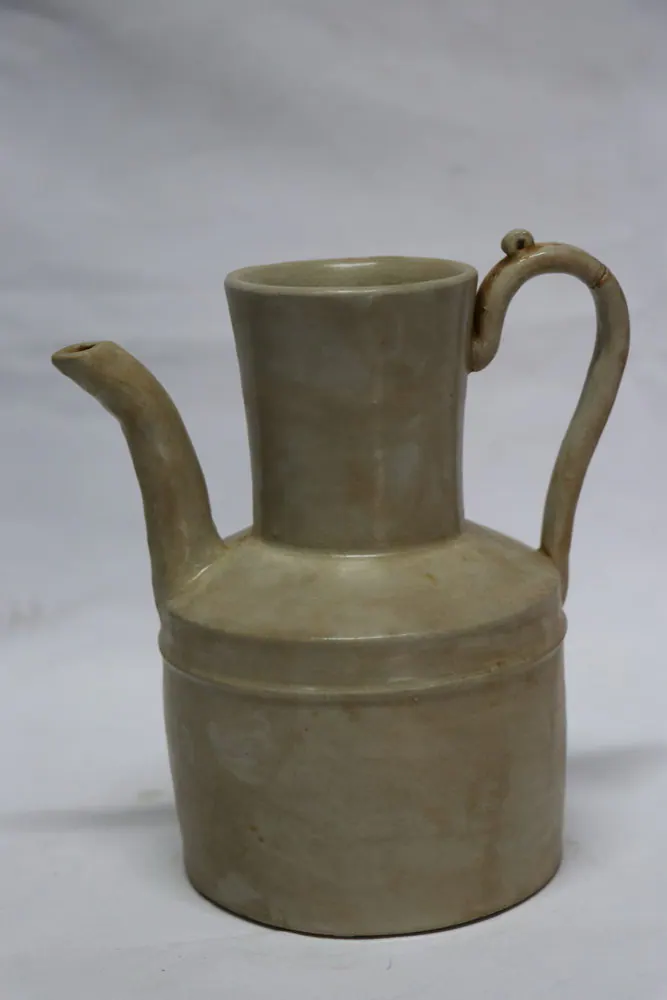 Song Dynasty PorcelainEwer with a Pale Glaze and a Ridged Shoulder, Song DynastySong Dynasty Porcelain
Ewer with a Pale Glaze and a Ridged Shoulder, Song Dynasty
Request priceView full details and all photos →Undecorated ewer under a pale greyish buff glaze, with a straight-sided body, a raised ridge below the shoulder, a tall neck, a curved spout and a loop handle, Song dynasty.
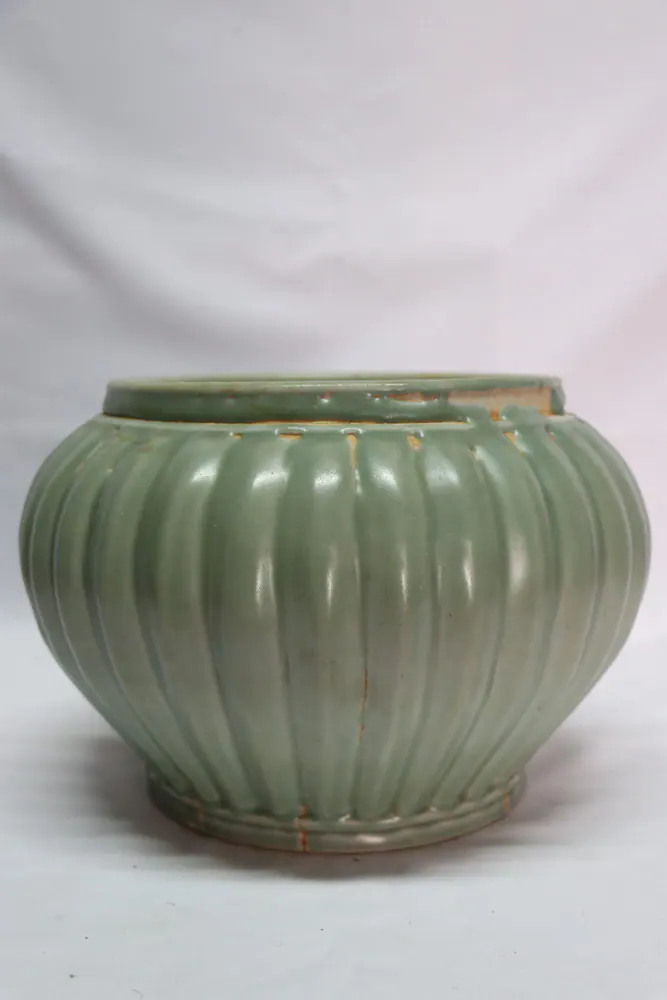 Song Dynasty PorcelainCeladon Jar with a Fluted Melon-Shaped Body, Song DynastySong Dynasty Porcelain
Celadon Jar with a Fluted Melon-Shaped Body, Song Dynasty
Request priceView full details and all photos →Squat celadon jar with a fluted, melon-shaped body and a short upright rim, covered in an even grey-green glaze, Song dynasty.
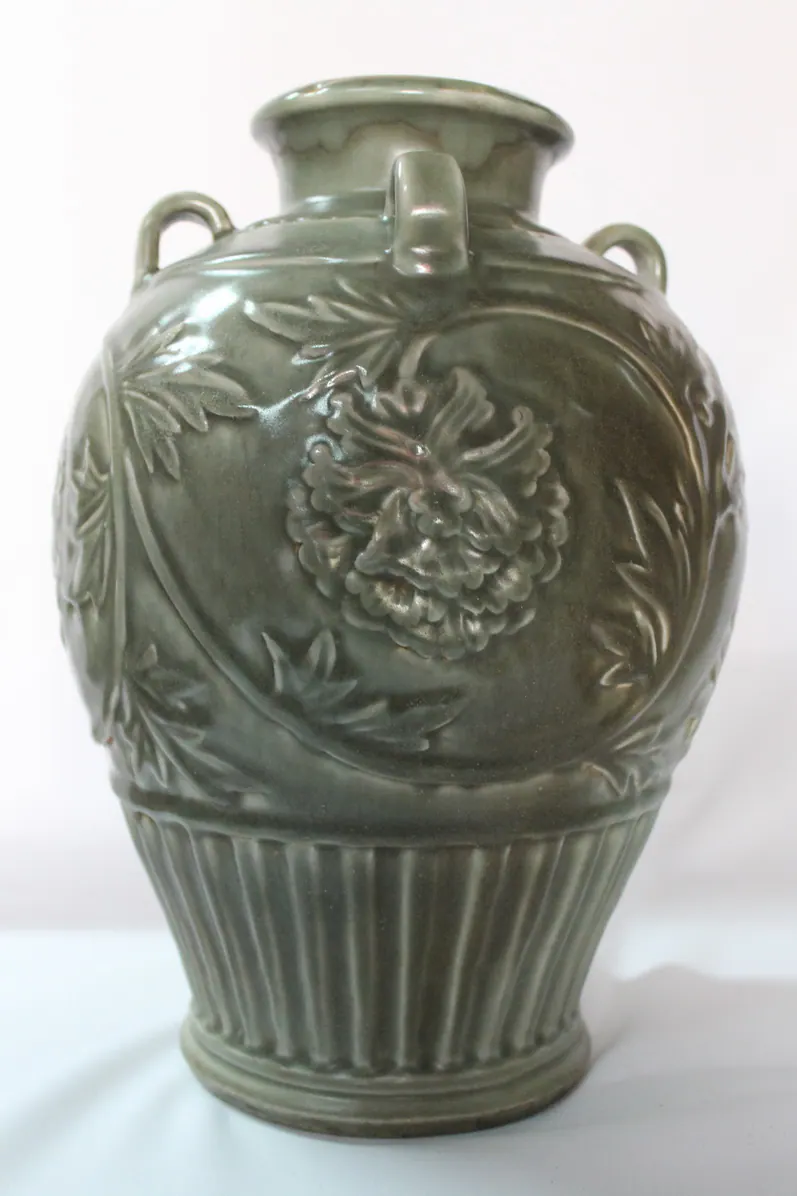 Song Dynasty PorcelainCeladon Vase with Carved Peony Medallions, Song to Yuan DynastySong Dynasty Porcelain
Celadon Vase with Carved Peony Medallions, Song to Yuan Dynasty
Request priceView full details and all photos →Ovoid celadon vase with loop handles round the neck, the shoulder carved in relief with peony blossoms in large round medallions above a fluted lower body, Song to Yuan dynasty.
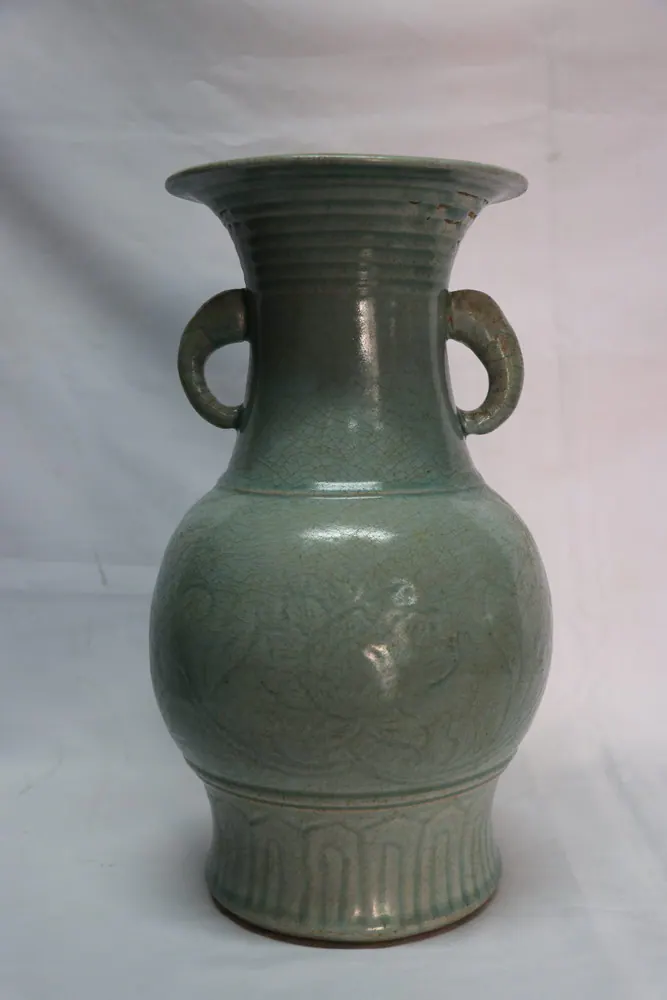 Song Dynasty PorcelainCeladon Vase with Two Loop Handles and Carved Lotus, Song DynastySong Dynasty Porcelain
Celadon Vase with Two Loop Handles and Carved Lotus, Song Dynasty
Request priceView full details and all photos →Celadon vase with a ribbed, flaring neck and two loop handles, the rounded body carved with lotus among leaves and stems, Song dynasty.
Be the first to see new pieces
Join our collectors' list for new arrivals, rare finds and private offers.